
An extract from my book And What Do You Do?, published by Biteback Publishing, Published in 2019 and updated in 2021
The two-carriage diesel train slowly made its way along the single track before coming to a halt next to the sad solitary platform at the terminus, Windsor and Eton Central. Beyond the end of the platform, the grand ironwork, the old booking office and all the other remnants of what was clearly once a substantial station remained, though now given over to that modern leisure activity – shopping. Between the rudimentary platform and the shopping complex, inevitably called Windsor Royal Shopping, were the first indications you were in Windsor – a lovingly polished old steam engine called The Queen, older than the monarch herself, and a slightly incongruous mosaic of Harry and Meghan.
Windsor is a royal town like no other. Union Jacks hang from the shops, which often bear names like ‘King & Queen’ (this a gift shop), and ‘Ice Queen’, where you can buy ice cream, though I did not see many takers on the cold January day I was first there.
The pubs too show their loyalty. There is the Queen Charlotte, then the Prince Harry, and the Duchess of Cambridge, clearly recent name changes. Had they previously been something like the White Hart or the Black Horse, I wondered, or had previous royals been gently eased aside, like waxworks in Madame Tussauds being discreetly replaced? So royal were the pub names that the Carpenters’ Arms seemed almost disloyal.
The town centre generally felt as if it could be a setting for an Agatha Christie mystery. Quaintness abounds, such as the car parking space bearing the sign: ‘Reserved for Church Organist’. I was on my way to the Royal Archives in Windsor Castle, a visit that had taken quite some time and a good deal of patience to organise. Inside the castle, the upstairs reading room for researchers is surprisingly small, with space for only six people at a time at most. I am grateful to the archivists who work there, who were all most helpful.
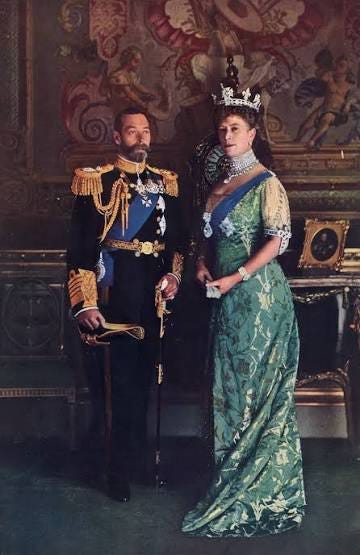
Amongst other matters, I wanted to research the change that had occurred in 1917 when the royal family adopted the name Windsor. Throughout the war, there had been mutterings about the German connections to the royal family, connections which to many hardly seemed patriotic. It was when German planes bombed Britain in June that year, killing 160 people, that the King was finally propelled into action. A month later, on 17 July 1917, a Royal Proclamation announced that the German name of Saxe-Coburg-Gotha was now replaced by Windsor. Here was a simple way of giving a clear signal as to whose side the royal family was on.
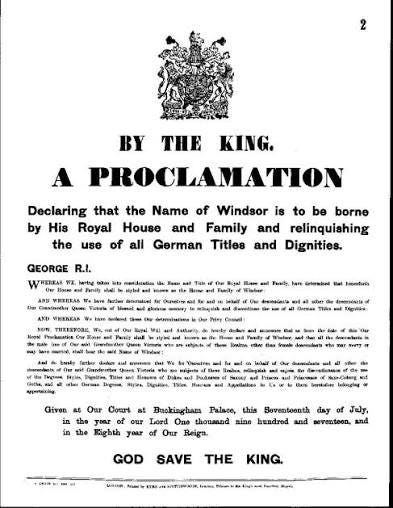
It is a tried and tested technique to adopt a name change to imply changes in culture. In reality, it is often merely a superficial act, providing a veneer for the continuation of existing practices beneath. So, similarly, after years of unremitting bad publicity, the nuclear complex at Windscale was renamed Sellafield. Group 4, who at one point were building up an unenviable reputation for losing prisoners they were escorting, became G4S. And in government, the Ministry of War became the Ministry of Defence.
The adoption of a new family name led to Kaiser Wilhelm’s acid observation that he intended to go and see The Merry Wives of Saxe-Coburg-Gotha. We were spared any reference to brown Saxe-Coburg-Gotha soup. At the same time, Louis of Battenberg had his name anglicised to Mountbatten, though the eponymous cake survived unchanged. In the extensive Royal Archives are letters that show the decision to adopt the name Windsor was not a straightforward one.
One serious objection came from Sir Alfred Scott-Gatty, Garter King of Arms, in a letter to Lord Stamfordham, the King’s private secretary. ‘I feel it is my duty,’ he wrote, ‘to point out that the surname Windsor is the family name of Lord Plymouth and other families both gentle and in humble circumstances.’ Nicely put.
Instead he suggested Plantagenet, which ‘as far as I know is extinct and His Majesty holds the throne of His ancestors through his descent from that family, or again Plantagenet-Tudor-Stuart would embody the principal Royal descents and could not fail to be popular with the two Kingdoms and the Principality.’ In other words, England, Scotland and Wales. Plantagenet harked back to the royal dynasty which held the English throne from the accession of Henry II in 1154 until the death of Richard III in 1485.
These suggestions were all knocked back by Lord Stamfordham. ‘The King has gone carefully into this question … Plantagenet is no doubt a grand name but it has become to be considered too theatrical … Tudor and Stuart are considered inadvisable.’ He also countered that Lord Plymouth’s family name was actually Windsor-Clive.
Lord Stamfordham was in fact representing the views of Herbert Asquith, who the archives show took a good deal of interest in the matter. Asquith had ended his term as Prime Minister in December 1916, the last leader of a majority Liberal government, but remained as leader of the party. It was Asquith who used the term ‘theatrical’ to describe the name Plantagenet and observed that ‘Tudor’ conjured up Henry VIII and Bloody Mary, while one Stuart was beheaded and one driven from the throne. He also knocked back the suggestion of Fitzroy, advanced by Lord Rosebery, but was sympathetic to Guelph as a solution.
The Guelphs were one of the great political factions in late medieval Germany and Italy, and the ancestral family of the reigning British monarch at the time, George V. This hardly seemed to break the German link. Interestingly, there was wide consultation on what name to adopt, not just with the inner circle and with key members of the Lords, but also with Fleet Street, with the editors of a wide range of papers, from The Times to the Daily Sketch, being invited to comment.
Commonwealth countries were also given the opportunity to comment, though only Canada did.
The consensus was that Windsor had a lot to commend it, and little to be said against it, and so was adopted. All in all, it is a curious way to decide one’s family name. That, however, was not the end of the matter. The traditional – some might say archaic – arrangements which give prominence to males came into play when the present monarch inherited the crown in 1952.
By this point, Elizabeth Windsor had married Philip Mountbatten – a union of two artificial recently invented surnames.
Philip was of Greek and Danish royal blood and bore the family name Schleswig-Holstein-Sonderburg-Glücksburg. In 1947, he was naturalised as Philip Mountbatten, although he had originally been minded to take the name Oldburgh.
There is in fact a school of thought that this naturalisation was unnecessary, that he was already a British subject by birth, by reference in the Act of Queen Anne as applying to all descendants of Princess Sophia. A House of Lords ruling in 1957 in the case of the Prince of Hanover was to confirm this. Be that as it may, because male trumped female, the implicit position was that when Elizabeth ascended the throne in 1952, the House of Mountbatten replaced the House of Windsor.
Papers in the National Archives at Kew reveal that this consequence was deeply unpopular with the then Prime Minister, Winston Churchill, who was appalled at the idea of the House of Mountbatten becoming the ruling dynasty. He seemed to believe that the Duke of Edinburgh’s uncle, Dickie Mountbatten, had unnecessarily sacrificed India. Accordingly, on Churchill’s advice, the Privy Council, with the agreement of the Queen, resolved on 9 April 1952 that ‘She and Her children shall be styled and known as the House and Family of Windsor, and that her descendants, other than female descendants, and their descendants, shall bear the name of Windsor.’
The House of Mountbatten had lasted from 6 February to 9 April 1952. Prince Philip had objected to the change back to Windsor but lost out. The existence of a family name, as opposed to a House name designating territory, had in fact been rather intermittent, not to say haphazard. Tudor and Stuart were well-established surnames, but then the practice died out, until resurrected by George V in 1917, as part of the process of anglicising the family, in order to ensure that not all legitimate descendants of the sovereign could style themselves as princes or princesses. The matter was further amended by George VI in 1948 to the effect that Elizabeth’s children would not have a surname, so in due course we got HRH Prince Charles and HRH Princess Anne. Henceforth the implied surname of Mountbatten would be hidden.
On to 1959 and enter Edward Frank Iwi, an English lawyer and something of an amateur constitutional expert. He was also a vibrant campaigner, collecting, for instance, a petition of some 50,000 signatures in 1947 calling for women to be able to sit in the House of Lords. The Lords was to vote in favour of this two years later, although it did not take full effect until 1963.
Five months before the Queen’s third child was due, he wrote to the Prime Minister, Harold Macmillan, to suggest that whereas Charles and Anne had been born before Elizabeth became Queen and so bore the surname Mountbatten, the forthcoming birth would be the first after the official change of family name back to Windsor in 1952 and that therefore the new child, being given his mother’s maiden name, would bear ‘the Badge of Bastardy’.
The Establishment kicked in with its all too usual response when it came to royal matters. Referring to Iwi’s letter, the Lord Chancellor told the Prime Minister: ‘This is in very bad taste. Iwi must be silenced … he might go quietly.’
But Mr Iwi would not be silenced, maintaining that it would be unfair on any child to leave the position unchanged. He was to find a vocal ally in the Bishop of Carlisle, who commented on the issue in public, saying that he did not like to think of any child born in wedlock being deprived of his father’s family name. ‘We in this country are accustomed to have respect for titles, but a family name transcends these and stirs deeper and more powerful emotions in the family circle,’ he suggested.
The bishop’s comments were regarded with even more hostility than those of Mr Iwi. As The Guardian editorialised on 14 December 1959: ‘The remarks of the Bishop of Carlisle about the Royal Family’s surname seem to have accorded the kind of stony reception given to a courageous traveller who lets down the window in a stuffy railway carriage.’
The irony was that the action taken by George VI in 1948 meant that the child would have no overt surname anyway, and indeed he duly became HRH Prince Andrew. But there was a consequence two generations down the line when the ability simply to be styled Prince or Princess would no longer apply, as a result of the 1917 changes.
The solution landed upon was to create yet another new name, Mountbatten-Windsor, for those who in due course would need a surname. This was given effect by another royal declaration, on 8 February 1960, just eleven days before Andrew’s birth.
As Cyril Hankinson, the then editor of Debrett’s, noted after the declaration: ‘It seems to me that this has been announced now so that the new baby will be born with the surname of Mountbatten-Windsor, which of course it will not use.’ This new name, one civil servant wrote dryly, should not be confused with the Browne-Windsors.
Not everybody approved of the outcome. On 11 February, a Mr Kendall wrote to the Speaker, who as it happens was his MP.
Surely for the Queen to change the surname of the Royal Family is a public, and not a private matter? Would it not be in keeping with the position and responsibility of Monarchy to have the question debated in the House, to give an opportunity for public opinion to be gauged? There is, I believe, strong antagonism throughout the country to Lord Louis Mountbatten, to the Battenberg family, and no desire to strengthen ties with Germany. Is not the English name of Windsor good enough?
The messy upshot of all this was:
• that the Queen, although she had acquired the name Mountbatten upon her marriage, now retained the surname Windsor that she held before her marriage and again since 1952;
• that Philip retained his assumed name of Mountbatten;
• that their children would have no surnames, except that Mountbatten-Windsor would be latent and would apply to their grandchildren;
• that the hidden surname of Mountbatten-Windsor would apply retrospectively to Prince Charles and Princess Anne;
• that the surname of the grandchildren of the Duke of Gloucester, the Duke of Kent, and of Prince Michael of Kent would be Windsor.
The conclusion that can be drawn from this saga is the same as applies to other matters affecting the royals, such as wills. It is that tradition is valued and defended, except when it is inconvenient, whereupon it is jettisoned, and new rules are made up as they go along to fashion the desired outcome. Much of the problem from 1952 arose from the long-established practice of institutionalising male rights above female ones.
As well as the complications referred to above, further oddities arise. For example, the pre-eminence of the male line means female members of the royal household are required to take the name of their husbands. So we have had Princess Michael of Kent, and before that Princess Arthur of Connaught, who sounds more like a character Graham Chapman might have played in a Monty Python’s Flying Circus sketch.
This bias towards the male is not unique to the royal family. In councils up and down the land, male mayors have mayoresses, while female mayors have only consorts. Is it not time, well into the twenty-first century, that we got rid of this antiquated gender bias? The optimum solution is that a monarch or a mayor, irrespective of gender, should always just have a consort. The other method of equalisation would be to say that if a king can create a queen through marriage, then a queen ought to be able to create a king.
At least, and at last, the question of equal rights of succession to the throne has been sorted. The law was changed on 26 March 2015 to mean that the order of succession is no longer skewed by gender. The first consequence of this is to keep William and Kate’s daughter Charlotte ahead of Louis. Under the old arrangements, she would have been moved down the order. This happened to Victoria’s daughter, also called Victoria, who, as a consequence, lost out on taking the throne to Edward VII.
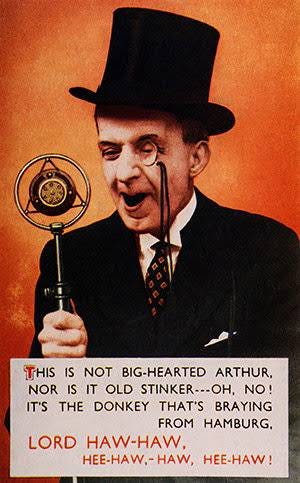
Another change related to the terms of the Treason Act 1351, one of the oldest pieces of legislation still on the statute book. Indeed, it is so old, it was written originally in Norman French. Under this law, it constituted high treason to violate the wife of the King’s eldest son, which suggests a number of prosecutions could have taken place in respect of the consensual arrangements Princess Diana engaged in. The penalty until 1814 was death by hanging, drawing and quartering, thereafter reduced to death by hanging. The last prosecution under the Act for high treason, though not in respect of the violation of a royal personage, was of the traitor William Joyce, unpopularly known as Lord Haw-Haw, who was found guilty and hanged in 1945.
As so often, modernisation in British law occurs at a snail’s pace. The Succession to the Crown Act 2013, which updated these matters, retained the crime of violating the wife of the King’s eldest son, but now only if he were heir apparent. It also remains an offence under the Act to violate the King’s eldest daughter if unmarried, though not a crime, it seems, if she has wed. Equally, it is an offence to violate the companion of a male monarch, whether male or female, but not that of a female monarch, whether male or female.
Another important modernisation took place at the same time, which was to end the debarment of individuals from the order of succession simply because of marriage to a Catholic. However, it is still the case that no Catholic can sit on the throne. I took this matter up with Prime Minister Tony Blair back in 2000, when I pressed him to amend the Act of Settlement 1701 that introduced this prohibition. He replied, ‘The Government has always stood firm against discrimination in all its forms and will continue to do so. We have no immediate plans to legislate in this area.’ Standing firm, but doing nothing.
The reasoning is that the monarch is also Defender of the Faith, head of the Protestant Church of England. But suppose the person that the roll of the dice throws up as monarch is not a Protestant, but a Catholic or a Buddhist, or a Muslim or indeed an atheist. Should they be barred from the throne simply because of their religious beliefs or lack of them? Or should they simply pretend to be Protestant to get past go, and take an oath as part of their coronation which they do not really ascribe to, just as dissenting MPs pretend to pledge allegiance to the Crown in order to take up the seats in the Commons to which they have been democratically elected?
It must be wrong to bar someone from the throne on account of their personal view on religion, and arguably even more wrong to require them to lie to get over this hurdle. Prince Charles clearly feels conflicted and has expressed a wish to be ‘Defender of Faiths’ rather than any particular one. And why should he not be allowed to do that if he wants? The logic of all this, of course, is that the Church should be disestablished.
As well as the convulsions with surnames and the name of the royal House referred to above, first names have been far from sacrosanct either. King Edward VII was actually Albert Edward by birth, named predictably after Victoria’s husband. Edward VIII was Edward, but had always been called David by his family. He was christened Edward Albert Christian George Andrew Patrick David. And George VI was Albert Frederick Arthur George, known as Bertie. So, curiously, all three used their last forename.
In the case of George VI, he already had a brother of that name, namely the Duke of Kent, which must have confused matters even more. The question thus arose: what would Charles choose to call himself when he becomes king? We cannot automatically assume he will be Charles III, even if that is widely taken for granted. The Queen certainly showed no doubt when she was asked, within minutes of learning of her father’s death, what name she wanted to adopt. ‘My own name, of course,’ she replied, surprised. ‘Elizabeth. What else?’
The birth names she gave to her son are Charles Philip Arthur George, so if he too goes for the last in the list, we could have ended up with George VII, and indeed there were mutterings over the years to suggest he had at least been considering this. The public would for certain regard it as weird that someone they have known as Charles for over seventy years would suddenly adopt a name that is not obviously his, but then the royal family does not always behave as ordinary mortals do.
No posts
Comments
Nothing yet. Say the first thing.
Sign in to join the conversation.