
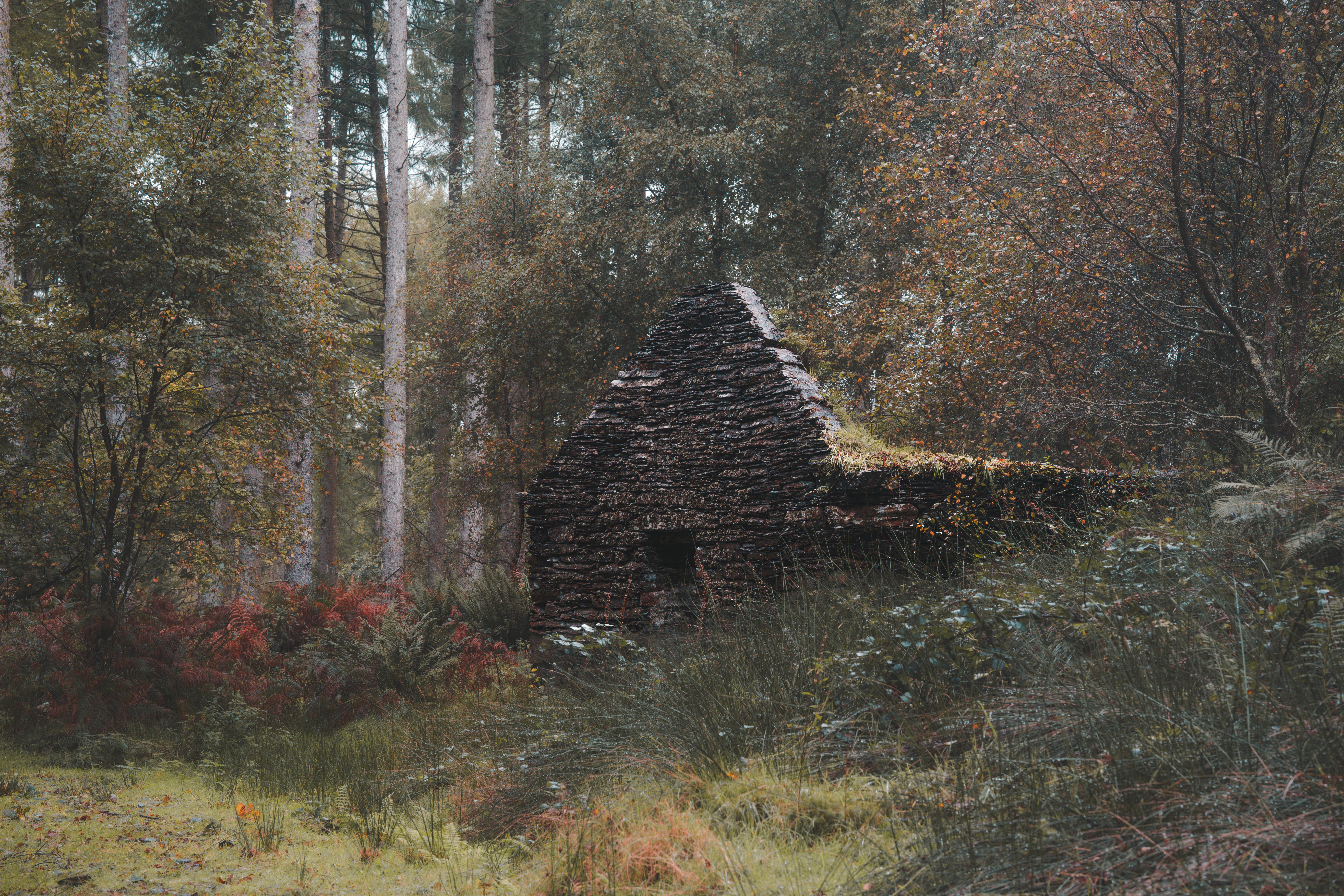
Stone.
Moss-soft.
Time pooled in slate corners where no one has lived for decades.
I stop each morning before this photograph—Welsh ruin, temperate rainforest, light filtered through beech and scattered conifers until it becomes something you could almost drink. The building takes maybe a fifth of the frame. The rest...
Space.
Not emptiness. Space that holds weather, holds years, holds the slow conversation between human intention and forest patience. My chest expands without my active choice. As if the frame contains actual forest air instead of paper and ink.
The image refuses drama. Colours whisper rather than declare—amber bracken, silver-green lichen mapping stone, russet leaves scattered like dropped coins. Nothing insists. Nothing demands. The contrast sits so low that shadows become suggestions, edges dissolve into the surrounding quiet.
Yet it commands attention longer than the sharp mountain peaks hanging nearby, those forests dense with incident and shadow. Those photographs announce themselves. Manifestos in frames. This one simply... continues. Beyond its borders. Confident the forest extends past any rectangle's capacity to hold it.
What makes some images breathable?
Others suffocate. Academic portraits where faces press against frame edges, surrounded by careful arrangements of books, diplomas, symbols of scholarly seriousness. Every pixel working overtime. The space around the person colonised by credentials until there's nowhere for actual presence to unfold.
Or landscapes stuffed edge-to-edge with waterfall and meadow and mountain peak. All competing. All commanding. Like conversations with people who cannot bear silence, who fill every pause with words until you forget what you wanted to say.
The ruin makes no such demands.
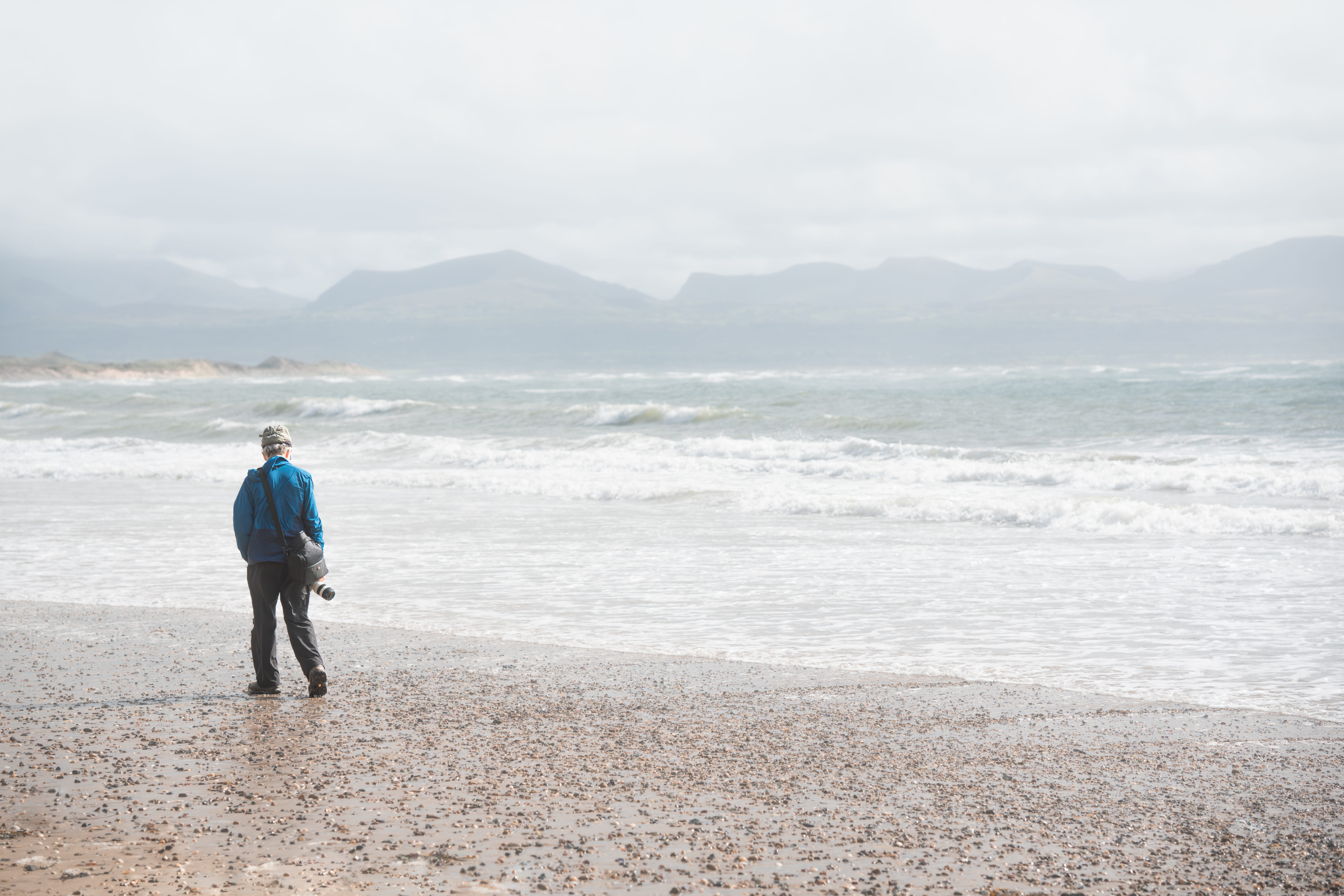
I have another image. Figure in blue, walking vast beach. Mountains ghosted in distance. Sky pressing down with that particular weight of open country and sea. Here the breathing room comes from scale—all that generous sand, that infinite overhead. Your shoulders drop because there's simply room for dropping.
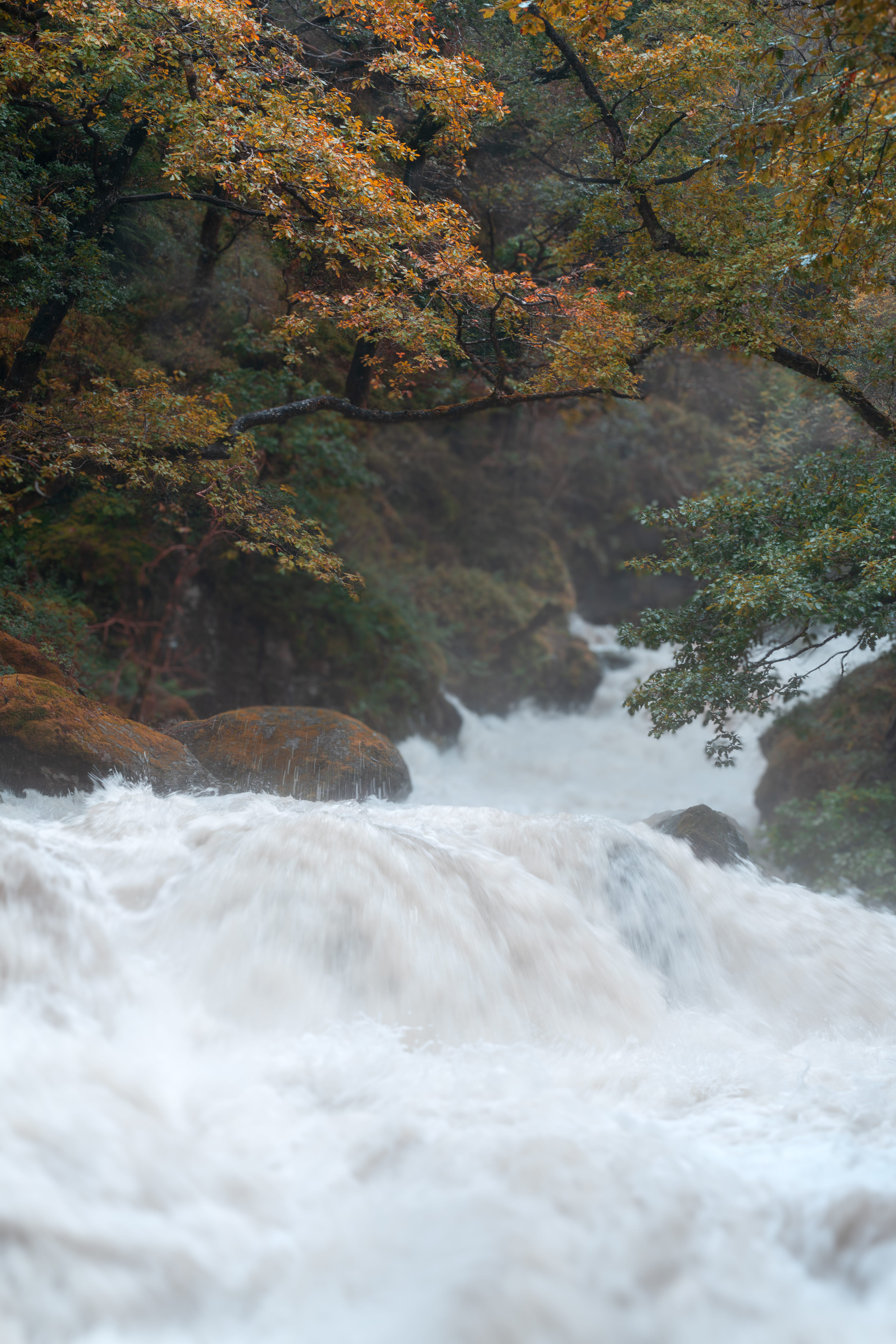
But then this third photograph complicates everything: stream in the same Welsh mountains, usually modest but captured after heavy rain when it had become urgent, alive. White water rushing over moss-covered rocks. Background dissolving into soft focus where autumn trees blur into atmospheric haze.
The space around this water vibrates. Energy rather than calm. Motion rather than stillness. Yet it makes room for breath—just breath that quickens with excitement rather than deepens with peace.
Three ways of breathing.
Through time. Through scale. Through force.
What connects them isn't composition or subject but willingness to let emptiness work as hard as substance. Photography as sculpture by subtraction—what you exclude determines what remains visible. Most photographers fear this power, packing frames like nervous dinner hosts inviting too many guests. But these images embrace the cut.
Trust absence to create presence.
Anton Corbijn knows this, too. His portrait of Nick Cave against white clapboard siding—Cave occupying perhaps a third of the frame, positioned right. The remaining space: weathered wood and shadow. Nothing more. Yet that emptiness hums with contained energy. Cave's intensity needs territory to unfold. Crowd him into tight cropping and you diminish what you're trying to capture.
The principle applies everywhere. Photographs that truly breathe create conditions where something subtler develops between image and observer. They offer clearance for your own experience to surface rather than overwhelming you with pre-packaged meaning.
Frame as invitation.
Not imprisonment.
This generosity is rare. A lot of art assumes you need guidance, that meaning must be underlined, highlighted, surrounded by interpretive apparatus. But photographs full of air reverse this. They assume you possess intelligence sufficient to complete what the image started.
Participation rather than consumption.
The ruin continues this invitation. Two years of daily encounters. Not because it depicts anything profound—Welsh ruins are common enough—but because it maintains visual calm my attention returns to when other images demand too much.
Pictures succeed not always by capturing beautiful things.
Sometimes by capturing spacious things.
Beauty can be concentrated. Even claustrophobic. Those macro photographs where every millimeter blazes with saturated colour, knife-sharp detail. Spaciousness requires different courage—willingness to let emptiness carry weight. Absence, too, can exert gravitational pull.
Stone walls.
Forest time.
Between them, space for whatever thoughts you bring.
Images: © Victoria Mummelthei rabbitingyears
Comments
Nothing yet. Say the first thing.
Sign in to join the conversation.