
There's a feeling that lives just behind your sternum when someone you love is about to leave—not the sharp stab of goodbye, not the dull ache of missing them already, but something else. Something that sits heavier than anticipation, lighter than dread. Your ribs seem to expand around empty air. German might have held a word for it once, something that tasted of winter breath and train platforms. Fernweh, perhaps, though that reaches toward distant places rather than distant people. English offers nothing, I think. Just the clumsy weight of explanation where a single, perfect word should rest.
I felt it again not so long ago, watching my neighbour load boxes into his car. Three years of borrowed milk and shared deliveries ending in packing tape and careful goodbyes. That specific gravity in the chest—too particular for sadness, too complex for loss. My mouth opened, searching for the shape of what I felt, but found only the inadequate scaffolding of approximation.
We've lost the topography of feeling.
Where languages once carved precise channels for the tributaries of human experience, English has built reservoirs—vast, general containers that hold too much and say too little. "Sad" must carry the weight of everything from a cancelled picnic to species extinction. "Angry" stretches from traffic irritation to revolutionary fury. We've become emotional cartographers working with maps drawn for giants, missing all the intimate geography that makes us human.
The Welsh had hiraeth—not homesickness, though that's how we translate it now, flattening its particular ache into something we think we recognise. Hiraeth was the pull of landscape on the body, the way certain valleys called to your bones, the homesickness not for a place you'd left but for a place that had left you. For the version of home that existed before time wore it smooth, before progress paved over its peculiarities. It lived in the throat like unshed tears, in the feet like the memory of different ground.
But we've bulldozed such precision. Efficiency demands that hiraeth become "homesickness," that the Portuguese saudade shrink to "nostalgia," that every untranslatable ache submit to the empire of the explainable. We've traded a thousand subtle instruments for a handful of blunt tools, then wonder why our emotional music sounds so crude.
Watch someone try to describe that moment when laughter dies in their mouth—not from awkwardness or embarrassment, but from the sudden recognition of something beautiful ending. They'll gesture helplessly, pile adjectives like sandbags against an incoming tide: "It was sort of melancholy but not quite, more like bittersweet but deeper, you know?" What haunts me here—they can find words, endless words even, yet the precise words once existed and we let them disappear.
In Scots and Gaelic there seems to have been dozens of terms for different qualities of darkness. Not just night and shadow, but gloaming—that ambiguous, pearled dimness of late dusk; dubhar—soft shadow gathered beneath the eaves of ancient trees; dòrchadas—a profound, enveloping darkness that brings mystery or spiritual weight; ciaradh—the deepening dusk, as the world turns purple-grey and indistinct; and smùid—the muted darkness that falls with mist or sea haar, obscuring boundary and distance... I could forever explore the lexicon of these languages. Each word held not just description but instruction—how to move through that specific darkness, what it meant for navigation, for mood, for the day's remaining possibilities.
Now we have "dark" and "darker" and "darkest," as if the night were merely a dimmer switch rather than a country with its own seasons, its own weather, its own emotional topography.
We've done the same to human atmospheres, lost the words for the spaces between people, I mean—not relationships, which are too solid, too defined, but those atmospheric pressures that shift when bodies share space. The particular tension that builds between strangers in lifts. The quality of silence that settles when two people discover they're thinking the same thing. The microscopic adjustment in the world's weight when someone you've just met becomes someone you might actually know.
The Japanese has ma—the pregnant pause, the meaningful gap, the space that gives shape to what surrounds it. But ma goes deeper than intervals. It is the recognition that emptiness itself could be eloquent, that what happens between words might matter more than words themselves. In conversation, in music, in the architecture of affection—ma is the breath that made meaning possible.
We've forgotten how to hear the spaces between things. Our language has become all furniture, no room to move.
Standing in the rain yesterday, I felt the absence most acutely. Not the rain itself—we have words for rain, too many and too few—but the specific quality of being rained upon when you're already soaked, when wetness becomes not discomfort but surrender. When your clothes stop fighting the water and your skin stops registering cold and you become temporarily amphibious.
The word I need shimmers just beyond reach, like sarāb—that desert mirage of false water that Arabic named so much more delicately, it seems to me, than "mirage". What a thing, really: here I am, drenched in real rain, thirsting for a word that may itself be illusion. Perhaps what I'm chasing isn't a lost word at all, but the fantasy that language could ever hold the full weight of being rained into surrender.
The mouth knows what it wants to say before the mind does. Watch children reaching for language—their faces contorting around meanings too large for their available words, their hands grasping at air as if the right sounds might be hiding just beyond their fingers. They haven't yet learned that some experiences don't translate. They still believe every feeling deserves its own word, that the world contains enough language to hold everything that happens inside us.
They're right, of course. It does. We're just not aware enough maybe where we put most of it.
In Gaelic, rionnach maoim described the shadows cast by clouds moving across moorland on a bright, windy day. Four syllables to capture something English needs an entire sentence to approximate, and still we miss the essential quality—the way those shadows seem to race across the landscape like dark thoughts across a bright mind, the way they transform static ground into something alive with temporary darkness.
Rionnach maoim holds more than description. It offers instruction for seeing, for the particular kind of attention that notices how light and shadow collaborate to create meaning. Without the word, we see less. We feel less. We become strangers to our own experience.
But perhaps words can return from disappearance. Perhaps in the space between what we feel and what we can say, new languages are always trying to be born. Perhaps every inarticulate moment is an invitation to remember that precision isn't just accuracy—it's tenderness toward the infinite subtlety of being alive.
The feeling behind my sternum has a name, somewhere. Something softer than the German Abschiedsschmerz—that word carries too much pain, too sharp an edge for what lives so quietly in the chest. What I feel contains joy too, the particular warmth that blooms when someone you love moves toward their own happiness, even as their leaving hollows you out. Freudewehmut, perhaps—joy-melancholy, what the chest does when love pulls in two directions. A word with weight but no sharpness, dense as wet earth.
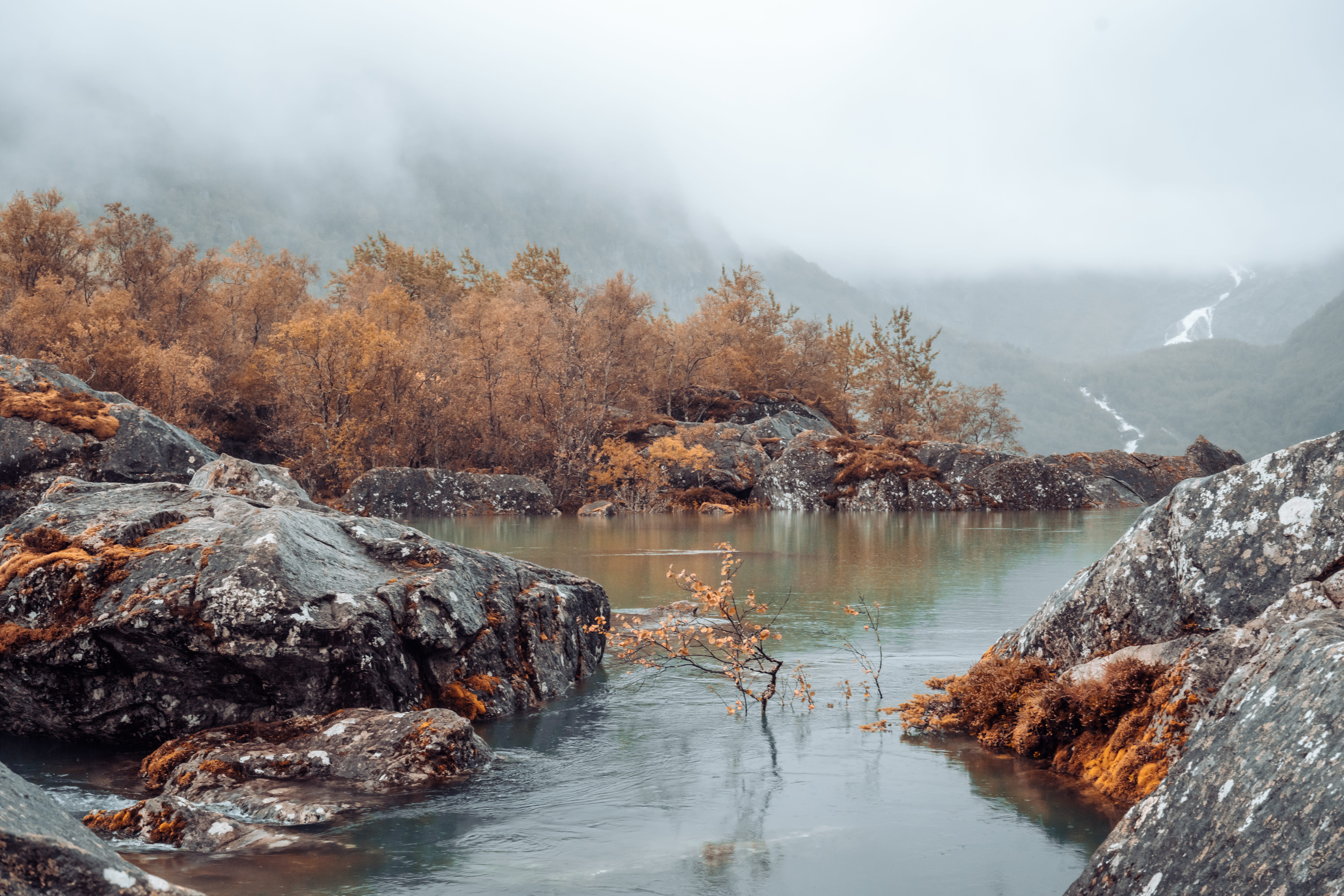
Image: © Victoria Mummelthei rabbitingyears
Comments
Nothing yet. Say the first thing.
Sign in to join the conversation.