
Featured in this week’s tech round-up:
Canyon’s 32” MTB concept looks slick …
… but I’ve got reservations about its other concept bike.
Shimano makes big changes to its Deore and Deore XT mechanical MTB groupsets.
Bianchi shakes up its Specialissima formula.
Esker’s Lorax 32 gravel bike looks ready for prime time.
The Surly Steamroller is back!
Vittoria rolls out wider gravel tire options.
Track your next bike shipment in (near) real time with Bikeflights’ new RFID labels.
Dress up your ride with Terske Components’ fancy titanium water bottle cage bolts.
I mentioned in the last tech news round-up that it sure sounded like the UCI was leaning toward banning 32” wheels for gravel (but critically, not for mountain bikes). That was news through the grapevine at the time, but now – thanks to some official confirmation from my long-time friend and former co-worker, Ben Delaney – I’ve now got more concrete information to share with you.
Come January 1, 2028, 32” wheels will almost certainly be banned for UCI-sanctioned gravel events.
“Gravel is a very recent discipline at the crossroads of several disciplines,” reads the official UCI communique. “It will potentially continue to grow and we tend to see an alternative to road practices, in particular to escape the promiscuity of motorized vehicles in training and competition. In the interests of the development of this discipline and others (like road or cyclo-cross) and of sustainability, it seems appropriate to us that the critical Gravel equipment has standards close to road cycling and cyclo-cross. In other words, it does not seem appropriate or strategic to us to authorise new sizes of gravel wheels. This could slow down the development of this growing discipline and, in some cases, contribute to decrease of road and cyclo-cross.”
More specifically, the UCI has cited 32” wheels’ “unanticipated dynamic advantages [such as] stability, traction, and inertia” as reasons for the ban, essentially suggesting the larger wheels provide its users with an unfair edge over riders with 700c/29” ones. Moreover, the UCI has expressed a “risk of morphological inequity” – in other words, that shorter riders would be at an inherent disadvantage since they’d be less likely to fit well on a bike with 32” wheels.
There’s a fair bit to unpack here.
For one, I find it interesting that the UCI has already decided that 32” wheels fundamentally offer more performance than 700c ones. That may be, but what sort of testing was done – and who did it? What were the results? Was that supposed advantage statistically more significant than other equipment changes that are possible with existing 700c wheels?
I also find it kind of rich that the UCI is suddenly concerned with the needs of shorter and/or smaller riders, particularly given how its recent drop handlebar width rule quite overtly ignored the fit requirements and desires of those same riders.
If you’re thinking right now that there’s a pretty obvious contradiction here, you’re not alone.
If 32” wheels offer inherent (and apparently unfair) performance advantages over 700c/29” ones for gravel, why xwouldn’t that be the case for mountain bikes as well? And wouldn’t shorter riders have those same fit issues for mountain bikes, too? If anything – given the additional spatial complications of front and rear suspension – it seems to me that those shorter riders would have an even harder time getting a 32”-wheeled mountain bike to fit than on gravel.
That said, there’s some precedent here to the UCI’s position. It’s always seemed to me that while the sport’s governing body clearly has strong ideas on what drop-bar bikes are supposed to look like, it’s been more than content to just leave the mountain bike world to be the wild west of cycling disciplines. Take this passage from that same communique, for example:
“In mountain bike, these dimensions are free and have led over the last 15 years to adopt wheels with a diameter higher than 700 mm (29 inches). More recently, tests and presentations show highlight a trend to want to develop 32-inch wheel formats. This involves adapting the design of the frames, the dimensions of the tyres and accessories.”
Is this more an indication that the UCI really is happy to just leave mountain bikes alone to do their thing however they see fit, or perhaps that the UCI is tacitly admitting it’s so far out of its realm of expertise here that the organization doesn’t even know where to start?
Either way, one clear result is that mountain bikes – XC ones in particular – are leaps and better than they were just a few years ago, whereas road and gravel bikes have been stuck in a perennial cycle of incremental improvements bound by arcane and arguably overly restrictive guidelines that stifle innovations and fresh ideas.
To be clear, I’m by no means embracing 32” wheels here. I haven’t even ridden them yet, to be honest, but even if they are significantly better in some ways, they represent such a massive disruption to the norm (and potentially massive costs to consumers to go with it) that I have major reservations about them flooding the market.
Regardless, while it sure sounds like gravel bike development will mostly continue along its current path, shorter-travel mountain bikes are likely to get pretty weird – and if you think 32”-wheeled mountain bikes are already a step too far, wait until you start hearing more about the 32/30.5” mullet setups industry folks are talking about.
And no, I’m not kidding. Buckle up.
Ok, let’s get into the news.
The spiel: Canyon is displaying at this year’s Eurobike trade show a concept bike called the Lux Era, its interpretation of what a modern World Cup XC-level 32”-wheeled full-suspension mountain bike could be. The company hasn’t released any technical details (such as suspension travel, frame geometry, etc), but there’s still plenty to talk about.
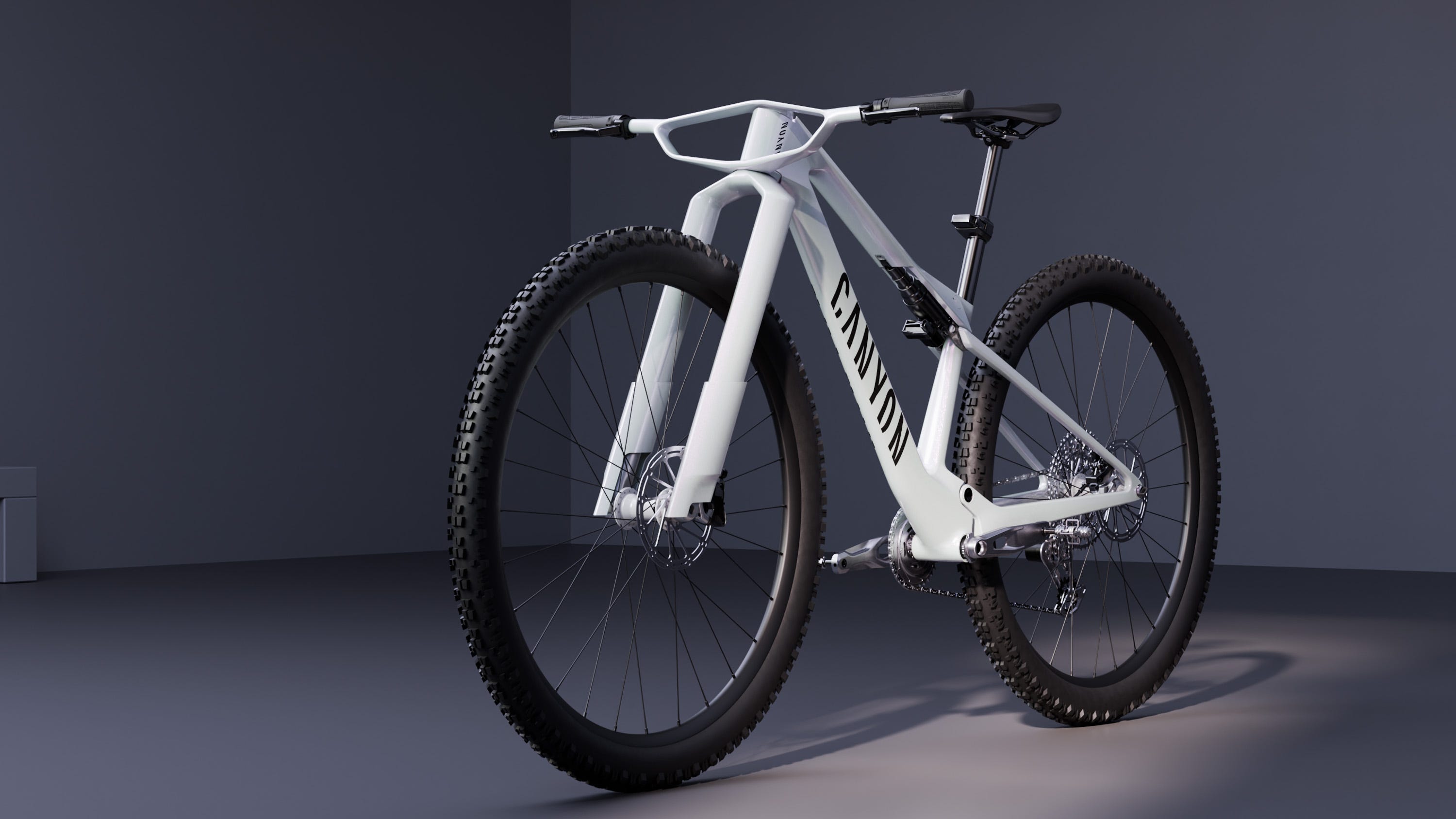
Proponents of 32” wheels cite their supposedly superior ability to steamroll over rough terrain as compared to conventional 29ers, as well as their superior traction, comfort, and momentum (though for that last bit, you could argue heavier wheels and tires could yield the same effect). Leaving behind the debate over how much of that is true, one undeniable fact is that 32” wheels are just really big, which can make it difficult for hardcore racers to get their bars as low as they want.
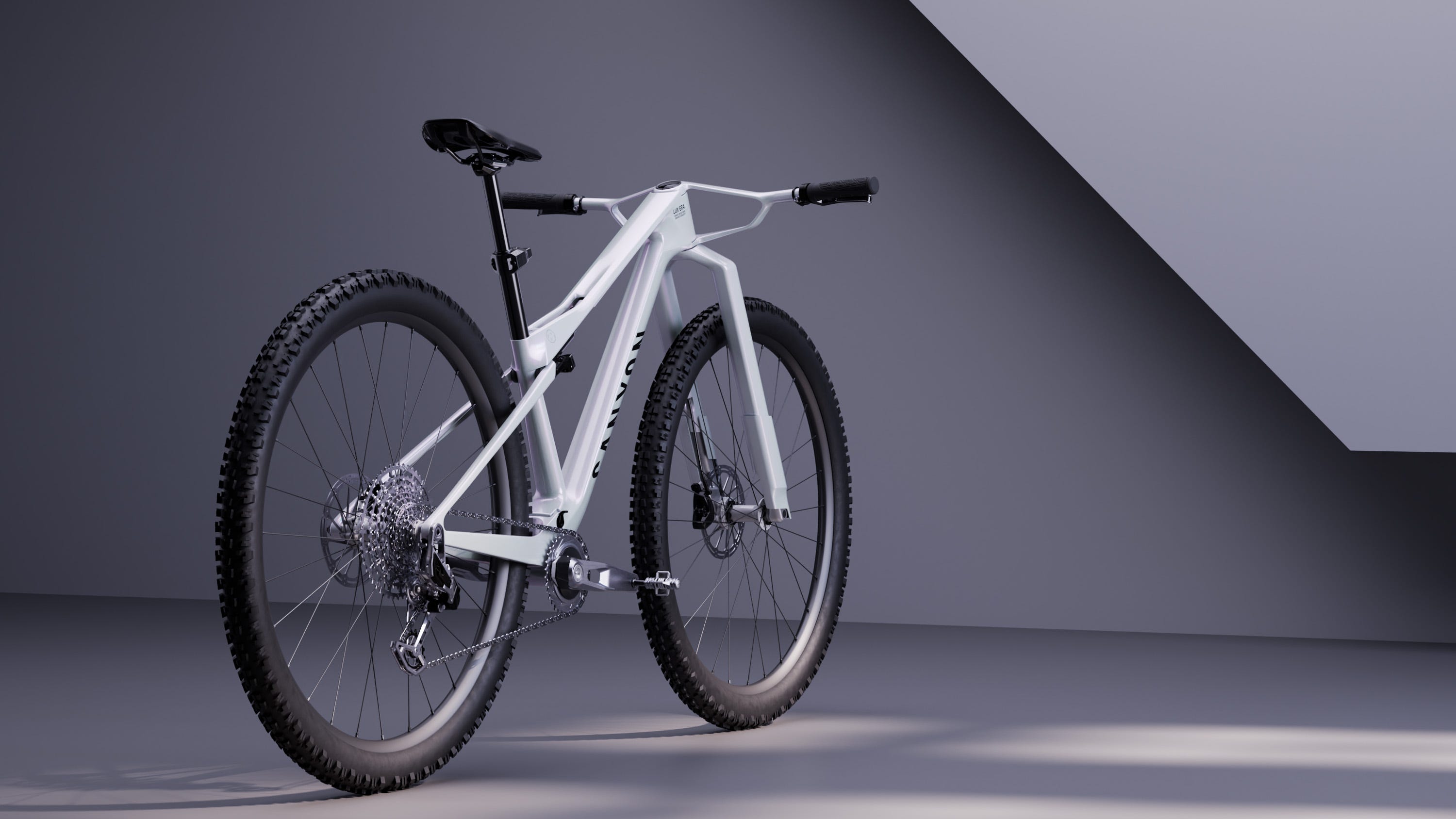
Canyon’s solution is a so-called “biplane” setup where the center section of the bar is basically split height-wise, with one portion connected at the top of the steerer and the other portion sprouting from just above the fork crown. This not only brings the grip height somewhere around the middle of the head tube, but that unusual configuration also provides a secondary extra-low-and-narrow grip position so riders can get more aerodynamic when the situation allows. It’s basically like what some riders (Kate Courtney, in particular) were doing at the Leadville 100, only without the sketchiness of trying to keep your hands from slipping off of the fork crown.
Not that that fork crown would offer much to hold on to, anyway, given Canyon has gone with an inverted design here. In addition to the usual claimed benefits of upside-down systems (more fore-aft rigidity, better seal and bushing lubrication, and lower unsprung mass for improved suspension sensitivity), Canyon also touts a lower-profile crown for improved aerodynamics.
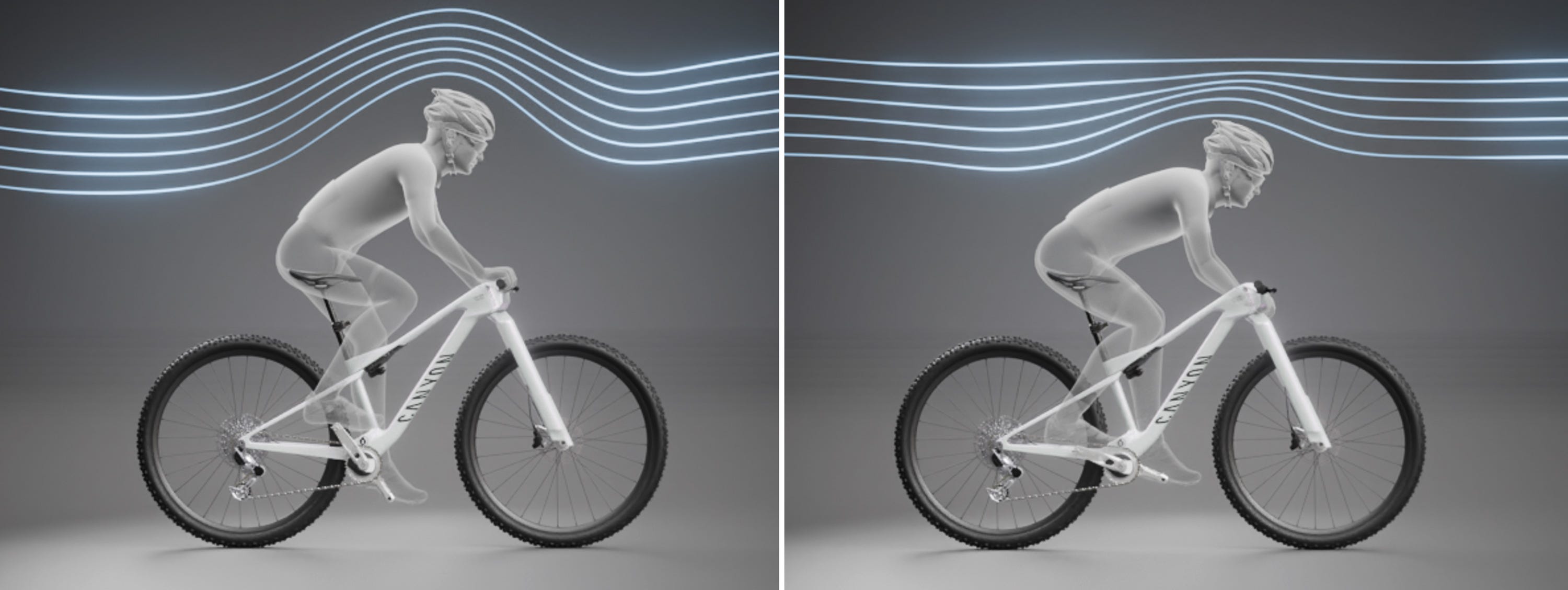
Aero tube shaping is featured throughout the concept, in fact, and Canyon has even built a computer directly into the top of the steerer, partially for better legibility, but also for the marginal efficiency gains since there’s no longer a separate little plastic box sticking up into the wind.
My take: Canyon says this is currently a “prototype concept” that’s yet to be submitted for UCI approval, but aside from the integrated computer, the rest of the bike actually seems well within the realm of possibility so I wouldn’t be surprised to see much of this make its way on to a race course sooner than later. Canyon has also already demonstrated it’s hardly averse to introducing unusual handlebar designs – remember the double-decker Grail front end? – so even that biplane setup perhaps shouldn’t be viewed with that much skepticism.
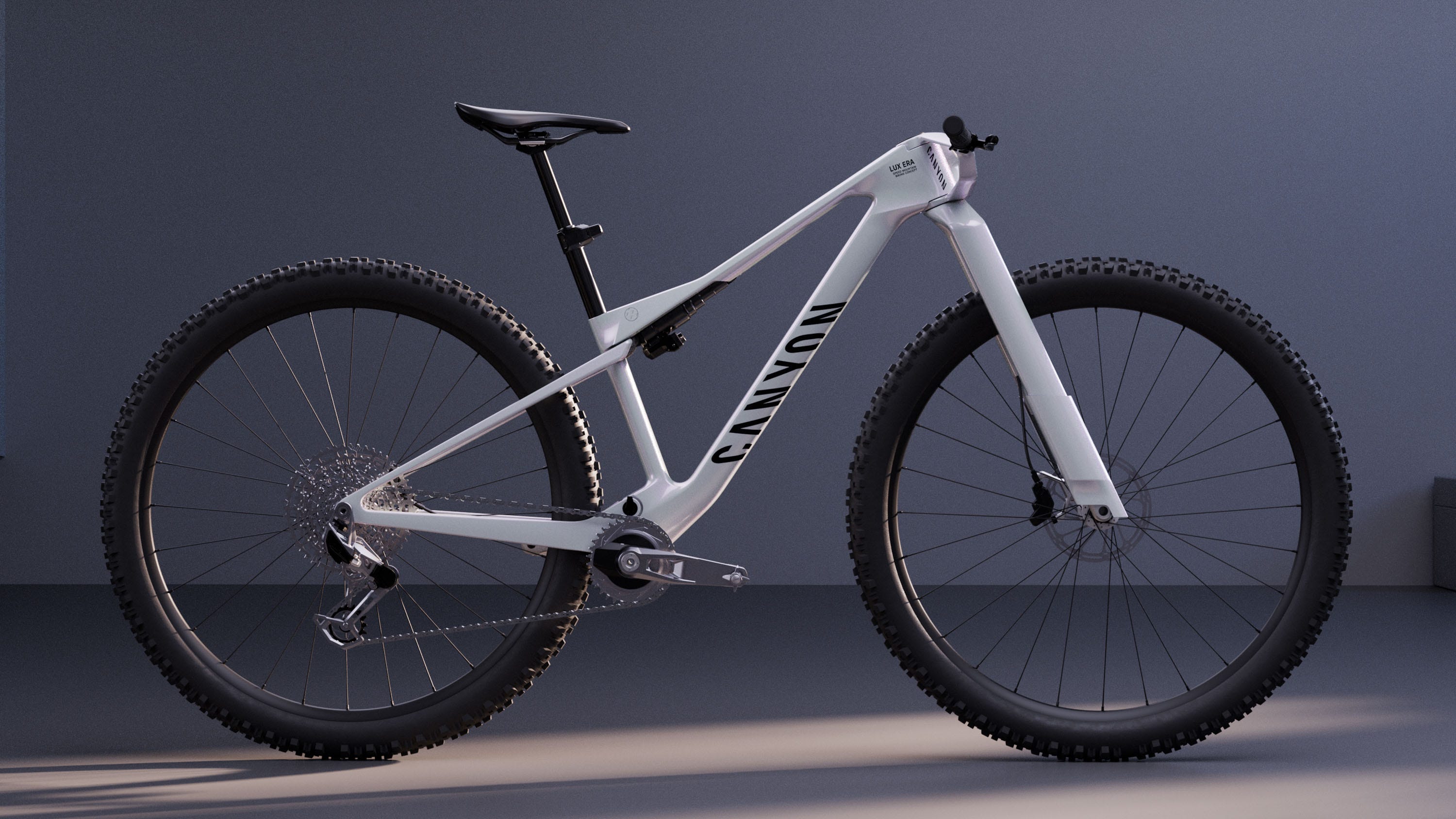
Aside from the computer idea, the only major physical hiccup I see here is that inverted fork. It’s a nice idea, but the reality is that a working prototype would more likely come with a conventional setup from one of Canyon’s existing OEM partners. Inverted forks also tend to be heavier than conventional ones, and while the fore-aft stiffness genuinely is usually better, the lack of torsional stiffness probably isn’t going to fly with World Cup racers.
On a more general note, the attention paid to aerodynamic efficiency here is almost certainly something we’re going to see more of moving forward. Canyon says the average speed for World Cup XC races is now 24 km/h (14.9 mph) vs 18 km/h (11.2 mph) just ten years ago – and that doesn’t even bring into the discussion marathon-style MTB events where the speeds tend to be much higher still.
Whether or not those figures are accurate is irrelevant; races are getting faster. Deep-section gravel wheels are already being used with some regularity for short-track events (they apparently ride too stiffly for longer XCO and marathon events), and you can bet aerodynamics will play a bigger role as racers and sponsors continue to seek a technological edge.
The spiel: Canyon is showing another concept at Eurobike, this time focused on safety for road riders.
At first glance, the Canyon Predict looks like it could be just another aero-focused race bike what with its bayonet-style fork, Y-shaped split stem and integrated bar, super-deep seat and head tubes, and wild paired-spoke carbon wheels. But hidden within all of that sleek bodywork is a “360-degree sensor array to anticipate road hazards, anticipating other road users, tracking group-ride dynamics, advising on cornering speeds and predicting tricky surface conditions before the rider even notices them.”
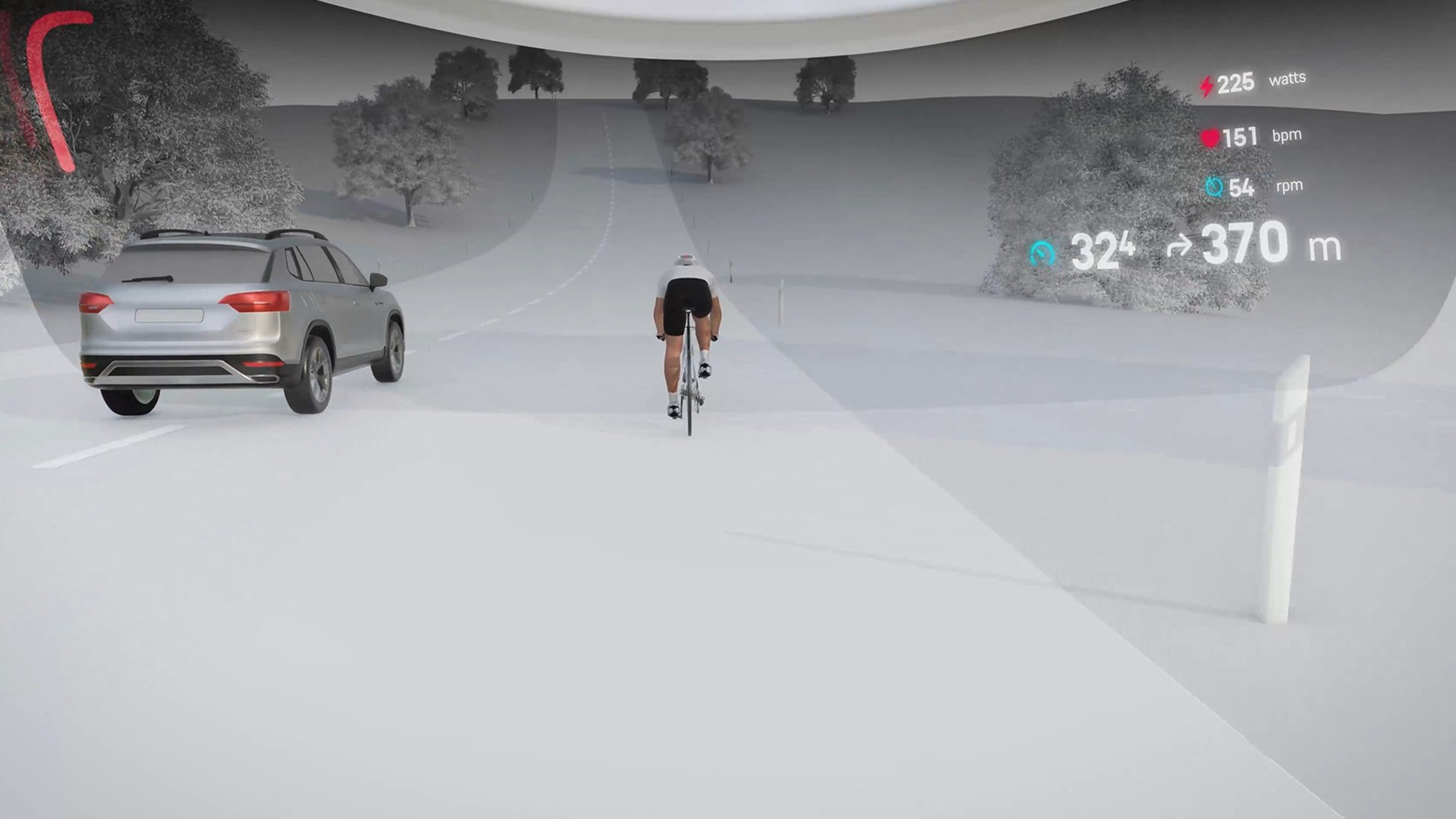
Those sensors feed information into an onboard computer that’s integrated into the handlebars and powered by Edge AI, promising to actually anticipate pending danger so you can respond accordingly. The complete system doesn’t even require you to look down at the handlebar display, either, as it’s also designed to pair with Canyon’s Stingr Smart aero helmet, which projects information on the integrated visor for an augmented-reality, heads-up display.
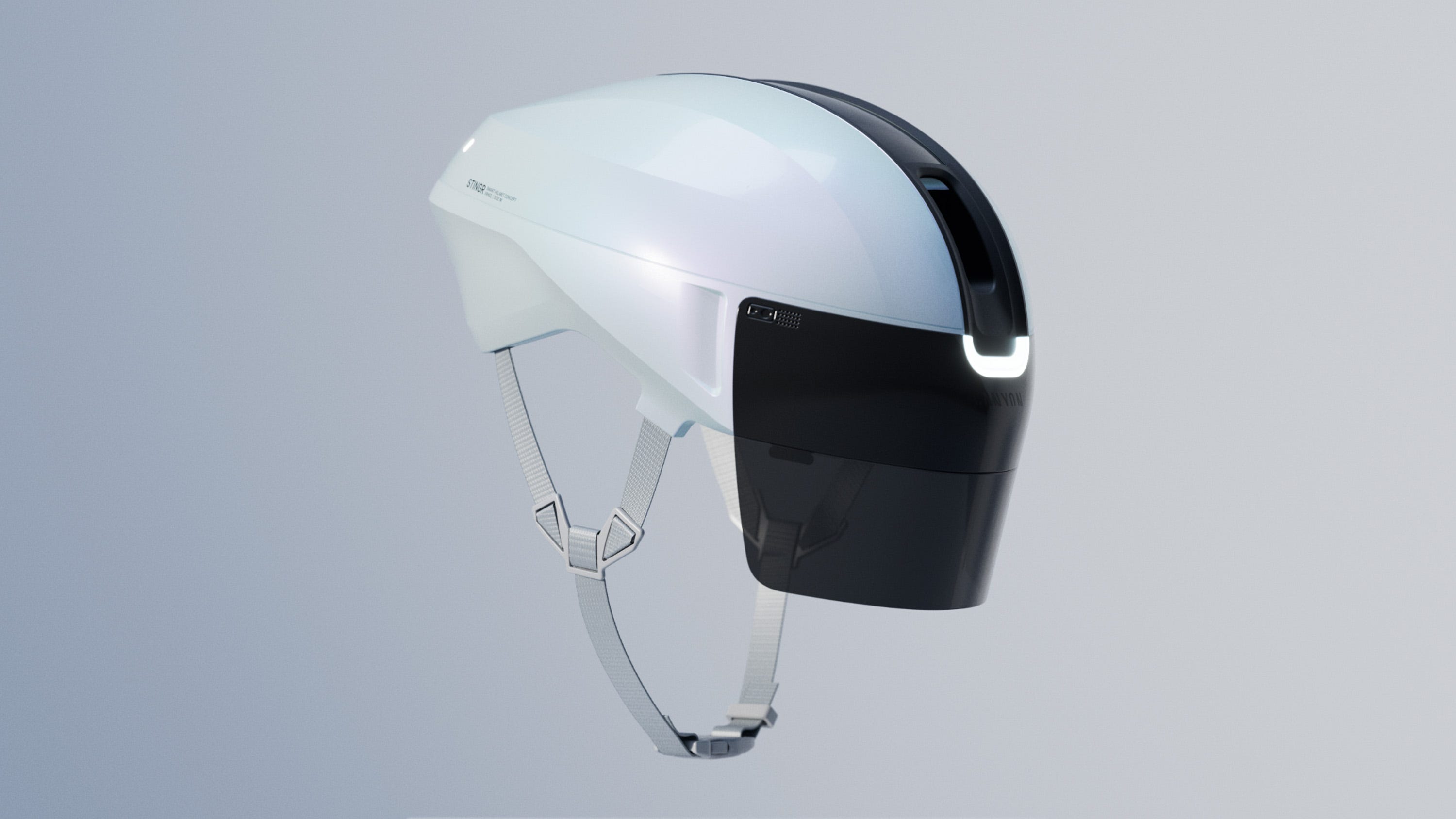
“With on-device intelligence, real-time object detection, tracking, trajectory prediction, and context-aware risk assessment, we can take a huge step in traffic safety.”
My take: Canyon seems really well-intentioned here, and I wholeheartedly welcome any significant positive change when it comes to rider safety on the road. That said, I can’t help but feel like I’ve seen this movie before. After all, it was only just a few years ago that V2X technology was supposed to be part of the magic bullet that kept cyclists from getting run down by drivers, but it doesn’t seem like that’s any closer to reality today than it was several years ago.
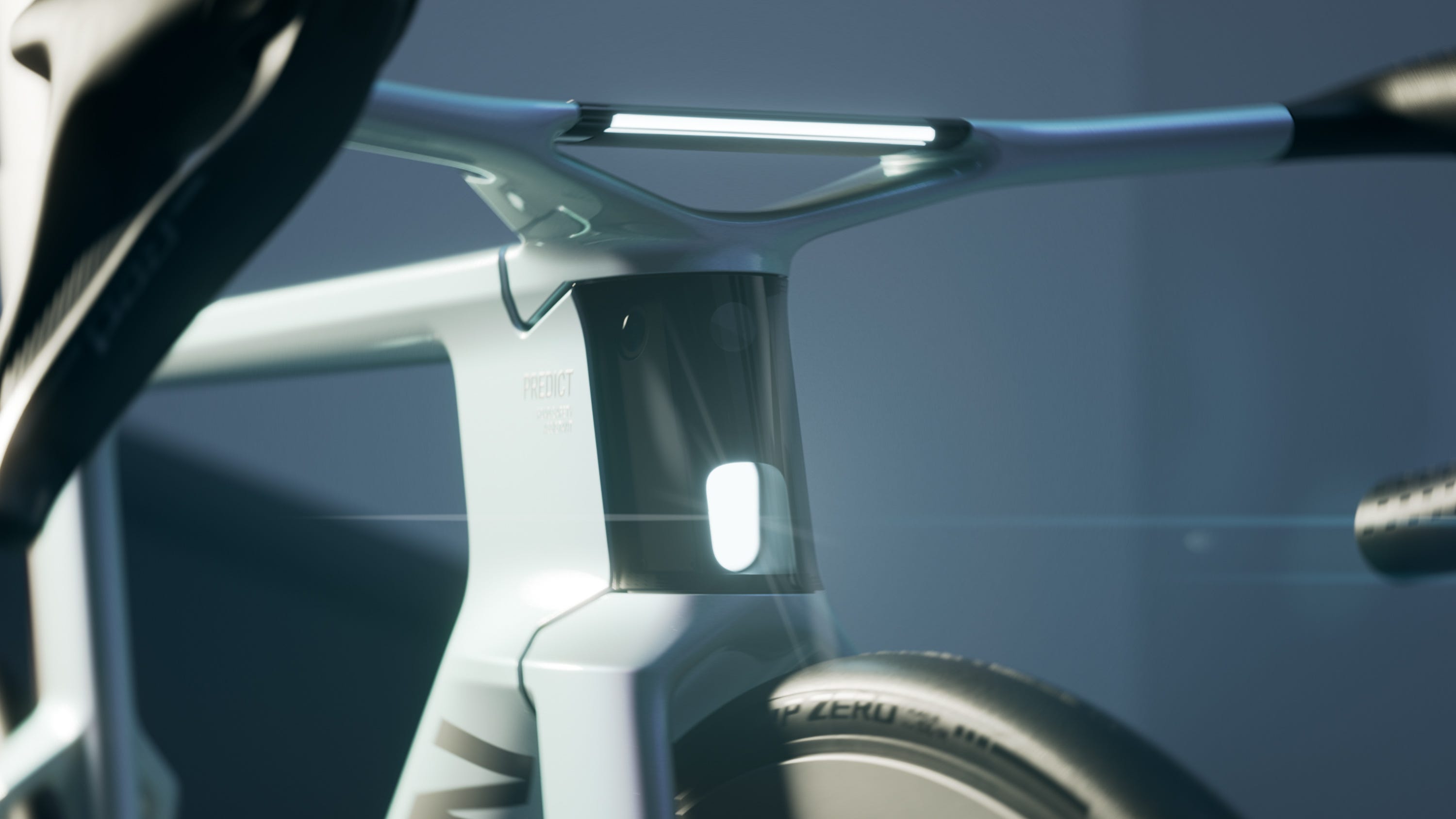
Ultimately I feel like this is yet another example of trying to technologize our way out of a problem instead of addressing the root cause. Rather than develop a fancy bike with a fancy sensor array and a fancy integrated AI brain that’s designed to pair with your similarly fancy HUD-equipped helmet (all of which is sure to cost an astronomical amount of money), how about lobbying to help get phones out of drivers’ hands so we’re less likely to get hit in the first place, and maybe also doing something about the sledgehammer-like frontal shape of so many modern vehicles so if/when we do get hit, we’re less likely to be killed?
Ironically, a big part of the reason why so many of us feel so unsafe on the road is because of technology – and you’ll have to excuse me if my cynical nature prevents me from having faith that a different technology is going to fix the problem.
I started spending a lot less time riding on the road more than ten years ago – purely for safety reasons – and I know I’m not alone. I miss it dearly, too, and I despite that that joy has been taken from me for reasons that are almost completely out of my control. If you want a rather sobering perspective on what riding on the road looks like these days (at least in the United States), check out this article from the New York Times, and then ask yourself if a sensor-and-AI-equipped bike is going to make you feel any better.
The spiel: Shimano has announced some big updates to its workhorse Deore and Deore XT cable-actuated mountain bike groupsets, much to the relief of fans who’d feared the Japanese company was going to take a similar path to SRAM in leaning even more heavily toward the electronic side of the fence. By and large, the changes are shared between both groupsets, and the differences when all is said and done are essentially the same as they’ve always been: weight.
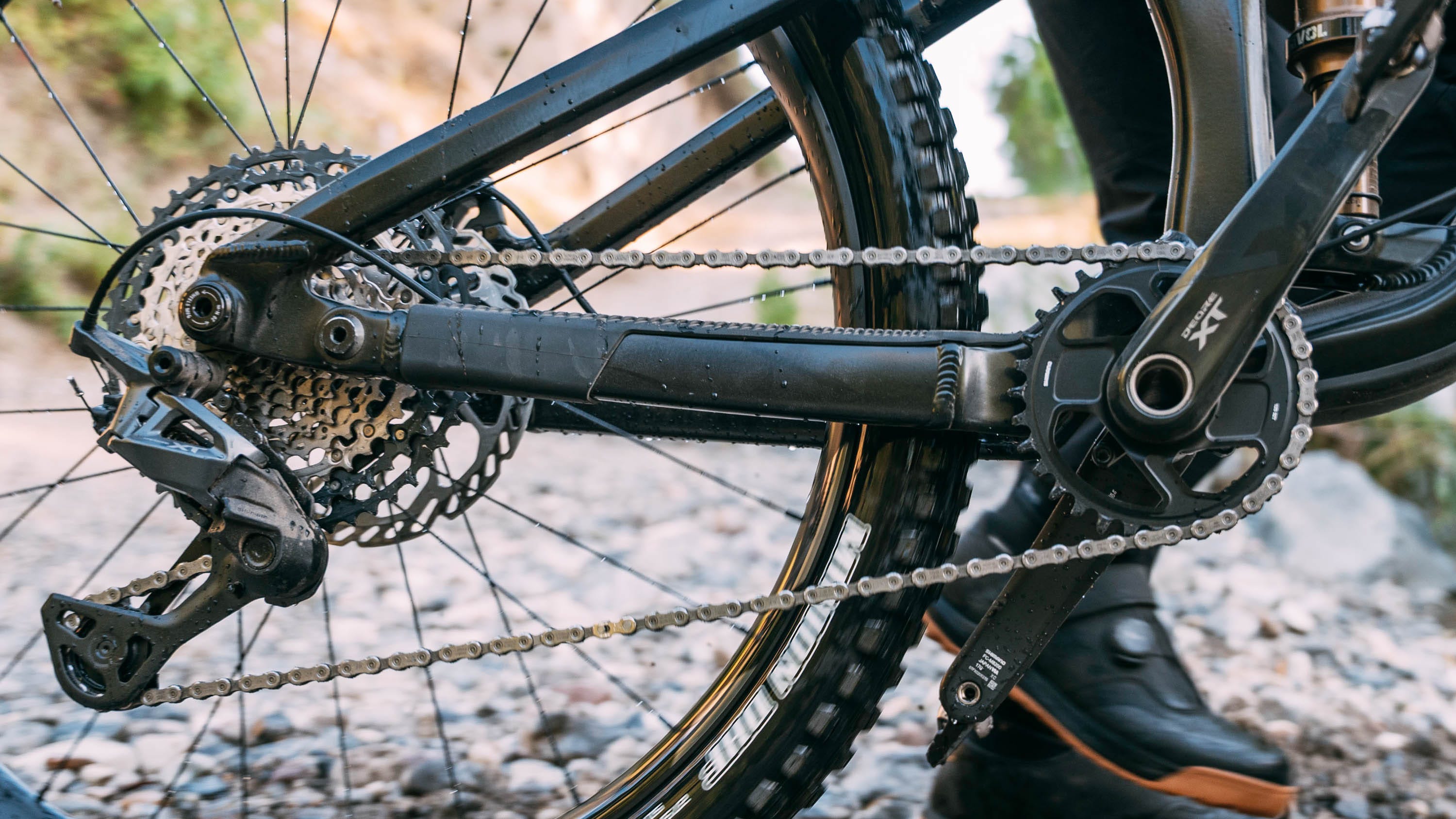
You can check out the Shimano site for the nitty-gritty details, but the biggest changes come at the rear derailleurs, all of which follow in the footsteps of Shimano’s recent Di2 mountain bike components in that the pulley cage clutch has been replaced by a dual-spring system that Shimano says “increases spring force by 70% for better chain retention and consistent performance over rough terrain,” while also providing the side benefits of reduced maintenance and a lower profile to minimize rock strikes.
Shimano has also beefed up the construction of all of the new rear derailleurs, with bigger links and more widely set pivots that should substantially improve the overall stiffness and shifting precision. The matching shifters get upgrades as well, with slightly revised paddle layouts that are said to be more ergonomic, plus improved internals that reduce the amount of slop for a more precise overall feel.
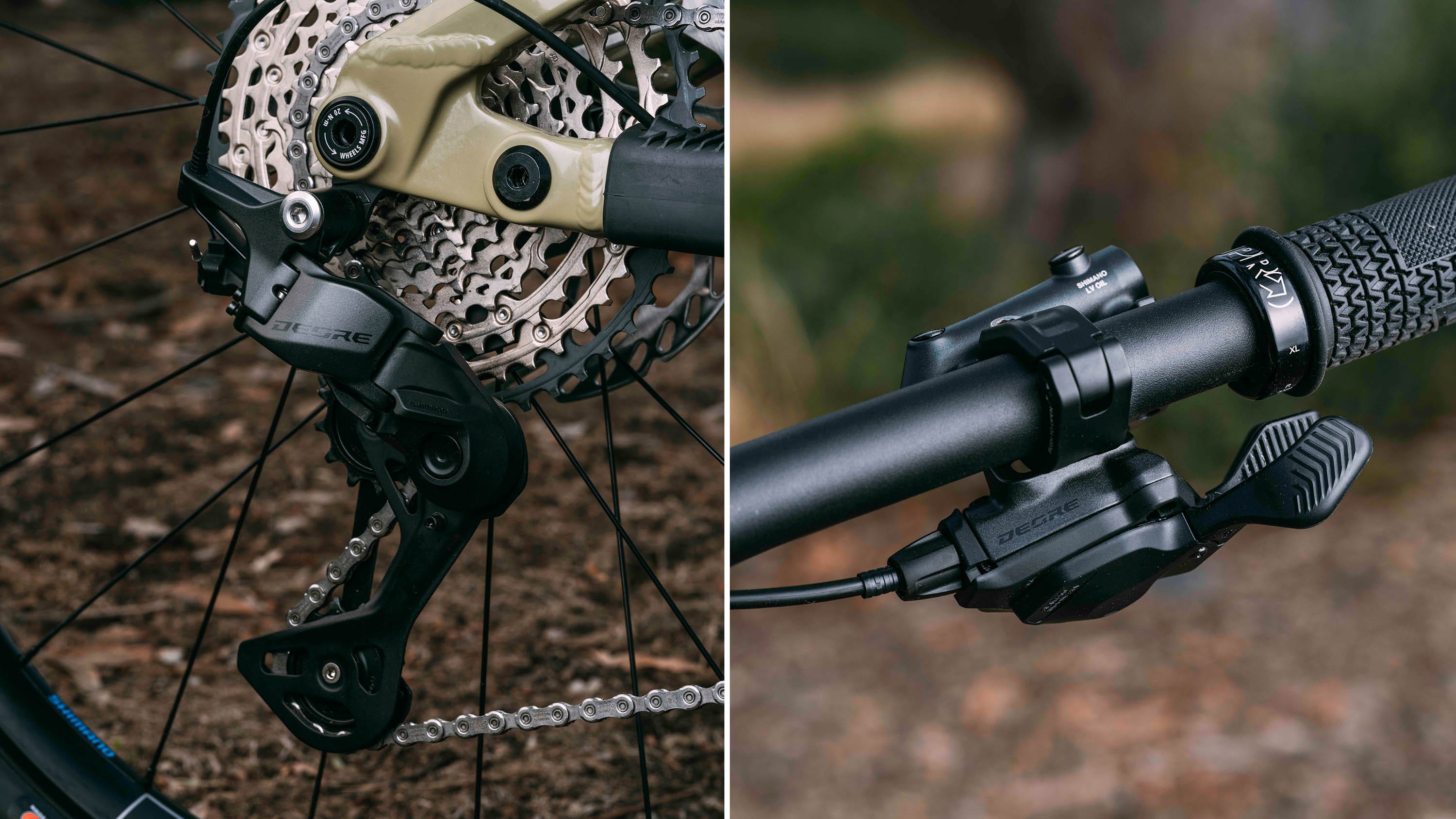
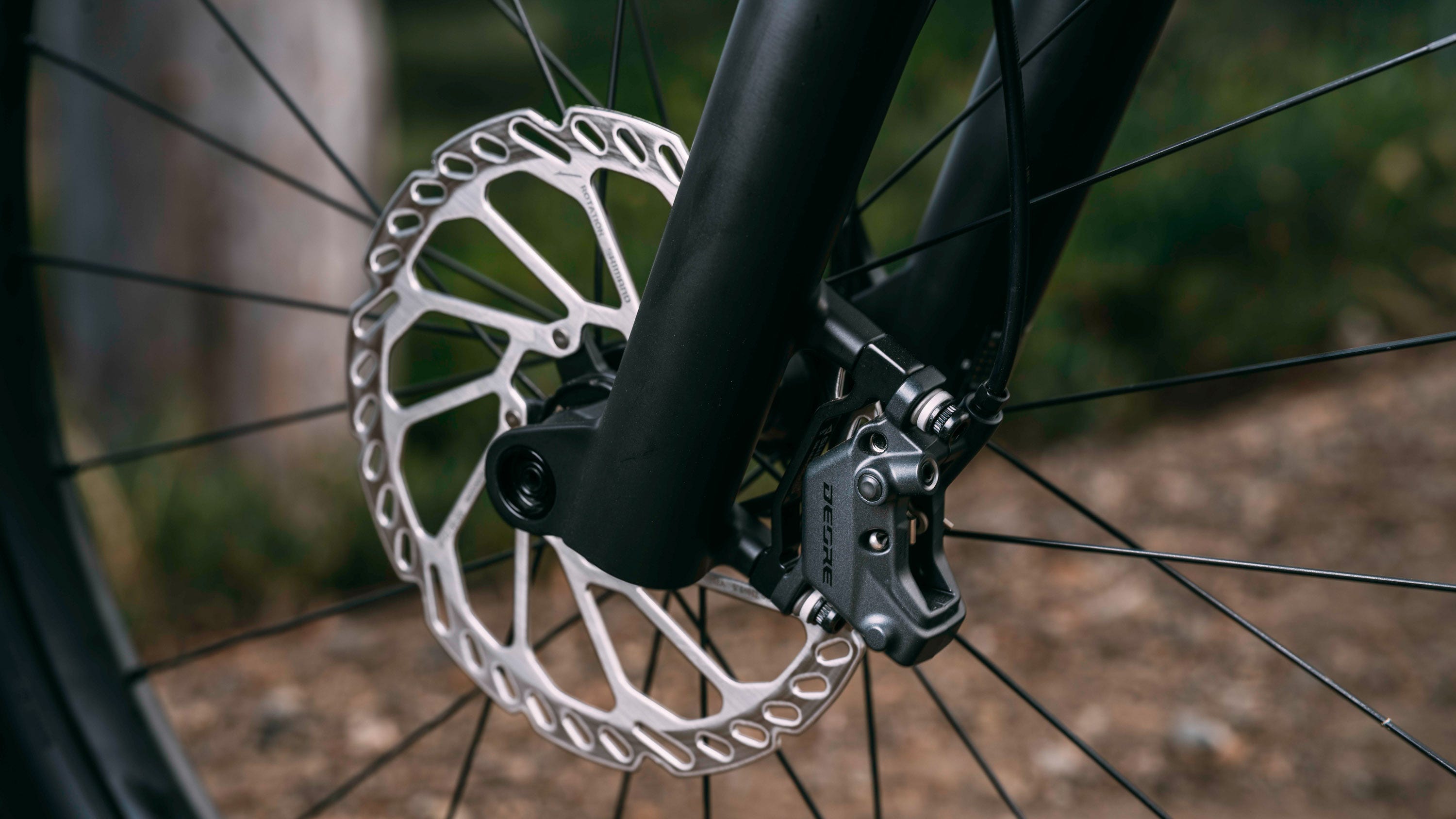
The Deore groupset gets even more updates, including a new aluminum crankset with direct-mount steel chainrings, the same low-viscosity mineral oil architecture already given to Deore XT and XTR for more consistent bite points on the hydraulic disc brakes, and a new 10-51T cassette with an aluminum inner sprocket to reduce weight.
Also new? Shimano has finally ditched its unusual 203 mm-diameter rotor sizes for the 200 mm used elsewhere in the industry, and the venerable M520 clipless pedal finally gets a modest update – though just in aesthetics, not functionality.
My take: None of these changes are monumental, but I’d argue that was the right approach to take. Shimano’s XT mechanical groupset, in particular, is extremely popular amongst riders that want high performance but still need to stick to a realistic budget, and it’s good to see some of the biggest vulnerabilities – rear derailleur stiffness and durability – addressed here. And the fact Deore buyers should get to enjoy the same improvements with just a little more weight and while saving even more money is obviously welcome.
Kudos to Shimano, too, for maintaining the same cable pull ratios as before. Especially for riders in rockier environments, rear derailleurs are basically expendable items, so it’ll be nice that they can switch to the newer bits without having to buy an additional shifter.
What I’m not so happy about, however, is Shimano’s continued shift away from clutched pulley cages. Shimano pioneered this concept more than ten years ago, and it was not only a huge leap forward in terms of chain stability and security, but also one of the key pieces of technology that made modern 1x drivetrains possible. Sure, the new dual-spring system is an improvement over a more lightly sprung cage (like that one time when you forgot to turn the clutch back on after fixing a rear flat), but my experience so far with several of Shimano’s newer dual-spring rear derailleurs nevertheless confirms there’s still more chain slap and overall movement than when there was a clutch – so much so that I recently dropped my chain on a section of washboard for the first time in ages, and I can feel the chain bouncing up and down through my feet when on the trail.
Rumor has it that Shimano’s main motivation in getting rid of the clutch was because its existing system required more maintenance than the buying public was apparently willing to give it, which led to complaints about squeaking, overly high shift lever effort, etc. That may be, but I really wish Shimano has just figured out a way to make a better clutch instead of getting rid of it entirely. As much as I’m glad to see Shimano continuing to fly the mechanical drivetrain flag, I have my doubts about how well this generation will be received.
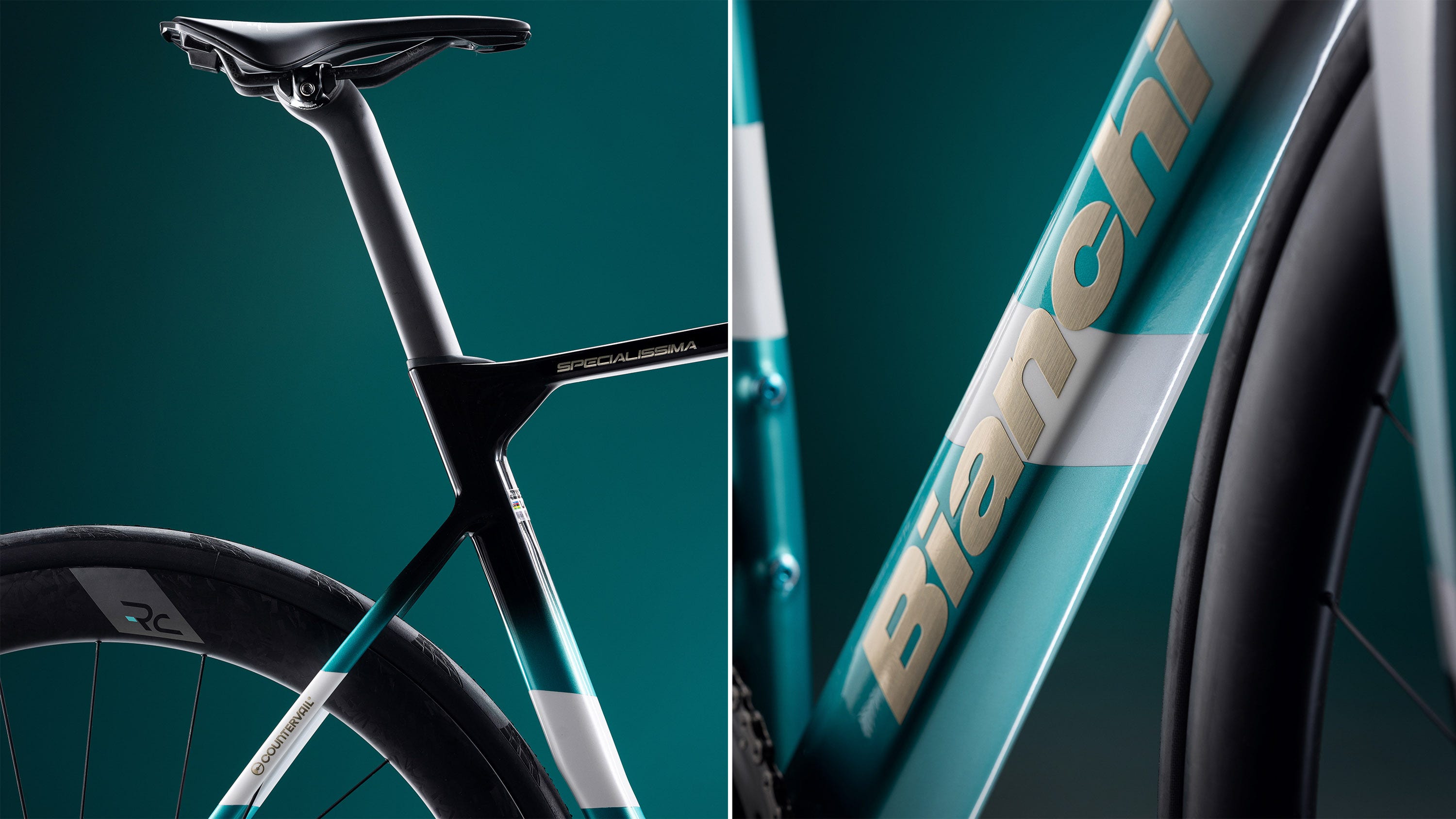
The spiel: Bianchi has long focused on low weight, classic appearances, and excellent ride quality for its Specialissima road model – the bike for the connoisseurs who valued that electric and lively feel when dancing on the pedals heading up a steep climb, and prized that timeless aesthetic as they walked away after a long ride in the mountains. For this latest generation version, Bianchi has turned the reimagined Specialissima into more of an all-rounder, still keeping it very lightweight – even lighter, in fact – but now adding a healthy dose of aerodynamic efficiency that supposedly makes it faster overall.
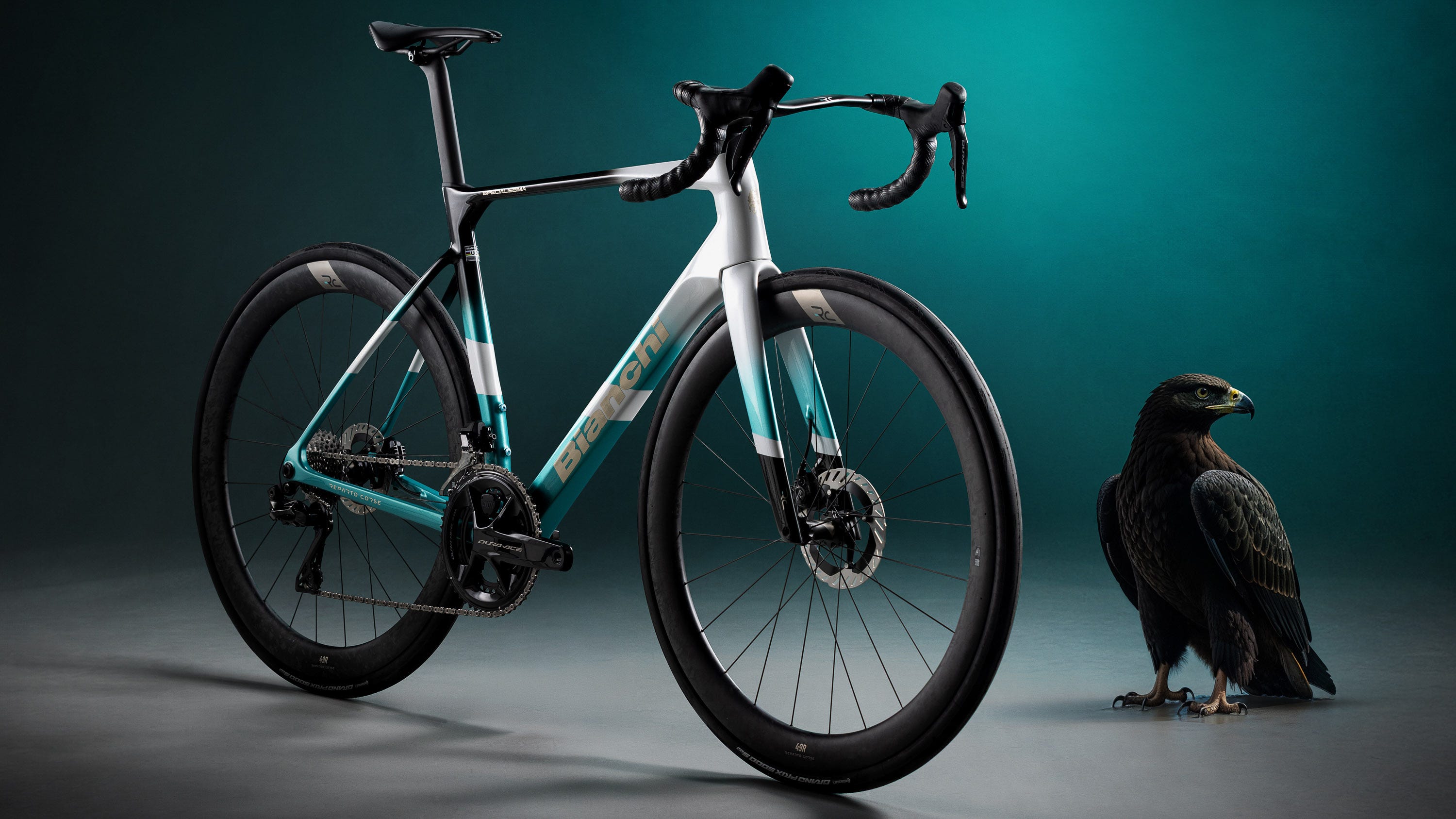
Bianchi says the new Specialissima will save its rider 16 W of effort over the previous model (at 50 km/h), through a combination of more overtly aero-shaped tubing, a new one-piece cockpit, a revamped D-shaped seatpost, and new wheels. Ride comfort is still promised, too, via Bianchi’s trademark Countervail fiber blend technology, which supposedly damps vibration better than more conventional all-carbon construction. And while weight isn’t the singular focus here, Bianchi also says it’s managed to trim 40 g from the outgoing version, landing on a new claimed frame weight of just 750 g (in a 55 cm size).
Bianchi will offer the new Specialissima in six sizes and up to seven complete models split between two frameset variants, with prices ranging from €5,200-11,550. Both frameset versions will be available as well, with retail costs of €5,200 for the flagship Specialissima RC and €4,200 for the 100 g-heavier Specialissima Pro (both include frame, fork, headset, and seatpost).
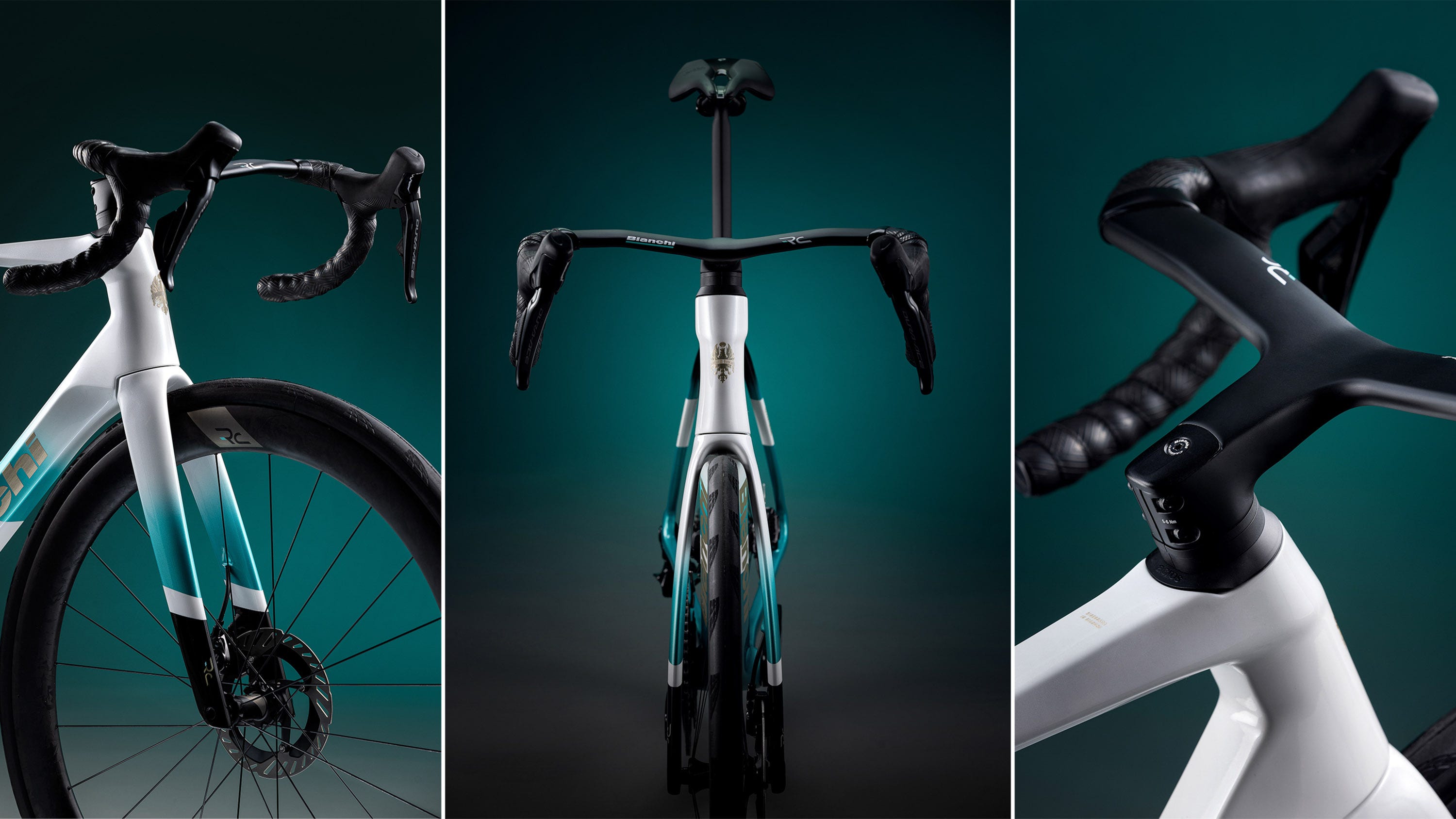
My take: The Specialissima occupies an awkward position in Bianchi’s lineup (as does arguably every road bike these days with an aggressive racing-focused geometry, but not necessarily a full-on aero design). While 750 g is obviously very light, it sounds less impressive when competing bikes are more like 600 g or so. And conversely, while Bianchi has apparently made some significant aerodynamic improvements here, it’s questionable how well the new Specialissima would fare against more overtly aero-focused road racers that aren’t much heavier.
I’m guessing you won’t see many Specialissimas on your TV screen given the preferences of modern pro racers. Even so, it’s worth pointing out that the new bike at least looks a lot less ungainly than the previous Specialissima, which hopefully hints at a return to Bianchi’s halcyon days of elegant design. Perhaps that’ll be enough to pull some folks in?
The spiel: Esker Cycles recently pulled the curtain back on its new Lorax 32, a new steel-framed gravel bike built around – you guessed it – 32” wheels. Naturally, Esker says the 32” wheels provides a more comfortable ride and more speed than the current 700c/29” format, though even disregarding the wheel size discussion, there’s plenty of other stuff on the list that many will likely find appealing.
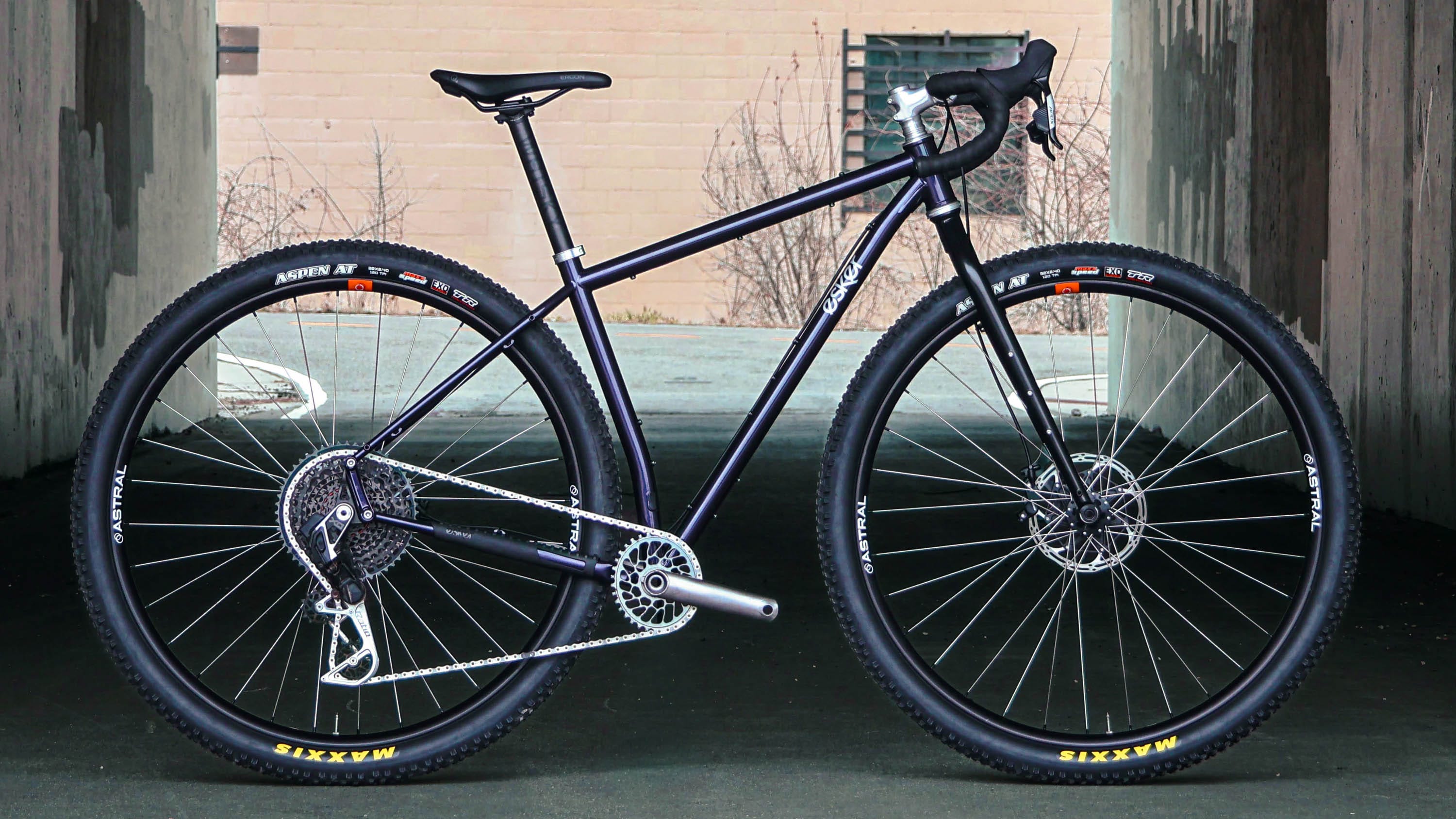
Esker is TIG-welding the Lorax 32 from seamless quad-butted and tapered 4130 chromoly steel tubing, and it’s about as user-friendly and versatile as can be. There’s clearance for tires up to 2.4”-wide (though the geometry is designed around 2.2s), the rocker-style UDH-compatible rear dropouts can accommodate just about any 1x drivetrain setup you can imagine, the cable routing is fully external, the 44 mm-diameter head tube features good ol’ fashioned press-in cups, the 31.6 mm-diameter seatpost is secured with an external aluminum collar, and down below is an English-threaded bottom bracket shell.
There’s a plethora of accessory mounts, too, including for front and rear fenders, a rear rack, top tube and frame bags, three bottles, and three-packs on each fork leg (which could also be used for a front rack).
Esker has designed the Lorax 32 around a rigid fork with a 495 mm axle-to-crown height, and company founder Tim Krueger has apparently put a lot of thought into the frame geometry so that riders can enjoy the claimed benefits of the larger wheels without the bike feeling like a cumbersome sled despite the not-exactly-light 2.9 kg claimed frame weight (medium size, with hardware).
There’s one small catch: the Lorax 32 isn’t actually in production yet. Instead, Esker is offering it on a pre-order basis, with a projected 120-day estimated delivery date from when the order window closes. Retail price is US$1,250-1,400 for the frame and matching steel fork (Enve carbon forks are available as an upgrade).
My take: I admittedly have never had the pleasure of riding an Esker of any sort, but I do appreciate the company’s no-nonsense approach to bike design. There’s a strong focus on function over flash, and the company currently offers nothing but metal frames, whether for gravel or MTB. Prices are impressively reasonable, too (so much so that I considered buying for myself one of the brand’s Woodsy frames a few months ago). I’ve yet to ride a 32”-wheeled bike of any sort, either, but I’m certainly intrigued by the approach here.
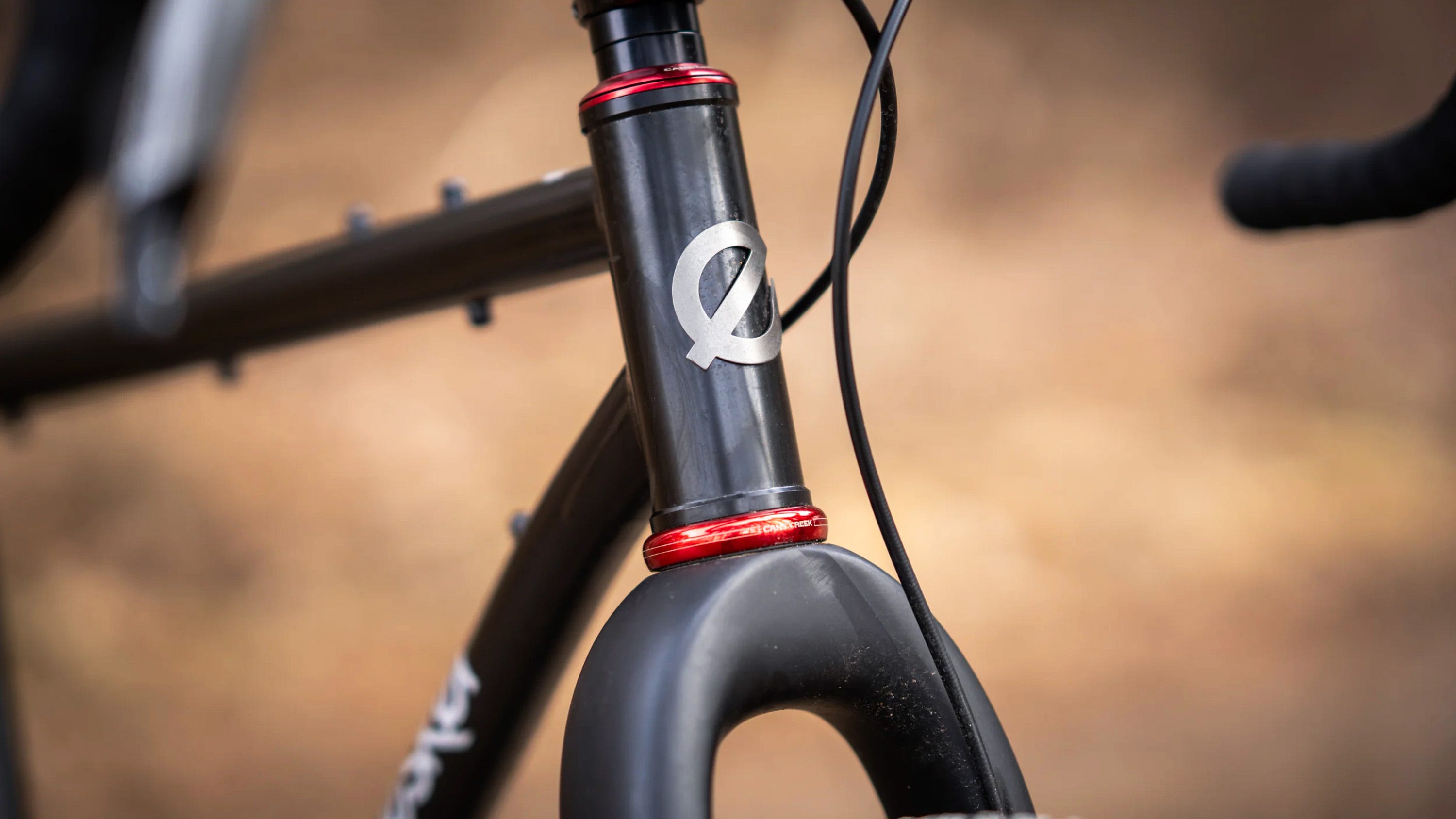
Even so, 32”-wheeled bikes are basically the wild west of the bike industry at the moment, and it remains to be seen how things will shake out, particularly in terms of frame geometry. While I appreciate Krueger’s seemingly very well considered approach to the topic, there’s still one big demographic that’s left out of this 32”-wheeled gravel bike equation. Four frame sizes are available, but the smallest of the four available sizes is only designed to accommodate riders down to 1.68 m (5’ 6”) in height, whereas Salsa seems to have figured out how to make its Fargo prototype accommodate ones much shorter.
And yes, 32”-wheeled gravel bikes will apparently soon be outlawed by the UCI. But realistically speaking, I think it’s safe to say that anyone buying this bike won’t care one bit about that. As for how the seat tube doesn’t quite follow the arc of the rear wheel, though? That might raise a few more eyebrows.
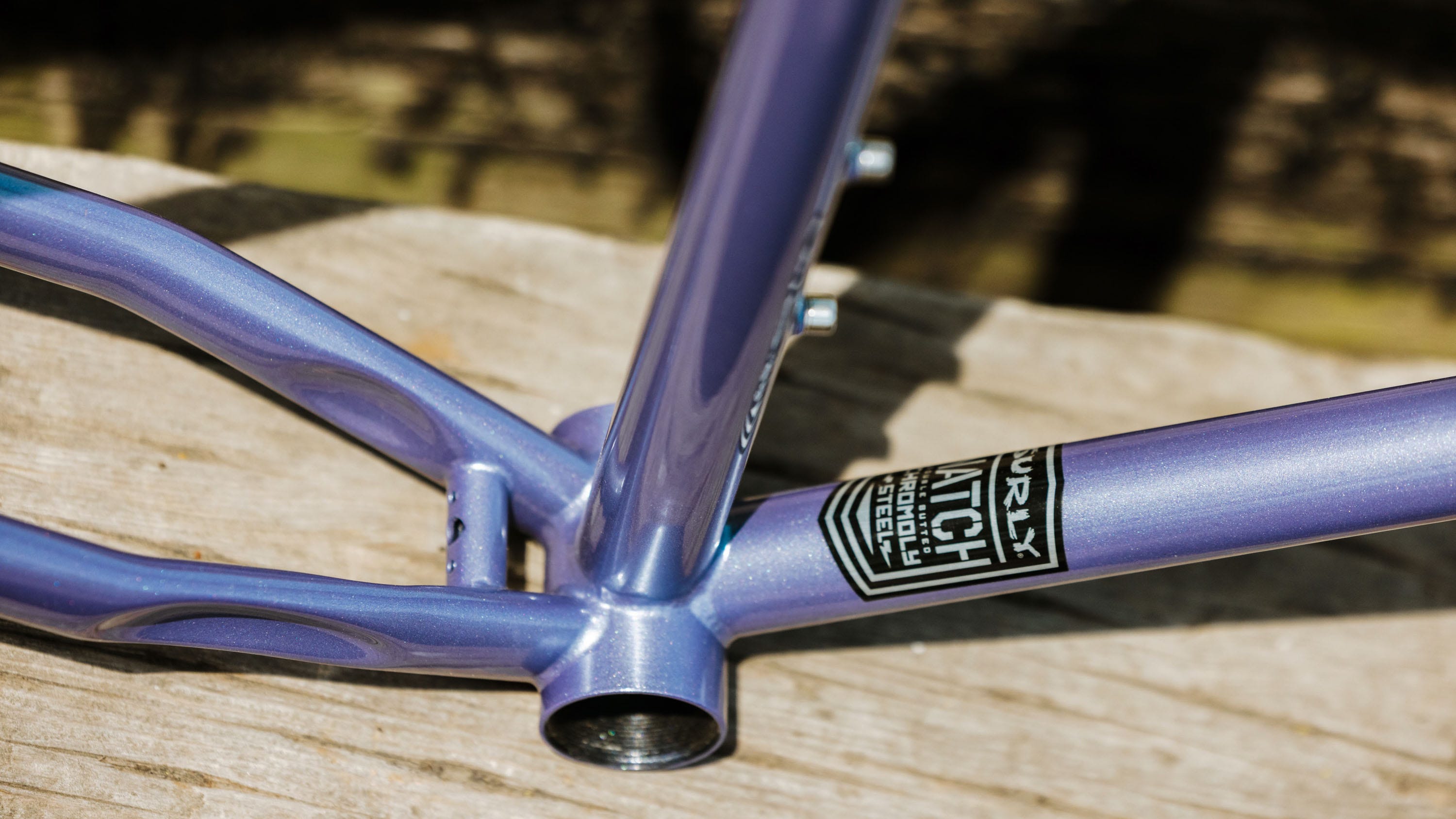
The spiel: Missed out on the mid-aughts fixie craze? Well now you can make up for lost time as Surly has just announced that it’s bringing back its legendary Steamroller model.
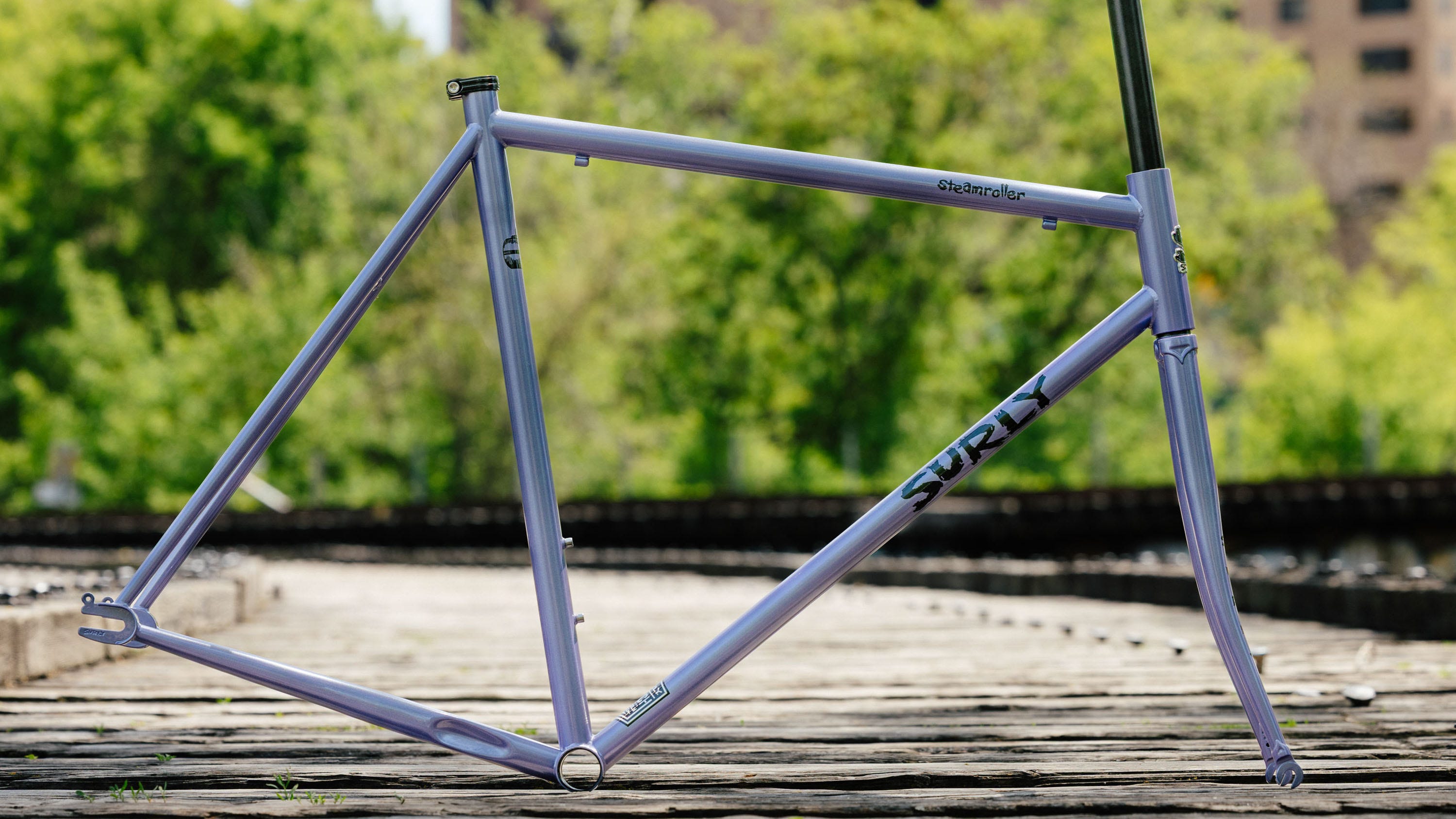
This is a proper resurrection of a long-loved fan favorite, too, as it seems virtually unchanged from when Surly originally discontinued the Steamroller in 2023. The frame is once again made of TIG-welded and double-butted 4130 chromoly steel, there are still investment cast horizontal rear-entry dropouts and a straight 1 1/8” head tube with a BSA threaded bottom bracket shell, tire clearance remains the same at 700x38 mm, and it’s still paired with a lugged steel fork.
Front and rear rim-brake mounts are still included, too, though Surly has at least seen fit to include proper housing stops on the underside of the top tube this time around so there’s no need for unsightly clamps.
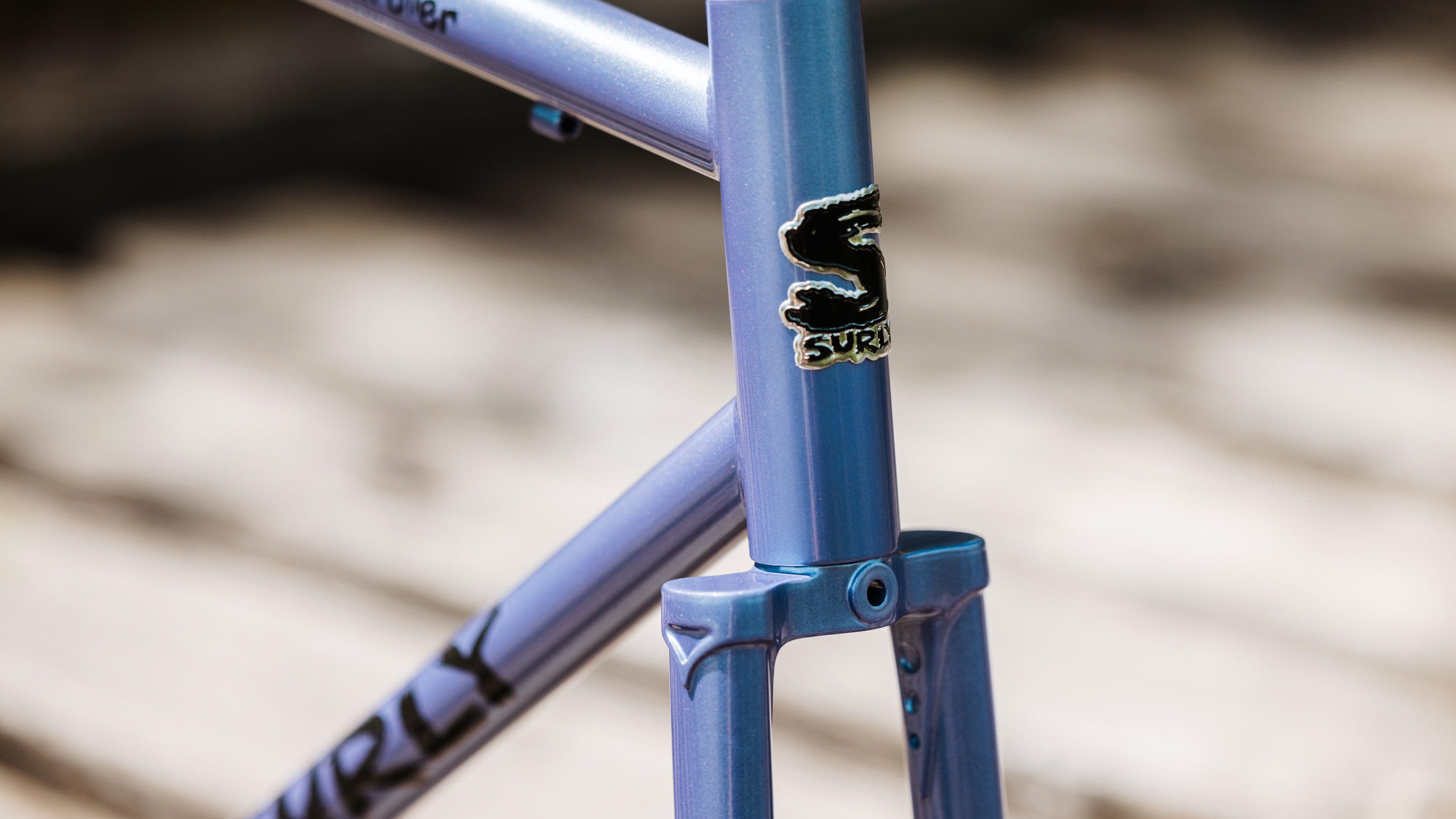
Surly is once again offering the Steamroller in five sizes, and the geometry is the same as it’s always been, down to the millimeter. But whereas the original Steamroller was offered in up to ten different colors, this time around it’s only available in a single “Anxious Lavender” hue. It’s also only offered as a bare frameset, and retail price is set at US$700.
My take: I’m not sure what faction within Surly got the company to bring back the Steamroller, but I’m actually quite excited to see its return (despite the fact that I haven’t regularly ridden a fixie in almost 20 years). It’s heavy, the geometry is old-school, and it’s not exactly the most versatile thing. But it’s also going to be relatively cheap to buy (just a hundred bucks more expensive than in 2023), cheap to maintain, and as robust as a cockroach.
In fact, I’d argue that this is exactly what the bike world needs more of, not yet another hyper-expensive unobtainium flagship. After all, you’ve got to start somewhere, right?
The spiel: Following the lead of its Terreno T30 tire model last year, Vittoria has just announced higher-volume 700x50 and 700x55 mm sizes for its T10, T50, and T70 tread designs that now fill out the rest of its Terreno Endurance family to address the growing demands for wider gravel tires. And while the Terreno T30 was already available in those sizes (and the T50 in the 50 mm width), Vittoria has now added brown sidewall options for the T30, too.
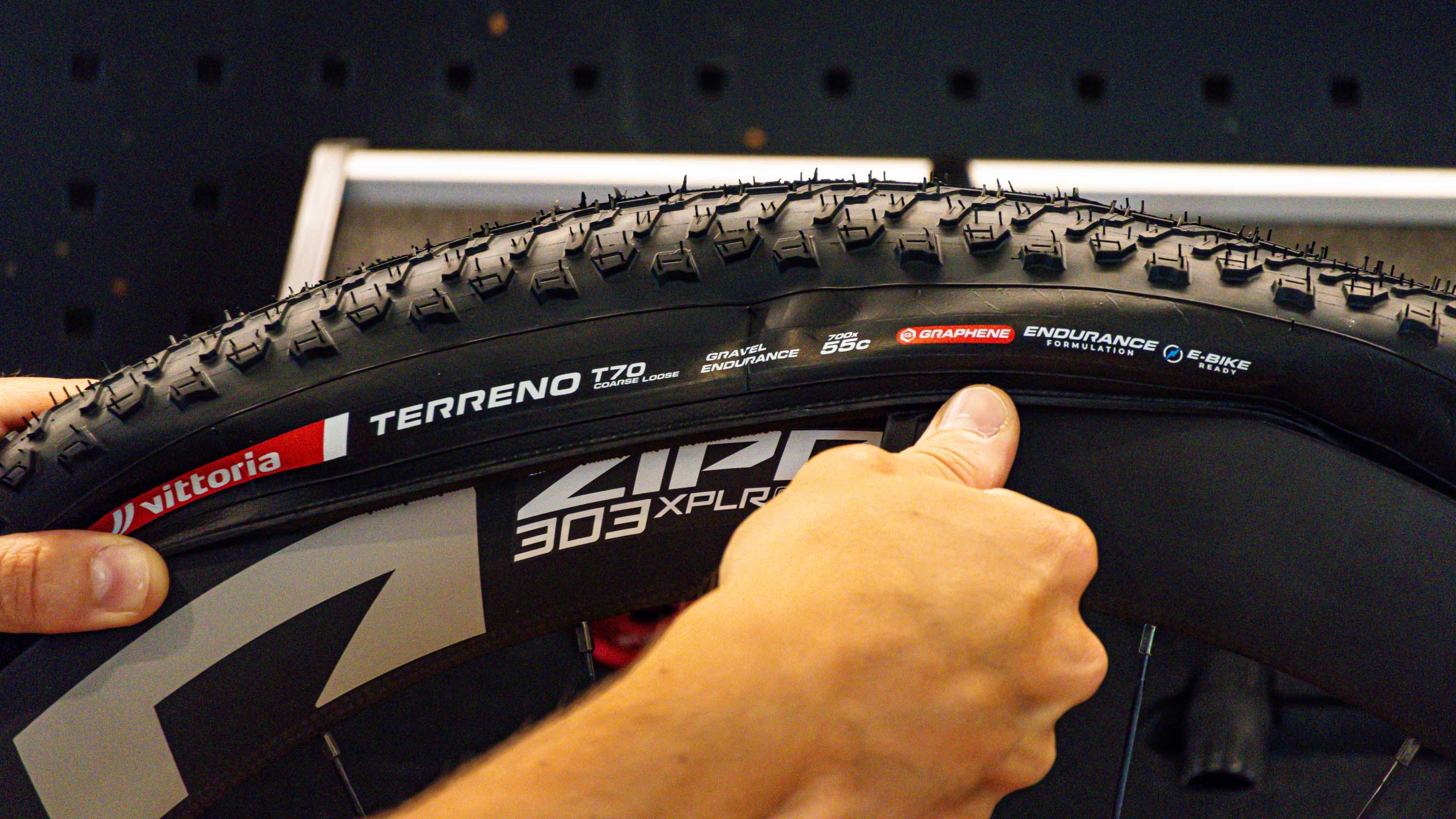
All of these tires are part of Vittoria’s “endurance” gravel range, featuring 100 TPI nylon casings, reinforced sidewalls, anti-pinch layers at the bead, puncture-resistant belts under the tread, and the company’s long-standing graphene-enhanced tread compounds.
Claimed weights for the new sizes range from 570-700 g, depending on model and size, and retail price is US$82 / €63 / AU$77.
My take: Good on Vittoria for adding these larger sizes to the catalog. While there’s a growing collection of data supporting the notion that higher-volume tires roll faster than smaller ones, bigger tires are also just more fun to ride – at least on rougher ground.
That said, keep in mind that third-party testing hasn’t shown much of Vittoria’s gravel tires to be all that fast in general, and all of these larger sizes are also only offered in the company’s tougher and more durability-focused Endurance casings; the higher-end Race variants (with their faster-rolling and more supple polycotton casings) still top out at 45 mm.
The spiel: Have the big gaps in the online tracking information ever got your heart racing after shipping your bike somewhere? The folks at Bikeflights are looking to ease some of that anxiety with its new shipping labels, which now have RFID (radio frequency identification) chips built right into them.
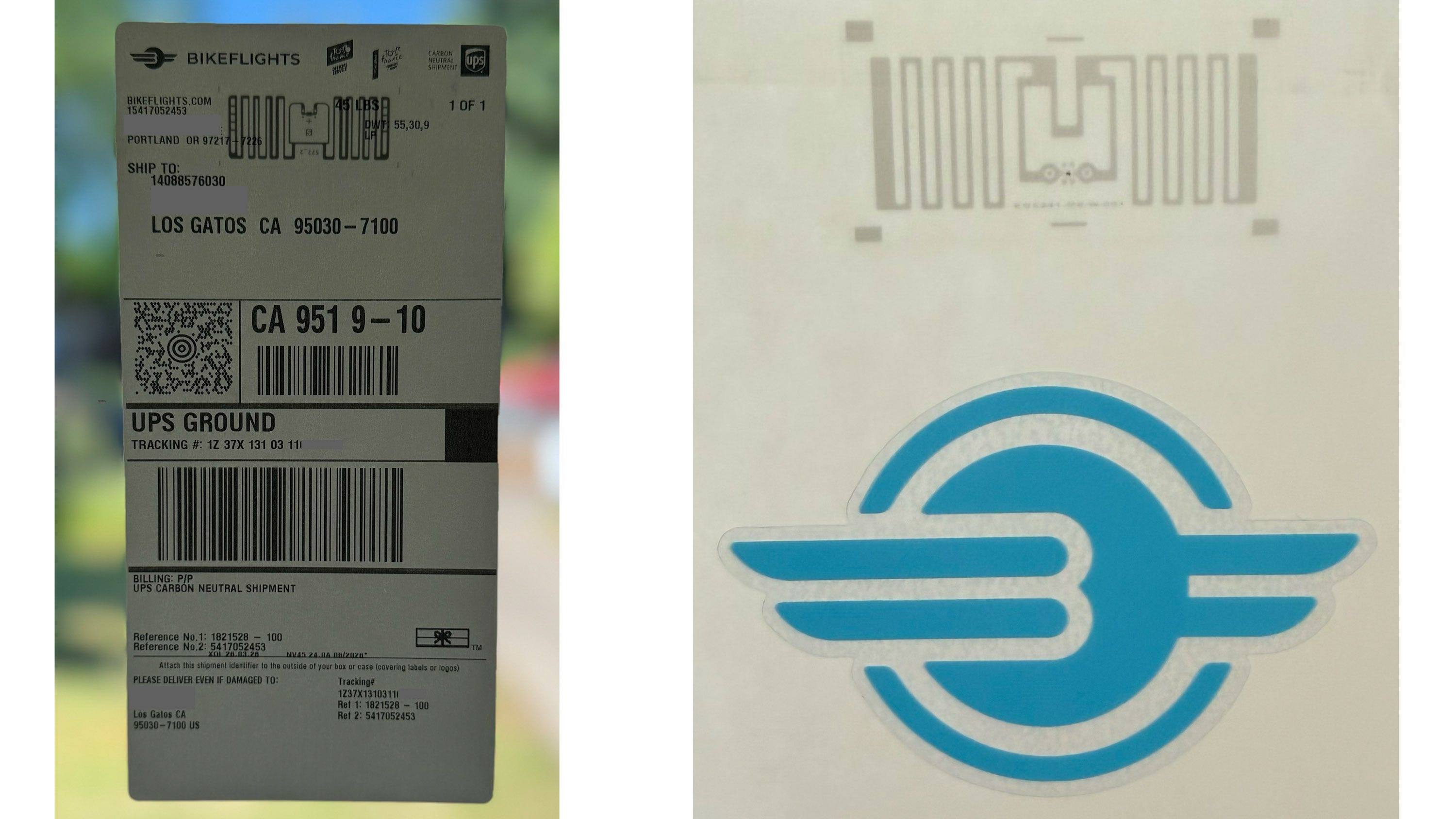
According to Bikeflights, these new labels will provide more granular tracking of where your shipment is at any given moment, which supposedly will not only offer more peace of mind, but also the potential for faster resolution in the event of some sort of disruption.
“As a tagged shipment passes an RFID reader in the carrier’s network, the reader activates the chip and captures its unique ID automatically, so the bike is identified, sorted and tracked more quickly and accurately at every point the label is read. It’s the same operational data the carrier and Bikeflights use to move and route the shipment with each scan feeding the customer’s Bikeflights shipment status page, so riders see meaningful, location-stamped progress instead of long silent gaps. The result is true end-to-end visibility and faster problem-solving across the entire journey, not just a string of scans.”
My take: I love this idea. I mean, who among us hasn’t obsessively hit the “refresh” button desperately looking for reassurance that your bike is safely en route? It’s also a big plus that Bikeflights isn’t charging any extra for this, either.

There are some caveats, however.
The system is currently only compatible with UPS, not other carriers like FedEx or DHL. It also only works for domestic shipments within the United States for now, and whereas you’ve historically been able to click-and-ship bikes (or frames, wheels, etc.) from the comfort of your own home when using Bikeflights, the RFID system will require you to wait a few days while the company physically ships your the RFID-enhanced label. Also, it’s not like the new RFID system provides true real-time data; there are still some sizable gaps in the timeline, though the information provided is still better than usual.
Even so, provided you’ve left yourself enough time to wait, this seems like a great idea.
The spiel: Terske Components has offered low-profile water bottle cage bolts for several years (modeled after Prototipo Works, who arguably kicked off the concept in 2018), but the company has now followed up with a second design that’s a little more user-friendly.
The new bolts aren’t quite as low-profile as the existing ones with their 3.7 mm-tall heads (vs. 1.75 mm on the “Ultra-Low Profile” variant), but they feature larger and more robust 4 mm hex keys instead of the ULP model’s more delicate 2.5 mm broaches, and the tapered base also sports a larger 9.8 mm diameter instead of the ULP’s slightly smaller 8.4 mm dimension. These are still made of Grade 5 titanium, though, and still offered in a rainbow of anodized colors.
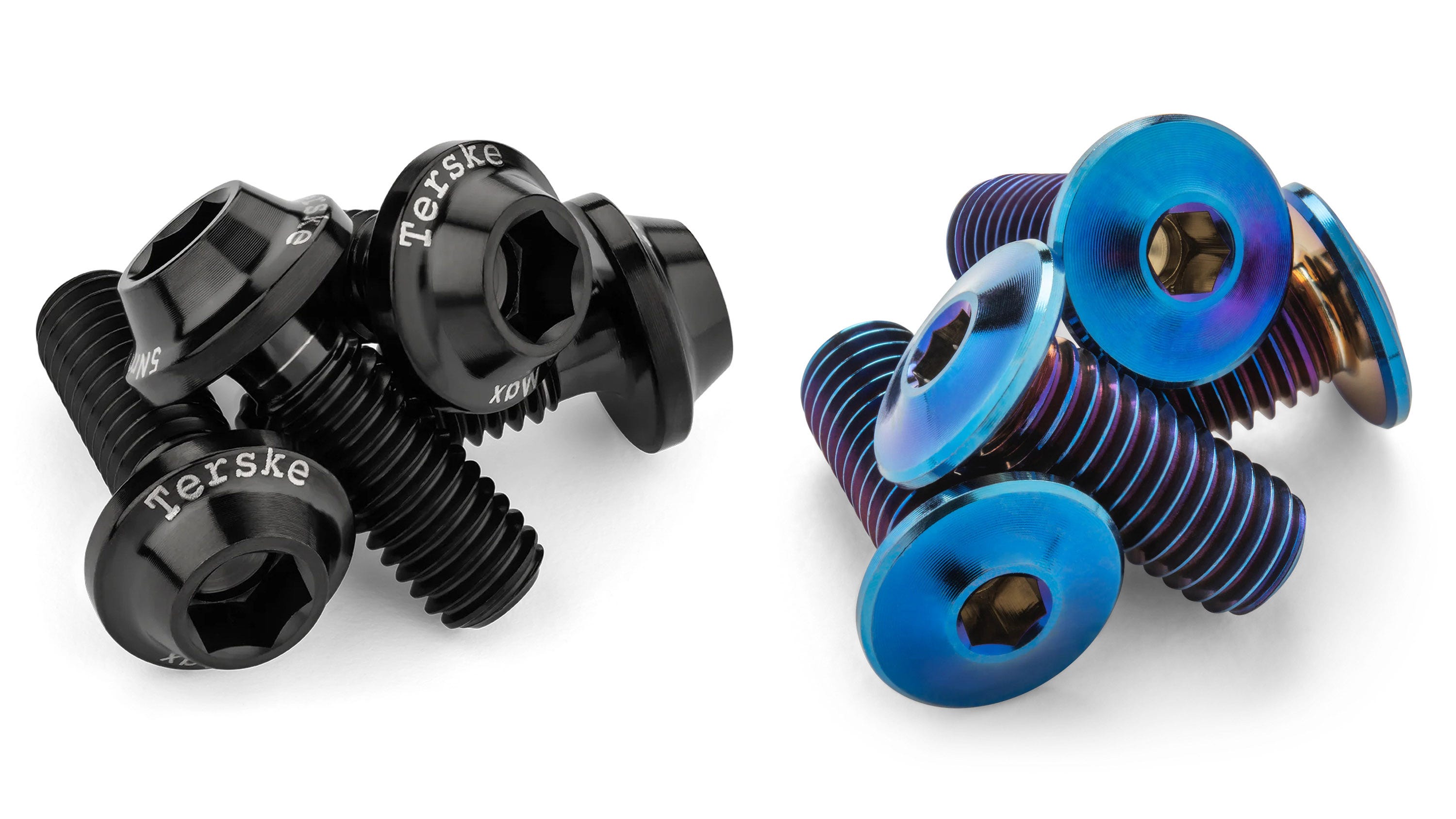
Retail price is US$15 for a set of four.
My take: No one needs titanium water bottle cage bolts. But if you’re looking to add a little bling to your ride, titanium cage bolts are a better choice than fragile aluminum ones in terms of durability, and they’re much less likely to corrode in place over time, too. I’m not sure who’s actually manufacturing Terske’s goods, but the items I’ve used from this brand over the years has generally held up quite well. Pricing seems pretty reasonable all things considered, too.
Ok, that’s enough news for this round-up. Before I sign off for the week, I’ve got a couple of announcements for you all.
First off, I promised my wife and kid that I’d take more time off this summer, and I fully intend to follow through on that promise. We’ve got some travel scheduled on and off over the next handful of weeks, so posts will be more sporadic for a bit. That’s maybe just as well since there’s a little bike race in France that has a habit of sucking most of the oxygen out of the cycling tech media space for much of July, anyway.
Perhaps the more impactful announcement is that I’m fairly certain this is going to be my last tech news round-up.
I’ve been thinking for a long time now that these round-ups just aren’t providing the service I’d hoped they would. While many of you have said that you appreciate me adding some context to insight instead of the usual flipped press releases, ultimately most of this is information you can find elsewhere – and often in a more timely fashion, too. The fact of the matter is that these take an awfully long time to put together, particularly as a solo operation going up against far bigger outfits that have entire staffs dedicated to nothing but churning news.
Truth be told, that time would be better spent on other things.
As it stands right now, I’ve got a mountain of bike reviews to finish, I’ve been trying to put this Decathlon/Van Rysel feature to bed for ages, and I’ve got far more discussion topics that would be perfect for podcasts than I have time to record them. Looking back, it’s easy to see now why I’m so far behind. To date, I’ve published nearly 50 of these round-ups, and again, given the time involved in each one, those slots easily could have been filled with those other things you all have repeatedly said that you want more of.
Point being, while I still believe this all-in-one format is a lot easier to digest than the norm, I really don’t think I’m doing all of you any favors by spending so much of my time on superficial gear news when I could be doing something more useful.
By all means, let me know in the comment section below if you think I’m way off-base here, but the more I think about it, the more this seems like the right thing for me to do.
With that all said, I hope you all have a great weekend, and I’ll see you back here in a few days.
Comments
Nothing yet. Say the first thing.
Sign in to join the conversation.