
If you want to get to know someone, don’t ask them what they do, ask them what they keep.
Last week I was invited by Johannesburg In Your Pocket to select my favourite pieces from the Russell Kaplan Winter Wunderkammer. Thousands of objects, just ten choices.
When I began the process, I thought I was choosing objects but instead the objects revealed something about me. I didn’t select the most valuable pieces, or the rarest and I didn’t even choose the ones I would necessarily want to own. Reflecting on my selections, I realised I had chosen themes: curiosity, mystery, ritual, light, travel, memory and care.
Suddenly my mixed bag of seemingly unrelated choices no longer felt unrelated at all. They were all pointing towards the same way of seeing the world.
Collecting has always been part of my identity but I’ve never been interested in collecting things because they were valuable. I was interested in the stories they carried. Tiny fragments that most people would have walked straight past. I arranged them into small worlds of my own, instinctively grouping them by colour, texture or shape, long before I understood that this was a form of curation.
These objects travelled with me, earned their place and became anchors in unfamiliar spaces. Looking back now, I wonder if that wasn’t the beginning of my design practice.
My mother had another habit. I’d come home from school and the house had been re-arranged. The lounge had become the dining room, and the TV area had transformed into the lounge. Nothing new had arrived but she had rearranged the relationships between the things we already owned. At the time, I thought she was redecorating but now I realise she was teaching me one of the most important lessons about creativity: that newness doesn’t always come from acquiring something new. Sometimes it’s about seeing familiar things differently.
That’s always remained a personal lesson when it comes to acquiring new pieces.
The entire selection process was a little like ‘Reggie’s Rush’ for adults. Wildly stimulating and gorgeously sensory with a touch of madness. Over in a flash!
The process itself wasn’t particularly logical, it felt more intuitive. I’d wander, double back, pick something up, put it down again, try and convince myself I’d made a decision, only to discover another object around the corner that completely changed my mind. It’s remarkably similar to how I design. You begin broadly, you gather, you edit, you question everything, discard, return and somewhere in the middle of all that uncertainty, something begins to make sense - you finally have direction.
How do you know when you’ve found the right object? The truth is, you don’t. Well, not immediately. The more you practice the more you realise there are a few things you instinctively look for. Remember, what you keep shapes how you design. This is what I’m drawn to:
Objects that change the way I see.
Objects that preserve mystery instead of explaining everything.
Objects that reward curiosity.
Objects that transform everyday rituals into something extraordinary.
Objects that support everyday life, simply.
Objects that continue evolving long after they were first made.
Field Note
Field Note
Field Note
Take your time in understanding the story behind each piece - each of these objects have energy and stories of belonging. The exchange between maker and keeper is what gives it meaning. These are a few of my finds.
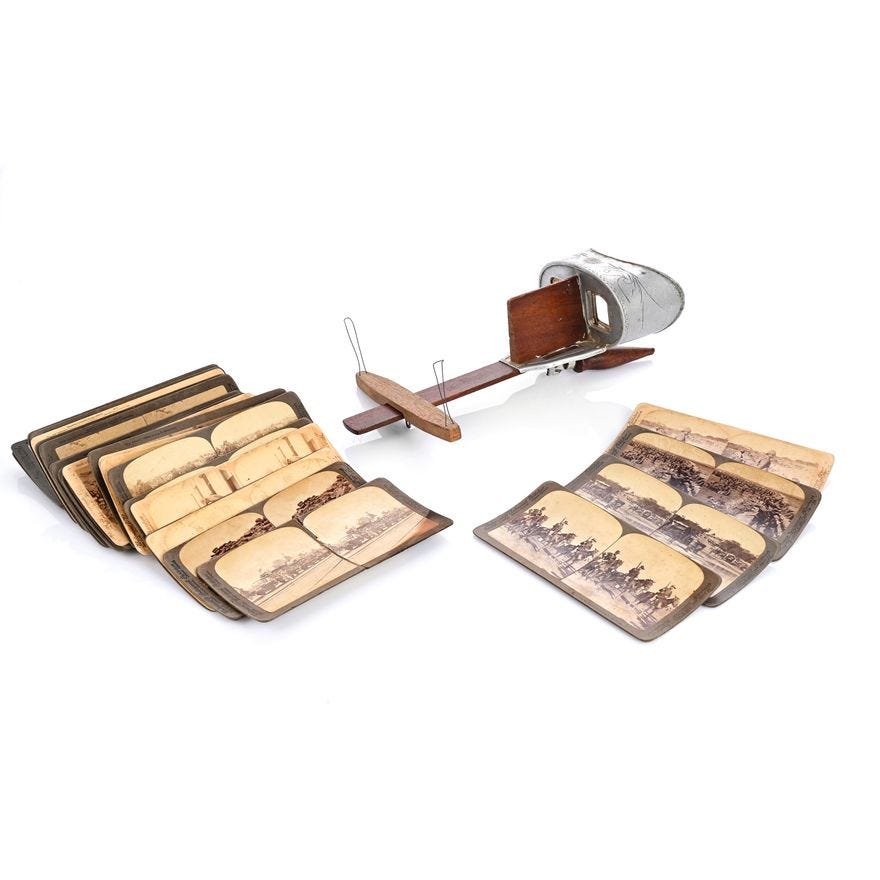
I’m drawn to objects that change the way we see, and this reminds me that every archive is an invitation to look again. A new pair of eyes and a fresh perspective always helps!
I’m fascinated by objects that ask us to look differently. The stereoscope was one of the earliest devices to transform flat images into immersive experiences, inviting its viewer to step inside a distant landscape rather than simply observe it. These scenes are more than historical documents; they are fragments of memory, preserving a moment in our complex past through the technology of wonder.
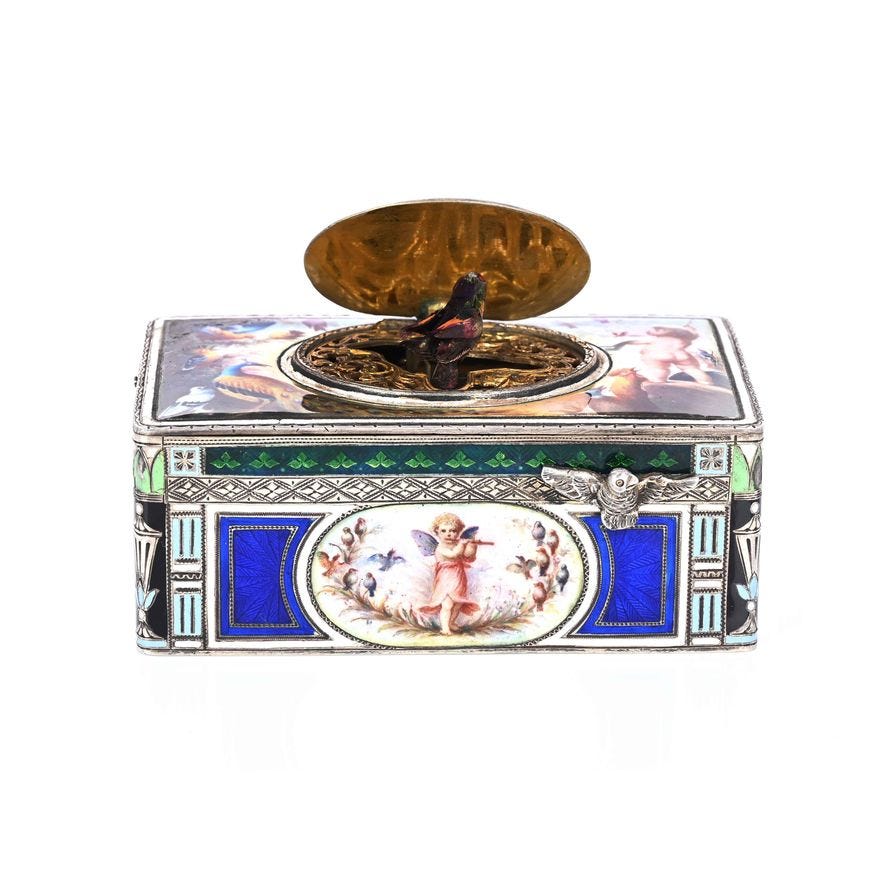
Always leave room for surprise. The objects I return to most are those that blur the boundary between engineering and enchantment. At first glance, this is a beautifully crafted silver box. But hidden within is a small act of theatre: a bird that emerges, sings and then quietly disappears again. I’m fascinated by objects that reward curiosity in this way, revealing themselves slowly, inviting us to experience the extraordinary concealed within the everyday.
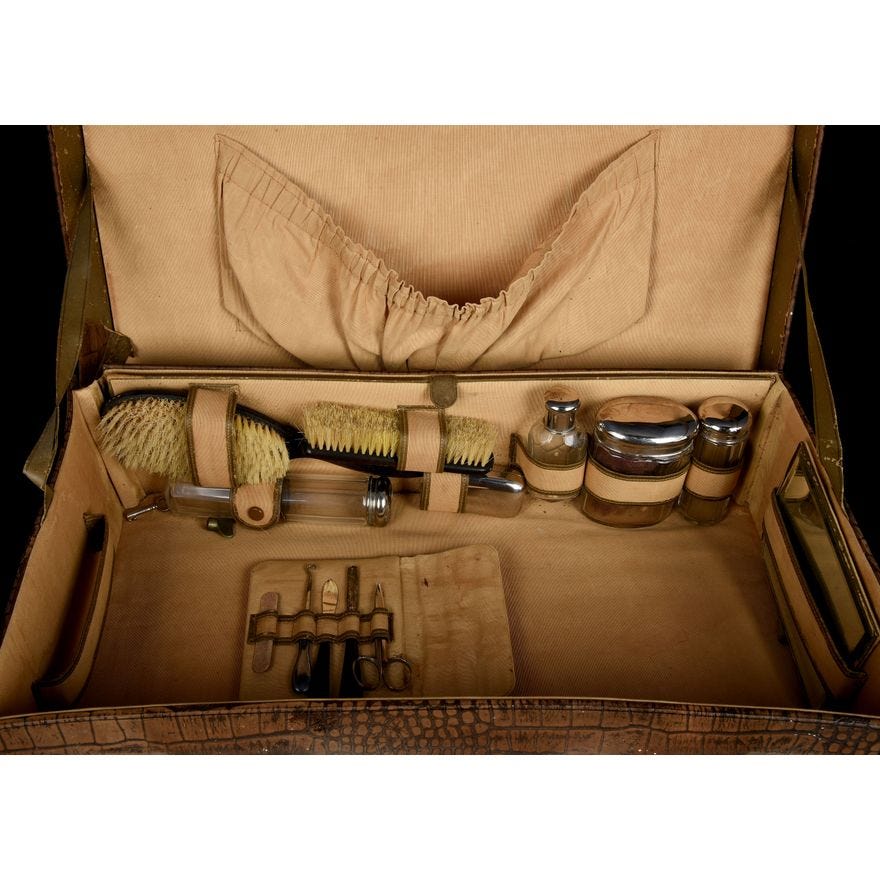
This vintage leather travelling vanity case reminded me of how much I adore travel and the objects we choose to travel with because they reveal so much about who we are. The suitcase feels less like luggage and more like a portable archive of rituals, carefully designed so that every object has its place. Objects like this remind us that travel isn’t just about arriving somewhere new; it’s about the routines and treasured possessions that make us feel at home wherever we are.
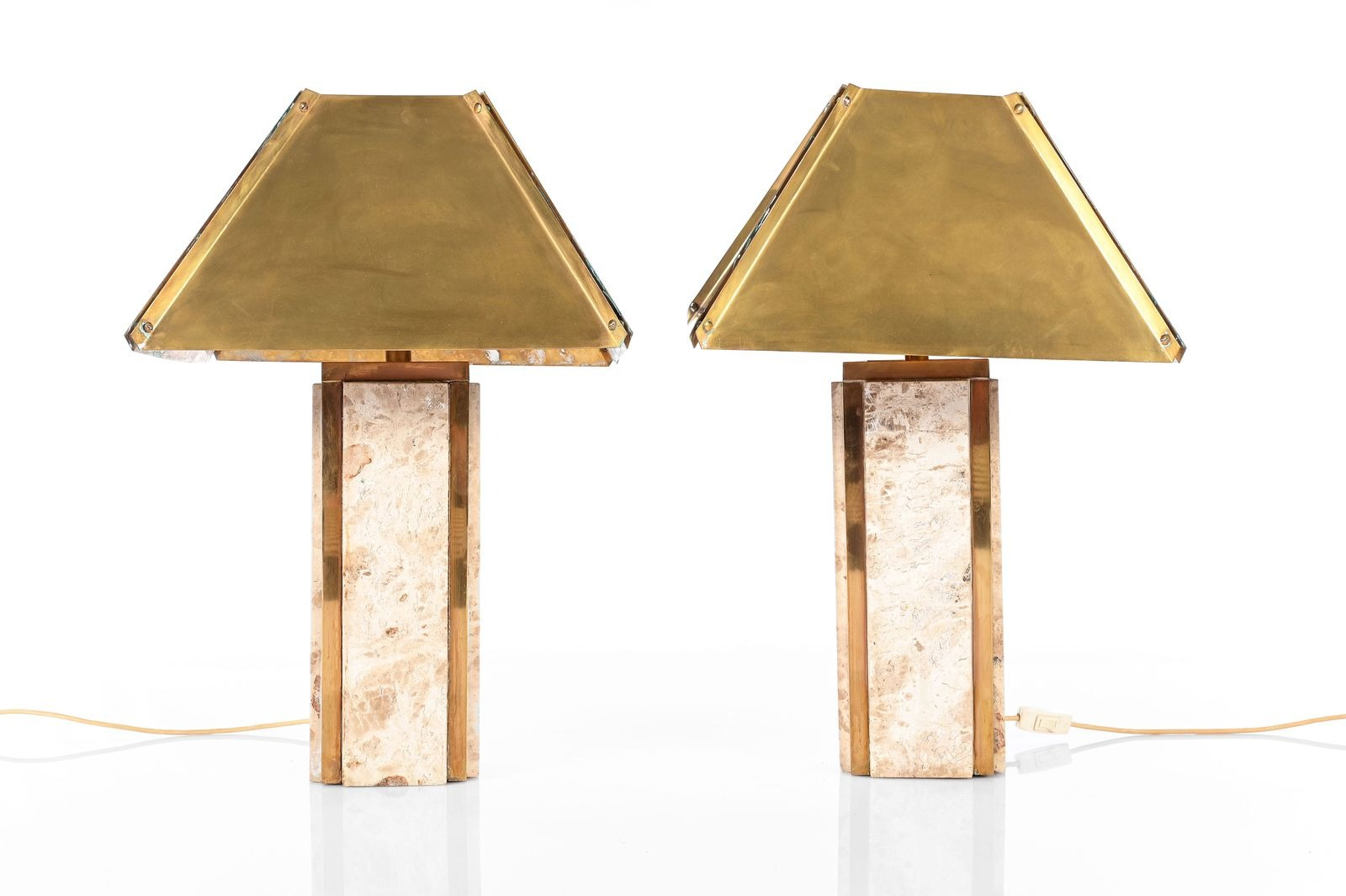
Light is one of the most overlooked materials in design but these pieces sculpt atmosphere as beautifully as they sculpt space!
The combination of polished brass and marble has become synonymous with the refined glamour of the Hollywood Regency design, where lighting was treated as both sculpture and source of ambience.
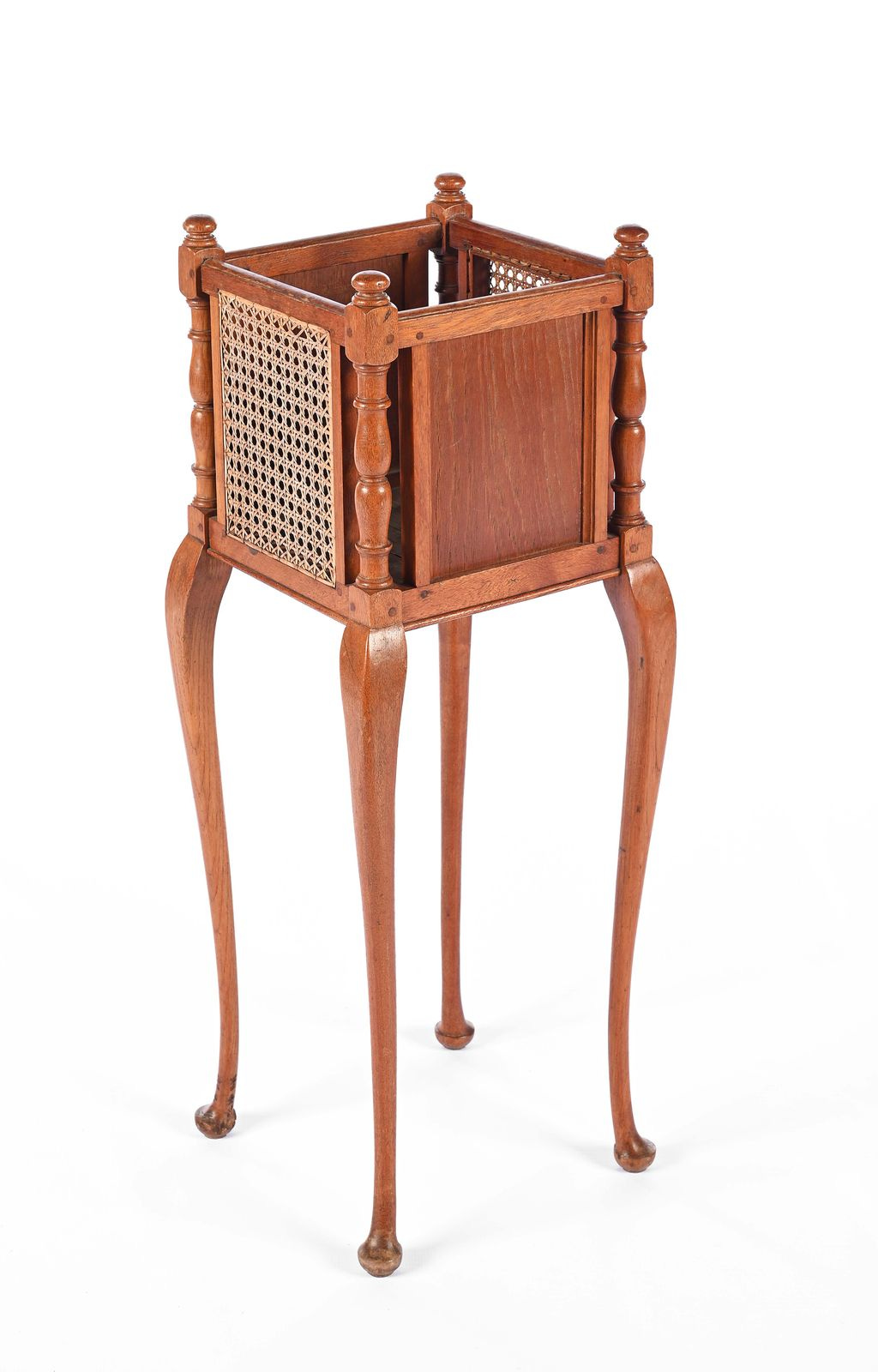
I love objects that speak to everyday life. This beautifully crafted plant stand is a reminder that good design should be celebrated in ordinary objects. The pairing of solid oak and woven rattan speaks to a slower way of living, one rooted in natural materials, balancing strength with lightness.
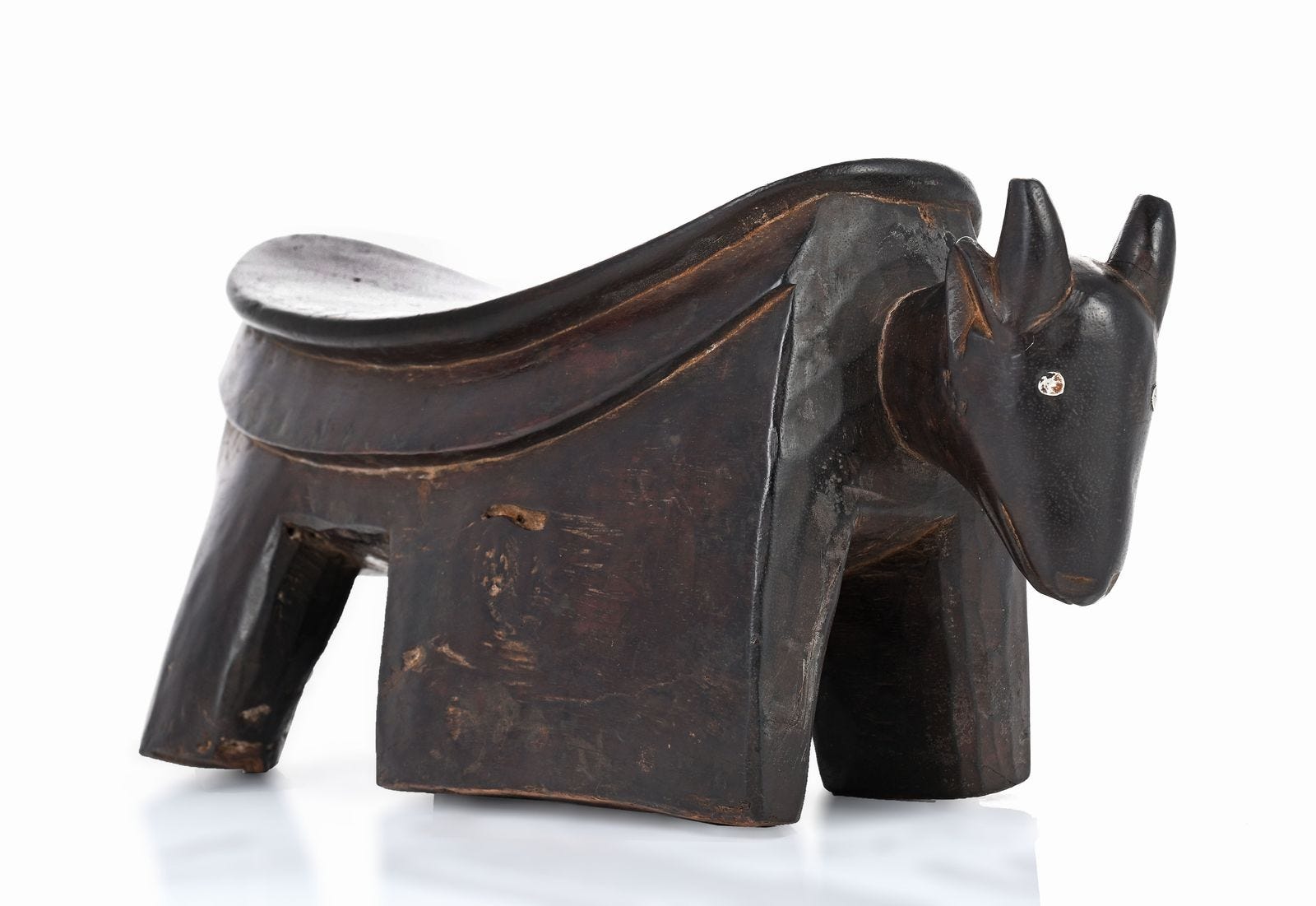
I’ve always loved objects that refuse to be just one thing. This piece carved from a single piece of wood is a headrest and stool made for both rest and everyday life. As a sculptural piece, it blurs the boundaries between beauty and ritual. Its zoomorphic form speaks to a deep relationship between people, animals and the landscape they inhabit, where function and symbolism are never far apart.
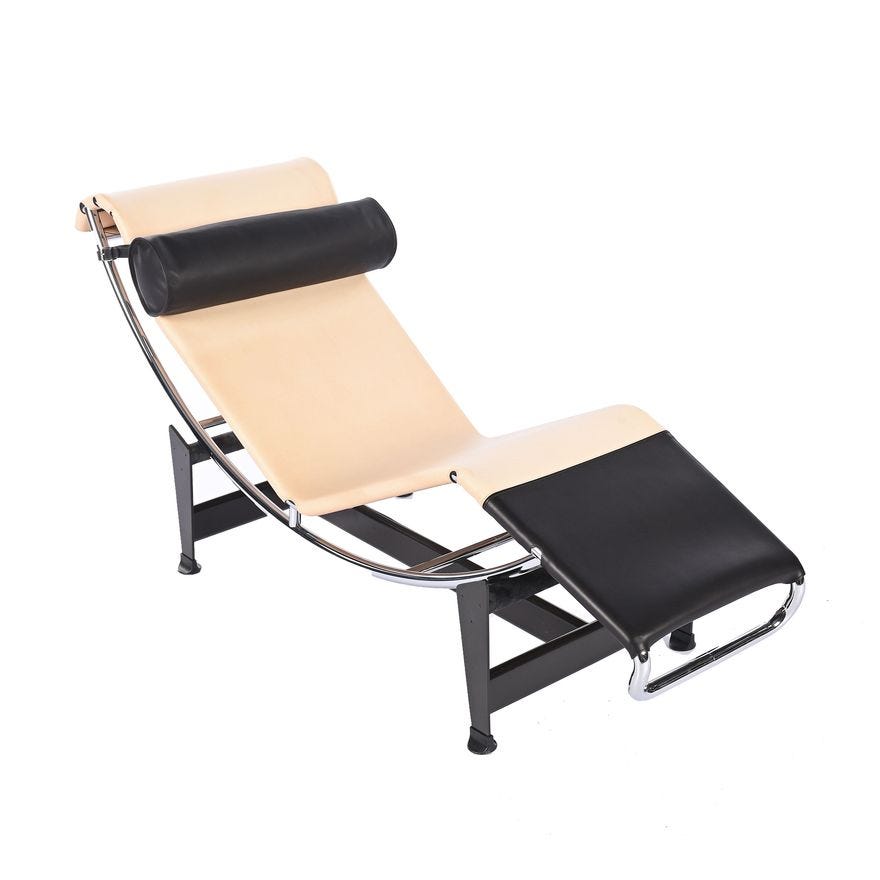
Classics never stop evolving! The LC4 is an icon of modern design, not because it follows fashion, but because it places the human body at the centre of the experience. This limited edition reminds us that the best design is never static. It can be reimagined, reinterpreted and rediscovered while remaining true to its original intent. I’m drawn to objects like this because a classic is not something that belongs to the past, but something that continues to find relevance with each new generation.
Choosing ten objects from the Russell Kaplan Winter Wunderkammer felt a little like choosing a favourite pet. It’s impossible.
But somewhere between the stereoscope, the travelling vanity case and a singing mechanical bird, I discovered I was looking for things that kept me curious.
That might be my only rule when collecting:
If an object changes the way I see the world, even just a little, it has already earned its place.
See you next week,
No posts
Comments
Nothing yet. Say the first thing.
Sign in to join the conversation.