
I arrived back in Joburg last Sunday evening and by Monday morning I already felt behind.
Emails had accumulated and meetings resumed like clockwork. The familiar rhythm of my city picked up exactly where I had left it. Phone calls, deadlines, decisions. Everything was exactly as I had expected.
Only I hadn’t quite returned.
After a week in the Karoo, I realised I was still keeping Karoo time.
There was a strange lag between my surroundings and my body. My thoughts still felt somewhere else, slower and quieter, as though part of me was still standing beneath the vast Karoo sky, watching the weather roll in. It made me realise that we spend a great deal of time preparing ourselves to leave, but very little time preparing ourselves to return home.
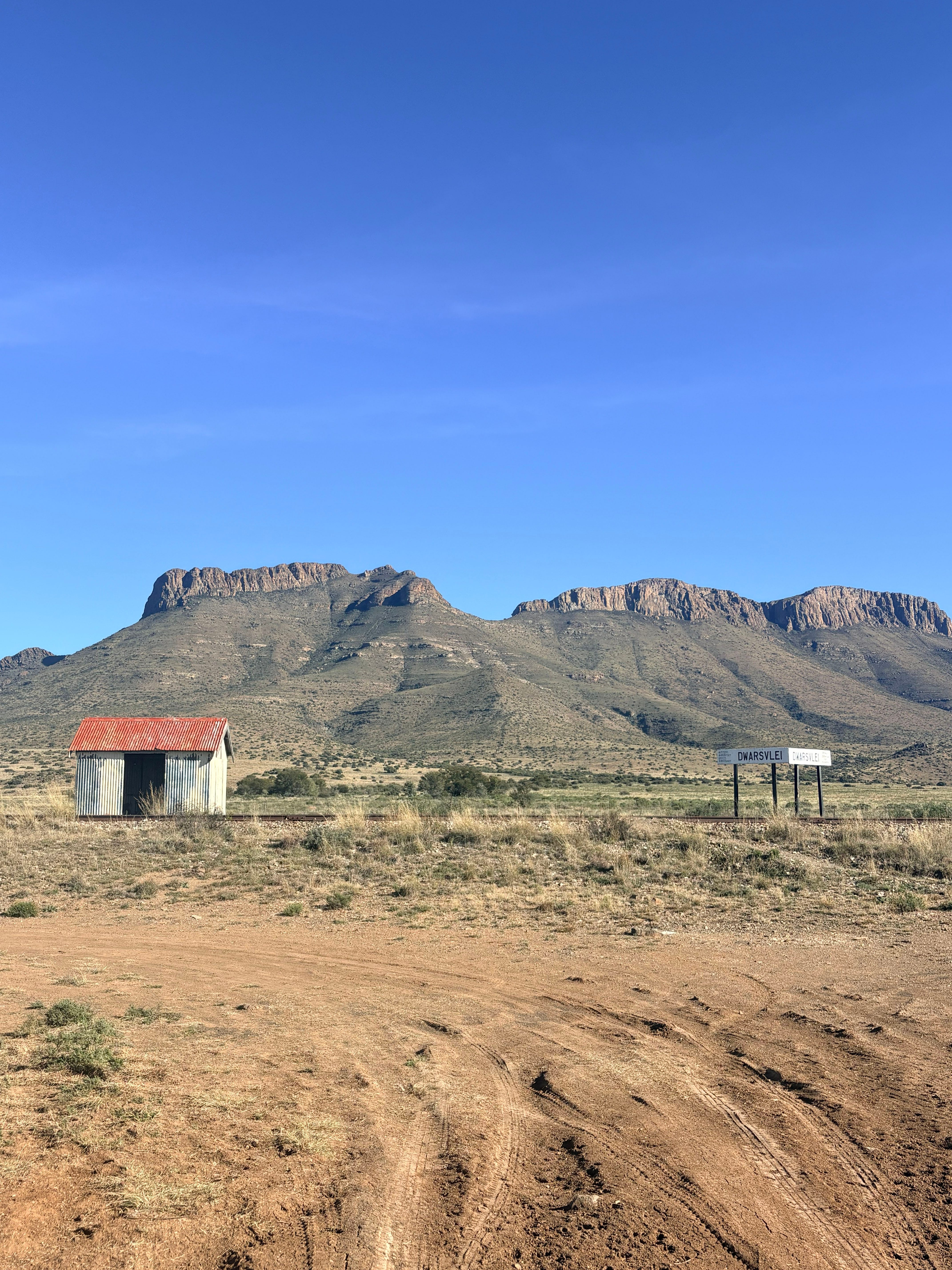
Last week, we travelled to the Karoo to install Wool World: Karoo Kraal for the Karoo Winter Wool Festival. It was a week of remarkable contrasts. Brilliant blue skies gave way to blizzards. The landscape shifted from sun-baked ochres to snow-covered white in the space of a day. An empty sheep-shearing shed slowly transformed into a place filled with artworks, conversations, music and people, only to be dismantled again a few days later, an empty shell, waiting for the next season.
Everything existed in a state of extremes. Which is perhaps why I found myself becoming less interested in the moments themselves, and more interested in the space between them.
How do we create different worlds within the one we already inhabit? Who lives in these imagined places? What do their surroundings reveal about the way they see, make and move through life? What does it feel like to step, briefly, into a life shaped by natural fibre?
These were some of the questions that guided the curation of Wool World: Karoo Kraal. Each yurt became a world of its own, bringing together unlikely collaborators to coexist within a shared spatial identity. Curation is an act of mediation, holding ideas, people, materials and disciplines in conversation and creating the conditions for something larger to emerge. A world is not defined by the objects it contains, but by the relationships it makes possible.
Working between worlds has taught me that the most interesting work rarely happens within the boundaries of a single practice. It happens in the threshold between them. Where fashion and spatial design, furniture and architecture, research and making, art and agriculture meet. The exhibition became a physical manifestation of that philosophy.
The drive from Joburg to the Karoo is not just a change in geography, it’s a change in tempo. It is a journey between worlds.
You leave behind traffic lights, notifications and calendars measured in half-hour increments. Gradually the roads become quieter, the horizon stretches further and the urgency you’ve been carrying begins to loosen its grip. It doesn’t happen immediately. In fact, the first day felt uncomfortable. My instinct is still to reach for my phone, to check what I’ve missed, to fill every pause with productivity.

But the Karoo has never seemed interested in any sense of urgency and certainly not mine. By the middle of the week, I realised that my own rhythm had begun to change too. Conversations became slower, meals continued without anyone watching the time, curation stretched into the cold, quiet hours of the night. The landscape was slowly recalibrating the way I was paying attention.
Then, almost as quickly as it had appeared, our temporary world disappeared again.
The exhibition was dismantled. The artworks carefully packed away. The shed emptied. Cars were loaded. People drifted back to their own lives, carrying stories, photographs and perhaps something less tangible that is much harder to describe.
There is something humbling about creating spaces that only exist for a short time.
As designers, we spend months imagining, drawing, making, agonising and assembling. Then, within a matter of hours, the work is carefully taken apart again. It reminds me that perhaps the value of a place has never been measured by how long it exists, but by what happens while it does.
Returning home, however, is its own transition.
We rarely speak about re-entry. We assume that because we are returning to somewhere familiar, the adjustment should be effortless. There’s almost an assumption that home is neutral. After last week, I realised that is not the case. After immersion in another landscape, another pace, another set of rituals, another community, home can feel surprisingly unfamiliar. I need time to reacquaint myself with the speed, the noise, the expectations. In many ways, returning is just another arrival.
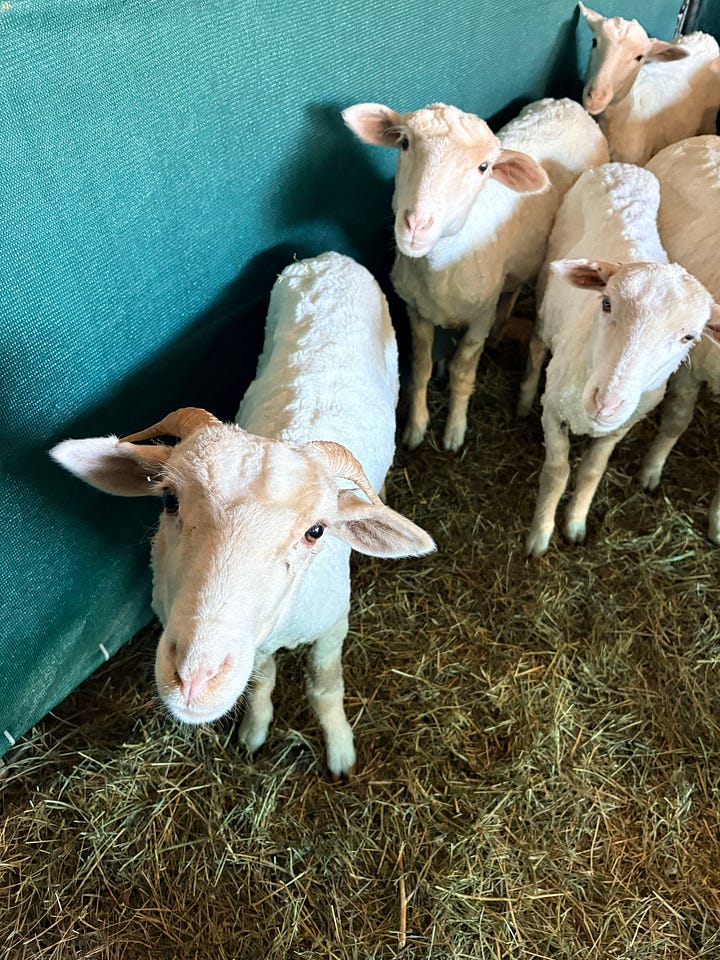
For these new arrivals to the farm, this was an entirely joyful experience!
Travel reshapes us in ways we rarely notice at first. It recalibrates our pace, our attention and our sense of what matters. Arriving somewhere new is only half the journey. Learning how to return is the next step.
Fieldwork doesn’t end when the exhibition is packed up, or the cars loaded and pointed in the direction towards Joburg. It’s really the beginning of another kind of work.
Travel always leaves a trace, a shift in perspective, a change in rhythm. I return ‘home’ carrying far more than the objects we packed into the boot of the car. Although that’s a given when you’re a collector! (hoarder)!
The temptation is to arrive back and immediately catch up, clear the backlog and resume the familiar rhythm as though nothing has changed. But so much has changed and somehow I need to make space for the experience to settle before it dissolves beneath the noise of my routine world.
For now I’m focused on some strategic organising principles I learned from a few very disciplined hounds on the farm:
For once, I look forward to ‘unpacking’ and not forgetting. To not rush ahead to return to who I was before I left. To give myself the permission to absorb the journey before I turn it into something useful. To decide what deserves to be carried forward and what belongs only to that place and allowing each one to leave its mark before crossing into the next. Fieldwork is my way of unpacking before moving on.
This is triage.
See you next week,
No posts
Comments
Nothing yet. Say the first thing.
Sign in to join the conversation.