
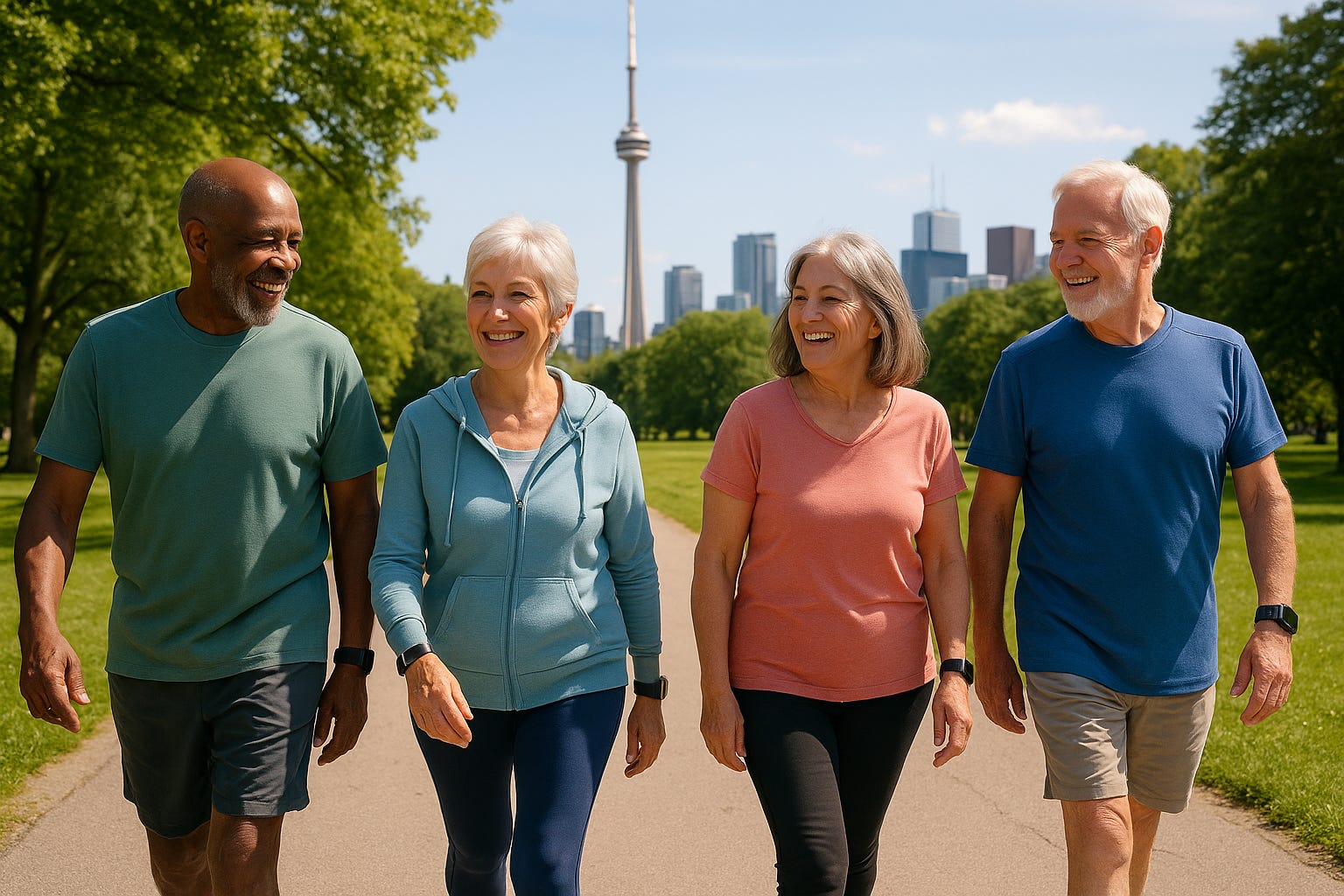
A massive new Lancet Public Health review published this summer (2025) looked at over 150,000 adults—and the results reshape what an effective daily step goal really looks like.
And surprisingly?
10,000 steps isn’t the health threshold we once thought.
The real action happens much earlier.
For decades, “10,000 steps” has floated around as the default activity recommendation. But as researchers often point out, this number was originally a marketing slogan from Japan in the 1960s, not a scientific threshold.
The 2025 Lancet Public Health systematic review provides the most specific evidence to date on the relationship between daily steps and major health outcomes. It looked at:
All-cause mortality
Cardiovascular disease (occurrence/frequency + mortality)
Cancer (occurrence/frequency + mortality)
Type 2 diabetes
Dementia
Depressive symptoms
Physical function
Falls
It combines 57 studies
It uses dose–response modeling, which means that it looks at the relationship between how much people walked (how many steps) versus the health results that they got as opposed to linear models used in the past (which assumed that more steps = more benefits). We now know that this is wrong because this study found the sweet spot, aka the inflection point (see next point)
It looks at the inflection point (where more steps provide diminishing returns)
It compares outcomes all the way up to 12,000 steps/day
This level of analysis gives us a clearer picture of how 7,000 steps compares with 10,000, which was never done before this.
Across outcomes, the curves all share one theme:
Increasing steps from very low levels produces the largest drop in risk.
Compared with 2,000 steps/day, 7,000 steps/day was associated with:
47% lower all-cause mortality
25% lower cardiovascular disease incidence (occurrence/frequency)
47% lower cardiovascular disease mortality
37% lower cancer mortality
14% lower diabetes incidence
38% lower dementia risk
22% lower depressive symptoms
28% lower falls
These are substantial, clinically meaningful reductions.
Here’s where the nuance comes in:
Health risks continue to fall between 7,000 and 10,000 steps
But the improvements get smaller—the curve flattens for many outcomes
For several outcomes, including diabetes and cancer incidence, risk differences between 7,000 and 10,000 were not statistically significant
In plain language:
You get most of the benefit by 7,000 steps.
After analysing the data further, the researchers found that 10,000 steps/day provided additional (but modest) risk reductions beyond 7,000 for:
All-cause mortality
Cardiovascular disease incidence
Cancer mortality
Dementia
Depressive symptoms
Example:
At 10,000 steps/day, risk of all-cause mortality was 10% lower than at 7,000 steps/day.
But here’s the key message:
10,000 steps is beneficial, but not necessary.
7,000 steps/day gets you most of the way there— and for some people, all the way.
In older adults, the dose–response curve often remained more linear, meaning they continued to get benefits even past 7,000 steps.
This suggests older adults may benefit from steady increases even beyond 7,000—but still don’t need 10,000 to see major gains.
Track your steps for 3–4 days without changing anything.
You may already be close to ,000–6,000 steps without realizing it.
The Lancet review shows that each additional 1,000 steps, especially if you are not walking a lot, will make a big difference.
Try:
A 10-minute after-meal walk
A loop around the block before breakfast
Pacing while on a phone call
One extra errand on foot
This is where:
Mortality risk decreases by almost half
Cardiovascular and dementia risks drop
Benefits start to level off (for most outcomes)
Think of this as bonus benefit, not a requirement.
Good reasons to walk more:
You enjoy walking
You’re building endurance
You tolerate higher volumes well (no pain anywhere, no extreme fatigue)
You want to push cognitive protection (dementia risk continues to fall past 7,000 steps)
Bad reasons:
Pressure from a device
Comparing yourself to other people your age or younger
Guilt or perfectionism
Especially for adults 60+:
Increase gradually
Use poles, a cane or a walker if balance is a concern
Watch for joint pain, dizziness, or unusual fatigue
Remember: assisted steps still count
Which of these step levels feels most achievable for you right now?
4,000
5,000
6,000–7,000
8,000+
Reply and let me know—I’m happy to help you build a plan.
If you’d like a personalized mobility and brain-health plan—including the right step goal for your fitness level—you can book a free 30-minute consultation with me.
Or simply hit reply and share your current step count.
And remember, be kind to yourself and others!
See you next time,
Dr. Loïse
Looking for simple, science-based tips for aging well — for yourself or your parents?
This newsletter shares what truly supports a long, healthy and happy life.
If it helps you, please subscribe. Thank you!
Comments
Nothing yet. Say the first thing.
Sign in to join the conversation.