
Good news — you’re right. Strength training isn’t just about building muscle; it’s one of the most powerful ways to protect your brain as you age.
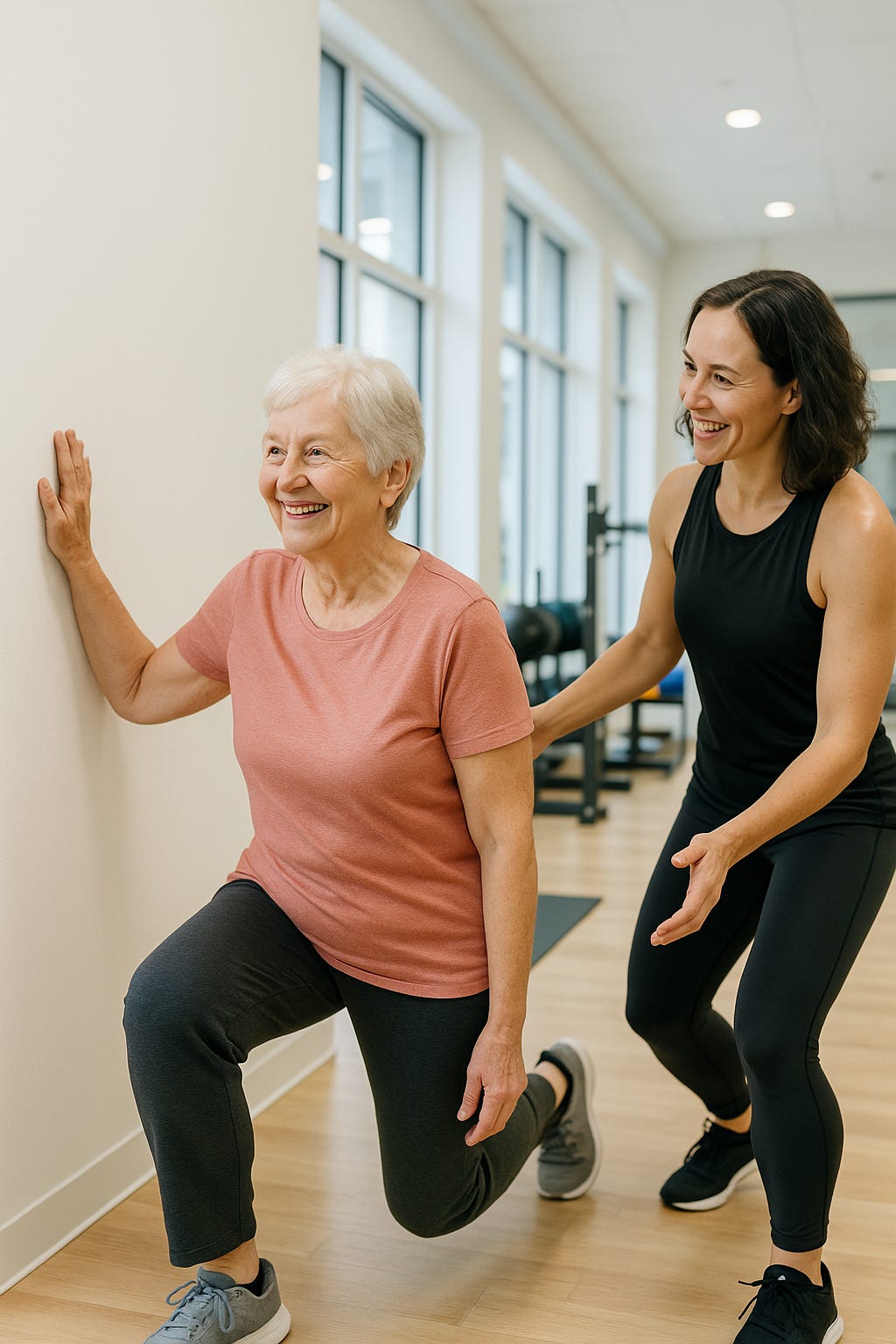
Resistance training (RT) also known as strength training simply means working your muscles against a force — like using weights, resistance bands, or even your own body weight.
At its core, there is a simple principle called progressive overload: gradually challenging your muscles over time to keep getting stronger.
And here’s the twist — your brain loves that challenge just as much as your muscles do.
In addition to helping you maintain muscle mass, recent studies (2025) show that resistance training changes the brain itself — especially in areas tied to memory (the hippocampus) and decision-making (the frontal cortex).
Here’s what science now knows about RT:
🧩 It increases neurotrophins like BDNF (Brain-Derived Neurotrophic Factor) and IGF-1 (Insulin-like Growth Factor 1) — key molecules that help grow new brain cells and improve mood.
💪 It sends signals from your muscles (myokines), telling your brain to repair and grow new neurons — real “muscle-to-brain” communication.
❤️ It improves insulin sensitivity and blood flow, giving your brain more oxygen and energy.
🌙 It lowers inflammation and stress hormones (like cortisol), while lifting dopamine, serotonin, and endorphins — your natural mood and focus boosters.
Within just minutes of lifting weights, your brain enjoys sharper focus and a calmer mood.
And after 2-3 months, MRI studies show larger volume in the hippocampus, thicker cortex, and better executive function — that’s science-speak for “better memory, planning, and mental clarity.”
You don’t need a gym full of machines to train your brain. If you can lift a grocery bag or carry a 2L milk carton (that’s about 5 lbs) you can start.
Here is an ideal evidence-based plan that will get you feeling stronger in a few months:
Frequency: 2–3 sessions per week
Intensity: Moderate effort — you can talk, but not sing (or a 60%-80% effort)
Duration: 30–60 minutes per session
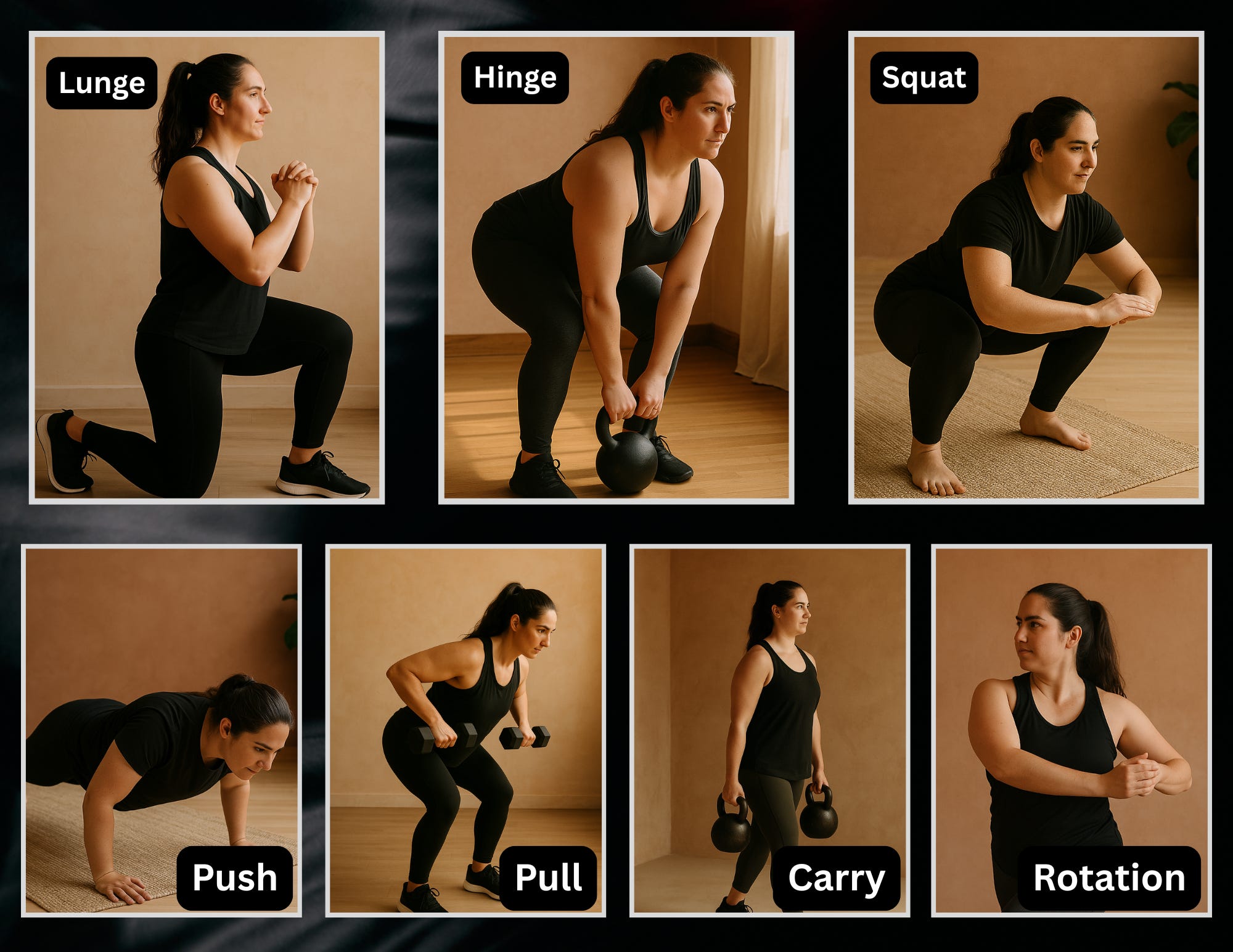
Movements: Focus on 7 key patterns — squat, lunge, hinge, push, pull, carry, rotation (see image below)
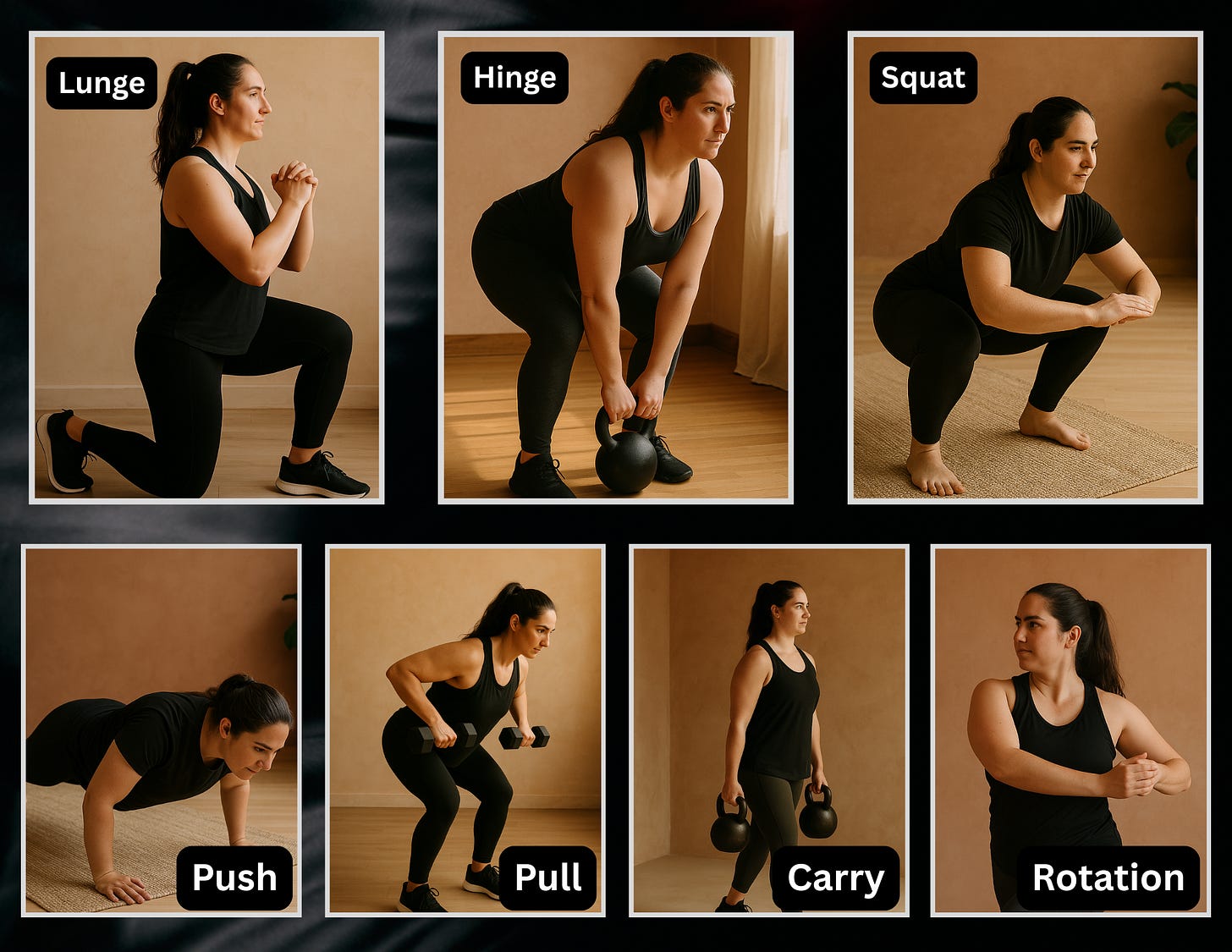
The 7 functional movement patterns for older adults Mind–Body Bonus: Add a mental challenge (like naming a city for each rep) to engage both muscle and mind. For more information on the brain fitness framework, get my free e-book on my website.
Every lift tells your brain, “Stay strong, stay fit.”
Can you comfortably lift your grocery bags or a laundry basket?
If yes — you’re already resistance training!
If not — that’s your body and brain asking for a bit more challenge.
If you’d like to learn how to safely and effectively add resistance training into your routine, let’s chat. You can book a free 30-minute consultation with me or email me at loise@neuromotionwellness.com to get started.
And remember, be kind to yourself and others!
See you next time,
Dr. Loïse
Are you in your sixties and want to get tips and insights on how to live a long and happy life? Are you a millennial witnessing your parents’s journey and wishing for them to thrive? Curious about the secrets to a contented life? If so, this newsletter is for you. Subscribe below if you find the content helpful — I truly appreciate it! Thank you!
Comments
Nothing yet. Say the first thing.
Sign in to join the conversation.