
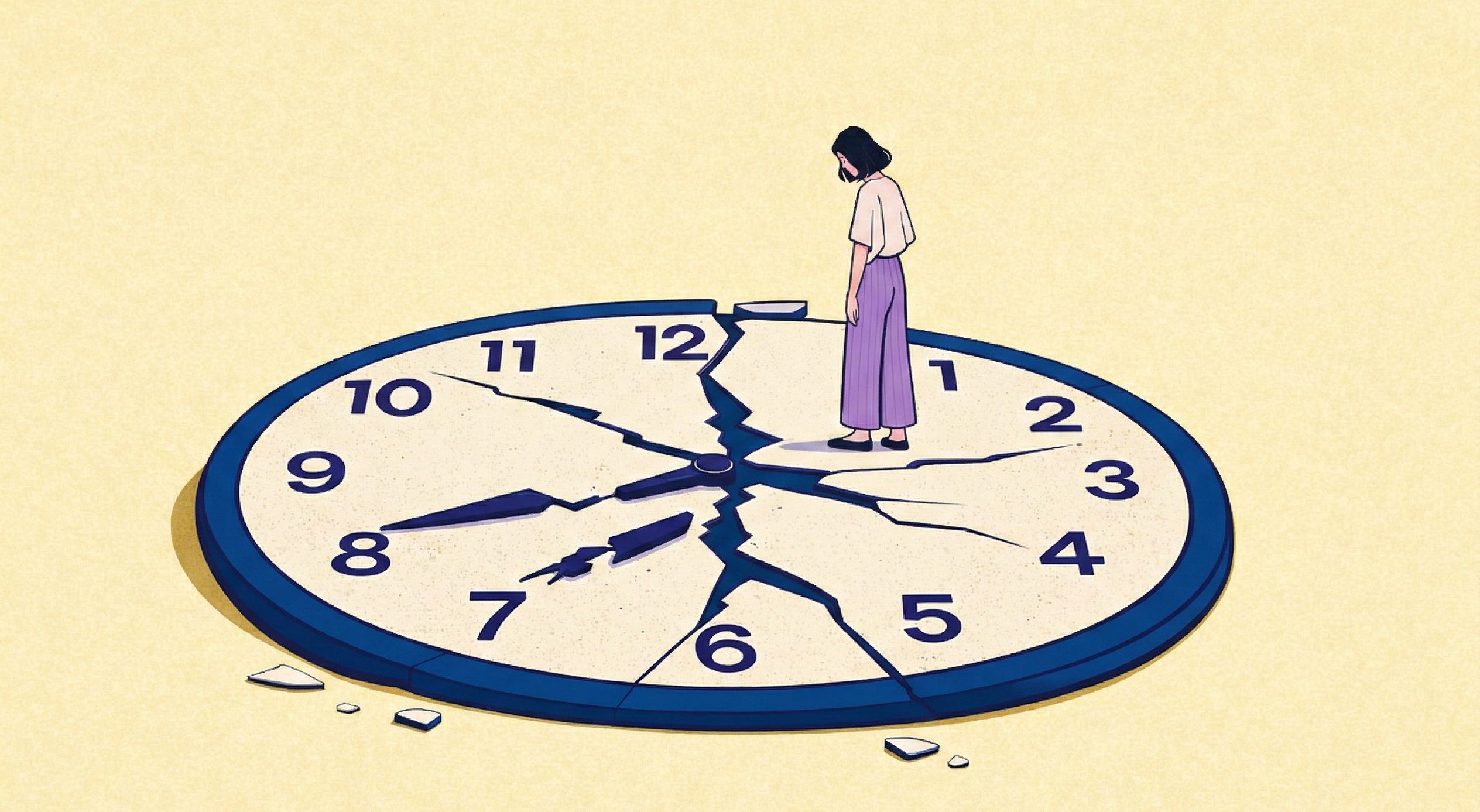
It’s that time of year where some of us change our clocks – the back and forth of springing forward and falling back. But even though we’re all inconvenienced twice a year, there’s no solid scientific reason why Daylight Saving Time exists.
Polls show that 6 in 10 Americans want to stop changing clocks altogether. And yet, for years, elected officials have ignored medical experts, instead picking the solution that would be worse for our health. So… what is going on? And how does Daylight Saving Time impact our health?
It’s a pretty common myth that Daylight Saving Time (DST) was introduced for or by farmers. In reality they’ve lobbied against it around the world, because among other problems, it upsets the cows. The true origins of DST lie in the desire to maximise daylight for our leisure — and consumption.
Shifting the clocks back was originally proposed by a Kiwi entomologist George Hudson, who wanted more light to collect insects after-hours, and a British builder, William Willett, who liked to golf. DST was first introduced in Europe and the US during WWI to conserve light and heat in the evening. The thinking was that if we could harness the power of the sun for an extra hour, we could save on energy expenditure. Since then, it was abandoned, re-adopted and has been the standard for most U.S. states since the Uniform Time Act of 1966.
But there’s no good evidence that later daylight saves energy – people just use more heat in the morning, and tend to drive more when it’s lighter later in the day. And it’s a change that’s harmful to our health.
A common belief is that the main problem with DST is this switching of clocks back and forth. And it is a legitimate health concern — the clock switch in the spring has been associated with increases fatal traffic accidents in the morning, as well as workplace injuries and heart attacks.
But, surprisingly, that’s not the main health problem. The larger concern comes from the ongoing mismatch the clock shift creates between our social schedules and the sun.
Inside your brain, you have a master conductor called the SCN (Suprachiasmatic Nucleus). And every single cell in your heart, lungs, and gut has its own tiny clock that regulates everything from your blood pressure to your hunger levels. And these peripheral clocks take their cues from the SCN to stay in sync.
This system is hardwired to look for one thing every day… morning sunlight. When the light enters your eyes in the morning, it keeps your internal clock anchored to the 24-hour day. And then, your body clock ticks away in a fashion that helps you feel alert in the morning and naturally sleep at night.
BUT when we have an artificial clock change — like moving to Daylight Saving Time — we lose that morning light cue. Your internal rhythm starts to drift later. And because it stays light later in the evening, it delays the release of melatonin, making it harder to fall asleep. You can see how this happens in this awesome data visualisation from The Guardian of how much daylight shifts into the late evening.
And because we, unfortunately, still have to work and go to school, this creates a state of social jetlag. Your alarm says 7am, yet your body clock still thinks it’s 6am. The obvious problem is lost sleep during DST… but this lost sleep has flow-on effects. Losing sleep can increase levels of hormones that regulate hunger, and make it more likely for people to crave high-calorie foods. Over time, lost sleep can impact our metabolic health, heart health, as well as mood and overall well-being.
And the reality is that Standard Time best matches our body’s internal clock. As the American Academy of Sleep Medicine says:
“The daily cycle of natural light and darkness is the most powerful timing cue to synchronize our body’s internal clock. When we receive more light in the morning and darkness in the evening, our bodies and nature are better aligned, making it easier to wake up for our daily activities and easier to fall asleep at night.”
So why would a country propose Daylight Saving Time year-round?
The answer lies in economics: if it’s lighter after regular business hours, we can do more. And doing more means spending more.
Over time, some unexpected lobbying groups have kept DST going, as well as lengthening the number of months we spend in ‘summer time’.
One is the candy industry, where the National Confectioners Association successfully lobbied to include October 31 within Daylight Saving Time to increase profits of Halloween. So children could trick-or-treat in the daylight, in 2007 DST was extended into early November.
There’s also the golf industry, which in the 1980s pushed for an extra month of DST. They argued that the extra hour of evening light would garner an extra $400 million in revenue. (This feels like an insane number, but keep in mind that golf generates $84.1 billion a year in the U.S. alone). And the daylight link has rung true before – In 1920, The Washington Post reported that golf ball sales in 1918, the first year of DST, increased by 20 percent.
Not to mention that we all use more fuel when it’s lighter later. One lobbying group estimated US gas stations have added an estimated $1 billion in annual sales since a month was added to DST in the 80s.
And the flip side of these evening activities? Lost sleep. Misaligned body clocks. And many people going to school and work in the dark (which beyond sleep loss, is associated with increased safety risks). But in a consumerist society, policies that increase spending tend to outlive policies that improve health.
Back in 2022, the U.S. Senate passed the Sunshine Protection Act to make DST permanent across the country. It was introduced by Marco Rubio, then Senator from Florida — a state that would reap a huge benefit in… golf revenue. At the time, Rubio argued that permanent Daylight Saving Time would lead to an economic boost – people would spend 3.5% more if there was DST year-round. We know that in months where it’s lighter later in the day, people spend more money – so why not try to carry that effect over the winter months?
But the Sunshine Protection Act died in the House of Representatives. It was reintroduced in 2023 and 2025, but again didn’t move. It was a win for the American Academy of Sleep Medicine, who lobbied against the change. After all, golf shouldn’t be more influential than all of the science and medical expertise we’d accumulated to date.
Just this February, another Florida lawmaker Gregory Steube introduced the Daylight Act of 2026, which proposes ending the clock change and permanently shifting U.S. time zones by 30 minutes — essentially splitting the difference between Standard and Daylight Saving Time. It is still very much hypothetical, as there are no recorded votes for the bill.
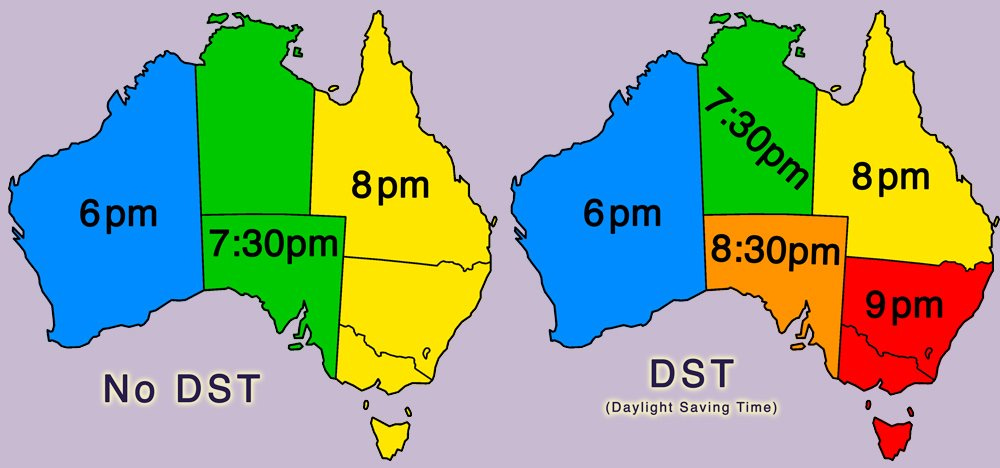
Luckily, not every country is going down this path of permanent DST. The EU voted to scrap time zone changes, and stay on Standard Time (although this hasn’t been fully implemented). Mexico, Japan, South Korea, China, Singapore and Dubai, have either abolished or don’t observe Daylight Saving Time. And Australia would very much benefit from a Standard Time intervention.
The chaos of DST is best illustrated in Australia, where half of the country changes the clocks, the other half doesn’t, and ultimately, there are up to 11 different time zones during summer. As people have rightly pointed out, it’s completely unhinged and Australia needs a time zone intervention.
Overall, Daylight Saving Time makes very little sense. Life is hard enough, and having all the clocks in sync just makes the most sense – like your circadian clock, Standard Time, and the sunrise. Changing the clocks so people can spend more and do more is silly, when we all know that it’s just better to do less.
This article is an updated version of a video on my YouTube channel, Why Daylight Savings is a Costly Mistake. You can watch it here.
No posts
Comments
Nothing yet. Say the first thing.
Sign in to join the conversation.