
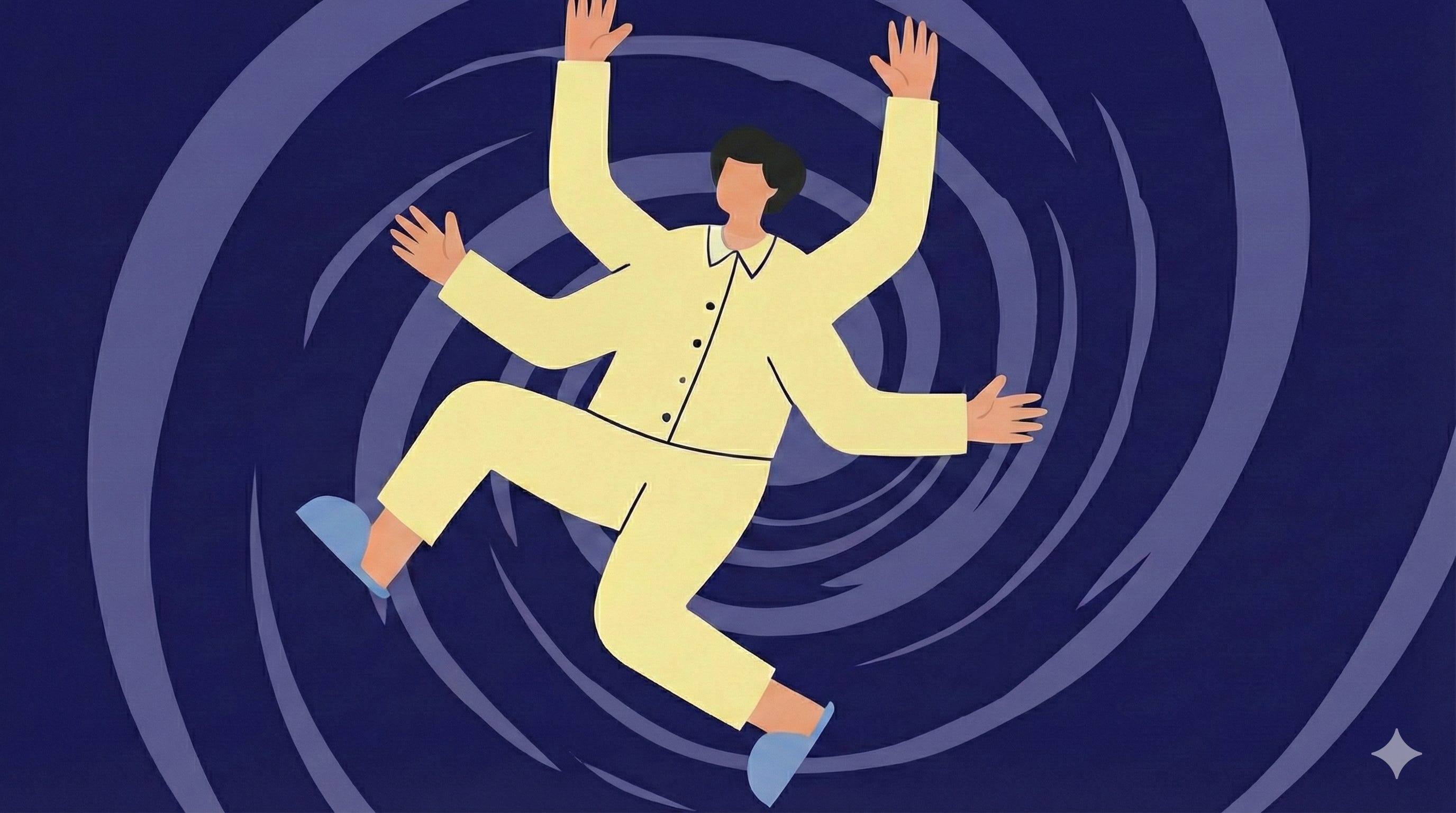
In 2014, I had an experience most up-and-coming YouTube creators only dream of. I posted a new video, and when I woke up it had 500,000 views. The video – on the effects of sleep deprivation – had been featured on the YouTube homepage and their daily trends show, YouTube Nation. (That whole sentence offers a very specific snapshot of internet history).
But the most surprising thing about this experience? The video is bad. It was an incredibly rudimentary stop-motion animation I made in a corner of my Sydney share-house bedroom. It tells a story of sleep deprivation that is unhelpful to improving sleep. Yet, it hit a nerve. People were tired. And tired people, I would soon discover, love watching videos about sleep in the wee hours of the morning.
I soon moved to NYC as a host for the Public Broadcasting Service, to make videos about psychology, health, and of course, sleep. I promise my stop-motion animation skills got better. Then my science communication brain got creative, and I pitched a Hollywood-style reality show about sleep to YouTube Originals. They bought it. In these episodes, we offered practical tips about sleep hygiene (as was the prevailing guidance): set a regular bedtime, consider deep breathing exercises, try separating your sleep and work space. Manage stress.
And then, the comments flooded in. There were thousands.
“It’s hard to actually implement these techniques”
”I try to stick to a sleep regime, but the habit of pulling an all-nighter just keeps coming back”
”Do ya’ll have any easier advice”
At first, I assumed the comments meant we needed better advice. But then I couldn’t find it. Like, how do you actually stop using your phone at night, besides having an extreme amount of discipline? I wanted details that didn’t exist, so I set out to investigate them.
And I might be the only person to say that YouTube comments launched my entire research agenda.
At first, I assumed the comments meant we needed better advice. I started reading the sleep literature more deeply, and started reading outside it. Then, late at night, I stumbled upon a letter to the editor that perfectly articulated what was bothering me: Much of our sleep advice asks people to be at their best at the exact moment they are least resourced – when they are exhausted.
Typically, sleep advice is framed in terms of willpower. We’re told to just set a routine. And if that routine fails? Try harder to stick to the routine!
Scientifically, this relies on reflective processes – slow, effortful thinking that requires us to be consciously making decisions and exercising self-control. (Some of you may know this as slow ‘System 2’ thinking from Daniel Kahneman’s classic book, Thinking Fast and Thinking Slow).
But when we’re exhausted at the end of a long day, self-control is one of the first things to go. Our minds are fatigued. So our sleep behaviours tend to be guided by automatic processes – habitual responses that happen without much conscious deliberation. (This is fast ‘System 1’ thinking). This explains why many sleep behaviours happen on autopilot – like reaching for our phone as we get into bed, or feeling anxious late at night when we know it’s hard to fall asleep.
And much sleep advice speaks primarily to System 2, even though many sleep behaviours are being driven by System 1.
In research, there’s a well-described phenomenon called the intention–behaviour gap: the space between what we plan to do and what we actually do. People can, for example, have strong intentions to go to bed earlier and still find themselves scrolling at midnight. And this isn’t because people don’t care! It’s because it’s incredibly hard to use discipline to change behaviours when you have strong exisiting habits.
Once I understood this, the YouTube comments made sense in a different way. Sleep advice typically isn’t designed for what drives our behaviour at night.
So, I wrote some kind of academic-fan-mail to A/Prof Amanda Rebar, the author of the letter to the editor, and she became one of my PhD advisors. My research became about understanding, and testing, the behavioural techniques that might shift our sleep habits.
There is, conveniently, an entire field of science devoted to changing behaviour. In the early 2010s, a panel of experts tried to catalogue what, exactly, helps people change; and they landed on 93 specific behaviour change techniques. These include strategies like self-monitoring, changing the environment around you, planning for obstacles, or deliberately swapping one behaviour for another.
Where most sleep advice assumes behaviour changes because we want it to, these techniques prompt more practical questions: What tends to trigger the behaviour? What do you usually do next? and… What does that behaviour give you in the moment?
These questions get to the cues, repetition, and rewards that are the building blocks of our behaviours. Using screens before sleep, for example, often delivers relief, distraction, or a small sense of agency at the end of the day. (And if you don’t account for that reward, you can tell people to stop scrolling forever and they’ll keep scrolling anyway).
This is the logic behind a trial I led, published in Sleep Medicine, where we tested a short online intervention to reduce bedtime screen time by targeting habit rather than willpower. We used a small set of behaviour change techniques, including behavioural substitution, where people planned a specific alternative to scrolling in their wind-down routine. Across the experimental groups, nightly bedtime screen time dropped by 23-29 minutes, with small improvements in sleep quality over follow-up. It suggests that when you work with cues and rewards in mind, people can shift what they do at bedtime without needing unrealistic levels of discipline.
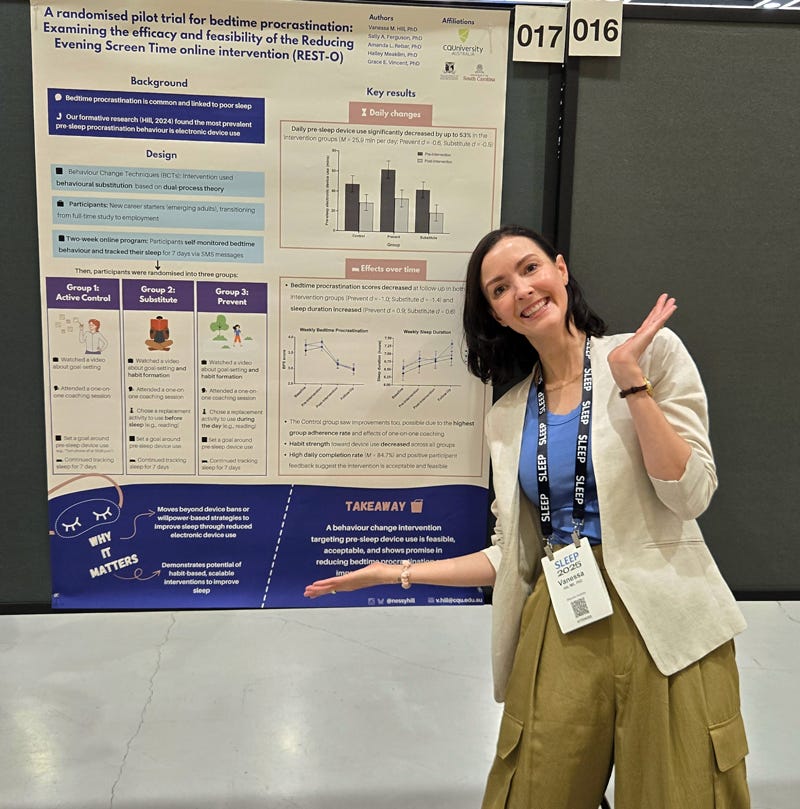
Behaviour change is still relatively new in the context of sleep, and a lot of these techniques haven’t yet been tested in people’s actual evenings. I could not have imagined I’d be someone testing them when my first rudimentary sleep video went viral now thirteen years ago.
But the reality is that generic, unrealistic sleep advice makes me mad. (And that turns out to be very motivating!). When advice makes people feel like they’ve failed, or that changing their sleep is unattainable, most of us stop trying.
So I’m still kicking around on the internet to communicate this point: start small. The goal isn’t perfect sleep. Some nights will be bad, and that’s not a personal flaw. Change is doable, even in the middle of a tired, ordinary evening, when you might be watching YouTube videos.
No posts
Comments
Nothing yet. Say the first thing.
Sign in to join the conversation.