
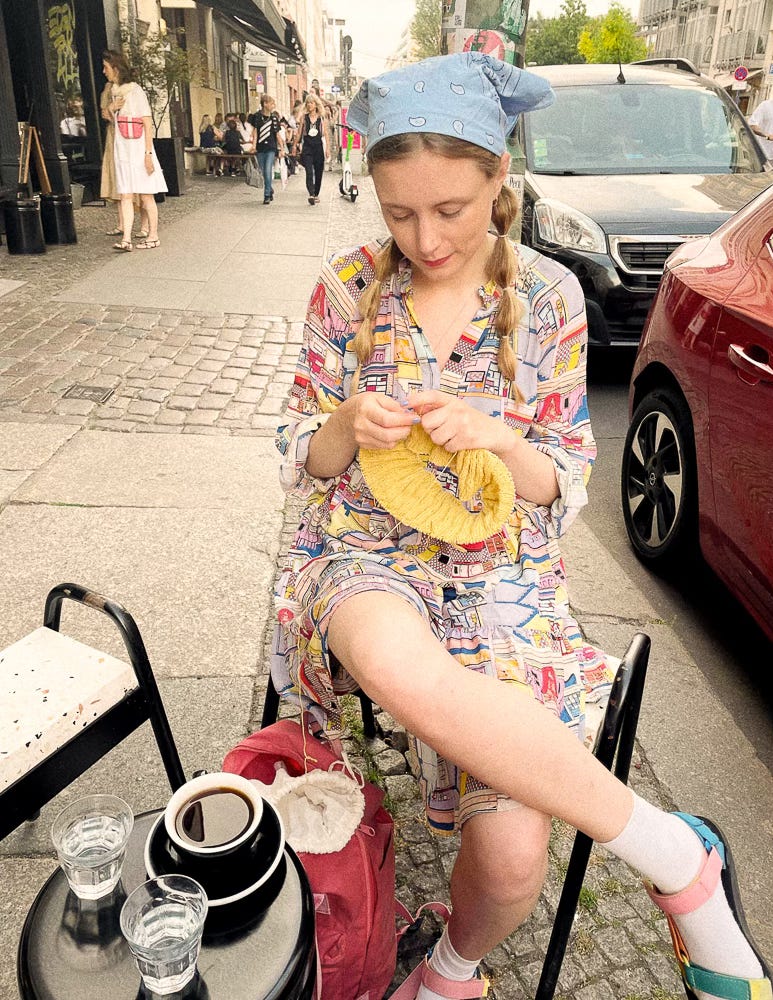
Crying with frustration, I called my mom.
I thought I’d be able to do this on my own, as I have done so many things in my life, but right now, I had no choice, I needed my mommy.
It was March or April 2020, and - as everyone else - I was under covid-lockdown, and - as almost everyone else - I had decided to take up knitting and the damn wool wouldn’t form stitches on my needles no matter how hard I tried.
I’d watched a YouTube tutorial over and over again, but nothing - I just couldn’t succeed. But I decided to push through - as opposed to the many, many times, I had thrown the knitting across the room in frustration previously in my life.
You’d have thought that the daughter of a woman who had been knitting for 60 years would have this come naturally, but for some reason it never caught on until I had absolutely nothing else to do.
My mom facetimed me, and sitting 300km away at her dining table with her own set of needles and yarn, she patiently helped me pick up stitches for a pink wool/acrylic vest. She helped me when I had to learn purl stitches and when I dropped a stitch she guided me on picking it back up.
I went on to finish the vest, and one more, and today, multiple sweaters, hats, baby rompers and scarves later, knitting has settled as a natural movement of my fingers, as it did in my moms strong hands 60 years ago.
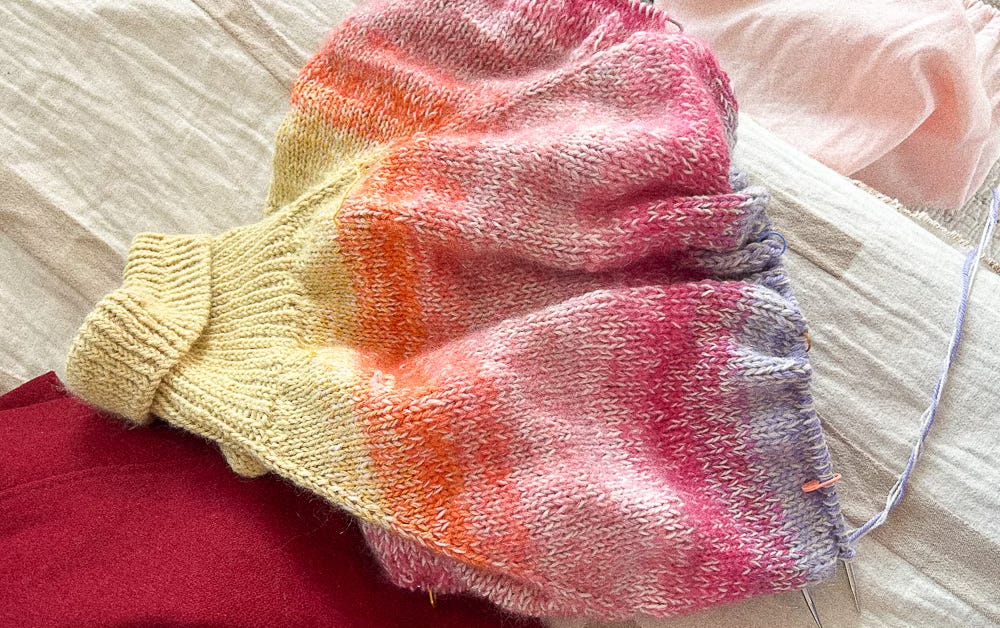
I’m not the only young person whose hands have become entangled in wool these past few years. In pretty much every train car in Denmark you’ll see at least 25% of the people there actively knitting.
In the time during and after covid, it seems like anything that is part of a slow country life has boomed in popularity. Sourdough, earth tones, crafts in general - and thereby: knitting.
The forced slowness we experienced a few years ago, seems to have created a realization that everything was moving too fast, and some of us, who didn’t already know the peacefulness(and frustration) of knit purl knit purl have come to find it as a place to escape and relax, heal and bond with others.
The surge in popularity that knitting has come to experience these years seems like the polar opposite of a society obsessed with development, technology and speed. But, at the same time, it seems just appropriate as well: something has been missing to balance out the stressful and digital life that everyone lives now.
The digital life has also been part of making the knitting trend this big - platforms like Instagram, TikTok and Pinterest have helped what was once something of an underground and underappreciated craft take flight. Knitters share their WIPs (works in progress) on these platforms: their progress, their final results, they talk about yarn types in the comment sections and hashtag the name of the pattern they knitted, so anyone out there can find it and have a go themselves.
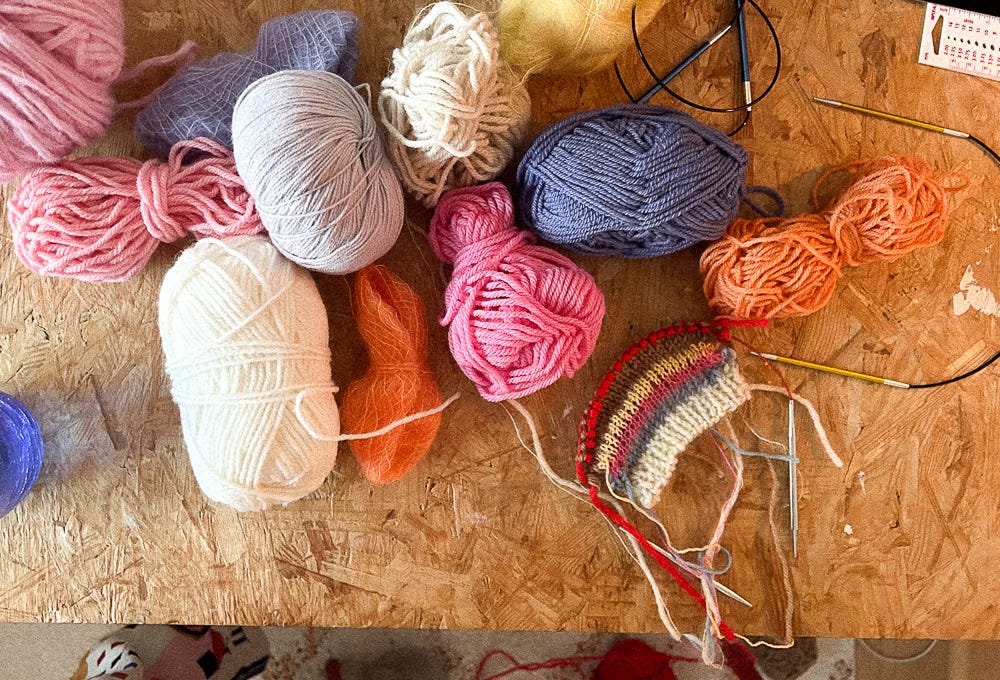
Knit designers are also experiencing a peak in interest, sales and development of their businesses, too.
Unconventional knitting designer Lærke Bagger (who I remember contacting me 10 years ago, when I was blogging, to wear her designs to fashion weeks) is experiencing an incredible amount of attention these years. Her way of knitting purposely “ugly“ things, using scrap yarn, insisting that anyone can knit, has gained her so much attention that she now has published two books; has had a show on TV; and tours the country with “knit and drink“ shows at major concert venues.

Her aesthetic counterpart Petiteknit, Mette Wendelboe Okkels has built a knitting empire, employing 17 people and selling the most popular knitting patterns in the country. Thousands of them, some translated into as many as 16 languages! She recently received international acclaim for hew incredibly popular scarf design, Sophie scarf, in German Vogue, who deemed it the accessory trend of the year, among others.
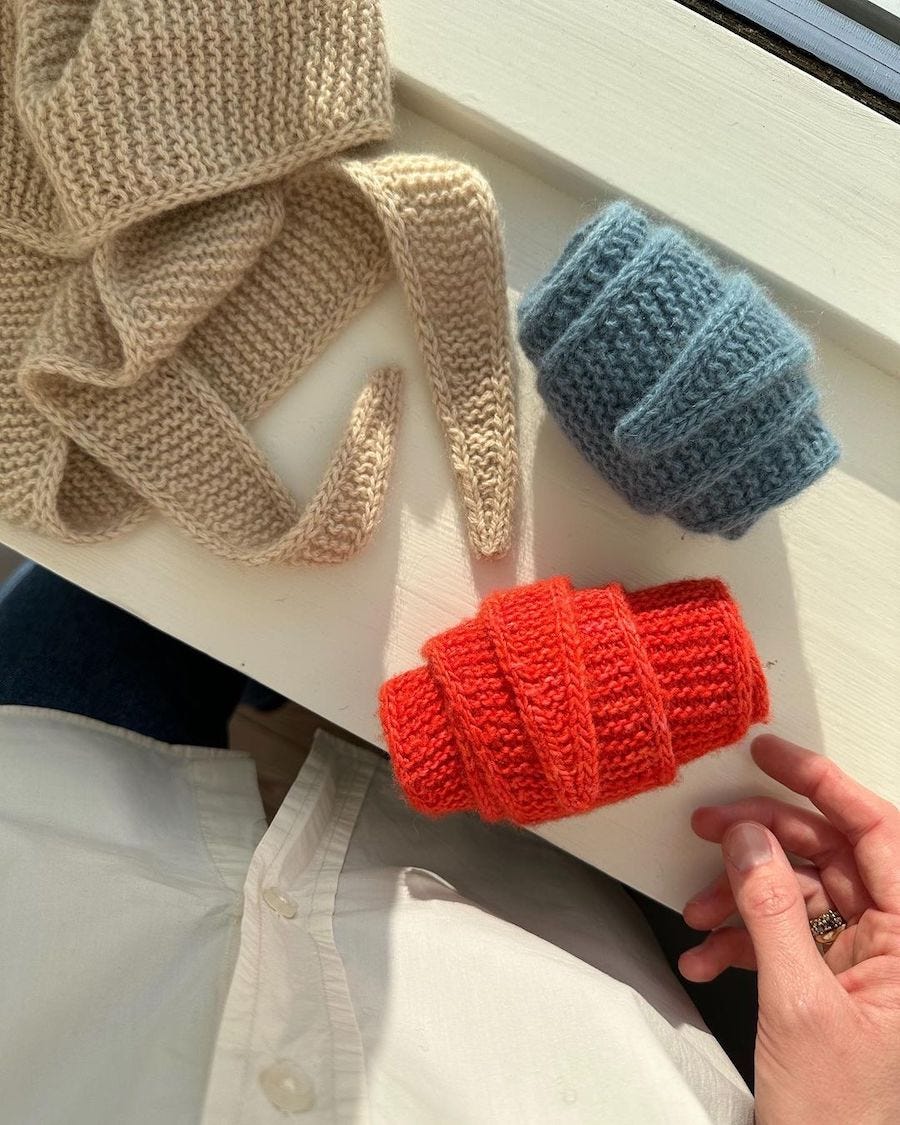
If you asked me ten years ago when Lærke contacted me writing about her work, I would'n’t have thought that knitting would ever reach these levels of attention in popular culture.
I mean, how can a craft this slow, at times expensive, time demanding, technique demanding become so popular in an increasingly digital and fast fashion focused world? Did anyone see it coming?
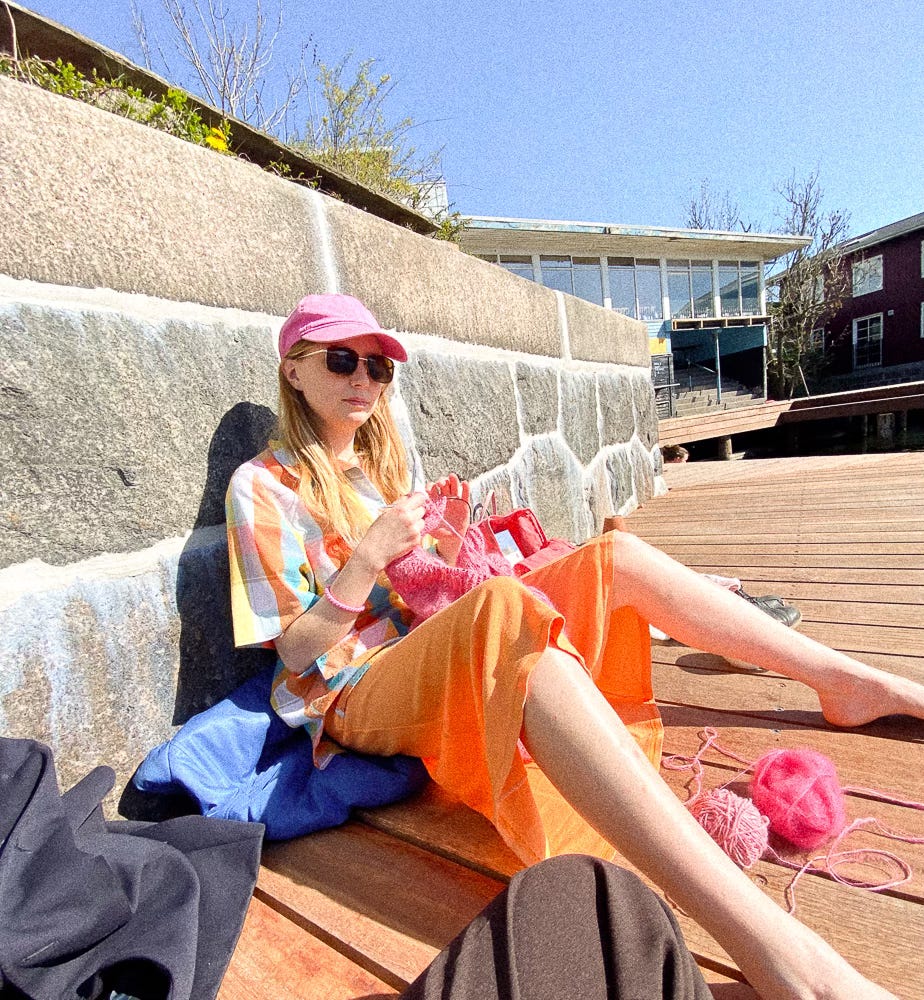
Again, I think it’s a case of needing to balance life and culture.
Sometimes, when things move too quickly, too much forward, we feel a need to look back to what has been.
Knitting carries so much history and tradition, especially in the North - in countries like Denmark, Norway, Sweden, the Faroe Islands and Iceland, knitted sweaters have been an essential part of the wardrobe. Once, depending on which country and even which town you were from, the pattern on a fisherman’s knitted sweater would vary.
Like Scottish tartan, the pattern on your sweater was a sign of where you were from, where you belonged. Check out these different patterns from Norway named for the town where the pattern originated.
The incredible Danish contemporary knit designer Laura Dalgaard has designed a collection of patterns that take inspiration from traditional Nordic sweaters, which I think is just amazing. I haven’t tried them yet, but I imagine knitting these intricate patterns must make you feel somewhat connected to history.
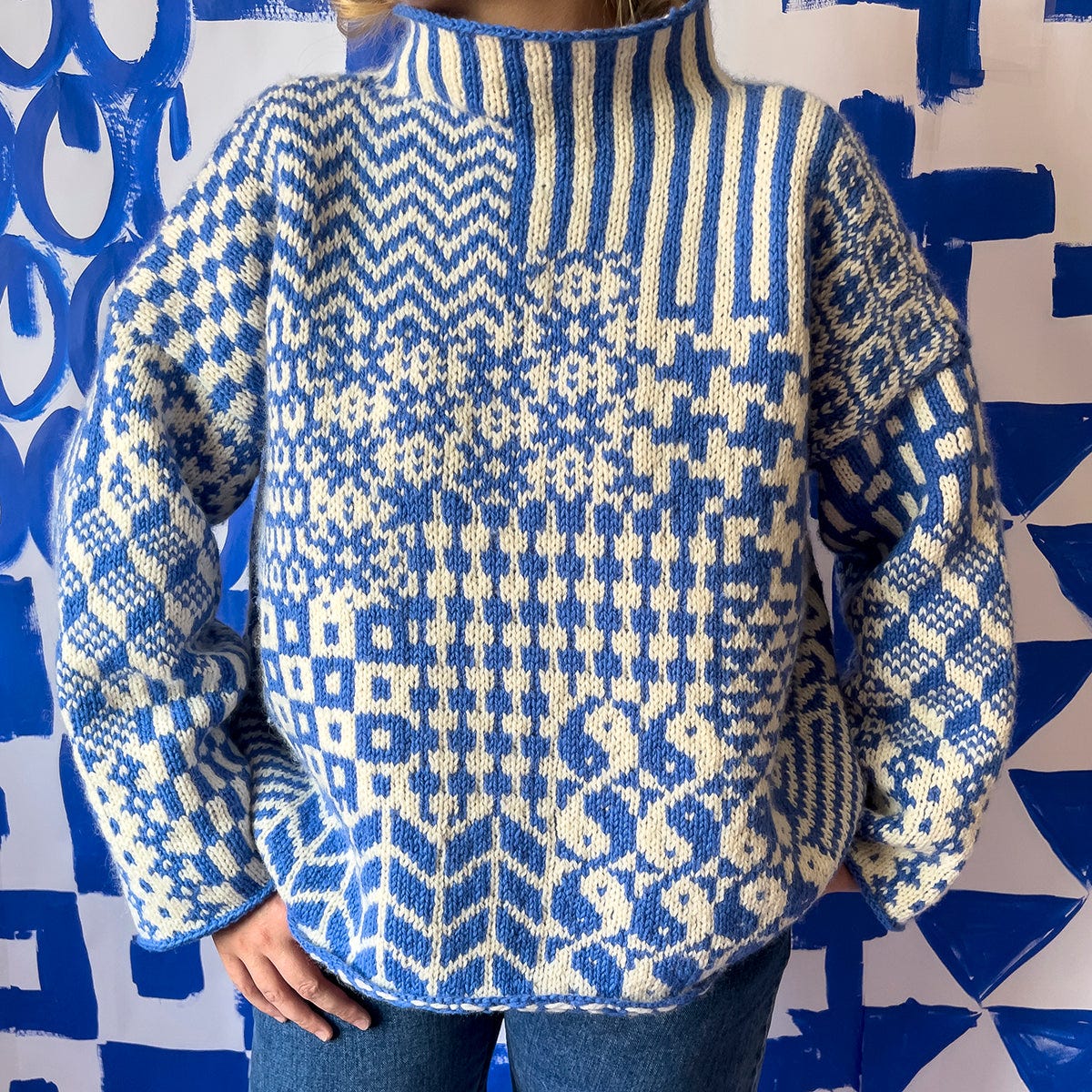
I think this reconnection with an ancient craft can help balance us, balance a stressful daily life or hours staring into a screen. Touching something that is not smooth and flat, but wooly, tangly, something you need to pay attention to.
Attention.
That’s also one of the things needed when you dedicate time to a craft like knitting - and in “the attention economy“ we’re living in at this moment, paying attention to something you’re creating IRL with your own two hands can feel like a kind of rebellion.
I’ve been thinking about this knitting “wave“ in terms of trendiness and rebellion. Is it a trend as so many other trends, does knitting just resurface every 20 or so years, and then go to sleep again?
Or is knitting a subtle rebellion this time again, as it was in the 70’s in Denmark, when hønsestrik(one of Lærke Bagger’s inspirational sources) emerged as a protest in connection to the Red Stocking women’s liberation movement in Denmark?
And can knitting be a rebellion, if it’s also a trend?
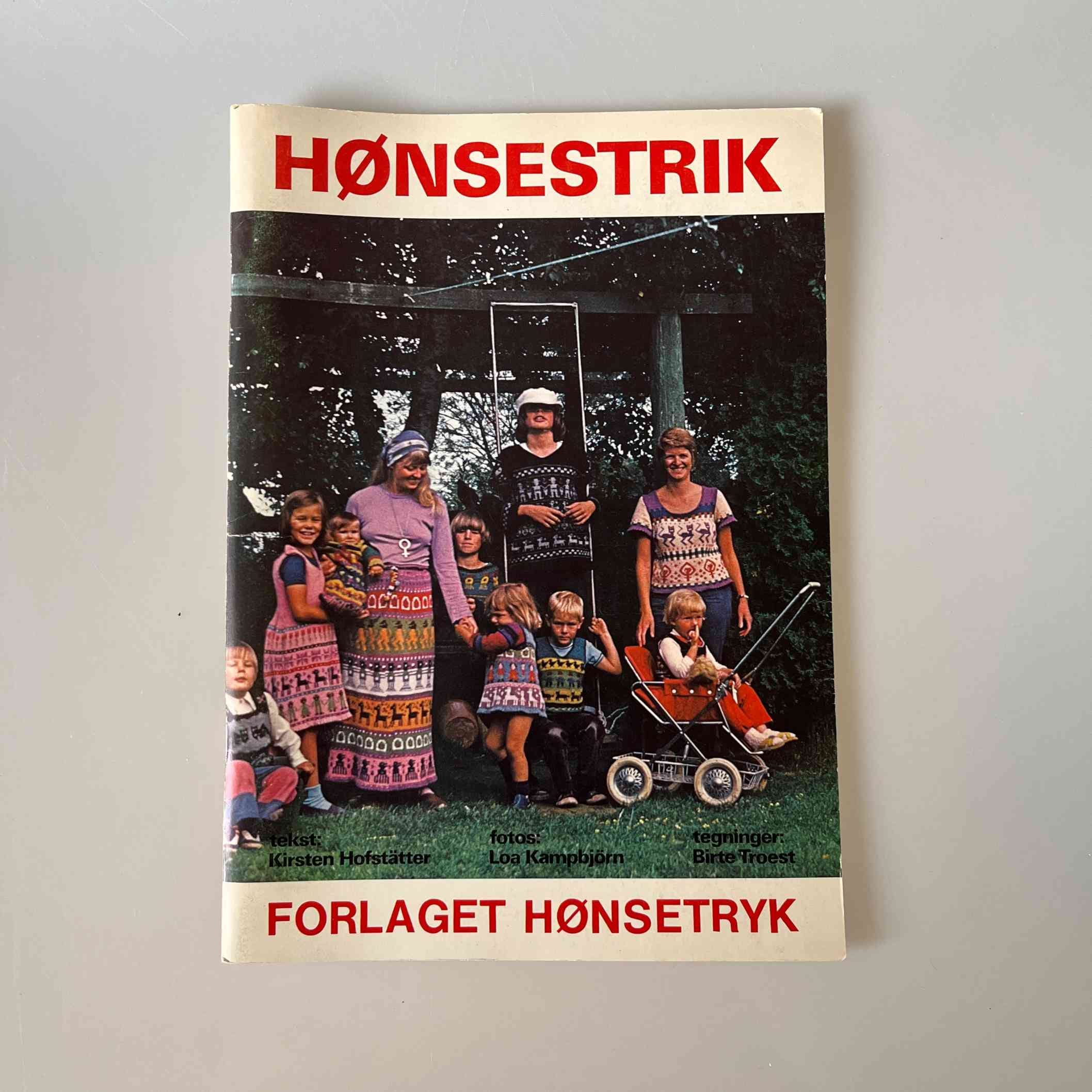
There is something about these old crafts, their histories. The presence of the act of knitting and a hand knitted cloth, that someone spent time, attention and skill creating.
From the first knitted cloth 3000 years ago, to fishermen’s sweaters displaying the pattern of their home region, to the protest of hønsestrik, to “knit and drink“-events, to knitting on TikTok and asking about yarn quality in the comments.
When we knit, no matter how new the yarn, the pattern, the needles, we just pay attention and immerse ourselves.
We connect with history, with textiles that helped form our culture, and for me: I connect with my mom.
Comments
Nothing yet. Say the first thing.
Sign in to join the conversation.