
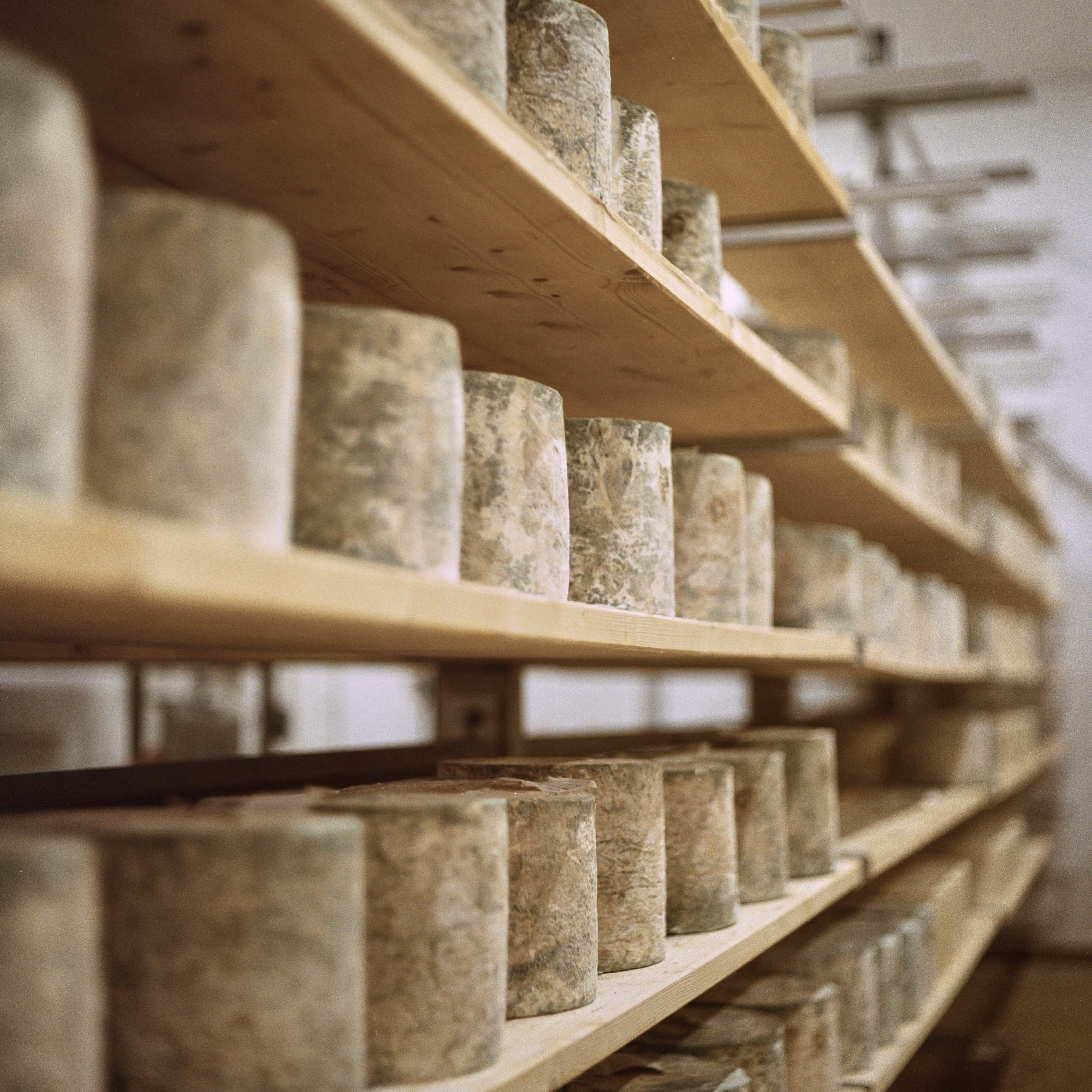
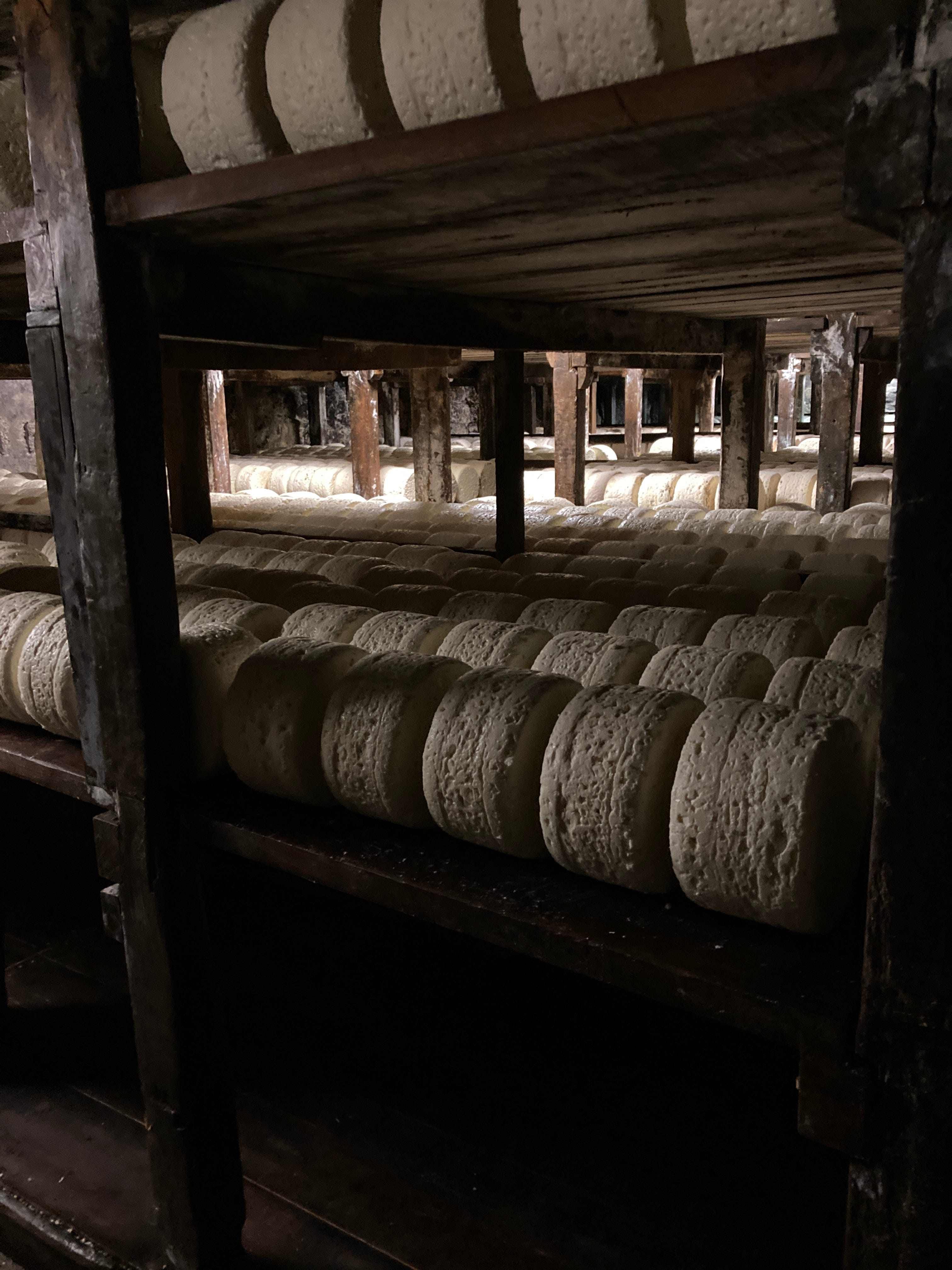
The caves of Roquefort have an inspirational power to them. Surrounded by cobwebbed walls and black oak shelves shining with the patina of centuries’ worth of rich sheepy whey, it is easy to feel a communion with the generations of cheesemakers and affineurs who have worked here before you, and a sense that somehow you should find a way to honour their work and their devotion to the craft. This was clearly the case for soon-to-be-ex vet John Bailey, because it was down in one of these caves, perhaps while fortifying himself with a bit of the eponymous and notoriously characterful cheese that he thought, ‘this is something I could do.’
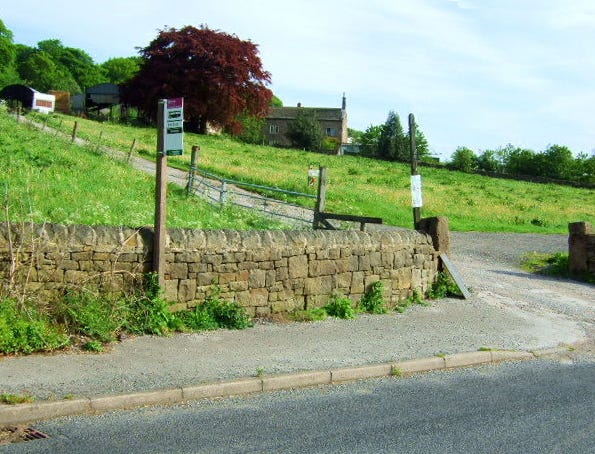
In 2017 John and his wife Heather Benbow sold their vet business and bought Wakebridge Manor Farm in the valley of the river Amber in Derbyshire, with the intention of starting a sheep’s cheese business. If you’ll remember, there was some stuff going on then that made it harder to get grants for this sort of thing, then a few years later, that Other Thing happened which seriously delayed the import of all their cheesemaking equipment from the Netherlands. So it was not until 2023 that the first cheeses were ready to take to market. Nevertheless, they persisted; cheesemakers - even proto-cheesemakers - are nothing if not resilient, and resourceful.
Along the way John and Heather had recruited Daniel Mason, partner of their daughter Victoria, to help make the cheese. Like almost everyone I know in the world of cheese, Dan’s journey into it has been non-linear, yet not irrelevant. Coming out of a degree in environmental science he began volunteering with a view to work as a ranger but he had already begun home-brewing. This interest took over more and more until he began touting himself around breweries instead, and finally got a job at Castle Rock Brewery in Nottingham. Now at this point, if Dan had turned up at my dairy I’d have hired him like a shot already with that background, but there is more. It turns out that he had been fascinated by cheese since childhood, and was a keen hobbyist cheesemaker at home, using as his guide the American book The Cheesemaker’s Apprentice, but, I suspect, doing a fair bit of seat-of-the-pants cheesemaking and developing his instincts.
Like all the great cheesemakers Dan has a sort of off-hand humility about the process. Allowing that his background in brewing has informed his cheesemaking, he says that they are similar processes, and that for both crafts you are working with ‘raw materials that are unpredictable,’ so that a major part of the process is ‘problem solving.’ Dan sees two main forces in cheesemaking: the changes in the milk affected by the weather, the lactation period of the sheep or even their mood; and the microbial processes at work during fermentation - neither of which the cheesemaker has full control of. All you can do is it ‘steer the milk in the way you want it to go.’ I reckon Dan’s a natural helmsman because the cheese is excellent.
Most of the hard sheep’s cheeses in the British Isles are based on Continental styles, like Italian Pecorino, Spanish Manchego, or French/Basque Brebis. With its cloth binding and soft crumbly texture, Wakebridge feels more indigenous to me, and I was curious to know if the cheese was based on an old recipe. I was particularly excited about this because the territorial cheese of Derbyshire was one of the styles that was rendered completely extinct by the early 1900s, largely due to the advent of the railways, and the development of the easier and less risky liquid milk industry. I’ve always wanted someone to resurrect Derbyshire cheese.
Dan says that the starting point for the cheese was wanting something ‘simple, that would show off the milk,’ and would not ‘divide people,’ in the way that say the often eye-wateringly powerful Roquefort can. The cloth binding, unique to British style cheeses, is something that he had always done with his cheeses at home ‘because that worked the best’ and makes the cheeses easier to transport. The recipe is broadly based on traditional British methods, using a British starter culture for example, and one of the results is that brittle crumbly texture, rather than the more elastic one characteristic of Continental hard cheeses. Dairy consultant Richard Newell helped in the early development of the recipe to make the cheese more ‘commercial’, which I read as ‘suiting the British cheese palate’.
Even if there was no intention to replicate an old Derby cheese, these eminently practical choices seem to me to be the same sort that Dan’s dairying forebears would have made - and though they are tantalisingly few, there are glimpses of a lost history of cheesemaking on the farm. I like to think that they would have liked Wakebridge and recognised it as something that could have come from their land, their flocks and their dairies. That the cheese is sheep’s milk locates it right back in the medieval tradition of cheesemaking, before British makers shifted to cows.
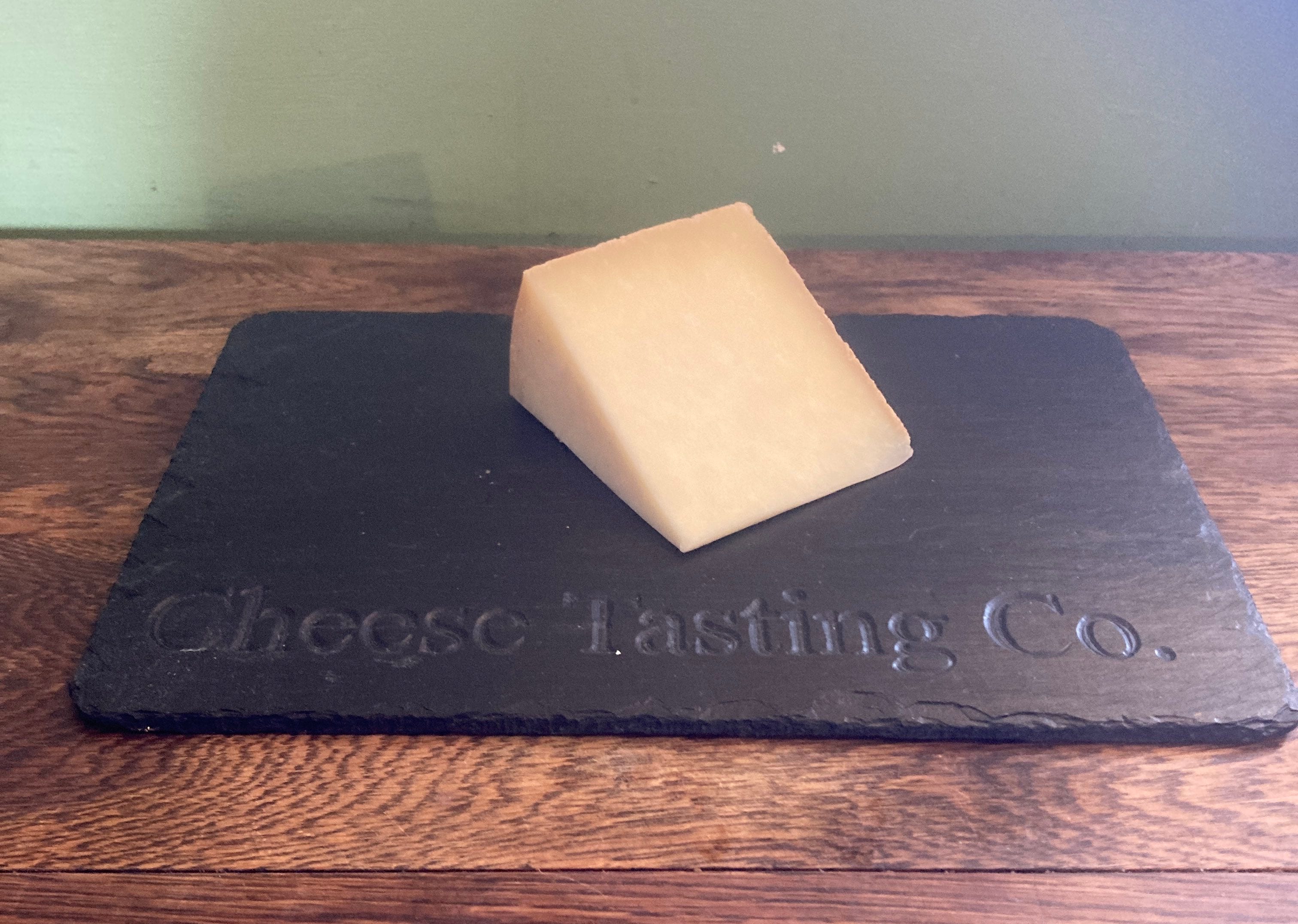
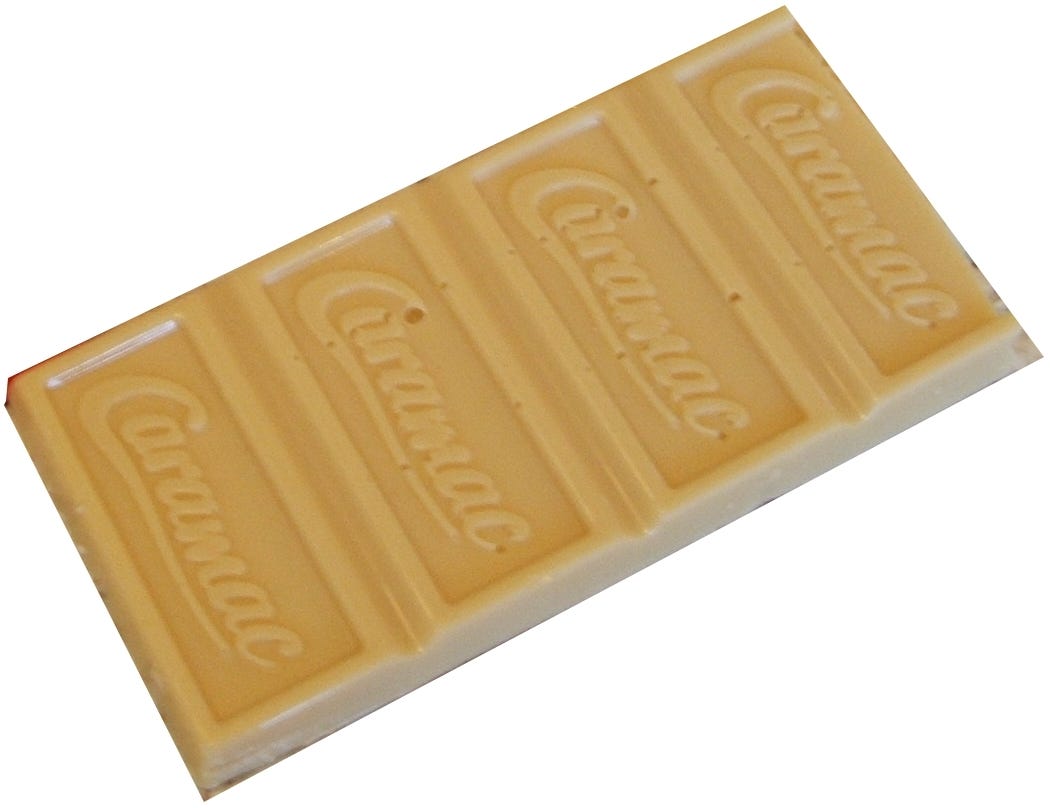
As for the cheese itself, Wakebridge has the light ivory colour of sheep’s milk, with the pretty imprint of the cloth on its rind. The aroma reminds me of buttered popcorn and while many hard sheep’s cheeses have a tropical fruit flavour, this one tastes of coconut - a thing I have never found in a cheese before - with a hint of caramelised milk that gives me a homely memory of the sadly extinct 1970s Caramac made from condensed milk and sugar. Perhaps we can bring that back too.
I’ve been enjoying Wakebridge with Unbarred Brewery’s Joosy Pale, whose tropical hoppy notes combine with the coconut note in the cheese to give a cheesy beery version of a piña colada. You can try them too if you come on one of my Cheesemonger’s Tours, in which we finish up at the lovely Blue Maid in Borough High Street for a cheese, beer and history tasting.
At the moment I’m amazed that anyone would think of starting up a new business, what with how tough things are at the moment; I’m constantly amazed that anyone would want to get into cheesemaking, given what hard graft it is, though I submit that it can be very rewarding; I’m verging on flabbergasted that Dan and the rest of the family have managed to produce such an excellent cheese in such a short time. Cheesemakers are amazing.
This week’s recommendations:
Substack: A Private Chef - Will Cooper: chef, beekeeper, cheesemaker, all his food looks lovely…stop it Will! You’re making the rest of us look bad!
Book: Field Work, by Bella Bathurst - A moving, beautifully written and sometimes heart-breaking exploration of farming life in contemporary Britain. This is a must-read if you work in food, but really I feel that everyone who lives in a city should read it.
Podcast: Farming Today - In the spirit of reminding us all where our food comes from…or doesn’t but should…
Thanks for reading! This post is public so feel free to share it.
Comments
Nothing yet. Say the first thing.
Sign in to join the conversation.