
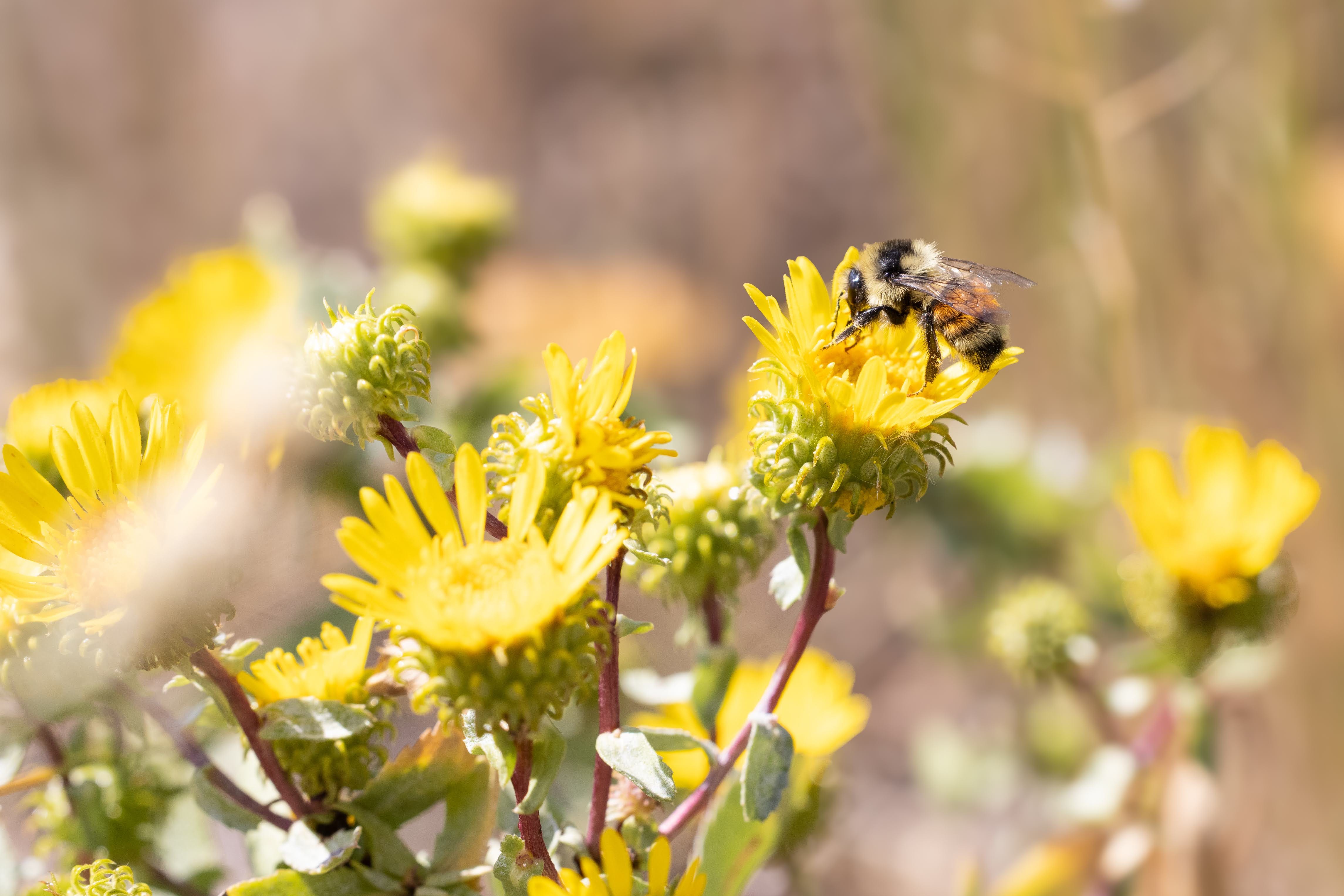
Bumble Bees are native to North America and are important pollinators, and they need our help! Pesticides, habitat loss, and competition from honey bees - who are not native to North America - all put pressure on these fuzzy little animals. That’s why I joined the Bumble Bee Atlas project, a community science effort to collect data needed to track and conserve bumble bees, run by the Xerces Society.
To participate, you go through training and commit to at least two surveys during the wildflower blooming season.
I did my first survey a few weeks ago at a nearby statepark. I had been eyeing a few plants in the park that had bumble activity so I already knew where to go. The survey is only supposed to take 45 minutes. But… my net skills are laughable. Somehow I managed to trap 4 bees in 45 minutes. Many people asked me what I was doing and wanted to make sure I wasn’t killing whatever it was I was catching. I thought that was admirable. One man asked me if I was catching every bumble bee I saw and I said “I’m catching every bumble bee I can catch” which is an entirely different (and much smaller) number!
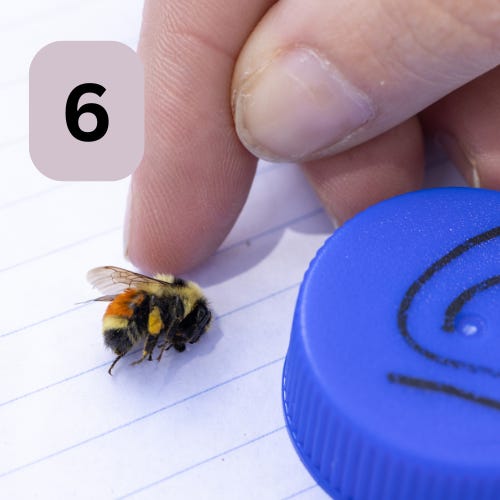
Once caught, the bumbles chilled on ice for 20 minutes, then ID’d to the best to my ability, photographed and released. They fly away unharmed once they’ve warmed up. My favorite part is watching them recover - grooming themselves like tiny cats before buzzing off.
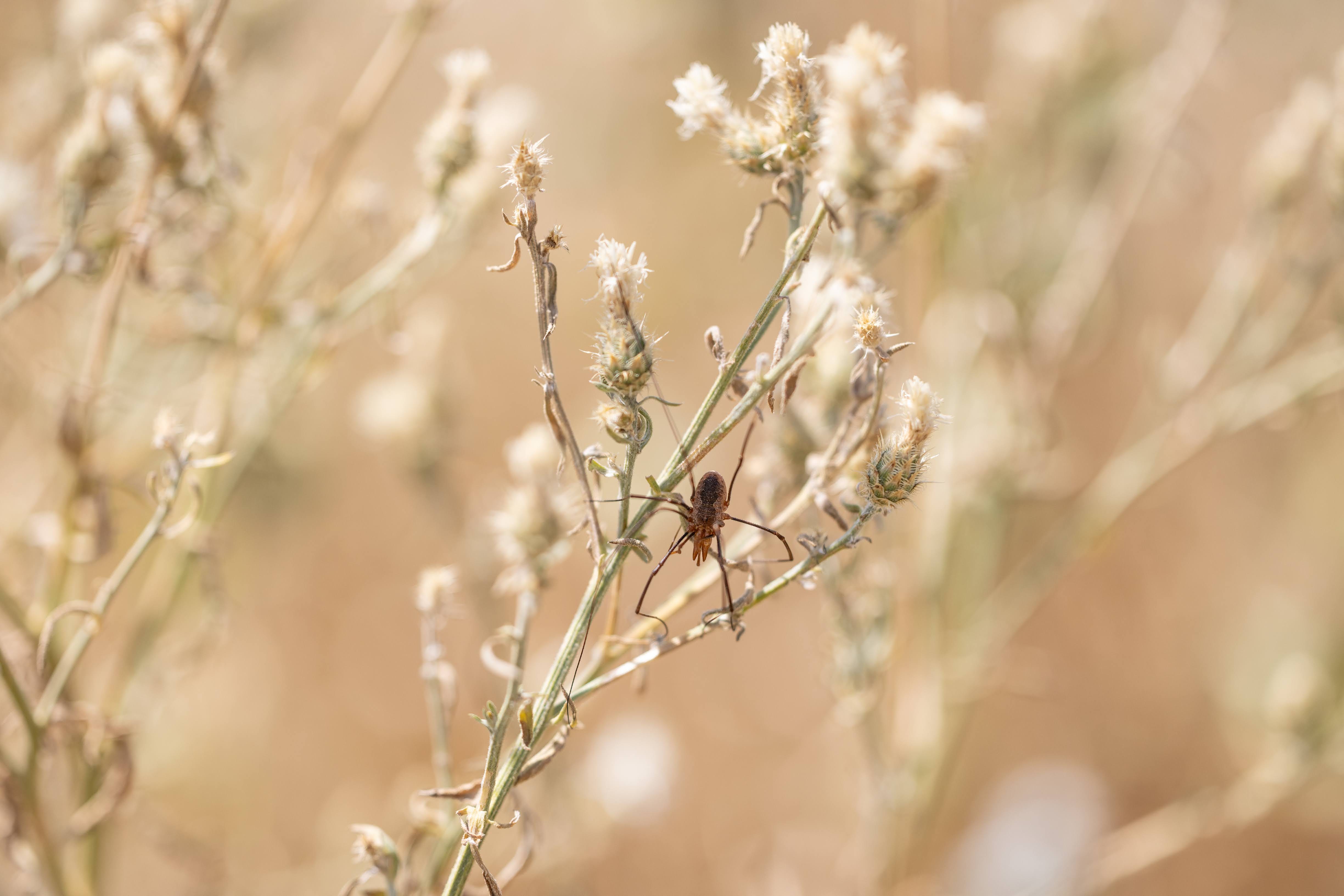
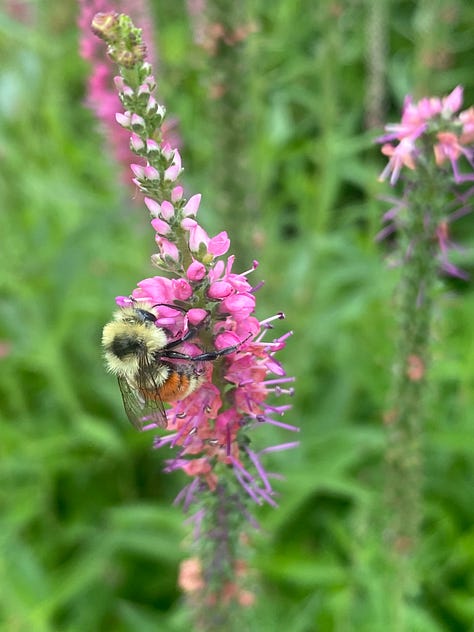
Since then, I’ve been thinking alot about habitat. The state park has many native plants, and the bumbles use some of them, like campanula sp. and curly cup gumweed. But they seemed just as interested in non-natives like Russian thistle, Alfalfa, and Diffuse Knapweed. In fact, on my second bee survey I found the most action on the knapweed. Bumbles, bee like flies, honey bees - Everyone seemed to like the bedraggled non-native knapweed. I even saw a harvestman lurking nearby, waiting to ambush a visitor. Down in my neighborhood that was once prairie, I notice a lot of bumble activity on non-natives like teasel and speedwell.
A state entomologist I had the privlede to speak with echoed my observations: bumble bees are readily using non-native plants. Hunt’s bumble bee, one of our most common, seemed especially willing to feed on non-natives, perhaps that is why it is thriving. The main exception was Mullein, there isn’t much action on the Mullein here.
Bumbles on non-native species - Speedwell sp., Teasel, Diffuse Knapweed. Photos © 2025 - Heather Valey
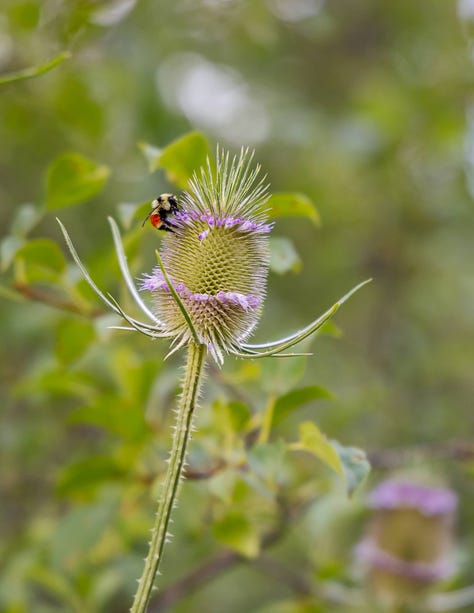
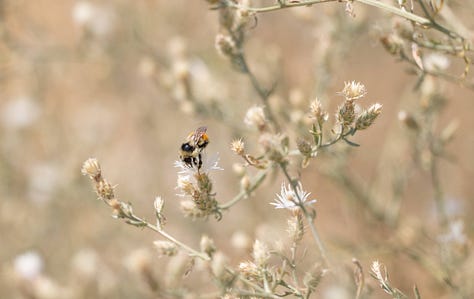
That leaves me wondering: If bees are finding food with non-natives, do we make room for them when restoring ecosystems? Would they continue to choose non-natives if more natives were available? Maybe our idea of good plant vs. bad plant is too black and white?
According to the state entemologist, many introduced weeds have become dominanat and important floral resources in the state. Colorado State University has done research that suggests that Canada and bull thistle are the most nutrious floral source for bumblebees in the Colorado frontrange.
He also mentioned that this means that restoration that involves removing flowering weeds can impact bumblebees. However, bumblebees are generalists and can switch to other flowers as needed. So as long term efforts commence to restore native plants we need to be aware of the timing and scale of our weed managment. Basically we don’t want to remove all of the existing floral resources while we are waiting for the native ones to re-establish!
What do you think? What pollinators have you seen on invasive and non-native plants?
Comments
Nothing yet. Say the first thing.
Sign in to join the conversation.