
“Her acne was never that bad in the first place” is a common criticism I get about my content.
But what people don’t realise is that I’ve made that abundantly clear from day one.
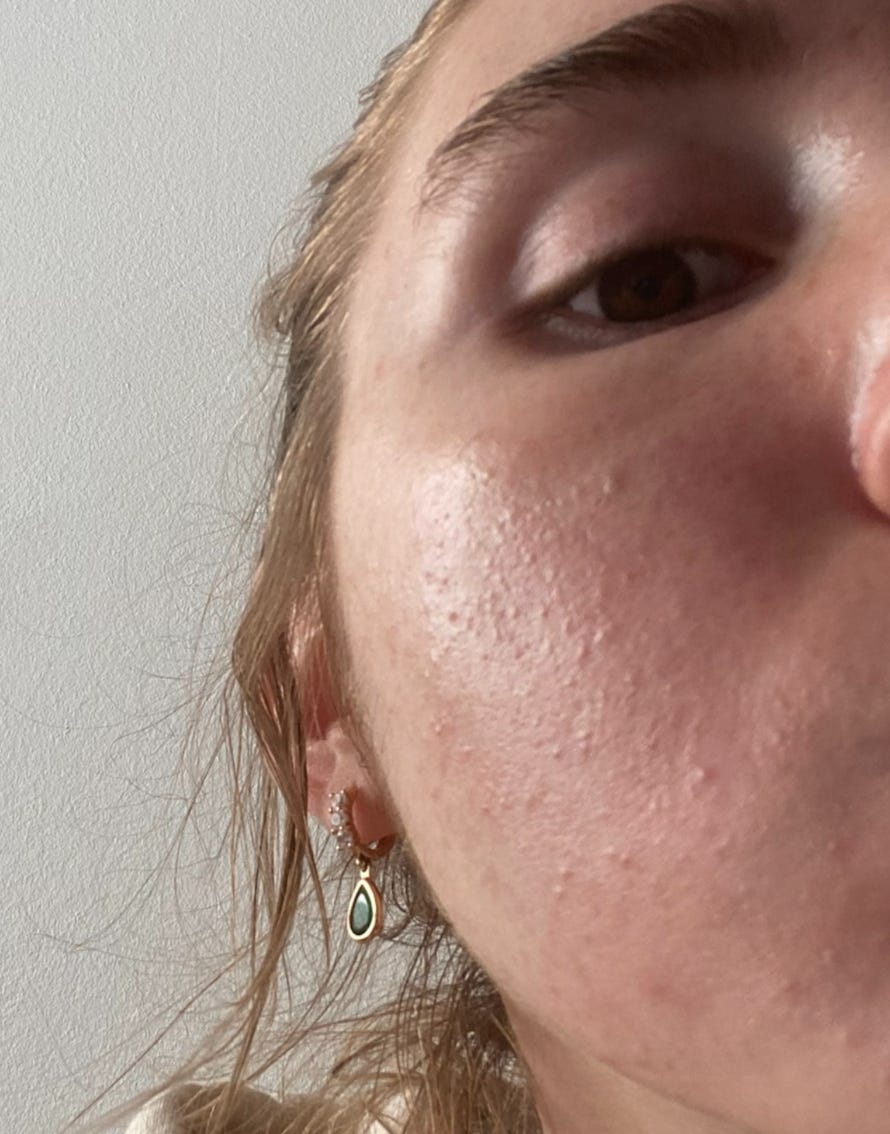
My content was never about acne vulgaris, but about ‘clog-prone’ skin. A term that thousands of people immediately resonated with.
The results you see are a direct result of how well you understand your skin. So I’m here to build the case for why you should acknowledge having the clog-prone skin type, and exactly how to care for it.
How to know if you have clog-prone skin
The difference between acne and clog-prone skin
Why clog-prone skin is rarely acknowledged by professionals
My golden rules for dealing with this skin type
Skin types are one of the most confusing concepts in skin care because many people treat them like gospel. The truth is that they are top-level labels to help guide us, but they are not useful in the way we think they are. The same way that some plants are ‘evergreen’ but might still require different types of soil, levels of watering and sunlight: skin types are only one guiding factor for how we should care for our skin.
If you’re walking into Sephora and only looking at products designed for your skin type, that might be exactly where you’re going wrong. If you’re rejecting skincare because it’s for ‘oily skin’ and you have dry skin, even more so.
But I’m not trying to confuse you on purpose. I know you’re only doing that to make things easier for yourself.
The key thing to remember is that you can have both types.
I’m imagining that if you do have clog-prone skin, you might have clocked it by now from this post.
But if you haven’t, consider this checklist to see if you relate:
You often break out when you try a new skincare product, within a few days or a week sometimes
You’ve become nervous to try new products because you break out so easily
It feels like you have to try five moisturisers to find one that won’t break you out
You often feel limited by which products you can use because so few of them don’t break you out. You might even get stuck using a product you don’t like for a long time because you can’t find an alternative that won’t break you out.
You regularly notice stubborn little bumps on your face, even if you don’t have inflamed pimples
You don’t have to relate to all of these to have this skin type. Remember that skin types are just just collections of similar traits to guide you, not something you could take a blood test for to be diagnosed with.
The most interesting thing to note is that you could have acne-prone skin as well as a tendency to clog and break out from new products very quickly.
The key difference lies in what drives hormonal acne vs. clog-prone skin.
When it comes to adult acne, breakouts appear due to a complex process involving hormones, insulin, oil and bacteria.
People with clog-prone skin can experience this on top of their tendency to break out quickly from products. The bottom line: you can have hormonal acne and this skin type at the same time, but they are not the same thing.
You might take medication for hormonal acne that makes it go away completely, but your skin would still be prone to breakouts from new products.
Looking back on my skincare history is what allowed me to have this epiphany.
I’ll give you a rough timeline to show you what I mean:
Age 12-16 - puberty, I had clear skin and never struggled with acne.
Age 16-18 - when I first started noticing the acne. Two things happened at once: I started working, which gave me income to spend on skincare. I would buy tonnes of it and apply it lavishly to my face. I would get acne and then buy more skincare to try to fix that acne. This is also when I started getting into the gym, didn’t realise I had PCOS and started drinking whey protein every day.
Age 18-21 - the peak of my bad skin. I was constantly battling with inflamed acne from processed foods and dairy due to my gym lifestyle, on top of not understanding my skin and applying tonnes more skincare trying to make it better. Sometimes it would miraculously improve, only for it to get worse a month later. I could never understand the pattern and I was in a horrible cycle of skin picking to try to take back control.
Age 21-25 - I started eating an anti-inflammatory diet and practicing good lifestyle tips for PCOS. My inflamed acne completely subsided. I would still get regular breakouts, though, which I assumed were hormonal.
Age 25-31 - (now). I began using a retinoid in 2020, and after the adjustment period I noticed how clear my skin was.
Now the only time I get breakouts is when I introduce a new product - often from just one day of use.
If I test a product on one cheek only, I will wake up with pimples only on that cheek.
I can use a cleanser once and have three new pimples from it.
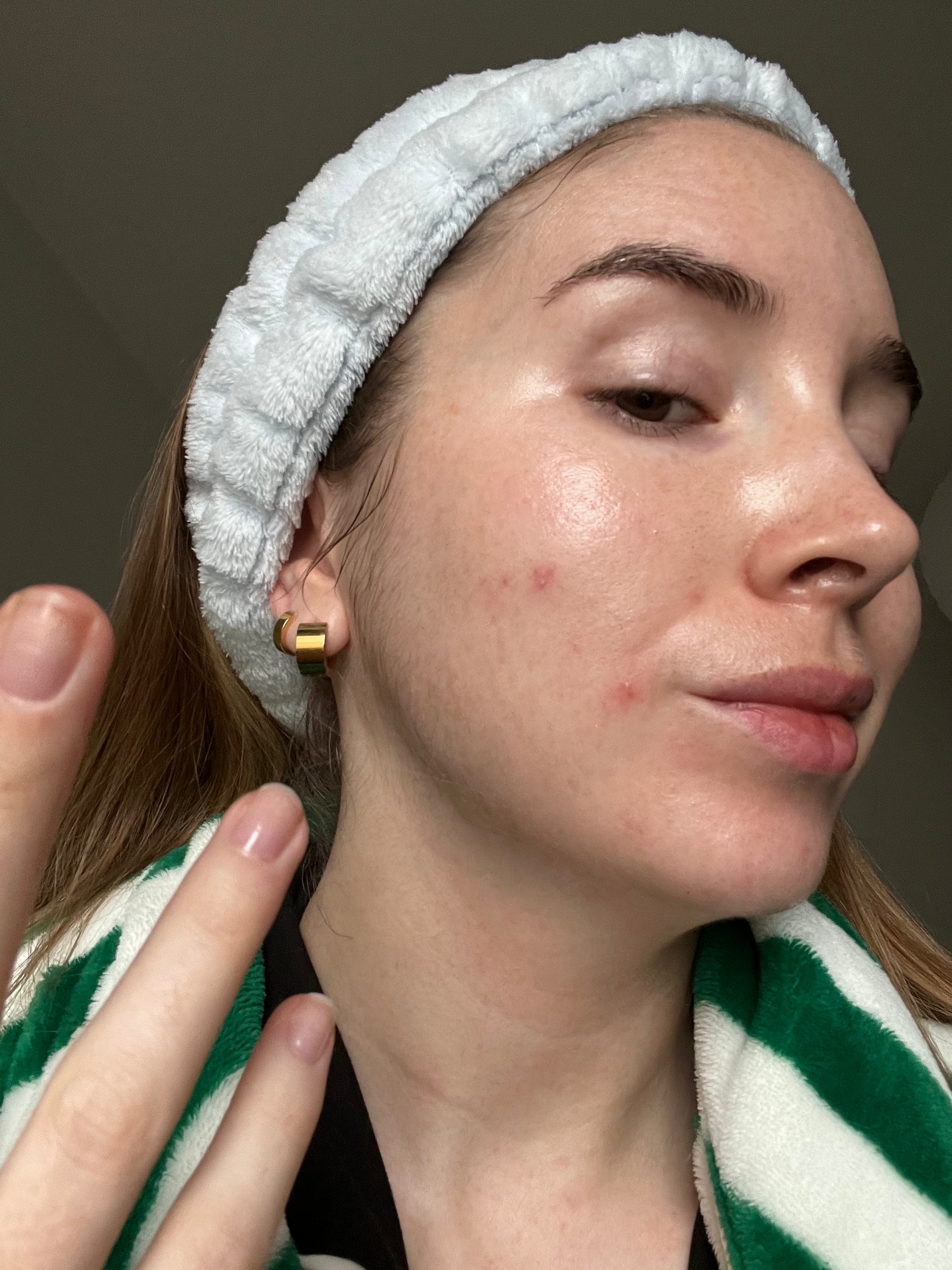
That’s when I realised: my acne has almost always been due to products, and if my skin is like this, there must be so many others who’re the same.
If you have this skin type, you will be gaslighted about it often. People struggle to acknowledge things they’ve not experienced themselves, so they fixate on alternative reasons:
“You must have an underlying condition”
“There’s no way that moisturiser could break you out, it must be hormones“
The skin type is rare enough that not many professionals can relate, so they think your experience is false.
Every day, people are realising their skin care has been causing them cystic acne for years.
Some of them are even going on medication to fix it, when the problem was a £10 tub of Cerave all along.
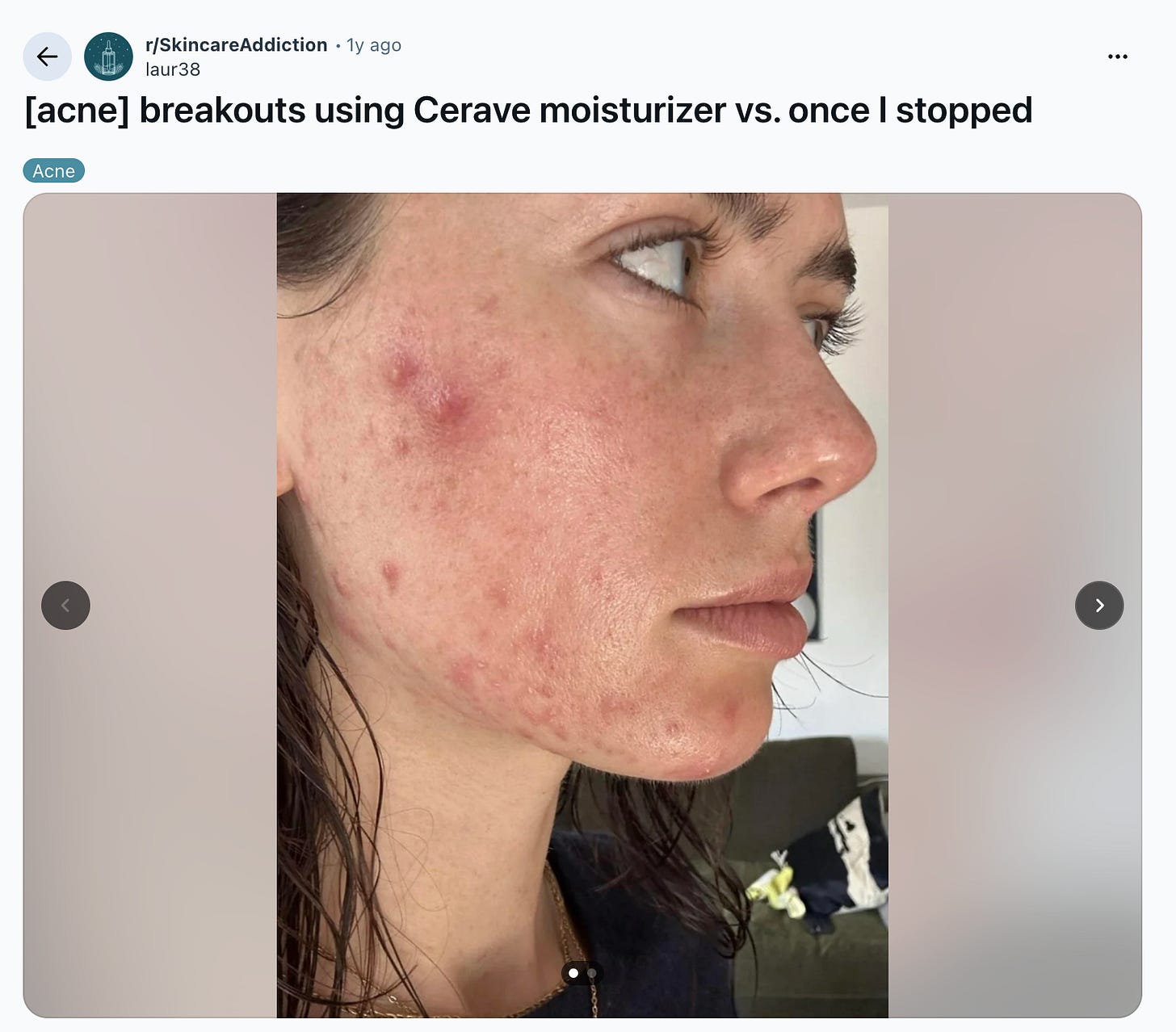
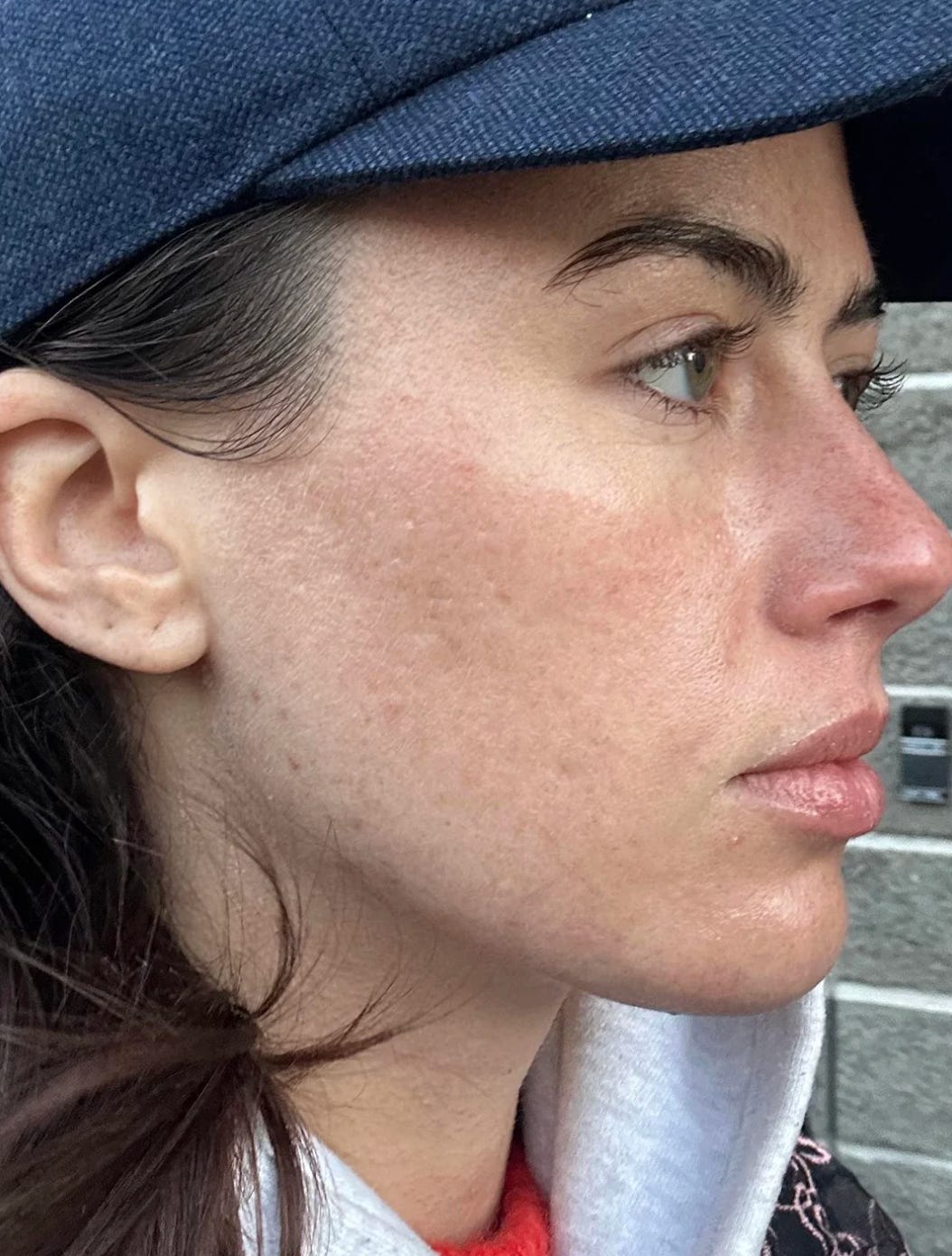
The same girl without Cerave:
Earlier I shared a photo of my breakouts from a cleanser after two days, in case you missed it. Can you imagine what would happen if I had continued to use that for a month?
How to care for this skin type
I’ll leave you with some tips for this skin type that I wish someone had told me in my twenties:
Patch test every new product you try. I have a complete patch testing guide here.
Only ever introduce one new skincare product at a time. Doing more than this can end in disaster - you have to stop using all of them, to then reintroduce them one by one, to see what’s breaking you out.
Keep a list of all of the products that break you out, and use AI to help you notice patterns and avoid high-risk products. You can’t always accurately predict what will and won’t break you out, but it’s a useful start.
Notice patterns with brands that break you out. CeraVe typically uses similar ingredients in all of their products, so it’s likely that if a brand breaks you out, their other products may be the same.
Consider using a retinoid regularly. I find that retinoids keep my skin clog-free and help me recover very quickly from new product breakouts.
You may have to use different products on different areas of your face. For example, I find my forehead is more clog-prone than my cheeks, so I use a different sunscreen there. It’s not ideal, but sometimes it’s what you have to do to make it work.
That’s all from me for this week, but below I’ve listed a few different articles you might enjoy if you think we share the same skin type.
Natalie x
About the author:
Hey, I’m Natalie. I built an audience of over 1 million on TikTok talking about skincare, that quickly evolved into something much bigger here on Substack.
Now I write brutally honest, big-sister guides on skincare, finance and wellness for your 20s and 30s - breaking down what actually works so you can get ahead faster, learning from my mistakes and shortcuts.

💬 Follow on TikTok or Instagram for brutally honest skincare takes
💻 Ask me a question in the group chat
🧴Shop my recommendations here
Comments
Nothing yet. Say the first thing.
Sign in to join the conversation.