
I still remember the mortgage advisor meeting that changed everything for me, faster than I ever could have expected.
My sister-in-law had given me a mortgage advisor’s contact details, so I figured I’d set up a call to see what it was all about.
I came away from the call with a mortgage in principle and advice to start looking for houses now if I wanted to.
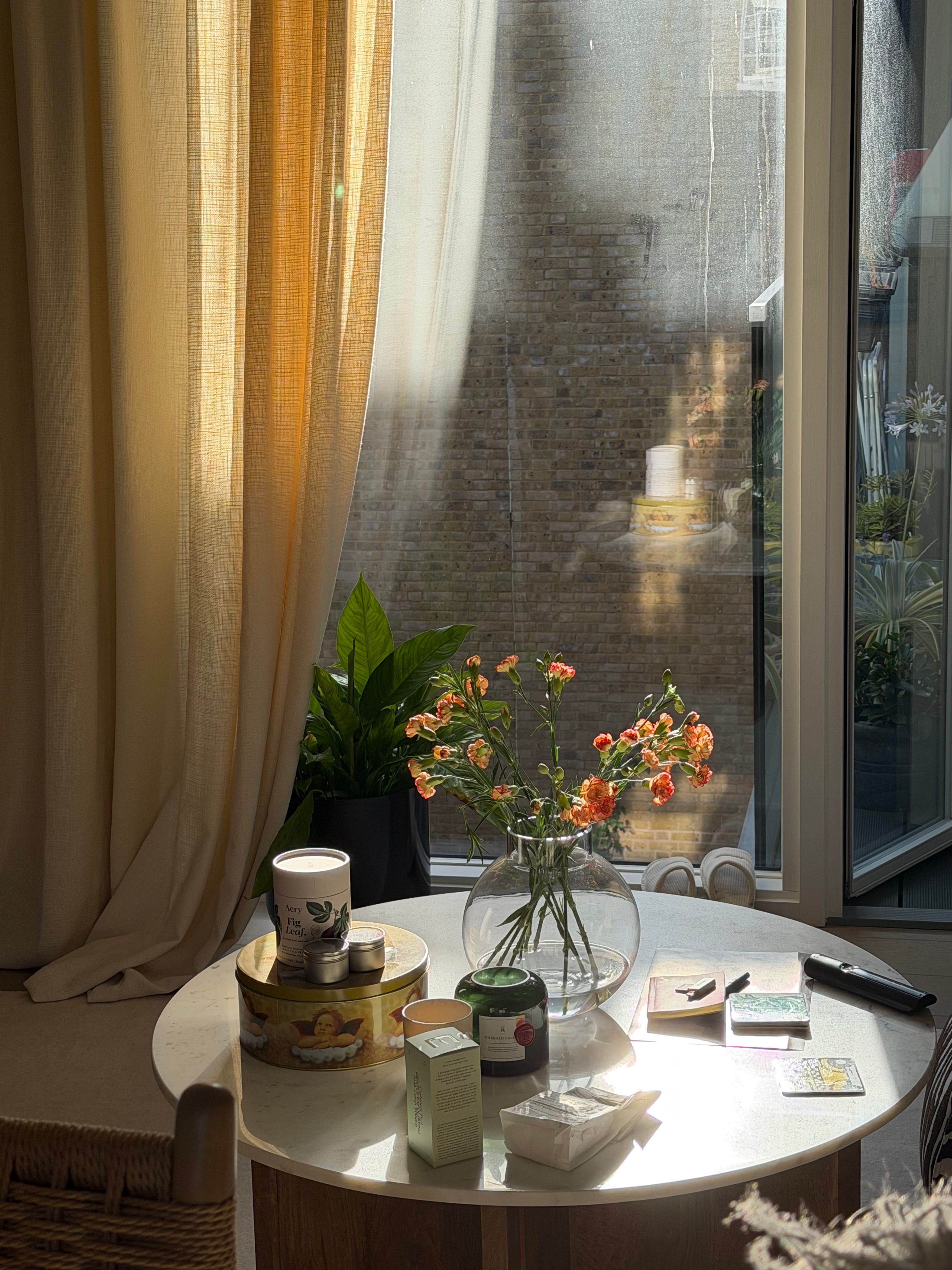
As a single income, self employed 29 year old, I was expecting to be given detailed advice on how to get my finances in order. Most likely for a purchase in a few years’ time.
I was not expecting to walk away with a mortgage in principle and the ability to make an offer on something that day if I wanted to.
Now, a year after moving in, I feel like I’ve learned so much about the housing market, home ownership, and everything I’d do differently if I was buying my first property again as a single 30-year-old. At the end, I’ve put a bonus list of bigger mistakes I recommend avoiding - highly recommend not skipping this part.
Starting strong with how your preferences can change so quickly when you’re looking at properties.
When I first started looking, there was a flat in a building I’d always admired.
I viewed it, I loved it, and I wanted to make an offer on it.
And I did make an offer on it - but I am so glad my offer was rejected.
My dad advised me to see 20 to 30 properties before I made a decision, and to be honest, I rolled my eyes because that felt like way too many.
But it’s now my go-to piece of advice.
I was looking to buy in the area I’d lived in for four years, so I felt like I would recognise my dream home when I saw it.
I was wrong, and I think many of you will be, too.
Challenge yourself to see more properties than you can be bothered to - especially if you’re buying alone.
You won’t regret it.
The type of property you buy can massively impact your life.
It’s easy to get swept up in a renovation because Instagram makes it look fun. But especially as a solo buyer, it can really make your life a living hell - not something to be taken lightly!
And I’m not saying everyone should buy a new build - I know they come with their own problems. But as much as period properties are by far the cutest, they often come with a horde of expensive problems.
Buying on my own, that was not something I wanted to deal with.
I know people who’ve bought older properties and have come back from holiday to find the roof has caved in, less than six months after buying. That’s £20k gone in a flash.
Even Grace Beverly’s most recent (and gorgeous) renovation has started sprouting wisteria from the skirting board.

I don’t think I could handle the stress of something like that on my own - more importantly, I simply don’t want to.
That’s why I tried to always keep in mind my reasons for buying:
autonomy - not having to ask somebody else to rent their property or potentially get kicked out
a smart financial move - paying off my mortgage instead of someone else’s
an easier life to facilitate where I’m at in my career
Emphasis on that last point.
I wanted to buy a flat that made my life easier, not harder.
And as much as it would have been nice to buy a cute little flat that looked exactly how I wanted, I had to get real with myself on what would actually make that happen.
In the end, I went for a new build flat with a few period features, like sash windows and a period/original facade.
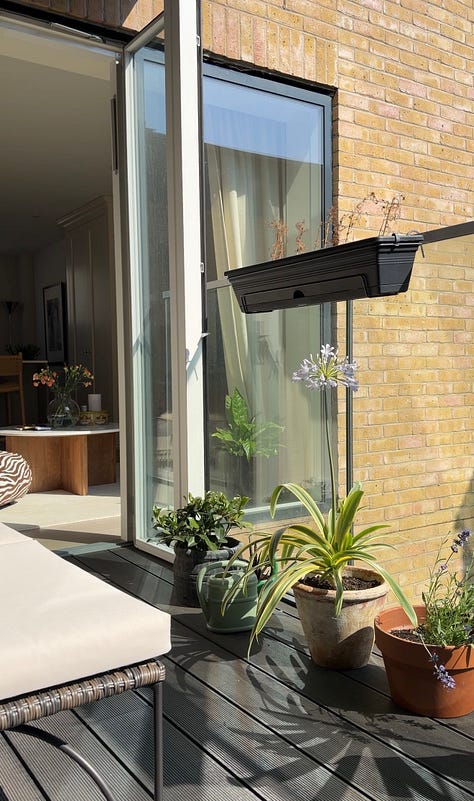
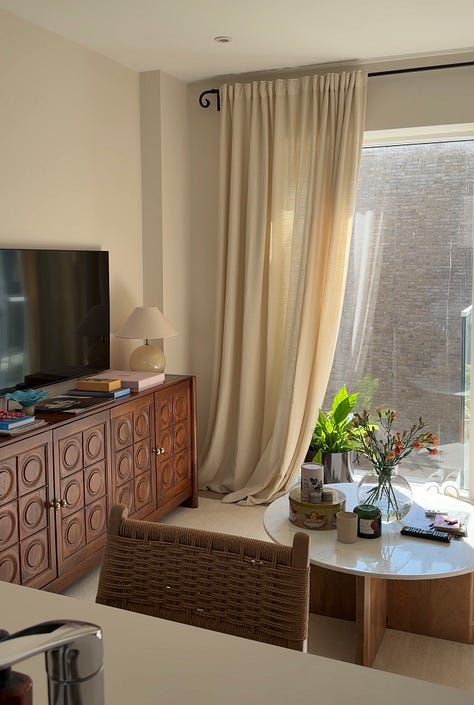
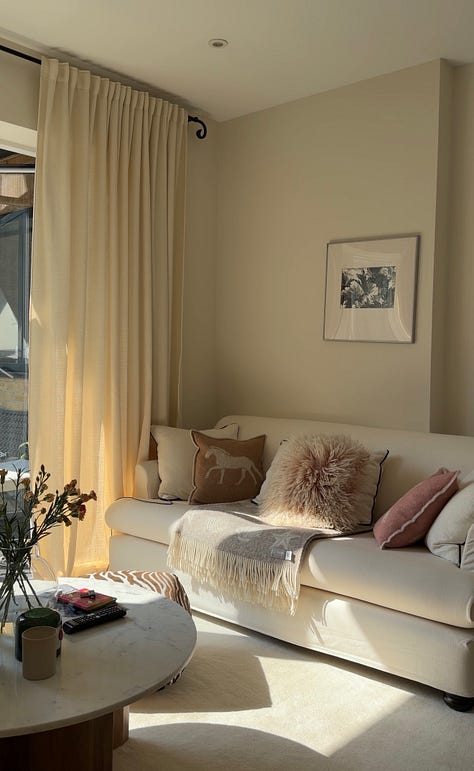
It’s easy to keep pristine, it has tonnes of natural light, and it’s a small development with a very low and well-managed service charge.
It’s a touch smaller than I wanted, but it’s also in my perfect location.
Swings and roundabouts. Speaking of which…
As a perfectionist (and someone who suffers from black and white thinking, which has now evolved into what I suspect is optimisation OCD), I struggled with the idea that I wouldn’t be able to tick every single box on my list.
Everyone kept telling me I’d have to make a compromise. I didn’t fully get it until I walked into the property I ended up buying.
This is because the majority of people are buying at the top end of their budget - even people whose budgets are multi-millions of pounds (not me, to be clear).
That means we are almost always looking at properties that are just a little bit more expensive than what we truly want to pay - and that means there will almost always be a compromise.
I knew my flat was for me when I:
had viewed enough properties to get a feel for what I really liked
had missed out on a couple and/or had my offer rejected
loved the way it felt when I walked inside
could feel excited to move in
matched my list of priorities in a property
All of this… AND its shortcomings didn’t matter that much to me.
It’s a lot like choosing a partner - there will always be shortcomings, but you need to decide which ones you’re willing to deal with.
My flat’s shortcomings:
It’s a little bit smaller than I wanted
It has a terrible view of a brick wall from the balcony (lol)
A lot of square footage is lost on the massive hallway, which is kind of useless
It doesn’t have a single storage cupboard (I had to build them all in)
One side of it is on a noisy main road (even though the sound insulation is incredible, so you barely notice)
Despite all of these things, the benefits of the flat outweighed them and I was excited to move in. That’s how I knew it was the one for me.
I’m hoping this isn’t new information to you.
There are plenty of horror stories about solicitors charging through the roof and being slow as hell.
The helpful context you’re probably missing is that house purchases are a dime a dozen to solicitors.
You see purchasing a house as a huge moment in your life. But solicitors will be working on tens, maybe hundreds of house sales at once. If you pick the wrong solicitor, that will soon become very apparent to you - mistakes, small details forgotten, slow response times. It can be agonising.
Luckily, one of my best friends is a lawyer recommended his solicitor to me. I went with Ramsdens, and they caused me no issues at all. And to be clear, I’m not affiliated with them in any way.
Now for the list of (what I deem to be) mistakes for any solo first-time buyer:
Any AI agent can give you a list of costs to buy a house in the UK, depending on the property price.
Don’t forget about solicitor’s fees, stamp duty, and your mortgage interest rate.
Don’t forget that interest rates can go up and down. Anyone who bought a house with a 1-2% interest rate in 2023 is likely now paying double their original mortgage due to interest rates. They make a huge difference.
Lastly, don’t underestimate renovation costs - the irony here is that everybody underestimates renovation costs. Budget for the idea that it will always cost more than you think.
After my sale went through, I got quotes for painting the entire flat - some starting at £4k - a cost I hadn’t even considered, to be honest.
Whilst it’s true that leaseholds are being reformed by the government, I still don’t think leaseholds are always a bad idea.
Many people are critical of leaseholds without understanding the nuance, so these are my personal rules when it comes to buying a leasehold property - because let’s be real, the majority of properties in London within a reasonable budget are leasehold:
Don’t pay to extend anybody’s lease - either buy a property with around 150 or more years of lease on it, or the owner should be paying to extend it. I would even argue that it’s not worth the hassle of buying a flat where even the owner is paying to extend the lease.
Leaseholds in London are more valuable and saleable than in any other part of the UK. I personally would only buy a freehold if I lived outside London, so the property isn’t difficult to sell in future.
Again, many people criticise service charges without thinking critically about the topic as a whole.
When you buy a property, you should expect, and budget for, unexpected costs. These are going to crop up no matter whether you bought a freehold house or a leasehold flat.
Either way, you’re paying for something.
With my flat, I am responsible for anything that happens within my flat itself, but not in the wider building. The service charge covers costs for:
communal cleaning
broken lifts
light bulb replacements
re-painting the hallways
maintaining the exterior
This is why I was only looking at flats with minimal services. The more services the property has, such as a concierge or a swimming pool, the more you’re paying every year to maintain that for everyone.
Service charges only ever really go up, so it’s important you start at a lowish number.
These are my rules for service charges:
Don’t buy a property with a service charge that’s more than £2,000 a year
Ask to see the management company’s past five years of service charge management. This will show you how much they budgeted for and how much they actually spent. My flat was able to show me that they underspent every single year and budgeted properly - aka, they weren’t purposefully trying to rip people off. On the flip side, my friend’s management company overspent by £40,000. Looking at the last few years of how they managed the money will give you a good insight into what would happen to you should you buy this property.
More services = more things to go wrong and more money for you to pay. Having a swimming pool seems nice until you have to pay for a dodgy company to keep fixing it.
Smaller blocks of flats are generally cheaper to run and own. I used to live in a complex of maybe 4,000 flats, and now I live in a building of 10. I gravitate towards smaller developments because fewer things go wrong, and the service charge is generally cheaper.
You’ve probably heard the saying, “buy the ugliest house on the best street.”
Or the saying “location, location, location.”
These were just sayings to me before I got on the property ladder, but now they make so much sense, and I don’t think they’ll ever change.
And maybe I’m biased because I’d always rather live in a nicer location and a slightly worse house, but it’s something I see ring true throughout so many of my friends’ and family’s lives.
I know people who’ve bought in an area they dislike because the house is nicer, and six months in, they’re already looking to move.
At the end of the day, the house you pick changes your life dramatically. Just like I said before - you’re picking a lifestyle, not just a house.
I know in 2026 the housing market is nuts, and we can’t all afford to buy in our dream area - but I would always encourage you to buy somewhere on a street that would make your life more pleasant, rather than one that would make you feel trapped or isolated in your own home (IF possible).
I think it’s normal to go through a phase of wondering whether you should buy a property to rent out as a form of income. This is something I considered and that many of my friends have raised to me.
When you only have a finite amount for a deposit, it can feel like a game of snakes and ladders - almost like a business decision.
You might’ve looked around in London and felt disheartened by what you can afford, so you look to cheaper parts of the UK to buy to let. Ultimately, we’re all just trying to get the most bang for our buck and make smart decisions in a crappy economy.
I’d argue against this for 99% of people, though, because of just how much your living situation impacts your life.
Buying a house is your chance to make your home your safe, sacred, calming space. And let me tell you, after a year of living in my new flat, I feel that more than ever. The idea that no one can tell me to leave and that I’ll always have an anchor point is worth the stupidly high stamp duty.
Therefore, I do think it’s a mistake to use your deposit on a property to let when you don’t have one to live in yourself. Maybe some would disagree, but I think heart and head should matter equally in this decision.
That’s all for today, but I’m thinking about writing more on the house purchasing and decoration process. Let me know if that’s something you’d like to see.
Natalie x
About the author:
Hey, I’m Natalie. I built an audience of over 1 million on TikTok talking about skincare, that quickly evolved into something much bigger here on Substack.
Now I write brutally honest, big-sister guides on skincare, finance and wellness for your 20s and 30s - breaking down what actually works so you can get ahead faster, learning from my mistakes and shortcuts.



💬 Follow on TikTok or Instagram for brutally honest skincare takes
💻 Ask me a question in the group chat
🧴Shop my recommendations here
Comments
Nothing yet. Say the first thing.
Sign in to join the conversation.