
Founded in 1919 as the École Municipale des Beaux-Arts de Casablanca, the school spent its first four decades as an instrument of French colonial taste, training Moroccan students in an academic tradition built for someone else's history. That changed in 1962, six years after Moroccan independence, when the young painter Farid Belkahia, born in Marrakech in 1934, was appointed director and began dismantling almost everything the institution had inherited from its founding.
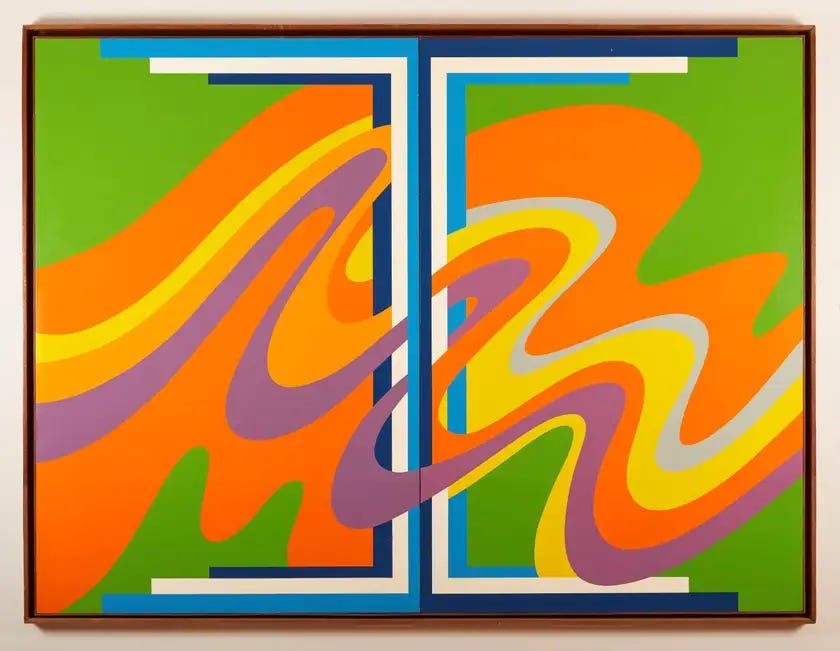
Around Belkahia gathered a small, tightly knit faculty shaped as much by friendship as by shared conviction: the painters Mohamed Chabâa and Mohamed Melehi, alongside Toni Maraini and Bert Flint. Together they rejected academic easel painting and the orientalist figuration that had defined the school under colonial rule, replacing it with an interdisciplinary, Bauhaus-influenced curriculum in which rugs, jewellery, calligraphy, tattoos, tifinagh script and painted ceilings counted as legitimate sources of form, on equal footing with anything taught in a European academy. By 1966, Belkahia, Melehi and Chabâa, whom many had taken to calling the Casablanca Trio, brought their work together in a joint show in Rabat, an abstraction built from Amazigh and African material culture.
Their ideas reached the public most directly in 1969, with Présence Plastique, a manifesto exhibition staged in the Jemaa el-Fna square in Marrakech as a protest against the state-run Salon du Printemps, a state fair inherited from the colonial period, whose organisers had long dismissed Moroccan artists' work as naive. The artists called it a living exhibition, and for ten dusty, windblown days it stood open to whoever passed through the square, later travelling to Casablanca and, after that, into secondary schools. Writing in French and Arabic in the journal Souffles, the group described wanting to engage the public "outside the closed circuit of the galleries or the salons, places this audience has never entered," and carried that conviction into posters, murals, magazines and street festivals meant to put modern art in front of people who would never set foot in a gallery.
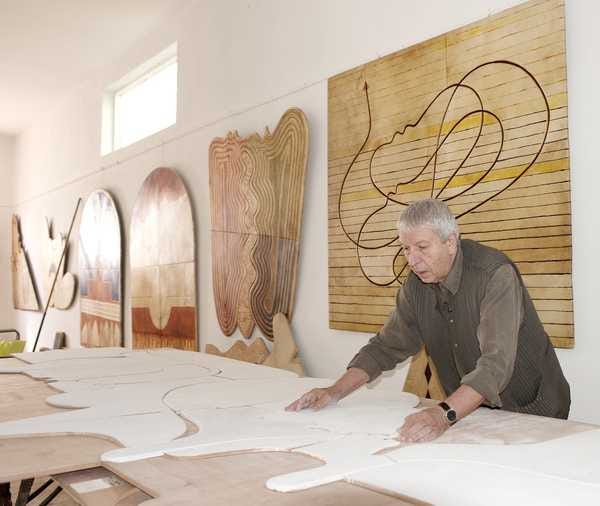
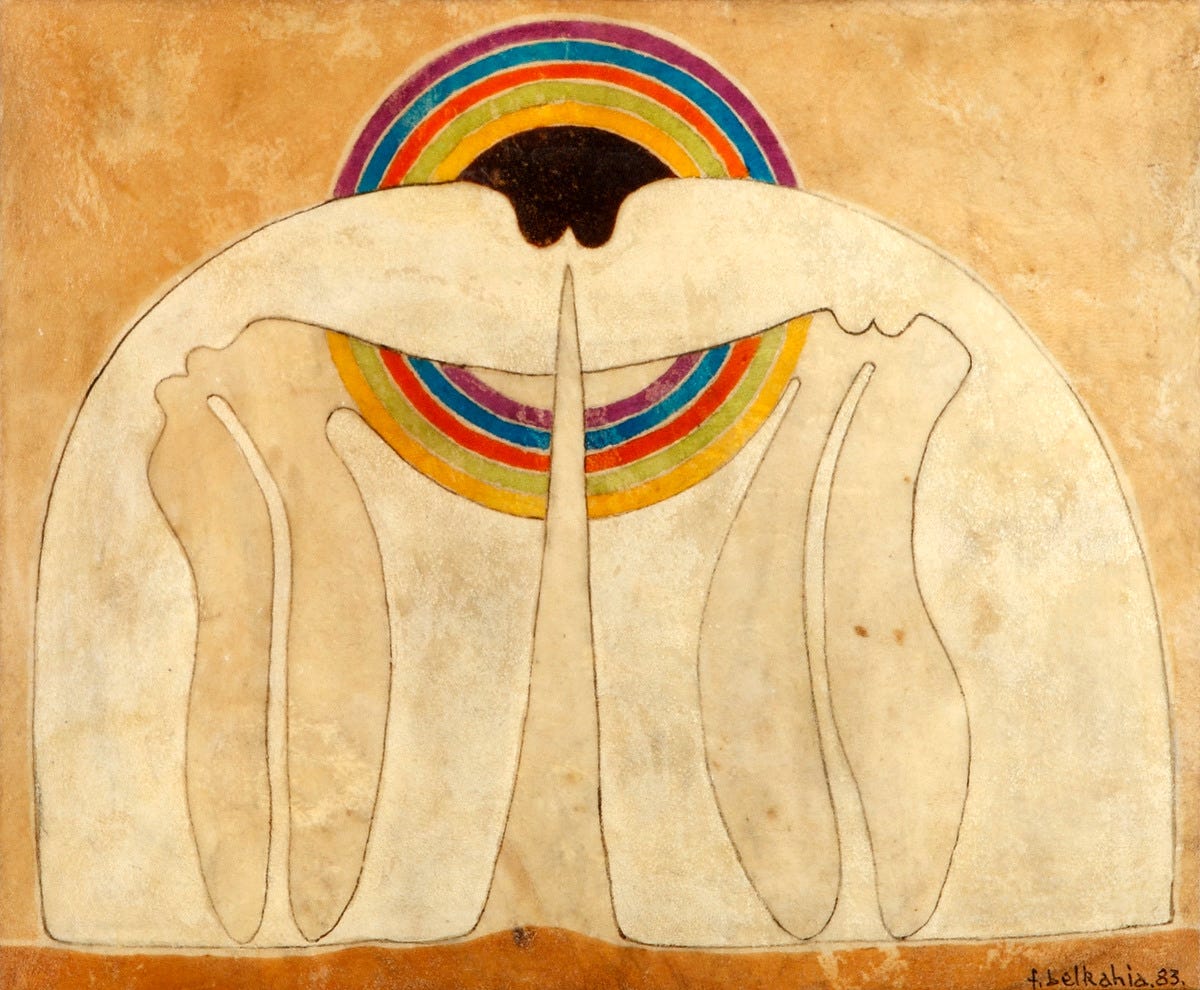
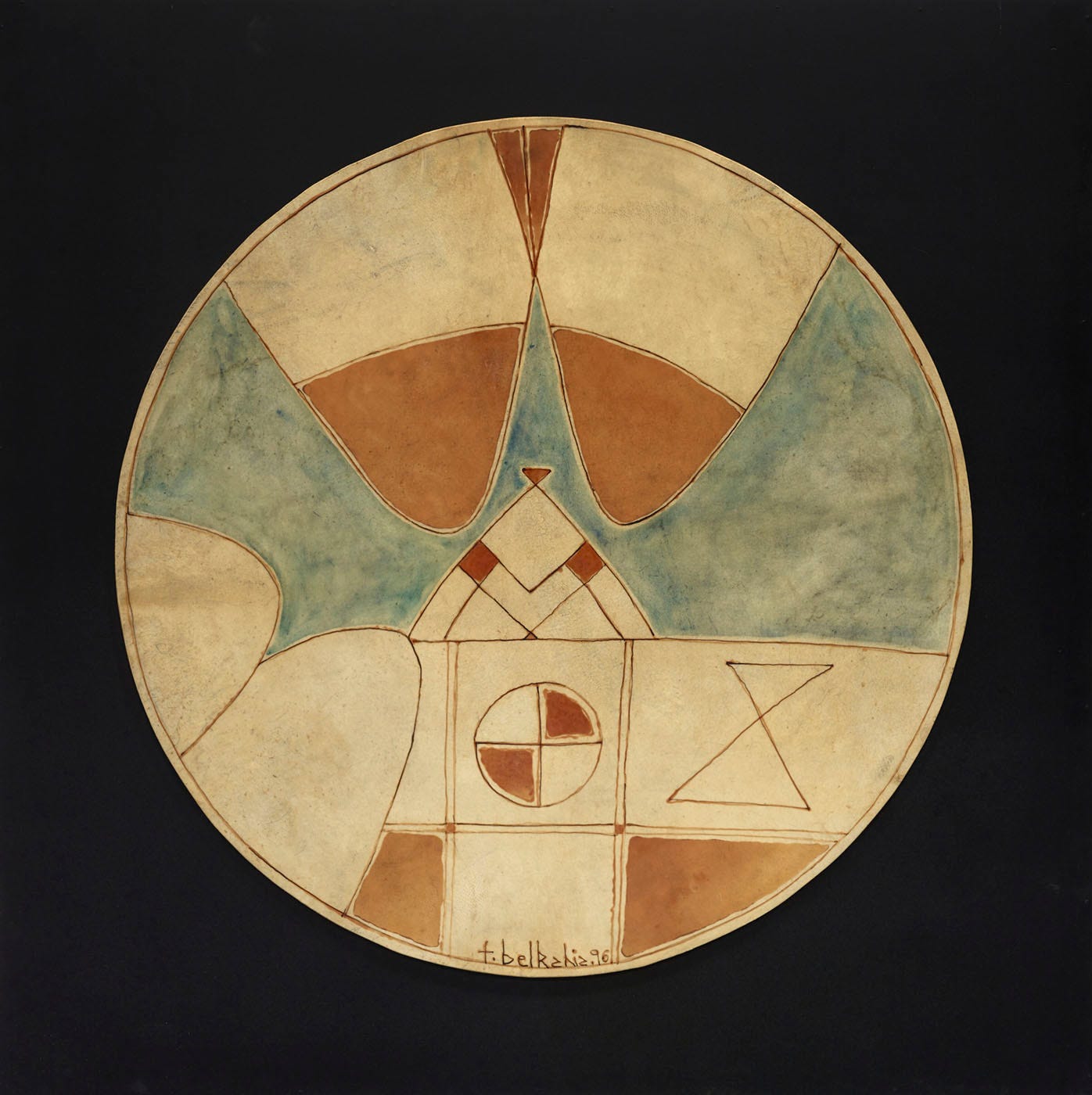
Belkahia's own studio practice became the clearest single record of what the school had been arguing for. From 1963 he broke with oil and the easel altogether, working for more than a decade in beaten copper before turning, from the mid-1970s, to raw hide stretched over shaped supports and stained with henna, walnut and pomegranate bark. Across both materials he carried the same vocabulary forward, tifinagh signs, carpet motifs and tattoo patterns worked into a form of abstraction drawn from Amazigh and North African material culture rather than from any Western movement. He remained director of the school until 1974, and by the time he died in Marrakech in 2014, the Casablanca School he had shaped alongside Chabâa, Melehi, Maraini and Flint had already done what it set out to do: it had given Morocco a modern art history that belonged to Morocco.
Cover artwork: Untitled, 1977, Mohammed Chabâa. Courtesy of the artist’s estate and Sharjah Art Foundation.
No posts
Comments
Nothing yet. Say the first thing.
Sign in to join the conversation.