
A market facing east
The two regions have circled each other for twenty years without building a route between them. Christie’s held the first international auction in the Middle East in Dubai in May 2006, hoping for $4.5 million and taking $8.5 million. Roughly $6 million of that came from Indian contemporary art, bought largely with the Gulf’s South Asian wealth.
Here, the East meant Mumbai and Delhi: diaspora money buying diaspora art. It never extended to Seoul, Tokyo or Taipei, and East Asian buying never came the other way. Two conditions have now changed, and both favour building the route.
The market is turning inward
The Art Basel and UBS report for 2026 found global sales up 4% to $59.6 billion, alongside a marked inward turn: UK imports rose 47% while exports fell 39% over the period analysed, as tariffs, shipping costs and political risk pushed collectors toward buying closer to home.
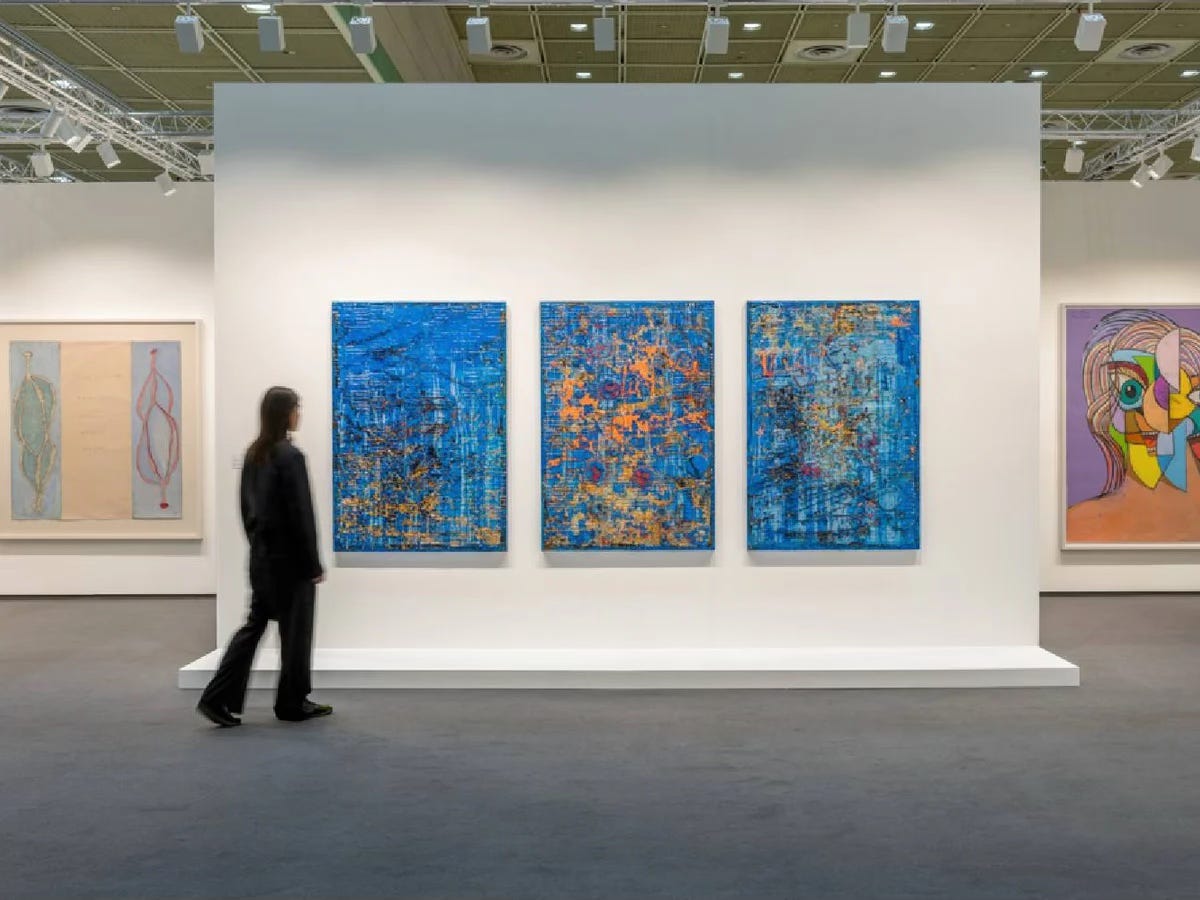
Frieze Seoul is the clearest expression of this. More than 70% of its exhibitors this year are based in Asia-Pacific, and over 50 hold permanent spaces in Seoul. Several long-standing Western participants have stepped back. The fair has quietly become a regional trading floor rather than a Western outpost.
Each region has what the other lacks
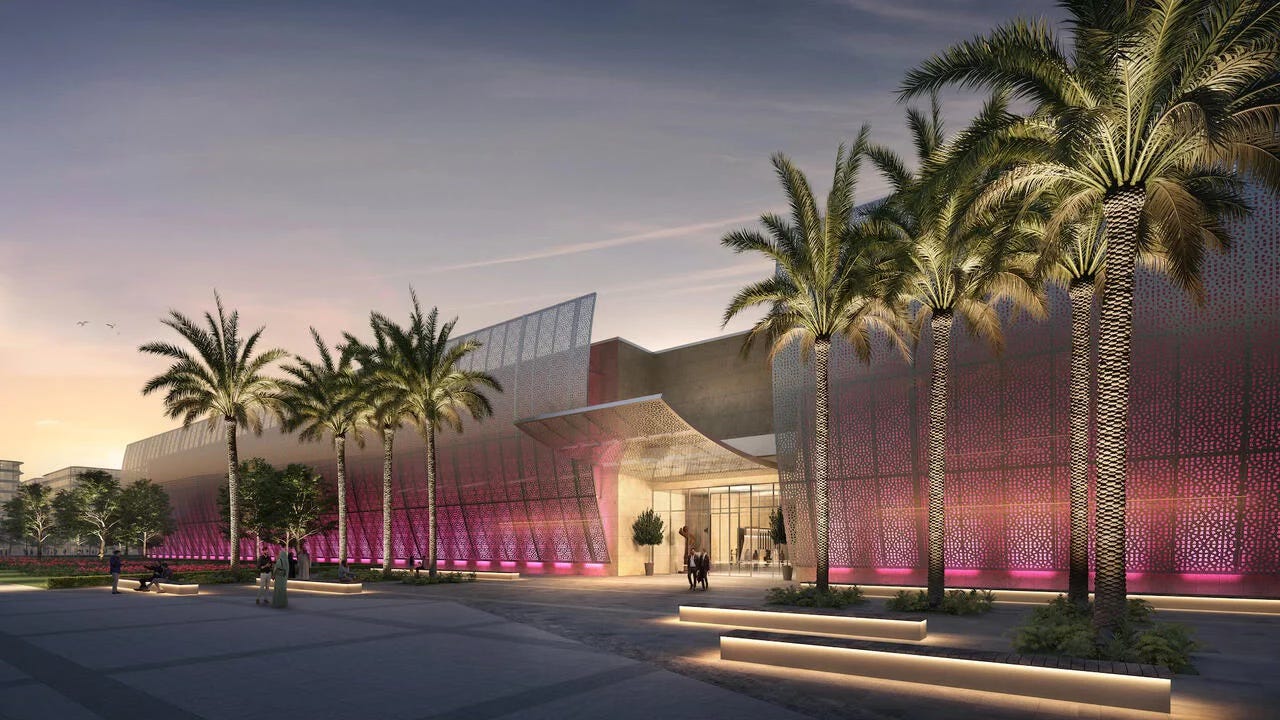
The Gulf holds institutional buying power at a scale nowhere else can match. Guggenheim Abu Dhabi opens on 11 December, the largest museum in the network, with a collection assembled since 2009 and an explicit remit toward underrepresented artists; Qatar’s Art Mill is projected for around 2030. When Art Basel debuted in Doha in February, representatives of more than 85 museums and foundations attended, and reported sales were modest. That is a market where institutions buy and private collectors largely don’t.
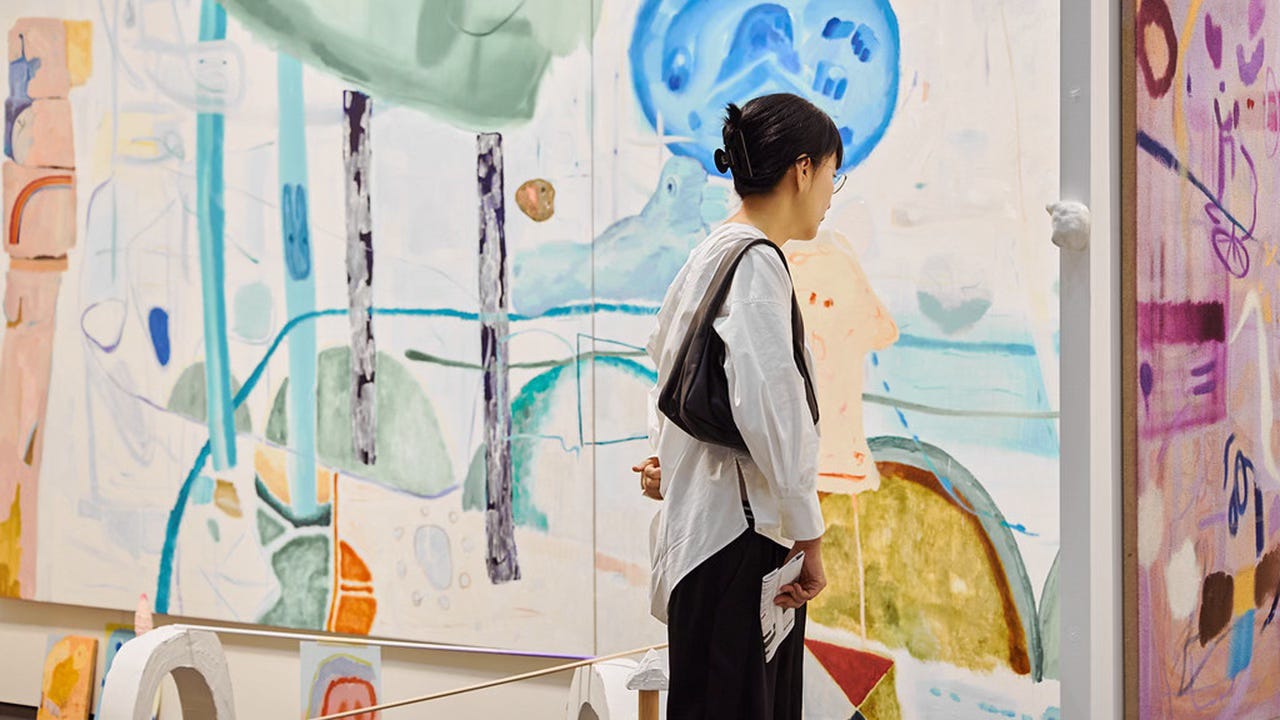
Korea is the mirror image: one of the world’s deepest private collector bases relative to its size, and very little institutional acquisition muscle. It is also capital-starved right now. First-half auction sales nearly doubled to 110.8 billion won while the number of lots offered fell 11%, with two works accounting for 23% of the total, as domestic money chased a Kospi that doubled to a record in June. Korean galleries need buyers who are not Korean. Gulf institutions need depth in exactly the twentieth-century material outside the Western canon that Korea and Japan hold.
The taste already matches
At Sotheby’s second Saudi sale in Diriyah in January, 89% of 67 lots sold for $19.5 million with fees, and the Saudi modernist Safeya Binzagr drew more attention than the Picasso in the same room. Korean collecting shows the same instinct in reverse: money concentrates on Lee Ufan, on Dansaekhwa, on work carrying national weight. Both markets pay a premium for cultural proximity. That is not a mismatch. That is a trade.
The vocabulary is already in place. Art Basel frames its Qatar fair as MENASA; Frieze describes its Abu Dhabi edition, opening 19–22 November, as a gateway into the Global South, inviting galleries showing artists from West Asia, North Africa and South Asia. Both are describing a shared corridor that runs between both regions.
What to watch, in order
We look forward to seeing Hafez’s booth: one of the few Gulf galleries ever to trade on an East Asian fair floor.
We are interested to see Spotlight, too. The fair’s new section is given over to twentieth-century artists outside dominant Western canons, and it is hard to think of terrain better suited to the argument this piece is making: the Gulf’s institutions are building collections in precisely that territory, and Seoul is now showing it by the wall.
And Focus, which this year gathers sixteen galleries all founded in 2014 or later, on subsidised stands. That subsidy is the cheapest door into the Asian market any young MENA gallery will find, and the model is spreading: a bursary for younger galleries in Abu Dhabi, waived booth fees in Dubai this spring.
Words Copyright of Naso Art Journal.
No posts
Comments
Nothing yet. Say the first thing.
Sign in to join the conversation.