
Mbarak Madhi’s work began in photography, the medium he trained his eye on before a residency at the Misk Art Institute pulled him toward installation, sculpture, video, and sound, disciplines he now moves between freely.
Born to a Yemeni and Indonesian family and raised in Saudi Arabia, Madhi has spent the years since that residency circling one question: who decides what a person is supposed to inherit, wear, remember, or belong to? It runs through his family history, his materials, and the collective he runs with a small group of Saudi artists. Talk to him about any one of these threads for long enough and the same word tends to surface: cliché. He is candid about where it comes from. His own “hybridity”, he says, can read on the surface as a familiar story, one some viewers recognise themselves in and others push back against.
A certain tenderness comes through when he talks about it. “There is a human that comes with it,” he says. It is a small line, said almost in passing, but it carries the weight of his intention: a need to understand the world around him, and the questions of history and belonging that come with it, whether through humour, memes, or a return to tradition and cultural memory. It runs through everything that follows, beginning with the project that first took up this line of enquiry.
Madhi’s first major project set out, in his own words, to accept his own hybridity, though he complicates the word almost as soon as he uses it. Put nationality aside, he says, and hybridity becomes a matter of tribes and family trees, a genealogy that “gets more and more complex” the closer he looks at it.
The work also grew out of questions about freedom of movement as much as belonging: what it means to travel on an Indonesian passport, he says, while his Yemeni friends face more difficulty to reach the same destination. Watching that disparity up close, he says, is part of what pushed him to ask whether the meaning of belonging itself needs rethinking.
When the project showed, people from different backgrounds came through and told him, “I relate to this,” while others pushed back. That reaction, some people seeing themselves in the work and others resisting it, is what Madhi means when he calls the subject cliché. It is a story familiar enough that it risks turning into a theme, when in fact it is a specific area of questioning, one that is very much part of his own life, and clearly, many others around him. Rather than avoid it, then, he leans into it. “If there’s a cliché, when I see it, I would laugh,” he says. “I would like it.”
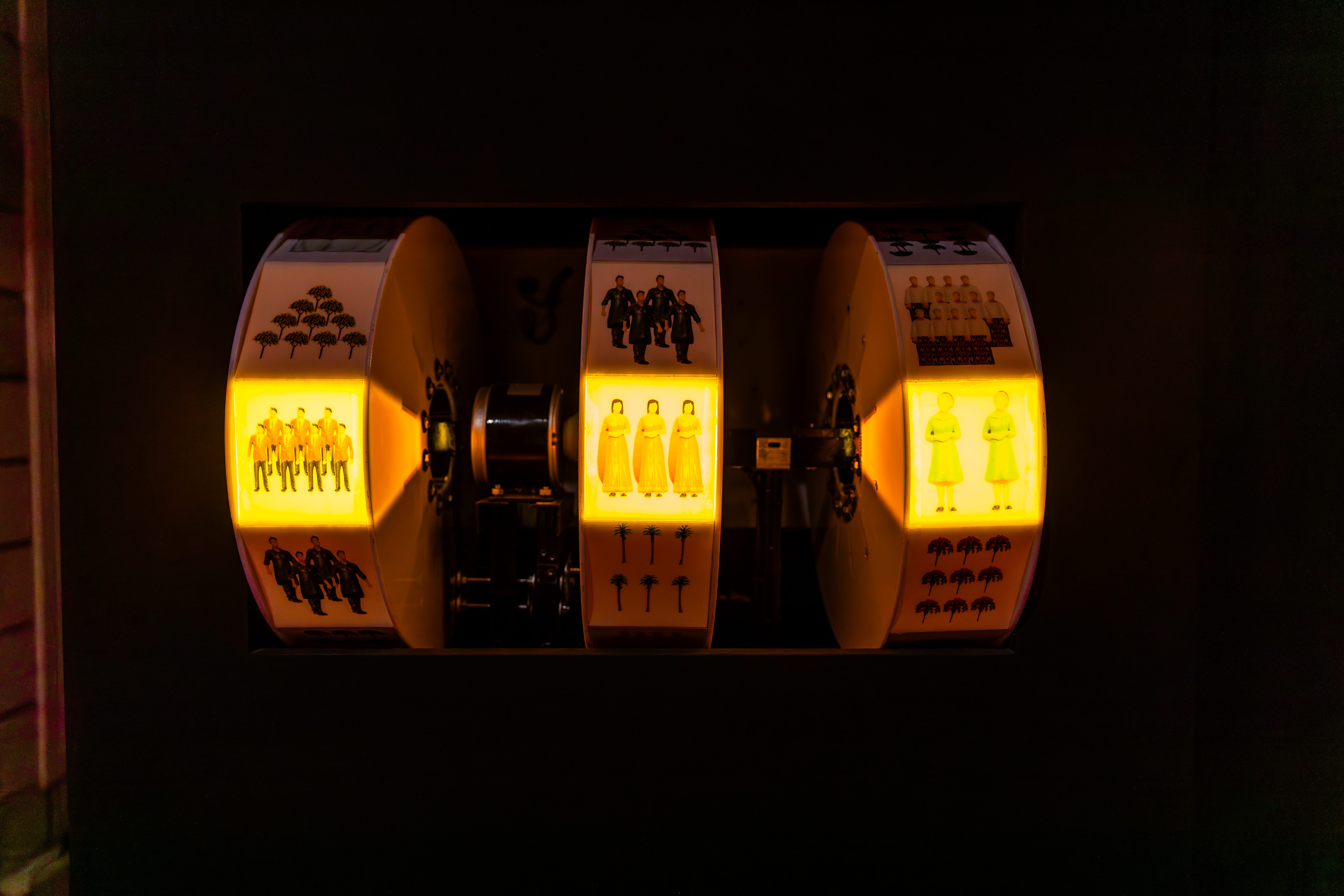
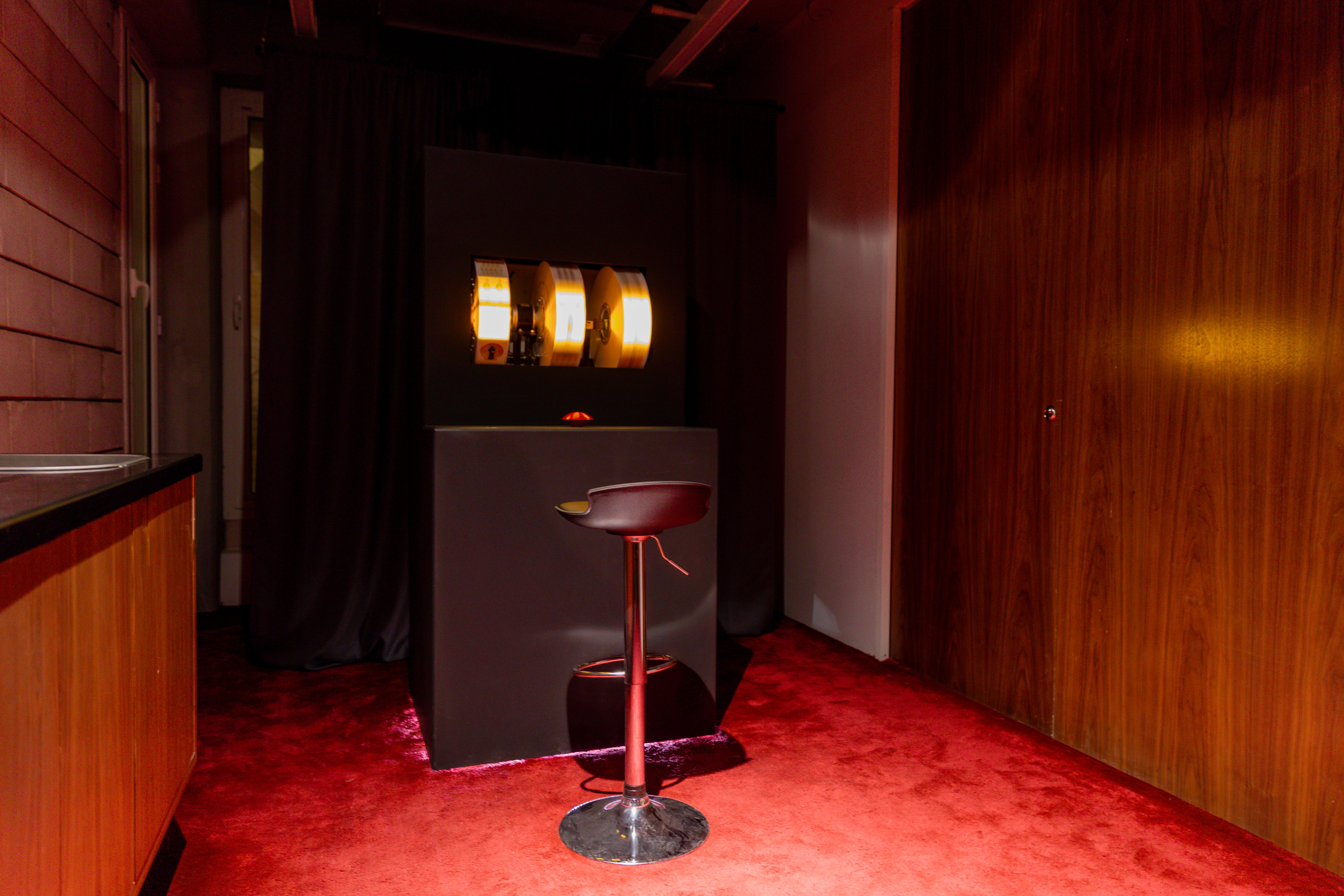
That same curiosity extends to everyday custom. Madhi describes feeling, at times, like he is adapting to “certain standards that I don’t know who’s setting up,” something he traces partly to growing up as what he calls a “third culture kid”.
Being caught between cultures leaves him with more questions than conclusions about where a tradition begins and ends, and who has the right to claim it. It is a live question well beyond the art world too: accusations of cultural appropriation, and the backlash that can follow them, tend to assume that a culture has fixed, defensible edges. Madhi is less certain that it does. He sees a version of the same uncertainty play out in the arguments he has watched, people framing it, he says, as something “taken from this culture or another”. His own answer, offered tentatively, is that culture behaves more like “a language that can be assumed, in a sense,” closer to a shared inheritance than a bordered one.
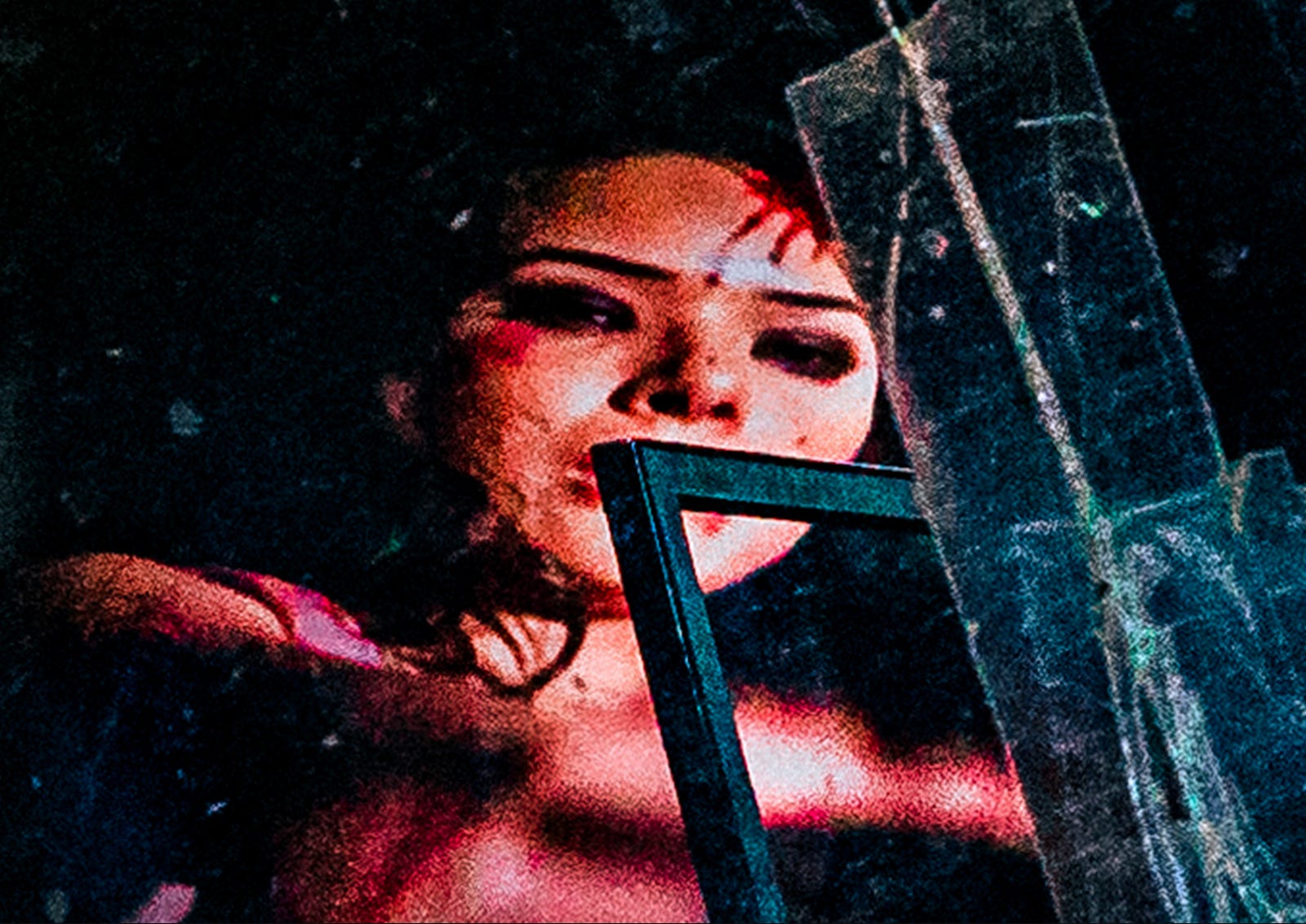
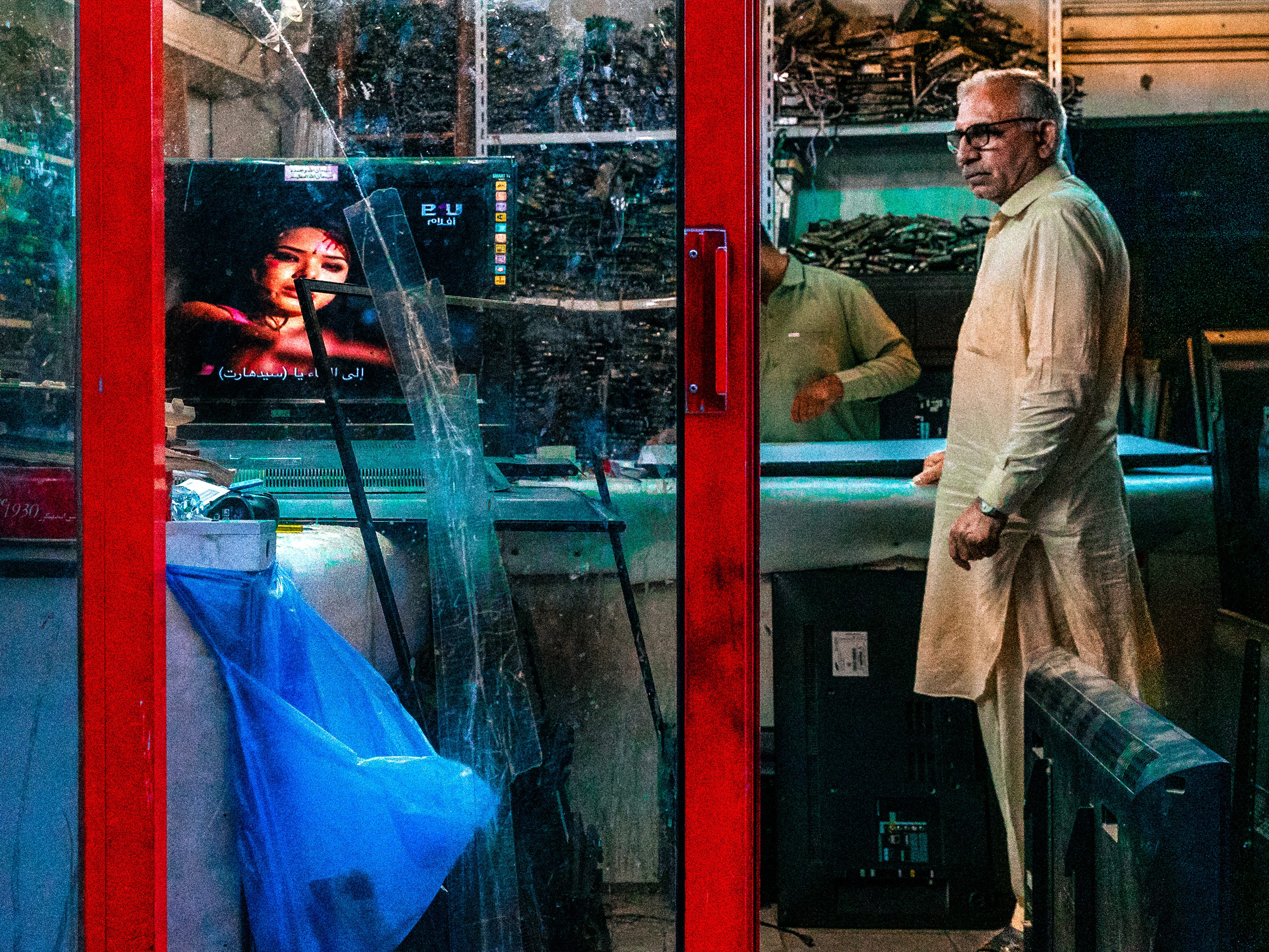
Some of what Madhi draws from is more difficult. One earlier project grew out of a family loss, photographs of his aunts that no longer exist, and became an ongoing question over what he is comfortable showing.
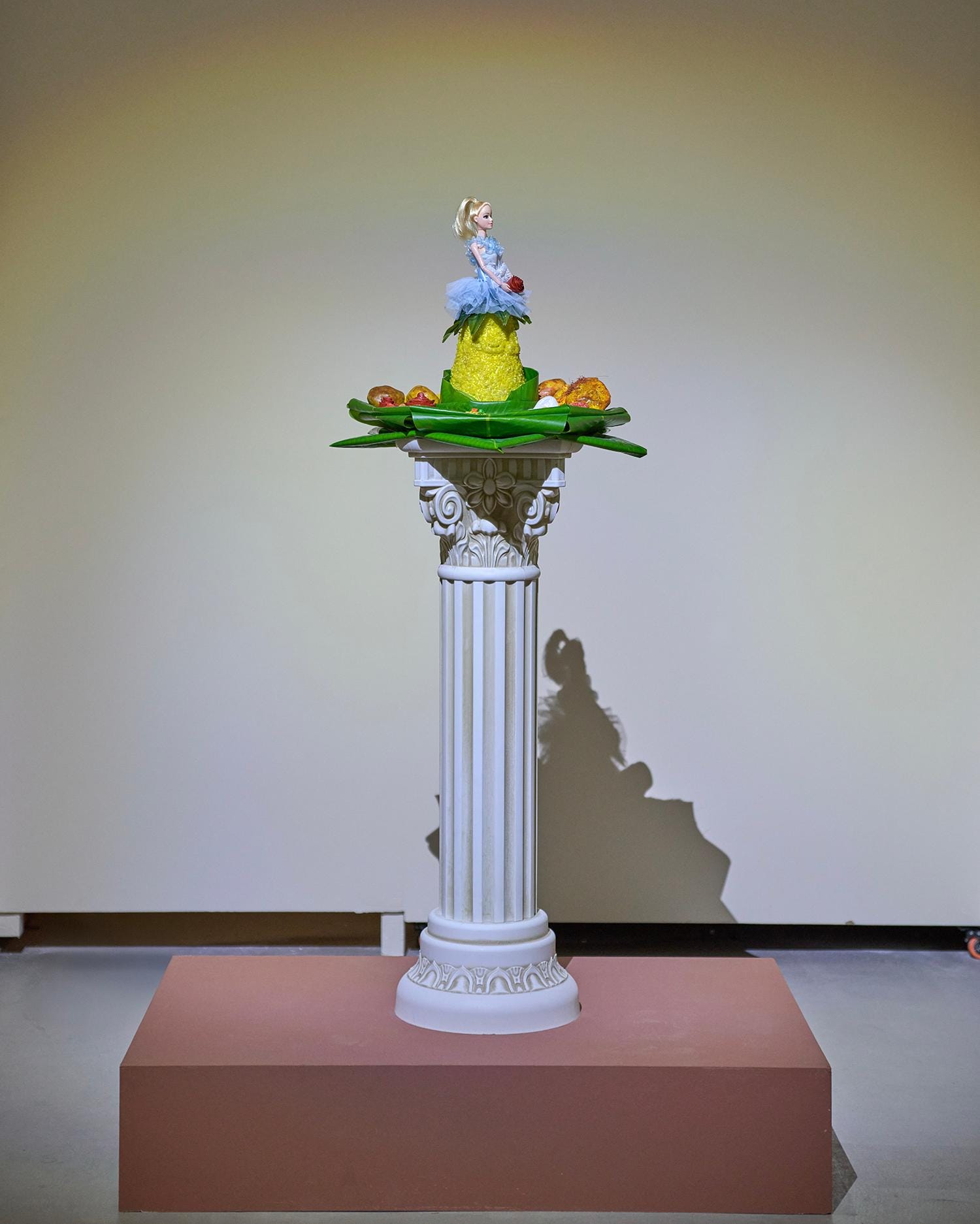
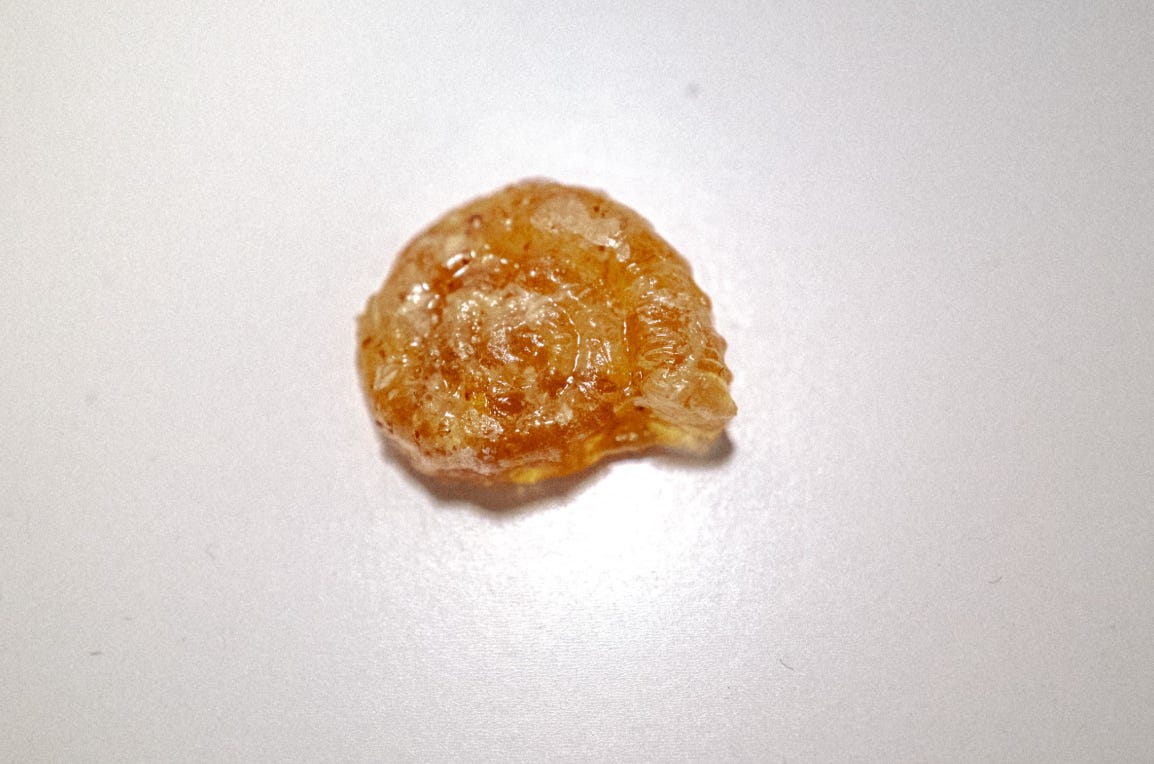
That same instinct, working around an absence rather than trying to fill it, carries into a more recent project, shaped like an Indonesian his aunt used to make every birthday, a dish the family has not seen since he passed away, with no photographs left of it either. Madhi has little interest in archival material as a starting point, preferring instead “the pictures that I see in my head,” testing whether memory alone can hold a shape the way a photograph might. What comes back to him is not the dish exactly, but the ritual around it, “chilling with the family, drinking tea, smelling the boukhour.” “When I smell the boukhour, what do I see exactly?” he says. “I see the teapot. I see the people.” It is a question he says he is still working through, in much the same reflective way he talks about the burned photographs.
Humour functions, for Madhi, as a working method as much as a mood, and it is bound up with the same instinct that lets him sit inside cliché rather than run from it. He traces the humour back to how people encounter the work in person. At Estiraha’s first exhibition, his friend’s mother came to see the show and found his piece tucked into a corner, a head resting on the floor with the hair still on it. Her reaction, somewhere between shock and disbelief, made him laugh. “It makes you question, it makes you more attracted to the work,” he says, rather than, “if you see something that’s just nice, you say it’s nice, but you wouldn’t want to interact with it.”
This same appetite shows up in how he takes in the world outside the studio. He learns “a lot of things from memes, like news,” he says, pointing to a wider attentiveness to the humour and absurdity of everyday visual culture.
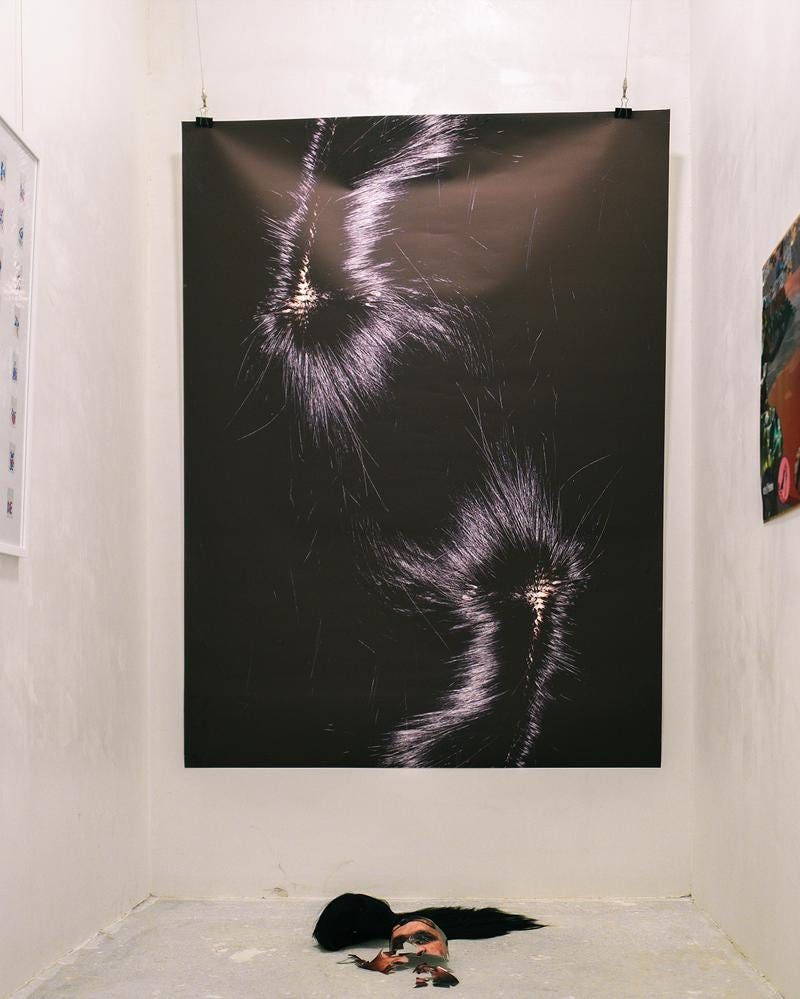
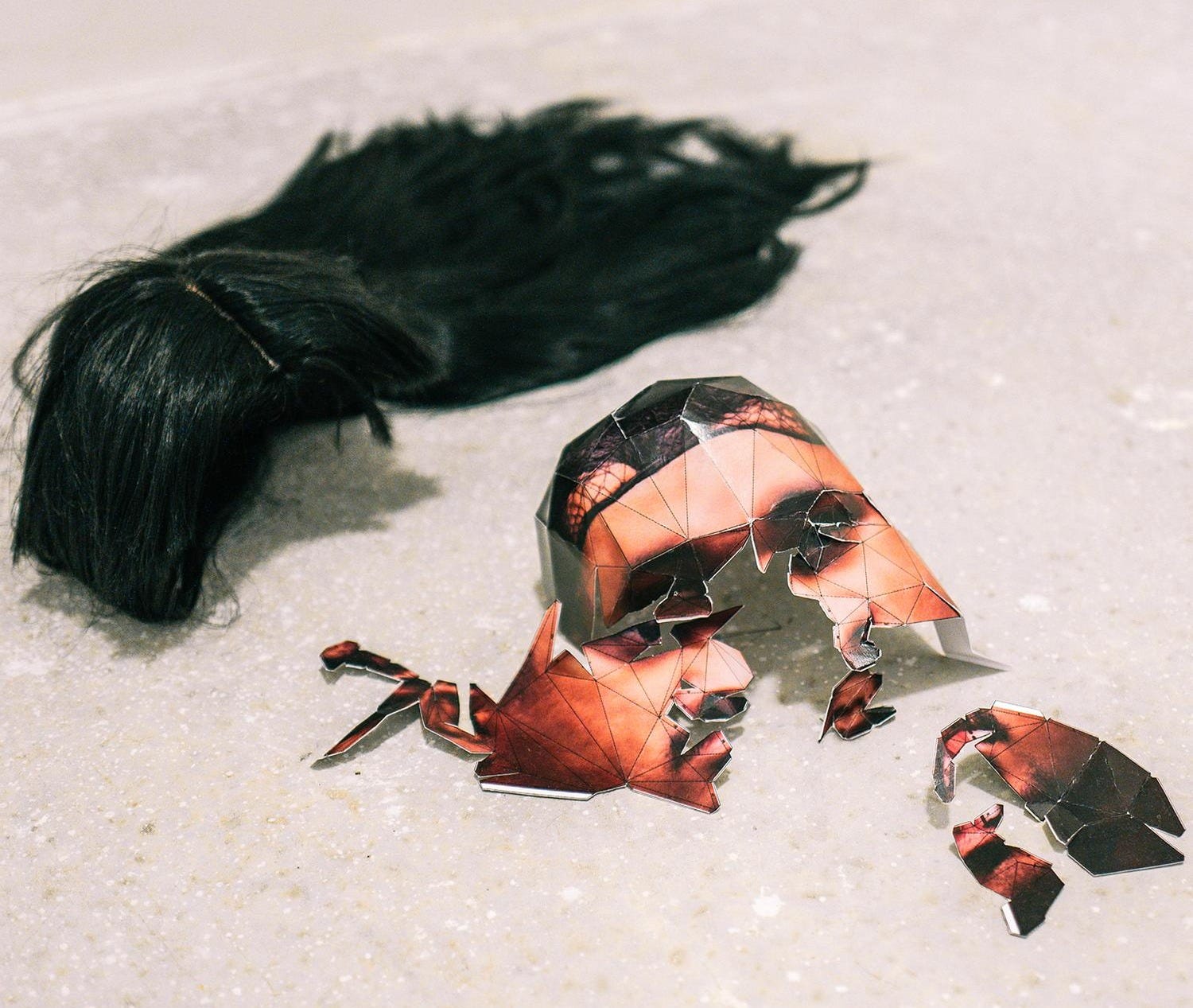
The same instinct runs through Estiraha, the collective Madhi runs with a small group of Saudi artists. What started as a workaround, a virtual co-working space to keep everyone working together without a shared address, became deliberate after about a year, when the group staged its first exhibition.
Since then, the collective has staged shows named Internet Cafe and, later, Digital Garden, an extension of it staged with KFUPM, all under a standing commitment to stay, as Madhi puts it, “anti-aesthetic, in a sense.” He traces that commitment back to a wider pattern he noticed in the scene around him, one that had narrowed into a fairly fixed idea of what serious work should look like: “minimal.” Against that, Estiraha grew from a much simpler impulse, the sense that “we kind of forgot that art can be fun.”
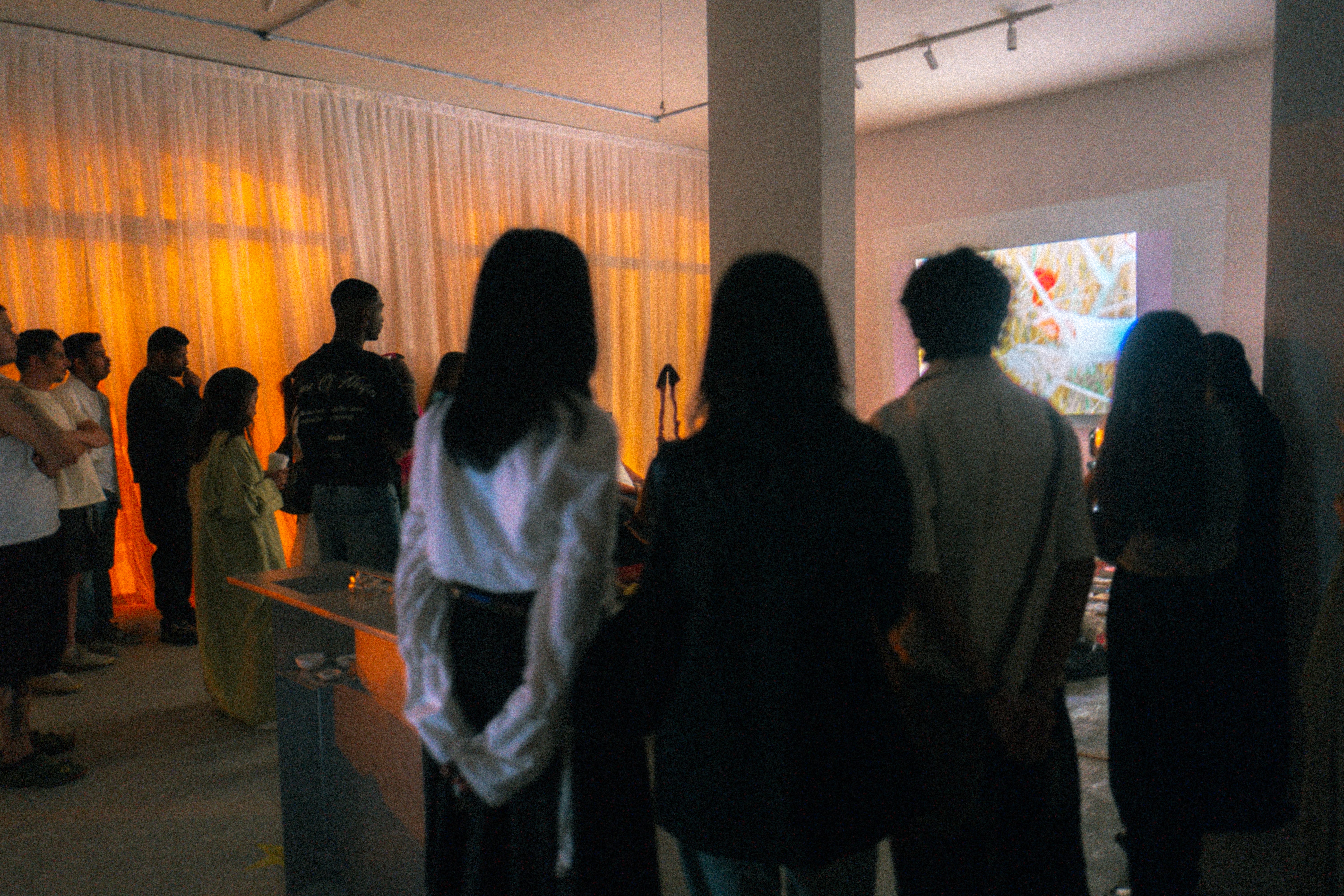
Increasingly, Madhi’s curiosity is turning toward sound, drawn to lullabies in particular and unable yet to say exactly why, and toward a quieter video project built from footage of his grandmother.
Across all of it, family history, humour, memes, sound, the same instinct keeps surfacing: an openness to being inspired by almost anything around him, whether that is his own understanding of belonging or the absurdity of everyday visual culture. “I don’t think I’m making this artwork for myself, it’s more for my generation,” he says. “The questions that I have are stuck in me, and I’m trying to respond to myself.” It is a quiet way of describing what his practice has been doing all along: working through personal questions that, somewhere along the way, turn out to belong to the people around him too.
Cover portrait by Akram Al-Amoudi.
No posts
Comments
Nothing yet. Say the first thing.
Sign in to join the conversation.