
Many Ashkenazi Jews living in the Pale of Settlement were beekeepers. The Pale of Settlement refers to a western region of the Russian Empire that Jews were restricted to live in, which existed from 1701 to 1917, and which covered an area of about 386,100 sq. mi. from the Baltic Sea to the Black Sea.
Jewish farmers kept bees for their gifts of wax and honey, which were highly prized and were used in many ways, such as for candle-making and skincare products, and in kitchen remedies for treating a range of ailments. Some Jews also brewed honey wine, a golden, fermented honey drink, sometimes known as mead. In some communities, mead even replaced grape wine in holiday ceremonies.
In Jewish tradition, honey is associated with joy, fullness and abundance, and is invoked in order to bless someone with sweetness. For example, we dip apples in honey on Rosh Hashana to manifest sweetness in the coming year. The sweetness of honey is exhilarating, revitalizing and healing, as we learn from the Torah, when Jonathan “put out the stick he had with him, dipped it into the beehive of honey, and brought his hand back to his mouth; and his eyes lit up.”
Honey sweetened many traditional foods and beverages. For example, a classic Ashkenazi cold remedy, gogl-mogl is a drink made from eggs, milk and honey.
See this delightful gogl-mogl demonstration in Yiddish: Bubbe’s remedy for the common cold
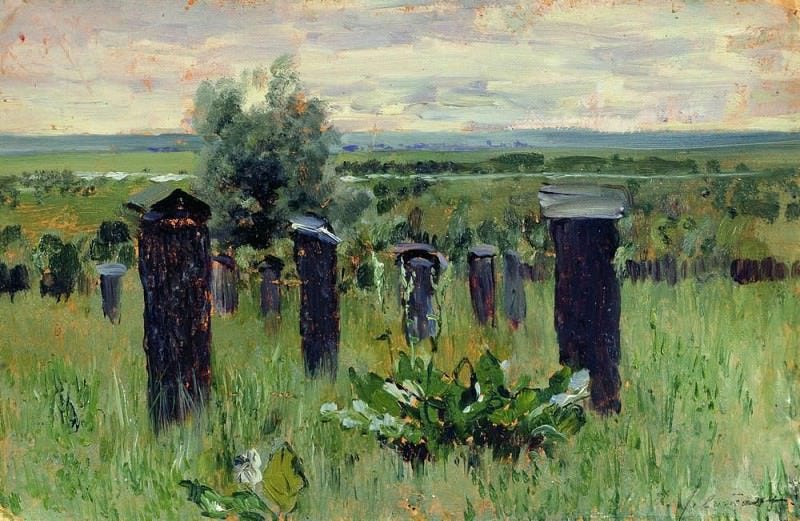
“Landscape with Beehives” - painting by Isaak Levitan (1860-1900)
Join me for Jewish Herbalism for Farmers this September to learn more about beekeeping, farming, and the everyday lives, remedies and recipes of Jewish farmers across the diaspora!
In this 75-minute class, we will study how plants were used for healing in the diaspora by farmers, folk healers and some of the most influential Jewish healers in history, from Asaf to Maimonides. Together, we will explore plant-based folk traditions and home remedies, with a special focus on the folk traditions and remedies of Jews who work the land.
In our learning together we will discuss the following questions:
🌱 What plants have been historically cultivated by Jewish farmers?
🌱 How have Jewish farmers healed themselves and their animals with plants?
🌱 What do these traditional practices reveal about the worldview of Jewish ancestors, their values, and how they related to nature?
While this class is intentionally designed for Jewish farmers, herbalists, and others who work with plants in diverse capacities, it also serves as an introduction to Jewish herbalism and to creating your own herbal remedies for folks who do not have a background in herbal or plant studies.
You may also enjoy my essay Raspberry Medicine from the Shtetl: Two Recipes and a Brief History
No posts
Comments
Nothing yet. Say the first thing.
Sign in to join the conversation.