
Please take a moment to tap that little heart in the upper left corner. It earns me gold stars with the folks, bless their hearts, who keep Substack going.
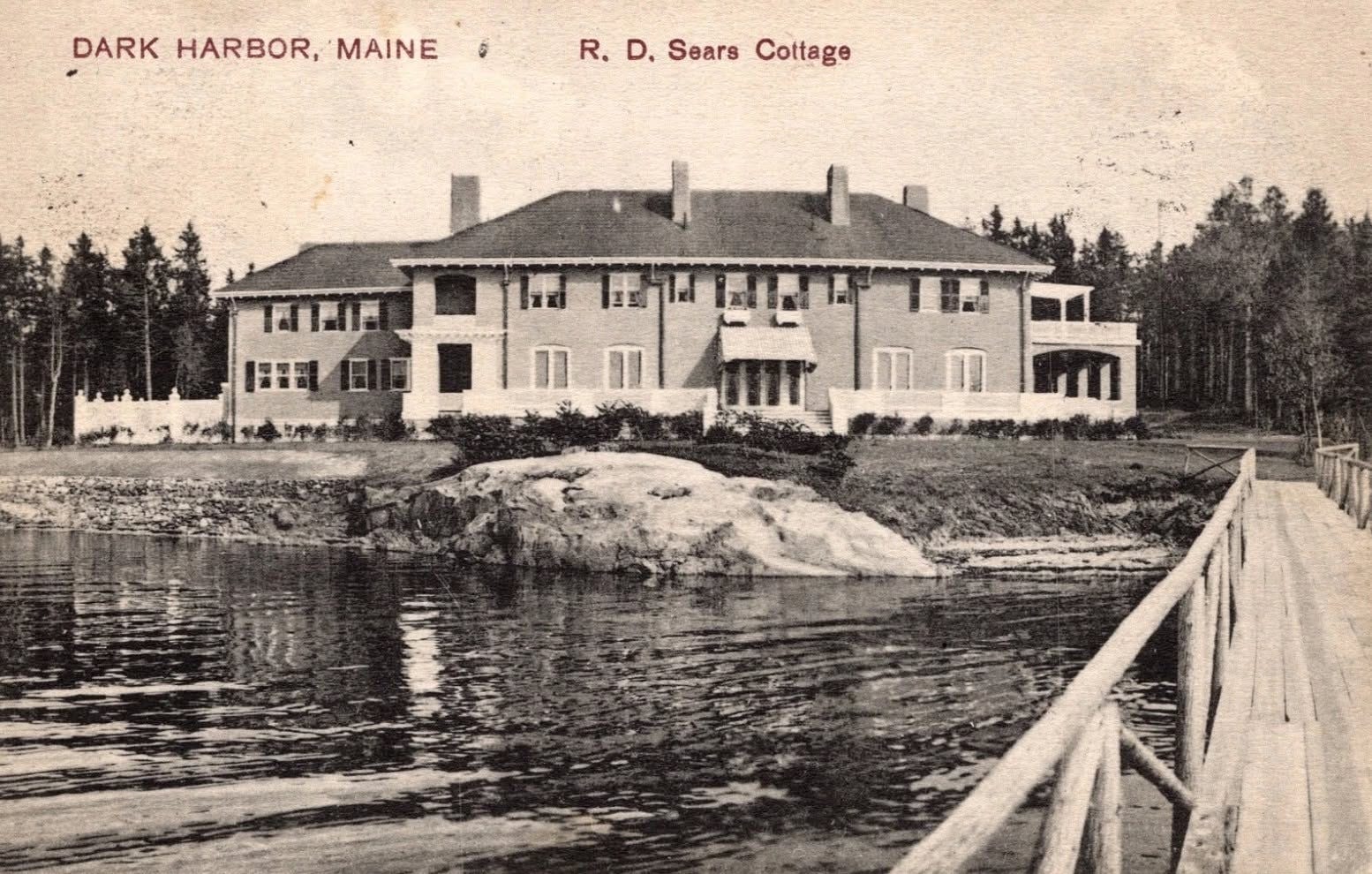
Summer people who came to Maine in the late 19th century called themselves rusticators. They came usually for the entire summer, Memorial Day to Labor Day, and they often traveled in impressive style, sending the servants on ahead to open the cottage. But once they reached Maine, they settled in to what they hoped was a more rustic, more local way of life. They swam, they sailed, they picnicked on the shore and went for hikes and gathered wild blueberries. They slept in unheated cottages, no matter how architecturally grand, and they took cold showers for self-improvement. In short, they rusticated, living, as far as they could imagine it, just like us locals.
But we rusticated too. If summer people built cottages on the shore, we natives more often retired to a camp at the lake. Any lake would do as long as the housing was not permanent. We called it “going up to camp,” as in, “We’re spending August up to camp.” When a college boyfriend came to visit, I showed him my family’s camp on an island in Lake Megunticook. “A camp?” “said he, “this is no camp!” Where he came from out beyond the Rockies, a camp was a lean-to with a couple of bunks and a space for an open fire in front. Our camp, to him, was a house, albeit a primitive house with kerosene lanterns, water from the well, and an old Glenwood cook stove that was fed by kindling from an occasional chopped-down birch tree.
In camps like that, people of my parents’ generation spent the summer, or as much of it as they could afford to be away from home.
For me, the all-time champions of going up to camp were my Aunt Doris and Uncle Howard, both of them born in the first years of the last century and, you would think, happy to leave behind them the hardships of country living in old-fashioned Maine. Yet, well into their 70s and early 80s, they took off from Camden every spring around the first of May and headed downeast to Forest City, right on the border with Canada, and a camp my uncle had built back in the 1930s on the shores of East Grand Lake. There they stayed, usually until the first of November.
Their camp was deep in the woods, down a long gravel road that cut through land owned by a paper company—Great Northern probably since at one point Great Northern owned most of that part of Maine. It was a comfortable place—a log cabin well chinked against the weather, the outside logs shining from yearly applications of dark varnish, the inside spacious with comfortable, overstuffed furniture, a great room encompassing kitchen, dining room, and parlor, with a bedroom attached, a massive fieldstone fireplace that was lit on chilly nights, and a wide verandah, screened so they could sit out at sundown and watch lake activity without the nuisance of blackflies or mosquitoes.
Not that there was a great deal of lake activity. Three or four boats at most passed each day, primarily fishermen trolling for smallmouth bass or other fish in which the deep, cold waters of East Grand are notably prolific. From far out in the middle of the lake, a helmsman would lift an arm in salute, and Doris and Howard would dutifully wave back. “That’s Everett,” sharp-eyed Howard might say, “haven’t seen much of him so far this year.” Canoes would come in closer, gliding in among the reeds along the shore’s edge, sometimes stopping and hauling up for a chat, maybe a cup of tea or a glass of Kool-Aid, before going on. But the lake was mostly quiet with few boats and even fewer camps. The rare times I visited, its glossy, glassy surface was like a bolt of faded blue-green silk, unruffled except for an occasional ripple of breeze. Storms there were, I’m certain, from time to time, but I never witnessed them. For me, East Grand was a place of utter serenity.
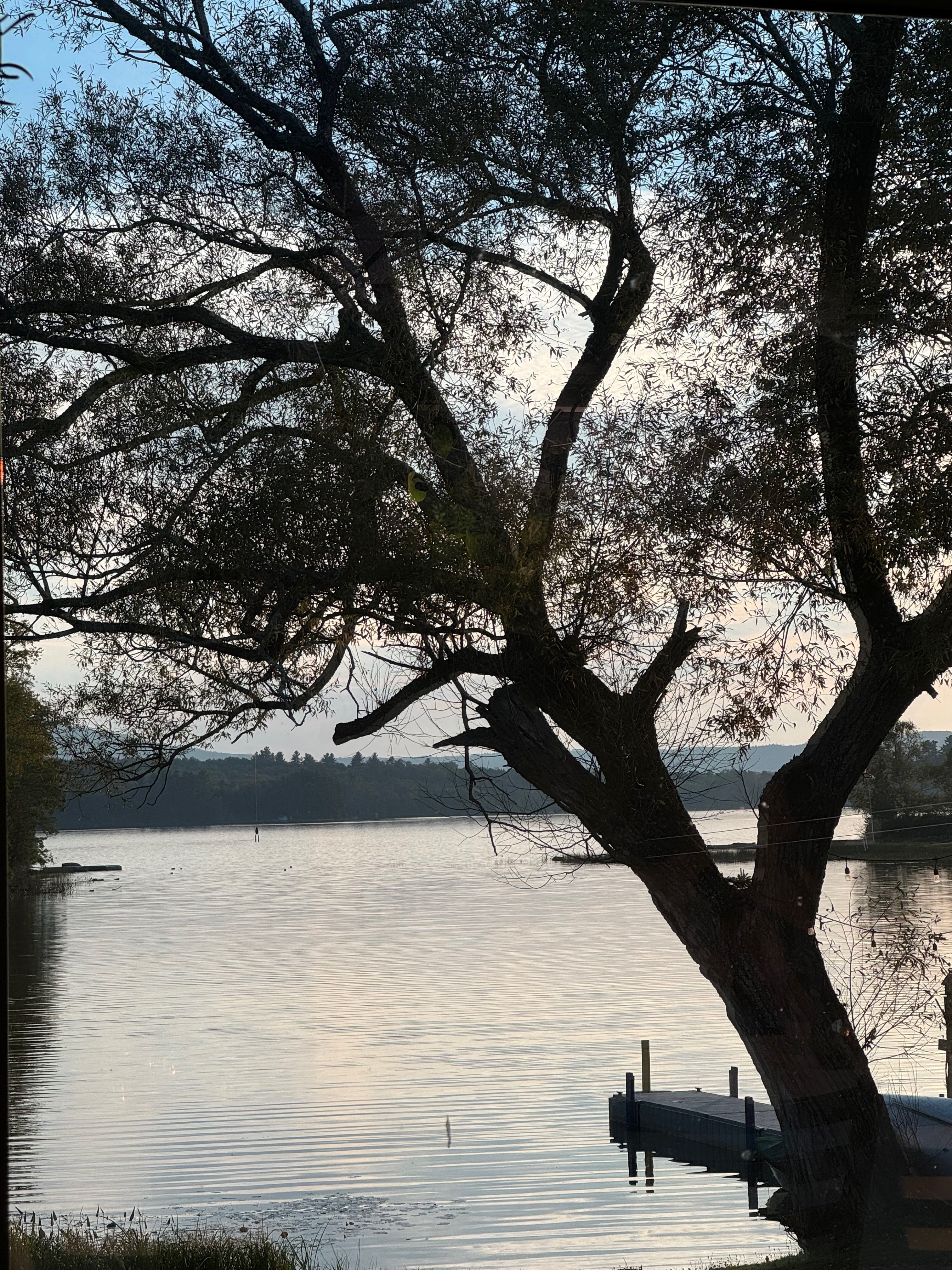
That flawless tranquility, I often thought, was the real appeal of camp for Doris and Howard. After the gregarious hubbub of winter in Camden (baked bean suppers on Saturday nights, church on Sunday mornings, whist evenings at the Grange), it offered a welcome stillness. Often there was ice remaining on the lake and snow in the woods when they got there in May, and frequently, by the time they left in October, snow had started to fall again. They were used to a little snow, they said.
East Grand Lake is one of those Maine treasures that’s relatively unknown to the outside world. At 16,000 acres, it’s one of the largest lakes in the state, long and irregular with deep narrow rocky bays and sandy reefs that are home to an impressive variety of fish, from those smallmouth bass to landlocked salmon, trout, and togue, as well as less desirable sticklebacks, bullhead, and suckers. Passamaquoddy Indians were the first fishermen to glean the riches of East Grand, and the adjoining watershed, which feeds into the St. Croix River system and eventually down into Passamaquoddy Bay, is still Passamaquoddy terrain. But it’s also a boundary water system, a small but significant part of the 5,000-plus miles of border between the United States and Canada.
Forest City straddles the border. On the American side, it’s an unincorporated township with a total residential population of five (15 if you include the New Brunswick side) that in summer swells to 30. “More trees than people,” the locals like to say. You can still buy 40 acres of undeveloped land for less than $2,000 an acre. (I know—I just checked the real estate listings.) Until a couple of decades ago, people might go back and forth across the border several times a day, hailing the customs officers as they passed through as if the frontier didn’t really exist—and it didn’t in the minds of those who lived and worked there. But since the United States got paranoid about terrorists entering from Canada, you have to have a passport, and that presents problems of sometimes ridiculous proportions for a Canadian who wants to go shopping in Houlton, Maine, or a Mainer who wants to cross over to fish in Spednic Lake.
You might think going up to camp meant idle times for Doris and Howard, but you would be wrong. If there was always a lot to do, however, there was also plenty of time in which to do it, whether that meant digging a garden, mending fences, mucking out the out-house, repairing the wood-duck boxes that perched on poles over a swampy inlet, tinkering with an outboard motor, chopping wood and gathering fallen limbs. In an unhurried but well-structured way, they did the kind of things their parents and grandparents had done before them.
They kept a prodigious vegetable garden that, once dug in the spring, had to be fenced off from deer and other varmints. As they harvested the vegetables, they put them up in jars, storing food that they carried back to Camden for the winter. Doris was a fine Yankee cook who could turn out crisp-crusted fruit pies or feather-light biscuits or dense, savory pots of baked beans. Even carrots, even beet greens, even summer squash—all were simple but tasty when she prepared them. Everything she cooked came fresh from her own garden or from the jars she put up. And just about everything she cooked had been taught her by her own mother, Phoebe Whitney, who had grown up on a Downeast farm and went on to become an occasional professional cook, whenever times were hard and extra cash was needed.
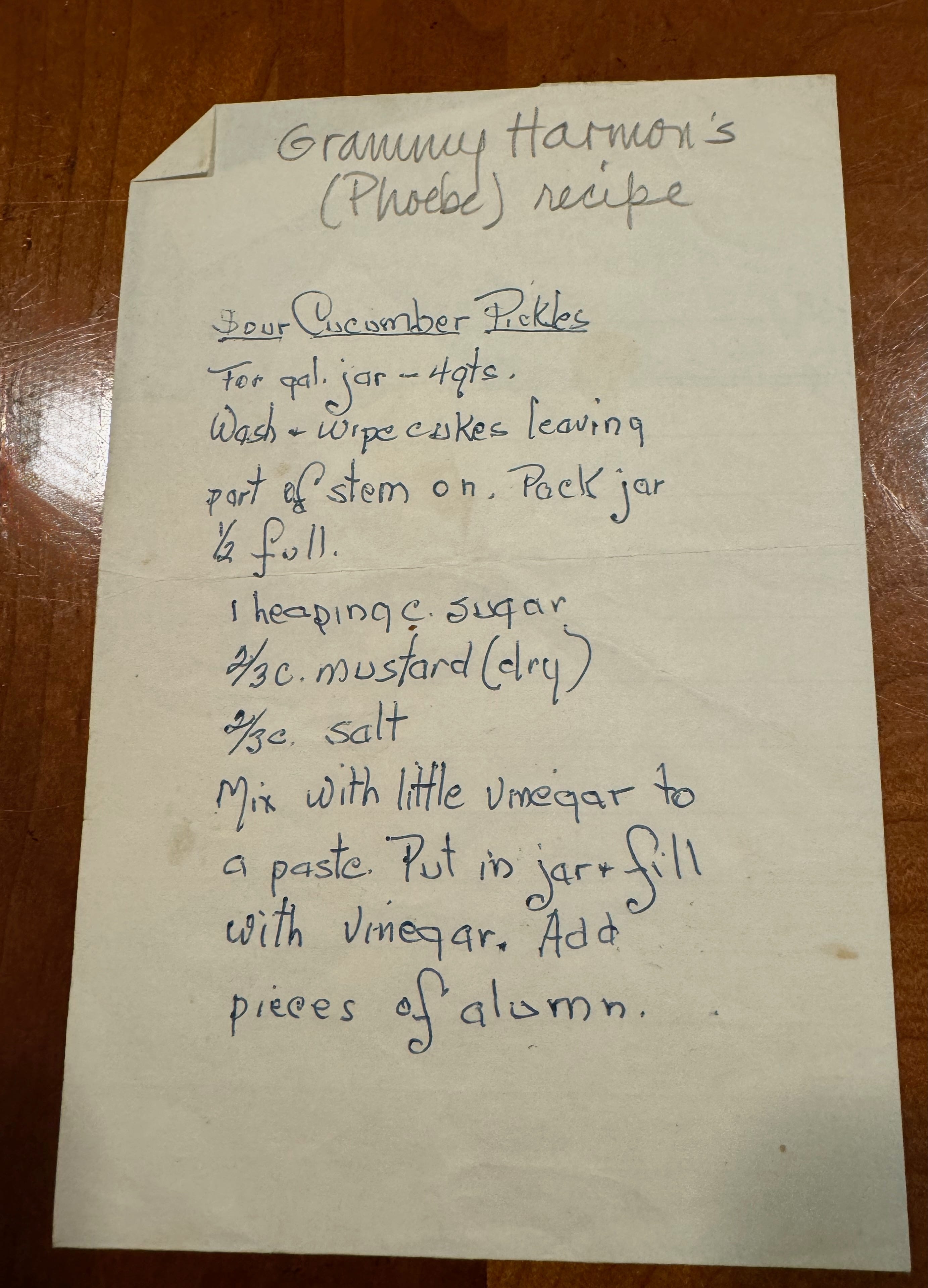
Pickles were one of Doris’s great specialties. The table was never considered ready for a meal until it had two or three dishes of pickles—vinegary beets, sweet bread-and-butter cucumbers, or big fat whole cukes they called sour pickles—these were a must on chowder nights. Or Pottsfield pickles, a relish that was an exaltation of unripe green tomatoes.
Howard was a pretty good cook, too, a camp cook of carefully harbored traditions. Moose meat, or venison, is often tough and stringy, Howard said, but it could fill you up nicely if you cooked it for a very long time. Bare Bones Pot Roast is what he called his recipe—a piece of chuck steamed in the oven for at least three hours in an inch or so of water with nothing but salt, pepper, and an onion, then vegetables thrown in to cook at the end. (“Vegetables? Oh, what you have to hand,” Howard said, thinking back, “carrots, parsnips, potatoes.” “Garlic?” I asked. “Lord, no!” he said, “no garlic,” as if he’d never heard of such a thing. Frenchmen might use garlic, but not good Yankees.)
One summer when I visited with my then ten-year-old son, we crossed over into Canada. Howard wanted to introduce Nicholas to the fine art of lake fishing. Why Canada? I’m not sure but it had something to do with licensing and the fact that a ten-year-old didn’t need a license in Canada. In any case, that was back in the day when we simply waved to the border guard and sped over Pendleton Ridge, then dropped down to Spednic Lake, part of the same spectacular chain that feeds the boundary waters.
Like many very large men, Howard had a high-pitched voice that belied his big frame. “It says Pendleton Ridge on the map,” he said, “but it’s really called Skedaddle Hill.”
Why?
“You think your generation invented running off to Canada to get out of the draft,” he said with a soft chuckle. “But back during the Civil War they did it too. They skee-daddled right over this hill and away they went. Skee-daddlers is what they called ’em.”
Among other things, Howard was an antiques dealer. He hadn’t much of an education, but he knew his history, especially his Maine history. And he had lived a lot of it. Too young for the First World War and too old for the Second, he had experienced the Depression first-hand. Once he described to me how they hunted illegally off-season, timing the hunt to coincide with Fourth of July so that shots in the woods would mingle with fire crackers and bottle rockets—an astute sharpshooter could bring home venison or moose meat for a hungry family, even at midsummer.
We fished that time from the grey granite ledges of Spednic, or rather Nico fished. And bless his heart, he actually brought up a small yellow perch that Howard cooked the next morning for the boy’s breakfast, first cleaning the little fish, then tossing diced salt pork in an old black iron skillet. He rolled the fish in cornmeal, fried it in the pork fat, and served it with the crisp pork nuggets on top. Nico was weak with pleasure—it turned him into a life-long fish lover, especially any fish he managed to catch on his own.
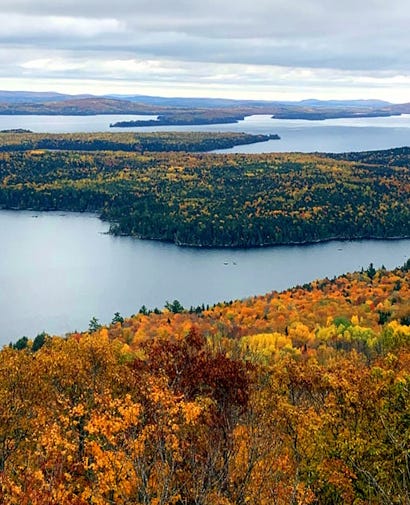
Doris and Howard are long gone now and so is the camp. It was left to Howard’s granddaughter and I’m not sure she ever went there or had much to do with it. I haven’t been back, though every now and then when I hear the haunted evening call of loons across a quiet lake, I think about East Grand and the simple camp that was so elegant in its splendid isolation. Could I ever live that way again? I’m not sure, but I’d love to try. Meanwhile I’ll put a pot roast in the oven, try out a bit of salt pork in a skillet, and fry me up a nice piece of fish.
And to go with it, I might open a jar of Pottsfield pickles. My mother and father always joined forces, sometime in the early autumn, to make these pickles, using mostly produce from their own garden. They had a long wooden chopping bowl, the kind people called a trencher, and a half-moon shaped chopping tool, very sharp, to get all the vegetables down to just the right size. When the pickle mixture started boiling, the whole house filled with the pungent fragrance of sugary vinegar, cinnamon and cloves. Once the jars were sealed, they had to be kept in the cellar way for several weeks before they could be opened.
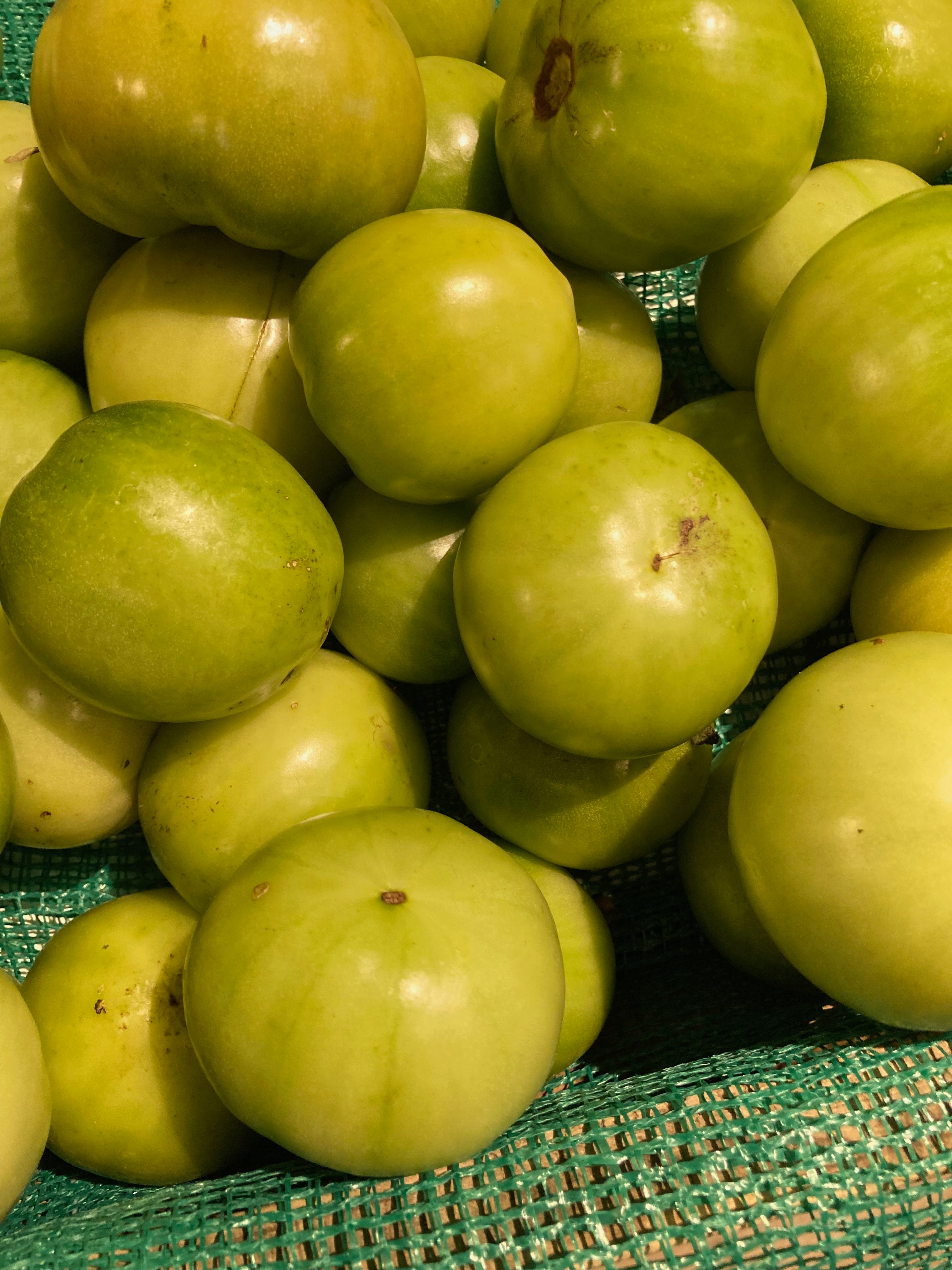
Other people might call this picallili or tomato relish. I never knew why the Harmons called it Pottsfield pickles but it was definitely a Harmon recipe. Many years later, I was in the tiny town of Downey, Iowa (population about 30), interviewing a gifted vegetarian cook I had met. We were at her house, eating leftovers from a feast she’d prepared the day before, when she said: “This would be about perfect if only we had some Pottsfield pickles.”
I said: “How on earth do you know about Pottsfield pickles?”
“It’s my grandmother’s recipe,” she replied.
“And where was your grandmother from?”
“Machias, Maine.”
“Well so was mine!”
And it might be that this is in fact an old Machias recipe. Or at least I like to think that.
Nowadays you can do all this much more quickly in a food processor but do pay attention because otherwise you risk turning everything to mush.
Comments
Nothing yet. Say the first thing.
Sign in to join the conversation.