
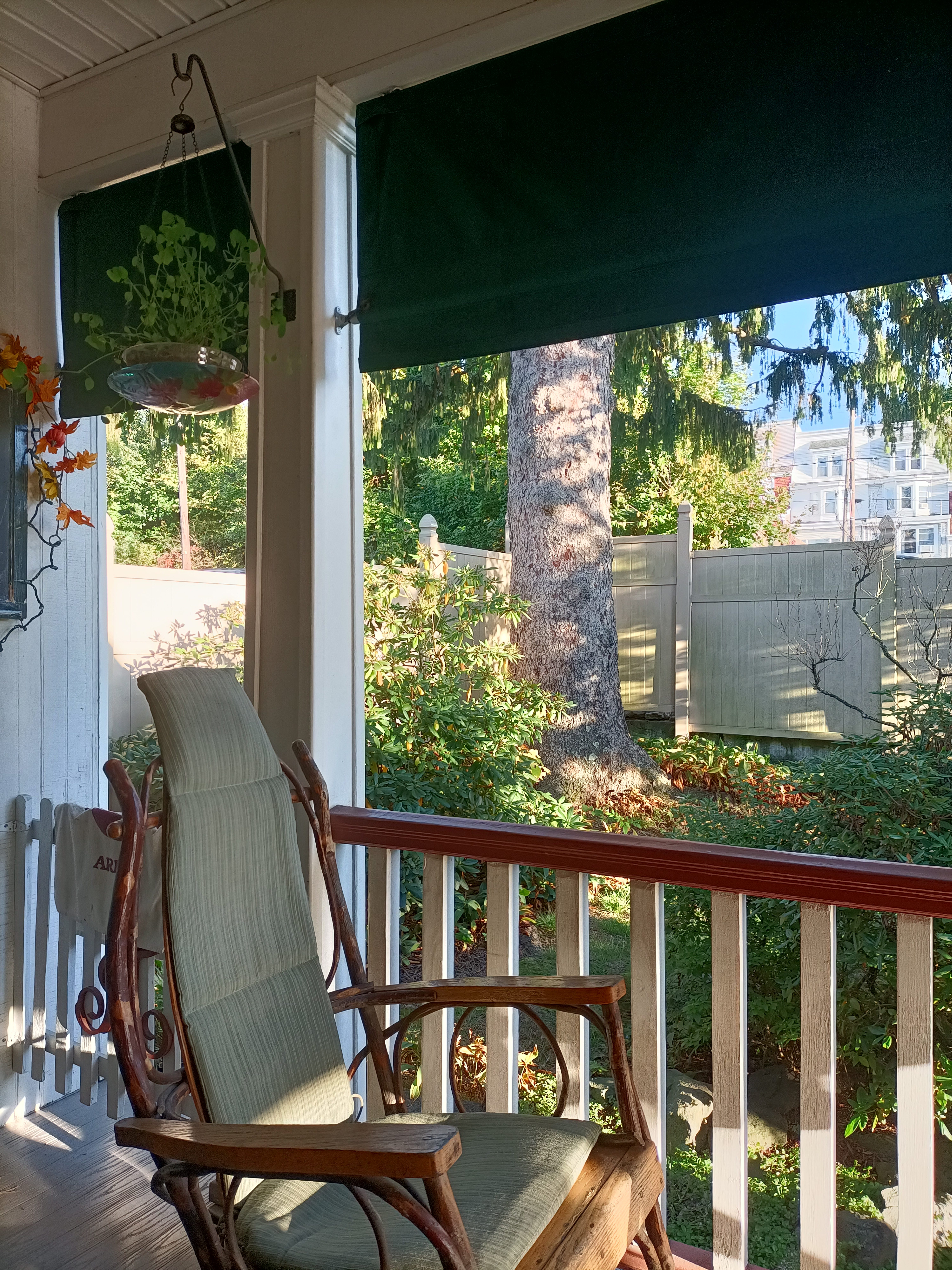
I am sitting in the passenger seat of a car at a stop sign at 12th Street and Laurel Boulevard in Pottsville, PA. It is summer, near sunset. At the corner house, once a neighborhood grocery store, two women sit on the front porch on overturned milk crates. Mother and daughter, both short, squat, and dissatisfied, they caterwaul, they don’t talk. The front door is open, the lights on. I can look inside. Disorder. Something between a storeroom and a dump.
A young girl, eleven or twelve years old, steps from the disorder to the front porch. She is holding a cooking pot. She speaks softly. The younger of the two women, most likely the girl’s mother, squawks at her, the ugliness in her voice like a slap. The girls steps back into the house. She does not say another word.
This happened one year ago, in July 2025, at the corner of 12th and Laurel.
My cousin lives in that neighborhood. She has a beautiful apartment in what used to be a knitting mill, converted to a rent-controlled apartment building by the state housing authority. One day, standing with her in the building’s parking lot, I asked her about a house across the street. Its vinyl siding had caught on fire and melted into a clotted heap.
She waved her hand in the air and got a disgusted look on her face.
“Fentanyl. The lab blew up.”
I walk down the hill from her home towards the center of town. In the street, I cross a man, a colossus, all rippling muscle and rippling his muscles with arrogant, edgy pride. Around his hips hangs a gun belt and each holster holds a handgun, each gun with a long black grip. I hasten my step, but not too much, not wanting to draw attention to myself. I turn onto North 3rd Street, in the direction of the Pottsville Free Public Library.
I remember when my mother’s friend Mrs. Mary Moran lived on North 3rd, only a few steps from the library. Her narrow front porch was almost level with the sidewalk, and that’s where she and her husband Tiny (who was an enormous man) liked to sit after work. Tiny drove a coal truck. Mrs. Moran was a school librarian. She was from “out the Valley,” from Heckschersville, and belonged to Saint Kieran’s Church, blessed by Saint John Newman, the first American bishop to attain sainthood.
In her childhood, “the Valley” was home to many Irishmen and Mrs. Moran spoke with an Irish brogue till the day she died. The last time I visited her, she pressed into my hand a pendant made of polished anthracite set in gold. Her husband Tiny made it for her.
Mrs. Moran loved children and children loved her. She never raised her voice.
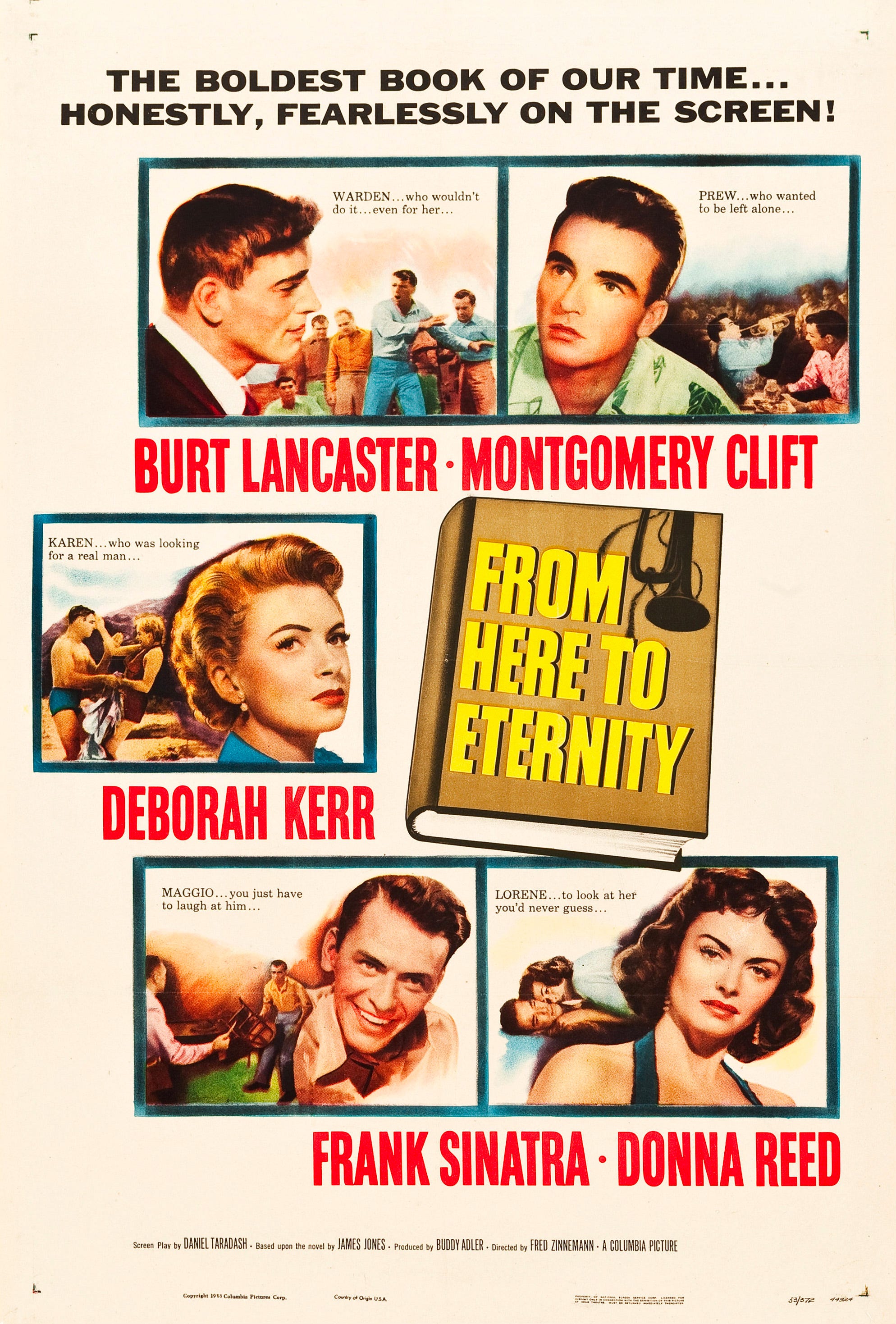
A few steps from her home, the law office of William Mosolino once occupied the ground floor of a very handsome townhouse directly across from the library, at the corner of Third and Market Streets. I often walked by with my Aunt Jean, who worked at the library and loved to read. Standing in front of the office, she liked to remind me that William Mosolino’s cousin was Gloria Mosolino, married to James Jones, the author of From Here to Eternity. This best-selling novel about American soldiers and the Japanese attack on Pearl Harbor on December 7, 1941, was made into a blockbuster movie in 1953. After all that success, Gloria and her husband moved to Paris, France!
Heady stuff for a young girl. Gloria was an actress. She was a stand-in for Marilyn Monroe in “The Seven Year Itch”! In Paris, my aunt told me, she and her husband had a “literary salon.” I didn’t know what that meant. I only knew about beauty salons in those days. Looking into it today, I am impressed. James Baldwin, Mary McCarthy, Jean Seberg and Romain Gary were frequent guests. Imagine, a Pottsville girl.
Pottsville’s first fast-food establishment, a local affair, stood catty-corner to the library. The Qwik Shop, I think it was called, where sandwiches were served in colorful plastic baskets. It opened in the early ‘60’s in a storefront where things never lasted long. Next door was Raudenbush’s Bakery (sugar and molasses cookies, rye bread). Across the street on Market, Huff’s TV Repair. Mr. Huff was gruff. As a child, those two words were inseparable for me. Huff and gruff—though Mrs. Huff was not. She was my Girl Scout leader at the Greenwood Hill Fire Company. She spoke very quickly, but she was not gruff. I loved Brownies, led by Mrs. Hildreth in the basement of the Presbyterian Church on Mahantongo Street. We did arts and crafts, sang, and went on outings. I liked Girl Scouts less. We had to earn badges. I was ready to serve those in need, but mastering outdoor skills was not for me.
With my aunt, with friends, on my own, I often went to the Pottsville Free Public Library, a much smaller place in my childhood, a place I loved. In summer, it was dark and cool. People whispered. You could hear the rustle of ladies’ skirts when they walked. I loved Mrs. Hass, the children’s librarian. She had the same gift as Mrs. Moran. She made every child feel loved. She also knew when I was sad and put books into my hands to cheer me up. She gave me Doctor Doolittle to read long before it was turned into a movie with Rex Harrison.
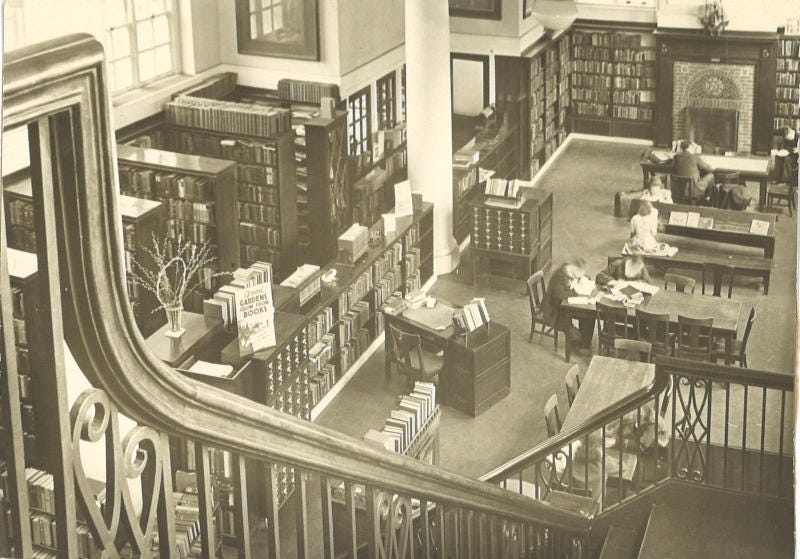
Today, the children’s reading room, which used to be in the basement, has moved upstairs and the library has a big new addition. Whenever I visit, which means, whenever I am in Pottsville, I still see lots of kids. Downtown kids, looking for a safe place, perhaps looking for a place to feel loved. The kids are rowdy. So are some of the adults. The library is no longer a silent place.
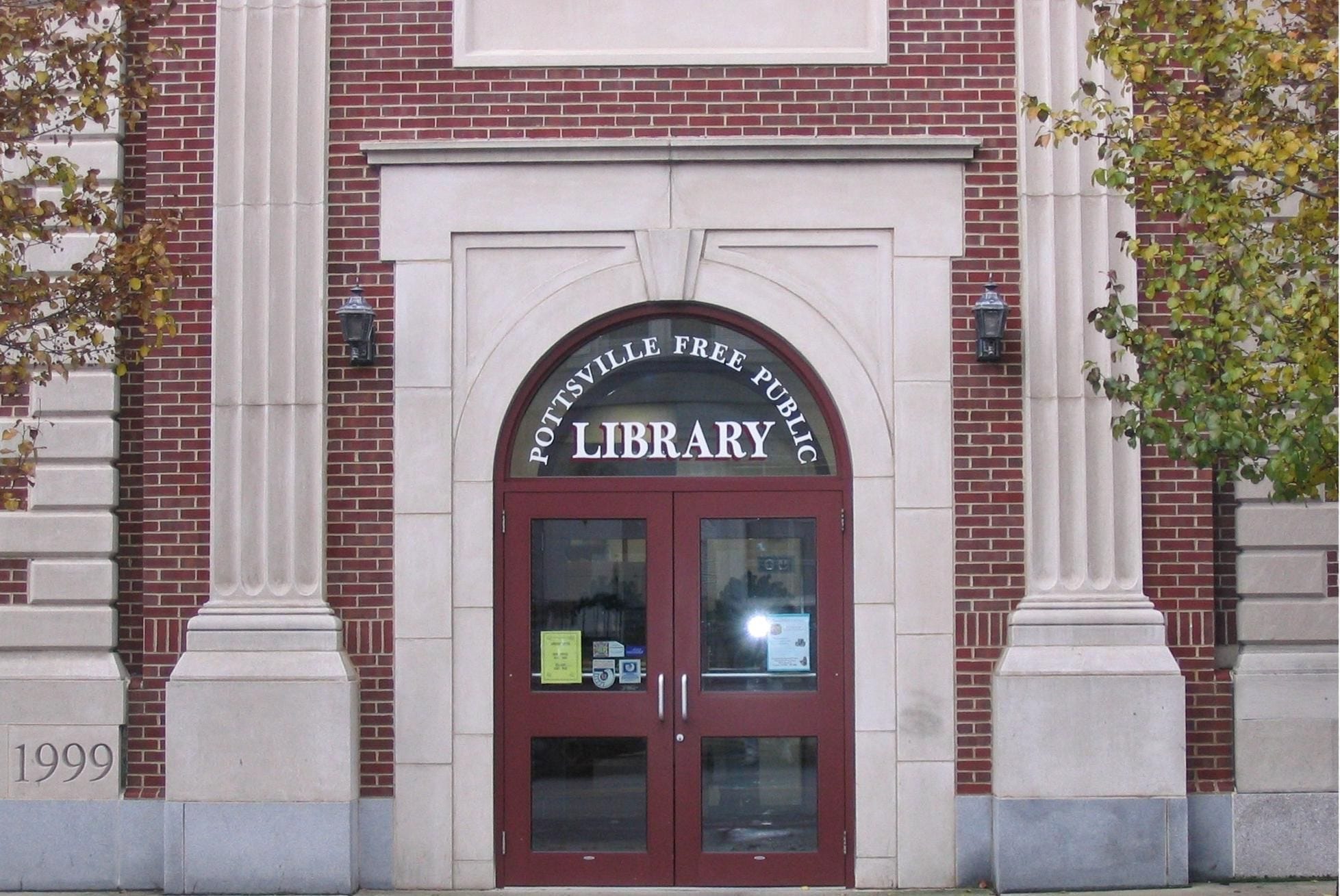
How that intersection at 3rd and Market has changed since I was a child! The handsome townhouse once home to the Mosolino law office is occupied by transients, if inhabited at all. What used to be the Qwik Shop and then a string of Chinese restaurants is an eyesore. The three-story building, unsafe, insalubrious, a firetrap. Mrs. Moran’s old house may be condemned. It is an understatement to say Pottsville is not what it used to be.
Whenever I visit Pottsville, I also like to visit my old neighborhood on Greenwood Hill, walking there from downtown. When I reach Route 61, I stop and wait as freight trucks thunder by, and while I wait, I am rarely alone. Teenagers with a younger brother or sister in tow, entire families, stand with bags from Dollar General. Downtown there is no other place to shop for food (I do not count the Farm Store, reserved for a more upscale crowd). The people standing with me do not own a car. Their food shopping takes place at Dollar General, which they can reach on foot. How much nutrition can you carry away from that place?
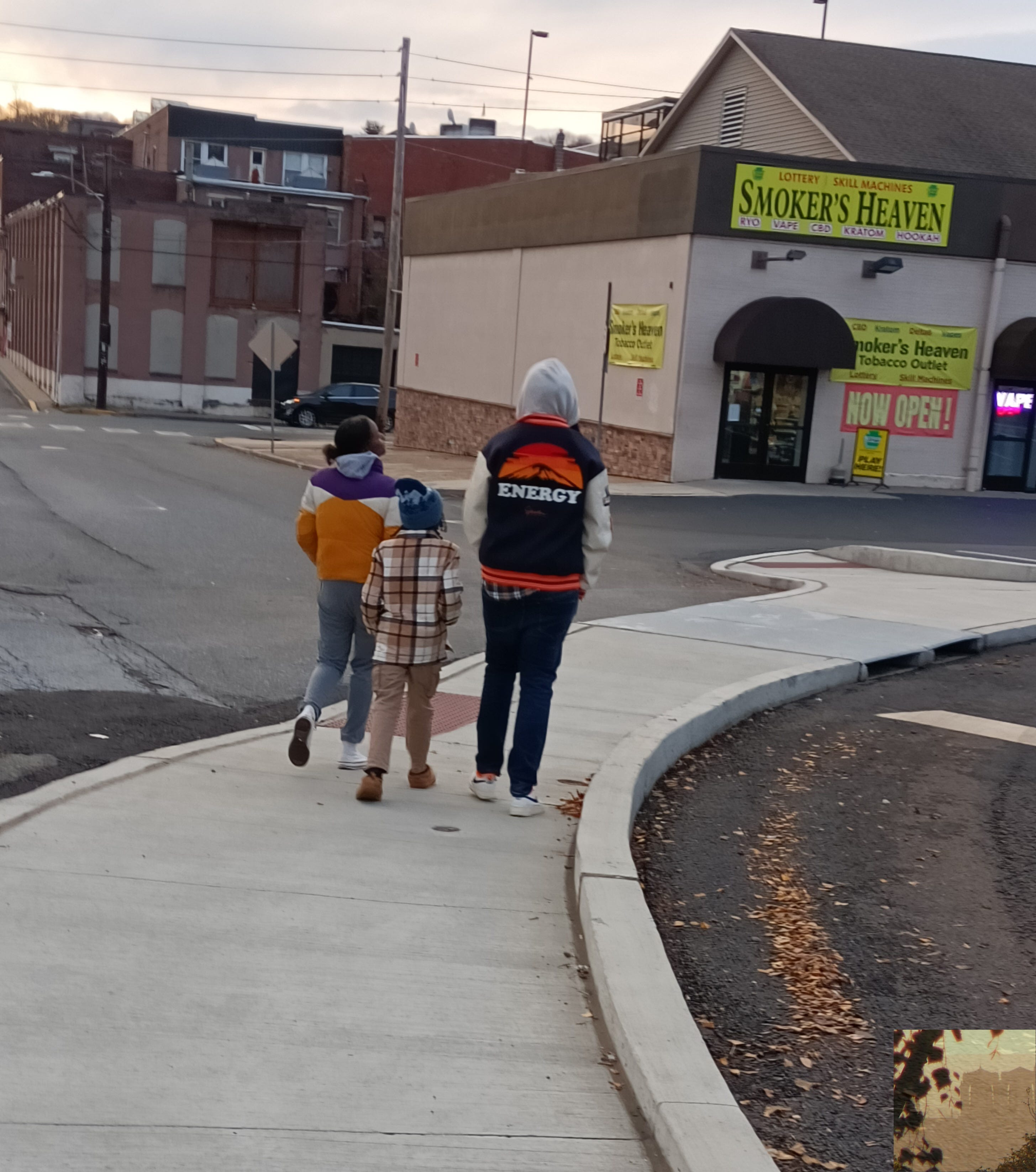
Today, parts of Pottsville that were lively and prosperous when I was a child have fallen into ruin, but now we have a president who says he is going to “make America great again.”
So, I ask myself, what once made those parts of town prosperous, and what made those long ago days of my youth a good time to be alive? More generally, what was it about the period extending from Franklin Roosevelt’s New Deal to the start of the Reagan years that “made America great”?
Here are some of my answers: First of all, during that period, income inequality between the richest of Americans and the middle class was shrinking. Americans wanted—and could afford—a good education for their children. The government invested heavily in science and research, which was, most people agreed, a sure investment in the future. In 1969, the United States put a man on the moon, in part because Americans wanted their tax dollars to go to NASA.
In the 1950’s, a third of American workers belonged to unions and union members worked to get out the vote in local, state, and national elections. Also, unions fought for employer-sponsored health insurance. In 1965, President Lydon B. Johnson created Medicare and Medicaid. By 1976, 86% of employed Americans had hospital insurance, 84%, surgical insurance. If a medical emergency hit, an individual, a family, did not risk losing savings and home.
During most of that period, despite World War II and the Cold War, Americans had a sense of security: they could afford a home and health insurance, and they could even afford to send their children to college. The globalization of industry and services had, however, already begun with, from the start, little thought for the future of the American working woman or man.
I know I’m painting with broad strokes, but I stand by what I write. Without decent housing, adequate health insurance, fair taxation, and good public education, there is no democracy. The current president wants to destroy all of the above. This will not make America great. Nor will AI, sucking up our brains, or AI centers, sucking up water and electrical resources to produce slop. Nor will eyes riveted on smart phones.
Another thing that made those long ago days so good: we knew our neighbors. We sat outside on front porches on summer evenings. We talked, face-to-face! All generations, together. Algorithms hadn’t made us hateful and divided. Greed was not the supreme value. Religion meant doing good.
Today, people like J.D. Vance, who ordered a military helicopter be used to transport his son to a golf lesson a few miles from their home, calls ideas like mine “unhuman.” I say, nothing more human than Americans working together to make their communities and their country a better and fairer place, “with justice for all.”
OK. I’ll stop. I’m preaching and I ask your forgiveness. The world is too much with me as I write, and I know I’m one of the lucky ones: health insurance, decent housing, fair taxation, good public education, I’ve benefited from them all.
And the young girl holding the cooking pot on the front porch of the house at 12th and Laurel, doesn’t she also deserve a chance?
Comments
Nothing yet. Say the first thing.
Sign in to join the conversation.