
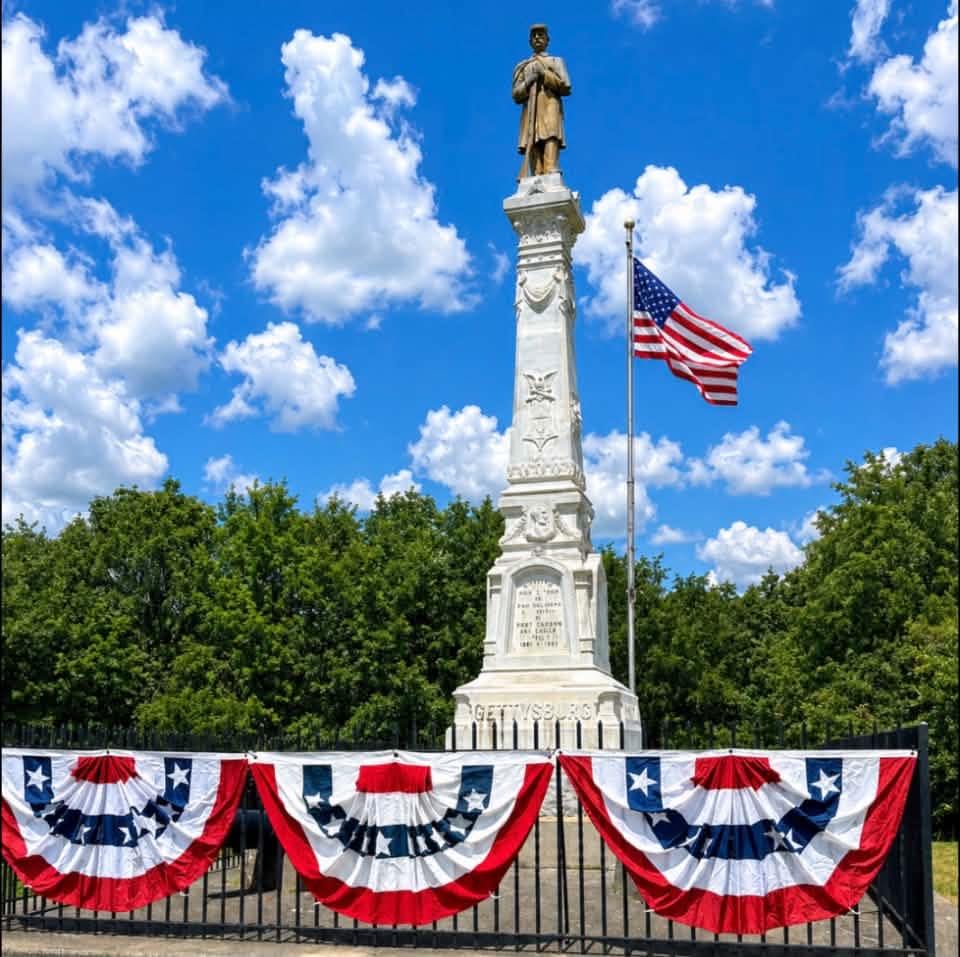
Like many people interested in Pennsylvania’s anthracite region, I regularly read Jake Wynn’s Wynning History, where I discover precious documents concerning the region’s past: letters written by Civil War soldiers, engravings or early photographs of breakers, articles that appeared in the local press. Recently, in Wynn’s June 24, 2026, post, I found a newspaper article first printed in The Patriot of Harrisburg, PA, in April 1862. This document intrigued me and I kept returning to it, not so much for what it said, but for what lurked between the lines.
Briefly, the Harrisburg paper provides an account of a visit to Wiconisco Township in the Lykens Valley by President Lincoln’s Secretary of the Treasury Salmon P. Chase, his daughter Kate, Pennsylvania-native Simon Cameron, Lincoln’s former Secretary of War, forced from office for mismanagement and corruption, and two of Cameron’s daughters, accompanied by other dignitaries and “a few invited citizens.” In Harrisburg, they all boarded a North Central Line train specially chartered for the occasion and travelled by rail to Lykenstown (Lykens) in Dauphin County.
When their train pulled in at 11:30 in the morning, Henry Thomas, a Welshman and Cameron ally, was waiting at the station. Serving as chaperone, he would be their guide for a visit of his Wiconisco mines. At the day’s end, all agreed the excursion was a great success and they returned by train to Harrisburg.
This is the gist of the article and here is a brief excerpt to give readers a taste of its style:
The party on their return expressed themselves delighted at the novel sights they saw – how coal was mined, the process necessary, and who and what the toilers were, doing the work. Before leaving Wiconisco an excellent dinner was prepared for the party at the Wiconisco Hotel. The dinner is said to have been enjoyed, and as having had full justice done it. The dinner was enlivened also with jovial and social conversation on the incidents and objects the trip gave origin to…
The party returned to Harrisburg the same evening, at half-past 8 o’clock. The object and purpose of the visit we cannot state. They may have been of pleasure, or probably of business. We rather incline to the latter, though both can be indulged in at the same time.
The first time I read the article, I was perplexed. What in the world? OK, there was “who, what, when and where,” the backbone of any piece of journalism, but there was no flesh. Words are employed to say little or nothing, and the style and grammar are like a roadblock erected to keep the reader out. “The dinner was said to have been enjoyed…” Really, there’s no better way?
Yet, I could sense a whiff of corruption and imagine the back-room dealings. Bringing the daughters along provided a veneer of charm, innocence, and gentility, but the real actors and actions are kept from view, hidden between the lines—lines that, in a teasing, noncommittal way, suggest corruption is OK.
If I was going to find out more, I’d have to get in between and start digging. So I did, slowly, carefully, laboriously, and came up with more than I’d bargained for. This April 1862 article, about four hundred words, does indeed speak volumes. It contains a history of the Civil War era, of anthracite mining, of political and industrial corruption, of ambition, vanity, greed and the complexity of human nature; it also teaches us about marriage and childbirth in those times. Yes, taking that article as a starting point, I could write a book…
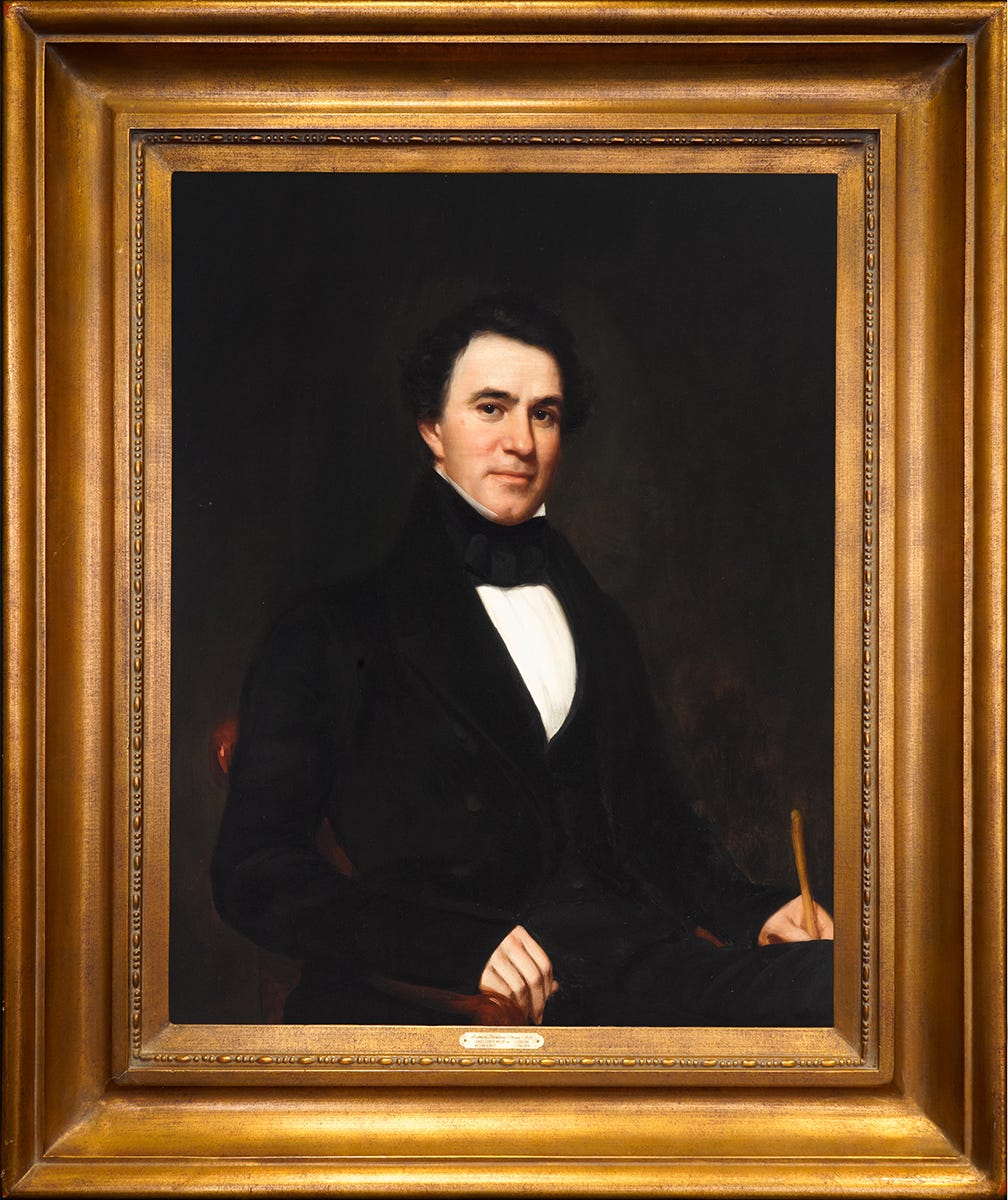
First of all, we have the players, Salmon P. Chase, Lincoln’s Secretary of the Treasury, father of the “greenback,” who put his face on the first dollar bill. On this fine April day, he is riding along with the recently disgraced Cameron, soon to be packed off to Russia as ambassador, called US Minister in those days, a post he will occupy for only a few months. What are these two men doing together? Surely we must place this trip in the context of the Civil War and the Union’s urgent need for coal to fuel its steam-powered warships. Simon Cameron, a native Pennsylvanian born in Lancaster County, knew the ropes in the coal region, had the contacts, could introduce Chase to the right people, help him make a deal. A win-win situation. At the end of that April 1862 day, we can only hope the United States of America got the coal at a fair price, without too many middlemen along the way.
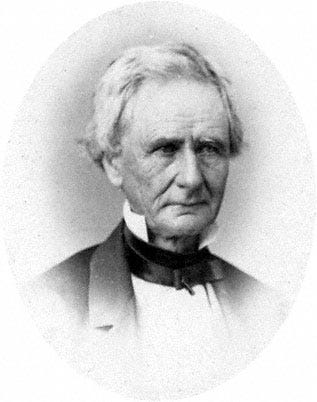
As for Henry Thomas, operator of the Wiconisco mines, already in 1861, he had benefited from lucrative contracts steered his way by Simon Cameron while still Secretary of War, enabling Thomas to build a small empire in the Lykens Valley. When Cameron needed him in 1863, the Welshman was ready to hand out bribes to help the disgraced politician buy back the US Senate seat he had given up in 1861 to join Lincoln’s Cabinet.
Of Simon Cameron, historian Frank Bernard Evans wrote in 1962, (He) “was in every respect a self-made man, but many contemporaries, including four presidents, considered the end product worthless.” Harsh words.
Of Salman B. Chase, Benjamin Wade, an Ohio senator and a contemporary, observed, (He) “is a good man but his theology is unsound. He thinks there is a fourth person in the Trinity: S.P.C.” Harsh words again, though said more in jest.
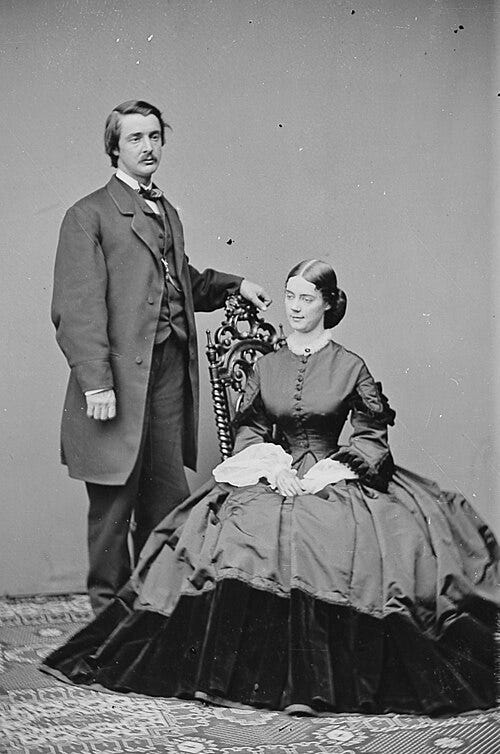
You need a big ego to place yourself on the national stage. You need a big ego or a superhuman sense of duty to run for President. Both Cameron and Chase ran in 1860, pitting themselves against Lincoln in the Republican primary. His whole life through, Chase was driven by political ambition. In hopes of gaining office, he, like Cameron, resorted to bribes. Ambition, vanity, and overweening pride drove him to it. Cameron, who dragged a trail of corruption behind him all his life, was more shrewd and methodical, carefully building a political machine that traversed a good part of the 19th century, outlived him, and survived well after World War I. He believed in political favors and punishing enemies.
But that is only part of the story. Both men were committed and lifelong abolitionists. In the 1830s, as a young Ohio lawyer, Chase was dubbed “the Attorney General for Fugitive Slaves.” He regularly defended escaped slaves and the people who protected them. Serving in the US Senate from 1849 to 1855, he was an anti-slavery champion. While Governor of Ohio from 1856 to 1860, he worked to improve public education, women’s property rights, and personal liberty laws, which could be used against slave catchers crossing into the state. Later in life, as Chief Justice of the Supreme Court, a position he held from 1864 to 1873, his first act was to admit John Rock as the first African-American lawyer to argue cases before the Supreme Court.
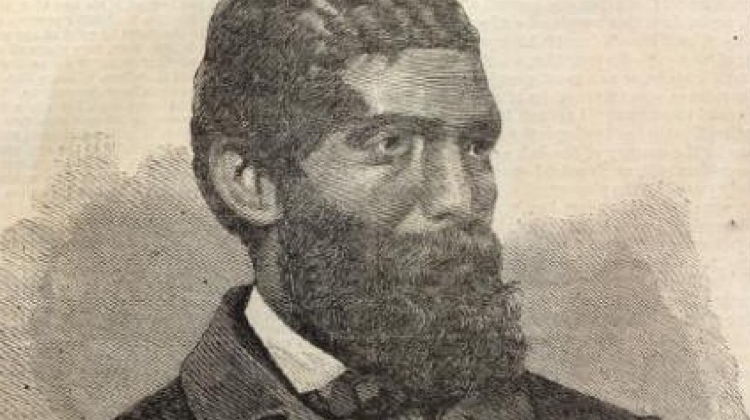
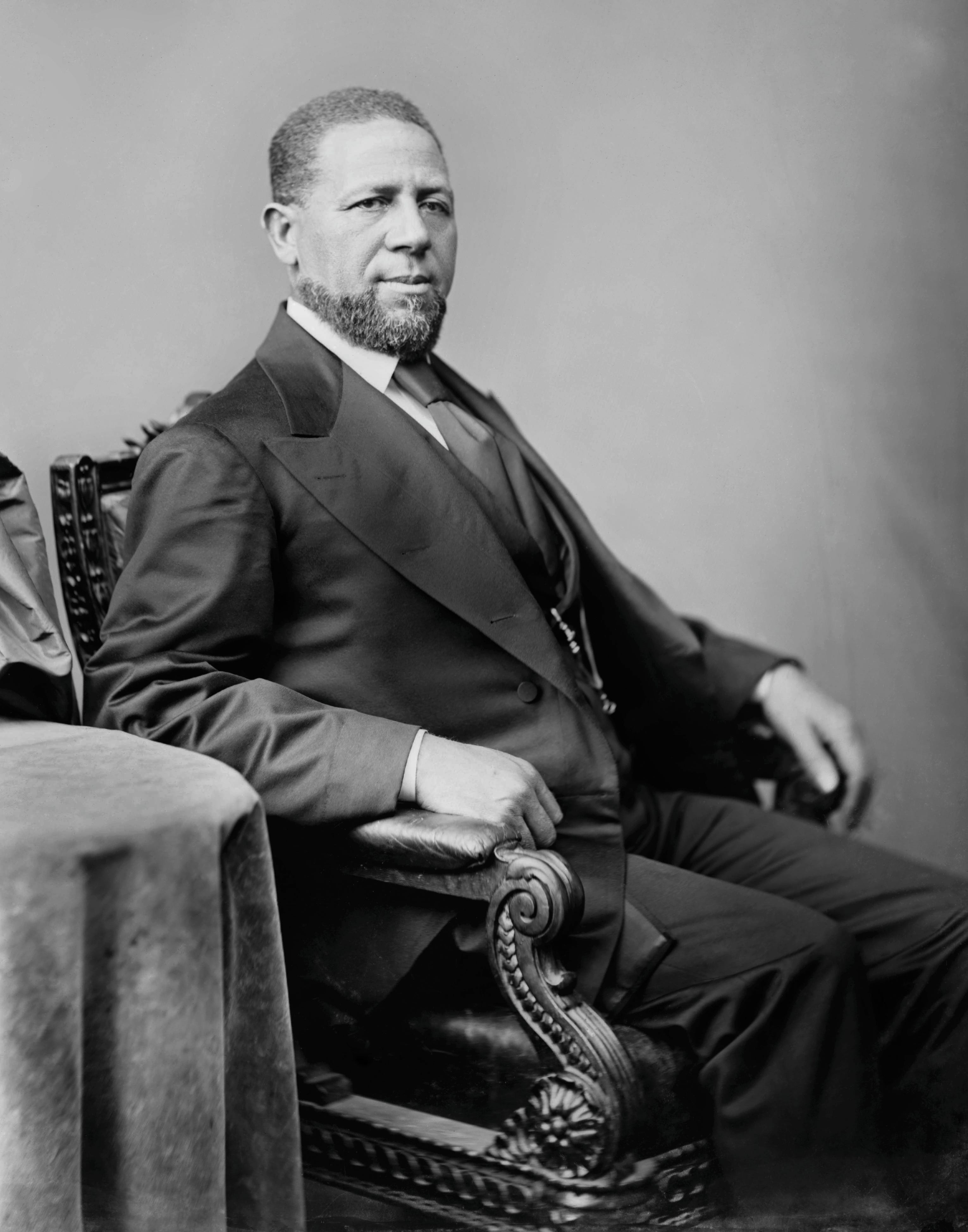
Pragmatic in all things, Cameron opposed the spread of slavery into new US territories and especially did not wish for this “peculiar institution” to interfere with business in the Commonwealth of Pennsylvania. After the Civil War, upon his return to the Senate in 1867, he was a steadfast advocate for African Americans, throwing his full support behind Hiram Revels, the nation’s first Black senator, opposed by Democrats who, using specious arguments, claimed Revels did not satisfy the citizenship requirement. In 1870, Revels was sworn in and after his inaugural speech, Cameron was the first to congratulate him.
Salmon P. Chase, Simon Cameron, complex men, complex legacies. I certainly do neither of them justice in so few words, yet I do not regret my attempt to read between the lines. Digging into their one-day excursion to Lyken, PA and the Wiconisco mines, I feel like I struck the mother lode, the Mammoth Vein in its richest, thickest folds. Their story, History, my story, our story, inseparable.
And there’s still more, other fascinating windows that open onto 19th-century life. Salmon P. Chase married three times, first, in 1836. With his first love, he had a daughter. He lost both of them within a year. His second wife gave him Kate, his only child, who accompanied him to Wiconisco in 1862. Her mother died of tuberculosis in 1839. Chase married again in 1846. In 1852, he lost yet another wife to tuberculosis and never remarried. Simon Cameron was luckier. He and his wife of over fifty years had ten children, six of whom survived. Cemeteries in those days were filled with the tombs of children who died in infancy, young mothers who died in childbirth, and the many victims, young and old, of “consumption.”
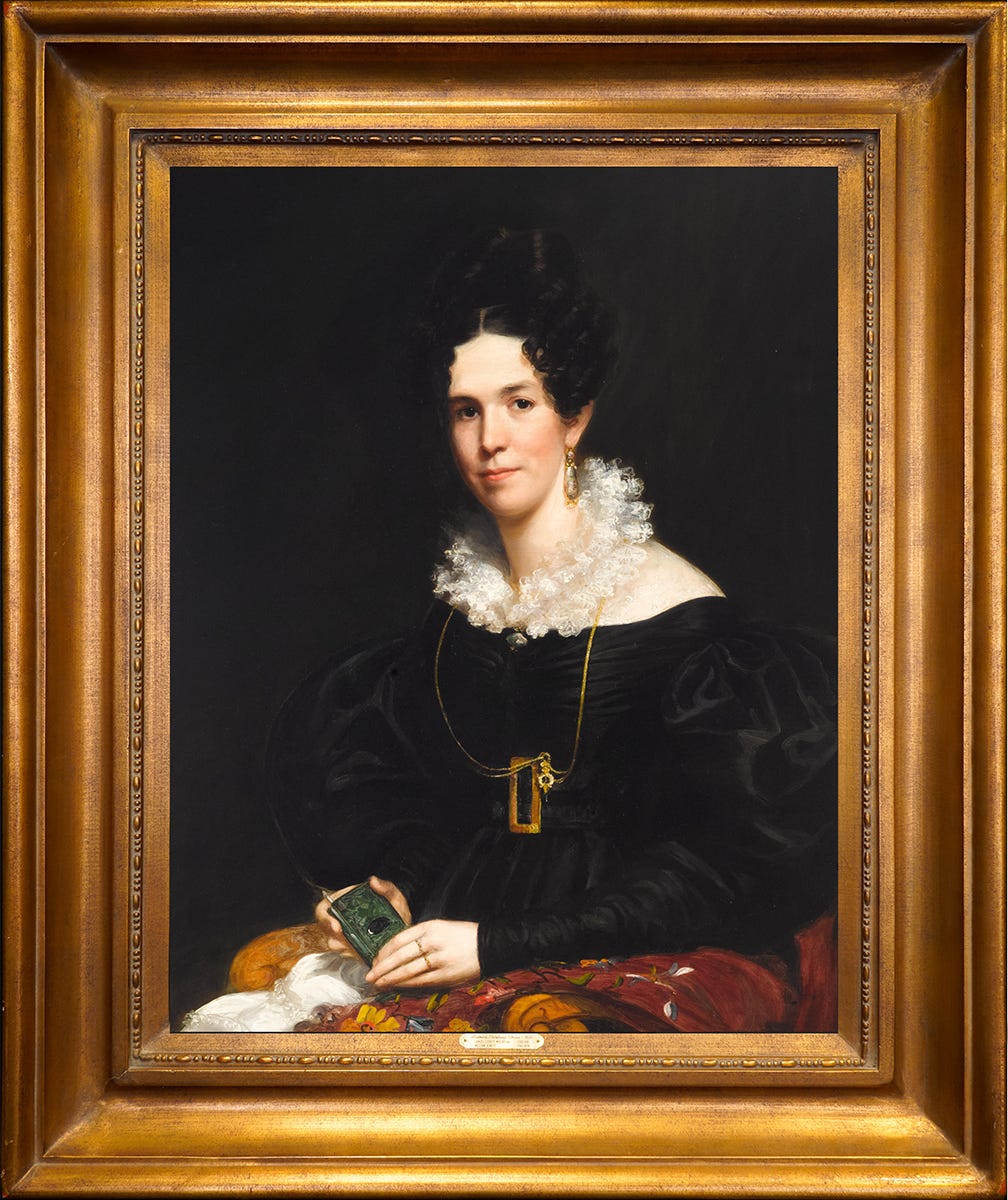
And finally, a detail about Simon Cameron that has won him a place in my heart. Cameron was born in 1799 and lost his father in 1811. His mother, unable to care for him and his seven brothers and sisters, “farmed them out,” and Simon found himself in the home of Dr. Peter Grahl of Sunbury, PA. The doctor and his wife, childless, raised him as their son. Cameron left Sunbury in 1817 for Harrisburg. Before he did, in that town on the banks of the Susquehanna River, he met and was befriended by Lorenzo Da Ponte, Mozart’s librettist for Don Giovanni, Cosi Fan’ Tutti, and The Marriage of Figaro. In 1805, Da Ponte was running a grocery store in Sunbury. There he met the young Cameron (Da Ponte was a man in his late fifties at the time) and the two travelled to Philadelphia together. Perhaps they went to the opera. I would have loved to be a fly on the wall. I also note that Da Ponte’s partner, not his wife, was a certain Nancy Grahl. They had five children together. They could not marry because Da Ponte was an ordained Catholic priest.
Much to ponder, much to explore between the lines of a short newspaper article written 164 years ago. Much to ponder on this day, the 250th anniversary of American independence. And best to conclude with the words of a President both Chase and Cameron served, those of Abraham Lincoln in his Gettysburg address, delivered on November 19, 1863:
Four score and seven years ago our fathers brought forth on this continent, a new nation, conceived in Liberty, and dedicated to the proposition that all men are created equal… We here highly resolve that these dead shall not have died in vain—that this nation, under God, shall have a new birth of freedom—and that government of the people, by the people, for the people, shall not perish from the earth.
Comments
Nothing yet. Say the first thing.
Sign in to join the conversation.