
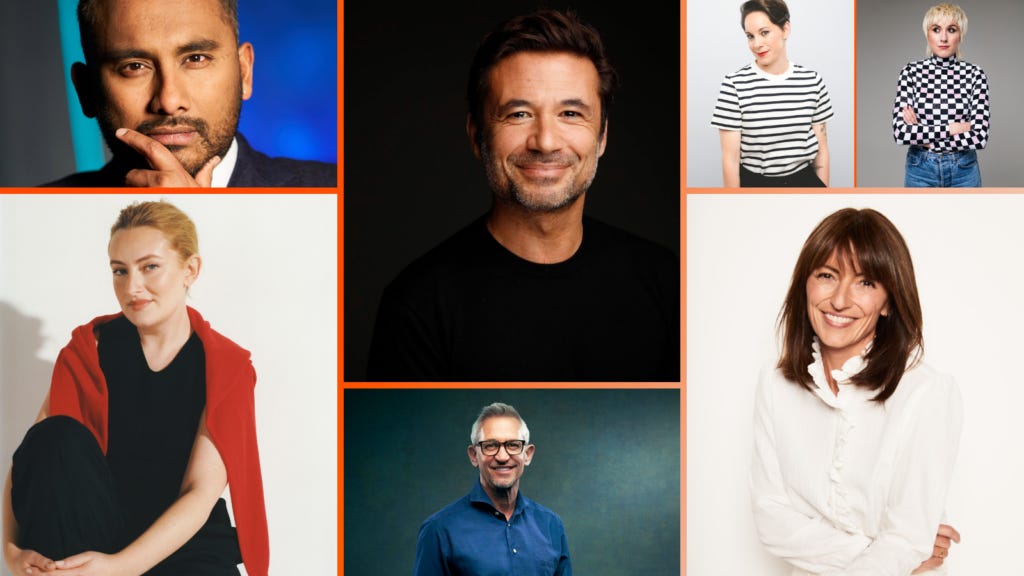
I’m back in Edinburgh for the 3rd year in a row, representing YMU at TV festival, and for a TV nerd like me, spending all day listening to talks about the future of entertainment has me written all over it.
I’m embarking on trying to bring the key findings here every day - more for myself, but thought it might be interesting for all of you guys too.
So, what did I take away from day 1..
My first day was spent listening to commissioners from Amazon, ITV, Disney+, Sky and Netflix talk about what they’re looking for next.
And, weirdly, I came away feeling quite optimistic about television.
Because despite all the conversations about shrinking budgets, declining linear audiences and whether young people even watch TV anymore, there is still money being spent. Commissioners are still looking for big ideas. And perhaps most importantly, they’re looking for shows that feel like shows. TV is making it’s big comeback apprently.
They don’t want just more content. Not another celebrity going on holiday. Not a podcast with cameras.
Actual television. What a sigh of relief.
There were a few things that kept coming up and key takeaways
This was probably the clearest message and seemed to come up quite often.
Amazon doesn’t want a traditional talent travelogue. Netflix doesn’t want indulgent travelogues either. Disney+ wants exclusive talent access, but there needs to be a story behind it. And I think there’s an important distinction here.
Commissioners aren’t saying they don’t want talent. They’re saying talent is no longer the idea.
Putting two famous people on a plane and sending them around Italy isn’t necessarily enough anymore. There needs to be a reason for us to watch them.
Amazon talked about real-world, lightly formatted ideas that allow talent to show their actual relationships and vulnerability. Sky wants talent-led reality, but with a genuine purpose or premise behind it.
I think we saw this shift coming, especially from meetings i have had over the last year, but it was good to hear it from the people in charge.
For us talent managers and creatives, the question shouldn’t just be:
“Who would people like to watch?” It should be: “What can we put them inside that reveals something we haven’t seen before?”
Something which kept coming up was that vulnerability is becoming a format and if I was to paraphrase what was being said - everyone is looking for real relationships, joyful moments and real emotions. Here is some examples:
Netflix wants what it calls “heartbeat formats” - shows sitting on a feel-good, emotional register where audiences genuinely care about the people involved.
Sky wants purpose.
Disney+ wants true stories with enough jeopardy and propulsion to feel almost like thrillers.
The best unscripted television increasingly seems to sit somewhere between entertainment and emotional storytelling. You need the format engine, but you also need to care.
That sounds incredibly obvious, but for years reality television has often been engineered around conflict. Who gets eliminated? Who argues? Who betrays whom?
There is still obviously a place for that.
But there seems to be a growing appetite for television where the emotional hook is connection rather than destruction.
This was probably the most interesting thing to me.
Both ITV and Netflix talked explicitly about interaction.
ITV wants the audience to be at the heart of its shows and able to participate. Netflix sees Live & Interactive as a major commissioning pillar.
For the last decade, television has watched as TikTok, YouTube, Twitch and social media taught audiences that they don’t just have to watch culture. They can participate in it. They can comment. Vote. Remix. React. Influence what happens next.
TV was interactive before social media - Big Brother and The X Factor understood the power of giving audiences control but somewhere along the way we became obsessed with on-demand viewing and forgot how powerful collective participation could be.
The next generation of big entertainment formats might need to combine the scale of television with the participation mechanics audiences now expect from the internet.
ITV’s brief was probably the most unapologetically ambitious.
They want fast-turnaround reality, big weekend entertainment, 9pm competition formats and huge noisy events. Essentially: where is the next Love Island, Big Brother or I’m A Celebrity?
And importantly, there is development money available. That matters because there has been a tendency recently to talk about British television as if everyone is simply managing decline. That isn’t what this sounded like. It sounded like a broadcaster actively hunting for its next piece of cultural IP.
They don’t want another dating show or another survival format. They want the thing after those things. Someone has to invent it.
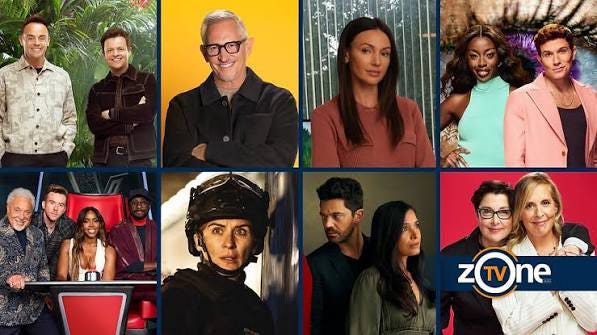
Netflix’s UK brief particularly stood out.
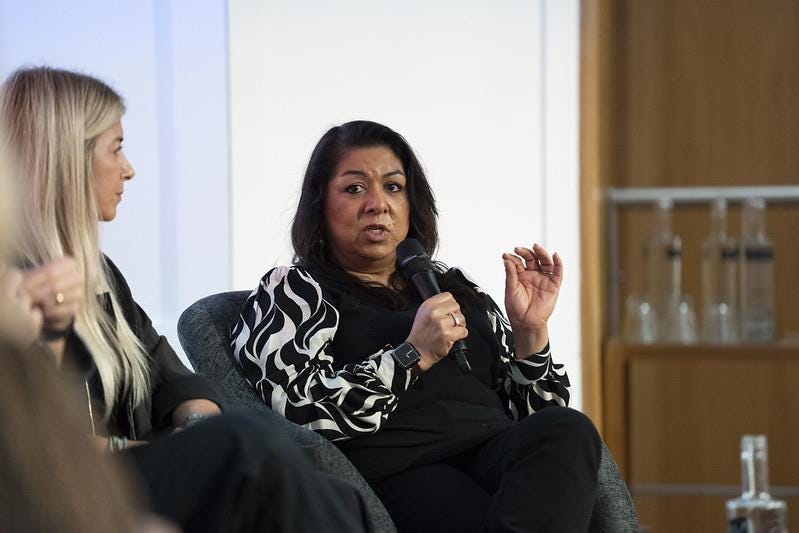
They want big ideas with incredible stories that feel as prestigious as drama. As with Syeda now at the forefront of Netflix, I am confident we are going to get that.
Often it feels like one of the traps of unscripted is treating it as the cheaper, quicker cousin of scripted television, but with the gloss of Netflix, they can change this - like they have done with shows like Squid Games the challange and Million Dollar Secret. We just need more of that in the UK.
Netflix seems to be looking across three distinct areas: those big prestigious stories; emotional “heartbeat” formats; and Live & Interactive entertainment.
In the US, there is also an appetite to reinvent talent shows and shiny-floor entertainment, alongside docusoaps that genuinely feel different.
Ultimelty, the last few years of tv fest have all been about digital, but the divide between the two seems to have disapeered and now we all just want great teleivison, despite where it’s distrubuted.
And as you could imagine, across almost every commissioner I heard from, the message was remarkably similar.
They still want talent.
They still want scale.
They still want big television.
But personality alone isn’t the format anymore. The idea has to earn the audience’s attention.
No posts
Comments
Nothing yet. Say the first thing.
Sign in to join the conversation.