
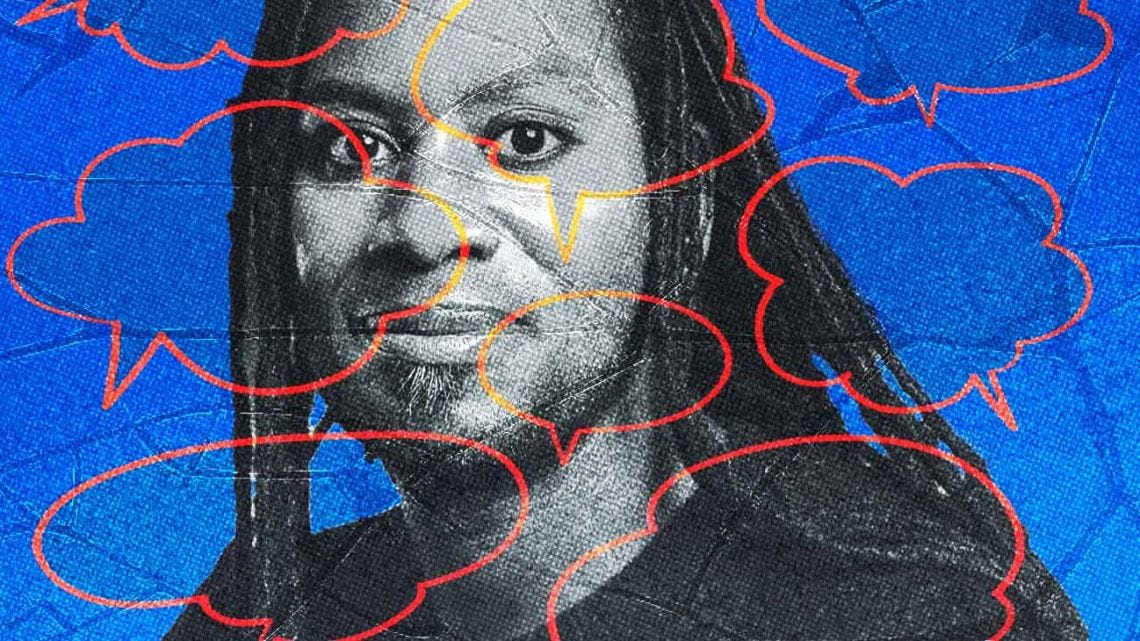
Unless you’ve been living under a rock, it would have been difficult to avoid the horrific news of the death of Professor Jason Arday last week.
His death came weeks after an onslaught of headlines, accusations and public scrutiny , all disguised as in the interest of public knowledge. His family described it as a “campaign of sustained abuse.” Hours before his passing, he reportedly told a friend that “he couldn’t go on.”
As the news cycle moves on, and the press are carefully covering this story, working hard to cover their tracks, I am worried we’ll stop talking about Professor Jason Arday at precisely the moment we should be turning our outrage into change.
We cannot let this become another tragedy we mourn, discuss and then move on from.
But before I explain why, let me take you back to how we got here.
Arday was born and raised in Clapham, London to Ghanaian parents. He grew up on a council estate and at a young age was diagnosed with autism and developmental delay. According to his family, he was non-verbal until the age of 11 and unable to read or write until he was 18.
He eventually studied Physical Education and Education Studies at the University of Surrey, trained as a PE teacher, obtained two master’s degrees and completed a PhD in education at Liverpool John Moores University. At 27, he reportedly wrote his ambitions on his bedroom wall, including: “One day I will work at Oxford or Cambridge.”
And then he did.
In early 2023, at the age of 37, Arday became professor of Sociology of Education at Cambridge, becoming the youngest black person to ever be appointed to a professorship at the university. His research concentrated on race, inequality and he became a key figure head in the Black Lives Matter movement, here in the UK.
But quickly, the narrative surrounding Arday moved from:
“The inspirational professor who defied the odds”
to
“the fraud who fooled everyone.”
And it was the speed and viciousness that the press were able to flip the narrative that concerns me the most.
In 2025, allegations emerged concerning plagiarism in Arday’s PhD and academic publications. Times Higher Education had investigated claims involving similarities between his work and previous academic material; according to Retraction Watch, it prepared a substantial investigation but did not initially publish it after receiving correspondence from Arday’s lawyers.
Arday denied deliberately plagiarising. He acknowledged errors in his earlier academic work and argued that inadequate supervision and aspects of his autism contributed to mistakes in attribution. Liverpool John Moores University investigated and upheld his PhD, reportedly treating the issues as honest/reasonable errors rather than deliberate academic misconduct.
But it didn’t matter – Like many public downfalls, once the snowball is rolling down their hill, and the press have decided what story they want to tell – there is no backing down.
At that point, once the press had the “fraud” narrative to jump onto , they began investigating not only his academic work, but his entire biography. They challenged his claims about being non verbal, claims about running 30 marathons in 35 days and lying about racial attacks. People who knew him backed him, but it didn’t matter because the spark had lit, and a wildfire was taking hold of Arday and he was feeling the burn.
Of course, there is a perfectly defensively argument that investigating plagiarism by a Cambridge professor is in the public interest but at what point does investigation turn into dismantling a human being?
Despite Cambridge defending Arday in what they called a “vile smear campaign to undermine his credibility.” On the 5th August 2026, Arday resigned.
His statement is devastating to read in hindsight. He said the “relentless accusations, speculation and public commentary” had taken a profound toll on him and his family. He said he wanted to escape the “constant spotlight” in which every aspect of his life was being subjected to public examination and judgment. He said he had reached “the limits of what any person should reasonably be expected to endure.”
But the coverage continued.
Even after his resignation, reporting examined his childhood, interviewing former schoolmates about whether he really had been non-verbal. Some remembered him talking and joking; others remembered him as non-verbal and receiving significant additional support.
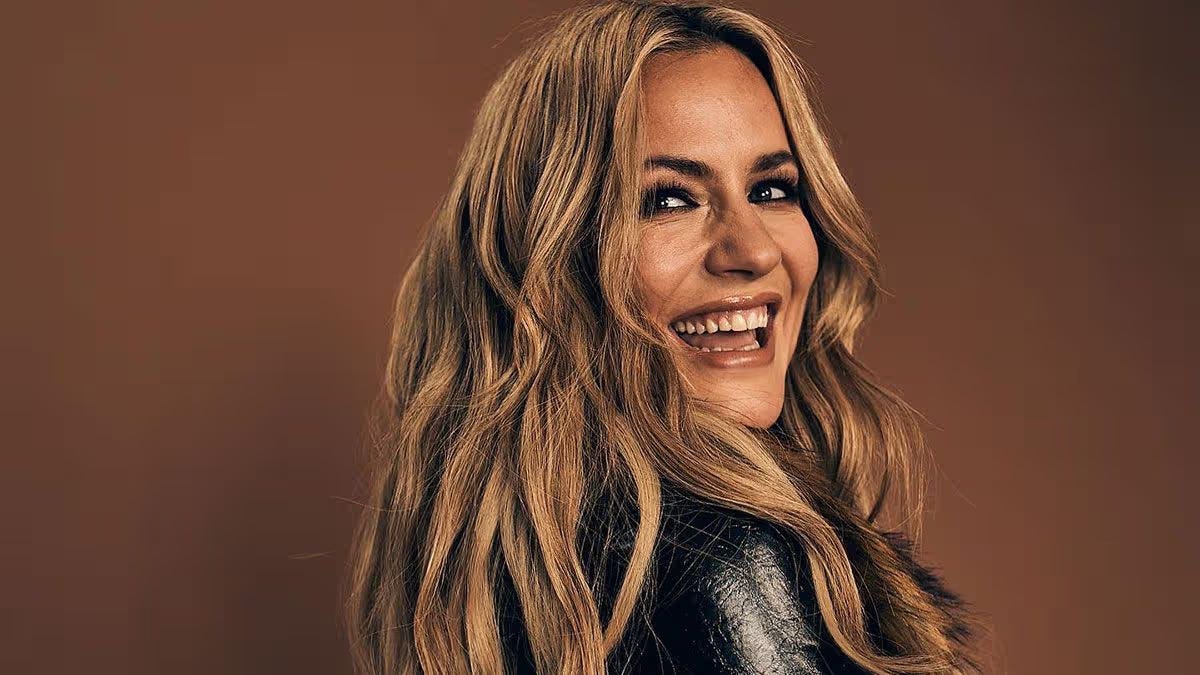
When Caroline Flack died by suicide in 2020, Britain promised itself it would change. In the months before her death, she had been subjected to extraordinary scrutiny: a Guardian analysis found 387 newspaper stories mentioning her in just six months, with negative coverage surging after her arrest.
The press created a “Be Kind” as a national mantra because it allowed everyone to mourn Caroline without confronting the system that killed her.
Perhaps, with Caroline, we were able to cover it all up and put it down to trolling and the price of celebrity, as though relentless public humiliation was simply something that comes with being famous – but Arday wasn’t asking to be famous – he was an academic , defying the odds who the press thought would bring clicks to their stories.
There is a link between both Flack and Arday that I cannot stop thinking about. Before death, the individual is asked to account for themselves. After death, the institutions that scrutinised them begin accounting for themselves. The narrative changes, the language softens and responsibility becomes complicated enough that nobody has to truly own it.
The press doesn’t need to be kind. Sometimes journalism shouldn’t be kind. It needs to investigate, expose and challenge. But it does need to be responsible. And maybe that is the lesson we should have learnt from Caroline all along.
The question we should really be asking ourselves is “With 6 years since Caroline’s passing, has anything actually really changed”
I’m not here to debate whether everything Jason Arday said was true, or whether he was “fooling everyone” - an absurd phrase in itself, considering I, like many people, had never even heard of Arday before the public scrutiny began.
A free press has every right to investigate people. That is what journalism is for. My concern is how quickly legitimate scrutiny can turn into a witch hunt, and how blasé we have become about the consequences of publishing something simply because it makes a good story.
The press had every right to question Arday’s academic record and whether he was suitable to be a Cambridge professor. What I struggle to understand is how that investigation expanded into almost every corner of his existence - his childhood, his family, his health, his personal history -until it felt as though the man himself, rather than any specific allegation, was under investigation.
That is the uncomfortable space between scrutiny and punishment. Between holding somebody accountable and making them feel like there is nowhere left to turn.
We cannot definitively say that press coverage caused the deaths of Caroline Flack or Jason Arday. But we can ask whether the relentless scrutiny surrounding them contributed to circumstances in which they felt increasingly cornered. And it is in that gap - between journalism’s right to investigate and its responsibility for how it does so- that I believe we have the most work to do.
Imagine a press where, before a story could destroy someone’s reputation, there had to be a basic requirement: it had to be true.
Not speculation dressed up as fact. Not a provocative headline that bears little resemblance to the story underneath it. Not “sources say”, followed by a claim that can travel halfway around the world before the person it is about has even had the chance to respond.
Because the media landscape has changed. A newspaper story no longer dies with tomorrow’s fish and chips. One headline becomes a tweet, a TikTok, a podcast discussion, a Reddit thread and eventually a Google result that can follow someone for the rest of their life. Speculation gets repeated enough times that eventually it becomes accepted as truth.
And yet the people publishing these stories are largely regulated by their own industry.
IPSO is the regulator responsible for more than 1,800 UK newspaper and magazine titles. It has the power, following a standards investigation, to impose fines of up to £1 million. Yet in more than a decade, it has never fined a newspaper. In 2025, IPSO received 6,534 complaints and enquiries, opened 555 investigations and upheld just 53.
That is why I believe we need genuinely independent press regulation with teeth: a body capable of protecting a free press while also holding it accountable when it gets things wrong. Freedom of the press should never mean freedom from responsibility.
This is exactly what Tulisa Contostavlos is now campaigning for. Tulisa knows the consequences better than most. In 2013 she was targeted by an undercover investigation by The Sun on Sunday which led to her arrest and prosecution. Her trial ultimately collapsed, and the reporter at the centre of the sting, Mazher Mahmood, was later convicted of perverting the course of justice.
Her Fix the Press campaign is calling for the implementation of the Leveson recommendations and a genuinely independent regulator with the power to investigate, fine and protect people. At the time of writing, almost 28,000 people have signed.
Sign Tulisa’s Fix the Press petition
Because this isn’t about stopping journalism. It’s about protecting it. We need journalists to investigate wrongdoing, challenge power and uncover things people would rather keep hidden. But with that enormous power should come enormous responsibility.
We said Be Kind after Caroline Flack.
Maybe Jason Arday should be the moment we finally demand something more meaningful:
Be accountable.
No posts
Comments
Nothing yet. Say the first thing.
Sign in to join the conversation.