
“In 2023 humans created more data than in all of human history before that. And that was true of 2022, and of 2021, and of 2020. And it will be true next year,” a leader at an old job of mine—a professor, a salesman, a figurehead—would say, hoping to coax lucrative connections from an audience of businesspeople. They needed to leverage all this data. If they didn’t, they were missing out.
Yes: we hear that we have “created” data. But what does the verb to create mean in such a context? How does a society create data? The world actually loses mass in an average year. Nothing fundamental gets made, though it does get turned into a hundred-plus million people, two billion Peeps, some good books, lots of plastic. But that’s all transformation, not creation. Therefore what the creation of data means is: machines are cataloging an exponentially greater portion of the world. More specifically, machines increase by more than 100% every year what they are able to see.

AI often presents as an automatic writing and drawing tool that spews prose and visual art passable as human to a too-large portion of readers. Yet it’s AI as ingester, devourer, consumer, swallower, perceiver that makes me leerier. And not just because it uses artists’ work for training data without paying them—an abomination whose understanding requires a more concrete, more economic framework than the one this post wishes to build—but because its powers of degradation increase in proportion to its ability to ingest the world. There’s a perception creep between man and machine: the comprehensiveness and insidiousness of its integration with our daily lives mean that we have begin to absorb our environments as machines do.
As the world becomes more legible to machines, the world becomes more accessible and manipulable to their owners. James C. Scott, examining state development throughout the centuries, sheds light on the connection in the book Seeing Like a State: How Certain Schemes to Improve the Human Condition Have Failed. 1
Suddenly, processes as disparate as the creation of permanent last names, the standardization of weights and measures, the establishment of cadastral surveys and population registers, the invention of freehold tenure, the standardization of language and legal discourse, the design of cities, and the organization of transportation seemed comprehensible as attempts at legibility and simplification. In each case, officials took exceptionally complex, illegible, and local social practices, such as land tenure customs or naming customs, and created a standard grid whereby it could be centrally recorded and monitored.
Scott, writing in the late 90s, soon notes that the technologies and economic systems of high modernity have only accelerated legibility. Were he alive, I don’t doubt he would note that artificial intelligence’s ability of perception, organization, and categorization have expanded the size and power of his “grid” by untold orders of magnitude. The Palantirs of the world now enable the state—whether that means government or technocorporate fiefdom—to see like a machine. See through a machine.
A different professor/salesman/figurehead at that old job used to talk incessantly about unstructured data. What is unstructured data? Machine food prior to digestion. Anything and everything not immediately ripe for quantifying and/or matricizing. Those of us who believe the world is not completely quantifiable—let’s call ourselves ‘humanists’—cannot retreat comfortably into our conviction, though, because those who believe the world will become quantifiable do not care about the truth of their conviction. Where it’s not quantifiable, they’ll fudge the numbers! They prefer approximations to blank spots.
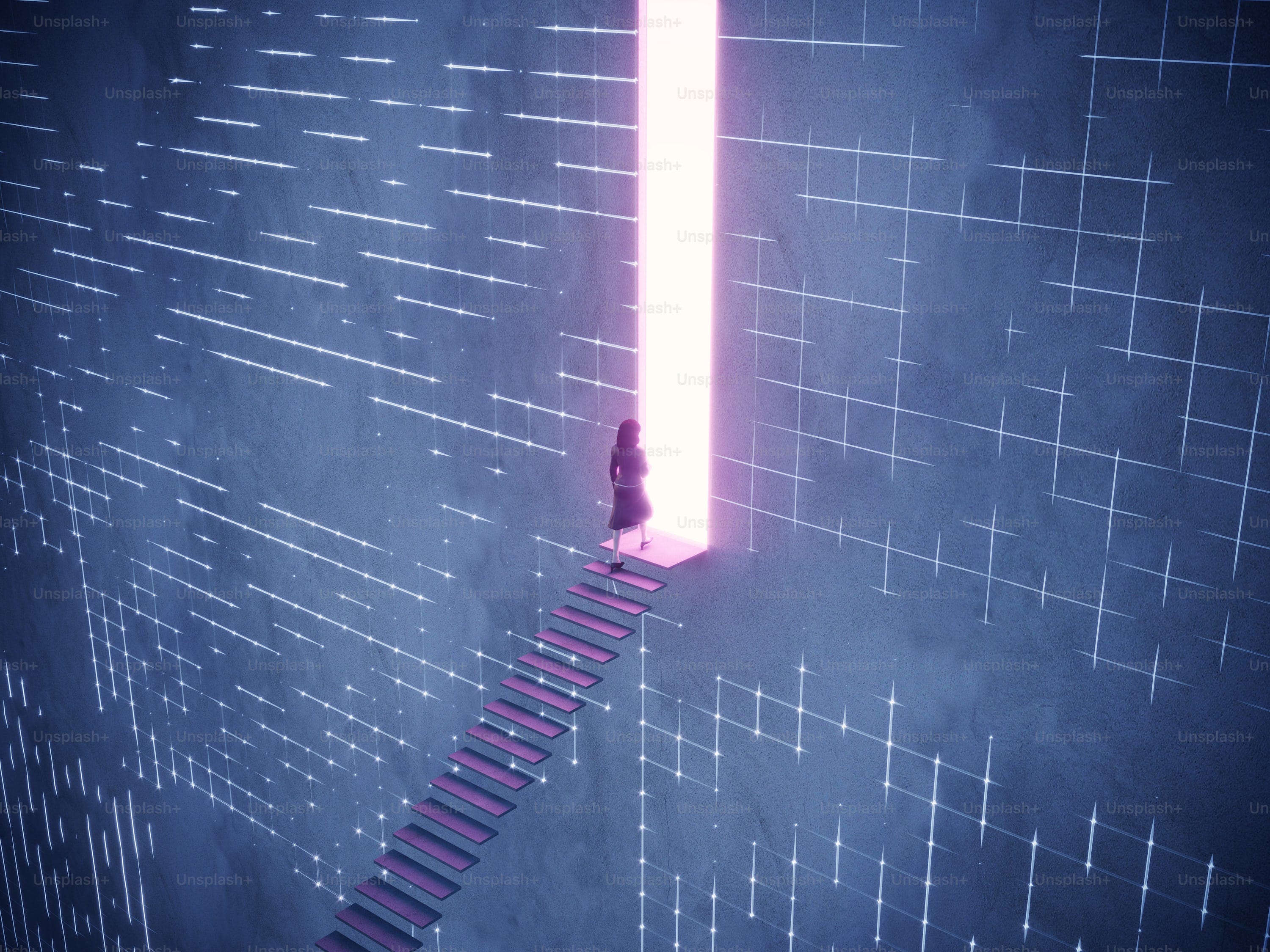
At a dinner with writers and professors in my current program—it was my turn to be the MFA student who was invited to attend an after-reading dinner with one of our Reading Series guests—the talk turned to AI writing. A poet said, “Yes, yes, AI can write a poem, but can AI read a poem?” I have been turning it over in my head ever since.
I don’t think it can. Perception is the human thing. Way back in 1917 Viktor Shklovsky told us that “the goal of art is to create the sensation of seeing, and not merely recognizing, things; the device of art is the “ostranenie” [or “estrangement”] of things and the complication of the form, which increases the duration and complexity of perception.”
Machines can only recognize, arrange, matricize, quantify. A machine cannot read a poem or story because it cannot be affected by art. Imagining such an action estranges the idea of poetry and fiction and reminds us of their beauty and purpose: to find the pieces of soul that a machine, should it be commanded to consume a given piece of art, will be unable to digest.
Works cited and/or referenced
Scott, J. C. (2020). Seeing like a state: How certain schemes to improve the human condition have failed. Yale University Press.
Shklovsky, Viktor and Berlina, Alexandra. “Art, as Device.” Poetics Today 36, no. 3 (September 1, 2015): 151–74. Original published in Poetika 1917.
All art used under Fair Use Doctrine and/or in accordance with licenses.
No posts
Comments
Nothing yet. Say the first thing.
Sign in to join the conversation.