
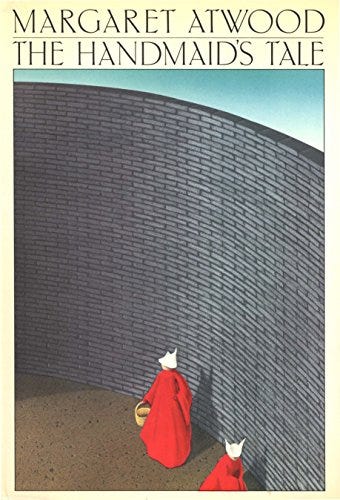
In a novel or story, the literary device of allusion opens a door between the fictional world and the world of the reader, imbuing narrative with affordances from beyond the text. The Handmaid’s Tale, for example, uses readers’ existing associations with the stories of Sarah, Rachel, and Leah (or, perhaps more properly, Zilpah and Bilhah) to help connect an imaginary dystopia to the real world. We can see that the seeds of Margaret Atwood’s Republic of Gilead are present in contemporary society in part because they are present in the Bible. Framed like this, allusion seems a political exercise, a supremely intellectual act on the part of the writer. It is difficult, for instance, to imagine Octavia Butler creating the social critique and complex theology of Parable of the Sower primarily by intuition.
Yet good fiction refuses pure polemicism. A literary allusion, therefore, is unlike a critical reference in that its purpose is not simply to support an argument. In fact, its purpose does not immediately need to be made clear. Atwood’s Offred is not simply Zilpah or Bilhah; Butler’s novel demands a different interpretive apparatus than the parable of the sower that appears in the gospels. Allusion often complicates rather than clarifies. Every writer’s process is different, but it is clear that many allusive narratives are at the very least conceived by a method that relies more on inspiration than logic, that in the creation of an allusion an author does something that feels more like liberation than deliberation. “Literature was in the air around me,” John Steinbeck, author of East of Eden, wrote of his creative process. “The Bible I absorbed through my skin.”
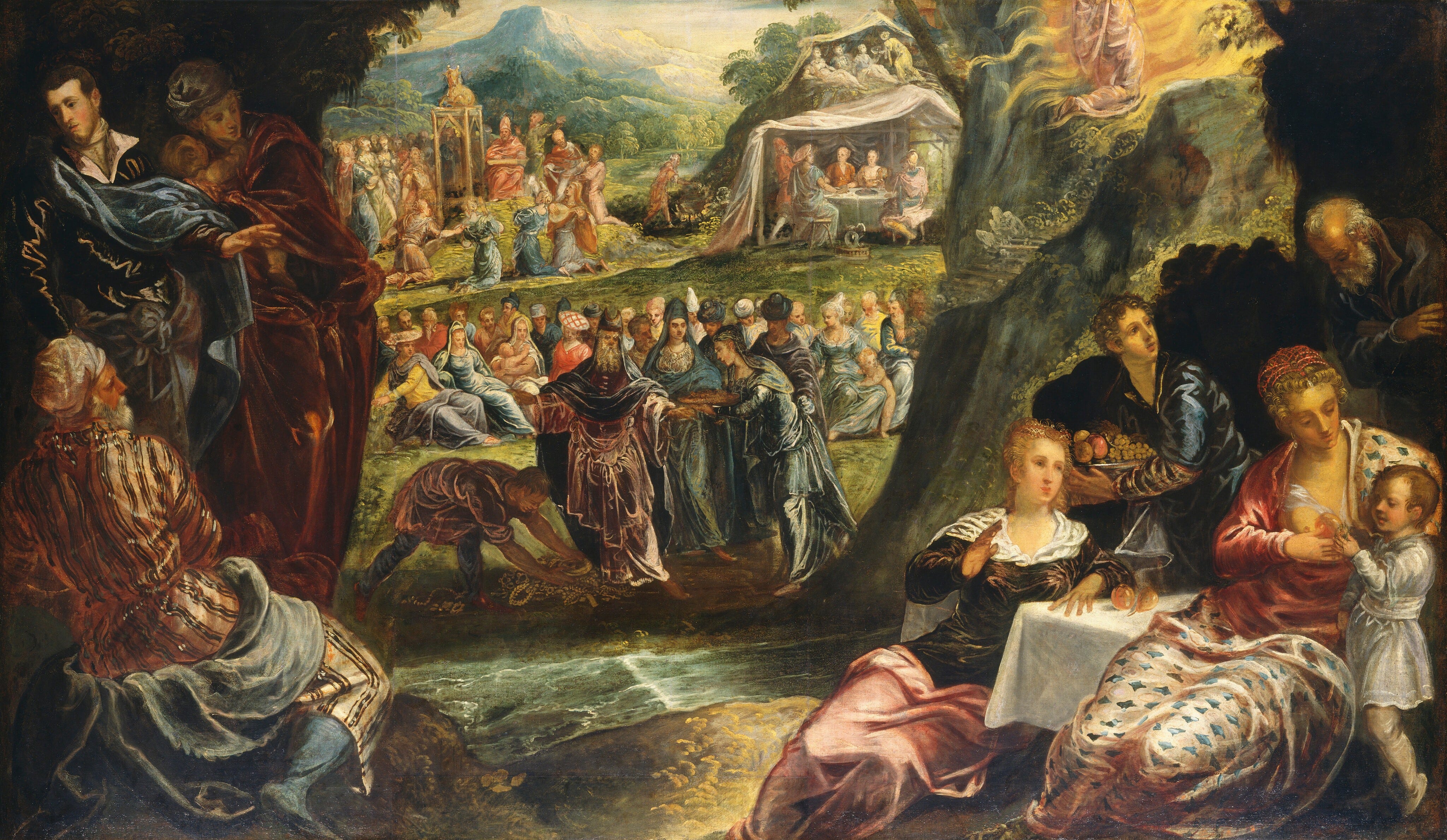
In the writing of my own novel, I have strived to combine inspiration and intellect in my use of biblical allusion. I could provide—and have provided, when talking to friends and family—many intellectualized reasons for the book’s multiple allusions to the Bible, most prominently the Book of Ezekiel, but the core of my desire lies in how captivated I am by the wild vibrancy of Ezekiel’s visions: in the words of religious scholar Lauren McCormick, their “trippy, liminal nature.”1 For the sake of my aesthetic and artistic aspirations, I am glad that I allowed the spirit to move me during the year-plus I spent on the first four drafts. On the fifth—as it began to take a shape that looked closer to what I want the final product to be—my methodology became less intuitive and more intellectual. I will never abandon the artistic sensibility that gives the novel its soul, but even allusions that complicate rather than clarify demand an underlying relationality. Otherwise the affordances I strive to bring into my fictional world will get shaved off en route.
I must then ask: What exactly am I positioning my novel in relation to? If I were to say I allude to the Book of Ezekiel, do I mean the words that appear in the contemporary translations of the Old Testament, or do I mean to call to mind the period of Judahite exile under the Babylonian empire? In the Wheels contains a technological device with spinning rings which have embedded cameras, echoing Ezekiel’s wheels, which “were full of eyes round about them four.” Do I understand what the the four faces of the living creature (man, lion, ox, and eagle) might have meant to Judahites in Ezekiel’s time? Do I need to?
It turns out that charting the relationship between the Bible and the world it depicts is easier said than done. Archaeological knowledge of the southern Levant in the Bronze and Iron Ages complicates as well as clarifies the Bible (it is, I suppose, like a good literary allusion in that way). Moreover, the currents of influence between archaeology and the Bible run bidirectionally. For example, the selection and execution of archaeological excavations—and the interpretation of the evidence they yield—has historically been subjected to the biblically framed motivations of powerful people with specific agendas. Keith Whitelam writes, “The biblical past, and the archaeological treasures of the region, were appropriated by Western powers in their struggles for political advantage and the legitimization of their own imperial ambitions.” The success of a discovery might be measured by its ability to support specific interpretations of biblical text—say, one that seems to justify Israeli instead of Palestinian control of a given piece of land—rather than its novelty, value to scholars and others in the archaeological community, or its ability to paint an accurate picture of the historical Levant. As a result, we cannot assume any archaeological finding is the result of dispassionate, objective research alone. Just as we need to understand why biblical scribes might have wanted to portray events in a certain way, we need to evaluate modern sources in light of their oft-intertwined funding and motives. My efforts to understand my own biblical allusions more fully by looking outside the Bible could therefore be stymied by a biblically-minded corruption of archaeological method.
The backlash represented by Whitelam and others, while justifiable, has also brought its share of all-or-nothing thinking. Phillip Davies, clearly frustrated by certain institutional influence, writes in The History of Ancient Israel that “It would be a poor modern history of ancient Israel and Judah that did not take a social/cultural anthropology into account as an aid in description, analysis and explanation of events. It goes without saying that the biblical narratives rarely offer any such explanations.” Really? Think of Ruth, think of Esther—think of almost any narrative in Testaments New or Old. Even if Davies’ argument is that biblical writers are so biased and focused on their own agenda that they cannot be trusted to be accurate, accounts from their perspective certainly contain rich veins of “social/cultural anthropology.” Moreover, eschewing the Bible would entirely defeat the purpose of my project, both in this post and in my novel. Removing the Bible from archaeology makes archaeology less relevant to my work—a truism I wager applies to millions of artists, scholars, and other people around the globe. More importantly, wholesale rejection of the Bible as a source of information seems just as foolish as uncritical belief. However biased, the Bible is an incredibly comprehensive—in some cases the only—source of information about people, places, and events that have a profound impact on the present day.
![r/blender - The Machine from the novel 'Contact' [Untextured]](https://substackcdn.com/image/fetch/$s_!m9SW!,f_auto,q_auto:good,fl_progressive:steep/https%3A%2F%2Fsubstack-post-media.s3.amazonaws.com%2Fpublic%2Fimages%2F77d3f5d4-2723-4940-822d-337eb71d12a9_640x392.jpeg "r/blender - The Machine from the novel 'Contact' [Untextured]")
Fortunately, many current biblical scholars and archaeologists see value in occupying a middle ground. Lauren Monroe, partially in response to Davies, puts it best: “Threads of historical Israel are in fact preserved and evident in the fabric of biblical representation… in dialogue with archaeology, they can be sewn together to produce an entirely different political history of Israel than the one the biblical authors sought to tell.” Biblical texts and physical remains alike can be scrutinized to determine when an archaeological result undermines a biblical account, when it supports a biblical account, and when no such relationship can be diagrammed.
As it turns out, the literal dirty work of biblical archaeology is, according to Biblical archaeologists, quite a literary process. I don’t want to overstate the similarities by claiming that an archaeologist connecting the Bible to an excavation is the same as a novelist making a Biblical allusion. Rather, it is enough to say that when I allude to the Book of Ezekiel, I am connecting my own novel to a web of understanding that is by no means settled, that is itself the subject of discovery, debate, and interpretation—the interaction of literary and physical history.
An Ido Koch article from Hebrew Bible and Ancient Israel about Judahite deportation under Mesopotamian imperial influence sheds exemplary light on the affordances of Ezekiel. Though Koch spends a significant amount of time on the period of neo-Assyrian domination in the southern Levant, he notes that “the erasure of Levantine social distinctiveness was completed by the Neo-Babylonian state.” The Book of Ezekiel is far from the only one that mentions the Babylonians, but it would certainly be included in the books Koch references as distinctive for their portrayal of a particular type of trauma: “Significant was the deportation of the Jerusalemites in the 590s and 580s BCE, for this is vividly memorialized in the Hebrew Bible, the only ancient testimony of the unforgettable trauma of deportation.”
Koch’s positioning of the biblical relationship between Judahites and their Babylonian captors illuminates a historical context that encourages me to connect Ezekiel to literary characters to whom I had previously been unable to relate him. I had thought of Ezekiel as a radical poet in exile or a captive scholar, but not as someone bearing the trauma of a people in addition to his own trauma—like the protagonists of, say, Helena Marìa Viramontes’s Under the Feet of Jesus, Edwidge Danticat’s Breath, Eyes, Memory, or Monique Truong’s The Book of Salt. Koch points out that, from an archaeological point of view, certain books of the Hebrew Bible provide “the only non-Mesopotamian written source on the deportations—and thus, the only channel through which scholars may study the long-term experience of being deported and of living in exile.” The three novels I mentioned above each tell a story from the perspective of a colonized person living in their colonizer’s country. What would it mean for Viramontes’ Estrella to look up into the sky and see a four-faced figure in the clouds? Does my new archaeologically-informed understanding of the colonial implications of the Book of Ezekiel change how (or if) I might allude to it?
Providing concrete answers to these questions would be the work of a scholar—literary, biblical, archaeological, or any combination of the three. In my capacity as a writer of fiction, I can be more elusive in my response. In some ways, this makes novelists more fortunate than scholars. Academic writing has little tolerance for allusion without explanation. Where an archaeologist often has to take a set of views and determine which is more likely correct—or at least show how they can be reconciled—a novelist can place opposing perspectives in the same space without resolving them. Fiction can self-consciously contain paradoxes. Yet open-endedness is itself a kind of curse: with such subjective standards, how will I know if I succeed?
The biblical scribes, however, show no fear of allusion; it is important for me to remember that the biblical history to which I connect my novel is itself an allusive web. Just as I want to resist a directly analogous relationship between an image in my novel and its biblical referents, biblical scribes often seem to be intentionally mystical, to the endless frustration and delight of those tasked with interpreting their words. In the context of Ezekiel and the books of the Babylonian exile, for example, it’s apparent that Babylonian motifs leaked into biblical text. Koch writes, “Their exposure to Babylonian culture led the deportees to increasingly appropriate Mesopotamian topoi and incorporate them into their cosmology and worldview.” But how much? And where? Isaiah’s seraphim, Ezekiel’s cherubim, and the lion and eagle imagery in Ezekiel’s visions, for instance, could allude to Babylonian religious figures like Anzû and Marduk’s servant animal mušḫuššu (which Marduk rode almost like a throne), themselves evolved and repurposed over centuries of rising and falling Mesopotamian empires. The degree and significance of such appropriation is the subject of yet another debate that will never be solved completely; biblical archaeologists can only hope to inch closer and closer to the truth.
Provable truth, however, remains their standard. The standard of a novelist—evocative truth, perhaps?—is slipperier, a realization that both liberates and terrifies me. I’m asking a lot of Ezekiel by inviting him into my novel. When I first called him forth, I didn’t quite understand the baggage he carried with him—the full freight of the allusions I planned to use. Today, I can only say that while I know his affordances a little better, what I’ve truly been given is an appreciation of their size and depth.
She said this during a lecture of hers I attended in spring 2025.
Works Cited and/or Referenced
Davies, Philip. The History of Ancient Israel. Continuum, 1999. Pages 1-14.
Koch, Ido. “A Framework for the Study of Deportations to and from the Southern Levant during the Age of the Mesopotamian Empires.” Hebrew Bible and Ancient Israel 11, no. 5 (2022): 10. https://doi.org/10.1628/hebai-2022-0011.
L.1.10, EBL edition, https://www.ebl.lmu.de/corpus/L/1/10
McCormick, Lauren. “Perfect Angels?: Imaging Technology Shines New Light on Feminine Figurines from the Biblical World.” Lecture. April 21, 2025.
Monroe, Lauren. “On the Origins and Development of Greater Israel.” Hebrew Bible and Ancient Israel 10, no. 2 (2021): 187-227. https://doi.org/10.1628/hebai-2021-0012.
Nelson, Thomas. King James Study Bible: Second Edition. Thomas Nelson, 2013.
ORACC Museum. Marduk. https://oracc.museum.upenn.edu/amgg/listofdeities/marduk/
Steinbeck, John. “Steinbeck’s Arthur.” New York Times, October 10, 1976. https://www.nytimes.com/1976/10/10/archives/steinbecks-arthur-the-guest-word.html.
Whitelam, Keith W. The Invention of Ancient Israel: The Silencing of Palestinian History. Routledge, 1996.
Zorn, Jeffrey R. “The View from Mizpah: Tell en-Naṣbeh, Judah, the Sixth Century BCE, and the Formation of the Biblical Text,” in P. Dubovsky, et. al., eds., Stones Tablets and Scrolls. Mohr Siebeck, 2020. 229-251.
Zorn, Jeffrey R. “Mizpah: Newly Discovered Stratum Reveals Judah’s Other Capital,” Biblical Archaeology Review 23.5 (1997): 28–31, 34–38, 66.
Jeff Zorn, “Tel en Nasbeh and the Problem of the Material Culture of the 6th Century,” in Lipschits, et. al. eds., Judah and the Judeans in the Neo-Babylonian Period. Winona Lake: Eisenbrauns, 2003. 413-447.
All art used under Fair Use Doctrine and/or in accordance with licenses.
No posts
Comments
Nothing yet. Say the first thing.
Sign in to join the conversation.