
Let’s be honest—this economy? It's a little like playing musical chairs with half the chairs missing and the music stuck on a glitchy remix.
Across Europe, companies are scrambling for “the right talent,” spinning up roles like “Purpose Strategist,” “Culture Architect,” and “Holistic Growth Hacker,” while young professionals—and career shifters—are endlessly updating cover letters, getting ghosted after third-round interviews, or funneling their hopes through yet another AI-powered application portal. Anyone relate?
One of our community members shared:
“Switching from academia to industry is tough! But doing it with no mentorship or guidance is even tougher! I’m not sure on how to approach recruiters, or how to write a motivation letter, without feeling like an imposter. I feel stuck.”
We’re all a little tired.
A little unsure.
And we all know the story isn’t as simple as “a shortage of skills” or “a lack of motivation.” Something deeper is going on.
Over the last few years, the term “war for talent” has been thrown around boardrooms and LinkedIn posts like a tired mantra. But when we look closely, what we’re really witnessing is a disconnect—between the kinds of careers people are craving, and the systems still stuck in outdated patterns of hiring, gatekeeping, and cultural bias.
And for bicultural, BIPOC, Black and Brown talent in Europe, this disconnect often feels even wider. Not because the talent isn’t there—but because it’s too often unseen, underestimated, or asked to contort into norms that weren’t built with us in mind.
According to a 2023 report by the EU Agency for Fundamental Rights, over 1 in 3 individuals of African descent experienced racial discrimination when applying for a job. In countries like Germany, Austria, and Finland, the numbers are even higher. And once in the workplace, the challenges don’t stop. Nearly 30% report facing discrimination on the job itself. We’re talking about daily microaggressions, under-recognition, fewer chances for advancement, and chronic underpayment.
Meanwhile, many Black and Brown professionals are overqualified for the positions they hold. In fact, according to the same report, 35% are working in roles that do not match their education levels, and 30% are stuck in temporary contracts. That’s three times the rate of the general population.
So why does this matter?
Because the job market is changing. Rapidly. Not just from the bottom up—but from the sides, diagonals, and dimensions we didn’t even know existed. According to the World Economic Forum’s 2025 Future of Jobs report, 60% of companies believe AI and automation will significantly reshape how they operate by 2030, with 70% of job roles expected to undergo substantial skill shifts in that time.
Skills like analytical thinking, adaptability, creativity, and emotional intelligence are topping the charts of in-demand competencies.
This is where many bicultural professionals in particular bring lived fluency. They’ve grown up navigating ambiguity and decoding environments that weren’t necessarily built for them. These aren’t buzzwords—they’re daily realities. And in this next economy, they’re also strategic assets.
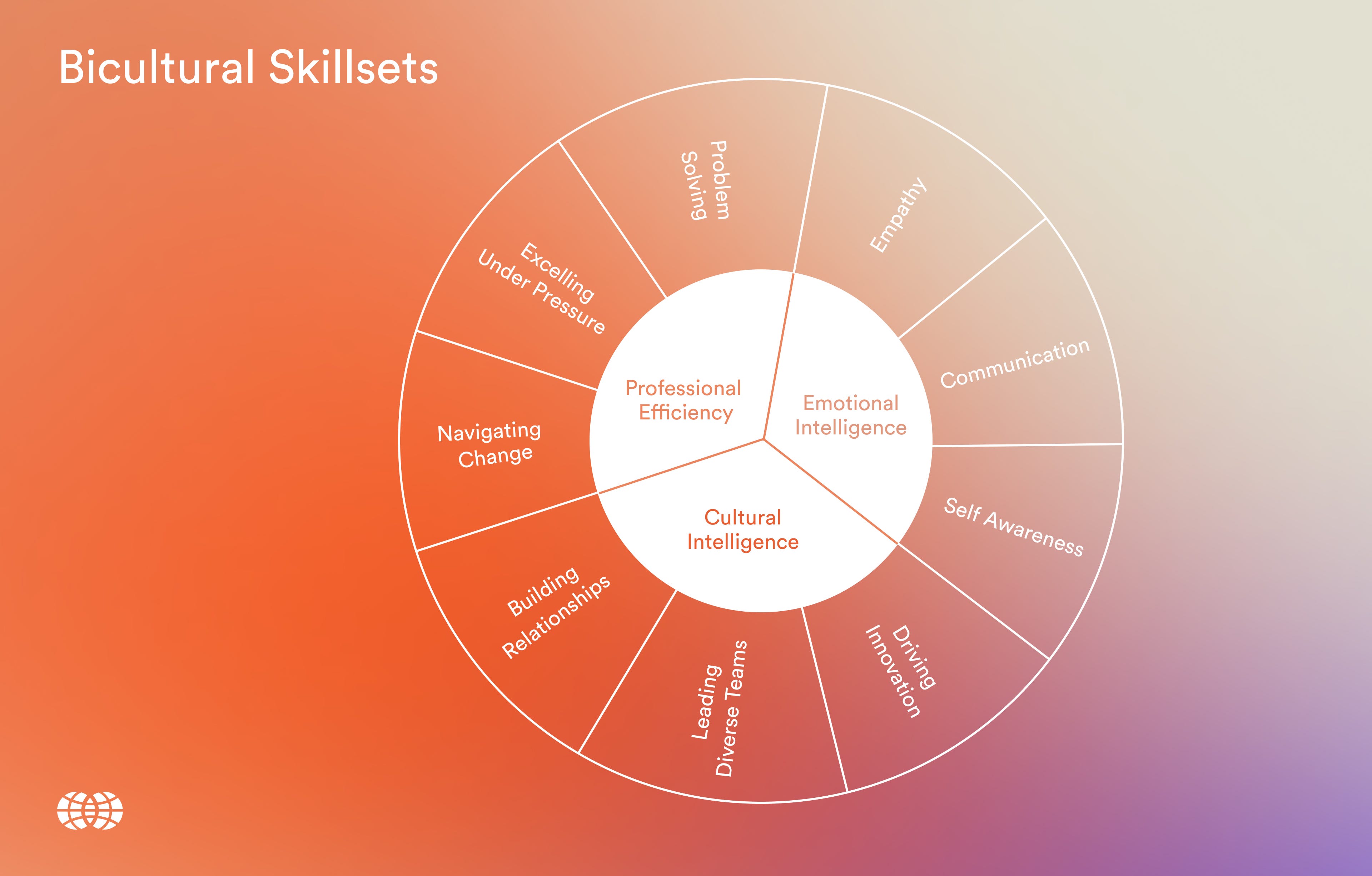
There is a greater need for spaces that are grounded in lived experience, where those who are actively doing the work are shaping the future of work, rather than analyzing it from afar.
And let’s not forget the fatigue. Not just from job seekers—but from hiring managers too. We hear it in hushed tones: “We tried to hire more diverse talent, but we couldn’t find any qualified candidates.” A myth that needs retiring, urgently. Because it’s not a pipeline problem—it’s a pattern recognition problem. We’ve been taught to look for potential in familiar packaging, to equate professionalism with sameness, to rely on cultural fit instead of cultural stretch.
Meanwhile, the global talent landscape is shifting beneath our feet. Remote work has opened up access like never before—breaking down borders, enabling people to work from cities and regions previously off the corporate map. Talents across the African diaspora are no longer limited by geography—but they’re still limited by where companies search, screen, and select.
Add to this the growing influence of AI in hiring—algorithms trained on biased data sets, automated assessments that favor certain communication styles or accents—and we begin to see how “objectivity” can quietly reinforce exclusion. In this context, even the most qualified candidates can be filtered out by tools that were never calibrated for them.
We’re at a crossroads, one where companies must move from diversity as intention to inclusion as a competitive advantage. One where hiring practices are redesigned not just for efficiency, but for future-proofing. One where value is seen not only in titles or tenure, but in unique experiences, hybrid identities, and the kinds of resilience that don’t show up on paper.
This shift isn’t just moral. It’s strategic. The organizations that will thrive in the future aren’t those with the flashiest DEI reports or the quirkiest job titles. They’re the ones that know how to recognize real potential, that can build cultures of belonging, and that are willing to evolve—not for optics, but for impact.
Because the truth is, talent is not scarce. Opportunity is. And connection—the kind that bridges cultures, industries, and generations—doesn’t happen by accident. It happens when we make the effort to see each other more clearly.
So, what does this shift mean for you? What are you seeking in an opportunity? What’s missing from today’s hiring processes that would make you feel more seen and valued? What are the things you wish employers understood about your experience and your potential?
We’d love to hear your thoughts, reflections, and experiences. After all, the fog isn’t lifting overnight. But maybe, together, we can start to clear the path forward!
Bridging Worlds by Omek is a space for bold conversations on what it means to lead, build, and belong as bicultural professionals, entrepreneurs, and brands. Join the community!
No posts
Comments
Nothing yet. Say the first thing.
Sign in to join the conversation.