
Over the past few weeks, more than 150 people reached out to talent expert Louis de Vos after he offered support on LinkedIn. Their message was clear:
“The experience of looking for a job has become exhausting.”
They’re not alone. The global job market is undergoing significant shifts. Major tech companies like Microsoft, Google, Amazon, and CrowdStrike have collectively laid off over 61,000 employees, citing restructuring and the integration of artificial intelligence into business operations. In the UK, the private sector has contracted for the second consecutive month, with manufacturers cutting jobs at the fastest rate in five years due to weak demand and rising costs.
In addition, in today’s hiring landscape, it’s not unusual for your application to be screened by an algorithm before a human ever sees it. Nearly 9 in 10 companies already use some form of AI to filter candidates. Meanwhile, the Easy Apply button floods inboxes, and recruiters are overwhelmed before the process even begins.
For bicultural and BIPOC professionals in particular, the job search often feels like trying to fit a multidimensional story into a single-page template. The systems we rely on to signal worth were never built to reflect layered identities, non-linear paths, or the lived experience of moving between cultures, languages, and norms.
Traditional hiring frameworks prioritize consistency, clarity, and conformity. But what if the very things that make someone unusual on paper, such as adaptability, translation, cultural code-switching, collective thinking, and navigating ambiguity, are the exact skills we need most in today’s complex world of work?
As an example, what if preserving tradition, as Omek community member Ida Ossonemane from Makobefang does by documenting Fang stories and rituals, is also a form of leadership, cultural stewardship, and storytelling all at once?
This spirit of self-discovery is what today’s job search deserves. The following tools and formats aren’t end-all solutions—they’re starting points. Invitations to blur the lines between form and function, center what makes you—you, and spark more human, more meaningful conversations. Ready to explore?
Rather than just listing job titles and dates, skill-based resumes center on what you can do—your capabilities, competencies, and cross-functional experience. It’s especially powerful for career changers, people with non-linear paths, or bicultural talent whose value may not fit traditional molds. It creates space for often-overlooked strengths like cultural fluency, emotional agility, resilience, and adaptability, which have become vital in today’s world.
Another way to make your resume stand out: use the STAR method. For each skill or accomplishment, briefly outline the Situation, Task, Action, and Result. It’s a clear way to share your unique stories, especially the ones that don’t always show up in traditional job descriptions, and show how you work, solve problems, and create impact.
Before you roll your eyes and think “what kind of woo-woo is this?”—hear us out. For biculturals who often shift between different cultural energies or working styles, Human Design can surface intuitive patterns around communication, collaboration, and flow.
By generating your chart, you’ll learn how you naturally engage and make decisions, which helps you craft a job-search narrative that highlights how your bicultural background lets you bridge teams, spot hidden gaps, and synthesize ideas. Research a company’s goals and tailor your message—highlight how you realign global teams or spot bottlenecks early, so hiring managers view your cross-cultural perspective as a collaboration asset.
By understanding your type, you gain self-awareness and renewed confidence in who you are and what you can do, which helps you decide what to say yes to, how to frame your difference as a strength, and how to work with your energy, not against it.
This is where biculturalism and neurodivergence and disability overlap — all challenge the dominant narrative of how intelligence, leadership, or communication should look. All reveal how brilliance can be quiet, nonlinear, or hard to categorize.
As shared by The Wheels of Impact, here’s a helpful way to break the binary between neurodivergent and neurotypical by spotlighting the full spectrum of cognitive diversity:
Neurodivergence includes individuals whose neurological functioning diverges from what is traditionally considered “typical,” including but not limited to autism, ADHD, dyslexia, and Tourette's. These individuals often bring exceptional strengths like deep pattern recognition, creative problem-solving, hyperfocus, and unconventional thinking.
However, these strengths can be overlooked or misinterpreted when hiring processes aren’t designed with inclusion in mind.
For example, timed tests may disadvantage those who process information differently; bright lighting or long Zoom panels might overwhelm those with sensory sensitivities; a preference for verbal communication can leave behind those who thrive in written or asynchronous formats.
Imagine an interview process that allows everyone to shine:
More flexible expression: written responses, video reflections, audio recordings, even simple sketches, so that you can present your best self.
Untimed or extended-time options, plus advance sight of instructions, so that solution quality improves under real conditions. SAP’s Autism at Work program saw a 25% increase in solution quality when candidates could review tasks beforehand and work at their own pace.
Basic accessibility standards for digital interfaces that benefit everyone.
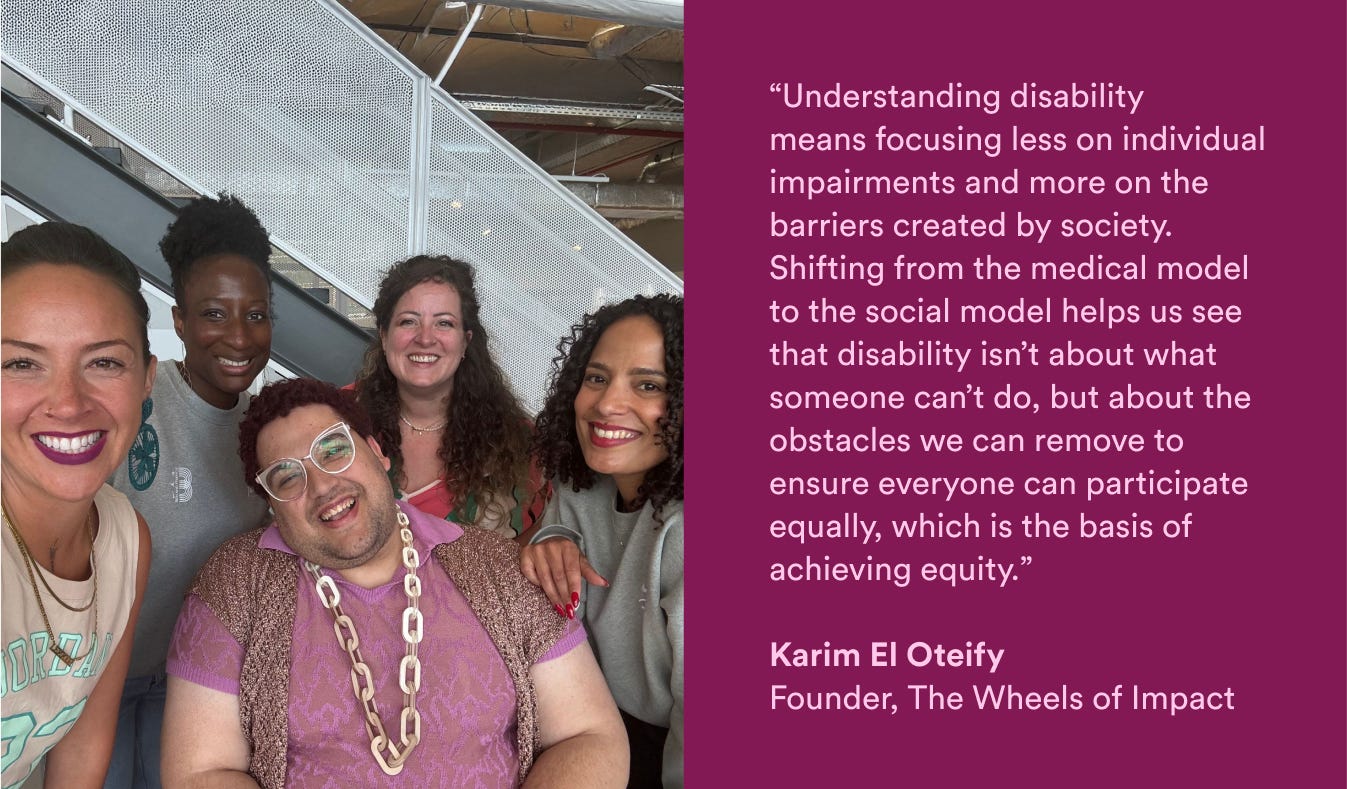
While these tools—skill-based resumes, Human Design, and inclusive practices—offer valuable self-awareness and can spark deeper conversations, it’s crucial to remember they are starting points, not rigid verdicts.
For many bicultural, neurodivergent, or non-traditionally shaped professionals, there’s a particular kind of joy and power in realizing that the very experiences that once felt “different” and therefore less welcomed are, in fact, deep sources of insight, leadership, and creative fuel.
As we imagine the future of job search and collaboration, maybe the goal isn’t to find the perfect fit, but to create conditions for expansion.
So instead of answers, we’ll leave you with questions that invite a wider lens:
How might your in-between spaces hold the insight others are missing?
In what ways might collaboration become not just a necessity, but a source of insight and innovation?
And how do we co-create environments where people, not just the work, are allowed to grow?
Bridging Worlds by Omek is a space for bold conversations on what it means to lead, build, and belong as bicultural professionals, entrepreneurs, and brands. Join the community! Watch this space for a special launch soon.
No posts
Comments
Nothing yet. Say the first thing.
Sign in to join the conversation.