
All the news that’s fit to be tied
Subscribe via RSS feed musicwire.substack.com/feed
July 23, 2026
By David Gross, Punmaster MusicWire
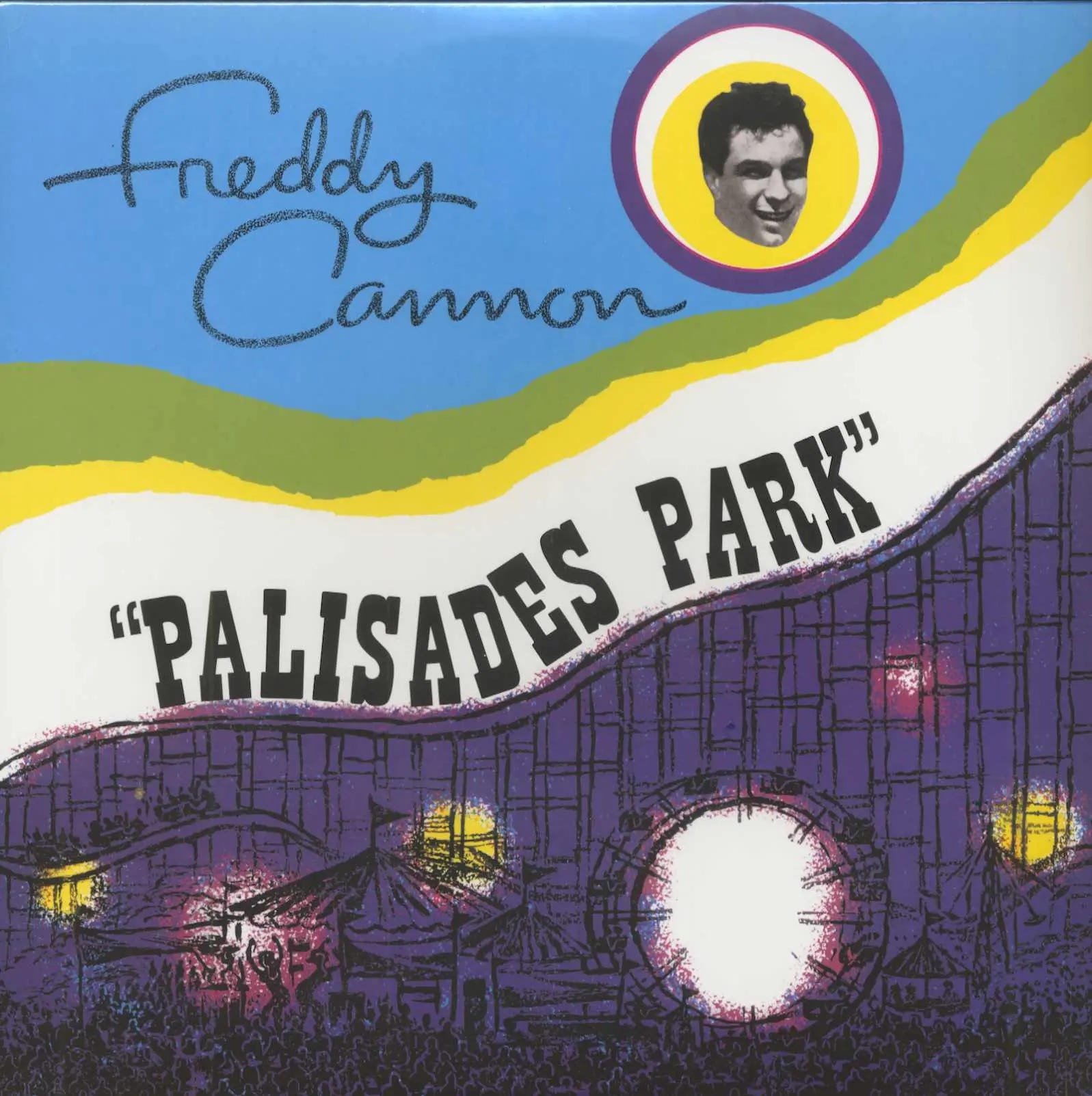
With the passing of Freddy “Boom Boom” Cannon at age 89, rock and roll loses one of its last great cheerleaders, a performer whose records never seemed to age because they were built almost entirely from enthusiasm.
Some artists leave behind a catalog. Freddy Cannon leaves behind a smile.
From the moment Tallahassee Lassie exploded out of radios in 1959, Cannon brought something different to rock and roll. He wasn’t brooding. He wasn’t mysterious. He wasn’t trying to change the world. He was there to make sure everyone was having a good time.
That may sound simple, but it turned out to be one of the hardest things in popular music to sustain.
Born Frederick Picariello Jr. in Massachusetts, Cannon arrived at exactly the right moment. Rock and roll was still young enough to feel dangerous, but it was also becoming a national obsession. Cannon’s booming voice, infectious energy, and relentless sense of fun made him one of the era’s most recognizable hitmakers.
Tallahassee Lassie became his breakthrough, a record bursting with momentum and confidence. Decades later, its influence remained evident enough to inspire cover versions by the Rolling Stones, Fleetwood Mac, and the Flamin’ Groovies—artists from different corners of the rock-and-roll landscape who all recognized the power hidden inside its seemingly effortless drive.
Cannon followed it with a remarkable run of records, including Palisades Park, one of the great summertime singles of the rock-and-roll era. Filled with the sounds and excitement of an amusement park, the song remains a time capsule of youthful America at the dawn of the 1960s. He also scored with his spirited version of New Orleans, bringing his trademark energy to a song that seemed tailor-made for his larger-than-life style.
If there was a common thread running through Cannon’s music, it was motion. His records felt like they were moving even when standing still. Whether singing about girls, cars, cities, amusement parks, or weekend adventures, he approached every song with the enthusiasm of someone who genuinely loved being a rock-and-roll singer.
That joy never disappeared.
While many performers from rock’s first generation eventually became museum pieces, Cannon remained an active ambassador for the music that launched him. Long after the hits stopped climbing the charts, he continued performing, recording, making appearances, and celebrating the sounds that had shaped his life. He understood something many musicians forget: people weren’t simply listening to old songs. They were revisiting memories, friendships, first dances, first dates, and the soundtrack of their youth.
For many fans, Freddy Cannon represented something larger than a collection of records. He embodied an era when rock and roll was still discovering itself, when every new single seemed to promise another adventure.
His music captured the optimism of postwar America and preserved it in grooves that still sound fresh generations later.
History often remembers the revolutionaries, the innovators, and the rebels. Freddy Cannon deserves to be remembered for something equally important. He reminded listeners that rock and roll could be joyful.
More than six decades after his first hits, songs like Tallahassee Lassie, Palisades Park, and New Orleans still deliver the same rush they always did. That’s a rare achievement. Trends fade. Production styles date. Tastes change.
Excitement doesn’t.
Freddy “Boom Boom” Cannon spent a lifetime generating it. And now that he’s gone, the music he left behind continues to do exactly what it has always done: make people turn up the volume and smile.
By David Gross, Punmaster MusicWire
There was a time when rock stars were made on radio, country stars were made on the Grand Ole Opry, and jazz musicians were made in smoky clubs.
And then there were the artists who were made sometime around 2:17 in the morning between an infomercial for miracle cookware and a movie that had already started thirty-seven minutes before you found it.
Welcome to the Midnight Hall of Fame.
These were the musicians who somehow slipped through the cracks of the traditional music business and found an entirely different route into America’s living rooms. They weren’t necessarily topping the Billboard charts. They weren’t headlining stadiums. Yet millions of people knew exactly who they were.
Take Boxcar Willie. In a world increasingly dominated by synthesizers, arena rock, and music videos, here came a man dressed like he had just stepped off a freight train in 1948. Somehow, against all odds, he became one of the most recognizable faces on television. He sold records not because MTV embraced him, but because insomniacs did.
Then there was Zamfir, the self-proclaimed Master of the Pan Flute, who accomplished something that should have been impossible. He turned an instrument most Americans couldn’t identify into a commercial phenomenon. For a period of time, it seemed entirely plausible that every household in the country either owned a Zamfir album or had seriously considered buying one at 1:45 in the morning.
Roger Whittaker may have pulled off an even stranger trick. He became famous for being a gifted singer, songwriter, and perhaps the world’s most accomplished professional whistler. Think about that for a moment. Rock and roll was producing guitar heroes, drum heroes, and vocal heroes. Roger Whittaker quietly became a whistling hero.
Slim Whitman occupied a category all his own. His yodeling falsetto sounded as though it had drifted in from another century. Long after radio programmers had moved on, television discovered that there were still millions of listeners who wanted exactly what Slim Whitman was selling. The result was one of the most unlikely second acts in popular music history.
Around the edges of this after-hours musical universe were a few familiar instrumental companions. Boots Randolph’s cheerful saxophone and Floyd Cramer’s elegant piano often seemed perfectly suited for the same audience that lingered over these late-night record offers. They weren’t necessarily products of the television marketing machine, but they felt right at home in that world.
The fascinating thing about these artists wasn’t that they became television stars. It’s that television became their record label, concert promoter, publicist, and fan club all at once.
Most performers spend years trying to create a brand. These artists became brands almost by accident.
Meanwhile, rock fans who considered themselves far too sophisticated for such things would inevitably find themselves frozen in place during one of these commercials.
You’d be halfway to the refrigerator when suddenly a pan flute emerged from the television speakers.
Next thing you knew, twenty minutes had passed and you were evaluating a three-record collection you had absolutely no intention of buying.
Or so you told yourself.
The truth is that these artists occupied a strange and wonderful corner of the music world. They weren’t quite pop stars. They weren’t quite cult figures. They weren’t exactly nostalgia acts, either. They were television legends.
And unlike many artists who chased trends, they rarely changed who they were. Boxcar Willie remained Boxcar Willie. Slim Whitman remained Slim Whitman. Zamfir remained stubbornly committed to the proposition that a pan flute could fill a living room.
History suggests he may have been right.
Today, in an era of algorithms, streaming playlists, and social media campaigns, it’s hard to imagine a musician becoming famous simply because millions of people kept seeing the same commercial after midnight.
But for one glorious stretch of American television, an entirely separate music industry seemed to exist after everyone else had gone to bed.
Its stars didn’t need hit singles.
They just needed you to stay awake long enough to reach for the phone.
What’s the connection with these songs:
Sukiyaki, Dock of the Bay, Me and Julio Down by the Schoolyard
The answer will appear in the next MusicWire...
What common category links the names Dot, End, Wand, Argo, and Hickory?
Answer: They were all names of record labels.
Two turbo-charged hours of high-octane roots, rockabilly & revved-up classics!
Rebroadcast Saturday nights at 7PM
Kickstart your weekend—guaranteed.
Listen live at KRSH.com
Download the free KRUSH mobile app
Or tune in to 95.9 The Krush in Sonoma County, CA
Tell 40 or 50 of your closest friends!
Check out the web site at rockabillyroadhouse.com
It's time to get down to the Main Gazane with Big Dave!

BREAK OUT THE HEADPHONES!
Hosted by Big Dave, the Saturday Night Album Trax features some of the greatest albums ever recorded. Deep cuts, live albums, extended tracks, rarities and themes. Plus get the background and inside stories on these classic albums.
These are the good old days!
STREAM IT LIVE at KRSH.com
“I’m a part of the I like ice cream watermelon soup generation.” ~ Allen Ginsberg
“Rock journalism is people who can’t write interviewing people who can’t talk in order to provide articles for people who can’t read.” - Frank Zappa
“The older you get, the better you were!” - Leslie West
“I opened the door for a lot of people, and they just ran through and left me holding the knob.” - Bo Diddley
“I’m as country as a dozen eggs.” - Elvin Bishop
“Elvis may be the King of Rock and Roll, but I am the Queen.” - Little Richard
“If you think you are too old to rock ‘n roll, then you are.” - Lemmy Kilmister
"If you tried to give rock and roll another name, you might call it 'Chuck Berry’.” - John Lennon
“The old-timers schooled me good. They brainwashed me to respect music, whether we were playing rockabilly or blues or rock and roll.” - Dr. John
“It’s much too late to do anything about rock & roll now ...” - Jerry Garcia
“Hippies? Why, I’m the original.” - Jerry Lee Lewis
"David Gross (Punmaster MusicWire) is the Arianna Huffington of music news!" - Barry "The Fish" Melton
"Rock and roll is here to stay.” - Neil Young
“The reason kids like rock ‘n roll is their parents don’t.” - Mitch Miller
“Rock ’n roll is really swing with a modern name. It began on the levees and plantations, took in folk songs, and features blues and rhythm. It’s the rhythm that gets to the kids – they’re starved of music they can dance to, after all those years of crooners.” - Alan Freed
“If I were not a physicist, I would probably be a musician. I often think in music. I live my daydreams in music. I see my life in terms of music.” - Albert Einstein
“The music business is a cruel and shallow money trench, a long plastic hallway where thieves and pimps run free, and good men die like dogs. There’s also a negative side.” - Hunter S. Thompson
"Mike Love, not war." - Scott Mathews
"I have outlived my dick" - Willie Nelson (2008)
Visit the archive: https://musicwire.substack.com/archive
Subscribe via RSS feed musicwire.substack.com/feed
No posts
Comments
Nothing yet. Say the first thing.
Sign in to join the conversation.