
All the news that’s fit to be tied
Subscribe via RSS feed musicwire.substack.com/feed
July 16, 2026
By David Gross, Punmaster MusicWire
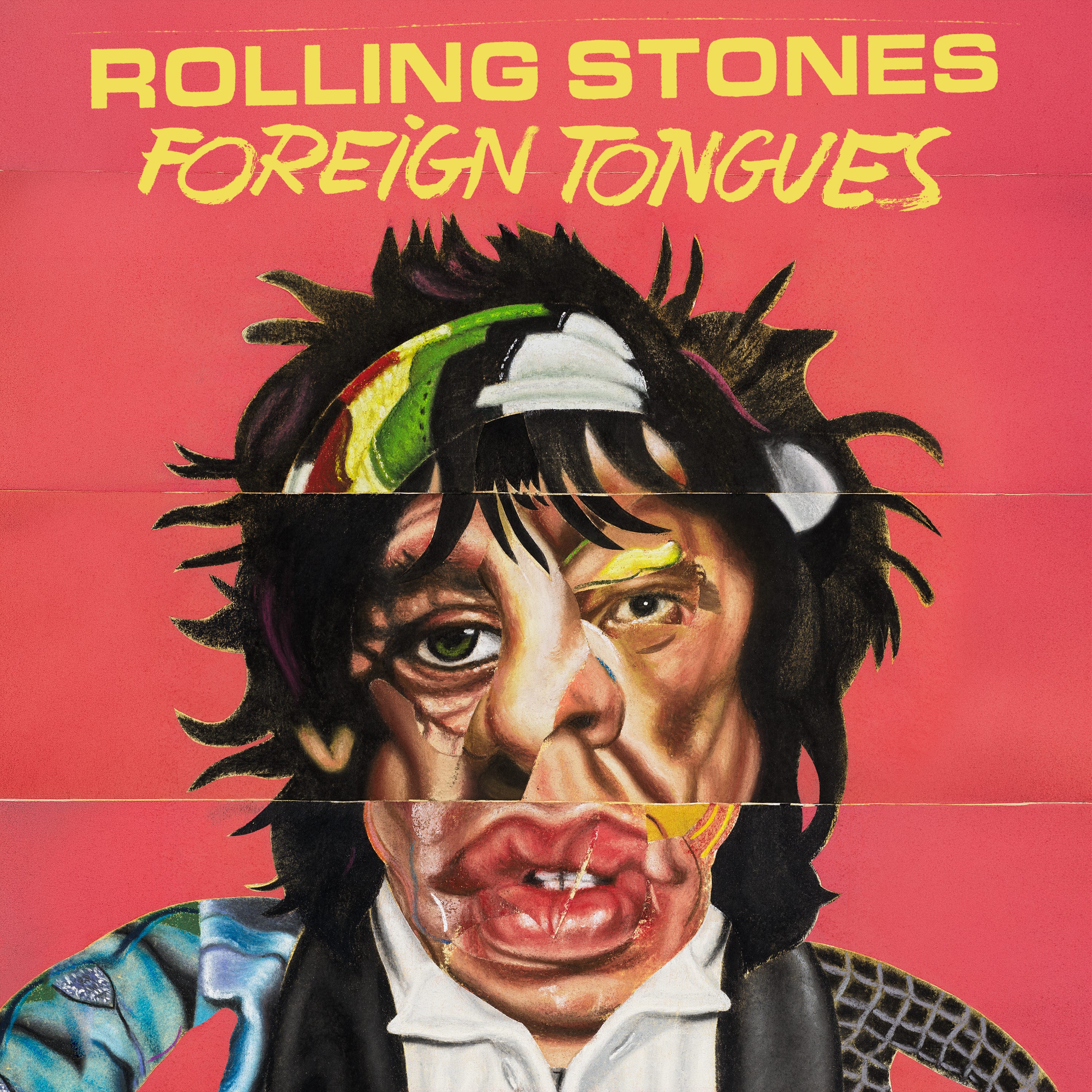
Foreign Tongues sounds like it has always belonged in your Rolling Stones collection.
The remarkable thing about Foreign Tongues isn’t that the Rolling Stones have made another good album. It’s that they’ve made one that feels as though it’s been hiding in plain sight for decades, waiting for you to pull it from the shelf somewhere among the later chapters of the Stones’ catalog.
That’s the highest compliment I can pay it.
Rather than chasing trends or trying to reinvent themselves, Mick Jagger, Keith Richards and Ronnie Wood simply sound like…the Rolling Stones. It isn’t nostalgia. It isn’t imitation. It isn’t an attempt to recreate the past. It’s a band that still understands exactly who they are.
The production wisely avoids polishing away the rough edges that make the Stones sound like the Stones. The sound is warm, spacious and muscular, allowing the guitars to breathe and the rhythm section to swagger. The result is an album that could have been recorded thirty years ago—or last month. That’s part of its charm.
The opening single, “In the Stars,” immediately hints at the album’s personality. There’s a touch of that mid-’70s atmosphere, recalling the period when Ronnie Wood was finding his footing alongside Mick and Keith during the Black and Blue era. It carries that effortless blend of rock, soul and groove the Stones have always worn so naturally.
The record refuses to stay in one lane, and that’s one of its greatest strengths.
The country-flavored “Ringing Hollow” fits Mick Jagger’s voice like a custom-made suit. Ronnie Wood’s wonderfully twangy guitar work gives the song just enough dust and sunshine to make it one of the album’s standout moments.
When it’s time to rock, Keith Richards delivers exactly what generations of Stones fans have come to expect. His chunky, unmistakable rhythm guitar remains one of rock’s great signatures, powering several of the album’s toughest performances with that loose, dangerous swing no one else quite captures.
One of the album’s most emotional moments arrives with “Hit Me in the Head,” featuring one of Charlie Watts’ final recordings. Hearing Charlie once again behind the kit is both moving and reassuring. His unmistakable feel reminds you that nobody made a rock band swing quite like Charlie Watts.
Keith steps into the spotlight for “Some of Us,” delivering one of his finest vocals in years. It’s reflective, vulnerable and beautifully weathered—the kind of performance only someone who’s actually lived the miles can sing convincingly.
The Stones also surprise with an inspired cover of Amy Winehouse’s “You Know I’m No Good.” Rather than merely reproducing the original, they filter it through their own blues-soaked personality, making it feel as though the song had been waiting all along to become part of their catalog.
Ronnie Wood deserves special recognition throughout the album, but nowhere more than “Back in Your Life.” His guitar playing is absolutely outstanding—lyrical, expressive and full of personality. Ronnie has always brought color to the Stones, and here he paints with every shade available.
The album closes with a stripped-down reading of Chuck Berry’s “Beautiful Delilah,” bringing the band full circle to the music that inspired them in the first place. It’s loose, bluesy, joyful and utterly authentic—the perfect ending to a record built on the foundations of rock and roll.
The guest list is impressive without ever overshadowing the band itself. Paul McCartney, Steve Winwood, Robert Smith, Chad Smith and even a brief cameo from Bruno Mars all make welcome appearances, adding subtle touches of color without ever pulling the spotlight away from the Rolling Stones. Combined with Charlie Watts’ moving final studio performance on one track, these contributions simply enhance an album that remains, from beginning to end, unmistakably and unapologetically the Rolling Stones.
Through it all, bassist Darryl Jones and drummer Steve Jordan provide a rock-solid rhythmic foundation, allowing the Stones to sound as confident and relaxed as they have in years.
If there’s one disappointment, it’s not hearing longtime touring keyboardist Chuck Leavell on these sessions. His musical fingerprints have become part of the Stones’ live sound for decades. Hopefully, if Foreign Tongues eventually finds its way onto a concert stage, Chuck will once again be sitting behind the keyboards where so many fans expect to see him.
And that may be the album’s only real frustration.
These songs deserve a tour.
They deserve to breathe alongside classics like “Start Me Up,” “Tumbling Dice,” “Beast of Burden” and “Brown Sugar.” Several tracks sound destined to become live favorites, and it would be a shame if they remained confined to the studio.
For a band now more than six decades into its extraordinary career, Foreign Tongues isn’t simply another late-career release.
It’s one of the strongest Rolling Stones albums in many years and easily holds its own alongside much of the band’s work from the 1980s forward.
More importantly, it never once sounds like veteran musicians trying to prove they still matter.
It sounds like the Rolling Stones doing what they’ve always done—playing great rock and roll with swagger, soul, humor and heart.
And that’s exactly where it belongs: sitting comfortably on your shelf with the rest of your Rolling Stones collection, as though it had been there all along.
If there was any lingering doubt that Foreign Tongues still had one more surprise tucked away, “Bad Luck Hideaway”provides it in style.
What makes the track immediately stand out is the rare opportunity to hear Mick Jagger and Keith Richards sharing lead vocal duties from beginning to end. Their voices, shaped by decades of friendship, conflict, collaboration, and survival, give the song a warmth that can’t be manufactured. Rather than sounding like two singers taking turns, they sound like two sides of the same story.
The song opens with a sense of escape and resignation, inviting listeners to a place beyond the noise and expectations of everyday life. It feels less like a destination than a state of mind—a refuge for the weary, the lucky, and everyone in between.
Musically, “Bad Luck Hideaway” settles into an easy, rootsy groove. Acoustic and electric guitars weave together effortlessly while Ronnie Wood adds texture and color without ever crowding the arrangement. Beneath it all is the steady presence of Charlie Watts, whose drumming once again demonstrates that great musicians often say the most by doing the least.
What makes the track especially appealing is its unhurried confidence. It doesn’t chase trends or reach for grandeur. Instead, it embraces the qualities that have always served the Stones best: strong songwriting, lived-in performances, and the chemistry that only comes from a band that has spent a lifetime playing together.
Like much of Foreign Tongues, the song feels connected to the later chapters of the Rolling Stones’ catalog rather than an attempt to recreate their youth. There’s wisdom in its grooves, humor in its outlook, and a sense of perspective that can only come from musicians who have nothing left to prove.
Many bonus tracks feel like leftovers. “Bad Luck Hideaway” feels like a hidden room in a familiar house—one more corner worth exploring after you thought you’d seen everything. Far from an afterthought, it serves as a fitting coda to an album that proves the Rolling Stones still know how to find new roads without losing sight of where they came from.
By David Gross, Punmaster MusicWire
There are records you grow up with.
Then there are records that grow up with you.
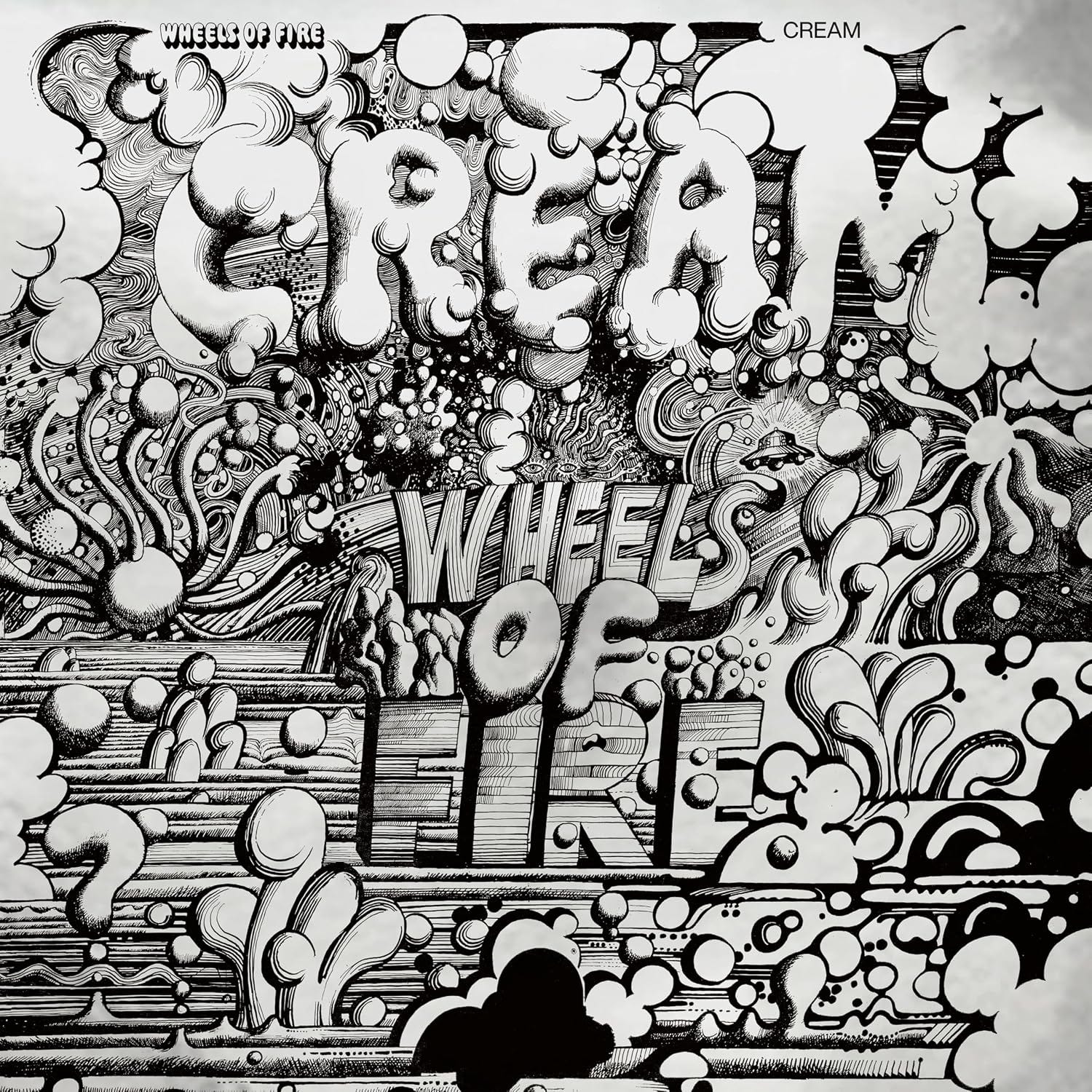
Cream’s Wheels of Fire has always belonged to the second category.
For decades it sat on shelves, in crates, on turntables, in CD racks, and eventually inside hard drives and streaming libraries. It remained one of rock’s undisputed monuments, admired, quoted, dissected and endlessly imitated. Yet for all its fame, there was always something elusive about it. Something hidden behind the glass.
Not the music.
The sound.
Listening to this extraordinary new box set feels less like revisiting an old album than entering a familiar house after someone finally cleaned every window.
Suddenly there is light where there used to be shadows.
And space.
So much space.
For perhaps the first time, Wheels of Fire no longer sounds like three musical geniuses competing for the same square foot of sonic real estate. It sounds like three musicians occupying an entire universe.
Jack Bruce’s bass doesn’t merely support the songs. It prowls through them.
Ginger Baker’s drums reveal details that seem to arrive from another room.
Eric Clapton’s guitar no longer appears as a giant wall in front of the music. It becomes part of the conversation.
The effect is startling.
Not because anything has been added.
Because so much has been removed.
The fog.
The congestion.
The invisible curtain that separated listeners from the actual performances.
What emerges is not a different album.
It is the same album standing up straighter.
The greatest surprise of this collection is that it reminds us that Cream was not a blues band.
Nor was it a psychedelic band.
Nor a jazz-rock band.
Nor a hard rock band.
Cream was an argument.
A magnificent argument.
Every song feels like three people attempting to pull the music in different directions while somehow arriving at the same destination.
Bruce wants melody.
Baker wants movement.
Clapton wants feeling.
The tension is audible.
It is also the secret.
Take away the tension and there is no Cream.
The band’s brilliance was never harmony.
It was controlled instability.
They played as though every performance might come apart at any moment.
Sometimes it nearly did.
And that possibility is what made the music feel alive.

The bonus material offers something even more fascinating.
Not rarities.
Not collectibles.
Evidence.
Evidence that great records are not born fully formed.
They evolve.
They wander.
They make wrong turns.
They reveal alternate possibilities.
Listening through the various versions is like watching a master painter leave pencil marks beneath the finished canvas.
You begin hearing choices.
A phrase that changed.
An arrangement that shifted.
A moment that could have gone left but went right.
The mythology surrounding classic albums often suggests inevitability. As if masterpieces arrive from the heavens complete and perfect.
This collection destroys that myth.
Great records are built.
Piece by piece.
Decision by decision.
Accident by accident.
Then there is the live material.
Good live recordings preserve a concert.
Great live recordings preserve danger.
Cream specialized in danger.
You can hear it in every extended passage.
Nobody sounds comfortable.
Nobody sounds safe.
Nobody sounds interested in repeating last night’s performance.
The songs stretch.
Twist.
Mutate.
Sometimes they seem to challenge one another.
What remains astonishing is how modern this still feels.
In an era of click tracks, digital precision and carefully managed performances, Cream often sounds like a high-wire act without a net.
The possibility of failure becomes part of the excitement.
The audience wasn’t simply watching musicians perform.
They were watching musicians discover.
What struck me most after spending time with this collection was something entirely unexpected.
Exhaustion.
Beautiful exhaustion.
The sound of artists pushing beyond what is reasonable.
The sound of people reaching the outer edge of their own abilities.
You can hear ambition everywhere.
Not commercial ambition.
Creative ambition.
The kind that keeps people awake at three in the morning because they know they haven’t reached the finish line yet.
The kind that produces masterpieces and breakups in equal measure.
The kind that rarely lasts.
Perhaps that’s why Wheels of Fire still resonates.
It captures a moment when talent alone was no longer enough.
Three extraordinary musicians were demanding more from themselves than talent could provide.
And somehow, for a brief moment, they got it.
This box set succeeds because it understands something many archival projects miss.
The goal is not nostalgia.
The goal is revelation.
The purpose isn’t to remind us how great Cream was.
We already knew that.
The purpose is to let us hear why.
Not through stories.
Not through legends.
Not through magazine covers and Hall of Fame speeches.
Through the music itself.
Clearer.
Deeper.
More human.
Nearly sixty years later, Wheels of Fire no longer feels preserved.
It feels alive.
And that may be the most remarkable achievement of all.
The Players
Eric Clapton
Guitar, vocals
Jack Bruce
Bass, vocals, piano, harmonica
Ginger Baker
Drums, percussion, vocals
Produced by
Felix Pappalardi
Inside the Box: What’s Included in the Wheels of Fire Super Deluxe Edition
Nearly six decades after its original release, Wheels of Fire receives its most ambitious archival treatment yet. Presented as a deluxe five-CD collection, this expansive set combines newly restored audio, previously unheard studio material, expanded live recordings, and a beautifully produced hardcover book devoted to one of rock’s most celebrated albums.
More than a simple anniversary release, the collection offers a deeper look at how Wheels of Fire was created, performed, and ultimately became one of the defining recordings of the classic rock era.
Disc One – The Studio Album Revisited
The original nine-track studio album appears in two distinct versions.
The first is the familiar 1968 stereo mix, newly remastered from the best available sources.
The second is the set’s most significant sonic revelation: a newly restored, phase-corrected stereo presentation that removes the original CSG processing used on the album. The result is greater clarity, improved instrument separation, a wider soundstage, and a more natural listening experience. Longtime fans may feel as though they are hearing these performances with fresh ears for the very first time.
Disc Two – The Felix Pappalardi Reference Reels
One of the collection’s most fascinating treasures comes from the personal archive of producer Felix Pappalardi.
Often described as Cream’s unofficial fourth member, Pappalardi played a crucial role in shaping the band’s sound. As producer, arranger, collaborator, and creative sounding board, he helped transform studio ideas into finished recordings.
These newly discovered stereo and mono reference reels provide an extraordinary glimpse inside the making of Wheels of Fire. Featuring alternate mixes, rough reference versions, longer edits, work-in-progress recordings, and studio dialogue, the reels document the album’s evolution from recording sessions to finished masterpiece.
Far more than a collection of outtakes, they reveal the creative process in action and offer listeners a rare opportunity to hear one of rock’s greatest albums taking shape in real time.
Disc Three – The Original Live Album
The original live portion of Wheels of Fire has been newly remastered and remains one of the most influential live recordings in rock history.
Recorded at San Francisco’s Fillmore Auditorium and Winterland Ballroom during March 1968, these performances captured Cream at the height of its improvisational powers.
The original live album includes:
Crossroads
Spoonful
Traintime
Toad
These four performances helped establish Cream’s reputation as one of the era’s most adventurous and formidable live acts, blending blues, jazz, rock, and spontaneous improvisation into something entirely their own.
Disc Four – More Live at the Fillmore & Winterland
Expanding upon the original live album, Disc Four presents additional performances from the same legendary concerts.
Among the highlights are:
N.S.U.
Sleepy Time Time
Rollin’ and Tumblin’
Sweet Wine
Tales of Brave Ulysses
We’re Going Wrong
Sunshine of Your Love
Steppin’ Out
These recordings offer a broader portrait of Cream onstage and showcase the trio’s remarkable ability to transform familiar material into extended explorations filled with invention, risk, and spontaneity.
Particularly noteworthy is the inclusion of “We’re Going Wrong,” a long-sought performance that finally receives an official release.
Disc Five – Rarities and Alternate Versions
The final disc gathers a wealth of rare recordings that further illuminate the creative journey behind Wheels of Fire.
Included are alternate stereo and mono mixes, early versions, single edits, alternate takes, and additional archival recordings that reveal different approaches to songs that eventually became part of the finished album.
Listeners will hear familiar material from new perspectives, uncovering subtle variations, production decisions, and musical ideas that were refined—or sometimes abandoned—along the way.
For collectors and recording enthusiasts, this disc provides one final opportunity to step behind the curtain and experience the album’s development from the inside.
The Hardcover Book
Completing the package is a substantial hardcover book filled with rare photographs, recording documentation, period memorabilia, tape box images, session information, and newly commissioned essays.
The book places the album in historical context while offering fresh insights into the recording sessions, the band’s creative dynamics, and the cultural impact of Wheels of Fire upon its original release and in the decades that followed.
At a Glance
Contents:
Five CDs
Newly remastered original stereo album
Newly restored phase-corrected stereo version
Previously unheard Felix Pappalardi reference reels
Original live album, newly remastered
Expanded Fillmore and Winterland performances
Rare mono and stereo mixes
Alternate versions and archival recordings
Deluxe hardcover book with rare photographs and memorabilia
Why This Set Matters
Many deluxe editions simply revisit the past.
This one deepens it.
By restoring the original album, opening the vaults, expanding the live recordings, and revealing previously unheard material from Felix Pappalardi’s archive, the Wheels of Fire Super Deluxe Edition provides the most complete portrait yet of Cream during its creative peak.
It is both a celebration of a landmark album and an invitation to hear one of rock’s greatest achievements from an entirely new perspective.
For fans who practically live on the concert trail—or simply wish they could—nugs has rolled out one of its most attractive promotions yet. Through August 15, new and eligible returning subscribers can sign up for three months at just $5 per month, a substantial discount from the regular monthly rate.
The timing couldn’t be better. Summer’s packed touring schedule includes livestreams and official recordings from Billy Strings, Goose, Dave Matthews Band, Widespread Panic, The String Cheese Incident, Marcus King Band, and a growing list of festivals, with additional artist announcements expected throughout the season. Subscribers also gain access to an extensive library of official concert recordings and on-demand performances spanning everyone from Bruce Springsteen and Metallica to Santana and many more.
For live music devotees, nugs has become the closest thing to carrying an all-access pass in your pocket. Whether you’re catching a show in real time, replaying last night’s setlist, or discovering a performance you missed years ago, this limited-time offer makes the experience surprisingly affordable.
What common category links the names Dot, End, Wand, Argo, and Hickory?
The answer will appear in the next MusicWire...
What musician is associated with these artists?
Frank Zappa, John Mayall, Johnny Otis, John Lee Hooker, Little Richard, Harvey Mandel, Tupelo Chain Sex
Answer: Don “Sugarcane” Harris
(and let’s not forget Don and Dewey, and Pure Food and Drug Act)
Thank to this week’s winners: Steve Hellerman, Rog (in Scotland)
Two turbo-charged hours of high-octane roots, rockabilly & revved-up classics!
Rebroadcast Saturday nights at 7PM
Kickstart your weekend—guaranteed.
Listen live at KRSH.com
Download the free KRUSH mobile app
Or tune in to 95.9 The Krush in Sonoma County, CA
Tell 40 or 50 of your closest friends!
Check out the web site at rockabillyroadhouse.com
It's time to get down to the Main Gazane with Big Dave!

BREAK OUT THE HEADPHONES!
Hosted by Big Dave, the Saturday Night Album Trax features some of the greatest albums ever recorded. Deep cuts, live albums, extended tracks, rarities and themes. Plus get the background and inside stories on these classic albums.
These are the good old days!
STREAM IT LIVE at KRSH.com
“I’m a part of the I like ice cream watermelon soup generation.” ~ Allen Ginsberg
“Rock journalism is people who can’t write interviewing people who can’t talk in order to provide articles for people who can’t read.” - Frank Zappa
“The older you get, the better you were!” - Leslie West
“I opened the door for a lot of people, and they just ran through and left me holding the knob.” - Bo Diddley
“I’m as country as a dozen eggs.” - Elvin Bishop
“Elvis may be the King of Rock and Roll, but I am the Queen.” - Little Richard
“If you think you are too old to rock ‘n roll, then you are.” - Lemmy Kilmister
"If you tried to give rock and roll another name, you might call it 'Chuck Berry’.” - John Lennon
“The old-timers schooled me good. They brainwashed me to respect music, whether we were playing rockabilly or blues or rock and roll.” - Dr. John
“It’s much too late to do anything about rock & roll now ...” - Jerry Garcia
“Hippies? Why, I’m the original.” - Jerry Lee Lewis
"David Gross (Punmaster MusicWire) is the Arianna Huffington of music news!" - Barry "The Fish" Melton
"Rock and roll is here to stay.” - Neil Young
“The reason kids like rock ‘n roll is their parents don’t.” - Mitch Miller
“Rock ’n roll is really swing with a modern name. It began on the levees and plantations, took in folk songs, and features blues and rhythm. It’s the rhythm that gets to the kids – they’re starved of music they can dance to, after all those years of crooners.” - Alan Freed
“If I were not a physicist, I would probably be a musician. I often think in music. I live my daydreams in music. I see my life in terms of music.” - Albert Einstein
“The music business is a cruel and shallow money trench, a long plastic hallway where thieves and pimps run free, and good men die like dogs. There’s also a negative side.” - Hunter S. Thompson
"Mike Love, not war." - Scott Mathews
"I have outlived my dick" - Willie Nelson (2008)
Visit the archive: https://musicwire.substack.com/archive
Subscribe via RSS feed musicwire.substack.com/feed
No posts
Comments
Nothing yet. Say the first thing.
Sign in to join the conversation.