
All the news that’s fit to be tied
Subscribe via RSS feed musicwire.substack.com/feed
July 30, 2026
By David Gross
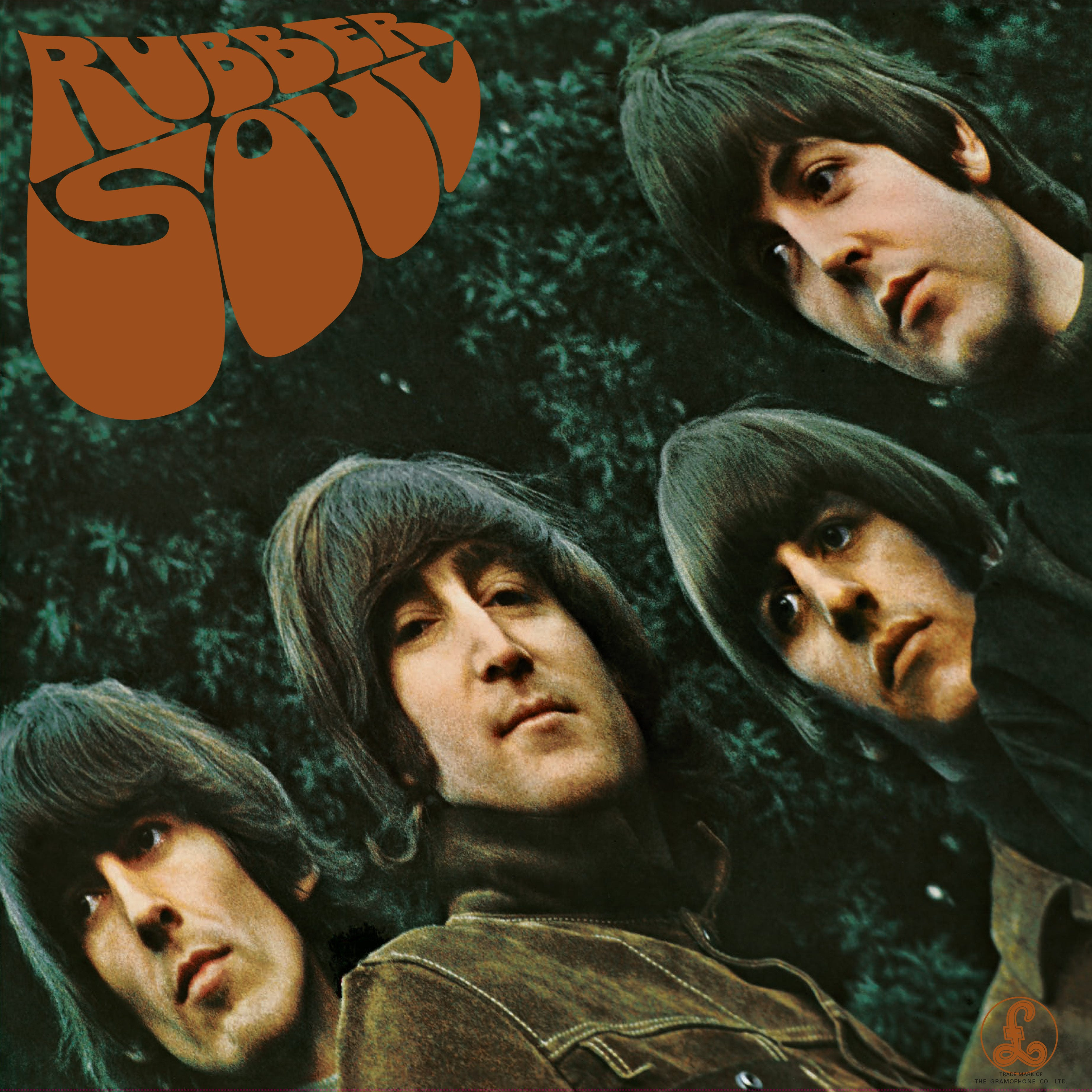
Every Beatles album occupies its own neighborhood. Please Please Me captured youthful urgency. A Hard Day’s Night perfected Beatlemania. Revolver opened the door to psychedelia. Sgt. Pepper built an entirely new world.
But Rubber Soul may be the record where everything quietly changed.
The newly announced Rubber Soul: Special Edition, arriving October 2, isn’t simply another stop in Apple Corps’ acclaimed archival campaign. It shines a spotlight on the album where The Beatles began thinking less like a touring rock-and-roll band and more like artists whose real stage was the recording studio.
For longtime fans, this may be the release they’ve anticipated more than any other.
Unlike Sgt. Pepper or Abbey Road, Rubber Soul has always carried a certain intimacy. There are no grand concepts. No orchestral crescendos designed to overwhelm. Instead, the revolution happens in smaller ways. A sitar appears almost casually in “Norwegian Wood.” Harmonies become richer. Lyrics grow more reflective. Characters suddenly possess emotional depth instead of simply chasing romance.
The Beatles hadn’t abandoned pop.
They had simply expanded its vocabulary.
Perhaps that’s why the album has aged so gracefully. While later records often impress with ambition, Rubber Soul wins listeners over through confidence. It sounds like four musicians discovering they no longer need to prove they can write hit singles—they already know they can.
Instead, they’re chasing something more lasting.
One of the most intriguing aspects of this new edition is hearing the journey rather than simply the destination. Early takes, studio conversations, and home demos remind us that masterpieces rarely arrive fully formed. Great records are built through experimentation, wrong turns, happy accidents, and countless refinements.
One curious omission may leave even longtime Beatles collectors scratching their heads. Missing from the session material is “12-Bar Original”—the six-minute instrumental recorded during the Rubber Soul sessions on November 4, 1965. Credited to all four Beatles—Lennon, McCartney, Harrison and Starkey—it offered a rare glimpse of the group simply stretching out as a band. Although an edited version finally surfaced on Anthology 2 in 1996, the complete recording remains absent from this new collection. Considering that Rubber Soul: Special Edition is being presented as the definitive chronicle of the album’s creation, its exclusion is one of the few decisions likely to puzzle devoted fans.
The preview of “Michelle (Take 1)” already hints at that process. Rather than diminishing the finished recording, it makes the final performance even more remarkable, revealing the craftsmanship hidden beneath its effortless elegance.
These archival releases have also changed how we hear Giles Martin’s remixes.
Early debates often centered on whether anyone should remix Beatles recordings at all. Today the conversation has largely shifted toward appreciation. Modern separation technology allows instruments and vocals once locked together on four-track tapes to breathe in ways impossible in 1965, often revealing details longtime listeners never realized were there. The goal isn’t to replace history but to illuminate it.
For Rubber Soul, that’s especially meaningful.
This is an album built on subtlety—interlocking acoustic guitars, understated percussion, intricate harmonies, and carefully balanced arrangements. If any Beatles record stands to benefit from greater sonic clarity without sacrificing its character, this is probably the one.
There’s another reason this release feels important.
Rubber Soul occupies a fascinating position in Beatles history. It looks backward just enough to retain the infectious energy that conquered the world while looking forward toward the fearless experimentation of Revolver. It’s the bridge between Beatlemania and modern rock.
Without Rubber Soul, there is no Pet Sounds. Brian Wilson famously cited the album as a creative revelation, prompting his own masterpiece, which in turn inspired Sgt. Pepper. One extraordinary record pushed another artist to create something equally extraordinary, beginning one of popular music’s greatest creative conversations.
That’s influence you can’t measure with chart positions.
As Apple continues opening the vaults, these releases have become something more valuable than collector’s items. They’re historical documents. They remind us that legendary albums weren’t created by mythical figures working in isolation. They were made by four young musicians who were curious enough to keep asking, “What if we tried this?”
More than sixty years later, we’re still listening to the answers.
That’s why Rubber Soul remains more than another Beatles album.
It marks the moment when rock music itself began growing up.
The October 2 Rubber Soul: Special Edition is anchored by a newly remixed stereo album from Giles Martin and Sam Okell, alongside the original 1965 mono mix, the complete Day Tripper / We Can Work It Out single, the original U.S. Capitol version of Rubber Soul, and a lavish hardcover book filled with rare photographs, recording documentation, and newly commissioned essays chronicling the album’s creation.
For many fans, however, the biggest draw will be the previously unreleased recordings. Among them is John Lennon's previously unheard home demo fragment, "Little Girl," offering a rare snapshot of an idea in its earliest stages rather than a finished song. The collection also opens the studio doors with early takes of "Michelle," "Norwegian Wood (This Bird Has Flown)," "In My Life," and several other session recordings that reveal alternate arrangements, evolving lyrics, and the remarkable craftsmanship behind one of rock's most influential albums.
Available in multiple configurations—including Super Deluxe CD, vinyl, Blu-ray, Dolby Atmos, and digital editions—the release offers both casual listeners and devoted collectors the most comprehensive look yet at the making of Rubber Soul.
By David Gross
⸻
Editor’s Note
The story of San Francisco’s musical revolution has been told for decades. This isn’t another chronology of legendary bands, famous concerts or the Summer of Love. It explores a different question: Why San Francisco?
This four-part Punmaster MusicWire special feature examines the unique convergence of geography, economics, personalities, ideas and timing that transformed one American city into rock music’s most extraordinary creative laboratory. Rather than simply retracing familiar milestones, it explores the conditions that made those milestones possible—and why San Francisco’s influence continues to resonate nearly six decades later.
Every great musical revolution has an address.
New Orleans gave jazz its heartbeat. Detroit assembled the Motown sound with the precision of the automobile factories that surrounded it. Liverpool transformed postwar grit into melodic brilliance. Nashville industrialized country music. Seattle gave Generation X a distorted voice.
San Francisco did something altogether different.
It didn’t simply produce extraordinary musicians.
It created an environment where extraordinary musicians became more likely.
That distinction may explain why the Bay Area’s influence continues to ripple through popular music nearly six decades later.
History often celebrates the stars. Jerry Garcia. Grace Slick. Janis Joplin. Carlos Santana. Those names deserve every accolade they have received. So do the unforgettable performances that turned the Fillmore into sacred ground and made San Francisco synonymous with musical adventure.
Yet focusing only on the musicians is a little like admiring a magnificent forest while ignoring the soil that allowed it to grow.
The real story begins before a single guitar amplifier hummed to life.
It begins with the city itself.
San Francisco has always been slightly removed from the rest of America. Water surrounds it on three sides. Steep hills divide neighborhoods into self-contained villages. Fog rolls in from the Pacific with such regularity that it seems almost choreographed, softening the skyline and giving familiar streets an ever-changing personality.
Even arriving there feels different.
Unlike so many American cities that gradually reveal themselves across miles of suburbs and freeways, San Francisco requires a commitment. You cross a bridge. You emerge from a tunnel. You arrive by ferry. You leave one landscape behind before entering another.
You must cross something to arrive.
That physical separation has always carried a psychological consequence.
For generations, San Francisco attracted people who weren’t simply looking for opportunity. They were looking for reinvention.
Gold seekers.
Immigrants.
Sailors who never boarded the next ship.
Writers.
Painters.
Political dreamers.
People who believed life might be lived differently if only they could find the right place.
Long before anyone spoke of hippies, the city had already become America’s refuge for outsiders. It was a place where unconventional ideas weren’t merely tolerated—they were expected.
The Beat Generation helped define that identity during the 1950s.
Lawrence Ferlinghetti’s City Lights Bookstore was far more than a neighborhood bookstore. It became one of America’s great permission slips, a place where unconventional ideas were welcomed instead of politely dismissed.
Allen Ginsberg’s reading of Howl at the Six Gallery in 1955 still echoes through American cultural history. The event wasn’t simply a literary milestone. It announced that San Francisco was comfortable giving voice to ideas that many other cities preferred to avoid.
That mattered.
Creative revolutions rarely appear out of nowhere.
They inherit the courage of those who came before them.
By the early 1960s, musicians arriving in San Francisco weren’t walking into an empty room. They were joining a city that had already developed an unusual tolerance for experimentation.
Jazz musicians stretched harmonic boundaries in North Beach clubs.
Coffeehouses welcomed aspiring singer-songwriters.
Artists, poets, filmmakers, and political activists frequently occupied the same conversations.
Disciplines overlapped.
Ideas circulated.
Creative collisions became almost routine.
Then another unexpected ingredient entered the equation.
Real estate.
It sounds almost too practical to belong in the story of rock’s most celebrated musical revolution.
Yet it may have been the single most underrated factor of all.
By the middle of the decade, much of Haight-Ashbury had fallen out of fashion. Elegant Victorian homes that today command staggering prices had become aging rooming houses with surprisingly modest rents. Young musicians, painters, photographers and students suddenly found themselves able to rent large communal houses that would have been unimaginable in New York and increasingly difficult in Los Angeles.
Most histories describe this as “cheap rent.”
That phrase doesn’t quite capture what those houses really provided.
They provided time.
Time to rehearse.
Time to fail.
Time to argue until two o’clock in the morning over music, politics, literature and philosophy before someone inevitably reached for a guitar to continue the conversation another way.
Creative breakthroughs seldom happen on a schedule.
They require long afternoons that appear unproductive.
They require unfinished ideas.
They require the freedom to experiment without immediately worrying whether the rent can be paid by Friday.
For one remarkable moment, San Francisco offered that freedom.
Musicians didn’t simply share rehearsal space.
They shared meals.
They borrowed instruments.
They wandered into each other’s living rooms.
Friendships formed between bands that, in other cities, might have viewed one another strictly as competitors.
A melody begun in one Victorian might be finished two blocks away. A conversation over coffee could become tomorrow night’s encore. Inspiration wasn’t scheduled. It circulated through neighborhoods as naturally as the city’s famous fog.
Ideas traveled on foot.
That may have been San Francisco’s greatest natural resource.
Not LSD.
Not amplifiers.
Not even talent.
Proximity.
Creative people living close enough to challenge, encourage and inspire one another every single day.
The city wasn’t manufacturing stars.
It was cultivating possibility.
By the time America first heard the phrase Summer of Love, something far more important had already happened.
San Francisco had quietly become a place where experimentation was no longer unusual.
It had become expected.
The stage had been built.
The audience was beginning to gather.
All that remained was for a handful of remarkable visionaries—promoters who trusted artists, audiences willing to embrace the unknown, and musicians eager to push beyond every familiar boundary—to discover one another.
When they did, the results would forever change the sound of popular music.
The Fillmore Auditorium. The Avalon Ballroom. Ken Kesey’s Acid Tests. Bill Graham. Chet Helms. The Grateful Dead. Jefferson Airplane.
Discover how a city already primed for experimentation found the people and the places that transformed possibility into a musical revolution—and why the audience became just as important as the performers.
⸻
David Gross is the publisher of Punmaster MusicWire and host of Rockabilly Roadhouse on KRSH 95.9 The Krush in Sonoma County, California. His work explores the history, personalities and unexpected stories that continue to shape popular music.
Irish singer-songwriter, actor, and Academy Award winner Glen Hansard has died following a motorcycle accident near Dublin. Rising from his early days as a street busker to international acclaim as the frontman of The Frames and one half of The Swell Season, Hansard captured audiences with his deeply emotional songwriting and unmistakable voice. He won the 2008 Academy Award for Best Original Song for "Falling Slowly," from the acclaimed film Once, in which he also starred. Beyond his celebrated music career, Hansard was widely admired for his generosity and annual charity performances benefiting Dublin's homeless community. His passing marks the loss of one of Ireland's most heartfelt and influential musical voices.
What’s the connection between these four classic rock songs?
Black Lincoln Continental
Teach Your Children
I’m Not in Love
Thank You (Falettinme Be Mice Elf Agin)
The answer will appear in the next MusicWire...
What’s the connection with these songs:
Sukiyaki, Dock of the Bay, Me and Julio Down by the Schoolyard
Answer: They all feature whistling.
Thanks to this week’s winners, Mark Cohen, Jack Pott
Two turbo-charged hours of high-octane roots, rockabilly & revved-up classics!
Rebroadcast Saturday nights at 7 p.m.
Kickstart your weekend—guaranteed.
Listen live at KRSH.com
Download the free KRUSH mobile app
Or tune in to 95.9 The Krush in Sonoma County, CA
Tell 40 or 50 of your closest friends!
Check out the web site at rockabillyroadhouse.com
It's time to get down to the Main Gazane with Big Dave!

BREAK OUT THE HEADPHONES!
Hosted by Big Dave, the Saturday Night Album Trax features some of the greatest albums ever recorded. Deep cuts, live albums, extended tracks, rarities and themes. Plus get the background and inside stories on these classic albums.
These are the good old days!
STREAM IT LIVE at KRSH.com
“I’m as country as a dozen eggs.” - Elvin Bishop
“Elvis may be the King of Rock and Roll, but I am the Queen.” - Little Richard
“If you think you are too old to rock ‘n roll, then you are.” - Lemmy Kilmister
"If you tried to give rock and roll another name, you might call it 'Chuck Berry’.” - John Lennon
“David Gross (Punmaster MusicWire) is the Arianna Huffington of music news!” - Barry “The Fish” Melton
“Rock and roll is here to stay.” - Neil Young
“The old-timers schooled me good. They brainwashed me to respect music, whether we were playing rockabilly or blues or rock and roll.” - Dr. John
“It’s much too late to do anything about rock & roll now ...” - Jerry Garcia
“Hippies? Why, I’m the original.” - Jerry Lee Lewis
“I’m a part of the I like ice cream watermelon soup generation.” ~ Allen Ginsberg
“Rock journalism is people who can’t write interviewing people who can’t talk in order to provide articles for people who can’t read.” - Frank Zappa
“The older you get, the better you were!” - Leslie West
“I opened the door for a lot of people, and they just ran through and left me holding the knob.” - Bo Diddley
“The reason kids like rock ‘n roll is their parents don’t.” - Mitch Miller
“Rock ’n roll is really swing with a modern name. It began on the levees and plantations, took in folk songs, and features blues and rhythm. It’s the rhythm that gets to the kids – they’re starved of music they can dance to, after all those years of crooners.” - Alan Freed
“If I were not a physicist, I would probably be a musician. I often think in music. I live my daydreams in music. I see my life in terms of music.” - Albert Einstein
“The music business is a cruel and shallow money trench, a long plastic hallway where thieves and pimps run free, and good men die like dogs. There’s also a negative side.” - Hunter S. Thompson
"Mike Love, not war." - Scott Mathews
"I have outlived my dick" - Willie Nelson (2008)
Visit the archive: https://musicwire.substack.com/archive
Subscribe via RSS feed musicwire.substack.com/feed
No posts
Comments
Nothing yet. Say the first thing.
Sign in to join the conversation.