
All the news that’s fit to be tied
Subscribe via RSS feed musicwire.substack.com/feed
August 20, 2026
By David Gross
Previously in Part Three…
San Francisco became far more than a regional music scene. Through live performance, FM radio, adventurous journalism and a growing national audience, its philosophy of experimentation spread across America.
Ironically, that success would also change the city forever.
History has a habit of simplifying itself.
It prefers anniversaries.
Defining moments.
Single photographs that somehow come to represent an entire era.
For San Francisco, that image is almost always the Summer of Love.
Thousands of young people gathered in Golden Gate Park.
Flowers.
Music.
Hope.
Idealism.
It remains one of the most recognizable cultural snapshots of the twentieth century.
It is also one of the most misunderstood.
By the summer of 1967, San Francisco’s creative revolution was no longer quietly unfolding.
It had become international news.
Magazine covers introduced the Haight-Ashbury to readers around the world.
Television crews arrived searching for colorful images.
Tourists followed.
Young people came looking for a community they had imagined from newspaper stories and television reports.
Some found inspiration.
Others discovered something quite different.
The intimate neighborhood that had nurtured creativity wasn’t designed to absorb tens of thousands of newcomers.
No creative ecosystem is.
Success always carries consequences.
The same city that had quietly encouraged experimentation suddenly found itself performing for the world.
Affordable neighborhoods grew crowded.
The informal connections that had linked musicians, artists, writers and dreamers became harder to sustain.
Attention shifted.
Expectations grew.
Commerce inevitably followed.
The irony is impossible to ignore.
San Francisco’s greatest achievement eventually altered many of the very conditions that had made that achievement possible.
Creative communities are delicate.
They thrive on freedom.
They depend on affordability.
They require trust.
Above all, they require time.
When any of those ingredients disappear, something essential begins to change.
Perhaps no event better symbolized that realization than the symbolic “Death of the Hippie” procession held in October 1967.
Often misunderstood as a rejection of idealism itself, the event was really a rejection of what the media had turned the word “hippie” into.
The original community understood that labels had become distractions.
Television had reduced a complex cultural movement into a costume.
The participants were declaring that the caricature had become more famous than the reality.
It was an extraordinary moment of self-awareness.
Few cultural movements have ever recognized, in real time, that they were already becoming myths.
Ask someone to name San Francisco’s musical legacy and the answers usually arrive quickly.
The Grateful Dead.
Jefferson Airplane.
Big Brother & the Holding Company and Janis Joplin.
Santana.
Country Joe and the Fish.
Quicksilver Messenger Service.
Those musicians unquestionably changed rock music.
But perhaps they weren’t the city’s greatest contribution.
San Francisco changed the relationship between artists and audiences.
It proved that listeners would embrace longer songs if those songs had somewhere meaningful to go.
It demonstrated that concerts could become experiences rather than recitals.
It encouraged musicians to trust curiosity over convention.
It showed promoters that audiences were willing to support artistic risk.
It reminded journalists that popular music deserved serious conversation.
None of those ideas were guaranteed to succeed.
Every one of them succeeded because enough people believed they were worth trying.
Looking back nearly six decades later, it’s tempting to search for a single explanation.
Maybe it was geography.
Maybe it was affordable housing.
Maybe it was the Beat Generation.
Maybe it was Bill Graham.
Maybe it was Chet Helms.
Maybe it was Ken Kesey.
Maybe it was the Grateful Dead.
The truth is more interesting.
It was all of them.
Creative revolutions rarely emerge because of one remarkable person.
They happen when remarkable people find one another.
San Francisco became the place where those encounters happened with unusual frequency.
The city encouraged collisions.
Between musicians and poets.
Between painters and promoters.
Between journalists and audiences.
Between ideas that might never have met anywhere else.
Those collisions became songs.
Concerts.
Friendships.
Movements.
That question brought us here four weeks ago.
The answer turns out to be surprisingly simple.
Not because the city possessed better musicians than everywhere else.
Not because it had more talented guitarists.
Not because one neighborhood happened to become fashionable.
San Francisco mattered because it created conditions where imagination could flourish.
It rewarded experimentation instead of punishing it.
It welcomed outsiders instead of asking them to conform.
It allowed artists enough freedom—and just enough time—to discover voices they didn’t yet know they possessed.
The music was extraordinary.
But it was also inevitable.
Once all the ingredients came together, something remarkable was bound to happen.
Perhaps not exactly the San Francisco Sound.
Perhaps not exactly the Summer of Love.
But something capable of changing American culture forever.
That is the city’s real legacy.
Not a single concert.
Not a single album.
Not even a single generation.
Its greatest gift was demonstrating that creativity has an ecology.
When the right place, the right people and the right moment intersect, ideas flourish beyond anyone’s expectations.
San Francisco didn’t simply change rock music.
It showed us how revolutions begin.
And perhaps, more importantly, how they can happen again.
Every generation searches for “the next San Francisco.”
Maybe that’s the wrong question.
Cities don’t become legendary because they imitate the past.
They become legendary when they create the conditions for something entirely new.
That’s the lesson San Francisco leaves behind.
Its greatest contribution wasn’t teaching the world what to play.
It was teaching us what becomes possible when creative people are given the freedom to listen—to one another, to their surroundings, and to ideas that don’t yet have names.
The echoes of that lesson are still being heard.
⸻
David Gross is the publisher of Punmaster MusicWire and host of Rockabilly Roadhouse on KRSH 95.9 The Krush in Sonoma County, California. His work explores the history, personalities and unexpected stories that continue to shape popular music.
Frank Beard spent more than half a century demonstrating one of rock & roll’s hardest lessons: the groove matters more than the drummer showing you how good he is.
Beard, who died at 77, was the rhythmic engine of ZZ Top, the deceptively loose, deep-in-the-pocket drummer behind one of the most instantly recognizable sounds in American rock.
Listen underneath Billy Gibbons’ guitar on “La Grange,” “Tush,” “Cheap Sunglasses” or “I’m Bad, I’m Nationwide.” Beard wasn’t simply keeping time. He gave the music its gait — a little Texas blues shuffle, some R&B, a dose of roadhouse boogie and an almost imperceptible amount of drag that made the whole thing swagger instead of march.
And Frank Beard was there before ZZ Top was ZZ Top.
He and Dusty Hill had already logged time together in Texas bands, developing the kind of musical shorthand that can’t be rehearsed into existence. When Beard brought Hill into Billy Gibbons’ orbit in 1969, three musicians discovered something that bands spend lifetimes looking for: their own sound.
They kept it for more than 50 years.
That longevity can obscure just how remarkable ZZ Top’s musical journey was. They traveled from greasy Texas blues and beer-joint boogie to arenas, synthesizers, sequencers and the unlikely promised land of MTV without ever ceasing to sound like themselves.
The technology changed. The clothes changed. The cars got shinier. The pocket never moved.
Beard was a large reason why.
He was not a drummer who needed to announce himself with pyrotechnics. His virtuosity was subtler. It lived in placement, restraint and knowing exactly how much space to leave around Billy Gibbons’ guitar. Beard understood that sometimes the funkiest thing a drummer can play is nothing at all.
There was also one of rock’s longest-running visual jokes: in a band whose two frontmen became instantly recognizable for their enormous facial hair, the guy actually named Beard was usually clean-shaven.
Behind the joke was a musician who had survived the excesses that consumed plenty of his contemporaries, emerged sober and settled into the extraordinary second act of ZZ Top — a blues band from Texas somehow becoming international pop-culture icons without surrendering its identity.
Beard once explained the trio’s remarkable durability with characteristic economy: with only three guys in the band, there were only two other people to argue with.
That economy described his drumming, too.
Frank Beard rarely played more than the song required.
He simply made sure that when ZZ Top started moving, the rest of the world moved with them.
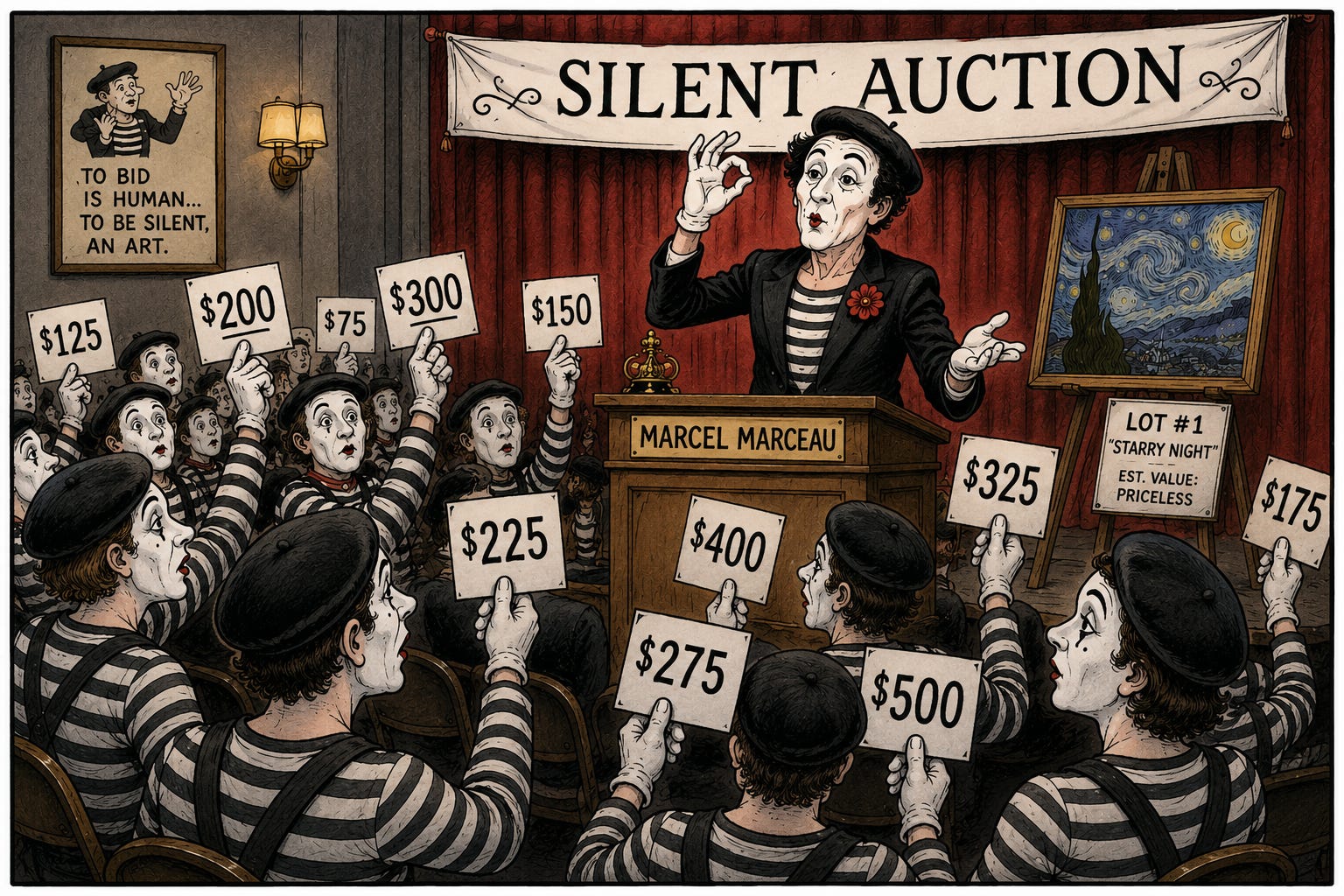
What’s the connection between these six legendary musicians?
Jimi Hendrix
Tony Iommi
Paul McCartney
Kurt Cobain
Albert King
Dick Dale
The answer will appear in the next MusicWire...
What’s the connection with these artists?
The Beatles, Roy Clark, Chad & Jeremy, Rolling Stones, Spiral Starecase, Willie Nelson, Carpenters, Stevie Wonder, Four Tops, Guns N’ Roses
Answer: They all recorded songs about “Yesterday”
Thanks to this week’s winner, Matthew Bolin
The Beatles – Yesterday (1965)
Roy Clark – Yesterday When I Was Young (1969)
Chad & Jeremy – Yesterday’s Gone (1964)
Rolling Stones – Yesterday’s Papers
Spiral Starecase – More Today than Yesterday (1969)
Willie Nelson – Yesterday’s Wine (1971)
Carpenters – Yesterday Once More (1973)
Stevie Wonder - Yester-Me Yester-You Yesterday (1969)
Four Tops – Yesterday’s Dreams (1968)
Guns N’ Roses – Yesterdays (1991)
Two turbo-charged hours of high-octane roots, rockabilly & revved-up classics!
Rebroadcast Saturday nights at 7 p.m.
Kickstart your weekend—guaranteed.
Listen live at KRSH.com
Download the free KRUSH mobile app
Or tune in to 95.9 The Krush in Sonoma County, CA
Tell 40 or 50 of your closest friends!
Check out the web site at rockabillyroadhouse.com
It's time to get down to the Main Gazane with Big Dave!

BREAK OUT THE HEADPHONES!
Hosted by Big Dave, the Saturday Night Album Trax features some of the greatest albums ever recorded. Deep cuts, live albums, extended tracks, rarities and themes. Plus get the background and inside stories on these classic albums.
These are the good old days!
STREAM IT LIVE at KRSH.com
“I’m as country as a dozen eggs.” - Elvin Bishop
“Elvis may be the King of Rock and Roll, but I am the Queen.” - Little Richard
“If you think you are too old to rock ‘n roll, then you are.” - Lemmy Kilmister
"If you tried to give rock and roll another name, you might call it 'Chuck Berry’.” - John Lennon
“David Gross (Punmaster MusicWire) is the Arianna Huffington of music news!” - Barry “The Fish” Melton
“Rock and roll is here to stay.” - Neil Young
“The old-timers schooled me good. They brainwashed me to respect music, whether we were playing rockabilly or blues or rock and roll.” - Dr. John
“It’s much too late to do anything about rock & roll now ...” - Jerry Garcia
“Hippies? Why, I’m the original.” - Jerry Lee Lewis
“I’m a part of the I like ice cream watermelon soup generation.” ~ Allen Ginsberg
“Rock journalism is people who can’t write interviewing people who can’t talk in order to provide articles for people who can’t read.” - Frank Zappa
“The older you get, the better you were!” - Leslie West
“I opened the door for a lot of people, and they just ran through and left me holding the knob.” - Bo Diddley
“The reason kids like rock ‘n roll is their parents don’t.” - Mitch Miller
“Rock ’n roll is really swing with a modern name. It began on the levees and plantations, took in folk songs, and features blues and rhythm. It’s the rhythm that gets to the kids – they’re starved of music they can dance to, after all those years of crooners.” - Alan Freed
“If I were not a physicist, I would probably be a musician. I often think in music. I live my daydreams in music. I see my life in terms of music.” - Albert Einstein
“The music business is a cruel and shallow money trench, a long plastic hallway where thieves and pimps run free, and good men die like dogs. There’s also a negative side.” - Hunter S. Thompson
"Mike Love, not war." - Scott Mathews
"I have outlived my dick" - Willie Nelson (2008)
Visit the archive: https://musicwire.substack.com/archive
Subscribe via RSS feed musicwire.substack.com/feed
No posts
Comments
Nothing yet. Say the first thing.
Sign in to join the conversation.