
Good afternoon, friends,
We’re coming to you from the bench overlooking Children’s Lake in Boiling Springs, PA. We had to unexpectedly get off trail to see family this week, but it was a great use of time and we feel incredibly upbeat. A “lovefest” as my mom called it. We are expectedly getting off trail next week too, to be with family again, so we’re just kind of plucking our way through PA. Never say no to a lovefest.
At this point in the trail, we’ve dropped out of the woods on the forested ridges and are now cutting through corn and soy fields — a nice change of pace to have big skies and long sightlines. Not as many mushrooms in this little chunk of trail, but the woods of Maryland and Pennsylvania have not disappointed thus far.
This portion of trail seems to get a bad rap, but we’ve really enjoyed all of the hiking north of Harper’s Ferry. Maryland, ~40 miles of trail which people sometimes try to hike through in a day, is full of history, tranquil forest, and a few stunning views like Annapolis Rocks and the original Washington Monument. Overall, the terrain has been smooth and the elevation is tame which really makes it feel like a pleasant walk in the woods rather than the battle it was throughout Virginia.
With frequent thunderstorms, we’ve found plenty of mushrooms, many of which I’ve never seen before. Before we look at some of those, I also want to feature some of the birds we’ve seen throughout our hike. We started in Georgia during peak migration and I haven’t shared many bird photos outside of a few photos. Let’s learn about some of our avian friends that call the AT home.
Barred Owl (Strix varia)
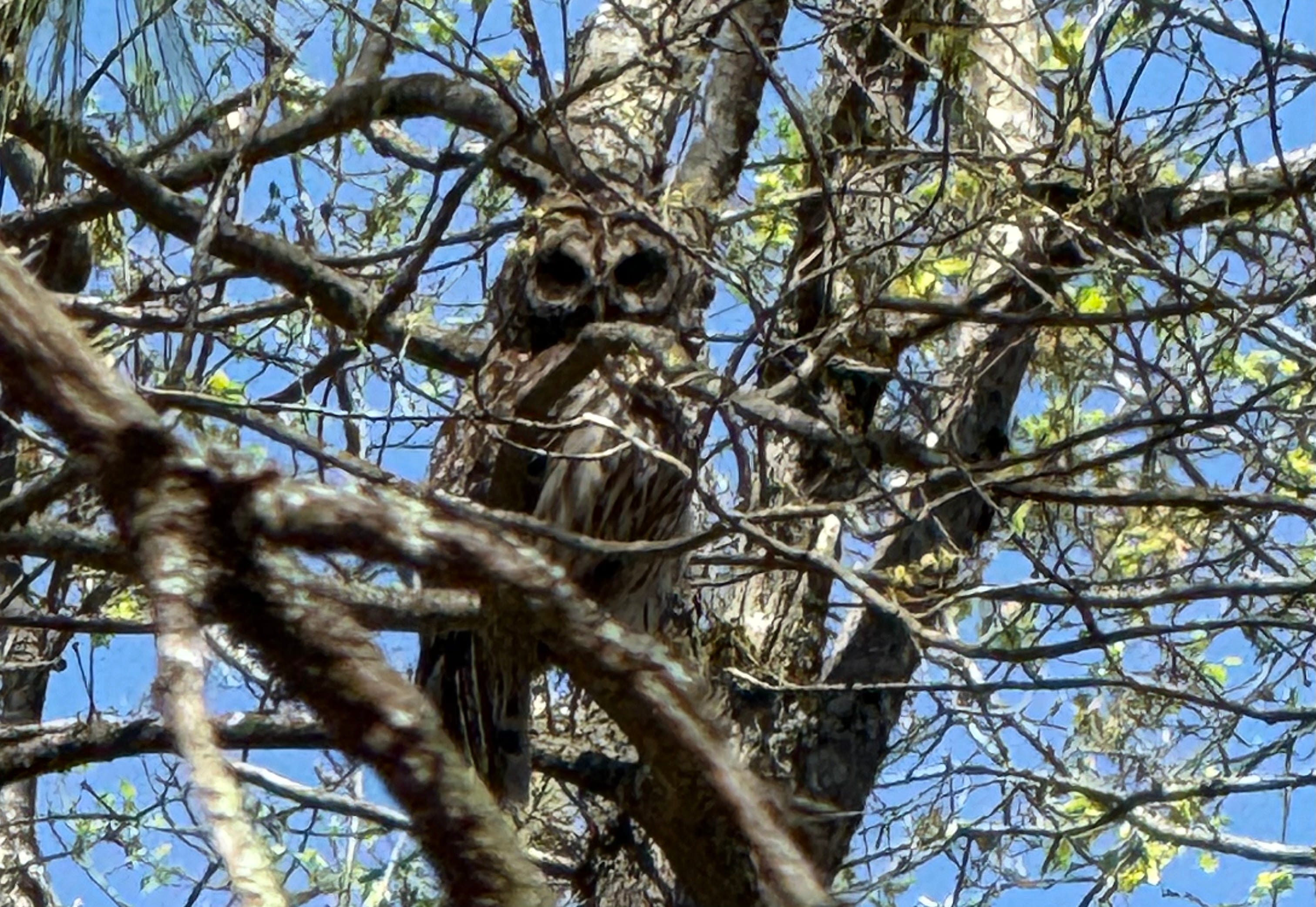
We saw this owl during our third day on the trail (the trees not having leafed out yet made this possible). This large owl has a distinct “who cooks for you” call that we sometimes hear at dawn or dusk, but what was new to us was when two owls respond to each other’s calls, and get close enough to each other, they engage in vocalization behavior called caterwauling. It’s basically back and forth robot noises as the owls excitedly explore their own octave ranges.
When I worked in Central Park, we had a famous resident barred owl named Barry that would hang out in the Ramble. Do not ask what happened to Barry, he went “upstate”.
Scarlet Tanager (Piranga olivacea)
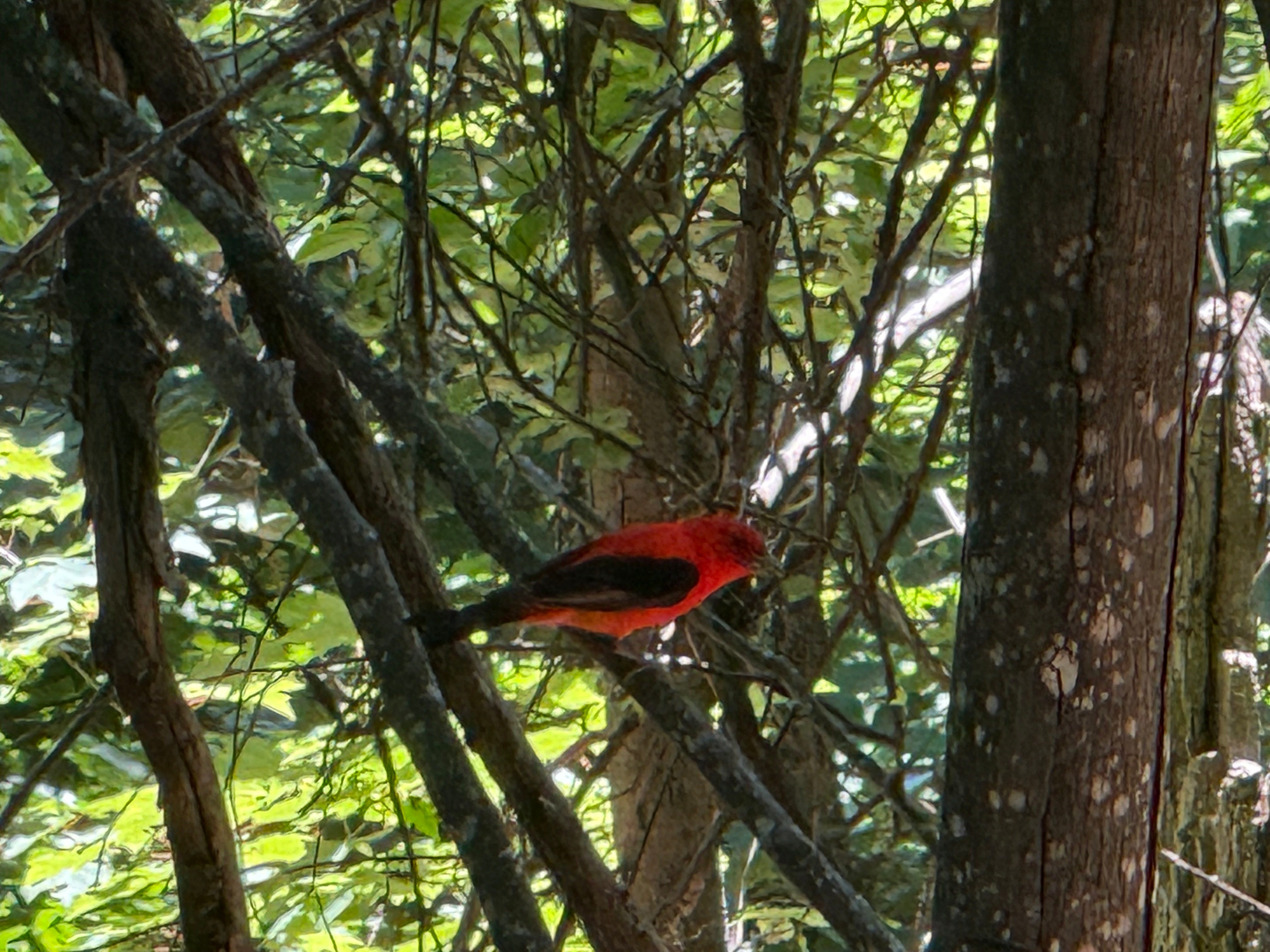
My favorite bird out here. We’ve seen a handful of males with their bright red plumage and jet black wings. They look tropical and part of the year they are; they winter in the tropics of Central and South America, and then migrate up here in the spring to breed.
Black-throated Green Warbler (Setophaga virens)
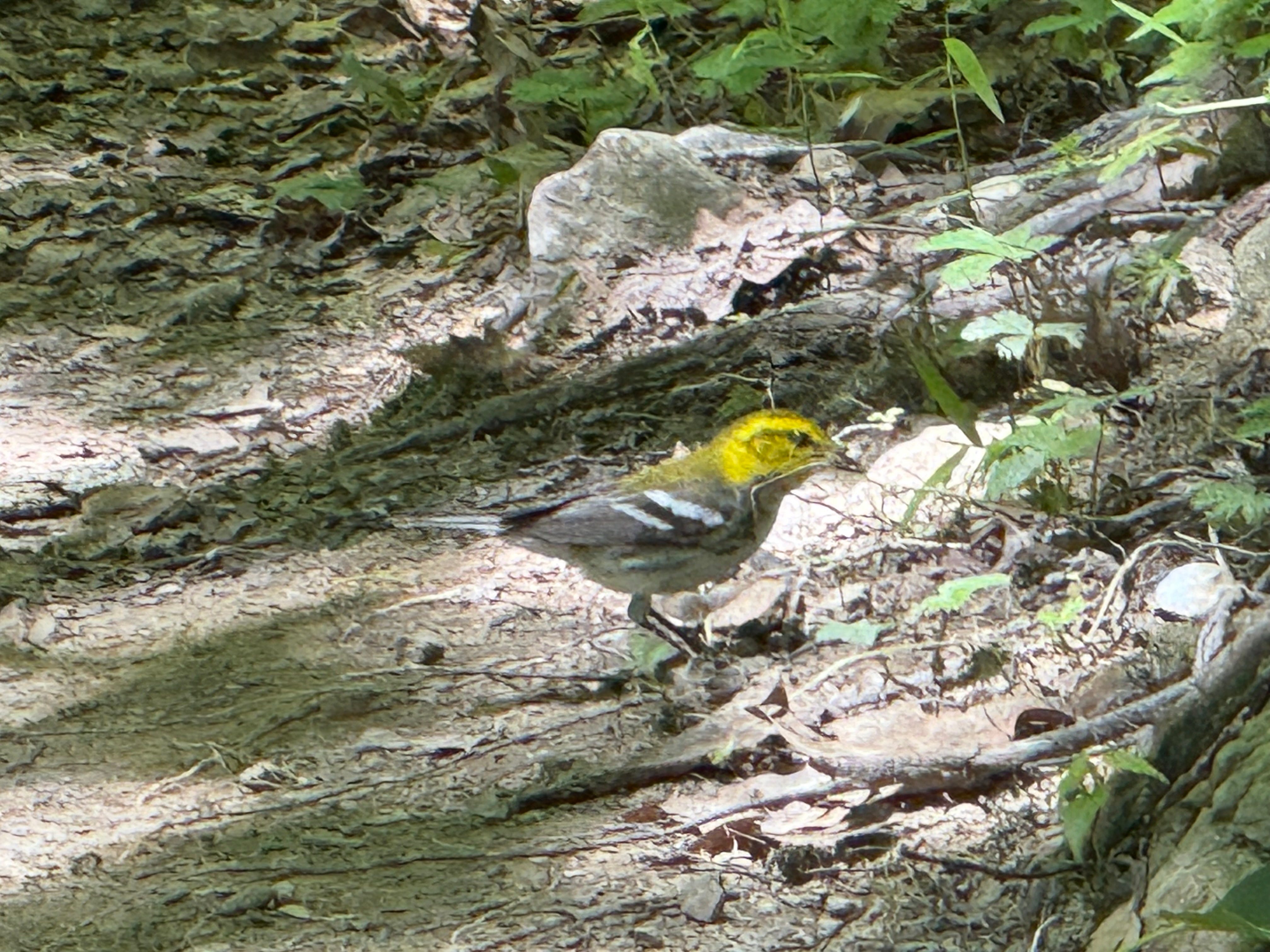
The five-note black-throated green song, “dzee-dzee-dzee-dzoo-dzee”’ was the soundtrack of our first couple weeks on the trail. We haven’t seen nor heard them recently, but that’s probably because they hunkered down in the National Forests in the southern Appalachians or migrated to intact forests further north. They like coniferous and mixed woods. This one was hopping along the trail gathering what appeared to be nesting material.
Wayco the Rooster
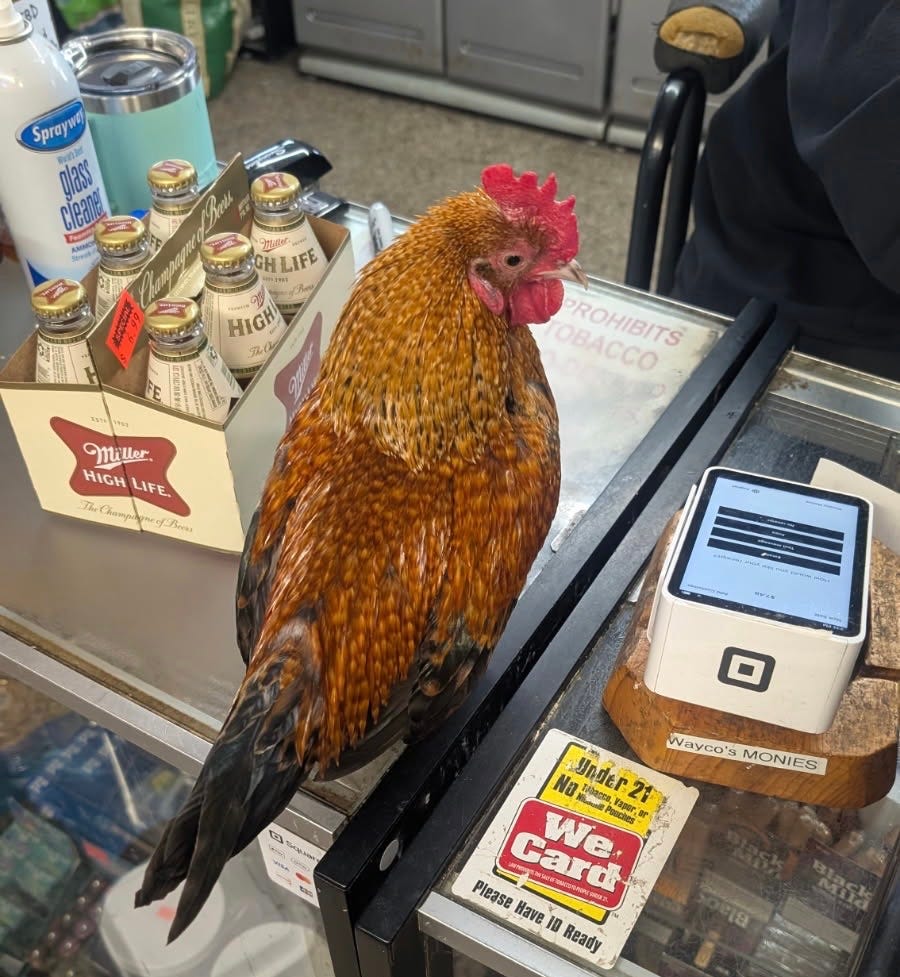
This rooster greeted us as we walked into a gas station in Hot Springs, NC. His name was “Wayco” because apparently he’s “Way Codependent” on Dave, the owner of the store. Waco loved when Dave would pick him up and twirl him around, even flipping upside down for brief moments. A six pack of Miller High Life and a rooster checking your ID, how much more Americana do you want? It’s a real-life Norman Rockwell painting.
Turkey vulture (Cathartes aura)
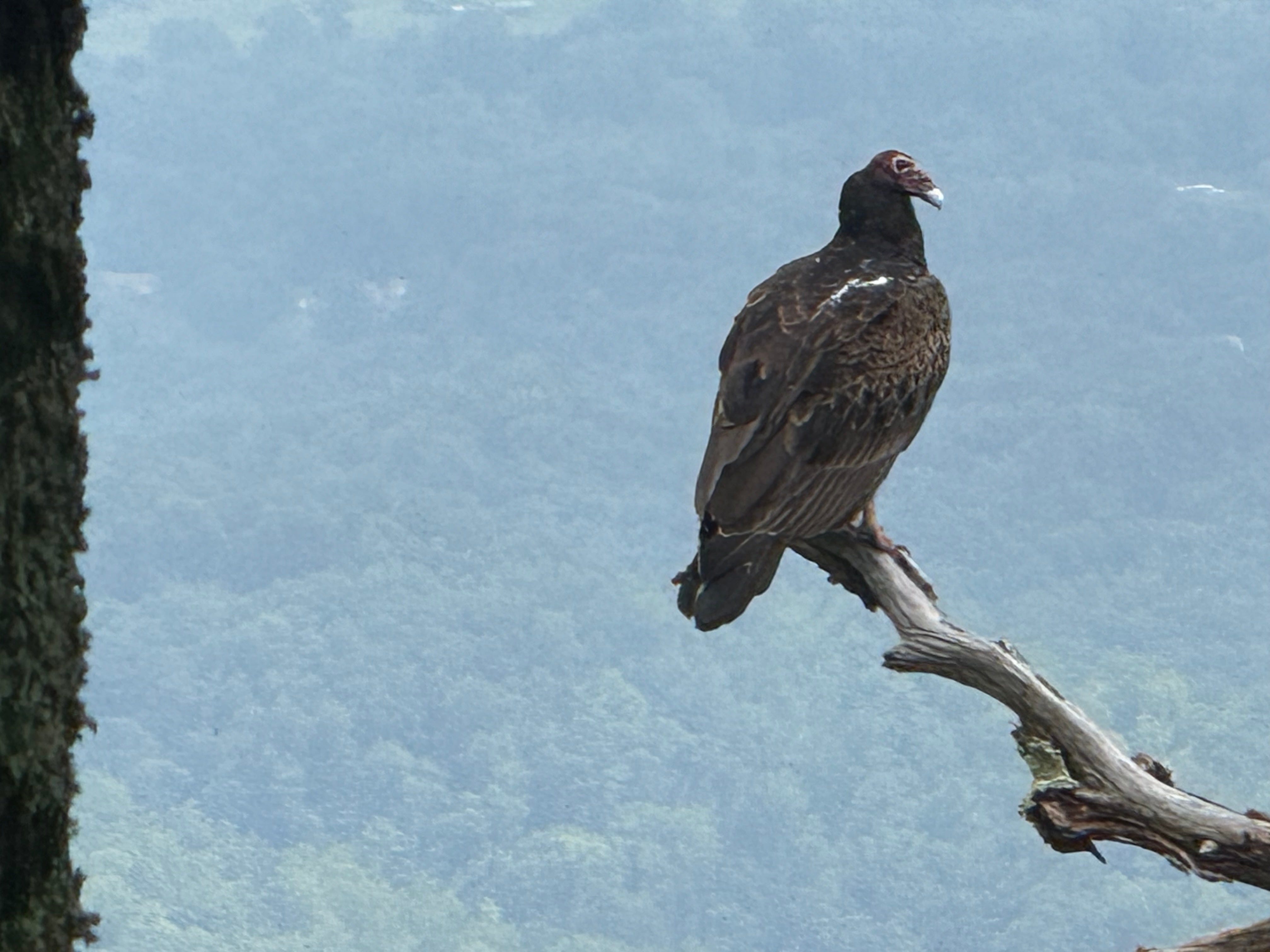
Turkey vultures don’t get a lot of love, but it was neat to see a few roosting in a tree at eye-level in the Shenandoahs. This was the only one that was bold and didn’t fly off when we turned the corner and saw them. I was reading that when threatened, which doesn’t occur often, they throw up the carrion they consumed and this foul-smelling, semi-digested rotting meat deters most agitators.
They also don’t have a syrinx, the organ for avian vocal cords, so they just grunt and hiss. None of these facts do much to help their ominous, uncouth, and scrappy reputation, but when you get the opportunity to see one stoically looking over the Shenandoah valley you realize the ornithologists got it right with the species name aura.
These are a few from Maryland and Pennsylvania that I’ve never seen before. Have you?
Some sort of Lactarius/Lactifluus
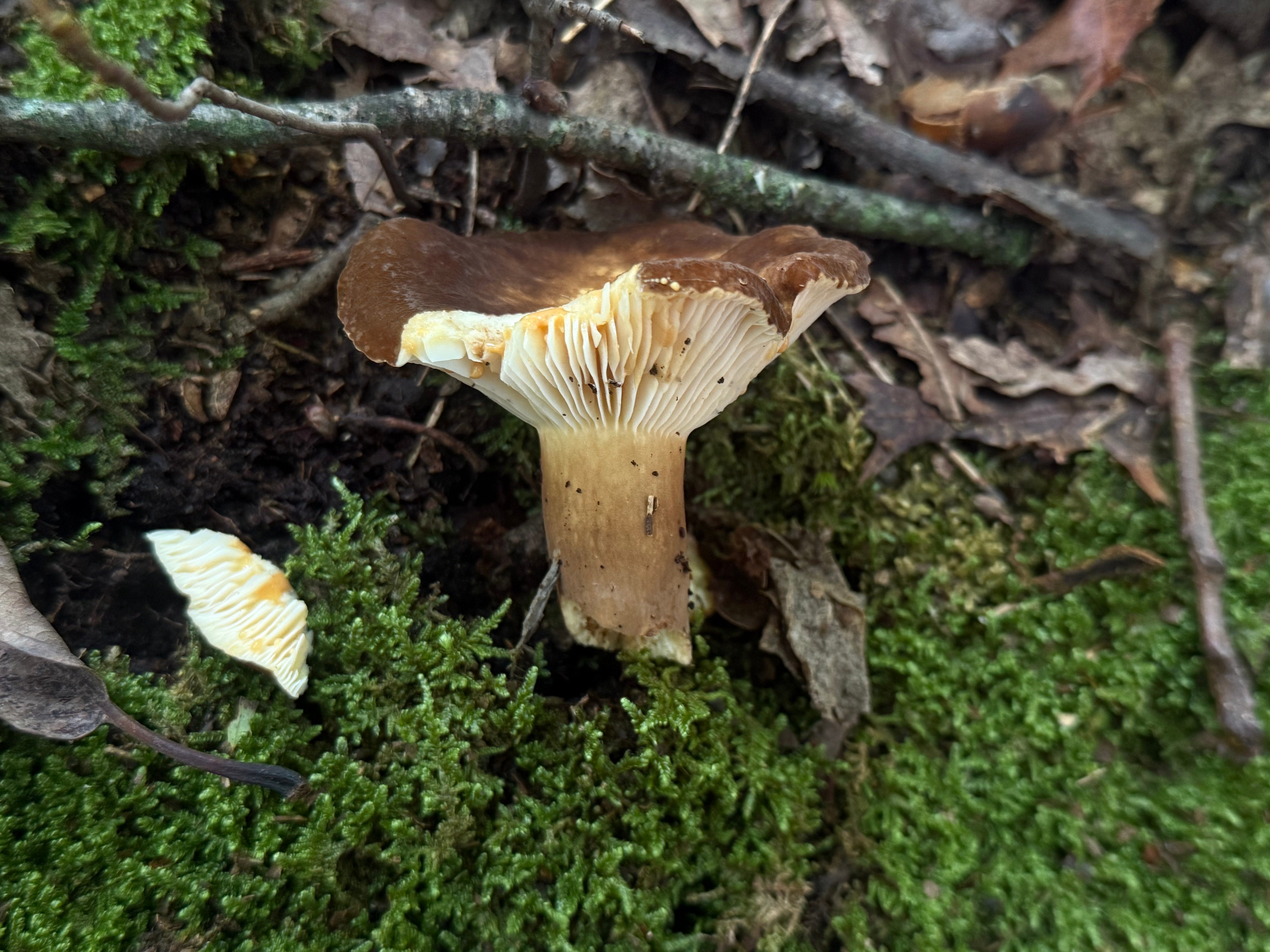
Just this morning, while hiking down into Boiling Springs, PA, we stumbled upon this brown milkcap mushroom with orange milk (a latex-like substance that is thought to gum up the mandibles of insects and deter fungivory (the eating of the mushroom… maybe a word?). I’ve seen orange milk caps that produce orange latex, like Lactarius deterrimus and L. thyinos, in addition to brown milk caps, like Lactarius lignyotus, but never a brown milk cap with orange latex. I was very intrigued by this mushroom and dehydrated a little piece of the cap for sequencing.
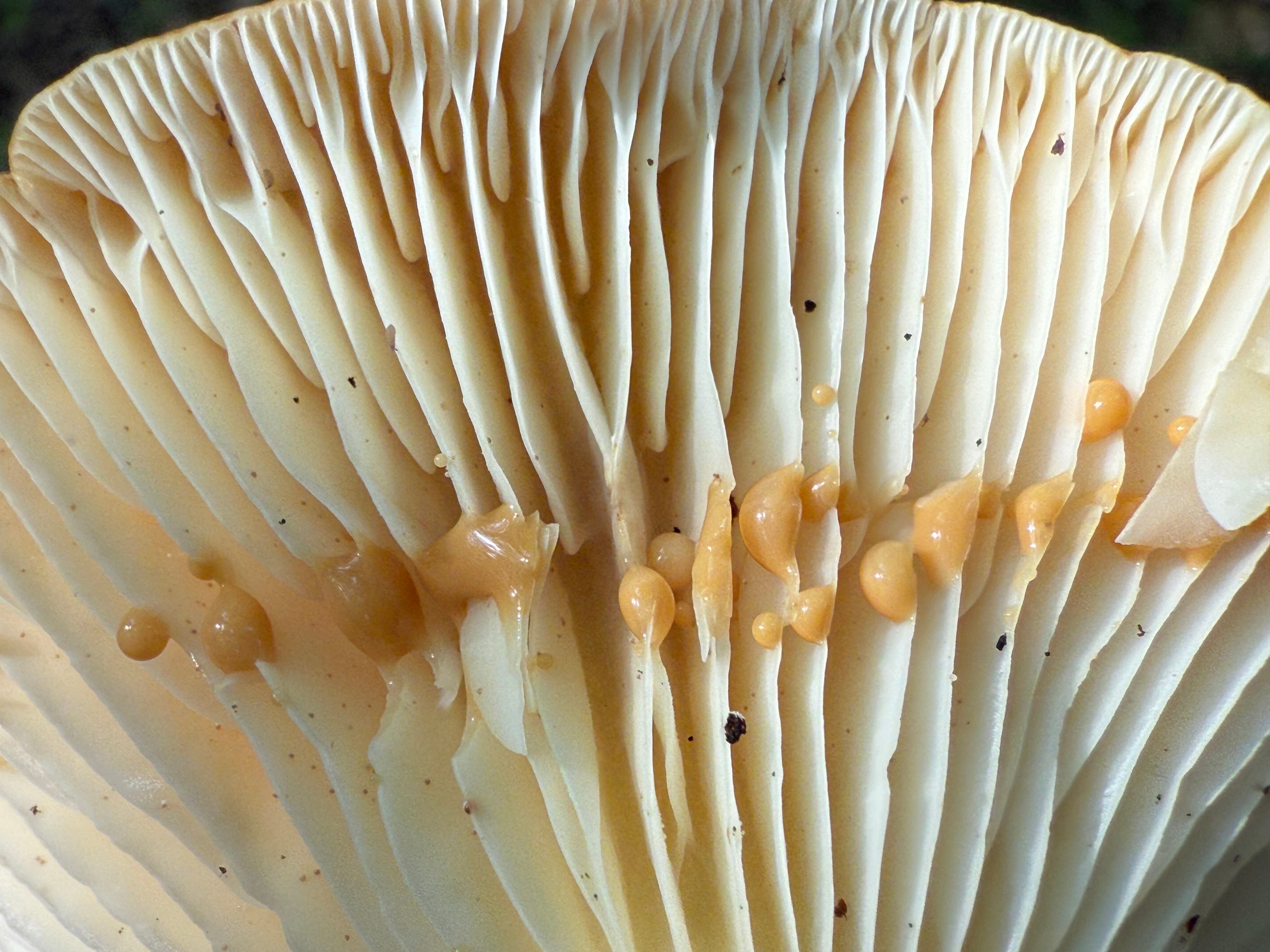
Never seen anything like it. The rain in PA has been daily, so it’s great for mushrooms right now. If you’re feeling inspired, both The Northeastern Mycological Federation foray and Mycofest will be occurring in this part of the state in just a few weeks. Get here while the mushrooming is good.
Collared Calostoma (Calostoma lutescens)
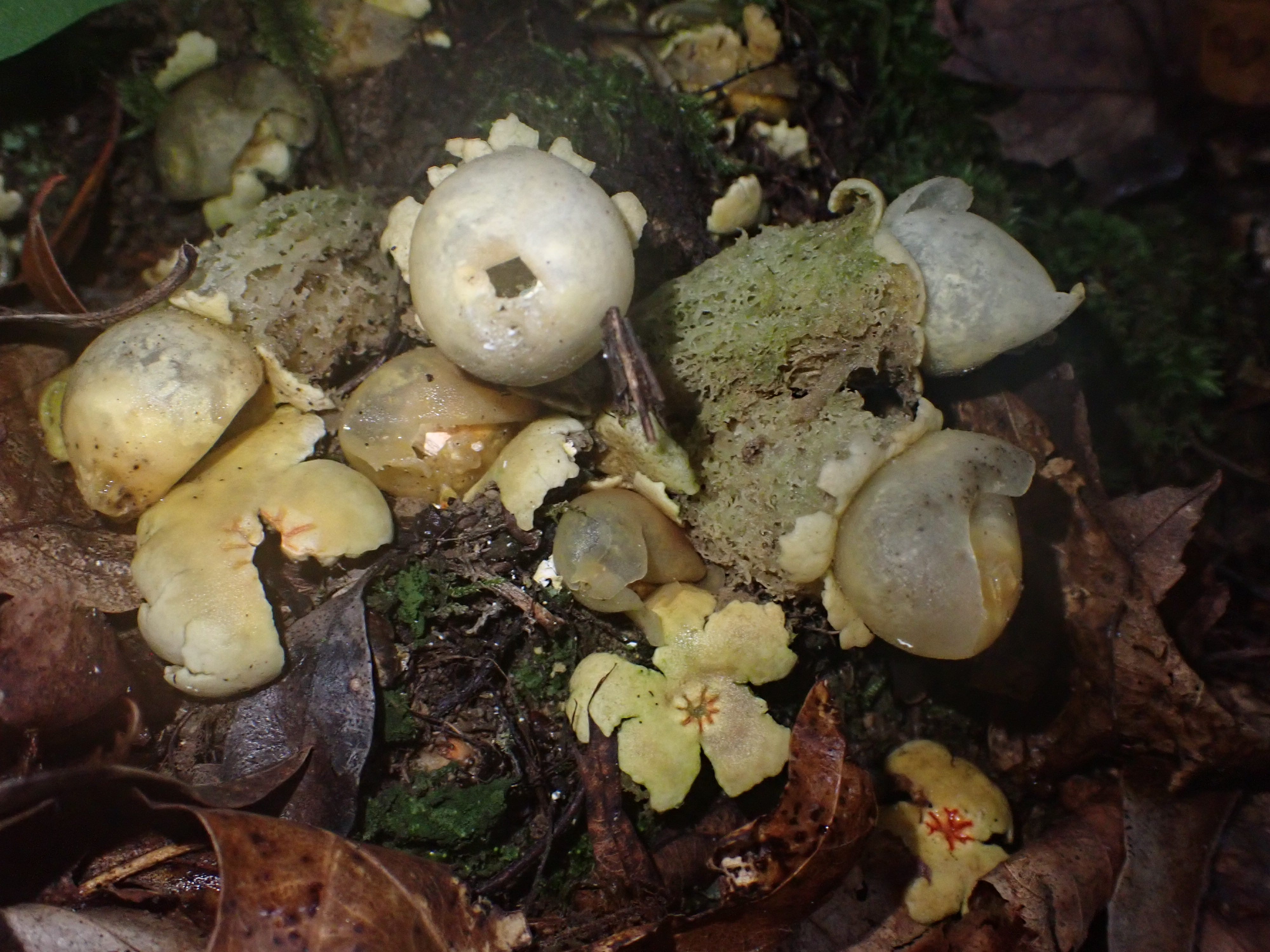
I’ve found Calostoma cinnabarinum before, and I figured this fungus was something in the genus, but I had never seen these yellow, gelatinous, stalked puffballs in the northeast. They’re mycorrhizal with oaks, and apparently more common in the southern Appalachians. This cluster was popping up alongside the trail in Maryland.
Amanita daucipes?
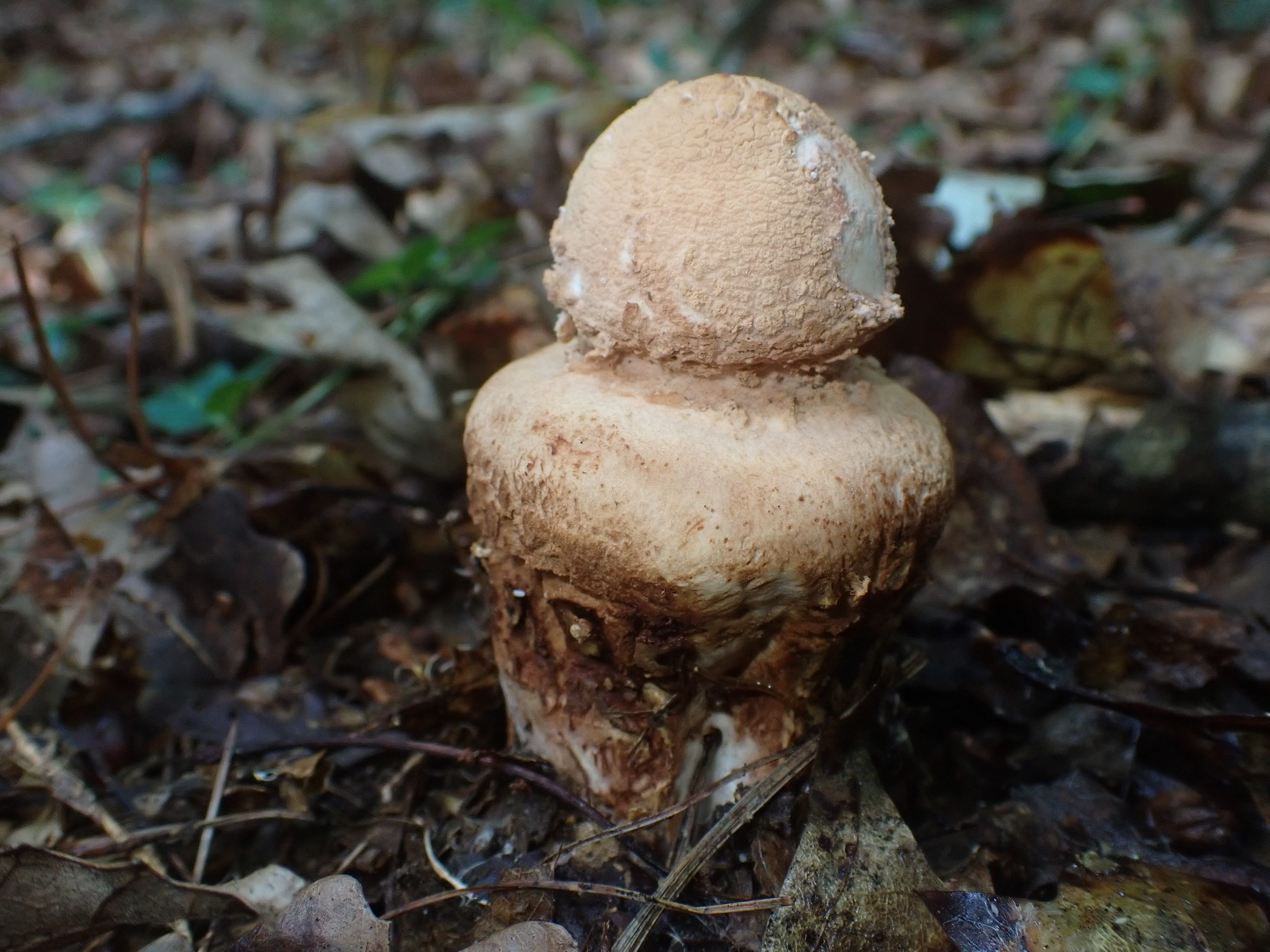
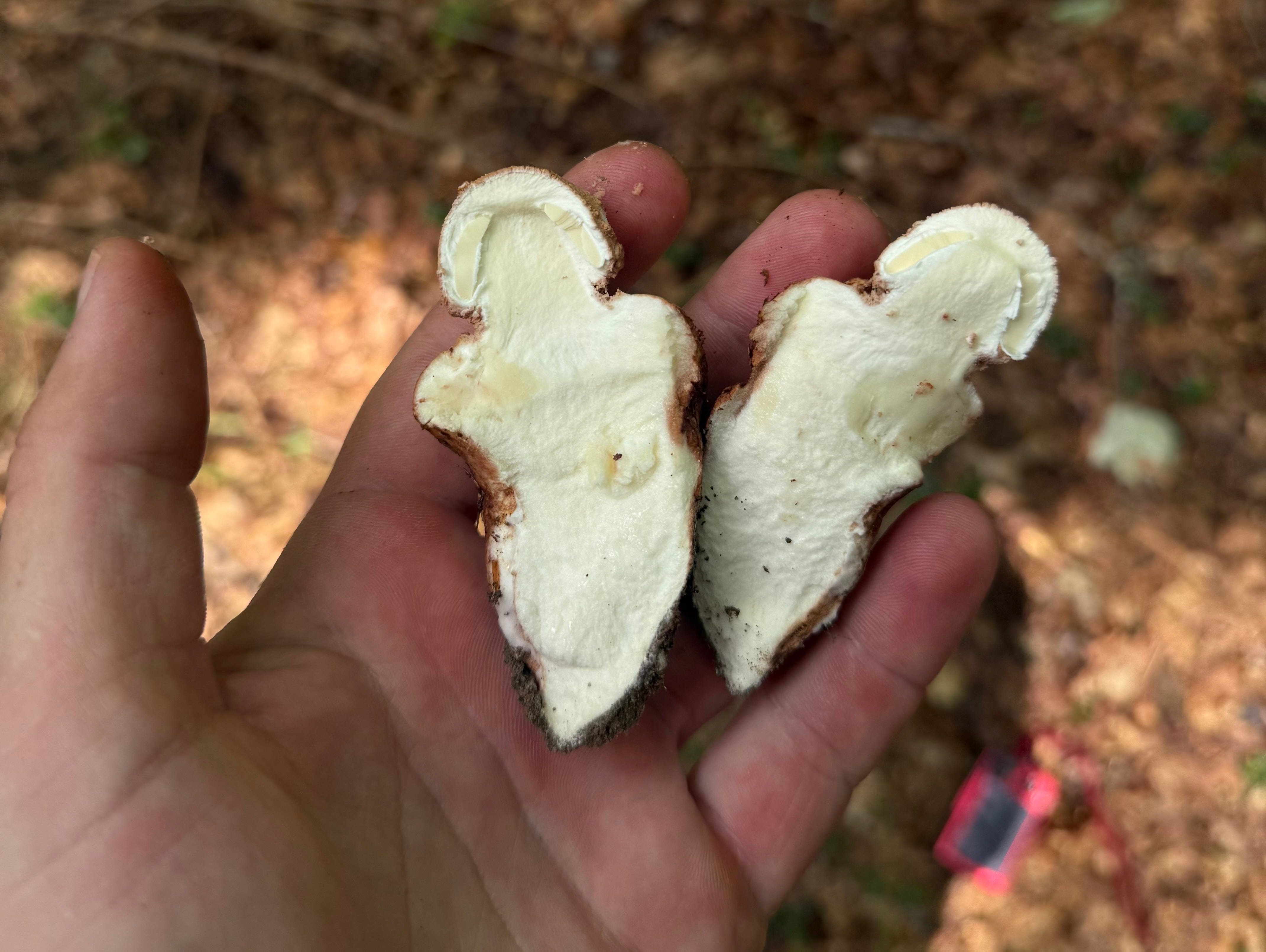
This mushroom was erupting out of the trail yesterday in Pennsylvania’s Pine Grove Furnace State Park. I originally thought this was some sort of aborted or deformed Tricholoma when I found it, due to the partially rooting base and umami/, but after a little research it looks like this could be the Carrot-footed Amanita. This is another mushroom that grows in the central and southern Appalachians, but is largely absent in the northeast.
Alright, now we have to get to hoofin’. Since we’re hiking through farms and private property, we’re technically not allowed to camp anywhere along the trail for the next fourteen miles. The plan is to push that distance this afternoon and camp at our first available option when we reenter the woods. The temperature, humidity, and precipitation seem to have all finally conspired in our favor, and I’m hoping for a vibrant, unobstructed view of the sunset over these Central Pennsylvania farms.
Yours affectionately,
Aubrey
Thanks for reading! This post is public so feel free to share it.
References:
https://ebird.org/species/turvul
https://www.marylandbiodiversity.com/species/15248
Kuo, M. (2019, November). Calostoma lutescens. Retrieved from the MushroomExpert.Com Web site: http://www.mushroomexpert.com/calostoma_lutescens.html
Comments
Nothing yet. Say the first thing.
Sign in to join the conversation.