
Good afternoon, friends,
The Shenandoahs, and Virginia in general, chewed us up and spit us out. It was the terrain in the first half, and then the rain and demonic possession in the latter half, so it was particularly nice to cross the Shenandoah into Harper’s Ferry, West Virginia on Thursday evening and leave that all behind. Did it have to be 100 degrees when we crossed? I guess so, but we’ve now spent the last two days lounging in air conditioning and hanging out with the friends that we seemed to either be just ahead of or just behind for most of Virginia. Morale has climbed all the way back up and we’re ready to rock and roll into the second half of the trail.
The rain and thunderstorms have generated plenty of fungi, so in honor of the country’s 250th birthday, we’ll kick off with some red, white, and blue:
Red Chanterelle (Cantharellus cinnabarinus)
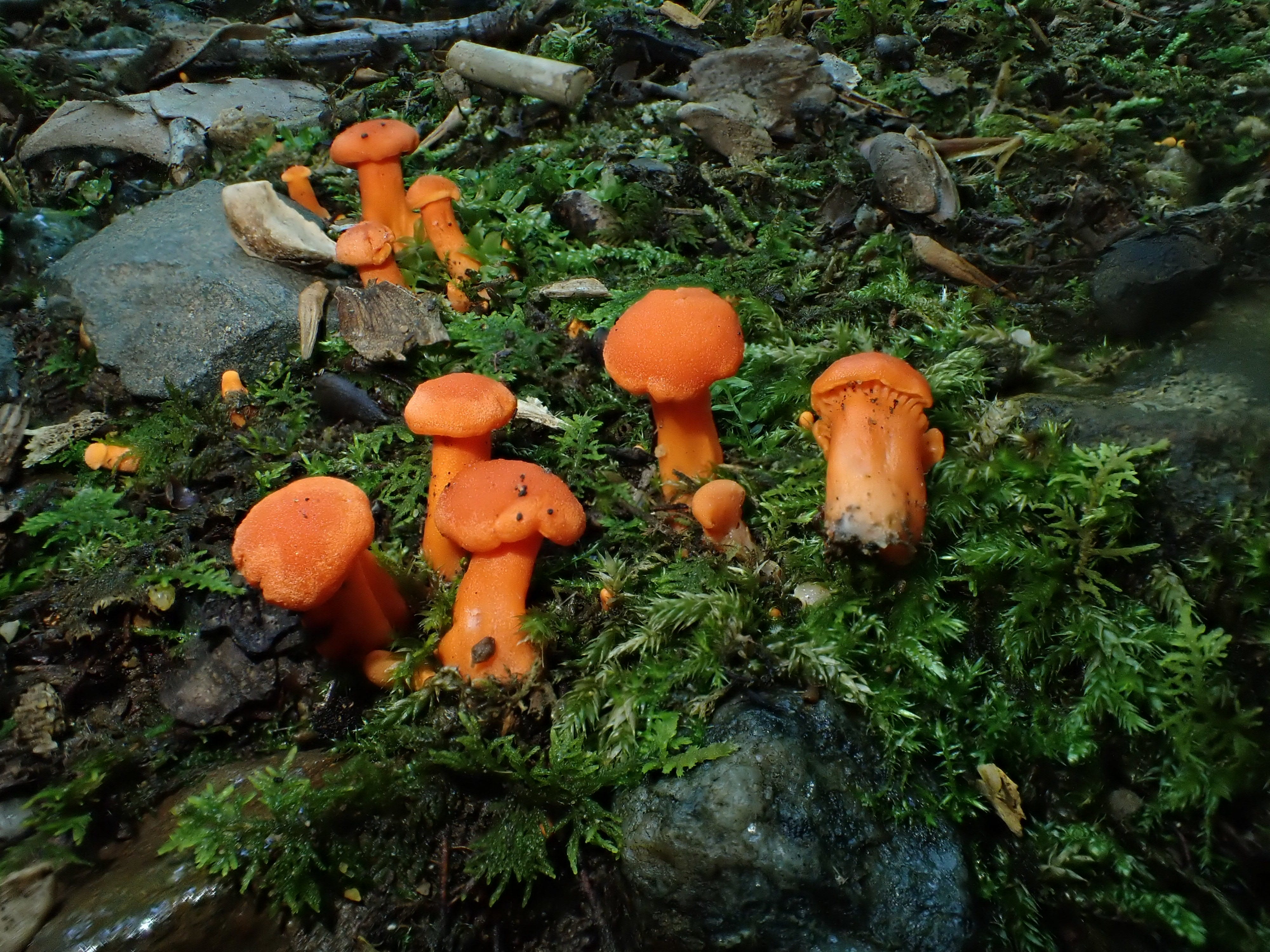
These tiny chanterelles are edible and form mycorrhizal associations with hardwood trees. Chanterelles in the eastern US are already not as large as the western species, and these are particularly small — they typically grow only 1 to 4 centimeters tall. I didn’t collect any to eat, but I did dry one out for sequencing. A big shoutout to the USPS for being open on the 3rd as I was able to send out 37 specimens, some of which I’ve carried 500+ miles from the beginning of Virginia.
Eastern Cauliflower Mushroom (Sparassis spathulata)
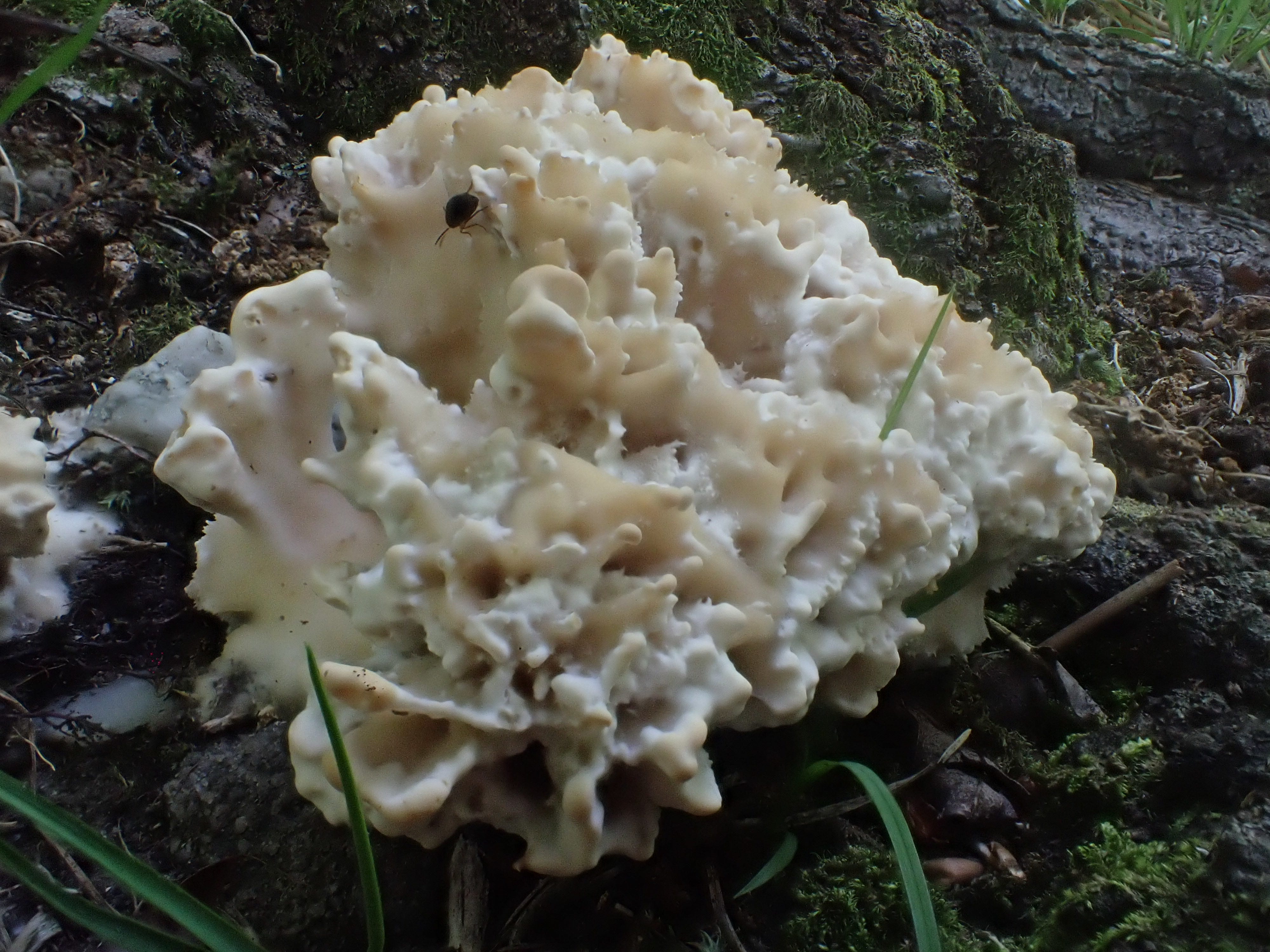
This is one of my favorite mushrooms because I remember using the Lincoff Audubon guide to try to ID this mushroom when I was just beginning my mushroom journey in Central Park. The spatula-like fronds are known as flabellae and are unique structures through which the mushroom releases its spores. A choice edible, the fungus digests the dead roots of oak trees and I found it at the base of an oak. A similar species,Sparassis americana, grows in the northeastern part of the continent but grows on pine roots instead of oak roots.
White Jelly Fungus (Protohydnum sp.)
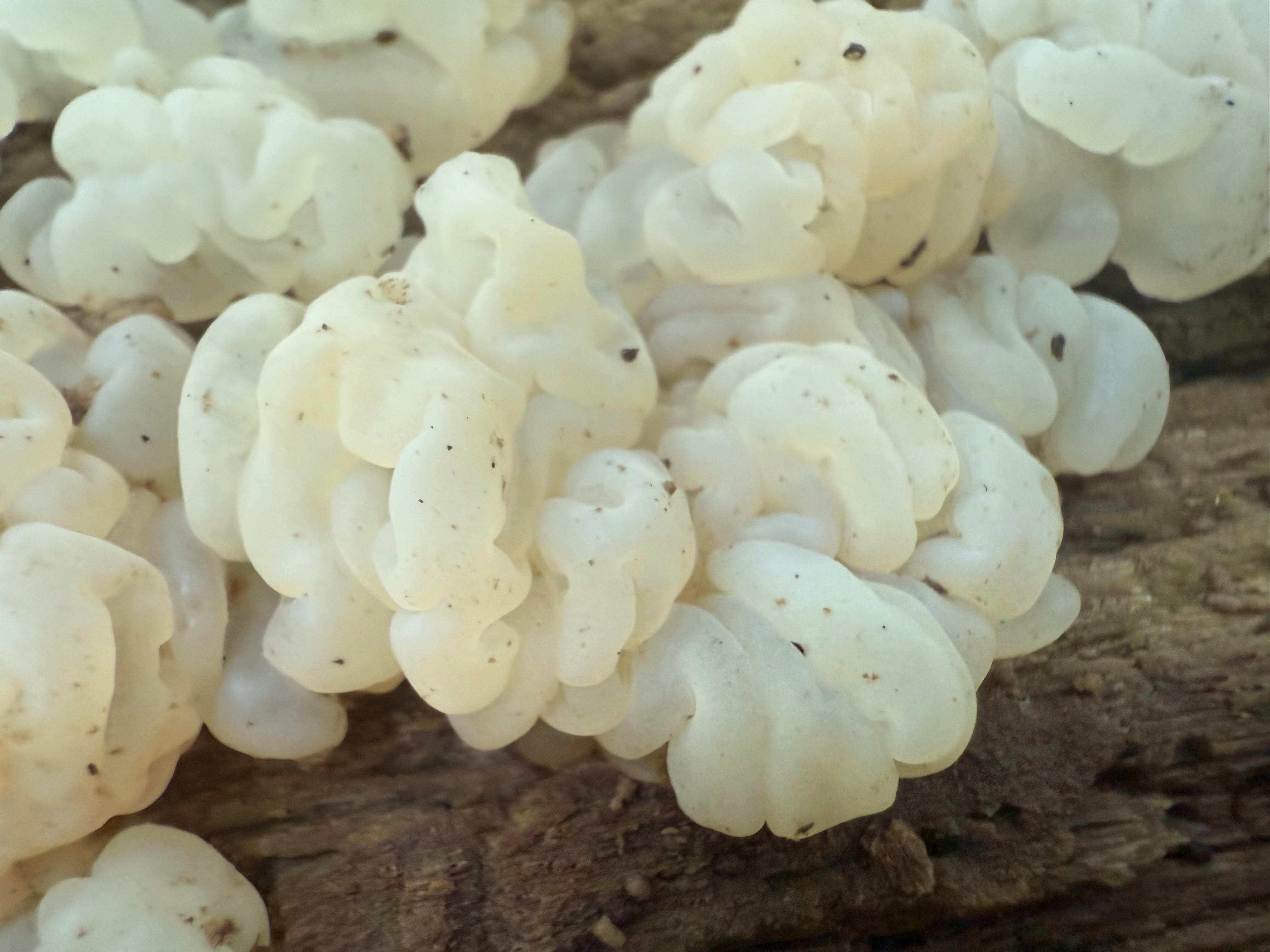
These white jelly fungi have been fruiting in large flushes on dead ash trees along the last couple hundred miles of trail. They discolor a pinkish brown, but when we find them fresh they’re completely white. They’re also pretty large, especially compared to the similar Crystal Brain Fungus (Myxarium nucleatum), with some of the gelatinous fruiting bodies hydrating to the size of my palm. I don’t really see these in the northeast, but they’ve been one of the most common mushrooms we’ve seen on the trail as of late.
Chromelosporiopsis coerulescens
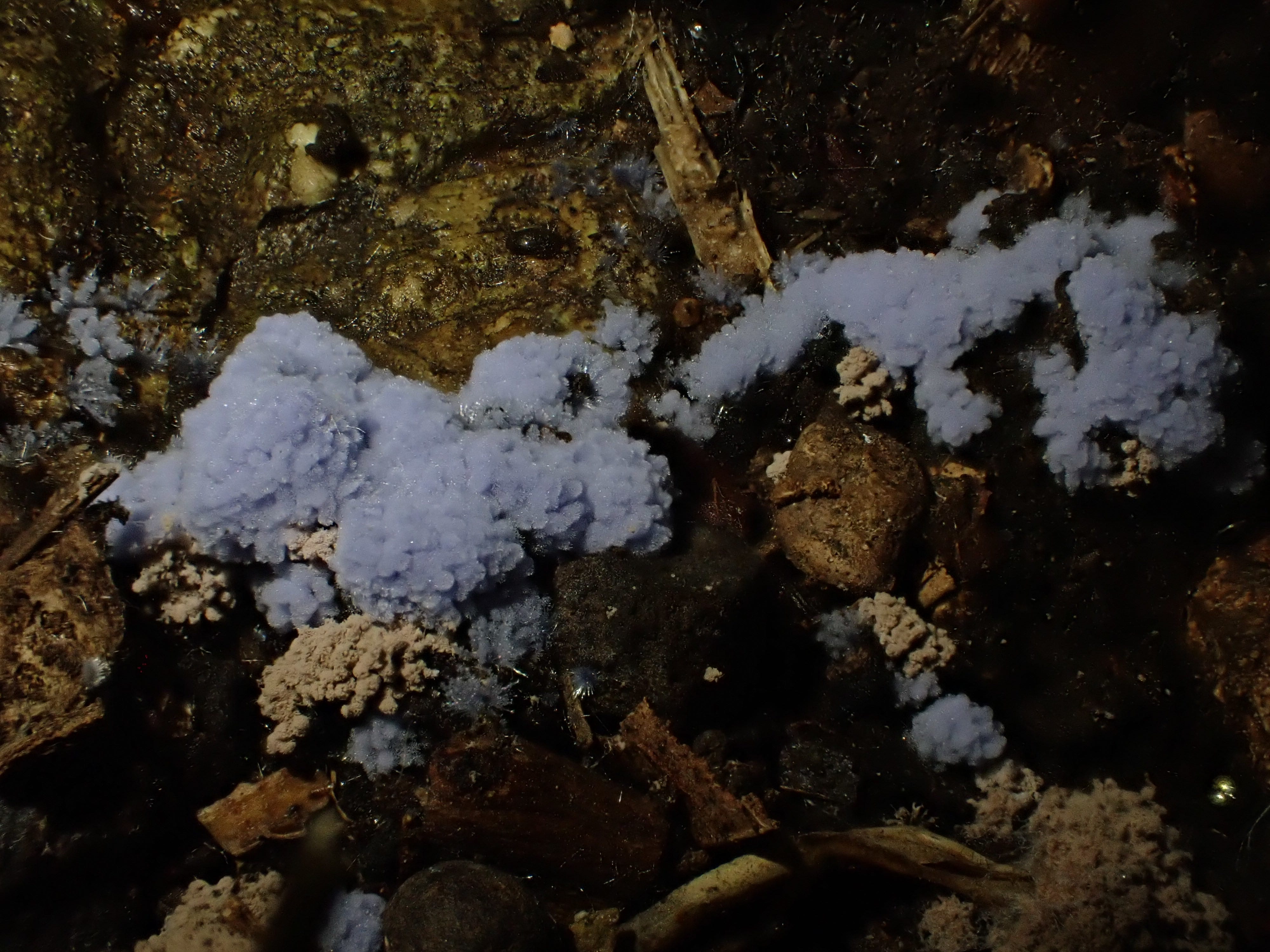
This light blue, fluffy fungus was a first for me. Originally thought to be a slime mold, it is apparently the anamorph (the asexual fruiting body) of some type of cup-shaped fungus (family Pezizaceae). Mysteriously, nobody knows what this fungus’s sexual fruiting body looks like, but the fungus is saprobic on dead organic material in the soil.
Eastern Hognose Snake (Heterodon platirhinos)
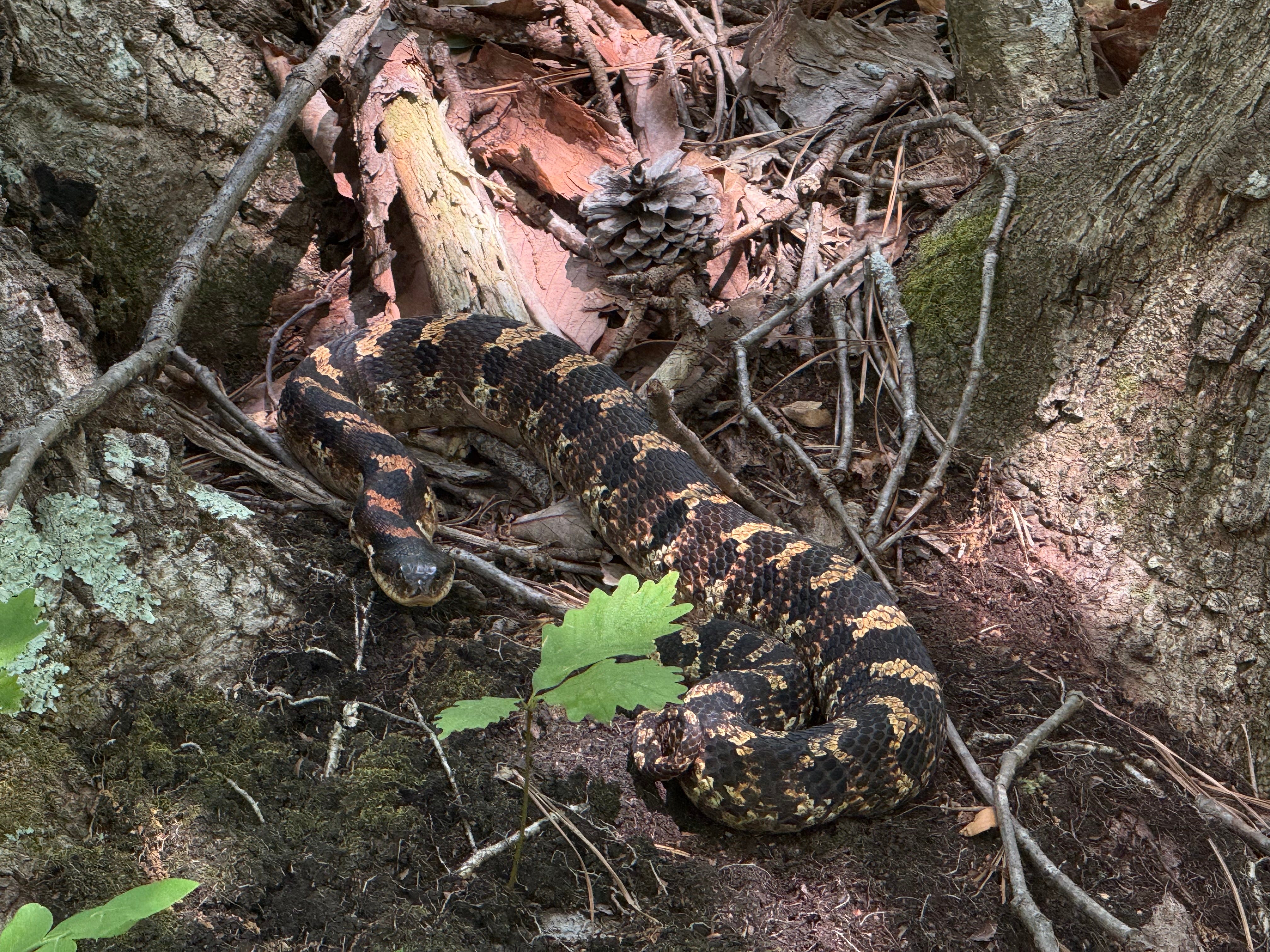
Ciara found this snake on the side of the trail. We didn’t know what it was at the time, but it could flatten its head almost like a cobra, and it would hiss at us anytime we got a little too close or comfortable with our photography. Hognose snakes are non-venomous and apparently pretty docile — we might’ve just disrupted digestion and thrown off the feng shui.
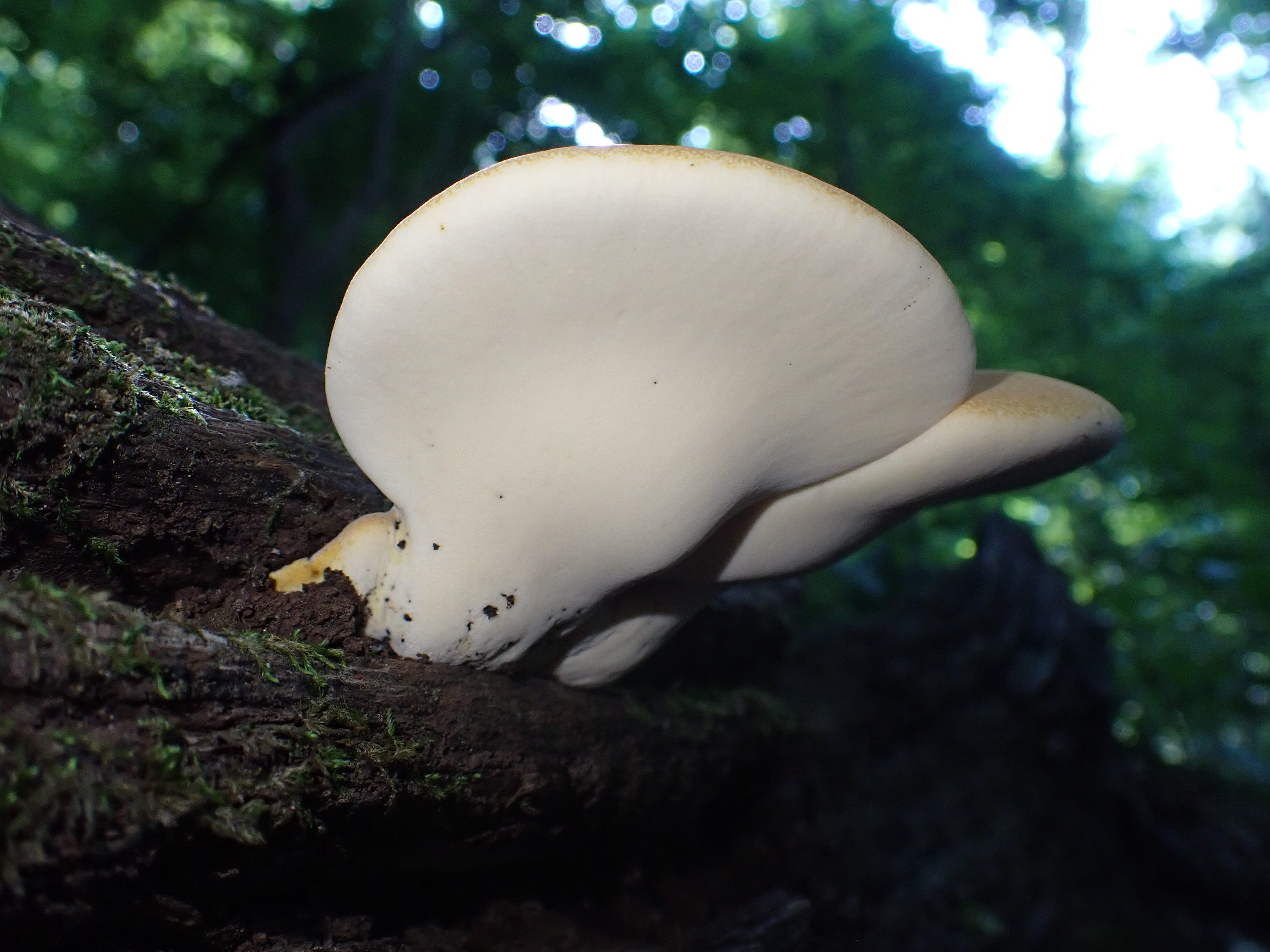
Oak Polypore (Fomitopsis pulvina)
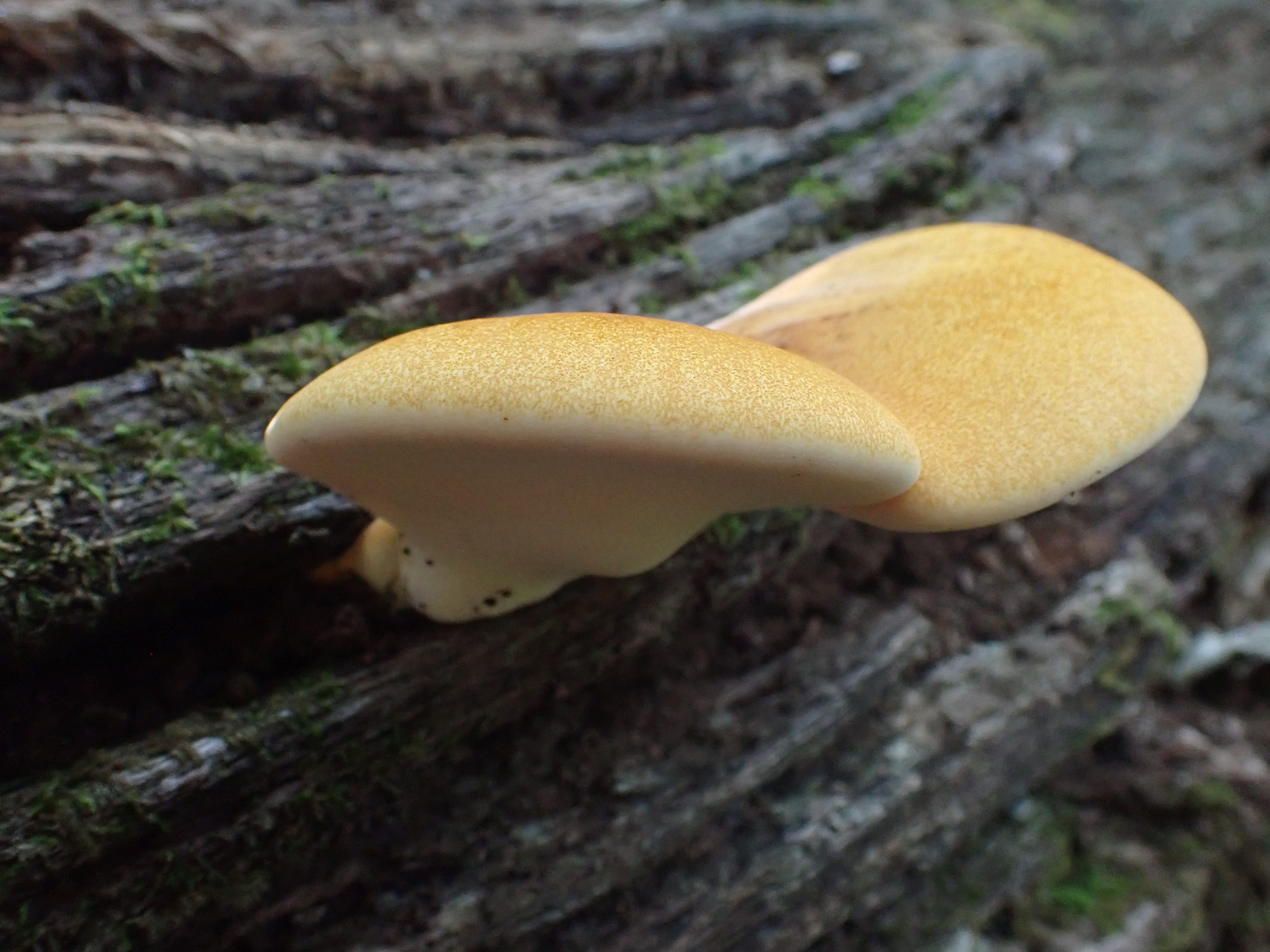
This was a new one for me. When I first found this mushroom, I thought it might be in the genus Fistulina (a relative of the beefsteak polypore I featured two weeks ago). It had the same gelatinous texture and the interior was pinkish. However, the only yellow Fistulina species I could find was Fistulina xanthoderma which is from tropical regions, so it seems like Fomitopsis is more likely here. This mushroom also had a very strong, lemony/chemically smell which was quite similar to the odor of Fomitopsis mounceae and Fomitopsis ochraceae.
Pawpaw Trees (Asimina triloba)
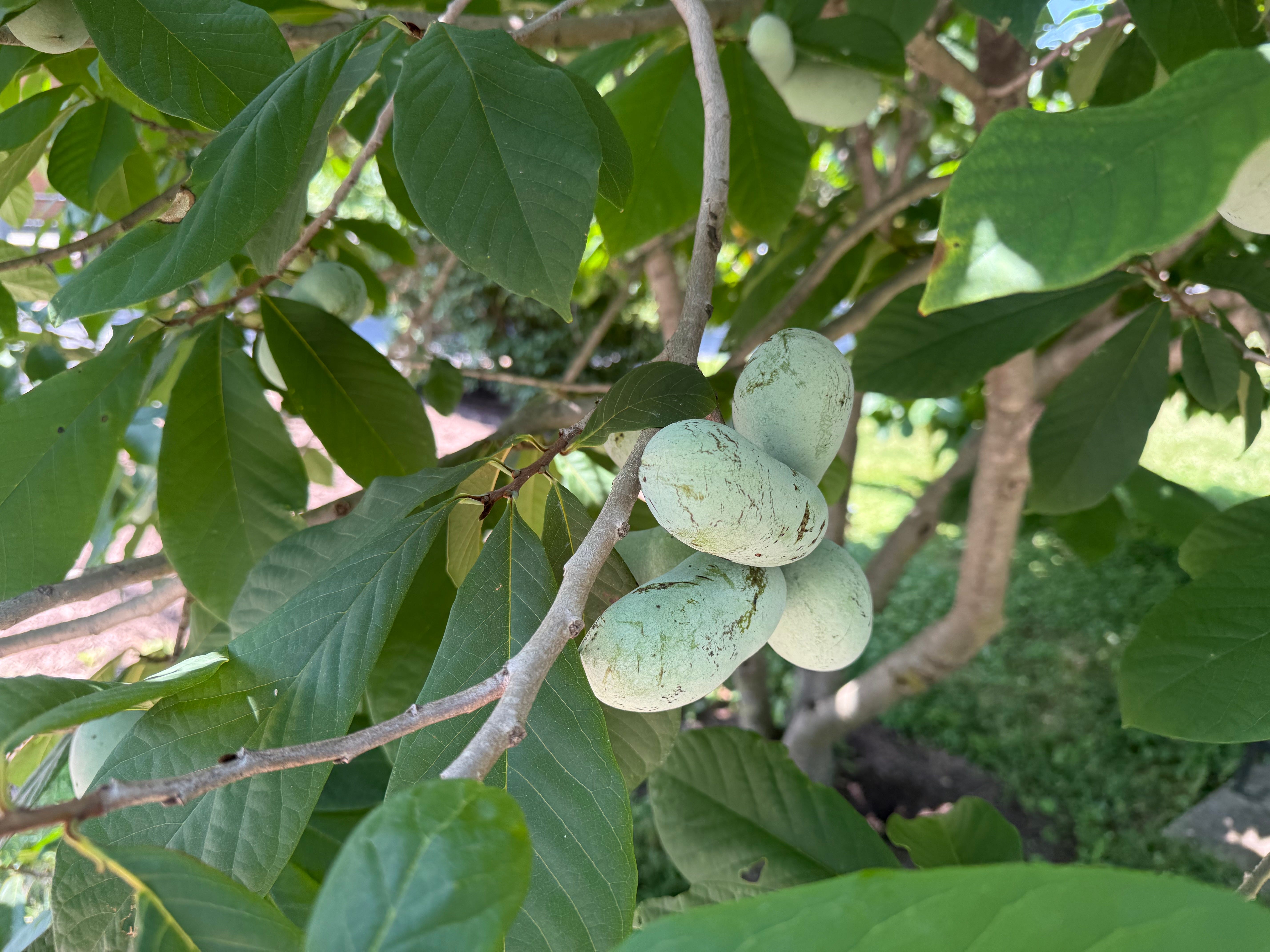
For the last 100 miles or so, the predominant understory tree has been the pawpaw. Also known as the North American banana, these large-leaved trees produce a fruit with an astringent skin and a sweet, custard-like fruit. This tree was actually just planted on Main Street in Harper’s Ferry, but it had the nicest fruit I’ve seen so far — probably because this tree has full sun whereas the pawpaws on the trail are shaded out by the oaks and hickories.
Zebra Swallowtail (Eurytides marcellus)
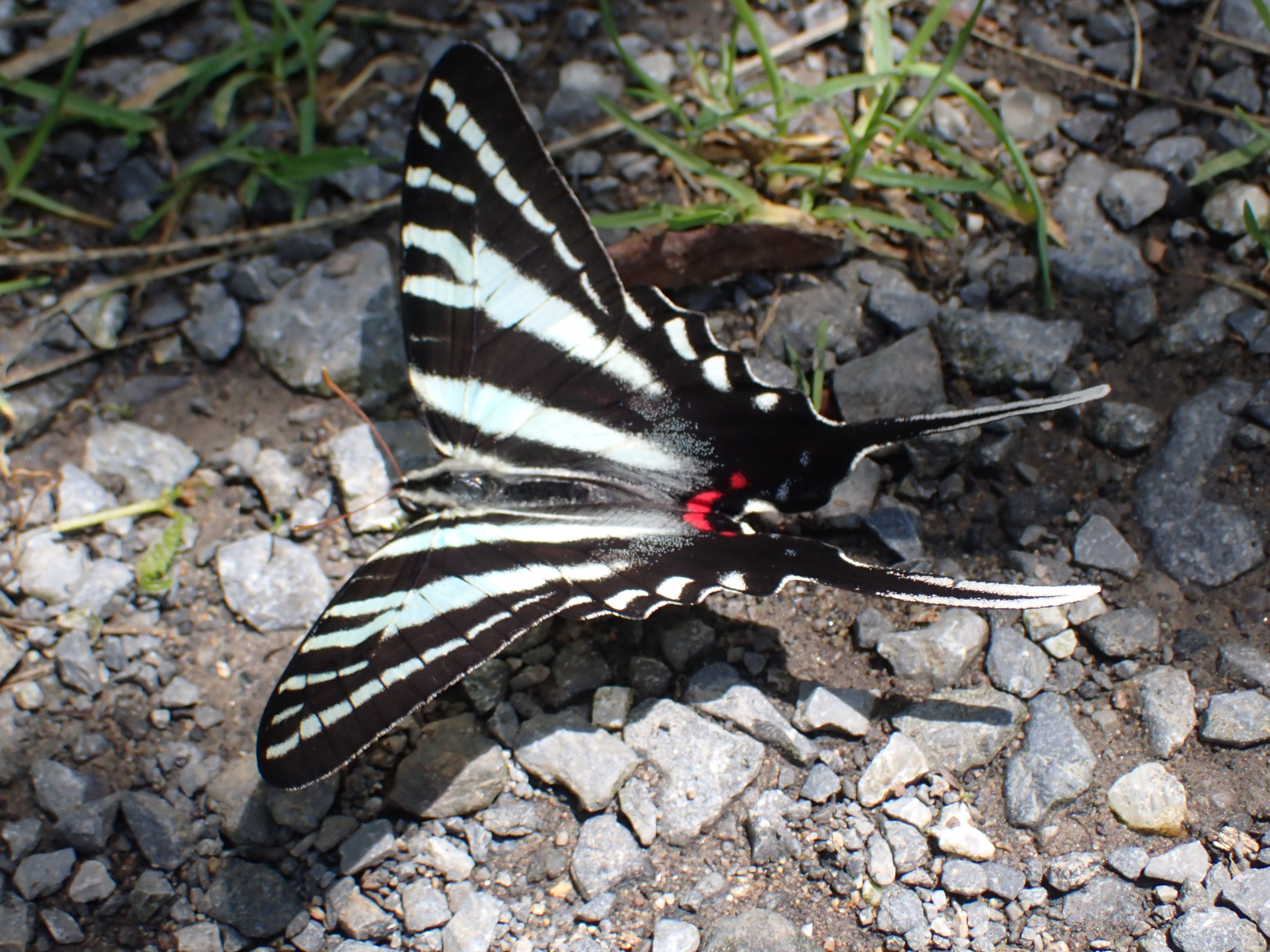
This large swallowtail uses pawpaws as the host plant for their caterpillars. The female lays a single egg on a pawpaw (a single egg because apparently the caterpillars are cannibalistic), the caterpillar eats pawpaw leaves (and hopefully not their siblings), forms a chrysalis, and then the adult butterfly will drink nectar from flowers and get minerals from the soil (as seen here).
Alright, our friends Zach and Natalie are coming out from DC to have lunch with us, and then we’re finally hiking out of town this evening. We were in Virginia for over a month, but we should hopefully start to cruise through a few states here. Some folks try to do the “four state challenge” and hike 40+ miles from the Virginia/West Virginia border, through Maryland, and into Pennsylvania in less than twenty-four hours. That’s not on our itinerary, too many mushrooms to photograph at the moment, but we’re just going to keep consistently plugging our way north.
Stay hydrated,
Aubrey
PS. The fun fact that we’ve heard a bunch on the trail is that John Denver’s Take Me Home, Country Roads, written by
Bill Danoff and Taffy Nivert, is not actually about West Virginia, but is an ode to the western part of Virginia. The more you know.
References:
Kuo, M. (2015, March). Cantharellus cinnabarinus. Retrieved from the MushroomExpert.Com Web site: http://www.mushroomexpert.com/cantharellus_cinnabarinus.html
https://www.inaturalist.org/taxa/83086-Eurytides-marcellus
Comments
Nothing yet. Say the first thing.
Sign in to join the conversation.