
This week a thread is in analog obsession, and embracing constraint as a creative force.
Christopher Nolan spent thirty years earning the right to work on a typewriter with no email account. The young photographer Szilveszter Makó is following that path with practical sets and natural light. It even connects to Nothing, which built a phone brand on the premise that you should use your phone less.
Self imposed limits can be a beautiful thing. Nolan’s argument for his is time, the only real zero sum, anything drawing down your output or your presence should have to justify itself.
The other side is limitless and its consequences. A 24-year-old at 4x leverage going from the best-performing large fund in the world to a forced sale in a single week. One of every eight open roles in Hollywood is tied to AI while the industry refuses to say the words out loud. Daily cannabis use passing alcohol for the first time on record, mostly alone. And 30,000 satellites headed for orbit against a debris count already north of 140 million.
Just a taste of whats in INTAKE #61
CHRISTOPHER NOLAN’S OBSESSIVE CAREER PATH
As The Odyssey closes in on $1 billion, $727.9 million after 12 days, most of the coverage is on cameras, the IMAX-only shoot, the extreme conditions, its ample. Nolan has again proven his commitment to the craft of cinema.
What I’m interested in is the “how” of Nolan’s career: he’s one of the few remaining directors who is bankable IP in his own right. That franchise took decades to build, and is an argument that scale earns you the right to be strange. Which is what sent me to David Senra’s Founders Podcast episode “How Obsession Built Christopher Nolan,” looking at Tom Shone’s The Nolan Variations which is at its core about how conviction, obsession, and time compound in a creative career.
Obsession as career engine. Nolan started making films at 7 with his father’s Super 8, decided at 11 to do it professionally, he used to spend hours in the dark just listening to film scores. Star wars gave him a fixation on the craft, a fascination on how things were done, especially practically. His early career is a story of plowing through: Memento got rejected by every distributor before it landed two Oscar nominations.
An analog commitment: Nolan owns no smartphone and has no email account; he uses a flip phone and receives printed emails via an assistant, who arranges in-person meetings. No cell phones are permitted on his sets. Must be nice ;) I say this in jest, as you have to be at a certain level (See also: Tarantino, landline and a cassette answering machine) to operate like this.
His reasoning is sound: it’s a commitment to not getting sanded down by all the same influences. The notion of how precious time is, and the distractions of modern devices. This was probably the hardest hitting statement to me. I struggle with time, I’ve often said it’s the only zero sum I believe in: there are 168 hours in a week, and anything sapping from your creative output or presence should be assessed.
Analog extends into his craft: Nolan writes scripts on a typewriter, shoots on celluloid, edits by hand after digitizing frame numbers, and operates the camera himself rather than delegating to a second unit. He’s said he feels “more of a craftsman than an artist.”
On the beautiful minimalism of the screenplay: books give you time and space, but the screenplay is really an art form in the act of removal, which takes confidence to strip things away. As Stephen King put it in his memoir On Writing, “To write is human, to edit is divine.”
“I enjoy writing screenplays because they are very stripped down, simple documents, and the more stripped down they are the better they are.”
— Christopher Nolan
Nolan’s obsession extends to near-total narrative control: with one notable exception, Insomnia (2002), he’s never accepted a fully-formed outside script. He’s written or co-written every other film he’s directed, a rare position for a director working at his budget level. That control extends to secrecy, on Dunkirk, only 20 of 600-plus crew were allowed to read the full script, copies were watermarked to trace leaks.
On career capital: Despite Memento’s 2 Oscar nominations (one for best picture), Nolan still needed Steven Soderbergh to talk a skeptical Warner Bros into just taking the meeting for Insomnia.
It was The Dark Knight where Nolan secured real leverage. The commercial success of that franchise, built the capital that eventually financed the obscure and highly original scripts Inception and Tenet.
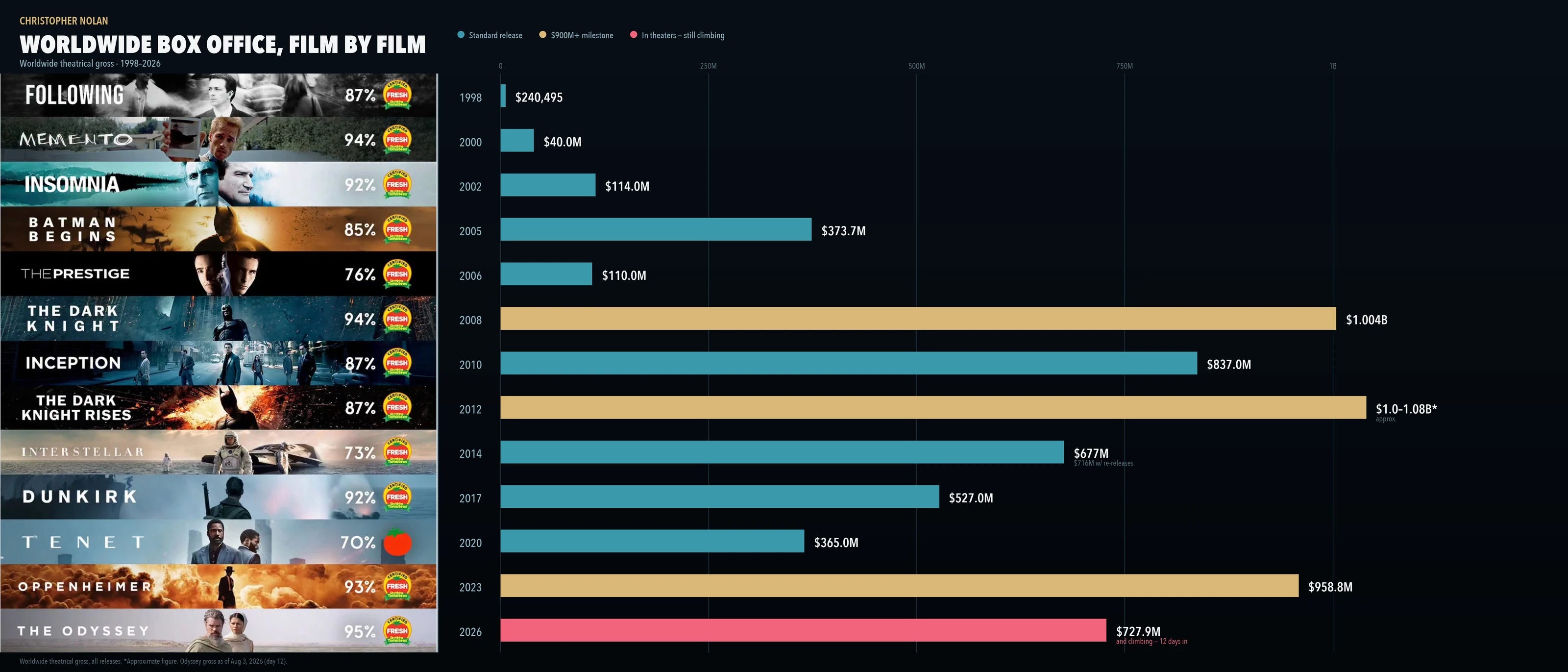
Nolan has compounded that leverage. Now the seventh-highest-grossing director ever, he can land $200 million for original, non-franchise scripts. You need to deliver the box office to finally make a film like Inception, which he incubated for 23 years.
In the same week, a July 30 Beijing interview with Zhong Shu, a philosophy doctoral student and podcaster, went viral for skipping the celebrity-and-process questions for hard hitting ones spanning hubris, atonement, and civilizational tone.
She landed the best framing of the press run, asking Nolan outright if he’s a bard for a civilization at dusk.
SZILVESZTER MAKÓ
Another artist owning analog in a digital age, Hungarian-born, Milan-based photographer Szilveszter Makó. Like Nolan, Mako is a purist, bordering on obsessive in a beautiful embrace of the tangible. His work rejects Photoshop, CGI, and AI outright; sets are built from recycled and handmade materials, lit only with daylight, and shot with a self-taught, deliberately undisclosed darkroom process.
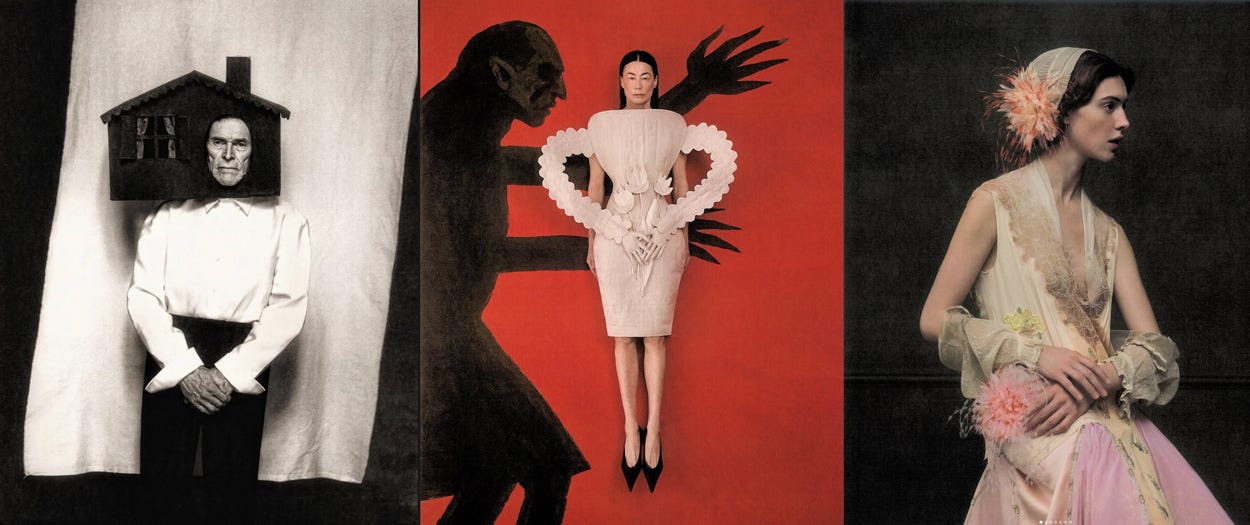
Makó’s through line in his work is control: A recurring “box” motif he calls both “a restriction and a liberation,” also in limiting the scope of his work.
“There is this Hungarian saying, you either work from A to Z or A to B. I work from A to B. It is remarkable what you can produce within a restricted parameter.”
— Szilveszter Makó (Aperture)
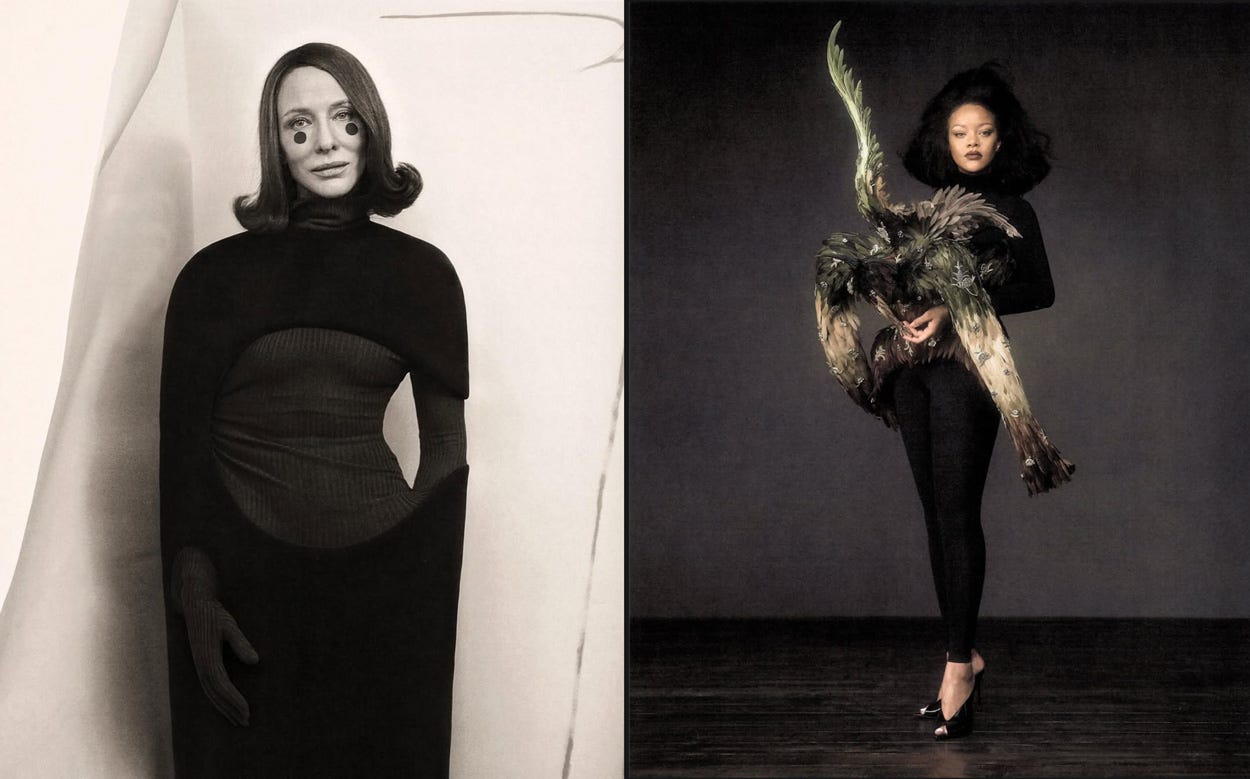
This has led the young photographer to a strongly defined aesthetic. In only a few years Makó has racked up a portfolio natural-light-only portraits of A-list celebrities (Rihanna, Elle Fanning, Willem Dafoe, Bad Bunny, Cate Blanchett, Marina Abramović), which is placing him as one of fashion editorial’s most distinct working image-makers.
TRAVIS SCOTT: WHEN I’M HOME
Travis Scott’s self directed music video which plays during the end credit sequence.
It is the first music video shot entirely using massive, heavy IMAX 70mm film cameras.
The track features James Blake & Ludwig Göransson. Shot entirely on location at Castelgrande in Bellinzona, Switzerland.
Nolan explained his reasoning behind casting travis as a bard in the film, that rap serves as a contemporary analogue to ancient oral poetry.
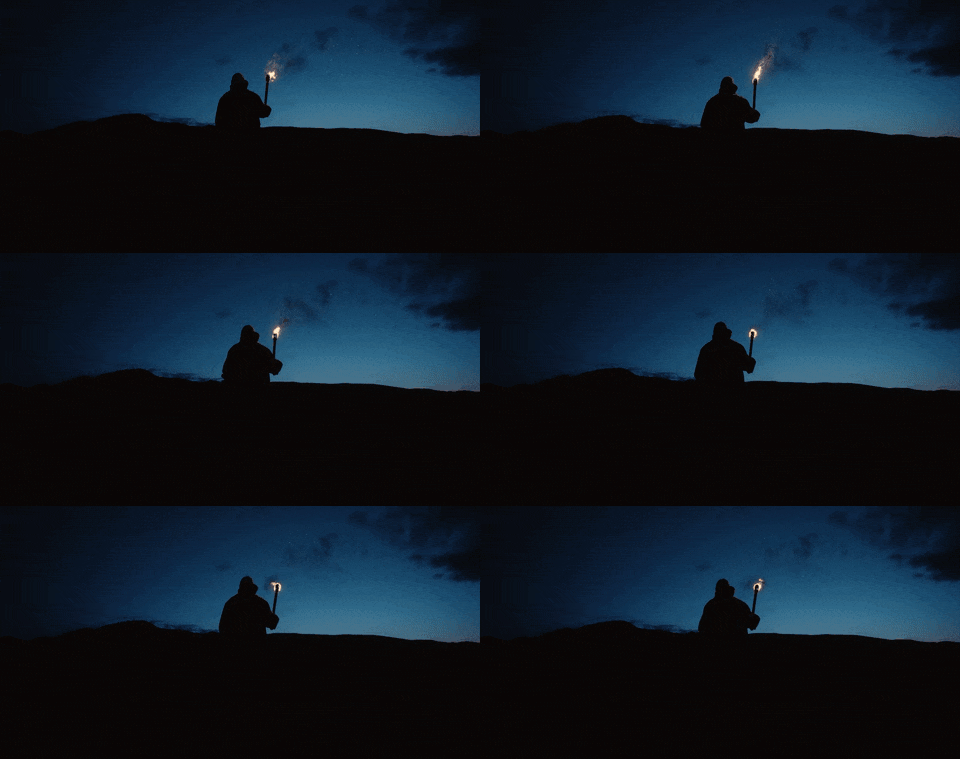
Some all star teams on the production & post: Division & 1080p on VFX. The edit was done by: Mah Ferraz
RITA ACKERMANN
One of my favorite artists will show The Chemical Alphabet, her next solo exhibition, this September at Hauser & Wirth.
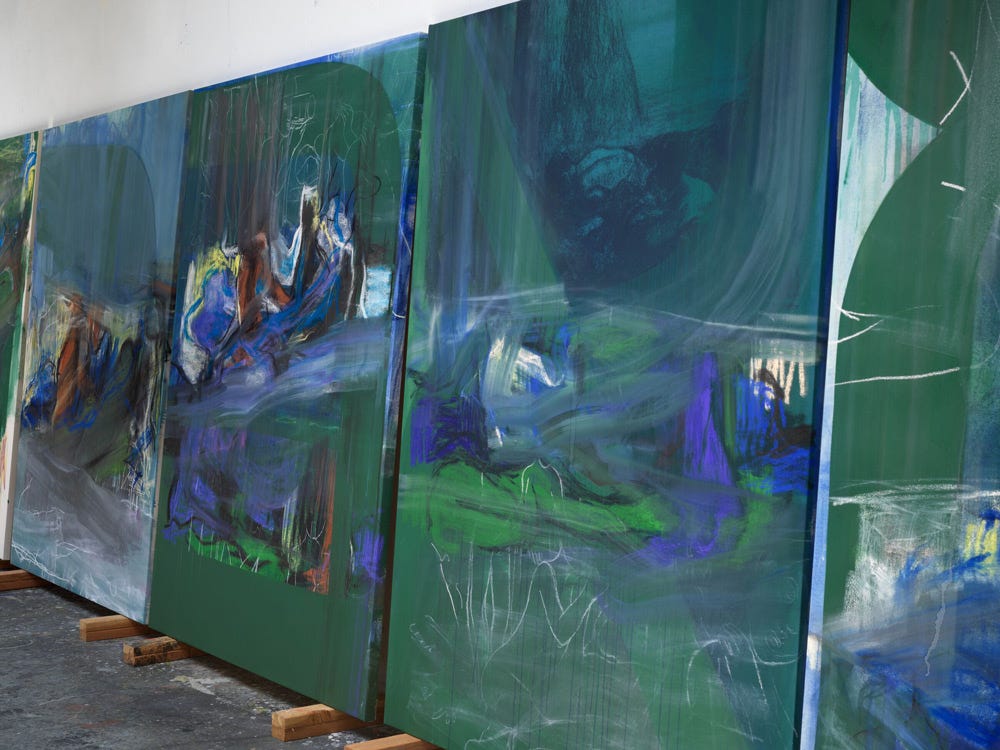
I love her accumulation, or what she calls ‘chalkboard method’, essentially a continuous building and wiping and building of layers which over time give her works what feels like multiple exposures. This is how I paint as well, it’s a process which can become meditative and allows for a malleable approach to working.
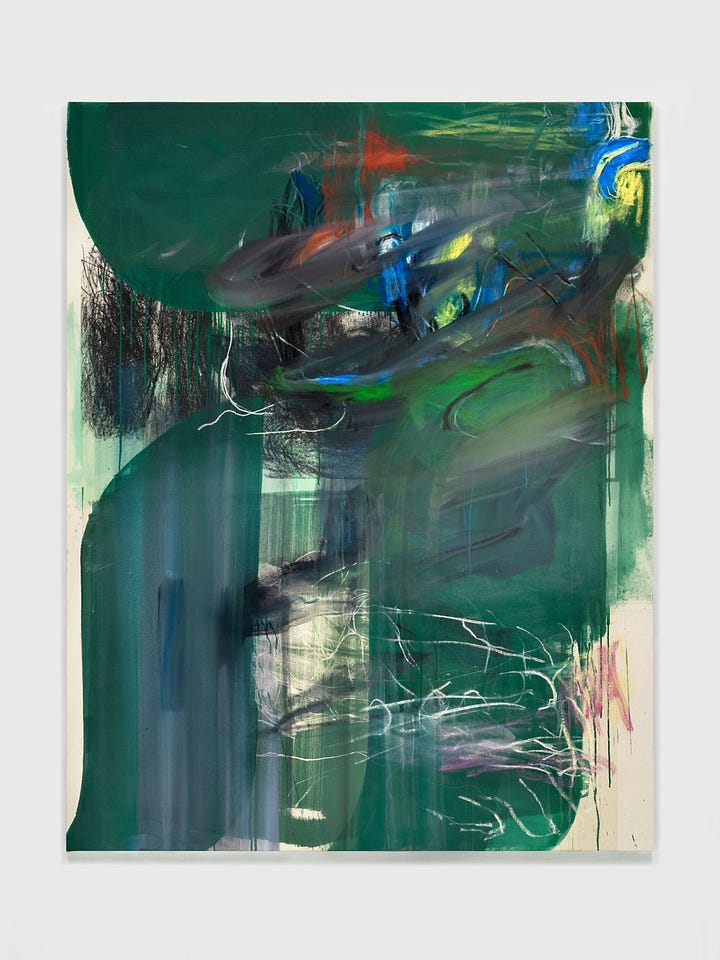
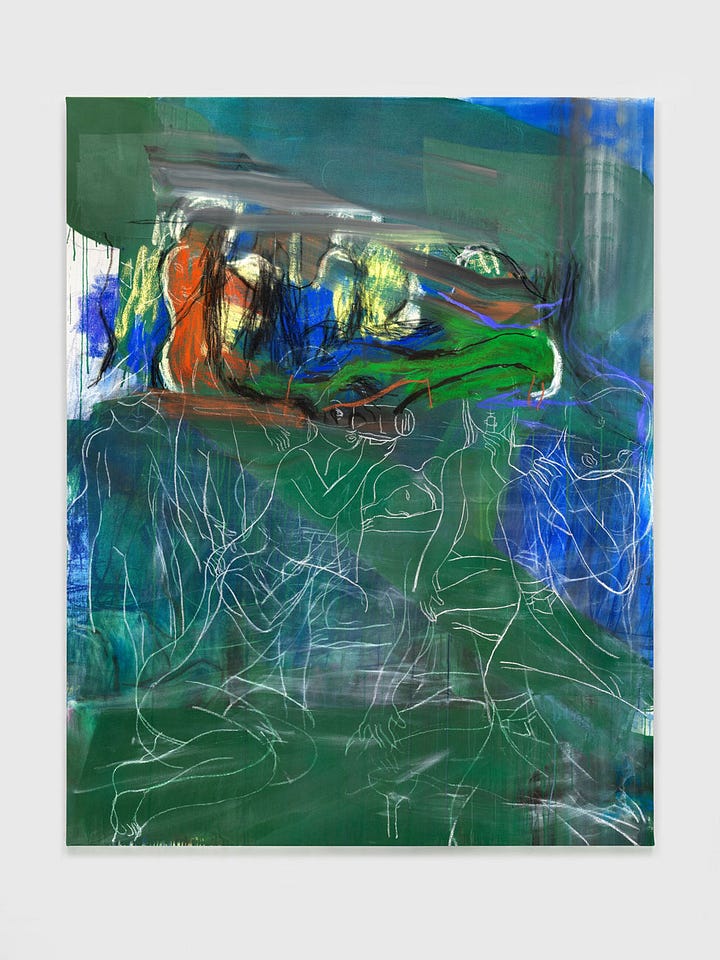
In this series, she’s interpreting letters from a Semitic alphabet, where the letterforms are the foundation of these compositions.
Opening Reception: 9 September, 6 – 8 pm | Hauser & Wirth 134 Wooster Street, New York
CLUB NOTHING
Nothing tech has captivated me this year initially in their antitech tech product design but more recently in their music strategy.
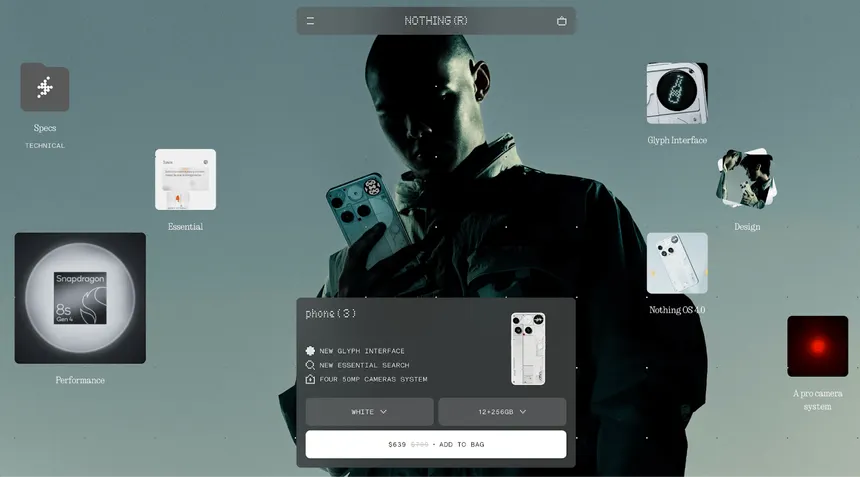
A few months back I wrote about their Charli XCX Global Brand Ambassador deal and adjacent campaign: a top-down celebrity equity play putting her on the brand’s cap table alongside The Weeknd and Swedish House Mafia.
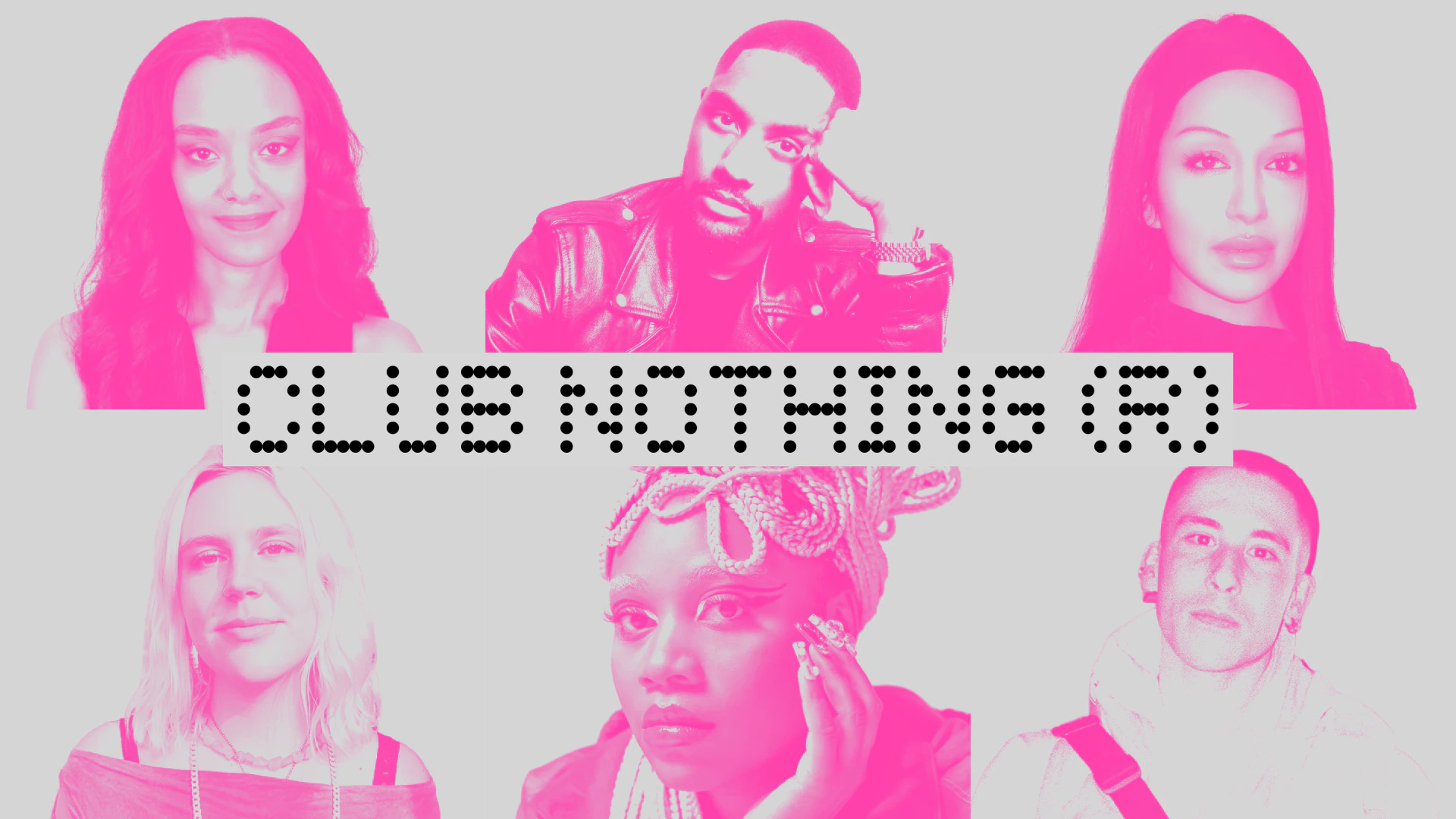
The brand is now playing bottom up with a grassroots club night grant series ‘Club Nothing’ a touring nightlife event series (New York, July 9; Tokyo, July 30) paired with a fund that doles out $40,000 split four ways, $10,000 each, for independent promoters, DJs and collectives to throw their own club nights, festivals or event series. Applications close August 9.
Winners get announced later in August.
THE UN-HATEABLE-NESS OF FRED AGAIN
This guy has managed mass reach and real success while staying teflon in the likability department. You’d expect to hate him, or at least get exhausted by the constant presence, but he brings joy consistently enough that I stay genuinely excited about what’s next. That’s hard to pull off at this level of fame.
Last week he brought 20,000 people to Palacio de los Deportes with two days’ notice. The show got announced mid-livestream, during “9 months & 50 hours,” the four-day arc that took a nearly two-year on-and-off collaboration with LATIN MAFIA fully public.
What I love is the process ownership. It’s transparent and it genuinely looks fun. Posted up at Lago Algo, the lakeside Mexico City space where MATTE holds our annual Zona Maco party for three years running, they ran a non-stop YouTube livestream broadcasting the entire mixtape-writing session, teasing tracks as they went, then walked straight into a sold-out show. 20,000 people were singing along to a song that had been released 6 hours prior.
There needs to be a Harvard Business School case study on how he markets his music and his tours. He’s built a repeatable format: cinematic teases, into live streams revealing collaborations into surprise shows. “under the fabric,” the film shot at the Mexico City stop that started this whole collaboration, dropped days ahead of the livestream as the lead-in.
USB002’s was the first phase: 10 shows in 10 cities over 10 weeks, each location revealed a week ahead, which brought a level of energy back to the electronic space that had seriously been missing. The most notable thing is his crowds engagement. No one’s on their phone. The shows are LIT UP.
Now rumors are percolating of a Thomas Bangalter studio collaboration, after Bangalter closed Fred’s USB002 Alexandra Palace residency with a rare b2b set in February, his first live appearance in nearly two decades. As of this writing it’s still fan speculation, no confirmation from either camp.
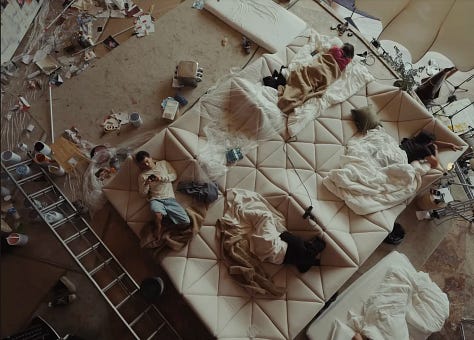
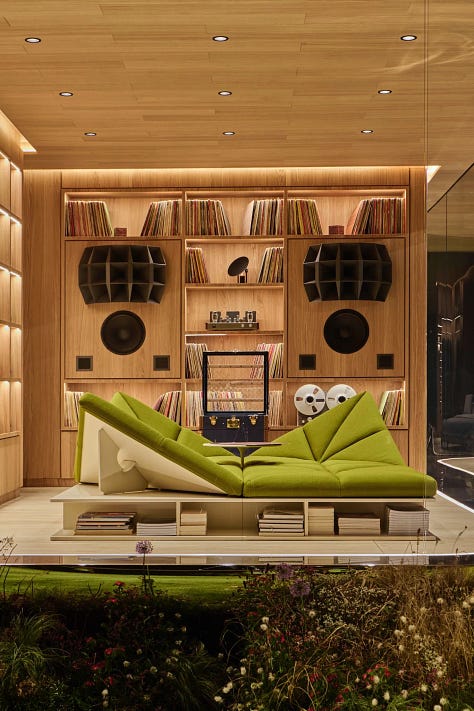
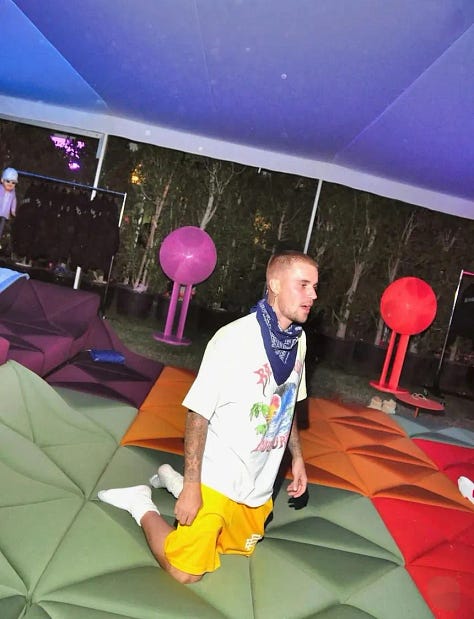
Side note: Paulin Paulin Paulin, is showing up in a lot of music plays right now. It’s part of the late designer’s son Benjamin and daughter-in-law Alice’s studio which cooked up “Sounds Like Paulin” a new cultural label centered on music. Which is why you’re seeing the iconic couch in situations like this, Bieber’s Coachella backstage and as part of Pharrell’s Louis Vuitton’s runway show.
JAY SHETTY’S GREAT TASTE
I must say, I’m impressed.
There’s been a two year run up in production value across leading podcasters, as they catch streaming deals or just decide to level up on their own accord as they rake in serious money. A few years back, I remember Steven Bartlett catching attention simply by being one of the first multicam setups and real color grading in the category. The bar for creator sets has moved a long way since.

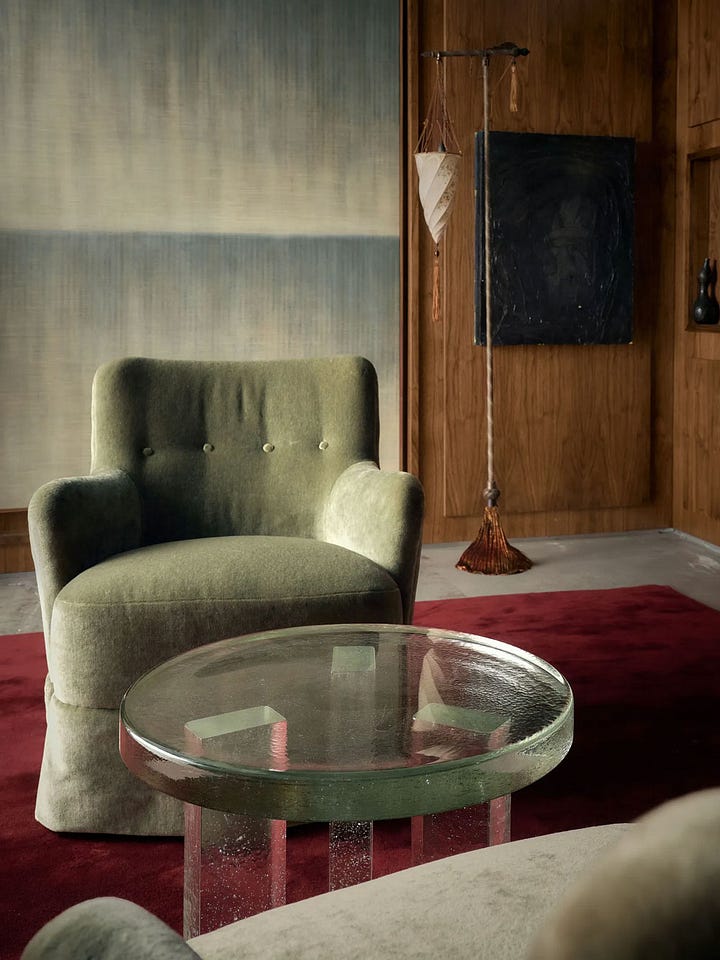
Shetty’s at-home studio deserves a look for the taste in execution, the first podcast studio I’ve seen featured in Architectural Digest. It was built out this spring for On Purpose’s move to Netflix, running roughly $500K as one piece of the $100M Spotify/Netflix deal that reframes the brand as a media business rather than a solo show.
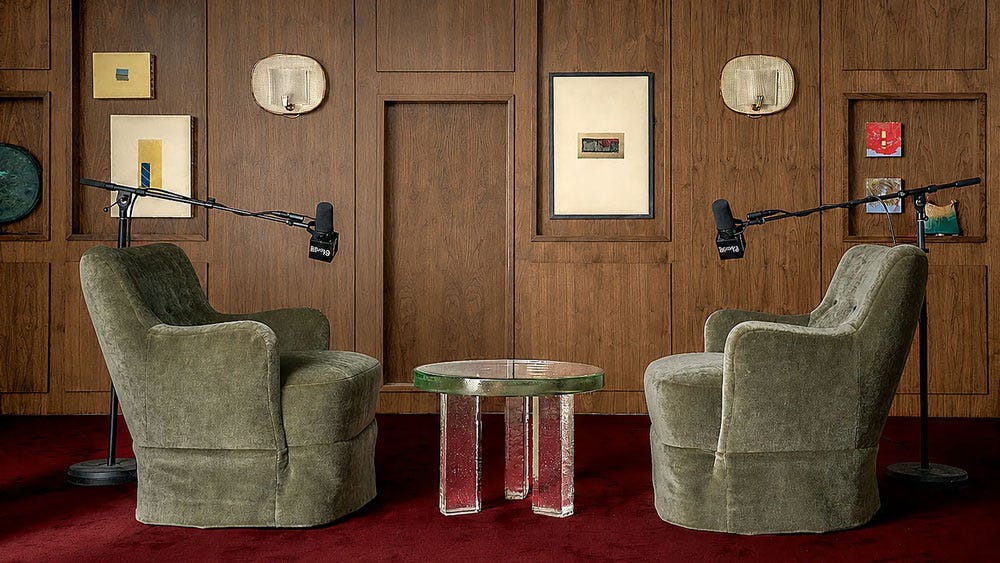
“The studio is actually in my home, so I wanted it to feel like a natural extension of it rather than a traditional set... The goal was to create an environment where people feel safe enough to share the parts of themselves they don’t normally reveal.”
— Jay Shetty (Architectural Digest)
For comparison, most designer-built podcast sets (Call Her Daddy, Sofia With an F, Dear Media’s roster) run around $30K.
It’s designed by Mike Moser, an LA residential designer with zero prior podcast work; this was his first-ever build in the category. “I think one thing that was huge for Jay was bringing in artists that had different perspectives,” Moser says. I especially respect the original art: Liam Stevens, Rosie Clements, J. Grant, and Maria Yelletisch.
Respect.
STUDIO PRACTICE
July was a hard month for studio output. I spent ten days in Cape Town and the other half with my family in Maine so my time in studio has been wanting.
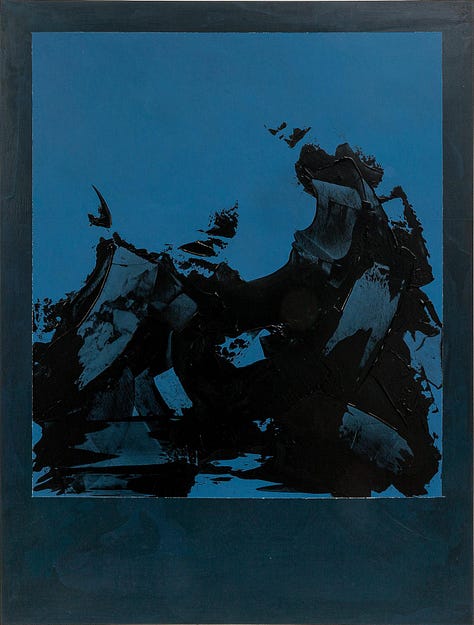
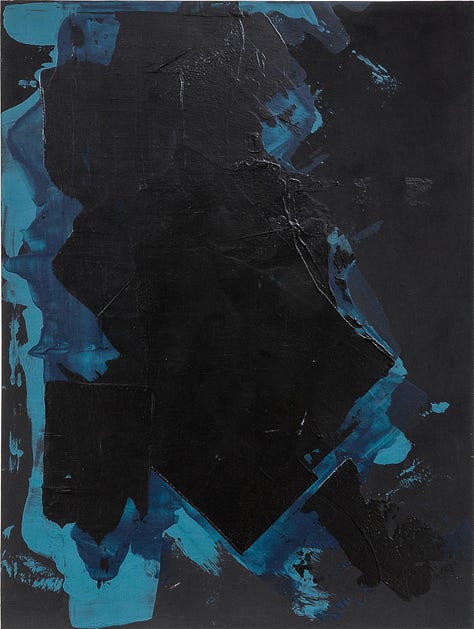
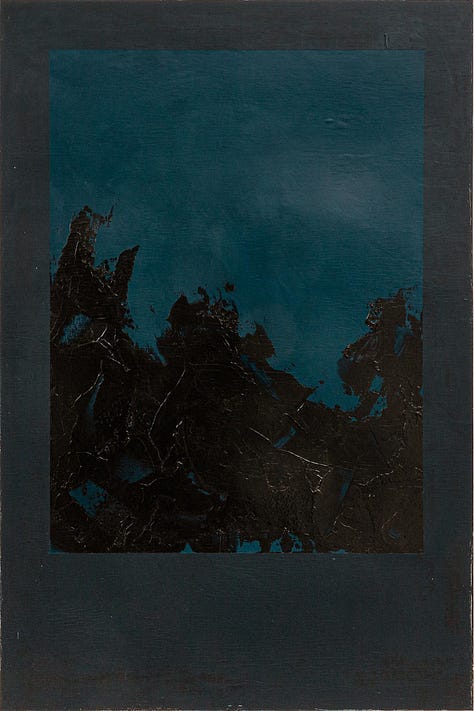
Three archive pieces in blue. More of my work and process on my studio site.
DRAWING MATTER
My resource share of the week. It’s obscure, but those in my opinion are the best.
“The Drawing Matter Collection contains over 20,000 objects—drawings, models, collages, photographs, and publications, with an international scope and dating from the Renaissance onwards. These relate principally to architecture, but there are also significant holdings around theatre, cinema, costume, metalwork, furniture, landscape and urban design.”

Essentially, if you love sketches, drafts, plans and fine pencil drawings, this is your archive. I especially like the cinema and theatre tags with set designs.
LEOPOLD UNWINDS
This story to me is about speed and leverage. A month ago, this 24-year-old was the AI wunderkind dominating financial coverage: Situational Awareness was the best-performing large fund in the world through June.
That fund went from $45B and +439% net to a forced sale of the bulk of its public-equity book to Ken Griffin’s Citadel in one week.
Leverage did him in, not a bad thesis. Leopold’s bets on AI will probably play out in the long run. It was 4x leverage and a short book that couldn’t offset a sector-wide AI selloff, producing a 67% loss in July resulting in his fund getting margin called.
Citadel bought the bulk of the public book, about $16B, at roughly a 10% discount to market value in a single block before Thursday’s open. The fund survived with $10B, kept its Anthropic stake, and closed July still up 80% for the year.
“You gotta guess [Citadel] made billions from this one trade. No doubt.”
Many of the same semiconductor names that caused the margin call rallied the next day. Hard lesson in timing and leverage.
Leopold will be A-OKAY, he’s still a billionaire. He lost a bunch of people a lot of money, but per Josh Brown on The Compound’s “What Are Your Thoughts?”:
“This is not like Madoff stealing from nurses and teachers. They’re billionaires in Silicon Valley. They love this shit. They wear failure as a badge of honor in where they’re coming from. They probably think it’s the most entertaining thing on earth.”
Leopold’s so okay, that a mere days after this near blow up of his fund, he placed a new $400 million bet into an undisclosed private tech company.
HOLLYWOOD’S QUIET EMBRACE OF AI
While Nolan is building a real ship and shooting nearly everything practically, Hollywood’s new reality is that it’s quietly embracing AI. It just won’t talk about it openly.
2026 may be the year the denial becomes untenable. Look at the last eight months, it was only in December that Disney’s $1B OpenAI/Sora deal was announced, followed by Netflix’s now-disclosed $587M price tag for Ben Affleck’s InterPositive.
Then Scorsese joined Black Forest Labs as an adviser and will use the technology on pre-production storyboarding for his next film. Runway landed its first big studio deal, training a custom model on Lionsgate’s own library, and SAG-AFTRA formally conceded synthetic-performer terms, ratified 91% to 9% this June. That’s a lot of traction in a short period.
The newest story, via the LA Times, is a survey of roughly 250 public studio job postings across Disney, Universal, Paramount, Warner Bros, Sony, Netflix, and Amazon MGM, which found about one in eight openings connected to AI.
The irony, the Times built the scraper it used to run that survey with Claude Code.
“There are plenty of studios that are hiring [for AI] but never talk about it in public,”
Yoland Yan, co-founder of ComfyUI, one of the few willing to discuss it openly.
Last month, one of the industry’s largest arbiters of craft spoke transparently:
“Artificial intelligence means it’s much easier for us to make movies… It’s very much like sitting here saying, well, I believe the horse and the buggy is really where it’s at... There’s nothing you can do about it. That’s progress, it’s the future.”
Lucas has always run toward new tools. ILM was built on exactly that instinct, and the resistance now is a pattern-repeat of sound, digital editing, and CGI, not a new phenomenon. The more interesting line comes later in the same conversation: “I always thought art is in the eye of the beholder. You can’t have people deciding what is and isn’t art.” That’s also the founding thesis behind his own museum, which I covered last week.
AI hiring is where the growth is. LA shoot days have collapsed 46% since 2022, something I covered in issue 52 as a runaway-production cost story on how LA lost the plot, not an AI one.
The LA Times put it well:
“It is Hollywood’s new cosmetic surgery... Everyone knows it is happening, but few will admit to it.”
MARIJUANA USE SURPASSES ALCOHOL CONSUMPTION
More Americans use marijuana daily than drink or smoke, for the first time ever recorded.
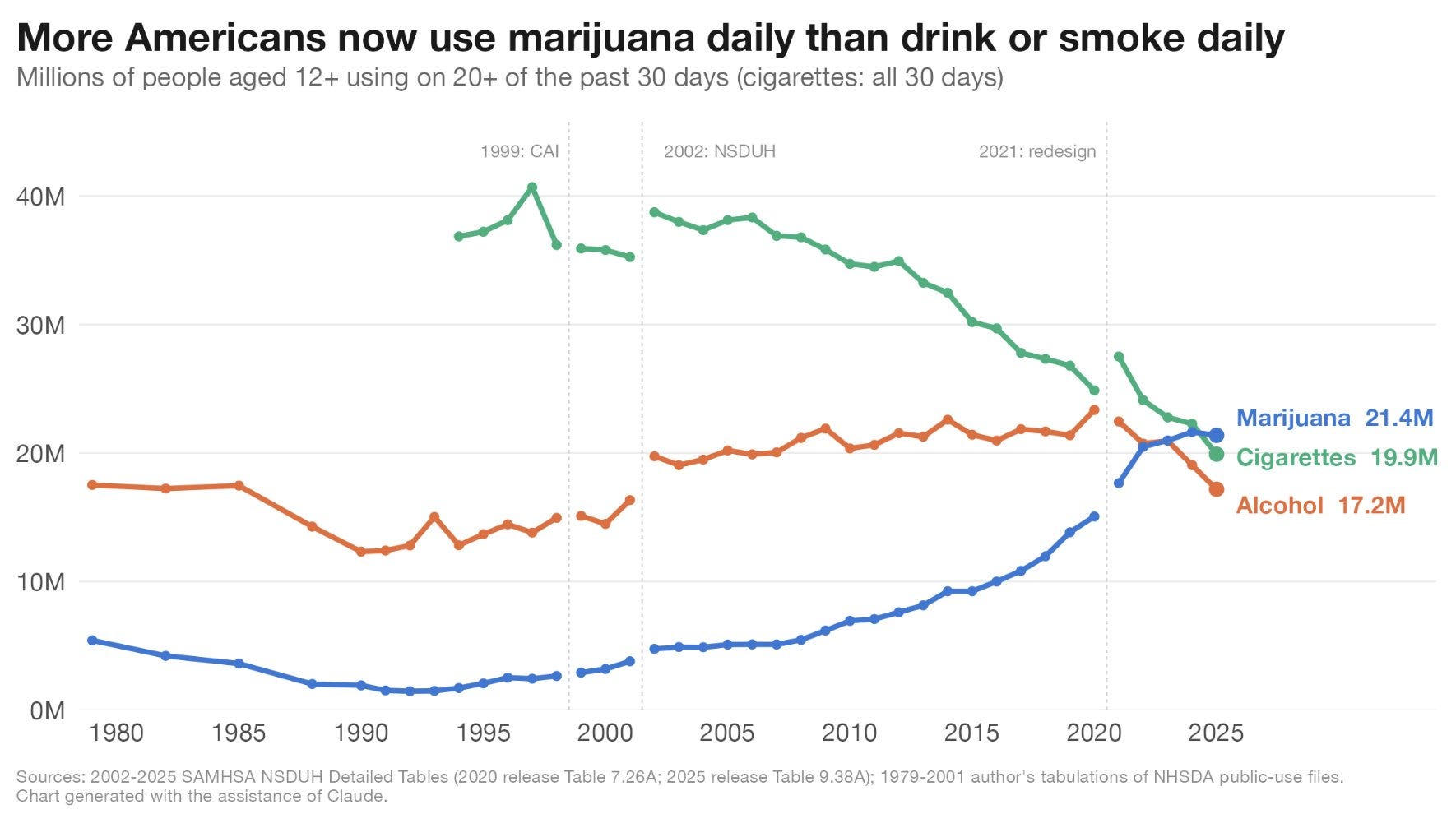
Now the most commonly used daily or near-daily substance by American adults, to the tune of 21.4m active daily users (Roughly 6% of the U.S population).
Unfortunately I think this is compounding our loneliness epidemic. More likely to be used in isolation, and less tied to social behavior. The high potency THC of today can be a full on knock out, nothing like boomer trees.
TOP NEWSLETTERS IN STARTUP BUDGETS
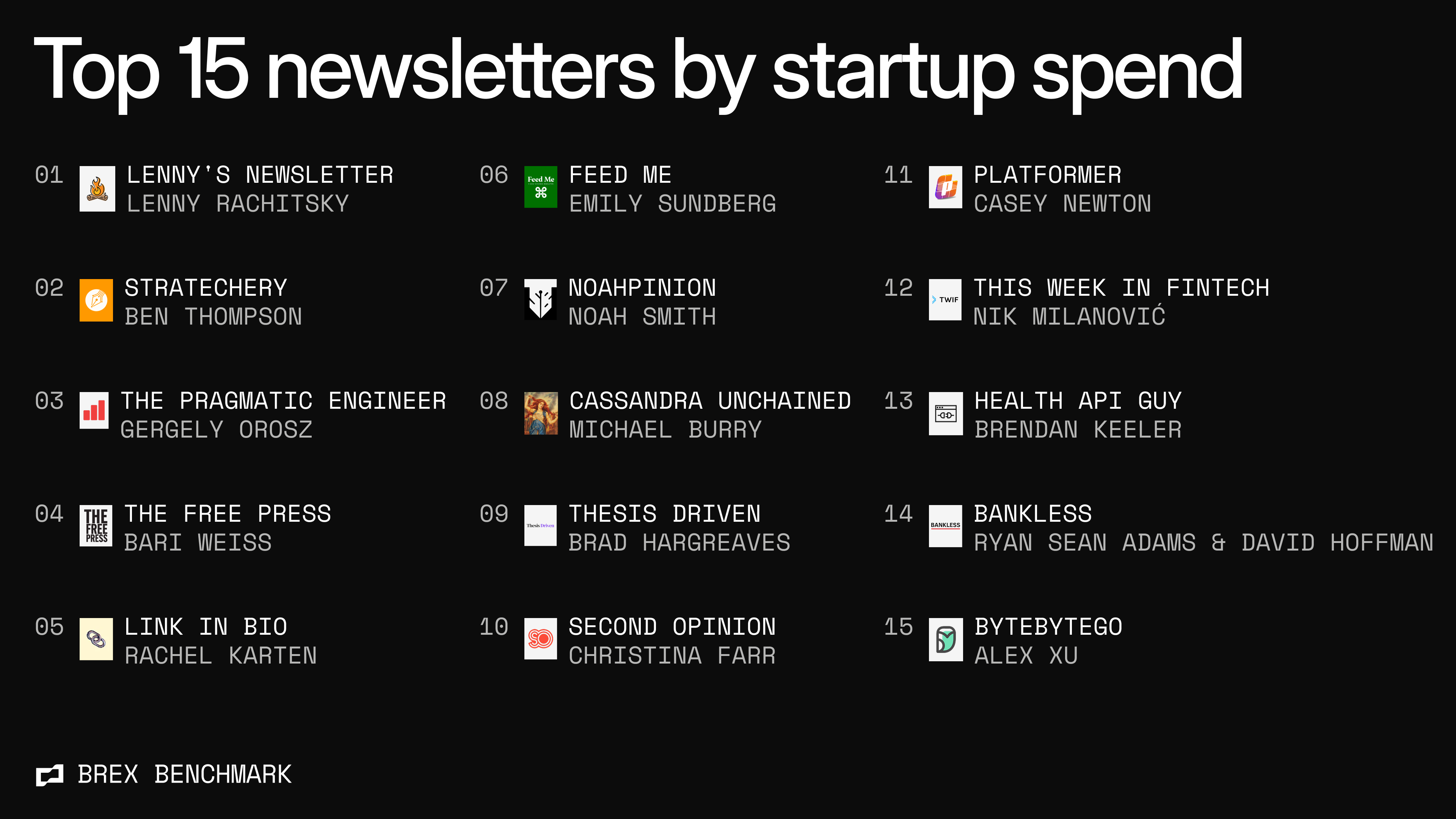
Brex just dropped a list of the top 15 newsletters baked into startup budgets. Once something you unsubscribed too, now considered a business expense.
SATELLITE SPACE RACE
A run of satellite news this quarter is bringing technological advancement and real competition to a sector one company has dominated for a decade.
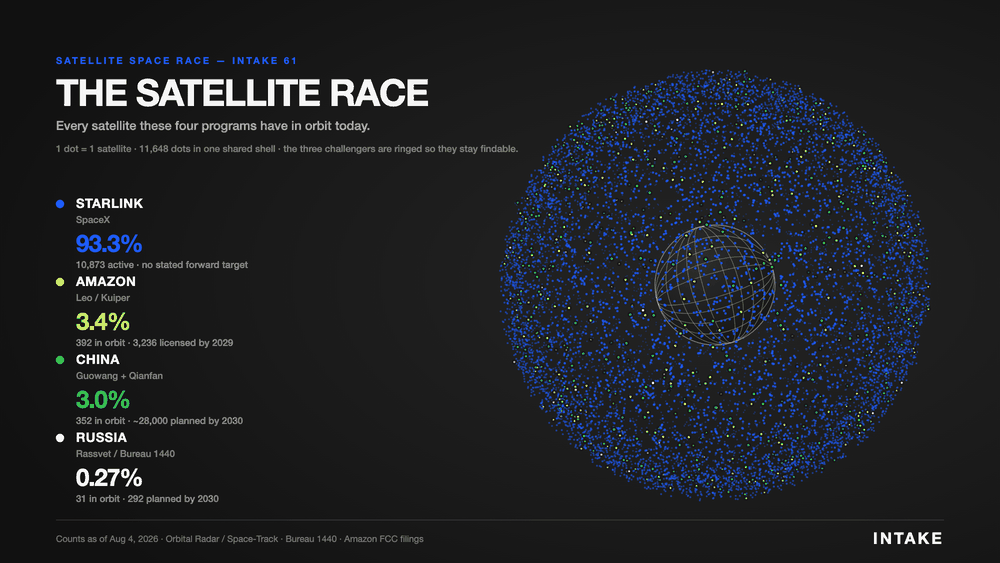
SpaceX still controls roughly 65% of active satellites, but Amazon is finally entering the race for real.
Amazon filed with the FCC in late July for a 5,105-satellite constellation. It’s still nowhere close to Starlink’s 10,000+ active satellites, but combined with its broader Kuiper build-out, Amazon’s fleet could clear 8,300 satellites around 2028.
The state programs are moving too. China’s targeting roughly 28,000 satellites by 2030 off a base of just over 350 in orbit today, the most aggressive non-US buildout globally. (For comparison, Russia’s program has put just 16 satellites up so far this year).
SpaceX’s first earnings report as a public company landed this week, and it’s got some insights on the state of their satellite business. Connectivity, is the only profitable segment: $4.3 billion in revenue, up 66% year over year, and 55% of total company sales.
Consumer revenue has now overtaken enterprise and government, and is growing faster. On the call, Musk said it’s “not out of the question that Starlink will provide the majority of the world’s internet” within a decade.
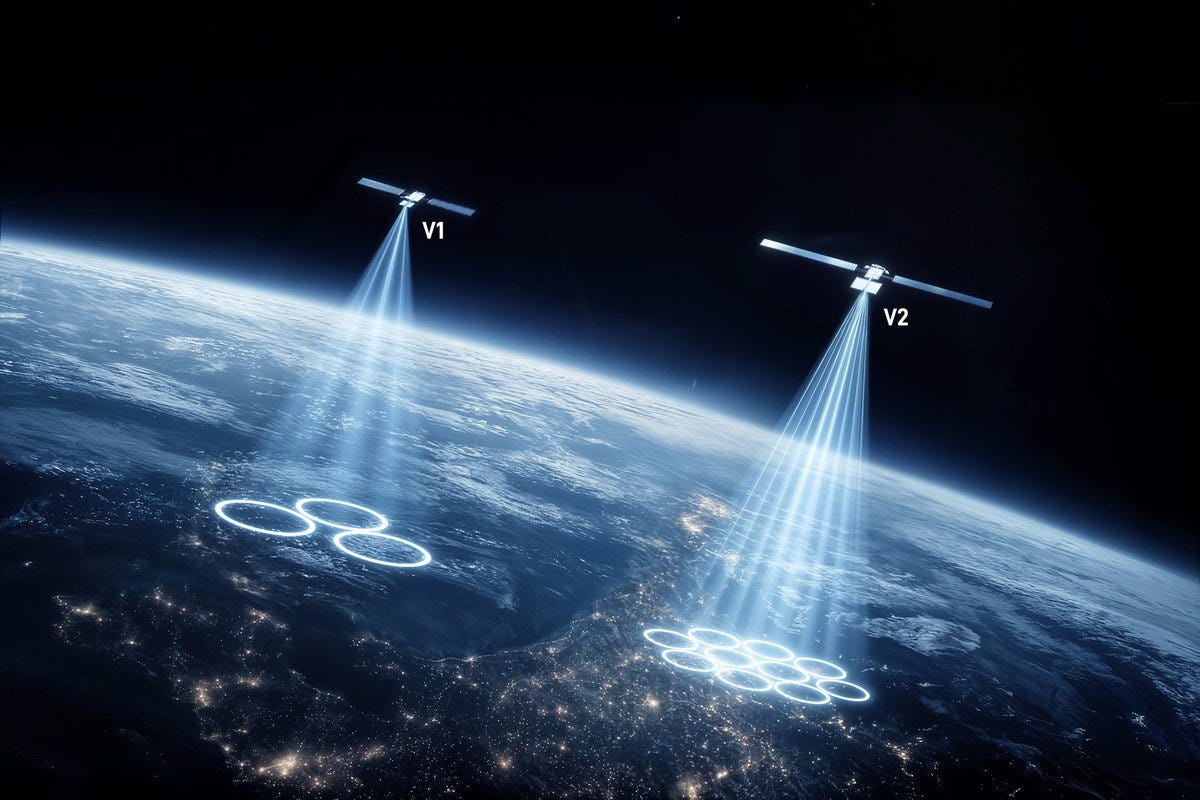
Starlink V2 is also on deck: 100x the data density of V1 and roughly 20x the per-satellite throughput, spread across thousands of spot beams so more users get served at once.
Laser links between satellites, route traffic sideways across the constellation instead of down to a ground station, extending coverage over oceans and the poles where gateways are sparse.
The catch is size: full V2 satellites don’t fit the Falcon 9 and need the Starship to launch, which pins mass rollout to 2027 and broader adoption to 2028. The tech in V2 is what changes satellite internet from rural backup to something that streams, runs apps, and takes calls like a normal connection.
The outstanding problem is debris. ESA’s July report claims active fragments flying around our planet are above 140 million. Scaling from today’s roughly 10,000 combined satellites to a plausible 30,000+ in the next few years creates real risks. Some models put the window to a major collision event at roughly every 3.8 days once that density is reached.
That problem is being wielded as a weapon. Starlink has filed FCC complaints accusing Amazon of violating orbital debris rules by launching into altitudes that are too high, and Amazon is countering that Starlink is using the agency to slow down a competitor.
Ultimately, heated competition is good for consumers.
BOOKS
This week, a return to page-spread for a rare archival piece: Design Quarterly 130 Single edition.
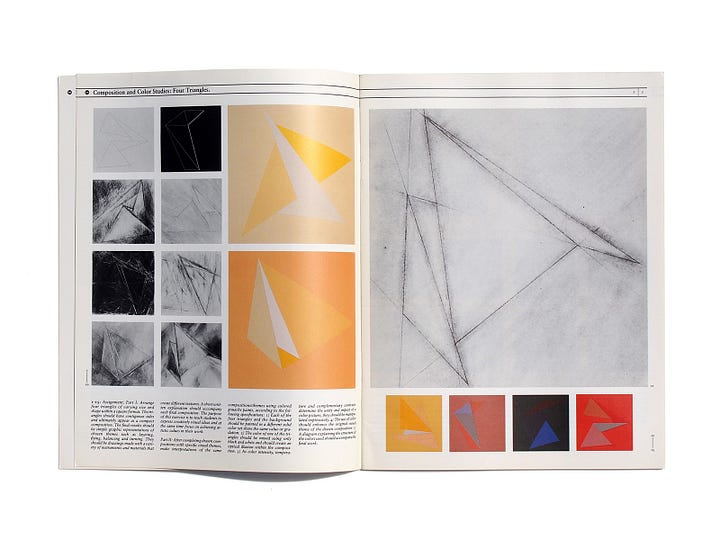
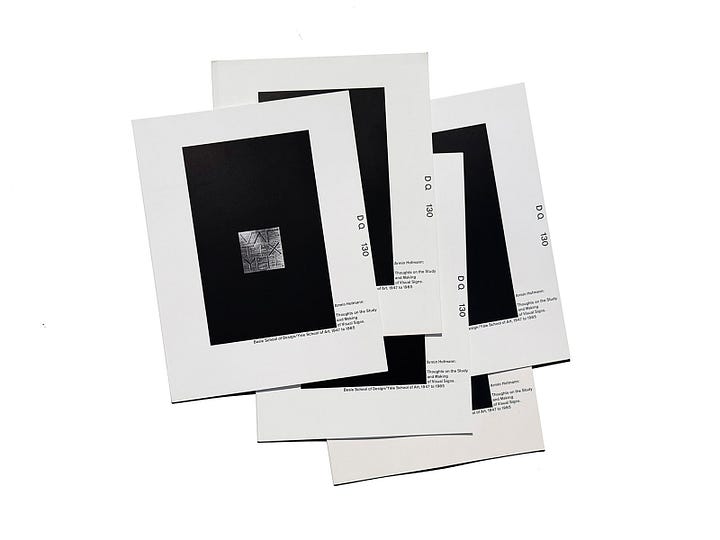
Published by Walker Art Center and MIT. Focused on the iconic Armin Hofmann and the philosophies that shaped the graphic design education at the Basel School.
- Thats it for this week
Comments
Nothing yet. Say the first thing.
Sign in to join the conversation.