
Our 4/20 neighborhood tour consisted of three dispensaries, then a snack. We sat in our smoking spot, enjoyed our new goodies, and talked about life. My friend knows lots of fun facts, so there’s no limit to where our conversations will go. He went on a rant about the history of code and how the year 2000 changed everything for computers. When he came back to himself, he was elated that all this information was stored in his subconscious.
“Thank you for being here. If we weren’t having this conversation, I would not be experiencing this. Thank you for being my friend,” he said.
‘Thank you,” I blurted into a cloud of smoke. “The last few years have been so hard. I appreciate you still being my friend even though I’ve been a mess.”
“All the people in the world could tell you, it’s ok! It’s ok!” he said while waving his hands in the air, “but if you don’t think it’s ok, then it will never be…It’s ok not to be ok.”
I fell silent for a few moments, taking time to process the confusion I felt. I’d seen the phrase plastered over everything you could think of. Stickers, keychains, sweatshirts, bumper stickers. But it felt like I was hearing it for the first time. “No one is ok all the time,” he continued. “We go through so much. It’s impossible. If someone was ok all the time, I’d be concerned.”
Instead of histories and fun facts, my subconscious is apparently full of guilt and a lingering sense of unworthiness. I was subconsciously expecting him to say: ‘It’s ok, you’ve made mistakes, but you’re not terrible and I still want to be your friend.’
But why? Right after he just thanked me for existing in all my ways? If I had only come around when I was “ok,” we wouldn’t have this friendship, our smoking spot, or our annual 4/20 tour.
After playing with his new puppy, I went home to nurse my back pain. The whole week, I’d been waking up in the middle of the night with my body calling me to align my spine and activate my core — doing yoga in my sleep. I’ve experimented with my sacral chakra and heart chakra a lot over the past few years, but over the past month, my solar plexus has been begging for attention.
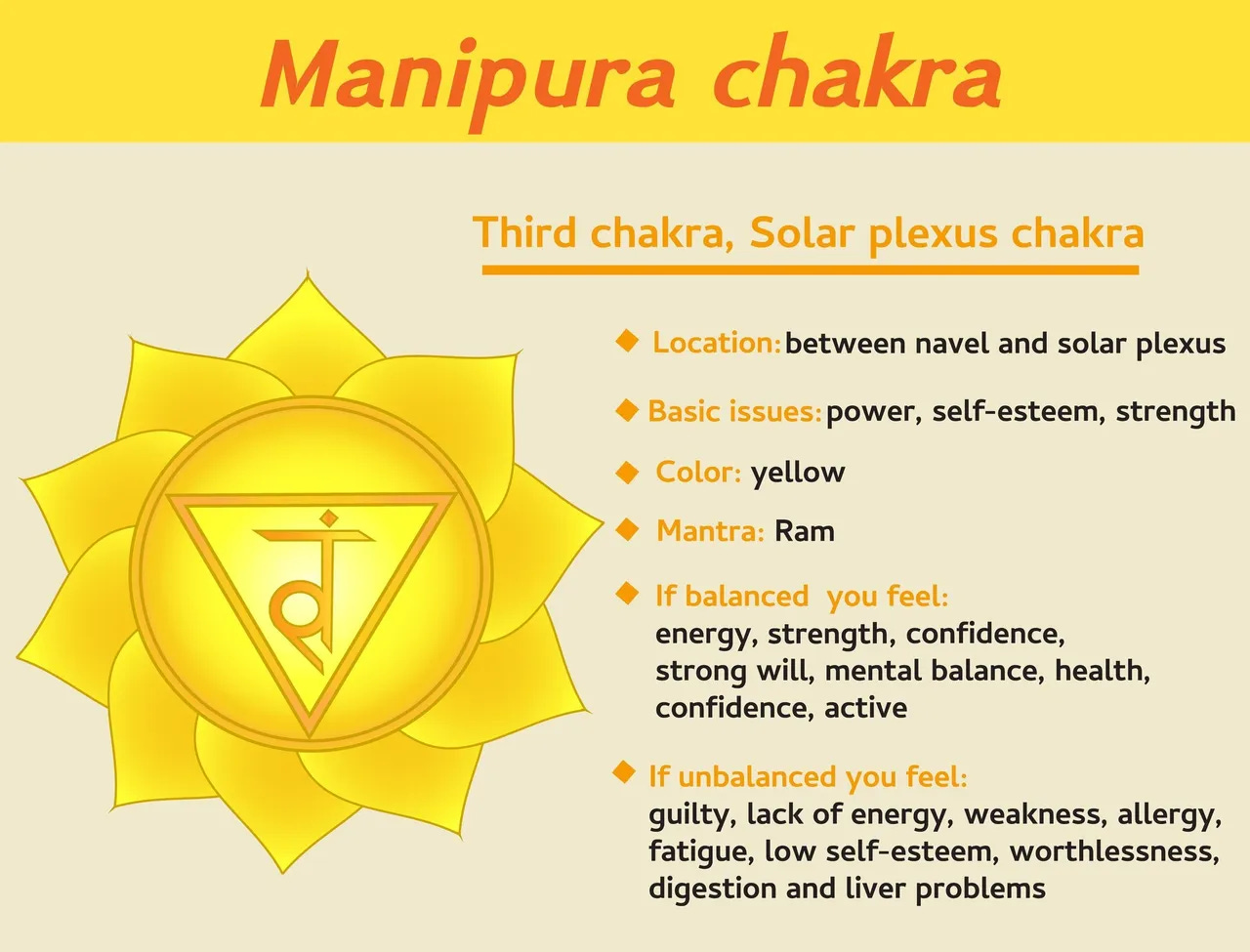
The solar plexus is the gut. Not the deep underbelly, but the gut. The seat of our intuition, digestion, and self-esteem. It is the energetic home of our personal power which keeps us feeling confident and in control of our lives.
In my body specifically, I have an intense posterior tilt (belly poking forward, glutes poking back). It completely destabilizes my spine, causes lower back pain, and gets locked up during times of stress and instability. This is due to the psoas muscles, which lie on both sides of the spine. The psoas is the only muscle that connects the torso to the legs. As one of the deepest core muscles, it’s responsible for keeping us upright. It’s also what holds our trauma responses. If the psoas is chronically contracted, the rest of the body has to overcompensate, which quite literally affects your structural alignment and therefore the internal functions of your organs. It can cause everything from digestive issues to a general sense of unease.
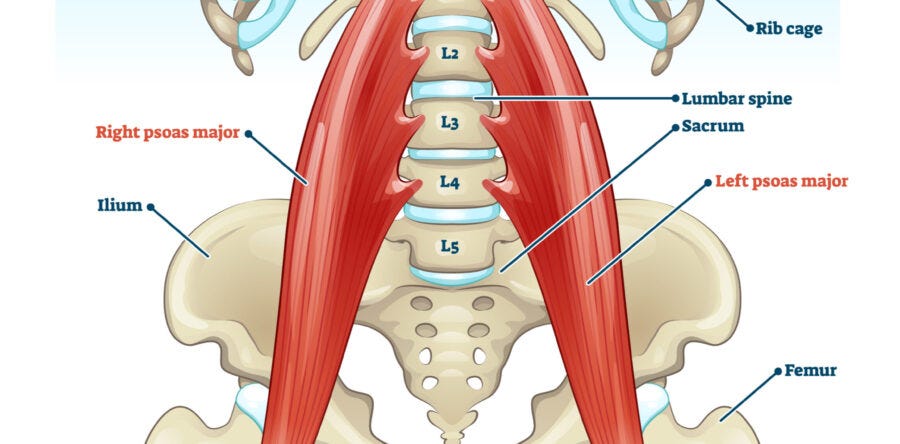
Hip exercises are a common way to target trauma release, as it’s become popular to say ‘trauma is stored in the hips,’ but in my experience, that’s just the surface. The hips are tight and/or sore because the psoas (a major hip flexor) is activated. The psoas not only contracts during perceived threats, but it holds onto those experiences like a toddler with a clenched fist. It’s quick to react and slow to release.
Stretching the psoas can bring relief, but lifting the gut and strengthening the mid-back gives the body space for repair. This is where the solar plexus lives. You’ll also notice that those adjustments invite (what we’ve been taught as) a confident posture. For example, rolling back the shoulders and lifting the head rather than crouching forward.
Having been raised in a Christian cult, I grew up being told there is no reason to have personal power. I’m supposed to be powerless and constantly repenting for any part of me that desires self-control. God, and a select few of his chosen pastors, and their families too, and anyone that they deem as spiritually correct, are the ones who hold access to power and assurity. This kind of religion pairs well with capitalism, which also seeks to sever us from the relationships we have with our bodies by overworking and chasing moving goal posts of success. The racial and generational trauma is the cherry on top. With caregivers and elders, mostly as coping mechanisms, instilling the belief that none of my needs matter. I should instead betray my body, which is always subject to scrutiny, out of duty, obedience, and a gratitude that life could’ve been much worse. So, of course, it took me a lot of time to warm up to chakras and incorporate energetic work into my practice. I used to feel like I was doing something bad when I first started practicing, in addition to being corny enough to go full woo-woo.
But bodies are simple and straightforward. If you’re listening, they’ll tell you exactly what you need. When I was transitioning from the South back to California, I was having a lot of issues with my sacral chakra, represented by the color orange and the element of water. Suddenly, I started getting massages, going to the Korean spa to soak, and sunbathing. These weren’t things I grew up doing, but I knew my body needed it. Then I set a commitment to start working with my heart space, represented by the color green and the element of air. I found myself unconsciously drawn to pranayama, morning prayer, and lots of leafy greens.
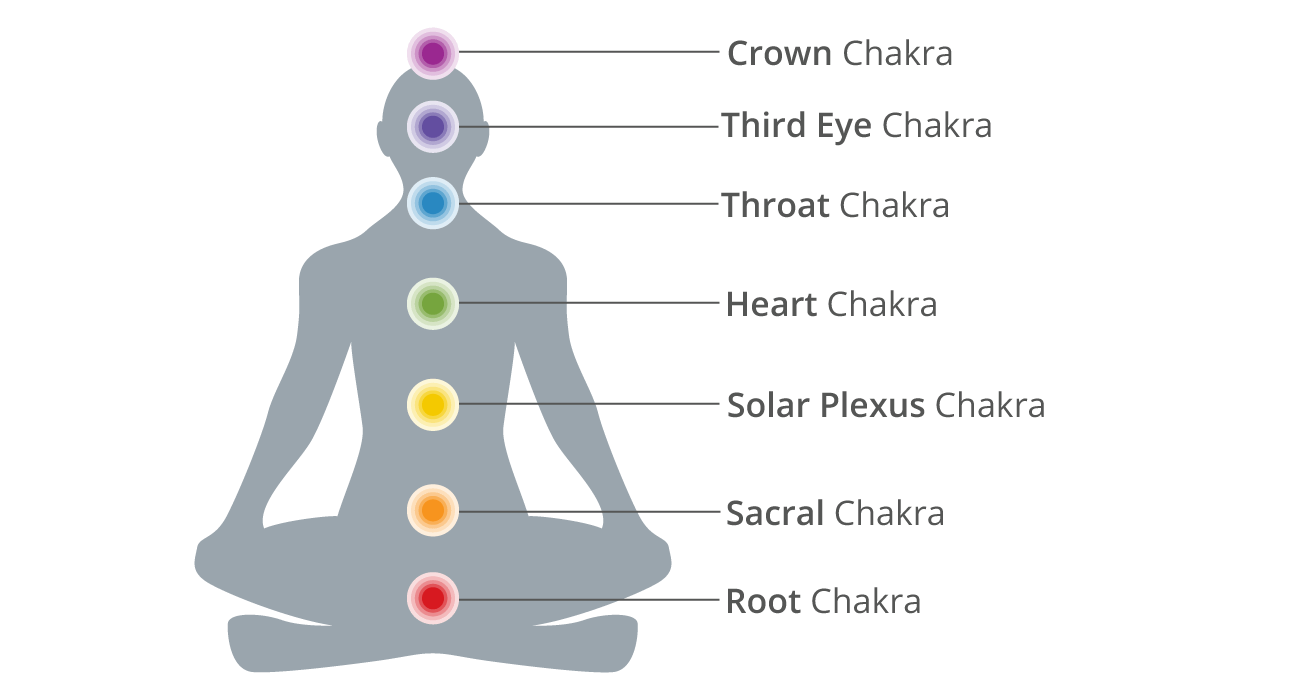
With the solar plexus situated in the gut, I’m being called to be more conscious about everything that I consume. Every choice I make about the food I eat determines what kind of energy my body will have, and how hard I will have to work to sustain its healthy flow. I’ve also been reading a lot, spending time alone, and journaling.
Bodies are also responsive to each other. If you’re open to connection and allow yourself to be witnessed, other bodies will reflect, absorb, and share your energy. My friend telling me to be ok with myself however I show up was an unexpected reflection of the unseen weight I’ve been carrying around—something my body is working hard to metabolize even when I’m unconscious.
The second part of his statement lingers. “No one is ok all the time. We go through so much. It’s impossible. If someone was ok all the time, I’d be concerned.”
Will I, or anyone, ever be completely “ok?” Will the tough times and transitions ever be completely over? Will the work of strengthening the gut or balancing a chronically stressed solar plexus ever be fully repaired?
We all know the answers, even though we may get into the habit of living as though fixing ourselves is the end goal.
The best way forward, as far as I can see, is to work a little each day on quieting the forces that convince us to give our power away, and to wean off of the need for validation. And of course, friendship. Fellowship with the life around you goes a long way.
If you struggle with any of the things I’ve mentioned so far, here are some resources to add to your toolbox:
You can set reminders and receive customized “I Am” affirmations throughout the day.
Remember a time when you felt diminished, incapable, or unworthy. If you can’t access anything with those words, think of a time when your voice got quiet. Or when you asked other people for their opinion instead of trusting your own decisions. Locate the feelings in your body. Then write out all of the details that come up.
Take 3 minutes to breathe and adjust your body (your physiology) to reflect a posture of confidence.
Think of a time when you struggled to enforce boundaries. Or when you people-pleased instead of stating your needs. Or when you struggled to allow others to help you. Locate the feelings in your body. Write down everything that comes up.
Take 3 minutes to breathe and adjust your body (your physiology) to reflect a posture of confidence.
Think of the last time you felt angry. Through the messenger of anger, what was grabbing your attention and telling you something had to change? Did you change it? Or did you dissociate from the anger? Locate the feelings in your body. Write out all of the details that come up.
Take 3 minutes to breathe and adjust your body (your physiology) to reflect a posture of confidence.
Use the notes you’ve created to make a list of affirmations.
Make a list of your goals and purposes for the week.
At the end of the week, examine how many of them got done and how many you bypassed.
What has stopped you? What distracted you?
Did you list too many? Are they really your priorities?
How would you rate the ability of your will to carry through?
Now make a list of goals and purposes you want to accomplish over the next five years.
How many of your daily actions are relevant to the fulfillment of these purposes?
How do you get waylaid off your path?
What parts are hardest to fulfill?
What is blocking your will?
No posts
Comments
Nothing yet. Say the first thing.
Sign in to join the conversation.