
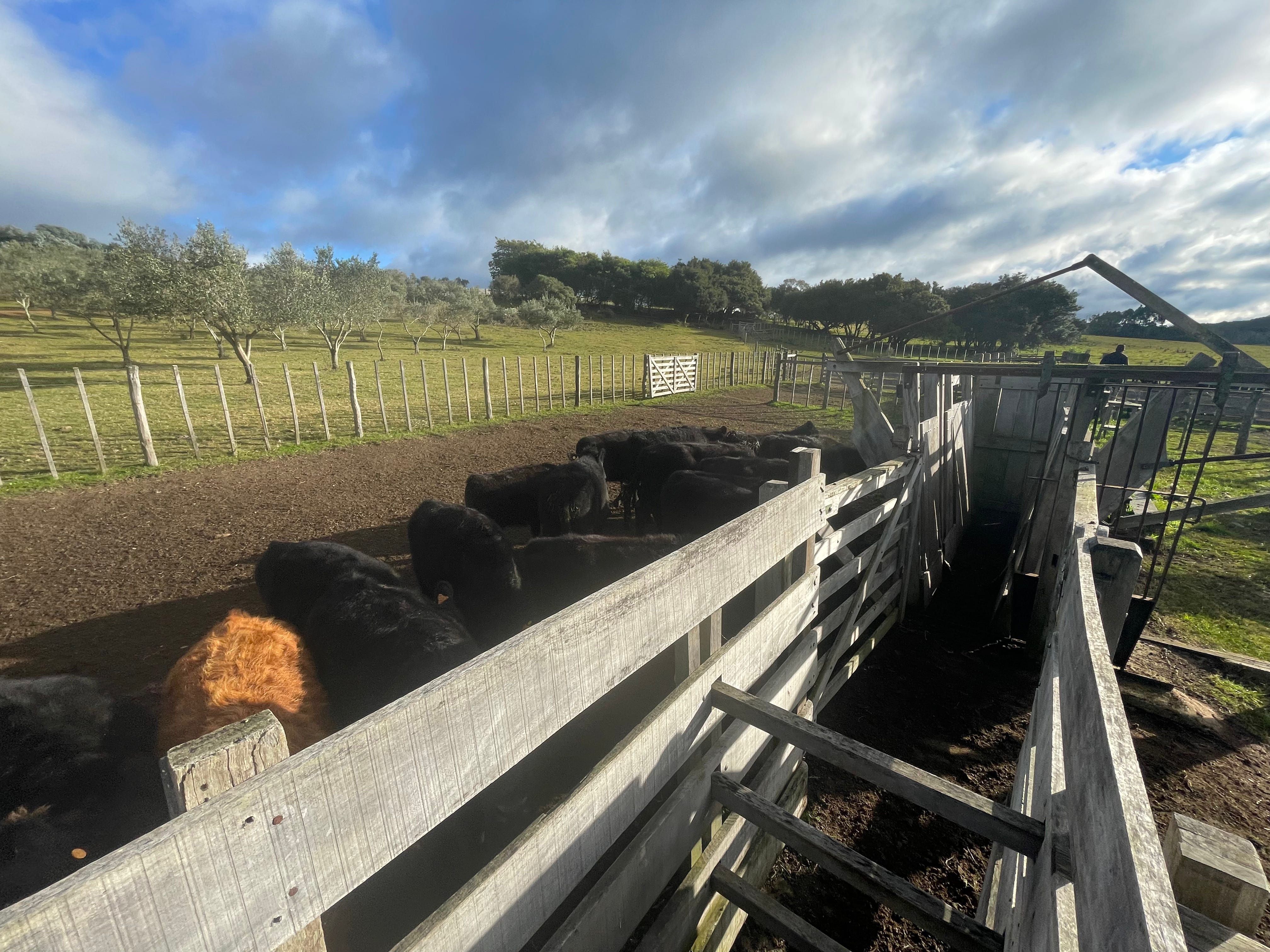
The week kicked off with weighing, separating, and ear tagging cattle. More specifically, Terneros (calves), Novillos (young steers), and Vacquillonas (heifers).
The terminology can get a bit confusing, especially considering all the distinction between masculine and feminine in Spanish, as well as the fact that use some words that don’t even have an equivalent in English. Another thing that requires some extra self-study to fully understand.
Our heifers are now around two years old and are being prepped for the upcoming reproductive season starting in September. A couple of years ago, I was able to take part in that process, including some routine veterinary procedures. I’m looking forward to getting more involved again this year. More on that soon!
Now for some science. Tempering is essentially the process of melting chocolate until only one kind of fat crystal (aka Polymorph) remains.
Polymorphs are crystal structures that, while chemically identical, differ depending on the arrangement of molecules. Think diamonds and graphite. Both are made entirely of carbon, yet one is used in pencils while the other adorns fine jewelry.
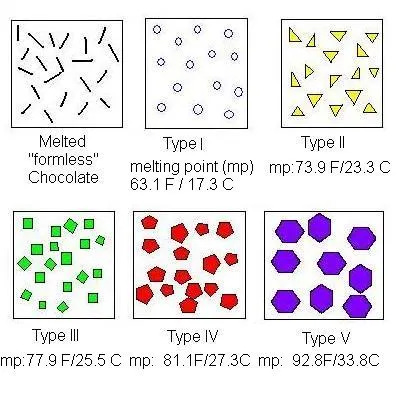
There are 6 types of polymorphs in chocolate.
γ (gamma) = Form I
α (alpha) = Form II
β’’ (beta 2) = Form III
β’ (beta prime) = Form IV
β (beta) = Form V
super-β (super-beta) = Form VI
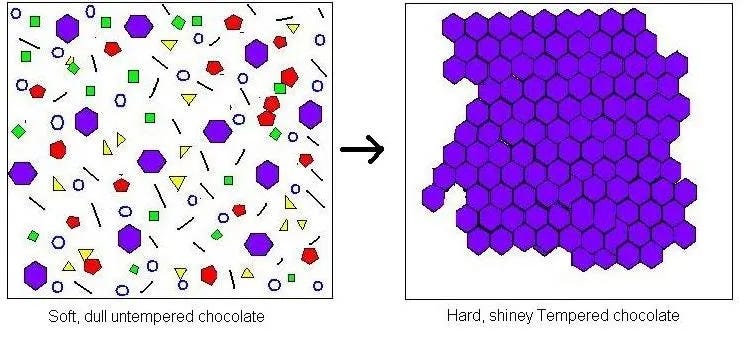
These crystal structures are the difference between a dull, waxy textured bon bon that melts quickly in your hand and a glossy truffle that stays firm at room temperature and snaps satisfyingly when you bite into it.
Untempered chocolate contains a mix of different crystals I–V. The goal of tempering is to convert them into a uniform structure of only Form V (beta) crystals. Among the 6 crystals, Form V is very stable, and is the only one to produce all of the desirable qualities listed in our truffle above.
Form VI (super-beta) is actually more stable, but doesn’t occur during the tempering process. If you’ve ever had an old piece of chocolate that’s kind of musty and dull, maybe last year’s halloween candy, that’s Form VI.
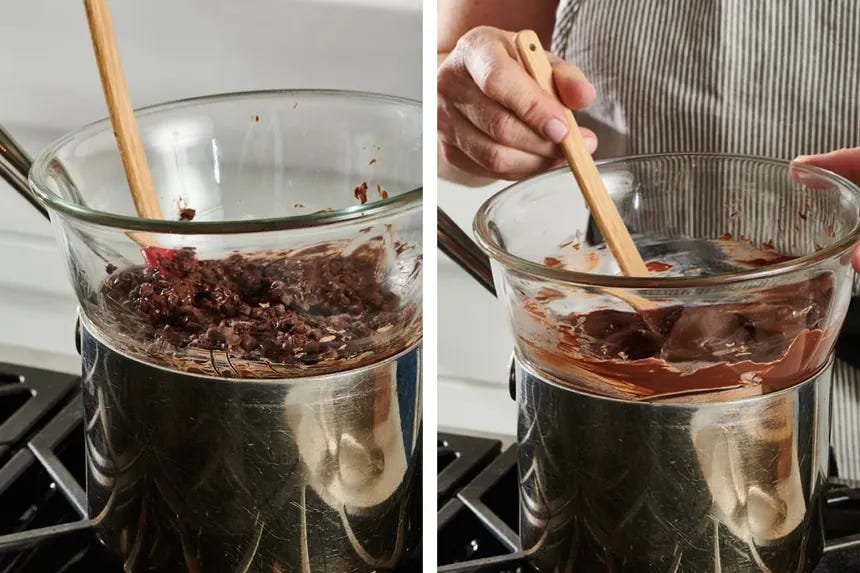
So how do we achieve this uniformity? By using a double boiler (a bowl heated over a pot of simmering water). This gently melts the chocolate without burning it. Continuous stirring helps maintain even heat and allows us to closely monitor the temperature throughout as it rises.
Here is where the precision kicks in. Form I crystals melt at around 17.3°C (63.1°F), while Form V remains stable until about 33.8°C (92.8°F), with all the other forms melting somewhere in between. We can’t let the chocolate exceed 33.8°C, or the Form V (beta) crystals will melt as well, leaving us with no crystals at all. If that happens, we would either need to let it cool and solidify again before starting over, or use a process called Seeding.
Seeding works by bringing the chocolate back down below the melting point of Form V, then adding finely chopped, already tempered chocolate. The stable Form V crystals in the added chocolate spread through the mixture, encouraging the rest to crystallize correctly and correcting any overheating issues.
It works, but will change the amount of chocolate you end up with as well as requiring you to have pre-tempered chocolate. Luckily, when my group overheated our chocolate the first couple times, we had some on hand… Better to be careful and do it right the first time!
With our chocolate perfectly heated, we quickly pour it all onto a marble slab. Using the spatula and scraper we smooth the mixture while cooling it quickly. Doing this encourages more stable Form V crystals to form. After it drops to 28°C, the chocolate is then brought slightly back up in temperature (32°C).
Depending on the end product, molds must be cleaned thoroughly with alcohol before filling with chocolate. Flip the mold over so that any excess comes pouring back out onto the marble slab, to be reused later. After that, the process is simple: solidify in the freezer, add filling of choice, seal with more chocolate, solidify again, plate, and bon appétit!
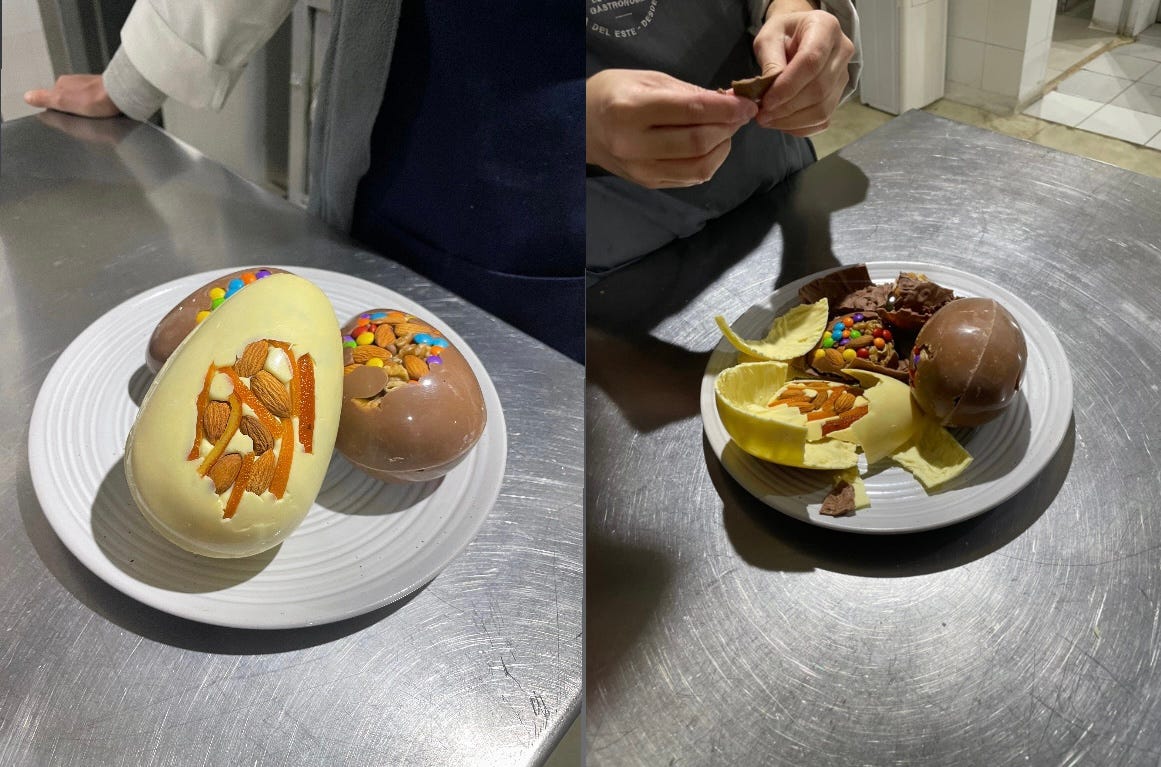
Many variations of this exist. Different chocolates, like milk or white, require lower melting temperatures because they have more fat crystals. And the options for shapes and fillings are endless. This week we practiced chocolate eggs! (Little late for easter…)
Reading The Invisible Man by H.G. Wells.

Continuing Salt, Fat, Acid, Heat by Samin Nosrat.
Finished The Autobiography of Benjamin Franklin.

Comments
Nothing yet. Say the first thing.
Sign in to join the conversation.