
It’s been 2 months since I left Japan and came back to Uruguay. After readjusting away from city life and recovering from the jetlag, it was time to get back at it.
So what have I been doing?
For some time now I’ve been interested in learning to ride and handle horses, this has only heightened since moving onto a ranch. About a month ago I began riding lessons with our casero, 2-3 times weekly. An accomplished competitor in horse events across the country, he’s been training horses for decades and riding them for even longer, I’m grateful to have him as a teacher.
In the past, I’d casually and occasionally ridden horses here on the ranch. They both had difficult personalities, turned lazy and stubborn without consistent riding. With them gone I’ve started riding on a much more seasoned horse, Fandango, belonging to the casero.
After getting comfortable in the saddle, the main challenge I’ve experienced has been establishing dominance with the horse. For example, for the past few weeks Fandango has been kept near our barn, not where he usually lives. Meaning, whenever we go for a ride, he wants to go very quickly towards his old home and he’s incredibly reluctant to go away from it.
Of course, my lack of experience plays a part in this, but I think the main contributor to the challenge between the horse and me is my own uncertainty and demeanor. Horses are said to sense your emotions through heart rate and the hormones you produce. For me, it’s not so much nervousness at this point, but rather that my presence in the saddle isn’t entirely confident or assertive yet.
A week or so ago we moved the cattle herd to the back 40 of the property to start their rotation again, passing by Fandango’s old home as we did. But, for the first time he wasn’t veering of our intended course when we neared the casero’s house. We were both too focused on the job at hand. After a few sessions with mixed progress, it was interesting to see that with a clear objective at hand that he and I were much more on the same page.
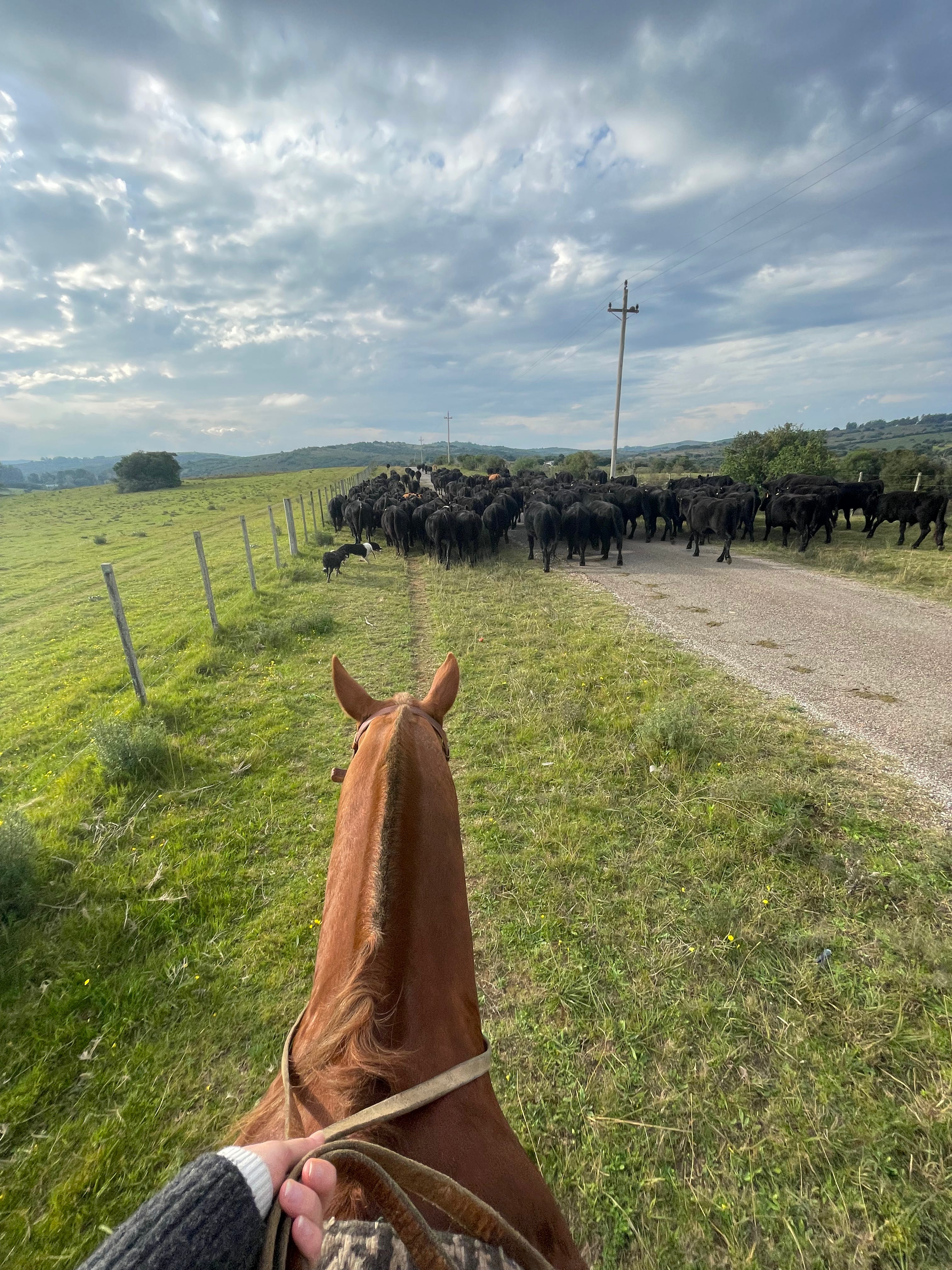
Eventually, we tried galloping. The first couple times, Fandango was off to the races and I was simply along for the ride. I did my best to rein him in when it became more than I was comfortable with, while white knuckling the pommel of the saddle… Since then, our casero set me to work practicing a controlled gallop, keeping a steady pace and being the one to set it.
Horse riding has been a perfect example that nothing in life is linear, especially progress. One class, I’ll finally complete a maneuver that we’ve been practicing for weeks, say opening and closing gates while on horseback, and the next day I’ll struggle with Fandango on simple instructions.
The funny things is that the second the casero switches places to demonstrate, the horse is completely locked onto the objective. He’s like an entirely different horse! Obviously, as his trainer and owner, they have a special bond and understanding. Fandango knows he means business. That attitude/demeanor is something I’ll have to grow with time as well as my own comfort and competency to back it up.
For the month of June I’ve been taking a 4 week chocolatiering course in Punta del Este.
I’ve always loved cooking and baking, but only ever had a little technical instruction. I picked this course, not only for it’s own learning potential, but also to test the water for something more long term. The course is held at the ‘Instituto Gastronómico de Uruguay’ (The Culinary Institute of Uruguay), which offers in-depth programs in culinary arts, pastry arts, and patisserie.
Eventually, I’d love to go to Italy for the ‘Chef Cycle’, or pursue something similar elsewhere in Europe, or even return to Japan to complete a long-term culinary program. For now, with the world in tumult, I’m focusing on expanding my horizons and building something real here in Uruguay.
With that being said… I’m still working on Spanish fluency. In all my classes so far, that has been the biggest challenge. Sitting in theoretical lessons, knowing the course would feel easy and be much more enjoyable in an English-speaking context, can be frustrating. At the same time, I know it being “easy” is NOT the point.
This week we made Dulce de Leche and Cognac Bonbons, Mochaccino Bonbons, and ‘Rocas’. (The second of which is not pictured below)
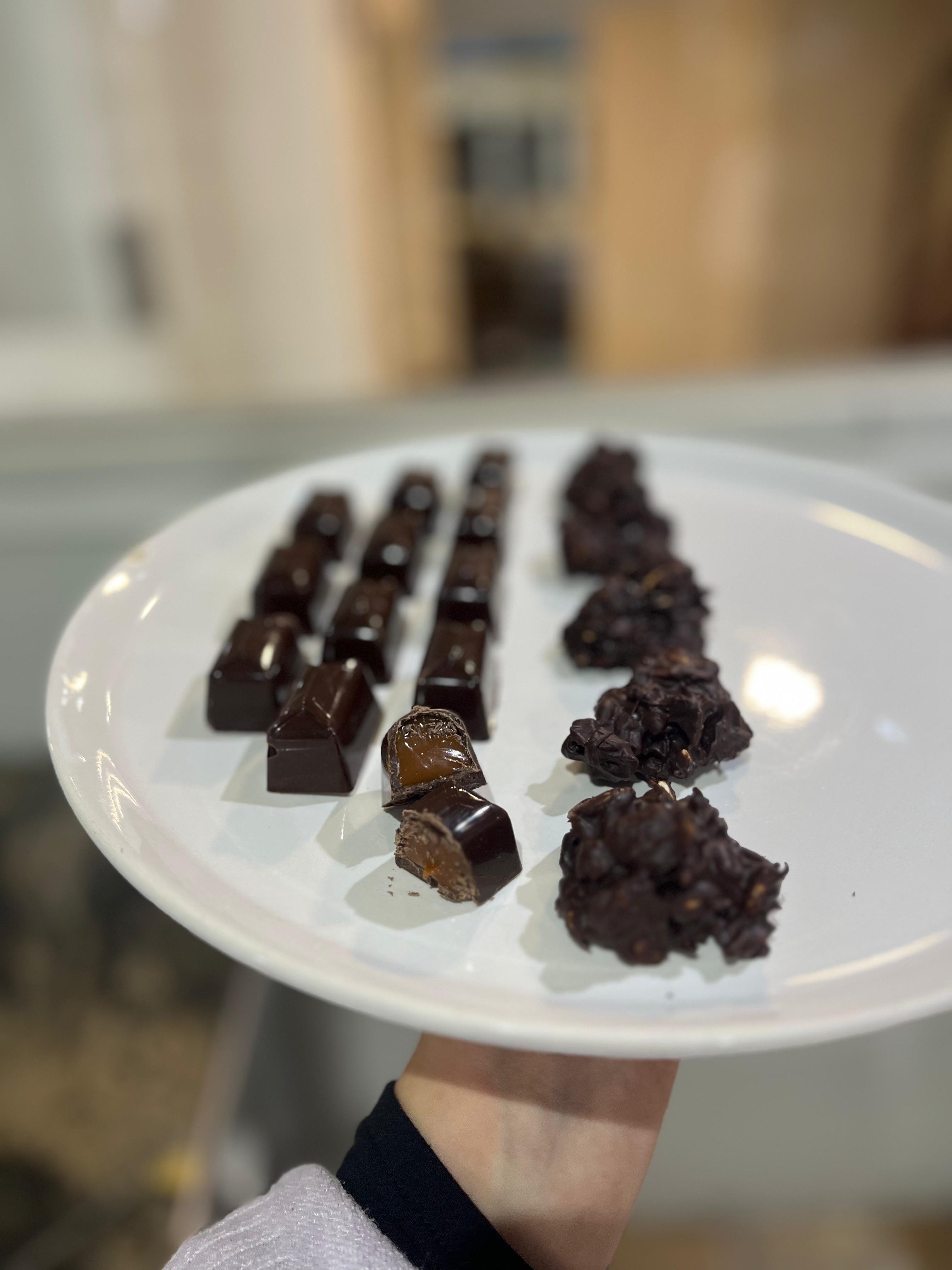
Quite frankly, there’s a lot of science involved. Which is why I’m supplementing all my culinary training this year with additional online science courses and reading materials. Much more on this later!
Part of my reasoning for taking the chocolatiering course, as well as other short-term culinary training in Spanish, was to prepare for a three-month bartending program I’ll be attending under the Enjoy SA Hospitality Group later this year. Hopefully by the time that starts I’ll be able to absorb more and easier!
In conjunction with the incoming bartending program I’ve been taking an online viticulture (wine) course on my time off from work and other studies. This also has a lot of science involved, which fits in with my overall culinary science picture this year.
Funnily enough, there happens to be an untended red grapevine here on the ranch. Over the next couple of weeks I’ve made it my mission to apply what I’ve been learning firsthand by attempting some winter pruning in preparation for the next season. (As Uruguay is in the Southern Hemisphere it’s currently fall/winter.) A happy coincidence will hopefully lead to something productive I can contribute to here on the ranch!
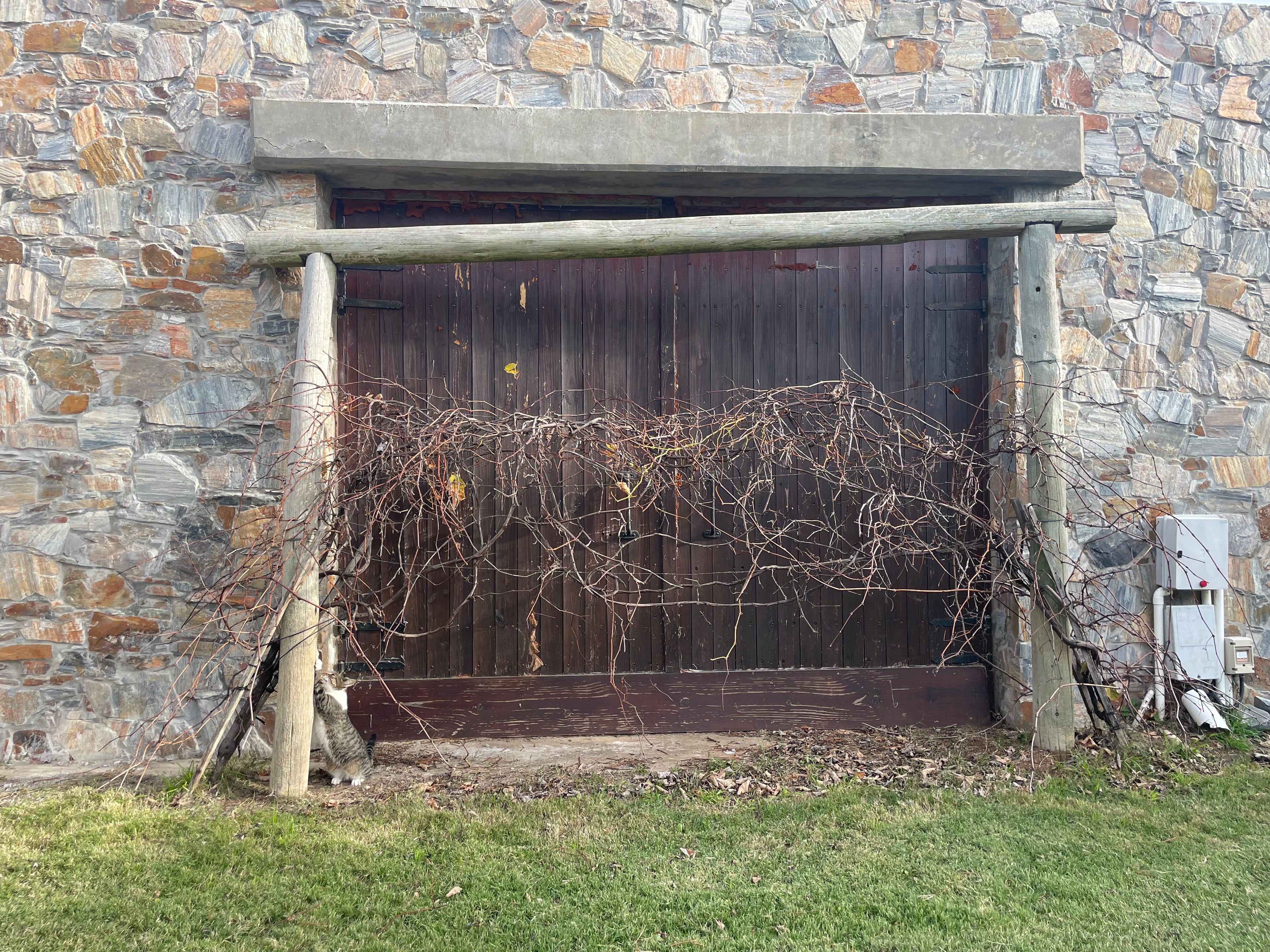
(The current state of things, feat. Bunny the farm cat)
Re-reading Salt, Fat, Acid, Heat by Samin Nosrat
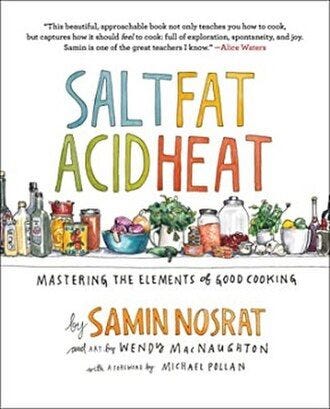
This book was such a great toe-in to the technical side of cooking the first time I read it. Now that I’m approaching things more seriously, it’s a must re-read.

Regrettably, I haven’t done nearly so much reading this year. That’s half by choice, after I realized I wasn’t being nearly as thoughtful and introspective as was possible with the choices of books and the rate at which I was devouring them. So unfortunately, my 136 book record from last year will probably remain unbroken…
On the bright side, being selective has already proven beneficial, and The Autobiography of Benjamin Franklin is a great example. Renowned as a founding father and for inventing the lightning rod, he also pioneered major advancements in American printing (copperplate presses and printing type among the most notable) and created the first chain of newspapers in the colonies. So far, I’m most inspired by his famous 13 Virtues and the method he used for “perfecting his character.”
More on that soon.
Comments
Nothing yet. Say the first thing.
Sign in to join the conversation.