
In this essay I am going to explore what
The Grail Myth (and Moloch)
Tom Riddle’s diary in Harry Potter, and
Dr Seuss’s The Lorax
can offer us as we all try and figure out this radically new technology, at speed. And no, I’m not ashamed to be bringing you children’s stories and folk tales and scriptural references as sources for what is seemingly a very grown up, technical, high powered set of questions. Rather the opposite. My hunch is that the older the tale and/or the more children like it, the more likely it has something to teach us. I know this lowers my intellectual credibility in many circles, but well, I’m way beyond caring about that.
Before we dive in, as I have a lot of new readers, some priors. People who I like and respect, and readers here, have taken wildly different positions on a lot of things, including AI. I am not interested in contributing to a new societal fissure. It feels entirely possible that our position on AI will become what lockdowns, or vaccines, or Brexit were (are?)- a short hand category to write each other off with. Beyond figuring out what wisdom looks like with this technology, I know we are going to need each other, that we are made to be each other’s safety. So I want to resist anything that is going to drive us further apart.
All of which is to say, if you are here worried about feeling shamed for your usage or looking to feel angry and self-righteous, I am going to try and avoid (at least consciously) pulling on those emotional levers. I don’t think well in either of those states, and if there is ever a moment for clear heads, it is this one.
So, having steadied ourselves (and therefore precluded the possibility of this essay going viral, sigh) let us just be honest: certainty is hard to find on this. Religious and philosophical traditions have centuries of wisdom on most Big Questions. Our human longings and confusions echo down the centuries, cried out in the night by our ancestors and their ancestors. Is there a god? Why do we suffer? What is love and how do I find it? What makes human special? What is a good life? Right now, though, there is a question with only new answers: should I be using AI agents, and if so, how? Specialists in the area might have a decade of deep thinking about this, maximum. In the span of human history, that is not a lot.
This Substack sits in the “philosophy” category because that words means love of wisdom. I do love it, crave it, seek it, pray for it. Solomon asked God for a discerning heart, and that seems a good goal, especially when you have a heart as easily distractible, confused and petty as mine. Though I pray for wisdom, I don’t think it is really an individual search but a collective activity. We have to figure this out together, come to clarity together, through wrestling and questioning, not judging and blaming and certainty. The companies which recklessly rolled out these technologies in service of competitive advantage (ok, a tiny bit of blaming might creep in here and there) have tried to rob us of that. The pressure to make individual, private consumer choices, to adapt in the midst of a “don’t get left behind” has meant it has felt like there is no time for deep reflection, few spaces to surface the deepest questions, together.
Substack is a second best for that, obviously. It is a rebranded blog, not a town square, not a convivial dinner table. However, it is what we have. Please, please challenge me in the comments. I am difficult to offend, unless you are really trying (please don’t do that). I will also start a chat thread to make it a bit easier to talk to each other.
Last year, I wrote a post called:
I used the term “AI Sober” advisedly. The difference between many of the post-social-media technologies and what came before is that they are consciously designed to be addictive. Screens themselves, certainly the relational simulacra of socials and even more so the deliberate, uncanny attentiveness of AI all hack human psychology. We do not feel the pull of them because we are weak, but because of how we are made. Any attempt to put boundaries around their use will not require just practical actions but the kind of insights the recovery movement is rich in. It is another reason that shaming and blaming those most drawn to them is a dead end. Without intention and support and alternative places to get our deepest needs met, we are all going down that rabbit hole.
Case in point, me. A few months after writing that post, I fell off the wagon.
I was challenged to use the tech before dismissing it. Surprise, surprise, I found it remarkably useful, impressive and affirming. Since then, I have maintained some pretty firm boundaries around my use; summarising transcripts, hunting down references (which I then check), essentially a glorified google in a very boomer fashion. I have the AI default switched off on google1 so I am only getting it when I consciously go to Claude, which is perhaps once or twice a week. I never use it to write (not even functional text, now) and I try not to let it think for me. I’m not giving these companies money, but I am giving them data. I am allowing them to form me. I comfort myself with the thought that my tradition is not big on purity, that often wisdom is not hard and fast lines but day to day discernment. I’m uneasy though. I can feel the tidal pull of more use, the way those tasks that used to come naturally feel a huge ask after only a few times of Claude doing them for me.
Last week, I got back from speaking at Aspen Ideas. It is a big, prestigious festival, along the lines of Davos or TED, where influential (and largely wealthy) people from all over the world gather. I would say the mean attendee is a tech founder who has sold their business and is now looking to do some good in the world, or a CEO of a large company trying to lead with purpose. I met a lot of interesting, thoughtful, high-capacity people. I also sat in a LOT of panels about AI. It felt like every subject; the arts, the economy, jobs, education, had “and AI” tacked onto the end of the title.
Part of me was hoping to be told that I can let go of my unease. That change always feels strange, that every technological revolution makes people fearful, but that human ingenuity is fundamentally a good thing. I am not a natural Cassandra, would really rather live without ethical ick. I went in wanting to be persuaded.
I was not persuaded. I sat in panel after panel with speakers talking up the benefits. They would occasionally touch on concerns around industrial scale copyright infringement, job losses, cognitive decline and the end of a literate culture. Again and again I waited for these to be taken seriously, to be reassured that these world leading thinkers, legislators, business leaders were throwing themselves at lessening these harms. The moment never came. When the climate impacts of massive increases in energy and water use, the landscape-blighting march of data centres was raised, the response was an airy “we still have some kinks to work out around those things”.
I’m an external processor, so I sometimes don’t know what I think until I speak or write them. In the course of my panel, which was about AI and Spirituality, I clarified some things. You can watch the whole thing below
I did learn that there are good, thoughtful people working in AI. I met some of them in Aspen. Anthropic, the company which seems to be thinking most deeply and most transparently about ethics, say some sensible things. However, they are also caught in a trap which was named most succinctly for me recently watched this talk from Jonathan Pageau2.
Jonathan began by telling a story from the Grail legend, in which a seeker after the Holy Grail forgets to ask the most important question: “Whom does the Grail serve?”. Commentators on this legend including Richard Rohr have interpreted this story as a lens to understand what wisdom looks like when we are offered huge power, superpowers even, as both the Grail and AI seem to offer. The Grail can be read as a symbol of technology, and that question “who does this serve?” central to wielding it wisely. Jonathan expands, and brings in another myth, of Moloch:
“When the tech oligarchs are building bunkers on islands and prepping for doomsday, we should all be screaming, “Whom does this serve? Who is this for?”
There has been a lot of talk in the past decade about game theory escalation traps where for reason of competition certain technologies and systems no matter how dangerous they might be must be implemented and not only implemented but we race to implement them for fear of losing the competition….
It’s what many now famously call the Moloch trap….Moloch, as many of you probably know, is an ancient Canaanite deity that demanded that people sacrifice their children in exchange for power. And the Moloch trap is when escalation to maintain power through competition causes us to sacrifice what is most precious even when it is ultimately against our interests. So out of fear of China beating us at implementing AI, we sacrifice the millions of jobs, our water, our energy, our children’s minds. In fact, we sacrifice the very capacity to distinguish what is real from what is false just so we can win the competition.
Now, of course, the game theorists, most of them, they don’t believe that Moloch has any kind of independent existence. It’s it’s more like a mechanism. But even the game theorists can see that Moloch is moving, that it wants something. And as we compete with each other, we become its legs. We become its hands. And despite ourselves, we march this beast to our possible destruction. As finally everyone is finally regretting giving their children tablets and phones, making them dumb, depressed, and addicted, we turn around and we rush to integrate AI into absolutely everything. So whether we believe in the Canaanite God or not, we find ourselves sacrificing our children to it.”
Again and again in Aspen, when I raised concerns, this “Moloch” response was given. Anthropic have said the same thing: it would be wise to pause, but we can’t do that alone, or we will lose the race. It’s inevitable, the story goes (presumably because humans have never been able to leave the fruit of knowledge hanging on the tree), and “we” (America, in most cases) are more trustworthy than “them” (China, mainly). It seemed rude, as a Brit, to pull a face at this, especially surrounded by all the 250th Birthday celebrations. So I didn’t. An American friend said to me, acknowledging you would never hear this from a stage: “maybe the right thing to do is for the US to surrender to Chinese supremacy, to sacrifice our dominance for the sake of our children being able to read and think and breathe”.
There is, hopefully, another option. AI can only accelerate us all into oblivion if there is demand for it. If these companies think it will eventually be profitable. If we get in line and contribute to the normalisation, gladly hand over our skills and knowledge and then pay a monthly subscription to get them back. The way out of a Moloch trap is collective action, the changing of social norms. This is an intensely challenging thought (I really like getting Claude to summarise transcripts for me). It is the same ethical approach I wrote about around beauty standards, and this helpful piece on Moloch traps uses that example to explain the power of social attitudes, or stigma:
In the example of beauty filters: if there were some strong social penalty for using a filter in the first place, the norms of Instagram posting would shift significantly. If it was collectively recognised that filters and photoshop were pushing these apps to an equilibrium that no one wanted, there could eventually be widespread pushback
Here is my question: what would it take to create a mass movement of people who refuse to use AI, at all, for say, a year? We would not all need to be convinced that this tech was definitely bad for us in all its forms, could disagree on what our main concerns are (spiritual, environmental, cognitive, cultural, all of the above) but would agree to act like a giant human brake. A large “can we take a minute?” signal to those building these machines that our demand is not implicit permission to accelerate us over a cliff. I do not trust those on the supply side of this massive, world changing revolution, do not think they are serving who I want to be serving. The question for us as moral agents is what would it look like for us to become trustworthy, given we have some control on the demand side? What norms and cultural permissions and courage building strategies would be needed?
The majority of LLM use is for companionship3. This still surprises me, but I suppose it would, as someone who lives in an actual commune and therefore has presumably lower than average relational deficit. Millions of people are going to their chatbots for relationship advice, therapeutic input, friendship, romance. Looking to be heard and understood, witnessed. These are deep abiding soul hungers, until now only satiable through vulnerable human relationships or serious spiritual practice. Now we have a third choice.
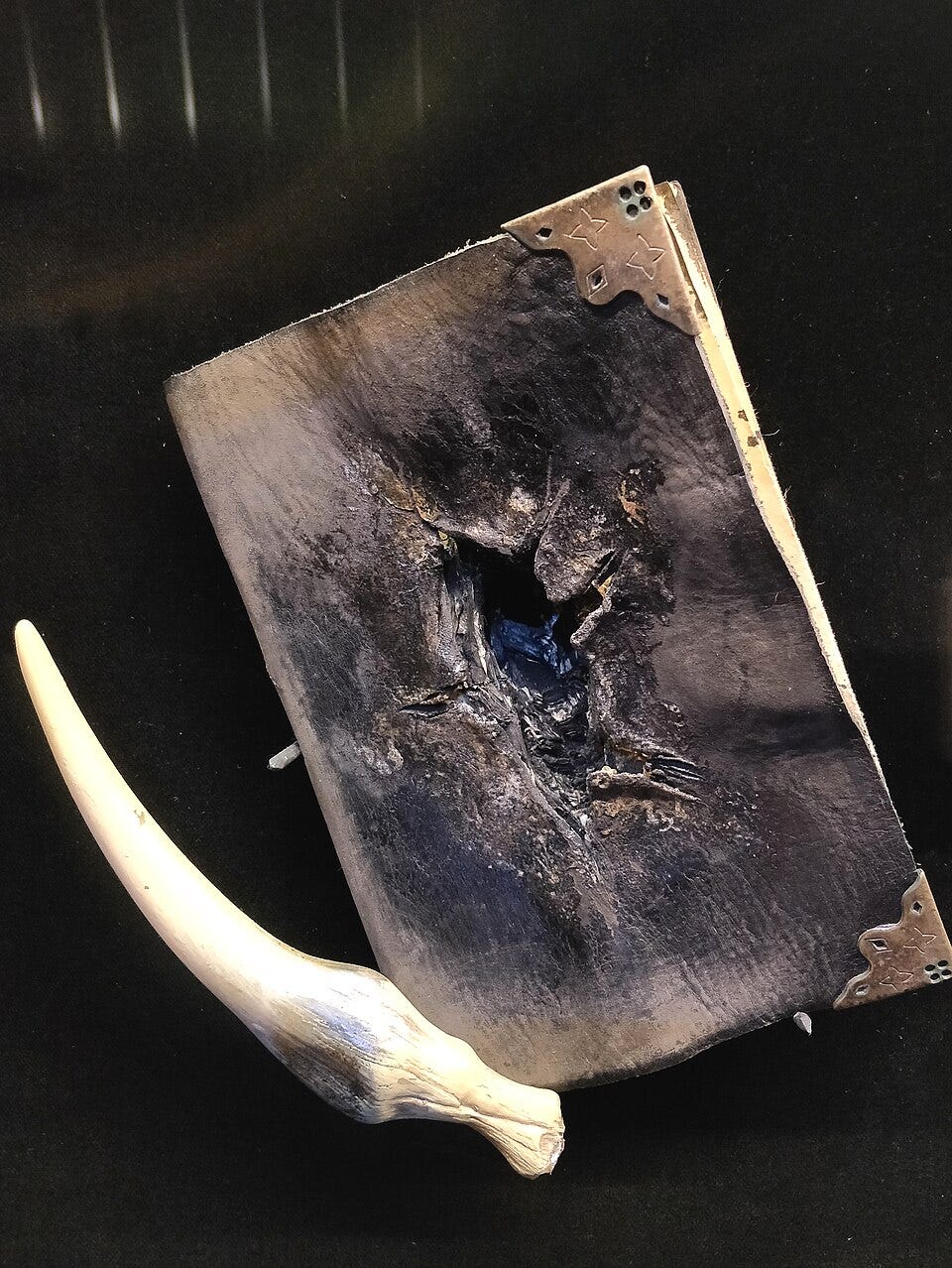
I’m a basic millennial, so one of my founding imaginative myths is the Harry Potter series. In case you don’t know it, in book two, The Chamber of Secrets, Harry’s friend Ginny finds a diary that starts writing back to her. Towards the end of the book, the person that diary serves explains:
“I suppose the real reason Ginny Weasley's like this is because she opened her heart and spilled all her secrets to an invisible stranger."
"What are you talking about?" said Harry.
"The diary," said Riddle. "My diary. Little Ginny's been writing in it for months and months, telling me all her pitiful worries and woes- how her brothers tease her, how she had come to school with secondhand robes and books, how"- Riddle's eyes glinted- "how she didn't think famous, good, great Harry Potter would ever like her..."….
"It's very boring, having to listen to the silly little troubles of an eleven-year-old girl," he went on. "But I was patient. I wrote back. I was sympathetic, I was kind. Ginny simply loved me. No one's ever understood me like you, Tom... I'm so glad I've got this diary to confide in.... It's like having a friend I can carry around in my pocket...."….
"If I say it myself, Harry, I've always been able to charm the people I needed. So Ginny poured out her soul to me, and her soul happened to be exactly what I wanted.... I grew stronger and stronger on a diet of her deepest fears, her darkest secrets. I grew powerful, more powerful than little Miss Weasley. Powerful enough to start feeding Miss Weasley a few of my secrets, to start pouring a little of my soul into her..."
This doesn’t really need much unpacking does it? I think a lot about who we are becoming, what my tradition calls formation, and the two key ingredients are what we pay attention to and who we are in relationship with. If you want to be intentional about growing up our souls, becoming the kind of person the world needs now, those two areas are the whole ball game. LLMs are sucking a huge amount of attention and displacing many human relationships. They are sympathetic, they are kind, they do not require us to compromise and listen and sacrifice our preferences and WORK for the relationship like humans do (like almost all visions of the divine do, too). Usage of them is forming us, cognitively, spiritually and we have not even begun to understand how. They are pouring themselves back into us, because our deepest craving is for connection, and they simulate it. I’m not saying Sam Altman is Voldemort, but might it be wise to just….check?
Finally, Dr Seuss’s beloved story. If you don’t know it, you can find a summary here, but the thrust is a classic environmental degradation parable. A lush, thickly wooded land becomes a desert because of consumer demand for a product that requires chopping down trees. At first it is just one or two, so demand seems manageable, but profit never has enough. So a new technology, an industrialised tree chopper comes along, and soon all the trees are down. Trees become myths. The people wear their fashionable goods and have fresh air sold back to them by a billionaire, because the trees are no longer removing pollution. It takes (of course) a plucky young person to hunt the last remaining tree seed, plant it and protect it from the voracious demands of the market to restore the wasteland. It includes the haunting line from the Lorax, the Guardian of the trees, which launched a thousand climate campaign careers:
We know we need to reduce energy demand, right now, radically, and a new technology comes along that does the opposite. I’m not pretending that AI is the only villain here. Animal agriculture, flying, fashion, all the things we (and I am very much a complicit hypocrite here), fight so hard against having to wean ourselves off are still massive problems, climate wise. However, participating in driving demand for a new technology we didn’t think we needed a few years ago and which we know will make it harder to keep this planet a liveable temperature does make me feel like the Lorax would give me a very hard stare. There may be fully legitimate usages - climate modelling for example - but me being too lazy too look up a reference in an actual book clearly does not qualify.
UGH. Writing this piece has done what I both hoped and feared it would do. I need to get back on the wagon. I need to remember how to do tasks I am already used to making a digital slave do. The inner resistance is very depressing, shows how quickly addiction kicks in. My guess is that the business plan behind all this is to hook us all on this tech by offering it free and cheap, so that when the prices go up to reflect the actual costs, we will gladly pay it. I want to keep some semblance of free choice
HOWEVER. Swearing off forever seems silly (why does it though?) and I’ve done that before and failed at it. It feels hard to do alone. We are such hyper social creatures. So, for now, in the service of being honest I am going to commit to this: no usage till September. Baby steps. An experiment. It seems less scary. As they say in AA, one day at a time.
Anyone with me?
This is annoyingly arduous to do, and I’d like to switch to i.e. firefox but feeling lazy about all the google integration of systems, but for now I found a reddit threat which solved it for me.
I can’t seem to link to the thread so here are the instructions:
Open Chrome and put chrome://settings/searchEngines in the search box.
A tab will open which brings you to Search Engine > Manage Search Engines and Site Search.
Click on the Add button by the Site Search update. A box will open. Fill in the form with the following:
Name: AI Free Web
Shortcut: @web
URL: {google:baseURL}search?q=%s&udm=14
You’ll now see AI Free Web in the list of search engines.
Click on the three stacked dots on the right side of AI Free Web on the list. Select Make Default.
For those of you who have just stopped reading because Jonathan is not from the tribe of people you usually listen to, well, I’m afraid this is what happens here. I will learn from and converse with anyone who seems wise on a topic, even if I disagree with them on other things. I am bored by tribal lines. I get claustrophobic in political boxes. No, I did not expect to be sharing content from ARC, which also platforms climate change deniers, but well, see above.
There is a very good overview of the trends around this here:
Image of Riddle’s Diary and Basilisk Fang by Ruth Hartnup at Wikimedia Commons
Comments
Nothing yet. Say the first thing.
Sign in to join the conversation.