
Oxford is a special place for many book lovers: the home of the creators of Narnia and Middle-earth, site of dozens of (fictional) murders, and host of an iconic library.
I studied abroad there in 2015, and over a decade later, this January, found myself back for archival research for my studies. Walking the puddled streets, wandering inside the Boldeian Library again, and lingering in old haunts put me in mind of my favorite Oxonian media.
Whether you’ve been to Oxford or not, I hope these works of art inspire in you dreams worthy of the city of dreaming spires.
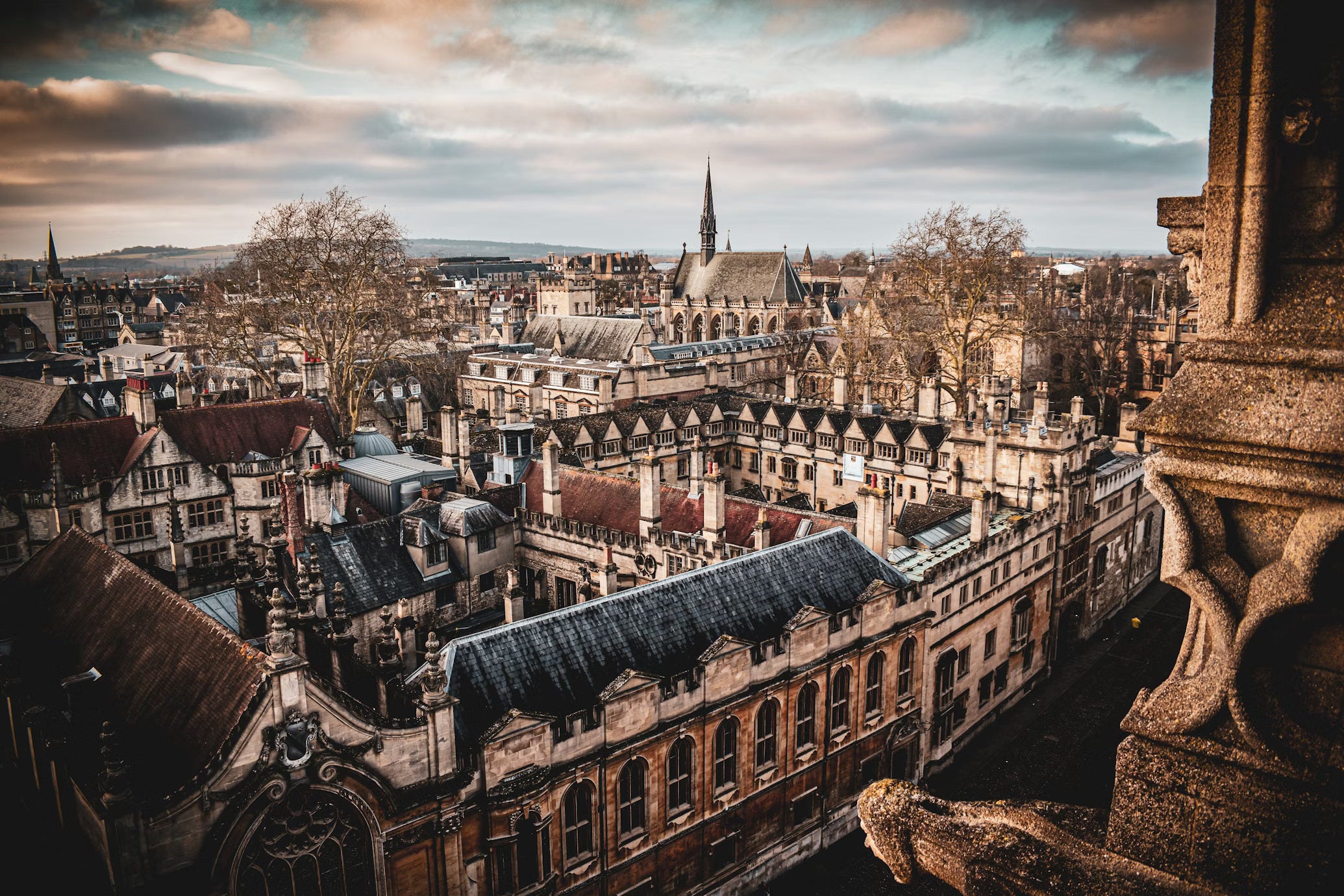
Poetry and Oxford are buckled together for me. I’d just learned to love poetry in a college class before I came, and it was here that I fell in love with metaphysical and religious lyric poetry—John Donne, George Herbert (both Cambridge men, but we’ll forgive them), and Gerard Manley Hopkins (Balliol College).
Hopkins wrote my favorite poem about the city:
Text within this block will maintain its original spacing when published
“Duns Scotus’s Oxford”
Towery city and branchy between towers;
Cuckoo-echoing, bell-swarmèd, lark charmèd, rook racked, river-rounded;
The dapple-eared lily below thee; that country and town did
Once encounter in, here coped & poisèd powers;
Thou hast a base and brickish skirt there, sours
That neighbour-nature thy grey beauty is grounded
Best in; graceless growth, thou hast confounded
Rural, rural keeping — folk, flocks, and flowers.
Yet ah! this air I gather and I release
He lived on; these weeds and waters, these walls are what
He haunted who of all men most sways my spirits to peace;
Of realty the rarest-veinèd unraveller; a not
Rivalled insight, be rival Italy or Greece;
Who fired France for Mary without spot.
“Yet ah! this air I gather and I release / He lived on,” I thought on my recent trip when I stayed across the street from Balliol.
Another favorite Oxonian poet is Elizabeth Jennings (St Anne’s College). She grew up with Priscilla Tolkien and they were lifelong friends. I love these lines from “In This Time,” found in her Selected Poems:
Text within this block will maintain its original spacing when published
O let the wind outside blow in again
And the dust come and all the children's voices.
Let anything that is not us return.
Myths are the memories we have rejected
And legends need the freedom of our minds.
I also have a great love for vintage Oxford University Press editions of collected poetry. David Cecil’s 1940 volume The Oxford Book of Christian Verse is a favorite, as are American Verse and English Verse (not too hard to find secondhand, even in the US).
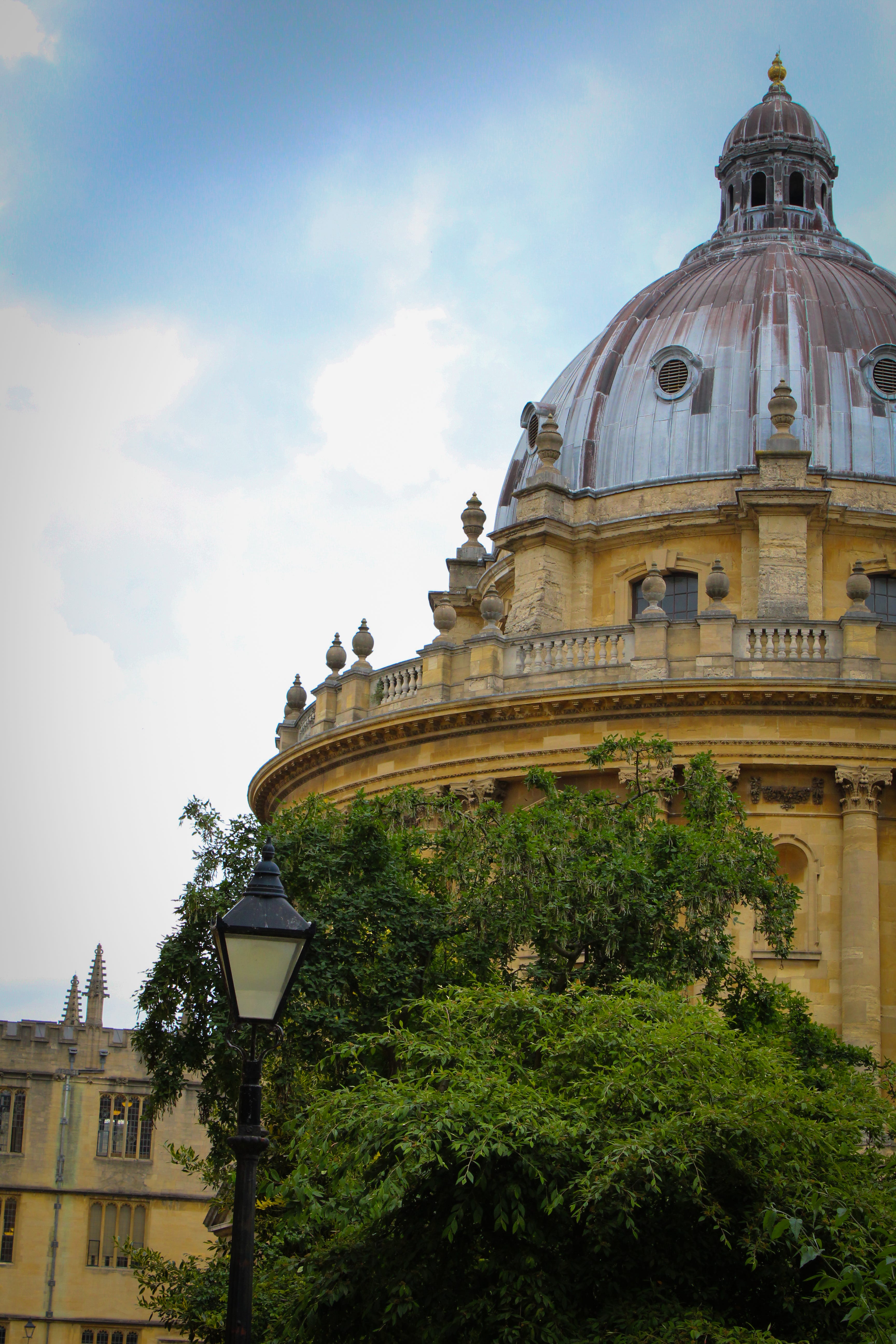
Oxford, being a bookish city, has no shortage of novels set there, or in fantasy versions of it. Here the titles that most thoroughly evoke Oxford for me.
Eliza for Common by O. Douglas (1928) is about a minister’s daughter in Glasgow, but she travels to visit her brother in Oxford, and oh! what delight. O. Douglas is perfect cozy reading with a good emotional core and authentic portrayal of family life. O. Douglas is the pen name of Scottish author Anna Masterton Buchan (sister to John Buchan, the thriller writer), who grew up in the large family of a Presbyterian minister, so her portrayals of ministry-family life are authentic.
Brideshead Revisited by Evelyn Waugh (1945) is the most iconic Oxford novel. It’s piercing, funny, spiritual, wacky, and presents the decadent undergraduate life that is not entirely mythologized. It’s also a Moody English Country House in Summer Novel™ (stay tuned!) which makes it perfect for long June nights accompanied by strawberries and lemonade.
The Eights by Joanna Miller (2025) explores the lives of four female undergraduates at St Hugh’s College immediately following the Great War. It’s a marvelous portrait of college life in a rapidly changing society as four very different women throw themselves into studies and friendships. I love how Miller incorporates historical documentation—syllabi, dress codes—at the beginning of each chapter.
Death on the Cherwell by Mavis Doriel Hay (1935) is set at the fictional Persephone College where the murder of a bursar upsets the boat. A secret society, prankful students, rigid leaders—what’s not to love? I read this at a recommendation from Harriet on her Oxford murder mystery post.
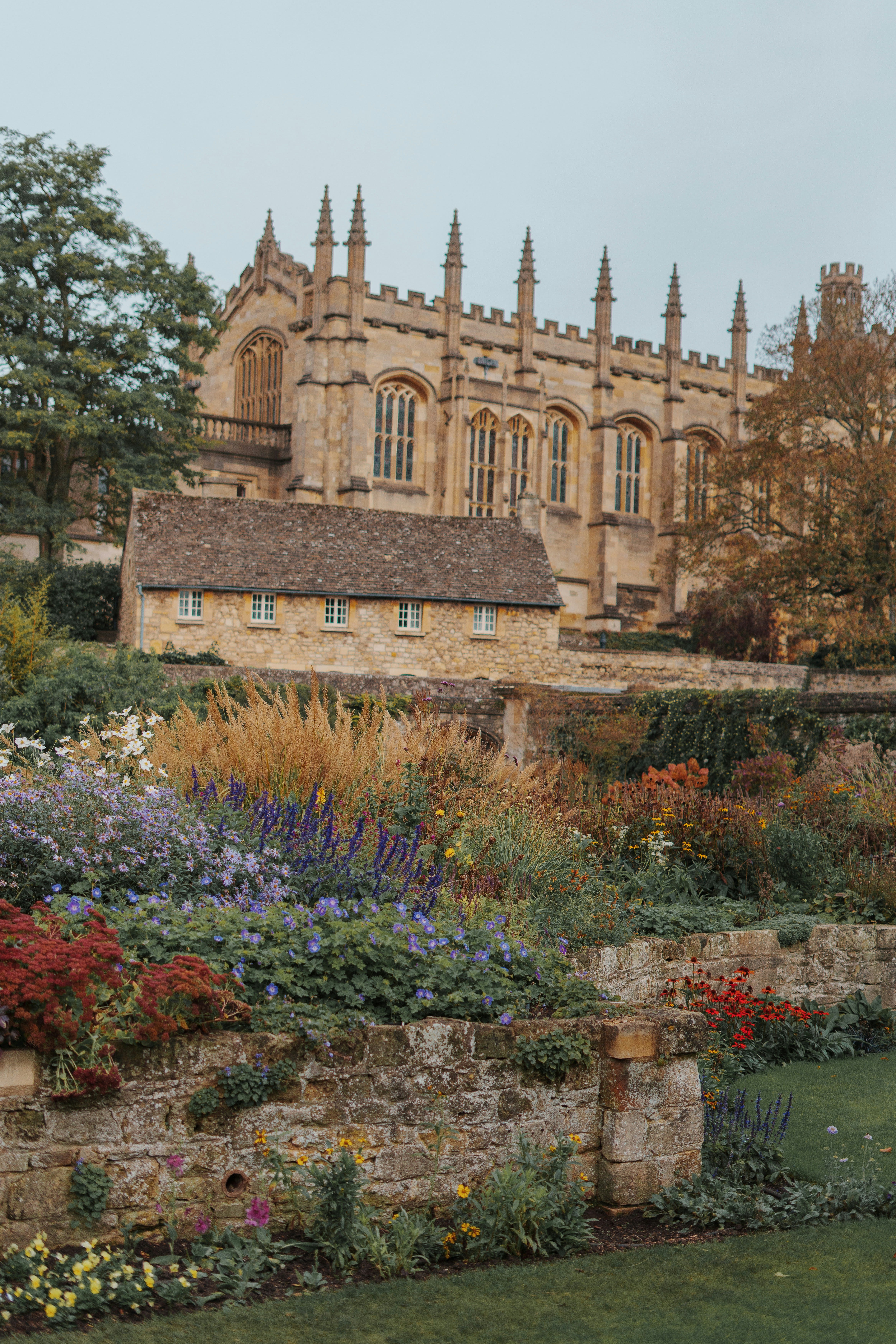
A Little Learning by Winifred Peck (1952) is best summed up by herself: “I went to Oxford in the days when we still had to take a chaperon for so dangerous a festivity as tea with a brother.” (12) Only the final chapters cover Peck’s time at Oxford, but her account of being educated at various schools in various ways is thoroughly enjoyable. She attended Oxford in the first few decades of women being admitted as students, and had her own literary career. Peck, the daughter of a bishop, was the sister of Monsignor Ronald Knox (Catholic priest), Dilly Knox (Bletchley codebreaker), Edmund Knox (Punch editor), and Wilfred Knox (Anglican priest), all Oxonians themselves. Just a normal bishop’s brood with outsize talent! Peck was at Lady Margaret Hall under the redoubtable Elizabeth Wordsworth, which leads us to…
Reluctant Pioneer: The Life of Elizabeth Wordsworth by Georgina Battiscombe (1978). Women’s education at Oxford was spurred by the founding of Lady Margaret Hall—but if women had no access to university education at Oxford before, who could be chosen to be principal of the first Oxford women’s college? The powers that were chose Elizabeth Wordsworth (1840-1932), a bishop’s daughter (and great-niece of the poets). Wordsworth also founded St Hugh’s College, portrayed in The Eights. I loved learning about this friendly, scholarly, careful woman and the lasting impact she had on women’s education.
The Unexpected Professor by John Carey (2005), the late and prickly scholar and critic, details Carey’s journey at Oxford. He studied English in the final days of Lewis and Tolkien, and spurred modernization of the English faculty, including such up-to-date authors as Charles Dickens. I love Carey’s wit and have a devotion to The Intellectuals and the Masses: Pride and Prejudice among the Literary Intelligentsia, 1880-1939.
Reading as One of the Fine Arts by David Cecil (1949), is an unjustly neglected lecture by an unjustly neglected Inkling. Cecil was the inaugural Goldsmiths’ Professor of English. You’ve heard it here before, folks: “...to enjoy literature as it should be enjoyed is a task of immense difficulty; requiring, in addition to common sense and uncommon sensibility, faith, hope, charity, humility, patience and most of the other Christian virtues. It also involves a long and unhurried process of self-training.”
Surprised by Oxford by Carolyn Weber (2011) is what I read on the airplane coming home from Oxford in 2015 (just after finishing Surprised by Joy by C. S. Lewis). It’s one of the best conversion memoirs I’ve read, tender and intimate but not over-share-y. She calls her love interest TDH (Tall, Dark, and Handsome) and if that isn’t the cutest thing I don’t know what is. There’s also a lovely adaptation from 2022.
The Oxford English Dictionary is my great Oxford University Press love. See if you have access through your local library or university library (many universities allow local residents to join their libraries: take advantage). Some great books about the OED are The Professor and the Madman by Simon Winchester; The Ring of Words: Tolkien and the Oxford English Dictionary and The Making of the Oxford English Dictionary by Peter Gilliver; and A Guide to the Oxford English Dictionary by Donna Lee Berg.
Choral music is the soundtrack of Oxford: the acoustics in the stone chapels, the voices of students filling up to the spires. Let it transport you.
The Choir of Merton College has some lovely recordings, especially their recent Choral Anthems I and II. The Choir of Magdalen College’s Arise My Love: Music for the Break of Day has a recording of Gerard Manley Hopkins’ “God’s Grandeur” that is especially lovely—“Glory be to God for dappled things!”
While in the library, I found myself craving Oxford-appropriate listening. Classical and choral music is usually too transportive for me while reading. I love soundtracks for deeper focus, which leads us to…
You didn’t think I’d get away without mentioning Gaudy Night by Dorothy L. Sayers (1935), did you? The 1987 miniseries is exquisite. The cast is achingly perfect and it’s funny and deep at once. Parts One, Two, and Three are available on YouTube. (N.B.: I don’t recommend starting the Lord Peter Wimsey novels with Gaudy Night; Strong Poison is a much better place to start, and sets up Certain Events in Gaudy Night.)
The Professor and the Madman (2019) is a stellar adaptation of a book written about the beginnings of the Oxford English Dictionary. It has everything I want in a film: gorgeous scenery, a profound portrayal of forgiveness, and dictionary hijinks. There’s also a book (1998). Beware a shocking story of mental illness and some medical gruesomeness—but that’s where the redemption comes in, too.
Endeavour (2012-2023), Inspector Morse (1987-2000), and Lewis (2006-2015) have probably filmed on almost every street in Oxford. Combined, these detective series portray the dark underbelly of the city and university from the 1960s to the 2000s. I don’t know why the Radcliffe Camera provides so many establishing shots, but I’m not complaining. Inspector Morse is based on the novels by Colin Dexter; the team had so much fun they made Inspector Lewis as a follow-up, and Endeavour as a prequel. Lewis is my personal favorite as Morse can get a bit dreary and Endeavour a bit conspiracy-heavy, but they are all very good (if occasionally gritty) mystery fare.
Testament of Youth (2014) is based on Vera Brittain’s 1933 memoir of the same name. Brittain left her studies at Somerville College to become a nurse in WWI, returning to a campus haunted by the students it had lost. Testament of Youth is about her road to Oxford, the Great War, friendship, romance, and love of learning. It’s one of the important portraits of the Lost Generation in England.
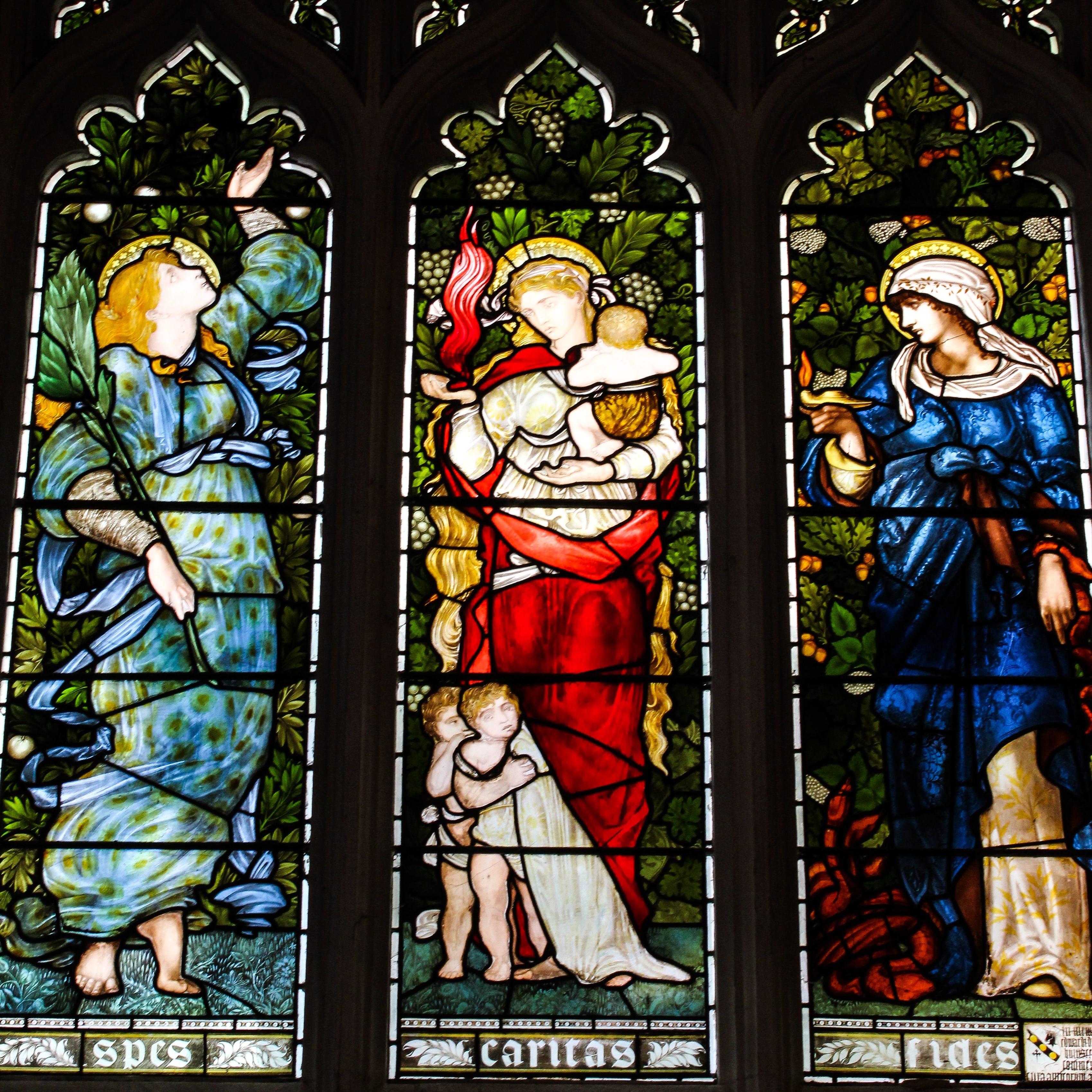
One of my favorite artistic movements, the Pre-Raphaelites, is linked with Oxford. William Morris and Edward Burne-Jones met during their student years, and the Ashmolean Museum has a Pre-Raphaelite exhibit.
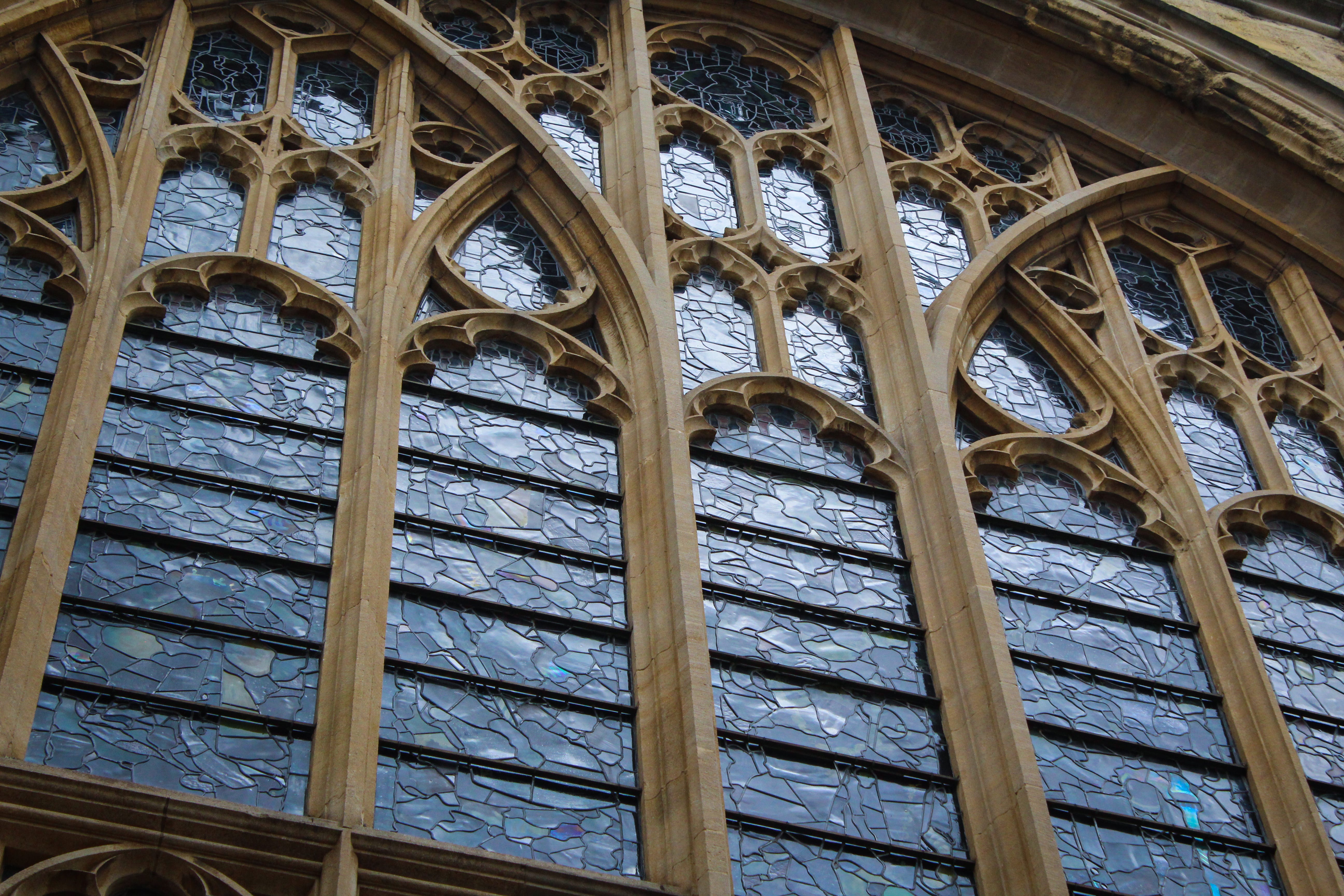
The ecclesiastical art in college chapels is well worth seeing, including one of my favorite works of stained glass:
Time in Oxford is not complete without the eccentric Museum of Natural History and Pitt Rivers Museum (the museums share a building). At the Natural History Museum, you can see the dodo specimen that inspired Lewis Carroll (Charles Dodgson). See their collections online here. At the Pitt Rivers, you can see more objects than you ever dreamed of, arranged by use and purpose rather than geography, history, or people group. The Pitt Rivers has an endearingly Victorian feel due to how much stuff is crammed into every corner. At the Ashmolean Museum, you can revel in J. M. W. Turner’s artwork, the Pre-Raphaelites, Greco-Roman objects, Stradivari violins, and more…explore their collections online here.
Somerville College has turned out an unusually large number of excellent women writers (it went co-ed in 1994): Vera Brittain, A. S. Byatt, Susan Cooper, Winifred Holtby, Marghanita Laski, Margaret Kennedy, Iris Murdoch, and Dorothy L. Sayers. Longtime readers know my affection for Marghanita Laski’s Little Boy Lost. Susan Cooper wrote The Dark Is Rising children’s novels. Iris Murdoch’s novels like The Bell are immersive, morally challenging philosophical studies. Margaret Kennedy’s The Feast and Troy Chimneys were both unforgettable reads for me, and I look forward to reading the work of Vera Brittain and her friend Winifred Holtby.
Some Oxford resources I have yet to enjoy are: The House in Norham Gardens by Penelope Lively; Towers in the Mist by Elizabeth Goudge; Brideshead Revisited (1981); The Word Detective: Searching for the Meaning of It All at the Oxford English Dictionary by John Simpson; Edmund Crispin’s Gervase Fen mysteries; and Not Far from Brideshead: Oxford between the Wars by Daisy Dunn.
What books, movies, musical productions, or artworks evoke Oxford most for you?
No posts
Comments
Nothing yet. Say the first thing.
Sign in to join the conversation.