
N.B.: If this post is cut off for you in the email, click on the title to read the whole thing.
Quite by coincidence, I discovered that, in 2025, I read one book from each year of the 1940s. It was entirely unintentional—I only noticed after I’d done it! The titles cover a wide range of genres, from children’s literature to literary criticism to mystery to fantasy with lots in between. Since this wasn’t an intentional reading plan, the books are all over the place (a good picture of the varied died that is my reading life). Here’s at least one book read from each year, 1940-1949, and some thoughts about literature in this decade at the end.
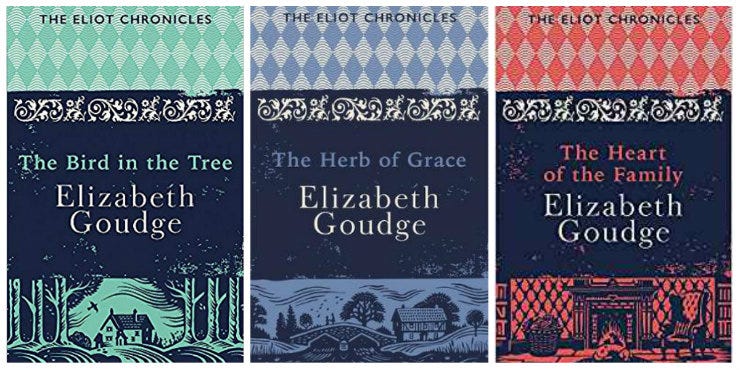
The Bird in the Tree is the first in Goudge’s Eliot family trilogy. If you love an old house that’s basically a character in a novel, this series is for you! The Bird in the Tree considers some weighty moral questions, perhaps in light of the monarchical machinations that the UK faced in the years before the war. It’s a novel about fidelity, authenticity, and how to choose when the two collide.
Kate O’Brien, an Irish writer, writes compellingly of life in an early 1900s convent school in The Land of Spices, from the perspectives of a student and a nun. It’s about holding on to faith through disillusionment, vocation, and the human soul. I knew this novel was for me when I saw the George Herbert title, doubly so when I learned it was about the religious life, and I loved the writing. (Be forearmed with translation tools, as O’Brien includes long passages of untranslated French and some Latin.) I highly recommend The Land of Spices to fellow fans of In This House of Brede and the Catholic Women Writers series.
Goudge’s 1936 adult novel A City of Bells is pure delight, and introduces us to Henrietta. Goudge followed A City of Bells in 1939 with The Sister of the Angels, an absolutely perfect children’s Christmas novel.1 After these comes Henrietta’s House, which can be read on its own. Henrietta is a somewhat magical, yet fully human little heroine. There is something supernatural at work in her life. Henrietta dreams of nothing more than a house where all her loved ones can gather round her. I can imagine many evacuated children in the UK enjoying this novel while they stayed in the countryside. Lucy Pevensie would have read Henrietta’s House over and over again.
I loved this quotation from Henrietta’s grandfather:
No Paradise? Have you no eyes, no nose, no ears? Have you not seen flowers growing, heard birds singing, smelt wet earth? Have you no heart to feel the beauty of these things? Where do you keep your heart, my dear sir? In a paper bag? Good Heavens! Dear me! Did you not realise that these things are green shoots pushing through winter earth, shouting out aloud the promise of the joy to come? And how they shout! No deafness, not even yours, my dear sir, is an excuse for not hearing. They shout so loud about it that one might almost say they are the joy to come. Paradise is already present in these things, my dear sir, even as March daffodils dancing in the wind are present in the green shoots of February... (171)
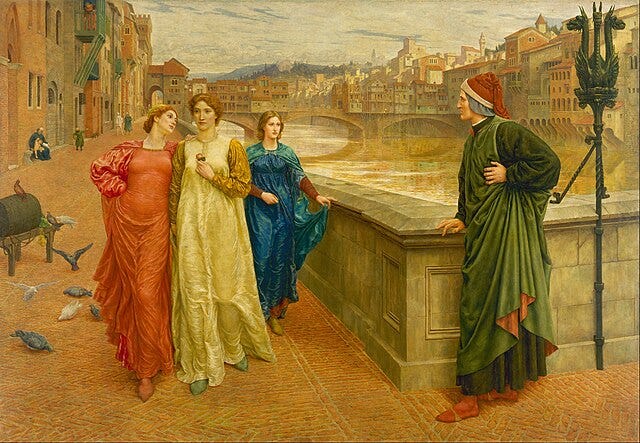
The Figure of Beatrice, which I read for research, is about the imagery of Dante, with Beatrice as a guiding metaphor. I can only imagine what a comfort thinking of these things was to Williams during the air-raids. It was a comfort to me to think of them now, fresh off my first reading of The Divine Comedy. I’d recommend it to readers of Dante.
I’ve written about E. C. R. Lorac here, but I read this novel after writing about Lorac. Checkmate to Murder is set during the war, with clues incorporating life patterns known to contemporaneous readers. (I love works that preserve such details!) It’s not the only one of Lorac’s wartime mysteries, either. Blackouts and rubble provide plenty of opportunities for Robert MacDonald to sleuth.
Cluny Brown is set a few years before the war. This was my first adult novel by Sharp, long having loved Miss Bianca and its sequels.2 It’s a fun upstairs-downstairs story about a free-spirited heroine who has her own ideas about life and station. I can imagine this would have been a light and funny reprieve for readers in 1944, one to read when emotional energy had run out.
While Williams published All Hallows’ Eve just before the end of the war, the war has ended just as All Hallows’ Eve begins. Williams’s novels are weird, in the supernatural sense of the world, and this one has some of the odder portions in a Williams novel—which is saying a lot, since other novels include tarot card figures coming to life and controlling the weather, the real Holy Grail, and characters actually going into hell. There is some real loveliness in this novel, but it’s also just plain weird.
If you’re interested in reading the fiction of Charles Williams, a great introduction is “The Weird and Wild Mind of Charles Williams” by Joel J Miller.
Coggin’s Who Killed the Curate? (1944) is a favorite of mine for Christmastime reading, and Mystery at Orchard House is a sweet springtime mystery in the English countryside. Lady Lupin, a scatterbrained young clergy wife, is sent for a rest cure to her friend’s country house and hijinks ensue. If you’re a cozy mystery fan, don’t miss out on Lupin. I can imagine 1940s readers picking this up for pure refreshment after the war and feeling that spring would, indeed, come again.
If Mystery at Orchard House was light and fun, The River is short but powerful. It’s about children, but not a children’s book. (Content warning for child death.) A recovering soldier, an English family in a multi-faith household living on a river in India, and the terror and beauty of nature provide an unforgettable reading experience. Godden captures the difficulties of adolescence, especially in a family with adolescents of different ages, with precision and mercy.
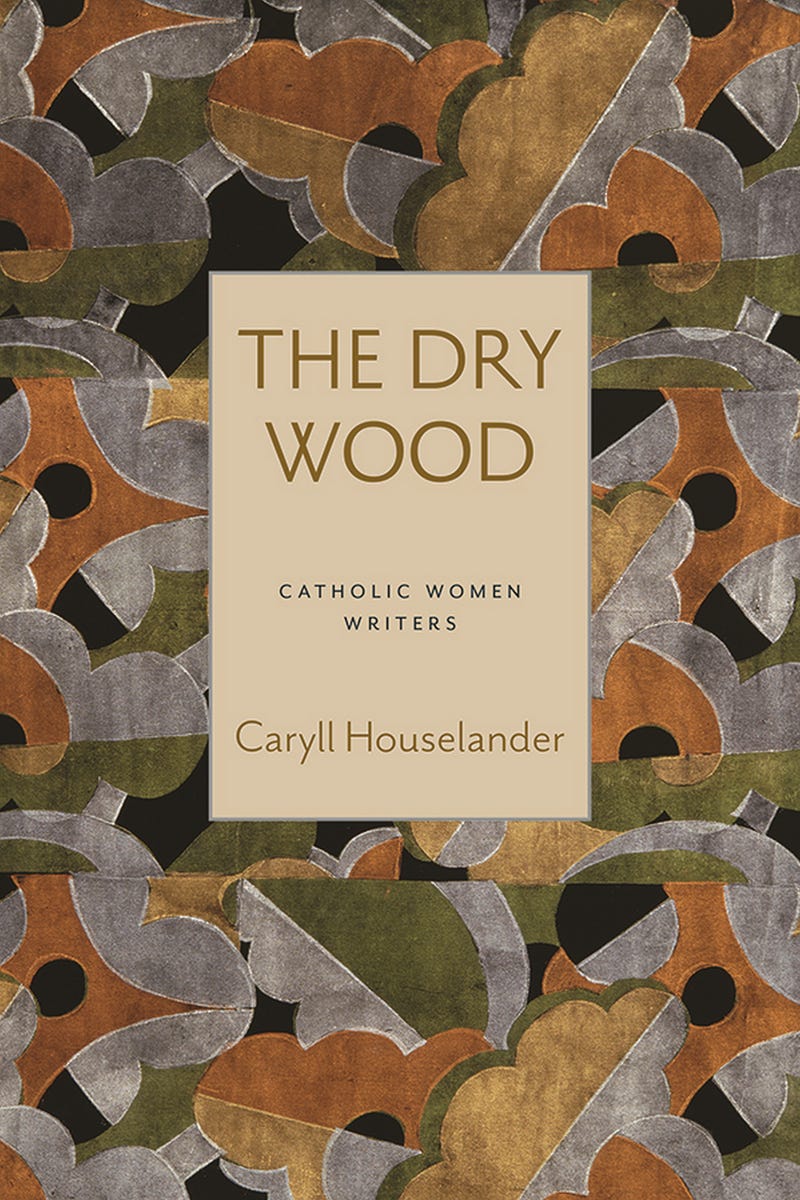
The Dry Wood is a beautiful Catholic novel by mystic Caryll Houselander. Houselander is known for The Reed of God, a mystical book about Mary, Mother of God. The Dry Wood is Houselander’s only novel, and I dearly wish she had written more! If you love spiritual character studies in novels and benevolent, omniscient narration, reach for The Dry Wood. It occurs in the same general circumstances as Call the Midwife by Jennifer Worth, from a Catholic instead of Anglican angle. I’ll never forget the priest “offering up” his dozenth cup of overbrewed tea.
I wrote about The Ark and its sequel, Rowan Farm, earlier. See here. Wonderful fiction for teens!
The Herb of Grace, published in the USA as Pilgrim’s Inn, is the second in the Eliot family trilogy. Originally, I’d been told to read this middle book before the other two: start at the very beginning.3 Interpreting the characters works best when cognizant of the events of the first novel. The Herb of Grace is about a family who moves into a historic inn. They recover from their separations and struggles during WWII and set up a better life for themselves. There’s a restoration of a fresco, great artist representation (visual and dramatic) and a beautiful redemptive theme.
I wrote about Rowan Farm and The Ark over the summer. See here and above.
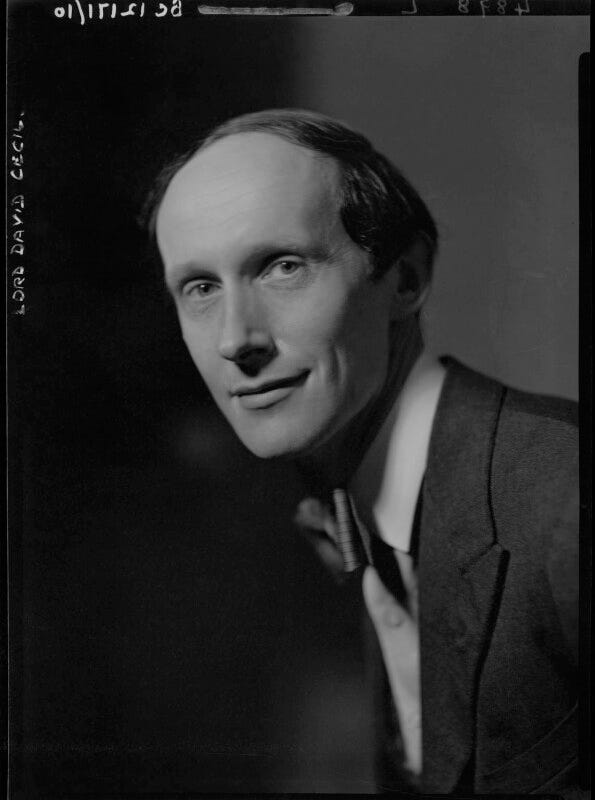
Reading as One of the Fine Arts is a printed version of Cecil’s first lecture as the inaugural Goldsmiths’ Professor of English at Oxford University. I simply adored it. Cecil is a gentleman (the younger son of a marquess, he went by Sir) and a scholar (he is the most underrated Inkling). In this talk, Cecil explores several ideas: the act of reading is a fine art; the duty of a student of literature is to be delighted, and to increase his capacity for delight; art opens “the eyes of the soul to a sight of that divine and flawless essence whence she springs and for which, while her unquiet exile on earth endures, she is immedicably homesick.”4 Needless to say, I loved this essay!
My dissertation subject, Ruth Pitter, really loved this book. The premise is a little wild: Hamilton analyzes the appearance of the definite article, “the,” in English poetry from the early modern era to the present day.5 Overall, from the 1600s (Donne, Milton, et c.) to the 20th century (Eliot, Auden), the use of “the” in Hamilton’s dataset increased dramatically, from 4-5% to north of 10%. What does this mean? Hamilton has lots of thoughts. He dedicated this book to Owen Barfield.
“…as a whole, the earlier poets were much less concerned with reflection and description, and dealt more constantly with personal relations, the he and she, and I and thou, man to God, and man to woman. And they were given to apostrophe, addressing with lyrical ease not only their ladies but the stars, the birds and the flowers…” (6)
“The [modern] poet’s use of the definite article often suggests that he has become absorbed and isolated in his own vision…paradoxically, the poet when most solitary seems to take us closest into his company, to be making us share his thoughts or to be pointing out to us his field, his rainbow, his blackbird in song, even his fantasy or his nightmare. The definite article, in claiming our recognition, points to the one unique object.”6 (14)
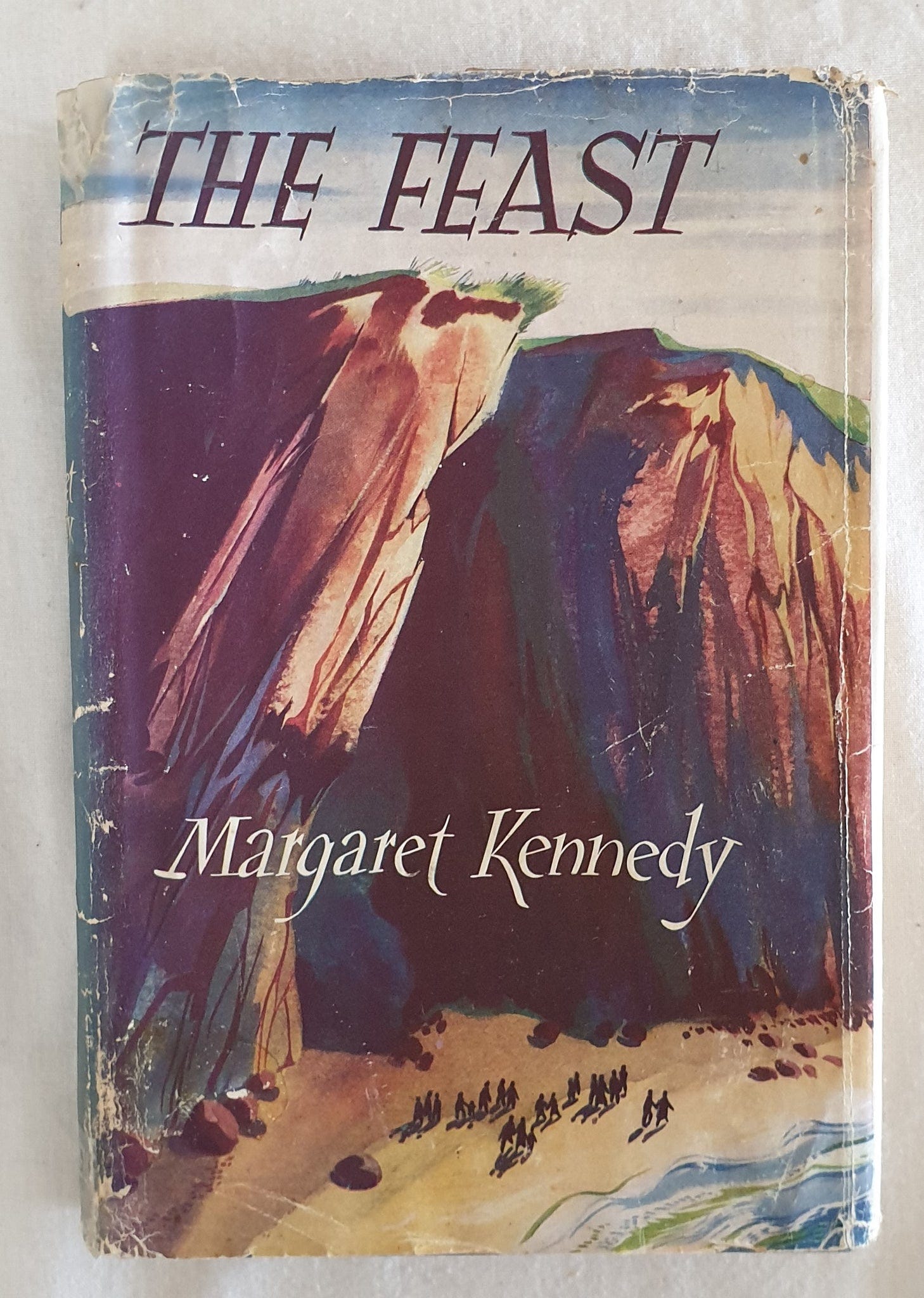
The Feast7 was easily the best first-time read of 2025 for me. Stay tuned for more at Mirrored Longings about it! It’s a seven deadly sins allegory set at a seaside hotel in Cornwall, and it’s marvelous. Funny and memorable and moral and shocking and comforting. I can imagine many happy readers in 1949 enjoying this on holiday (and checking the foundational integrity of their hotels).
I wrote about this splendid novel here. One of the essential postwar novels, not to be missed.
This varied and idiosyncratic selection of seventeen books doesn’t lead me to make sweeping generalizations about Literature in the 1940s or The State of Humanity. Instead, I’m coming away from this unintended reading project reflecting on what literature can offer us in challenging times.
On most continents, the 1940s were a difficult decade. Even those lands where war did not touch—and there was much more than one war in the 1940s—deprivations like rationing and supply chain issues complicated daily life. Global politics faced massive challenges, and national politics changed beyond recognition, or even imagination, in many countries.
In the face of all this, what were publishers inking on their rationed paper supply? What were authors writing while their loved ones were in peril and their countries crumbled? What were readers opening up in the turmoil of their anxieties and losses?
While some novels turned to a pre-war past8 (Cluny Brown, The Land of Spices), some influence of the war is felt in all of them. The postwar novels, starting with All Hallows’ Eve, turn immediately to the question, how shall we live now? There is a return to the importance of personal morality in the face of impersonal groups. It’s less about which side you’re on, and more about who you are—no farming out your morality to the party line here. Even in Mystery at Orchard House, the lightest of mystery fiction, there’s a sense that being a kind, welcoming person can help change people’s lives for the better. In The Feast, Kennedy shows that our own personal virtues are still important in every interaction, from opening mail to attending to children. In the Eliot family books, Goudge considers how war can strain family relationships, and what can be done to make amends.
Criticism, dealing with literature and not politics, had a moral component. Williams in discussing Dante, of necessity, discusses virtue. Cecil says reading well requires “faith, hope, charity, humility, patience and most of the other Christian virtues.”9 Hamilton says that a “sense of the greatness of man…is needed for the full vigour of the arts.”10 The arts, rather than being a peacetime luxury, are the soil of virtuous living.
In the 1940s, the war was too fresh for the gratuitous optimism associated with the 1950s. None of these books are ignorant of despair. Yet, I did not encounter pessimism overwhelming the story (though there are plenty of 1940s books where that happens). There was a balance of realism and hopefulness in each of these books that I found challenging and consoling.
In the 1940s, as today, there’s a temptation to outsource our morality to groups. If I’m part of this group, if I vote this way, if I signal that I’m not like those people, I’m doing it right. Laski, O’Brien, Williams, Kennedy, Goudge, and Benary-Isbert remind me that none of that matters if I would forsake a needy child, intentionally hurt someone with my words, or renege on a promise I made. I must be responsible for my own actions. My daily choices do matter, and I can choose what’s right: that’s an antidote to despair in any age.
While reflecting, the words of Alexander Pope returned to my mind:
Text within this block will maintain its original spacing when published
Hope humbly then; with trembling pinions soar;
Wait the great teacher Death; and God adore!
What future bliss, he gives not thee to know,
But gives that hope to be thy blessing now.
Hope springs eternal in the human breast:
Man never is, but always to be blest:
The soul, uneasy and confin’d from home,
Rests and expatiates in a life to come.
Alexander Pope, An Essay on Man (1734)11
What are your favorite books published in the 1940s? And…should I do this for another decade?
There is a Restoration of Church Art, which is my favorite thing to find in novels: A Month in the Country by J. L. Carr; Pilgrim’s Inn/The Herb of Grace, also by Goudge, later on this list.
You might know Miss Bianca from its adaptation The Rescuers (1977) and sequel. While delightful in their own ways, the film adaptations just don’t capture the sparkling wit of the original or the very serious nature of mouse rescue societies.
A very good place to start.
David Cecil, Reading as One of the Fine Arts (Oxford University Press, 1949), 16. The essay is also published in The Fine Art of Reading and Other Literary Studies (Constable, 1957).
Imagine how much labor this took before digitization! My eyes are crossing just thinking of it.
G. Rostrevor Hamilton, The Tell-Tale Article: A Critical Approach to Modern Poetry (William Heinemann Ltd., 1949). Emphasis original. I was curious about John Donne’s Holy Sonnet X, “Death be not proud,” and found it never uses “the.”
The Feast was originally printed in Ladies’ Home Journal shortened and under the title Never Look Back. It was published in full in 1950, but I’m counting it here because I will not shut up about it!
All the books I read for this decade were written in English for the Western world, so I’m using “the war” as shorthand.
“Indeed, to enjoy literature as it should be enjoyed is a task of immense difficulty; requiring, in addition to common sense and uncommon sensibility, faith, hope, charity, humility, patience and most of the other Christian virtues. It also involves a long and unhurried process of self-training.” Cecil, Reading as One of the Fine Arts, 6.
“Yet the fact that it [modernist poetry] requires such a weakened form betrays a serious defect. I conclude that it suffers from the disease of the age, an inadequate sense of the greatness of man. This sense, whether based on religious or on humanistic grounds, is needed for the full vigour of the arts….One might naturally look to Eliot, as an important Christian poet, to revive the conviction that man, however low he may have fallen, has an essential and tragic greatness. But, owing to the impact of the age on his particular bent of mind, the hope is not fulfilled.” Hamilton, The Tell-Tale Article, xii.
See also: “The poetry continues to reflect the vision of a disintegrated world, and it is an exaggerated vision. For Eliot, in his expression as a poet, is out of touch with the active virtue and strength which even to-day survive in ordinary men, and which make the drama of their life worth while.” Ibid., 59.
No posts
Comments
Nothing yet. Say the first thing.
Sign in to join the conversation.