

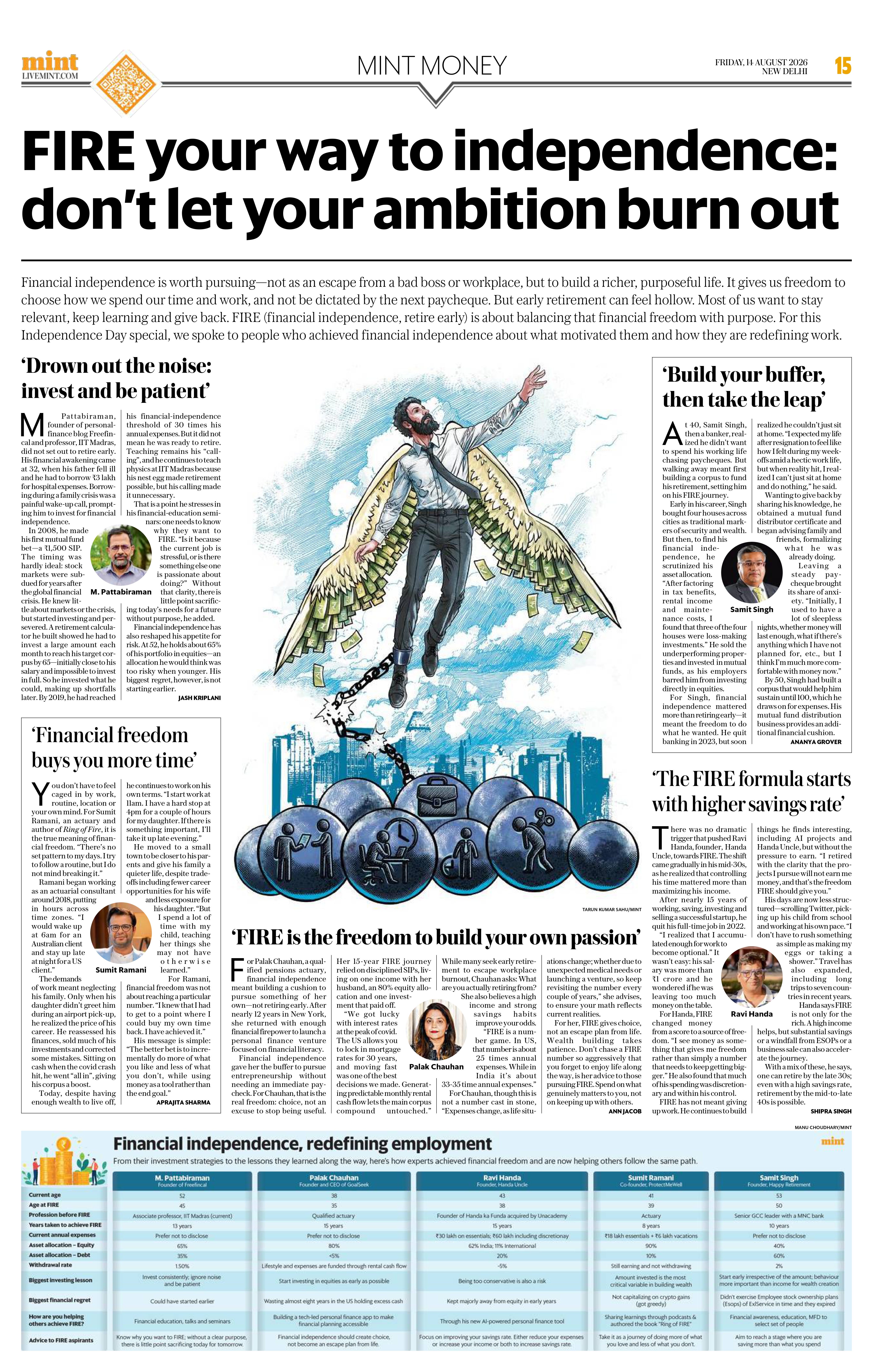
There’s growing excitement around FIRE—Financial Independence, Retire Early—and everyone appears eager to get on that bus. Sadly, most conversations around FIRE converge on just one question: How do I retire early?
For many, the desire to retire early stems from working ungodly hours, dealing with a toxic workplace, a difficult boss, or experiencing burnout. FIRE becomes an escape route because it feeds the fantasy of simply walking away. This is where many FIRE aspirants get it wrong. Early retirement is merely one possible outcome, but the real goal that everyone should aspire to is financial independence. This is the secret sauce to living a purposeful life because it gives you the flexibility to take control of your time, walk away from situations that no longer serve you, take a break when you need one, and pursue work that genuinely excites you.
The journey towards financial freedom begins with one fundamental principle: build a lifestyle where you consistently spend less than you earn. But financial readiness alone is not enough—your mindset matters just as much. Have you saved enough to manage an emergency or leave a job you no longer enjoy? Are you willing to keep learning and diversifying your skills to create new opportunities? Can you embrace change, step outside your comfort zone and adapt to unfamiliar environments? Being able to answer these questions in the affirmative is just as important.
Before you embark on this journey, it’s important to understand what you are retiring to and not just what you are retiring from. To fuel your dreams of FIRE, Mint Money put together a special Independence Day edition featuring people from different professions. We explore what motivated them to embark on their FIRE journey, how they achieved financial independence and how they are now using their skills and time to remain meaningfully engaged.
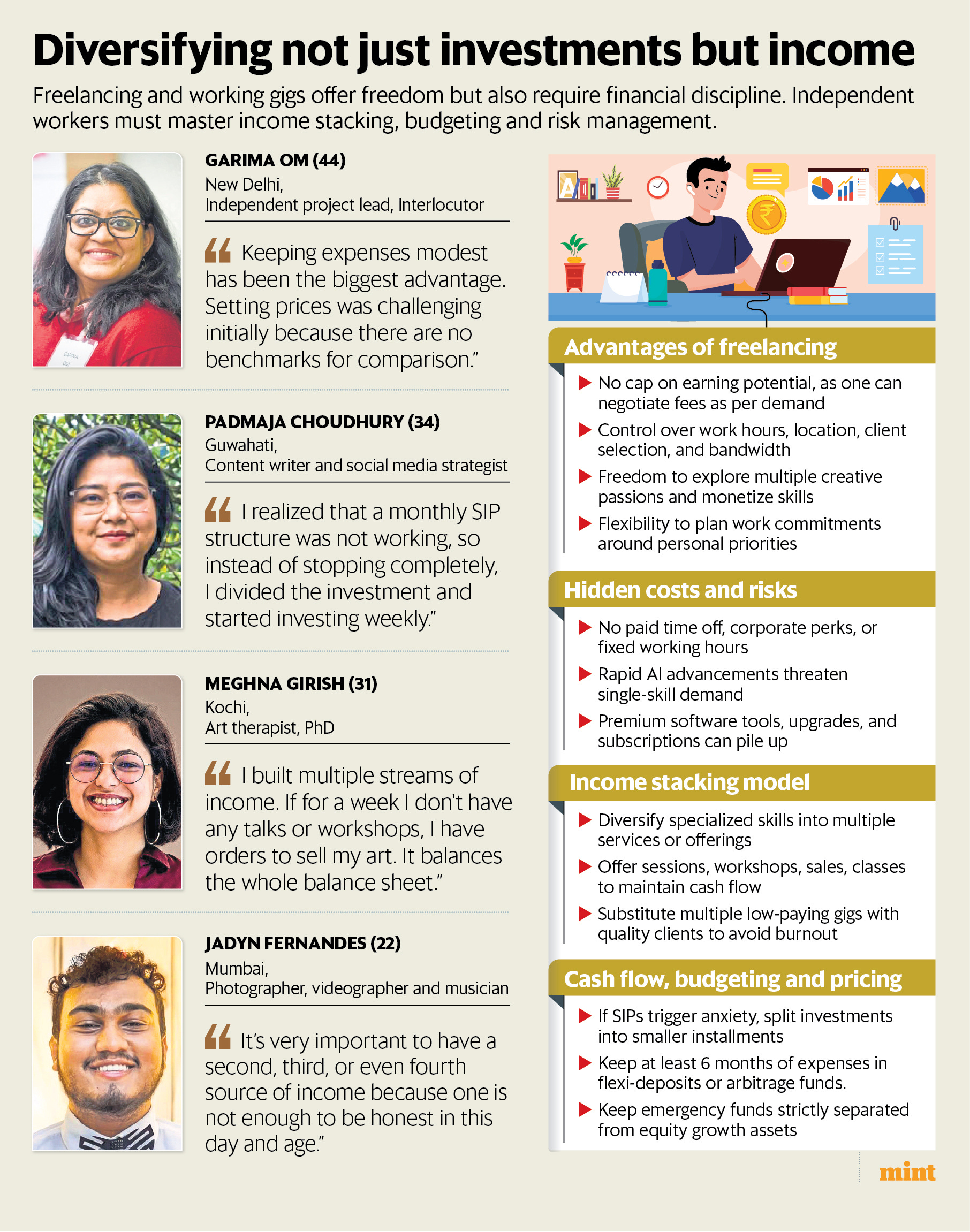
Not too far off from the concept of freedom is the growing number of professionals choosing the gig route. Freelancing offers greater control over one’s time, work, and career, but that freedom comes with a fair share of uncertainty. You live without the security of a regular paycheque or employer-backed benefits and so, managing your money becomes very important. Ann Jacob in this story explains how gig workers can navigate this uncertainty by diversifying their income, building a larger emergency fund and investing with flexibility. The message is clear—professional freedom is sustainable only when it’s supported by financial discipline and mental preparedness.
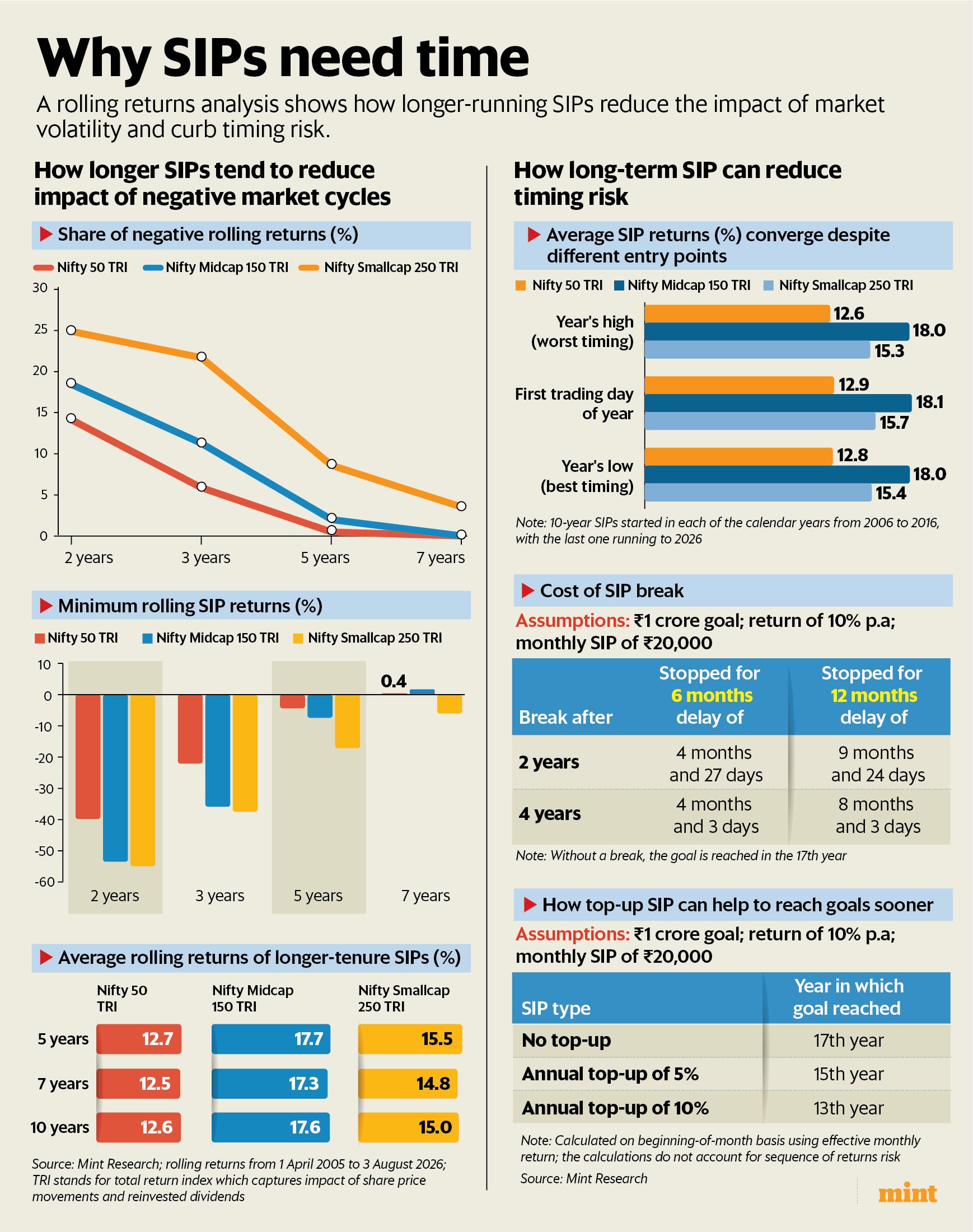
And one fundamental step towards financial discipline and preparedness is investing regularly. When investing in mutual funds, systematic investment plans are designed to build this discipline. The benefit of SIPs goes beyond just building a habit to invest. Because they spread investments across market cycles, they help investors navigate volatility better. An investor who panics during a downturn often fares worse than one who stays calm and continues investing for the long term.
For compelling evidence, read this insightful story by Jash Kriplani. It explains why investors should avoid reacting to short-term market swings by stopping their SIPs or frequently changing their investments. Staying invested allows investors to benefit from rupee-cost averaging, buying more mutual fund units when prices fall and fewer when they rise, which can soften the impact of volatility over time.
In long-term investing, consistency and sensible asset allocation usually matter more than trying to time the market.
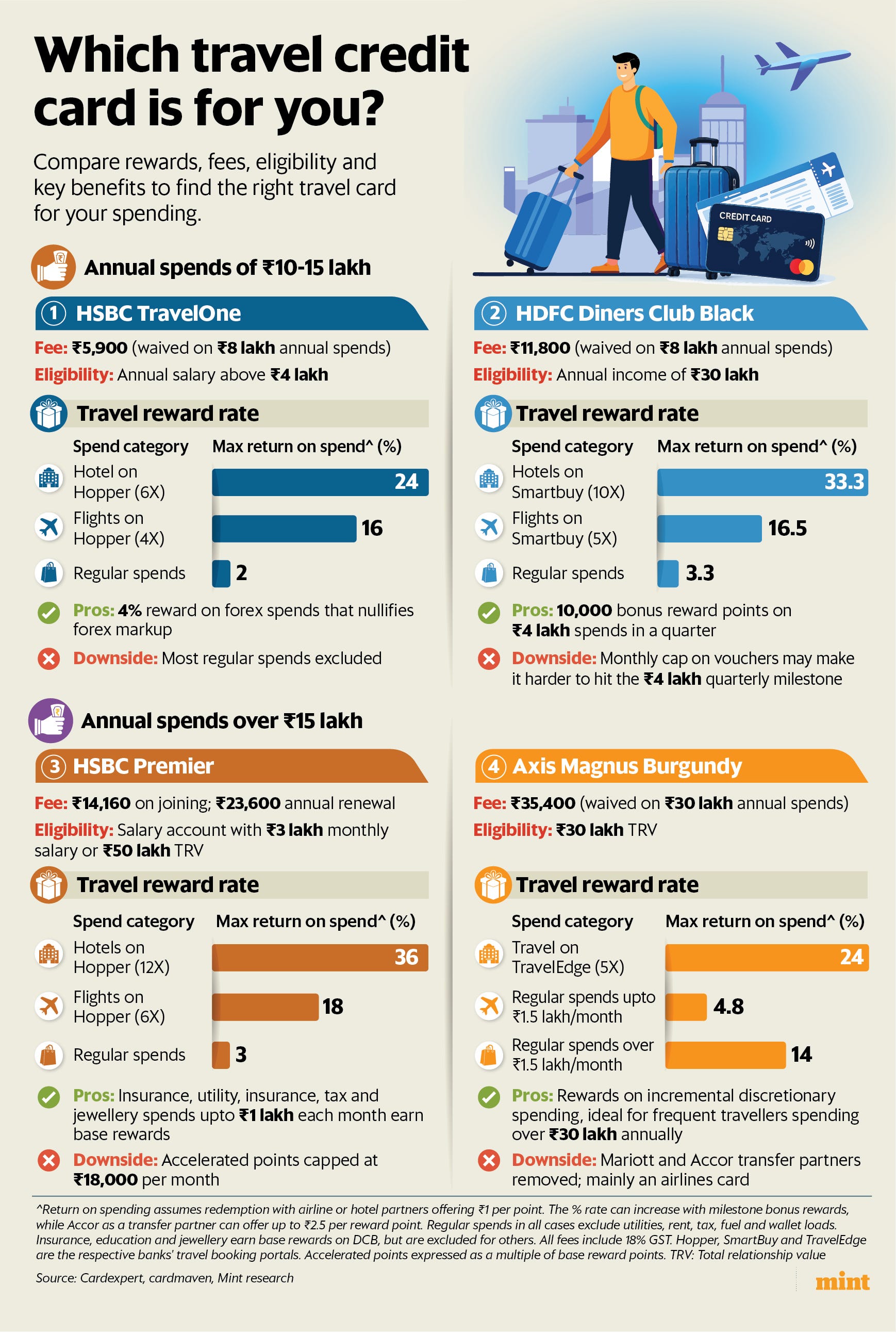
This week, besides stories to help you on your journey towards financial freedom, we have two important reads on credit cards. The first is our annual selection of travel credit cards. In this series, we pick the most rewarding travel-focused credit cards for frequent travellers. Every year brings new surprises and trends worth highlighting. This year, Shipra Singh found that reward programmes are being steadily devalued and travel credit cards are no exception. Not only has the quantum of reward points decreased, but rewards are also increasingly linked to higher spending and subject to tighter caps. Based on your annual income and, consequently, your travel spending, Shipra identifies the best card in each category.
But choosing the best credit card is only half the task; the other half is paying the bills. This is an area that demands greater oversight because a small change in your autopay settings can turn into a costly mistake. When you pay your credit card bill online, say via netbanking, your bank typically offers three options: the minimum amount due (the bare-minimum payment needed to avoid late-payment penalties and being classified as a defaulter), the total amount due, and an amount of your choosing. The same options are available when setting up autopay.
The problem arises when the minimum amount due is selected as the default option and you pay it without realising the costly mistake you are making. When you pay only the bare minimum, the unpaid balance continues to attract steep interest charges. Additionally, you lose the interest-free period on subsequent purchases, and together, these consequences risk pushing you into a debt trap.
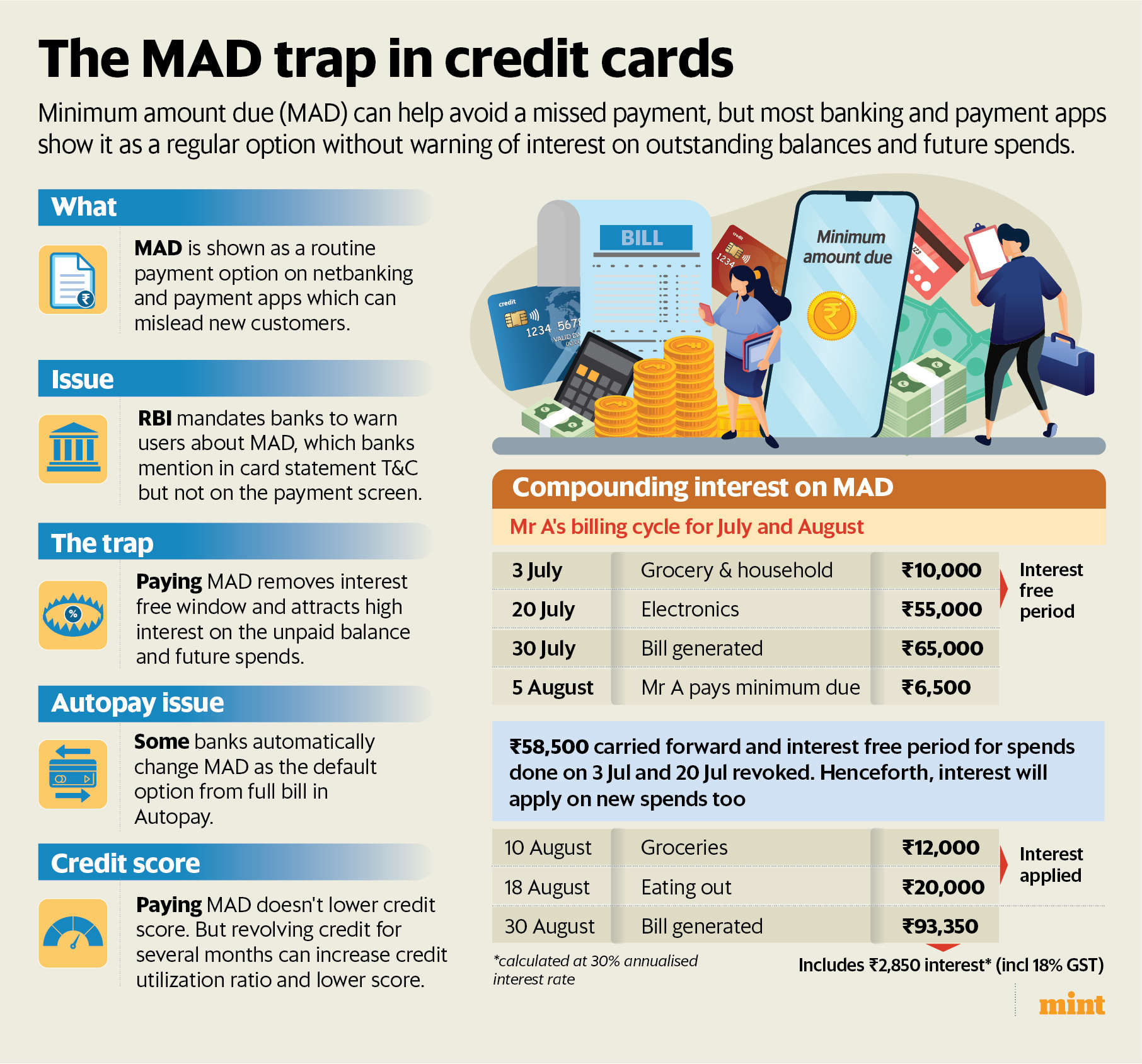
Whatever the mode of payment, ensure that you pay the total amount due. Check your payments regularly, especially if you use autopay, to confirm that the entire bill is being cleared. Read the story by Shipra Singh for more on this.
That’s all from the Mint Money team this week. Until next time!
Deepti Bhaskaran is editor, Mint Money, with two decades of experience as a personal finance journalist. Her work reflects a strong focus on financial literacy, consumer protection and practical money management. She can found at deepti.bhaskaran@livemint.com.
No posts
Comments
Nothing yet. Say the first thing.
Sign in to join the conversation.