

As I write this, a friend is trying to settle a health insurance claim for his daughter. The insurer denied cashless treatment on the grounds that the condition for which she was hospitalised might have been pre-existing.
This is precisely the kind of confusion the insurance regulator sought to prevent when it defined a pre-existing condition as one involving prior symptoms requiring a doctor’s diagnosis or prescribed medication. The child had neither, yet the claim was denied. Fortunately, she was admitted under the care of her paediatrician, who was able to review her medical history and establish that the condition was not pre-existing.
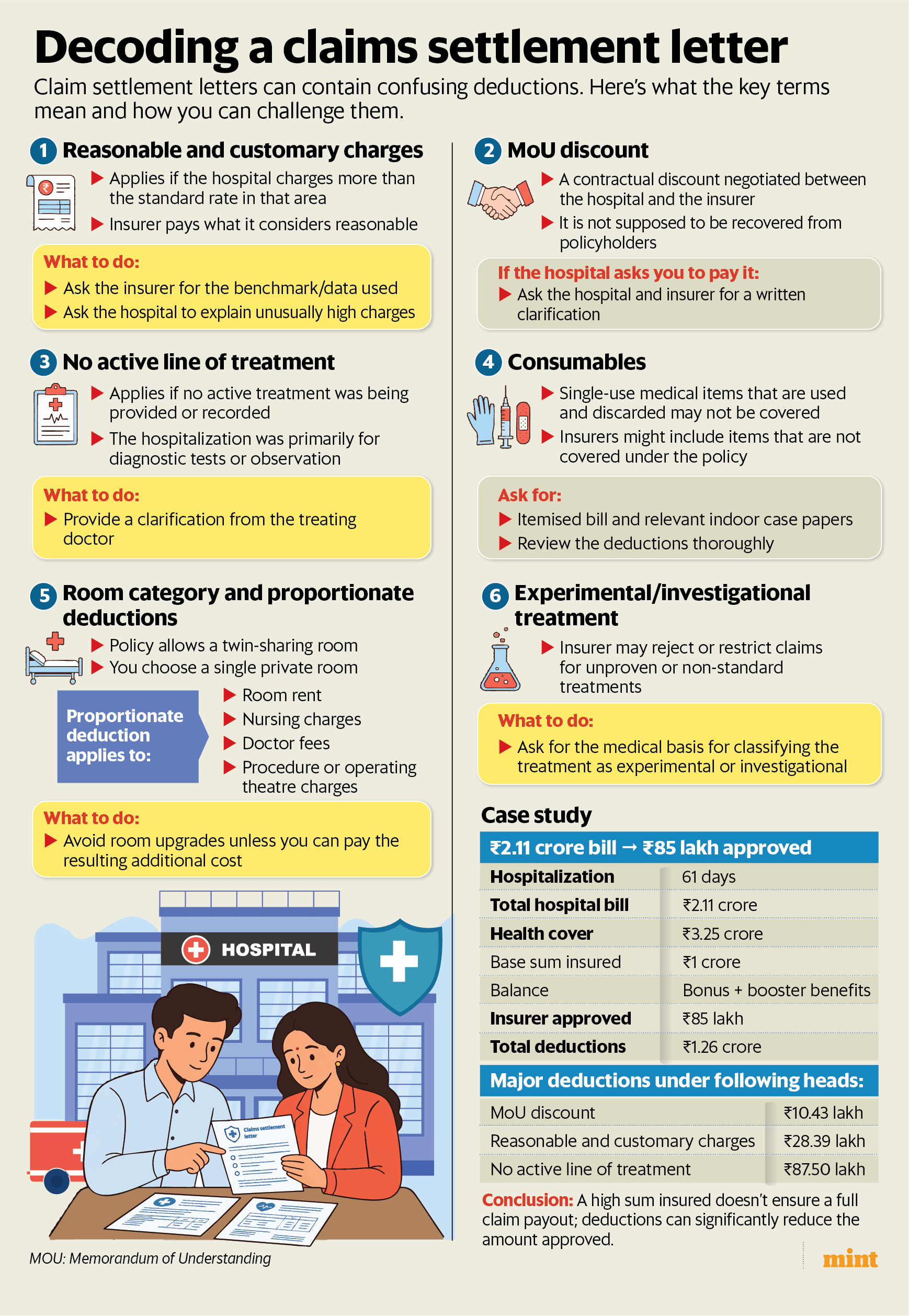
Health insurance claims are becoming increasingly complicated, and not all complications end in a rejection. Some leave you paying more than half your hospital bill from your own pocket. One of the biggest shocks for policyholders is discovering the various deductions that can lead to such hefty payments despite having adequate cover.
Consider this example: a policyholder incurred a hospital bill of ₹2.11 crore and was insured for an even higher amount. Yet the insurer approved only Rs 85 lakh, leaving the patient to pay Rs 1.26 crore. The deductions fell under various heads, ranging from the familiar “reasonable and customary charges” to the more baffling “hospital discount”—an arrangement between the hospital and insurer. The insurer applies this discount while settling the claim, while the hospital tries to recover the amount from the policyholder.
It is common to expect an out-of-pocket payment of 10-15% for incidental expenses such as non-payable consumables. But imagine having to pay more than half the hospital bill yourself.
In this excellent story, Aparajita Sharma takes a deep dive into the various deductions insurers may apply to your final hospital bill. She explains why you should understand them in advance and how to be battle-ready when the time comes to make your policy work for you.
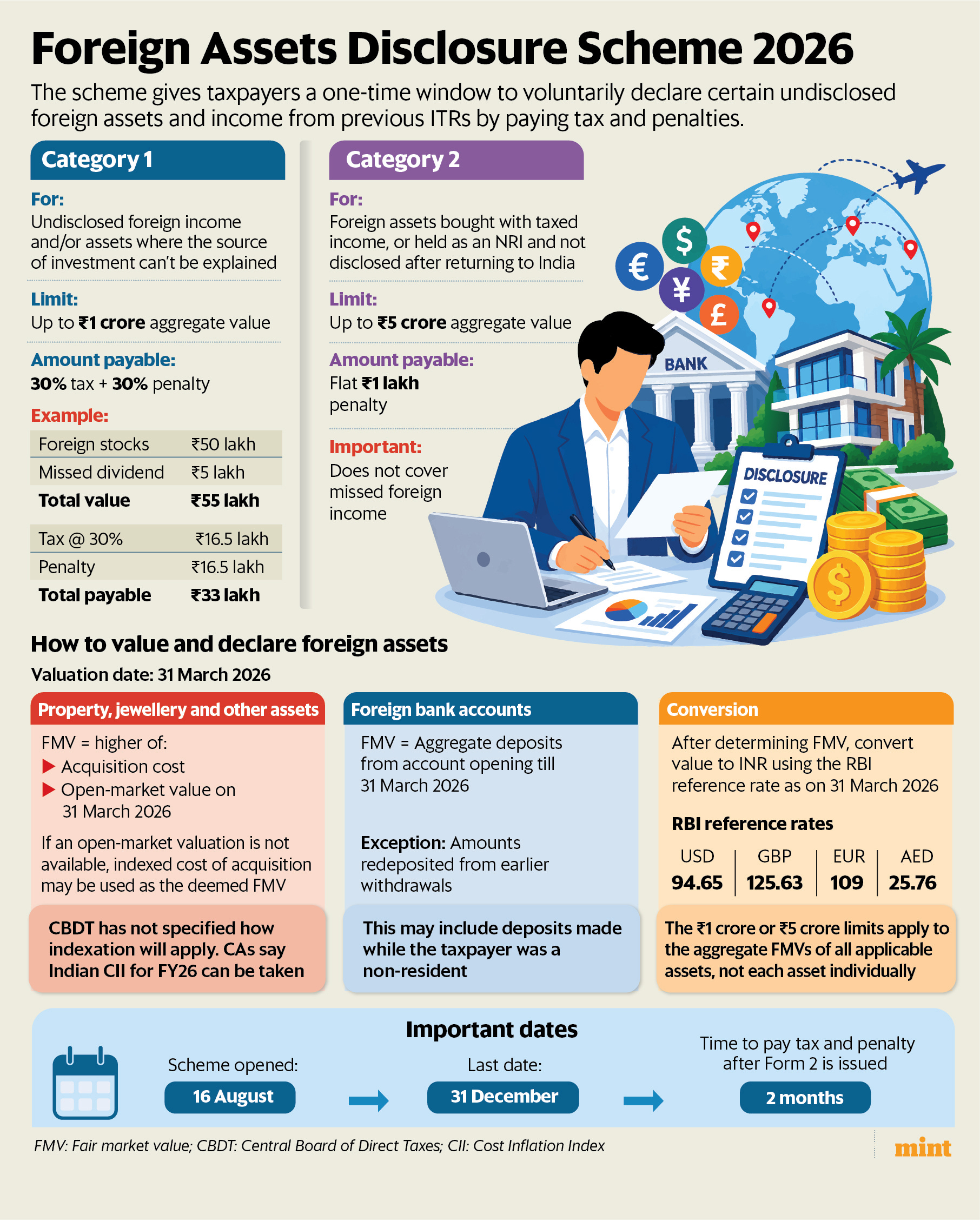
Being battle-ready matters just as much when dealing with the taxman, especially when an inadvertent oversight can put a target on your back under the Black Money Act. Taxpayers who missed declaring foreign income or assets now have a one-time window under FAST-DS 2026 to correct past omissions and avoid harsher penalties and prosecution.
FAST-DS is aimed at small taxpayers who have inadvertently missed disclosing foreign assets and income, including returning non-resident Indians (NRIs), individuals with overseas bank accounts or investments, and employees holding foreign employee stock options (ESOPs) or restricted stock units (RSUs). The scheme is also available to resident but not ordinarily resident (RNOR) individuals, provided they were residents either in the year the foreign asset was acquired or the year they failed to disclose it.
It covers assets or income from prior years that taxpayers failed to report in their returns, omitted by not filing a return, or that otherwise escaped assessment. The relief is not without cost, though. Depending on the nature and value of the omission and the category you fall under, you may have to pay tax and a penalty or a fixed fee.
The window closes on 31 December 2026, making this story by Shipra Singh an important read on who is eligible, what category you fall under, what it will cost and why you should act in time.
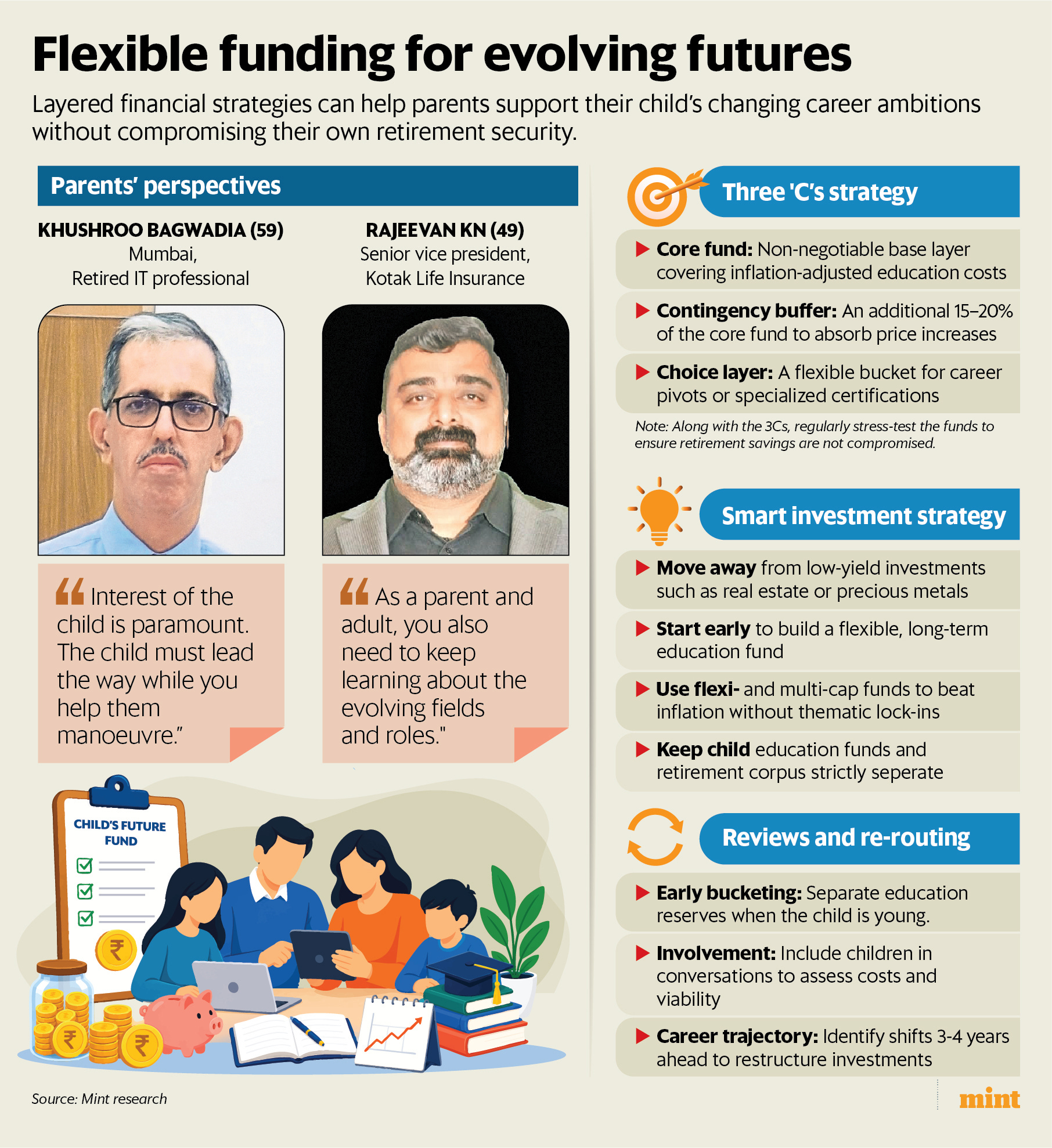
In the investment space, Ann Jacob looked at why investing for your child’s education cannot be a straitjacketed exercise. Preparing financially for your child’s future involves hard math, but it also needs to account for a child whose dreams and aspirations may pivot several times.
Instead of planning for one predetermined course or career, parents need a more layered approach: a core corpus for education, a contingency buffer for cost overruns and a choice layer that allows for last-minute pivots, gap years or specialised courses. The key is to start early, review the goal regularly and involve the child in these conversations. This can help ensure that your retirement corpus does not become the casualty of any last-minute surprises.
Shefali Anand this week reviewed income-plus-arbitrage funds, a relatively new category of debt mutual funds designed to deliver debt-like returns with better tax efficiency.

These funds typically invest at least 35% in arbitrage funds and the remainder across debt funds, qualifying them for long-term capital gains tax of 12.5% if held for at least two years. But their short-term returns have been mixed, their debt portfolios vary widely and their complex structure makes comparison difficult. While advisors recommend them to wealthy clients looking to park money for more than two years because of their tax efficiency, they are unlikely to make sense in simple portfolios.
And finally, on the occasion of World Senior Citizens’ Day on 21 August, Ann Jacob looked at the various benefits senior citizens enjoy across taxes, investments and everyday spending in India.
Unlike welfare states and developed economies that provide a state-funded pension layer and stronger healthcare and eldercare systems, seniors in India largely need to rely on their own savings to fund their post-retirement years. Tax concessions, higher interest rates on deposits and discounts on travel and utilities provide some cushioning, but the larger financial responsibility still rests with the individual.
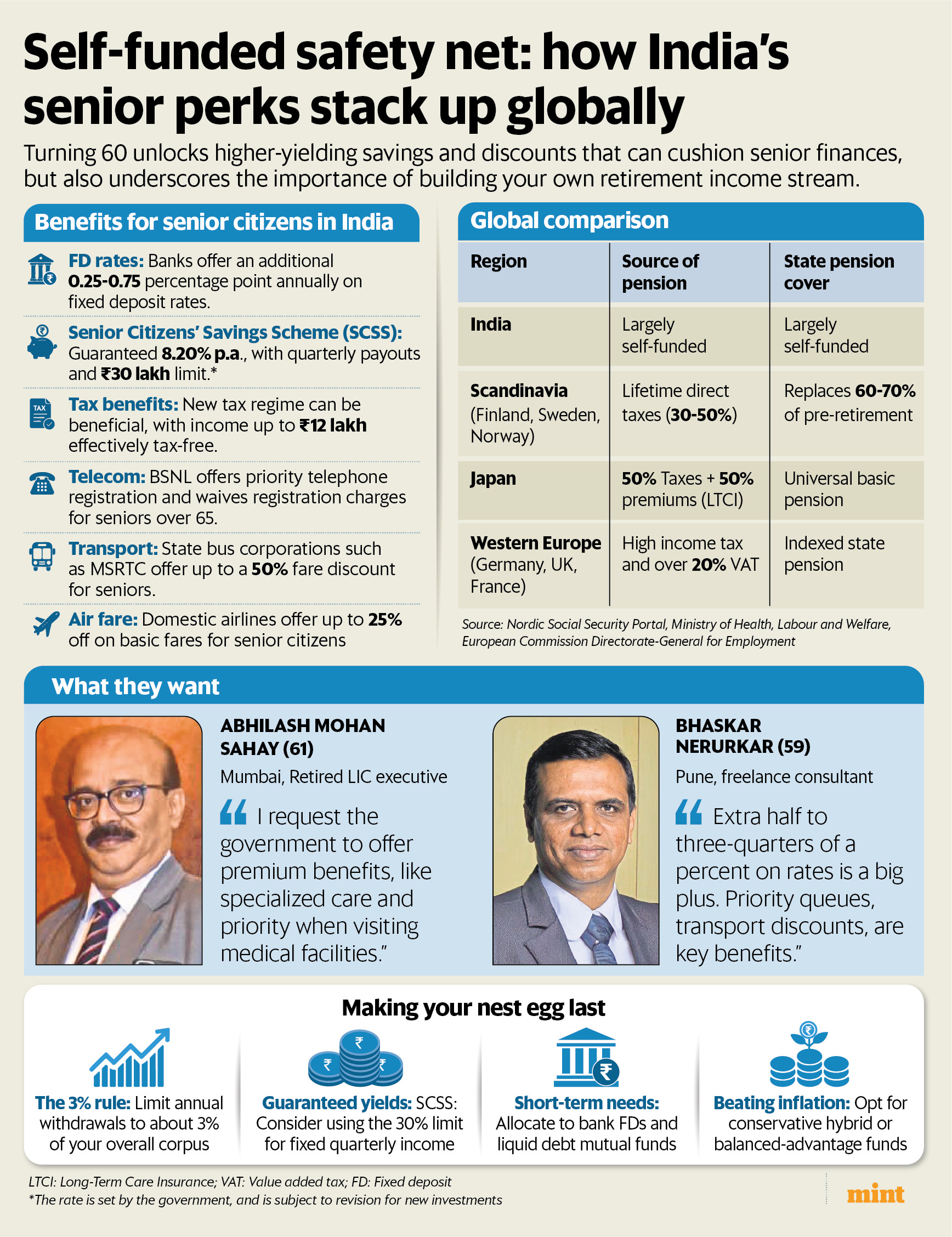
So, even as becoming a senior citizen may mark your retirement from work, your money cannot afford to retire. You still need to keep your eye on the ball to ensure that your corpus lasts through your retirement years.
In this week’s Money Guru, Ananya Grover spoke to Jay Kothari, executive director and international business head at DSP Asset Managers, about why India could emerge as an “AI hedge”. His advice: look for fundamentally strong companies with global and local growth potential that are trading below their intrinsic value, and avoid getting swept up by the coming IPO frenzy.
That’s all from the Mint Money team this week. Until next time!
Deepti Bhaskaran is editor, Mint Money, with two decades of experience as a personal finance journalist. Her work reflects a strong focus on financial literacy, consumer protection and practical money management. She can found at deepti.bhaskaran@livemint.com.
No posts
Comments
Nothing yet. Say the first thing.
Sign in to join the conversation.