
Wide release: Available for free by July 30, 2026, on Apple, Spotify, YouTube, etc.
Not medical advice.
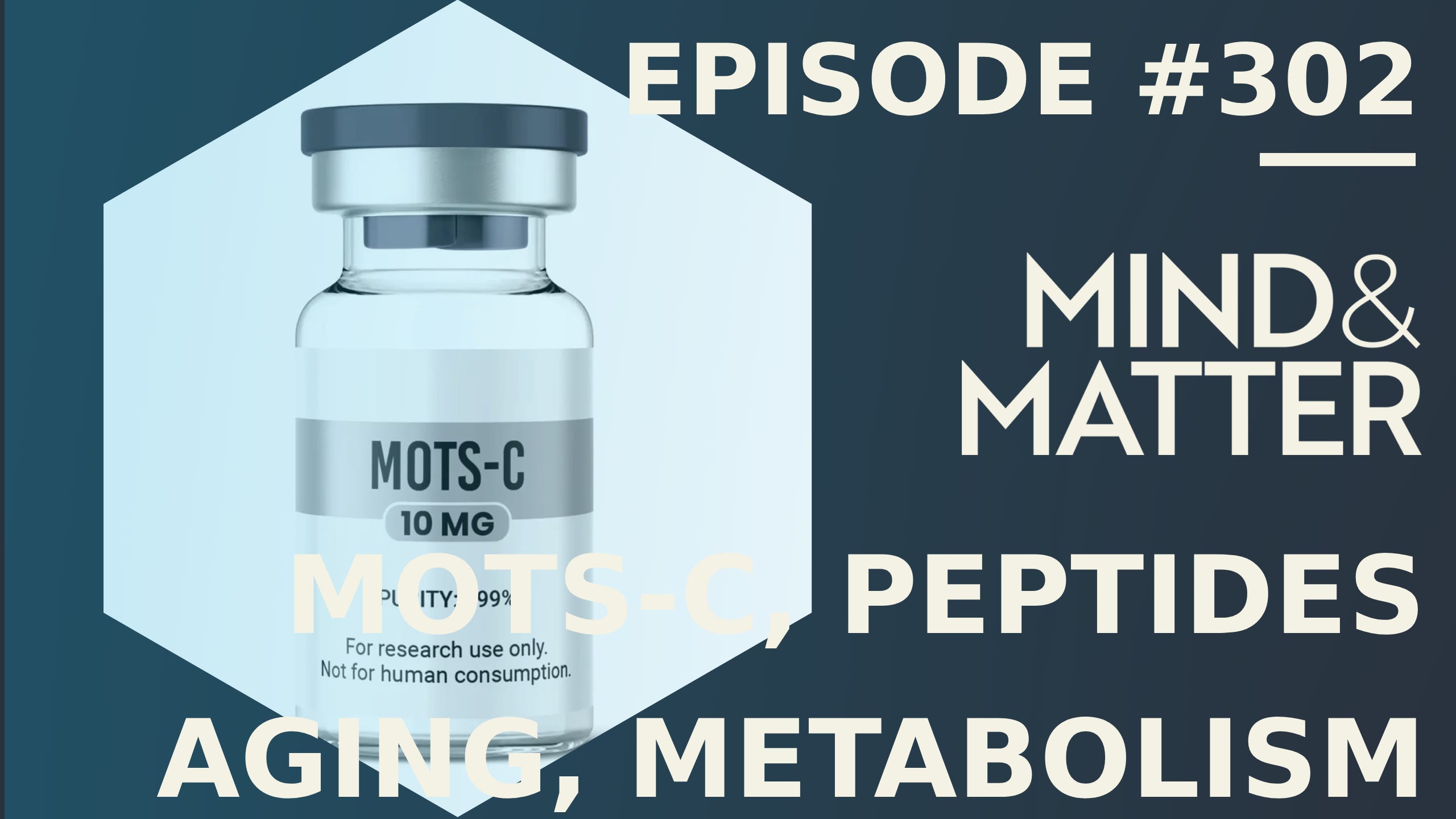
Nick speaks with Dr. David Lee about the mitochondrial-encoded peptide MOTS-c. Lee describes its discovery within the mitochondrial genome, its movement into the nucleus under metabolic stress to broadly reshape gene expression, and preclinical evidence that it blocks diet-induced obesity, improves treadmill performance in older mice, and modulates autoimmune responses.
TOPICS DISCUSSED:
Mitochondrial Roles: Not just ATP production, but “speaker of the house” via communication molecules that “talk” to the rest of the cell.
Origin of Communication: Mitochondrial peptides were likely co-opted from ancient antimicrobial factors to synchronize nuclear and mitochondrial genomes.
MOTC Discovery: Identified in mitochondrial ribosomal RNA regions linked to interferon responses.
Stress Induction: MOTS-c is produced in response to exercise, immune activation, and nutrient withdrawal; circulates as a mitokine.
Nuclear Regulation: MOTS-c translocates to the nucleus under stress and acts as a nonspecific cofactor that shapes chromatin accessibility and gene expression.
Metabolic Effects: Prevents diet-induced obesity and fatty liver in mice without altering baseline weight; engages AMPK and suppresses anabolic pathways.
Immune Modulation: Shifts immune cell programs to reduce autoimmune attack in type 1 diabetes models.
Aging Phenotypes: Daily or intermittent dosing doubles running capacity and preserves walking ability in old mice.
ABOUT THE GUEST: Changhan David Lee, PhD is Associate Professor at the University of Southern California Leonard Davis School of Gerontology. His laboratory investigates mitochondrial communication and microproteins in the biology of aging.
RELATED CONTENT:
Article | MOTS-c & Cellular Energy Homeostasis
KNOW YOURSELF:
Visit the SUPPORT PAGE if you find value in this content. Includes discount codes + links to affiliate partners, including products to help you measure and manage your health.
Listen or watch on your favorite platform:
PRACTICAL TAKEAWAYS:
Intermittent rather than continuous metabolic stress aligns with the MOTS-c peptide’s natural production rhythm.
Exogenous MOTS-c use should respect short half-life and cycling patterns observed in animal studies rather than continuous elevation.
SUBSCRIBER CONTENT BELOW: Reference paper + episode transcript.
Comments
Nothing yet. Say the first thing.
Sign in to join the conversation.