
Hello dear chaps,
I read a funny piece by Zulie Rane this week about the giveaways in AI writing and it got me thinking about what sets human writing apart from the robots.
What differentiates it now, but also what you can do to separate yourself from the millions of AI-generated blogs, books, and tweets that will continue to flood the internet in future.
(I mean, Amazon has already banned AI authors from publishing 3 books a day like wtf, as if it’s even a thing to try and publish THREE books a day)
AI content is already everywhere – and the proliferation only going to get worse.
If you want to stand out, the key is to double down on what makes you… you.
Today we’ll cover:
✍️ How to find your voice
📚 A reading lesson I wish someone told me as a kid
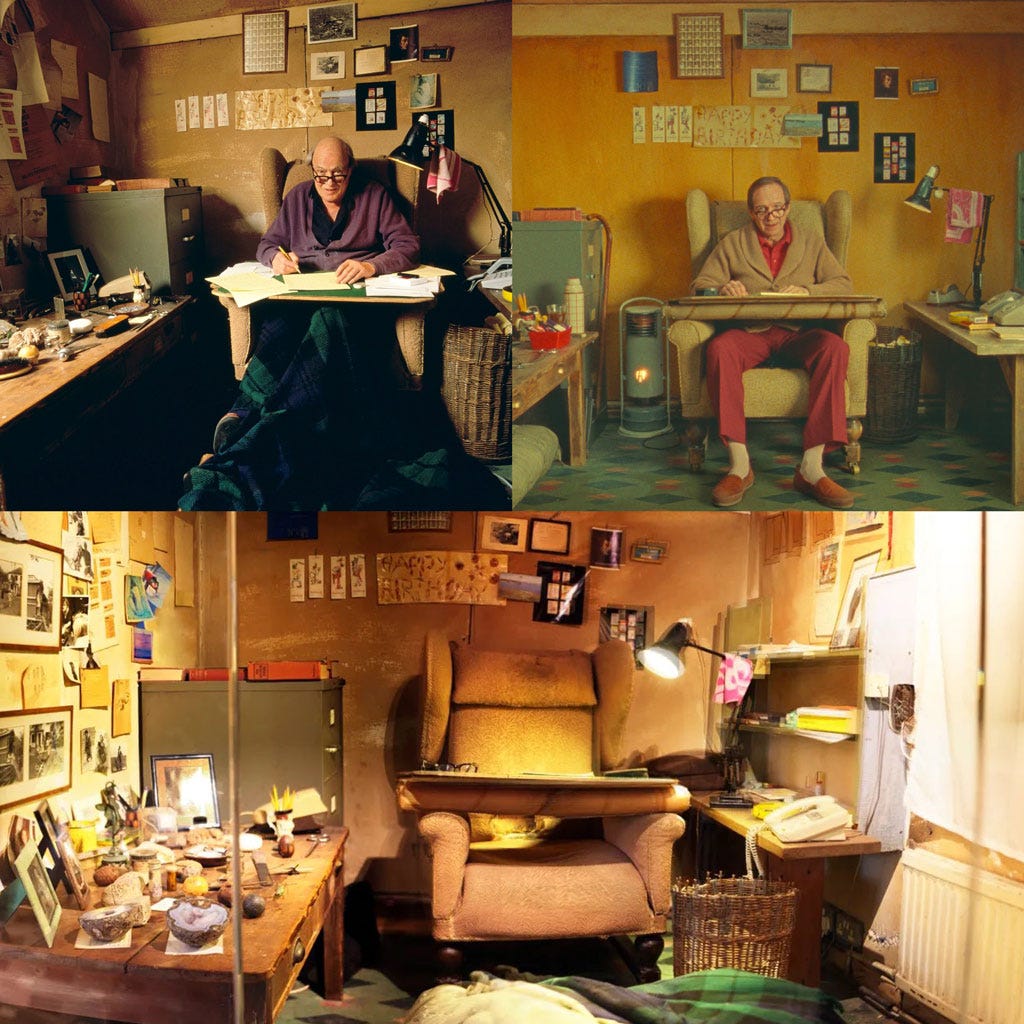
☕️ One cool way you can see Roald Dah’s famous writing shed
Let’s dive in!

What is your writing voice, and why is it important?
Your voice is what makes your writing your writing. It’s your word choice, your style, your personality seeping into the language you use, and the way you use that language.
If you’re blogging, writing a YouTube script, or posting on social media, you should actively be using your voice as a tool.
It helps you to stand out
It connects you to your audience
It adds character to your work
The best creators weave voice through their work – and it’s part of the reason we love them so much.
YouTuber Ali Abdaal recognized he was using certain phrases automatically, like productivity grease monkey, cheeky work sesh, or whatever else it might be – and he actively started scripting YouTube videos in a way that used these phrases. It helped to build his brand and make him more approachable.
The blogger Tim Denning cracks jokes, throws in Aussie references, and has fun with his articles.
Same with Mark Manson, author of The Subtle Art of Not Giving a F*ck:
When I was like four years old, despite my mother warning me not to, I put my finger on a hot stove. The stove was red and bright and shiny and I knew yummy food came from it, so the allure was irresistible.
It’s like he’s talking to you.
Why? Because he writes like he speaks.
I don’t mean literally – er – you know, ah, it’s escaping me now… that sort of stuff
Otherwise, we’d never actually be writing anything. But make a note of the phrases you use, and the way you chat when you’re with friends, and sprinkle it into your online writing. Be more you.
How can you find your voice? Here are 3 quick tips:
Read widely. Adult books, children’s books, blogs, magazines, tweets. Read actively – taking note when a phrase or word sticks with you.
Embrace your quirks. Do you talk faster when you get excited about something? You can recreate that in your writing by letting your sentences flow without as much punctuation.
Write like you’re talking to a friend.
When I was a kid, I hated reading. It felt too much like work.
Sometimes at school it literally is work. Countless times I forced myself to finish books because I had to, and it reinforced this belief that books weren’t for me.
But this idea that you have to finish a book you start has sort of lingered over me, and it’s made it harder to read. If a book sucks, I slow down. When I could be reading something else, I try to plow through.
This has several problems:
It makes reading a slower process, because you don’t enjoy it
It puts you off starting another book, because you feel like you won’t enjoy it
It stops you finding the books you do enjoy
Then I saw Ryan Holiday’s post on the reading rules that changed his life, and one of them was to just stop reading when the book sucks.
It sounds simple.
It is simple.
But somehow, I just never really considered it.
When you read an article online or check out a blog, the second you get bored you can click away.
But with a book, for some reason, it’s always felt different.
I’ve started to quit the books I don’t enjoy much faster. Think about it: we’re never going to read all the books we want to anyway. So you may as well get to the good stuff – the ones that REALLY resonate – faster.
I stumbled on these the other day and they look fantastic.
You’ve got The Wonderful Story of Henry Sugar, The Swan, The Rat Catcher, and Poison to look forward to.
The coolest thing about these films is that Wes Anderson recreated Dahl’s famous writing shed to perfection, right down to the birthday sign behind his chair.
Here’s a pic, courtesy of Austin Kleon

That’s it for this week!
If you got something from this, I’d love it if you could hit the ❤️ button to let more readers find it on Substack.
And of course, feel free to share it with a mate!
– Mike
No posts
Comments
Nothing yet. Say the first thing.
Sign in to join the conversation.