
This week’s two projects approach mid-century living from different moments in a house’s life. The Ridgewood House begins with the family itself, showing how architecture can be shaped around routines, sunlight, and the way people move through the day. The Eichler renovation begins decades later, asking how those original ideas can continue to serve a family whose needs have changed.
Together, they make a useful point: good residential architecture is not defined only by what is preserved, but by how well it continues to support the people living in it. Whether designing from scratch or adapting an existing home, the strongest decisions often begin with everyday life.
Don’t forget to let us know if you like this new article format in the poll below.
(Marco Guagliardo - Mid-Century Home’s Editor in Chief)
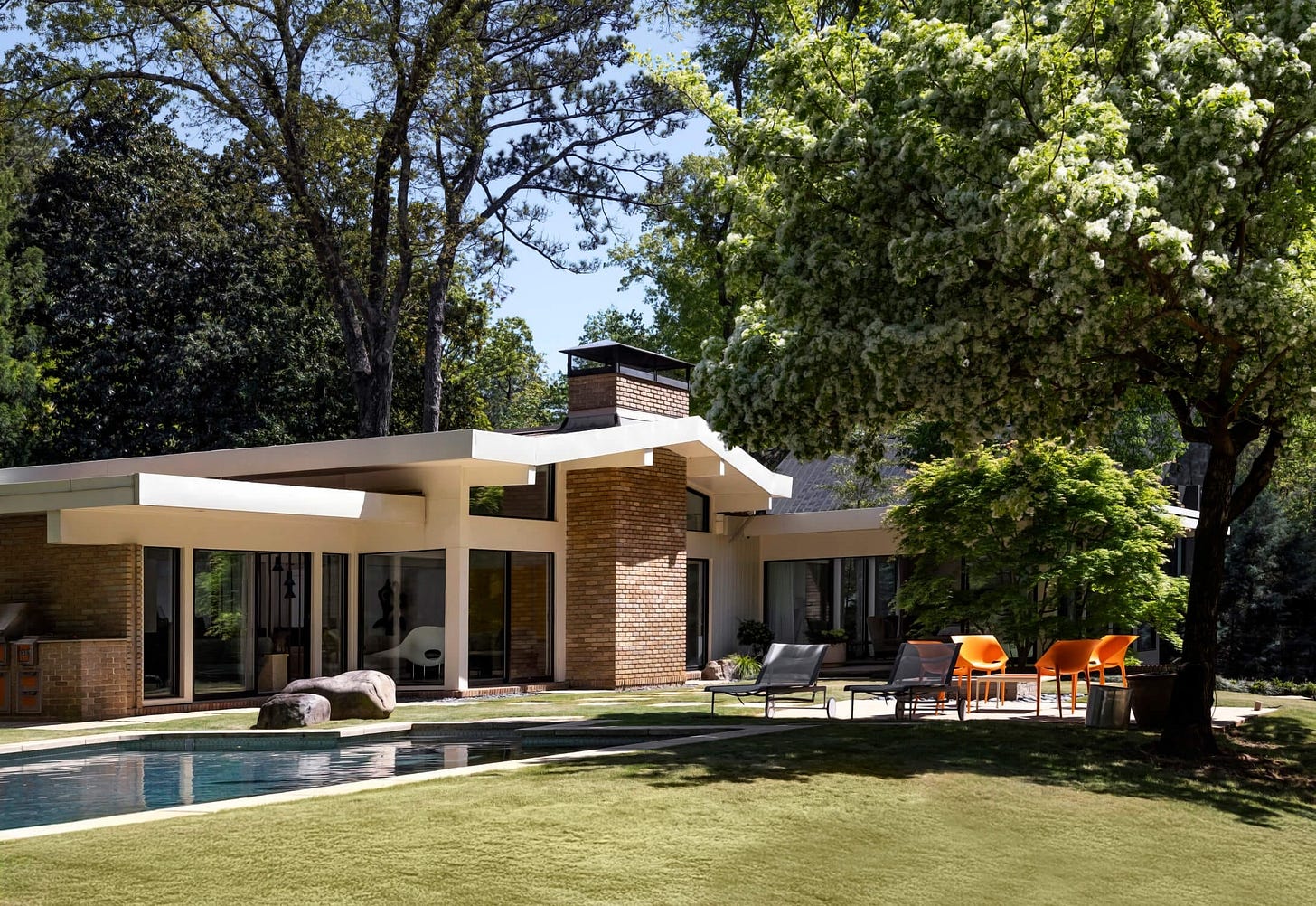
A 1959 Atlanta home designed around the routines of one family.
Mid-century architecture is often discussed through materials, structure, and form, but some of its most enduring lessons begin with a simpler question: how should a house support everyday life?
When Jerry Cooper designed the Ridgewood House in 1959, he started with the routines of the family who would live there, from breakfast and entertaining to outdoor play and the movement of sunlight through the day. The result shows how architecture can gain longevity by responding closely to people and place rather than fashion.
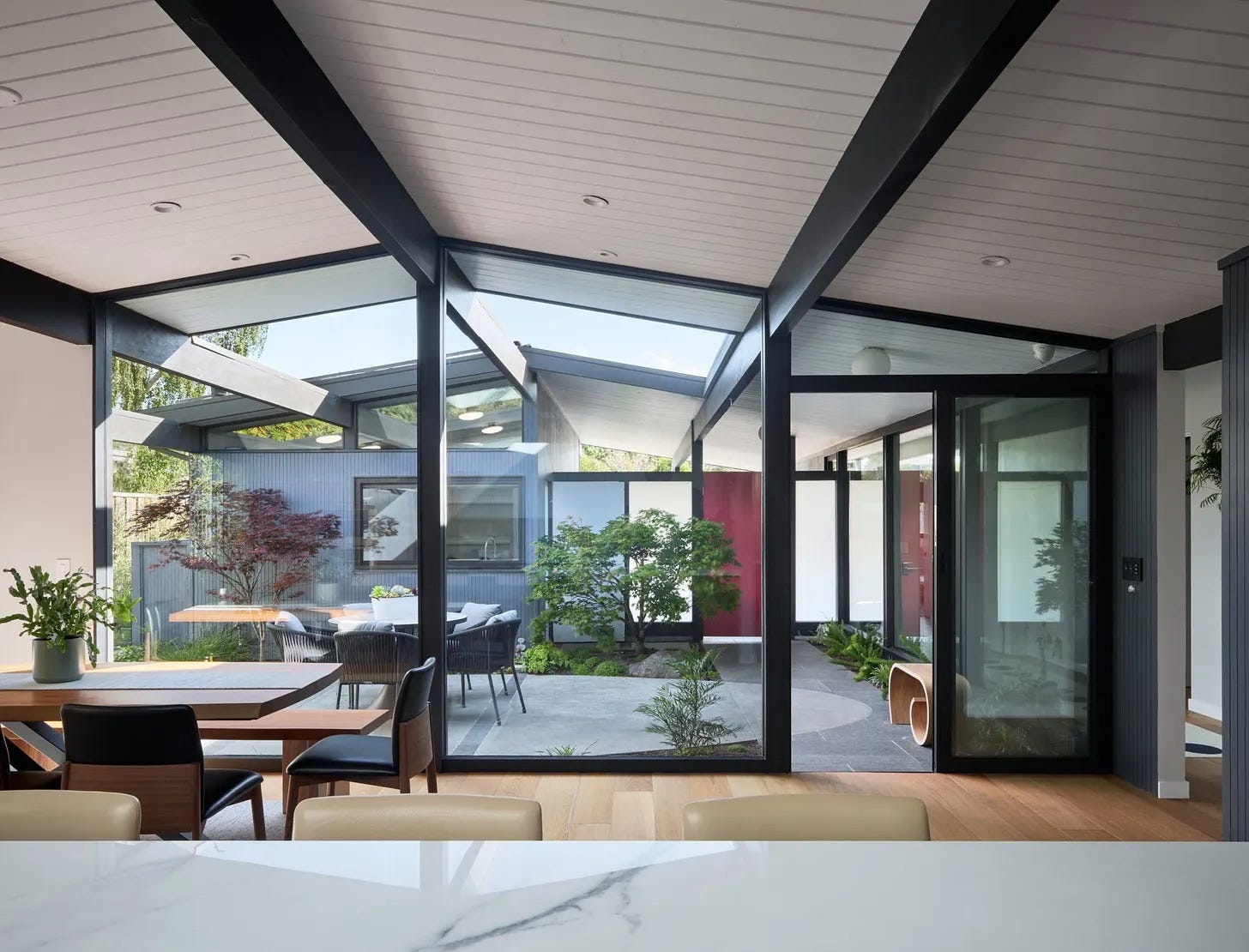
A Palo Alto renovation reshapes this home around the changing needs of a growing family.
Preserving an Eichler does not necessarily mean keeping every room or architectural element exactly as it was. These houses were designed around openness, informal living, and a strong relationship with outdoor space, principles that can also guide how they evolve.
This Palo Alto renovation by Klopf Architecture makes that distinction clear. Several significant changes were made, yet each one responds to how the family actually lives. The project asks us to consider preservation as something more flexible: protecting the ideas behind a house while allowing its plan to change with the people who inhabit it.
No posts
Comments
Nothing yet. Say the first thing.
Sign in to join the conversation.