
Restoring a mid-century house is only part of the story. Once the architecture has been preserved, there is another question to answer: how do you make it feel personal, comfortable, and suited to the way someone lives today?
This 1951 Los Angeles home had already been carefully restored when LAUN began working on its interiors. Instead of altering the architecture again, the designers introduced warmth through color, furniture, walnut built-ins, and a few carefully considered changes. The result shows how a restored house can move beyond preservation and become a home again.
(Marco Guagliardo - Mid-Century Home’s Editor in Chief)
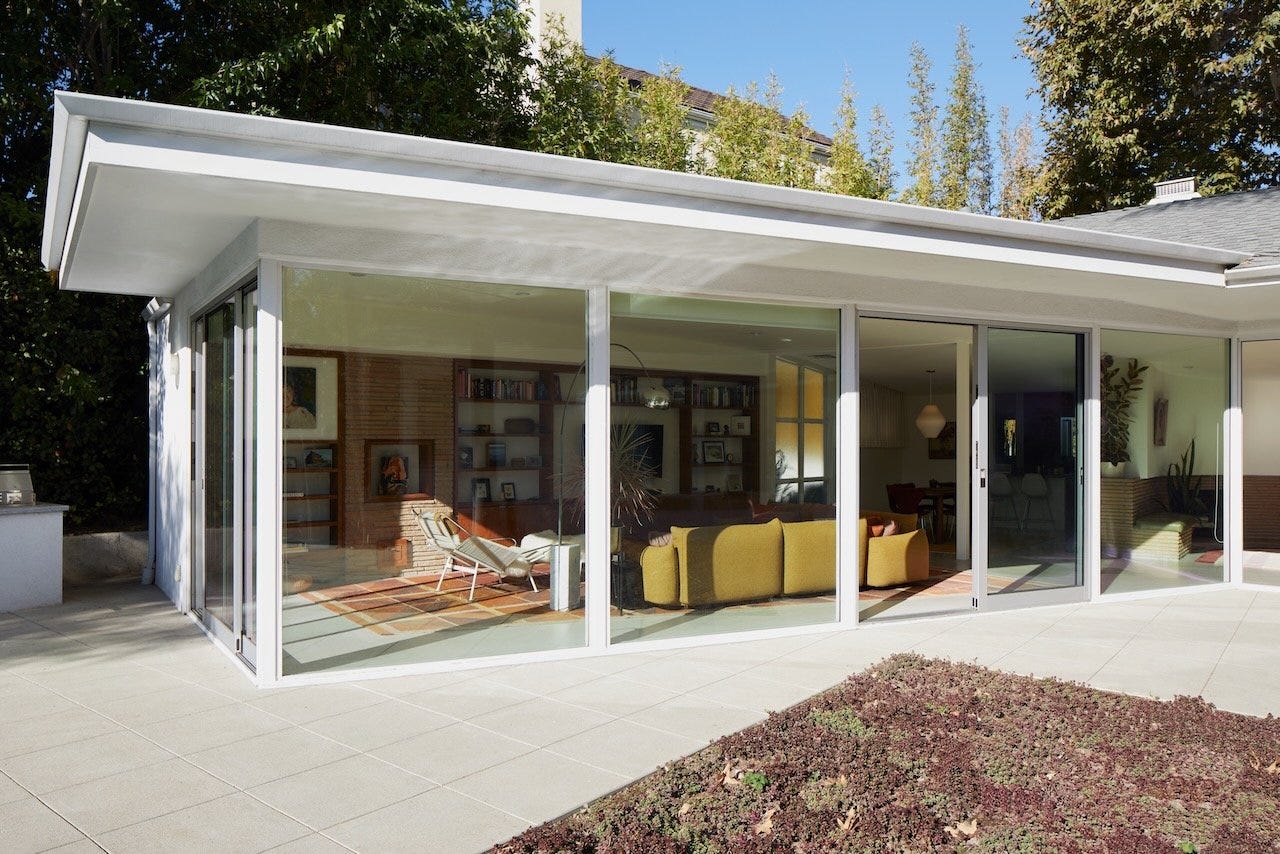
When LAUN began working on this 1951 Studio City residence, the architecture was already in remarkably good condition. Designed by California architect Henry C. Burge, who later taught Frank Gehry at USC, the house had been carefully restored by its previous owner, an architect.
The starting point was therefore unusual. There was no need to recover a compromised floor plan or undo decades of insensitive alterations. Instead, the question was how to make an already restored mid-century house feel comfortable and personal without turning it into a period display.
The current owner, purchased the house in 2019. As working from home became increasingly important during the pandemic, the interiors needed to support both daily life and her professional routines while retaining the character that had initially drawn her to the house.
Comments
Nothing yet. Say the first thing.
Sign in to join the conversation.