
In today’s Journal, David Petraeus, the retired U.S. Army General, teams up with a former Prime Minister of Ukraine, Arseniy Yatsenyuk, to commemorate the 35th Anniversary of Ukraine’s freedom and independence from the grip of the collapsed Soviet Union. How right they are to lament the changes we have seen in the last several years!
While this anniversary is significant to Ukraine, it is part of a much larger story of how the global order has changed over the past 3½ decades.
We have traveled from the euphoria that followed the collapse of Soviet totalitarianism—which many believed to be the final prison of nations—to the horror of Russia’s revanchism against Ukraine and attempt to overturn the international order.
We have traveled from the complacent conviction that the liberal international order had triumphed and that we had seen “the end of history” to the painful realization that authoritarianism retained its power over nations.
We have traveled from the illusion that humanity had left global wars behind forever to the stark prospect of a third world war that could span continents and have devastating global consequences.
We believed that the defining metaphor of the new era would be the fall of the Berlin Wall. In reality, the defining metaphor of this new era is the inspirational, determined and innovative defense of Ukraine’s freedom in the face of unprovoked aggression—and, indirectly, Ukraine’s defense of Europe and the North Atlantic Treaty Organization as well.
Yes, this is correct, although few Americans understand it, and the Trump administration has been slow to grasp it.
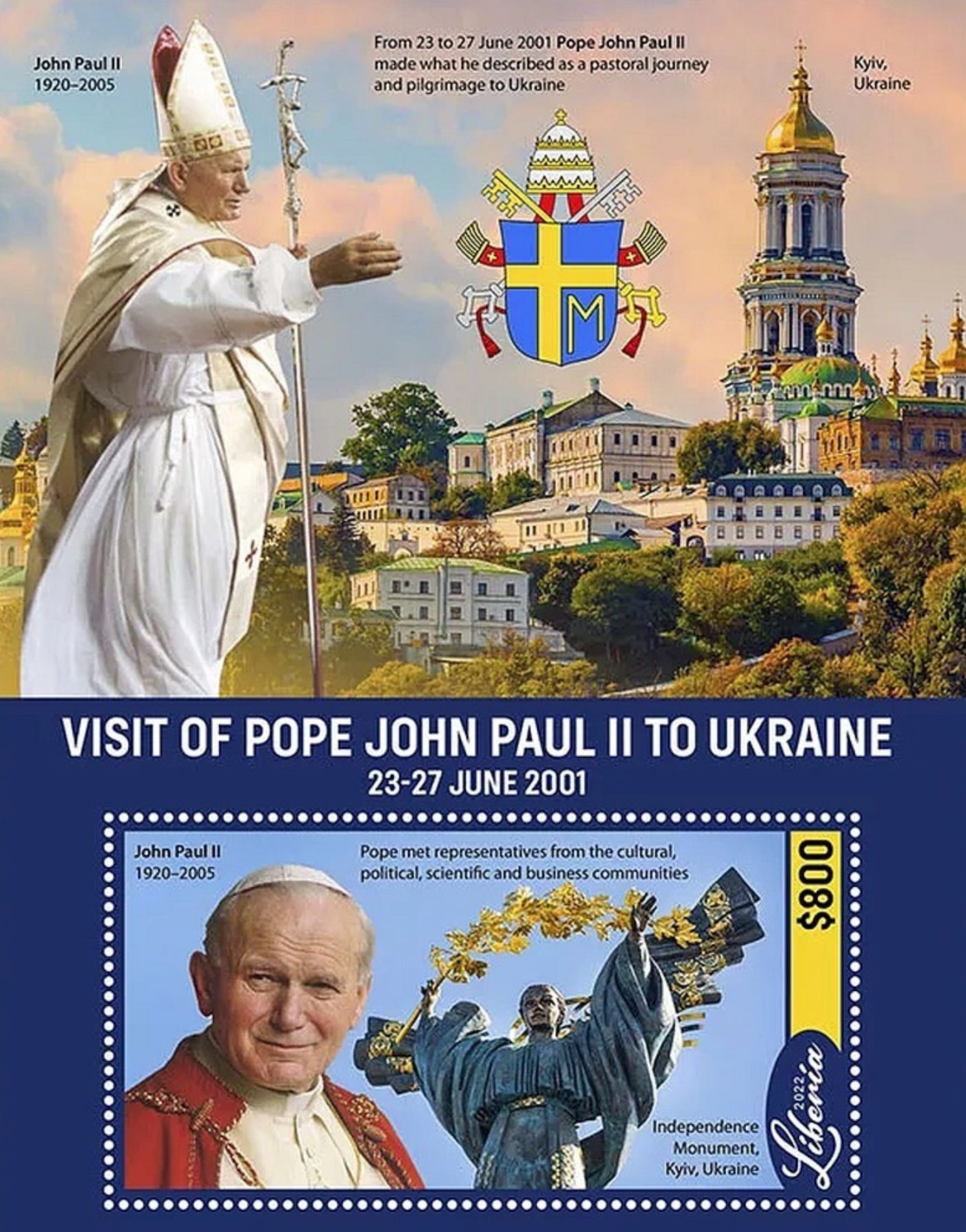
From a Catholic point of view, the war of Russia against Ukraine is an attack too, both directly and indirectly, on the freedom of Catholic Christians to maintain unity with the See of Peter. There is a long history. Consider the 1946 “Lviv Sobor” as a start:
The sobor was followed by a wave of repression against those priests and monks who had refused to accept the ‘re-union’. The Ukrainian Greek Catholic church, as such, became an illegal, catacomb organization. Extensive popular resistance was demonstrated against the new situation as many parishes refused to allow Russian Orthodox clergymen into their churches. In September 1948 the Sponsoring Group leader, Havryil Kostelnyk, was assassinated in Lviv, allegedly by a ‘Vatican-nationalist’ agent; in fact, all indications are that this act was masterminded by the Soviet authorities. The leading polemicist against the Ukrainian Greek Catholic church, Yaroslav Halan, was killed by Ukrainian nationalists in October 1949. In 1972 the ‘re-union’ of the Greek Catholic church was ratified by the local sobor of the Russian Orthodox church. In the West the uncanonical nature of the Lviv Sobor was noted, and the liquidation of the church roundly condemned by Catholic authorities, most notably by the papal encyclical The Oriental Churches of 15 December 1958 and, more recently, at the meeting of the synod of the Ukrainian Catholic bishops in Rome in 1980.
When John Paul II visited Ukraine in the summer of 2001, at the time of an anticipated major celebration of the country’s 10th anniversary of independence, he said upon his arrival:
I greet you, Ukraine, brave and determined witness of adherence to the values of faith. How much you suffered in order to vindicate, in difficult times, the freedom to profess this faith! …
What an immense burden of suffering you have had to endure in years past! But now you are responding enthusiastically and re-organizing yourselves, seeking light and comfort from your glorious past. Your intention is to continue courageously in your resolve to spread the Gospel, the light of truth and love for every human being. Do not lose heart! This is an undertaking that honours you, and the Lord will certainly not fail to grant you the grace to bring it to completion. …
Down the centuries, the Ukrainian people has known harsh and exhausting trials. How can we fail to recall, remaining in the context of the century just ended, the scourge of the two World Wars, the recurring famines, the disastrous natural calamities — extremely sad events that in their wake left millions dead? In particular, under the oppression of totalitarian regimes such as Communism and Nazism, the people risked losing its national, cultural and religious identity; it saw the destruction of the intellectual elite, the custodians of the Nation’s civil and religious heritage. Most recently, there was the radioactive accident at Chernobyl, with its tragic and pitiless consequences for the environment and the lives of so many human beings. But it was precisely at that moment that the definitive change for the better began. That apocalyptic event, which led your country to repudiate nuclear weapons, also brought your citizens to a vigorous re-awakening, inspiring them to set out on the road to a brave renewal.
It is difficult to explain as the result of merely human dynamics the epoch-making changes of the last two decades. But whatever the interpretation given, it is certain that from these experiences a new hope has been born. It is important not to disappoint the expectations which now fill the hearts of so many, especially among the young. With the contribution of everyone it is now urgently necessary to promote in the cities and villages of Ukraine the blossoming of a new, authentic humanism. This is the dream that your great poet Taras Shevchenko expressed in the famous verse: “. . . enemies will be no more, but there will be the child, there will be the mother, there will be people on the earth!“. …
Ukraine has a clearly European vocation, emphasized also by the Christian roots of your culture. My hope is that these roots will strengthen your national unity, bringing the life-blood of authentic and shared values to the reforms now under way. May this land continue in its noble mission, with the pride expressed by the poet just quoted when he wrote: “Nowhere in the world is there another Ukraine, nowhere is there another Dnieper“. You who live in this Land, do not forget this!
As you can see if you read the whole thing, he phrases what he wants to say shrewdly, because he wishes to memorialize the courage and suffering of some Ukrainians, without opening up old wounds.
His closing words, as this great Pontiff departed— no doubt remembered by many who are fighting their defensive war today—were these:
In the school of Christ, in the footsteps of Saint John the Baptist and of the saints and martyrs of this land, may you too, dear brothers and sisters, be brave enough always to give priority to the values of the spirit.
Dear Bishops, priests, men and women religious, who have faithfully accompanied this people at the price of personal sacrifices of every kind, sustaining them in the dark times of the Communist terror, I thank you and I offer you this encouragement: continue to be zealous witnesses to Christ and good shepherds of his flock in this beloved country of Ukraine.
You, dear young people, be brave and free! Do not let yourselves be taken in by the deceptive mirages of an easy happiness. Follow the way of Christ: he is demanding, certainly, but he alone can help you to savour the full meaning of life and enjoy peace of heart.
You, dear parents, prepare the way of the Lord before your children. Bring them up with love, and set a good example by living the principles you teach. And you, teachers and leaders of society, deepen your commitment to promoting the complete development of the human person, fostering in the young a deep sense of justice and of solidarity with the less fortunate.
May you be, one and all, “a light to the nations” (Is 49:6)!
City of Kyiv, may you be a “light to Ukraine“. From you there set out the evangelizers who down the centuries have been “John the Baptists” for the peoples dwelling in these lands. How many of them, like John, suffered in order to bear witness to the truth, and by their blood became the seed of new Christians. May future generations never lack men and women of the mettle of these, your glorious ancestors.
Most Holy Virgin, Protectress of Ukraine, you have always guided the Christian people on their pilgrim way. Continue to watch over your children. Help them never to forget the “name”, the spiritual identity which they received in Baptism. Help them to rejoice always in the priceless grace of being followers of Christ (cf. Jn 3:29). May you be the guide of each one. You, Mother of God and our Mother, Mary!
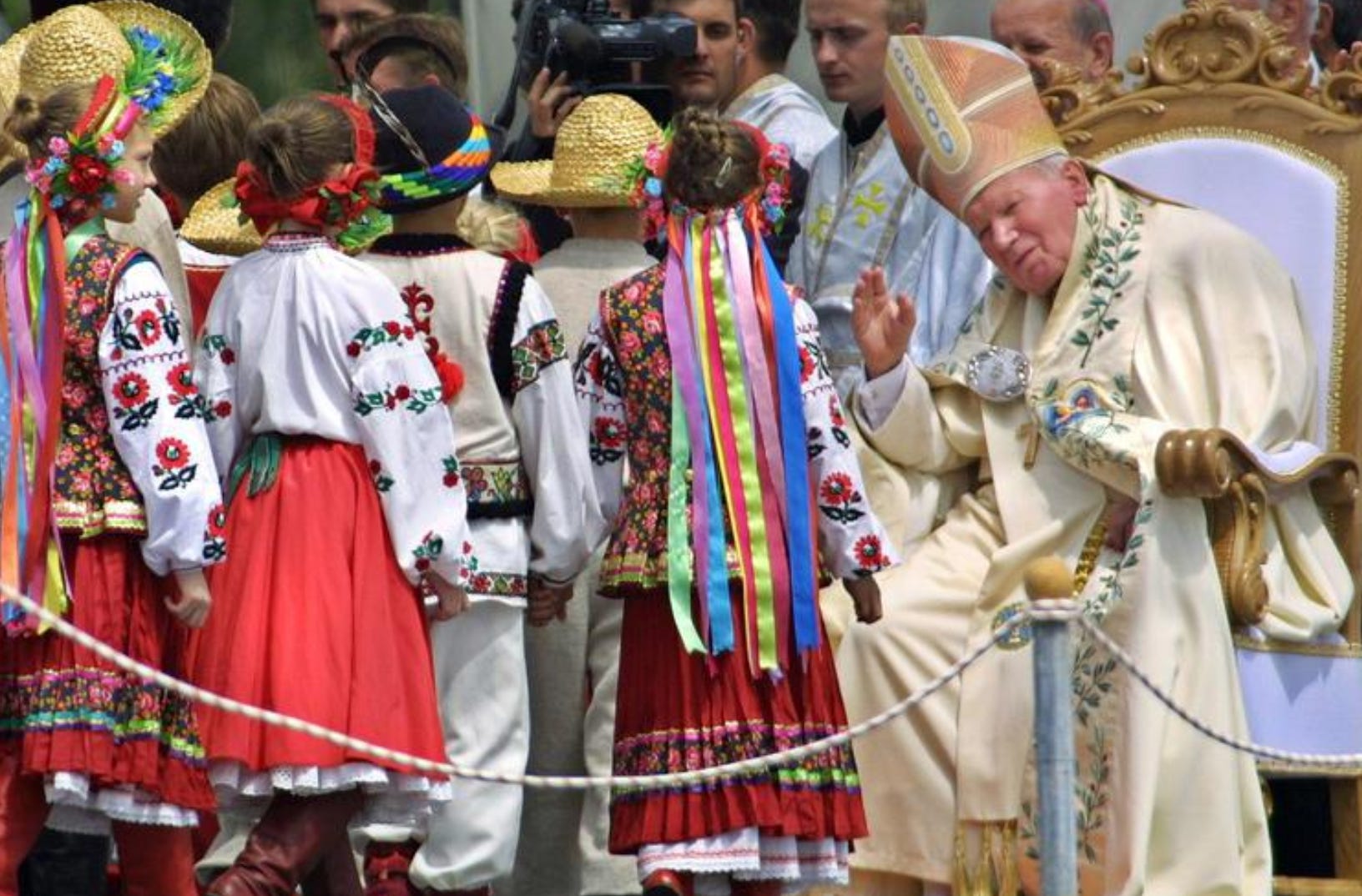
Practically speaking, U.S. military support of Ukraine must be conditional on its advancing our national interest broadly construed, or at least, on its not being incompatible with it. But where our sympathies should be, as a free people, is clear.
The occasion of this anniversary led me to prompt Claude to do some research on my own name. Here is what it came up with:
Distribution. Pakaluk is a genuinely rare surname. Forebears.io records it as held by around 33 people in Poland, its most common country, with the remainder mostly in the United States; the surname’s Polish concentration and Slavic form place it squarely within the West Slavic/East Slavic borderlands — the region spanning eastern Poland, Galicia, and western Ukraine.
Morphology. The name splits cleanly into a root, Pakal-, and the suffix -uk. That suffix is one of the most diagnostic markers in Ukrainian and Polish-Ukrainian borderland surnames: it denotes descent (”son of” or “descendant of”), and its concentration is specifically associated with Galicia and the western Ukrainian lands — the same region that produced most Ukrainian-Canadian and Ukrainian-American immigrant surnames of this shape (Shevchuk from shvets, “cobbler”; Honcharuk from honchar, “potter”; Pavliuk from Pavlo). So the surname’s form itself points toward a Ukrainian or Polish-Ukrainian borderland origin rather than a Polish-interior or Jewish one.
The root. The most plausible source for Pakal- is the dialectal Ukrainian noun пакіл (pakil, genitive пакола/pakola) — a stake, picket, or peg, most often one driven into the ground to tether an animal or support a fence or tent. It’s etymologically related to the standard Ukrainian кіл (kil, “stake”), with a prefixed pa-, and belongs to a wider Balto-Slavic family of words for stakes and posts (cognate with Lithuanian kuõlas). If that derivation is right, Pakaluk would belong to the same broad class as many Slavic surnames built on everyday rural implements — the “descendant of [the man known for/associated with] the stake” — plausibly an occupational or nickname surname, perhaps for someone who set or worked with stakes and pickets, or a nickname for someone tall and thin, on the pattern of similar “stake/pole” nicknames attested elsewhere in Slavic onomastics.
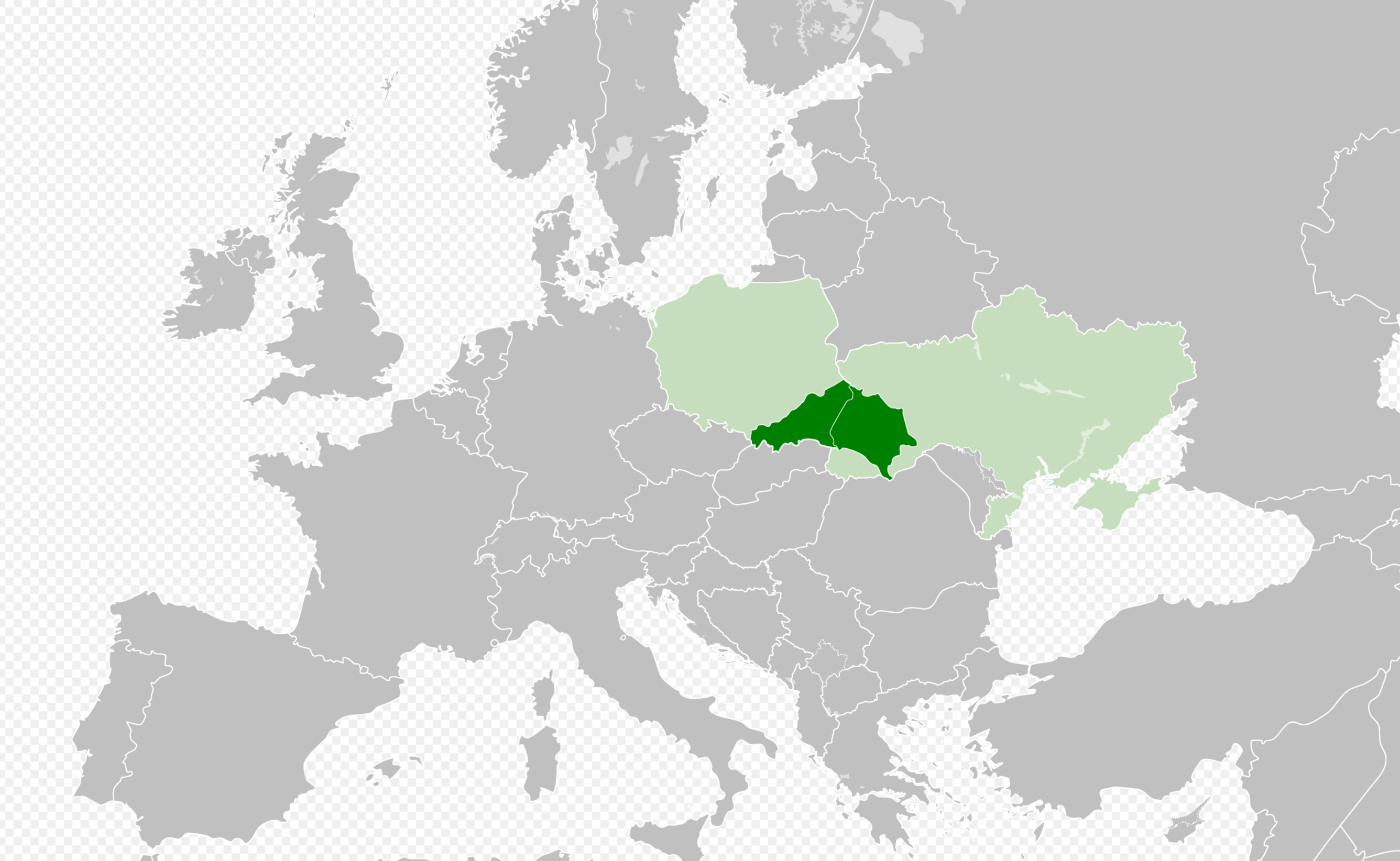
(Galicia is the dark green region spanning Poland and Ukraine. Source: Wikipedia. A Ukrainian once told me that my name was from the Carpathian highlands.)
I care about Ukrainian Independence Day and Ukraine’s war to preserve its freedom and independence for personal reasons. But I care about them too because I’m an American.
Ciao!
No posts
Comments
Nothing yet. Say the first thing.
Sign in to join the conversation.