
It’s one of the strangest drugs in medicine. Dirt cheap, commonly known, probably in your drawer, and nobody asks what it actually is.
It’s thought of as simple headache medicine, a fever reducer, the heart-attack pill, something that is too ordinary to be explored.
Some substances are underestimated for exactly that reason. They are so familiar that curiosity never gets spiked. They are old, cheap, and common. Aspirin is a perfect example.
There is a kind of person who looks functional on the outside and still feels as if their body is running with unnecessarily high friction. Energy is lower than it should be, recovery is rough and inflammation shows up easily. Nothing is catastrophic, but the system does not feel graceful.
Aspirin belongs in such a world, as it touches some of the most foundational chemistry that makes a body feel inflamed, swollen, irritated, poorly regulated and metabolically noisy in the first place. It reaches into inflammatory messengers, stress amplification, liver dysfunction, hormones and energy production. That is why it keeps showing up in areas where one might not expect to see it, like metabolism, hormones, liver function, fertility, even cancer biology.
This article will look at aspirin from its inflammatory fat roots through prostaglandins, energy production, hormones, liver function, the brain and reproduction. It will also explain the real risks and who should not take it. The aim is to explain why it keeps benefitting so many apparently unrelated areas of physiology, and to help you judge whether it belongs in your own context.
We need to take a step back from the “painkiller” perspective. It’s not wrong, but it undersells aspirin. Aspirin really does help with headaches, fever and pain, but it is doing way more than that.
To understand aspirin properly, you have to realize that stress is more than a mere feeling.
Worries, deadlines, bad news etc. are obviously a part of it, but only a part. The body has its own version of stress, and it is very physical. Stress, in this sense, is a biological state.
Some effects of this biological stress are tissues becoming easier to inflame, stored fat being released aggressively into the blood, pain, worse recovery and worsened hormones. Fuel use and energy production becomes less efficient and noisier. The system goes from easy, reliable energy and toward something less sound.
We will refer to the entire cluster of stress as “stress chemistry”.
One can live inside that kind of chemistry for years without a dramatic crash. They’d simply become hormonally worse, more inflamed, more fatigued and less lively. The body still gets through the day, but it does it by leaning harder on emergency pathways and inflammatory signals.
Aspirin is most interesting when it is seen as a modifier of that context. It interrupts important parts of the chemistry that make the organism feel swollen, painful, estrogen-dominant and metabolically worse. It is doing more than “masking” symptoms, rather It’s directly affecting the signals that create the state those symptoms come from.
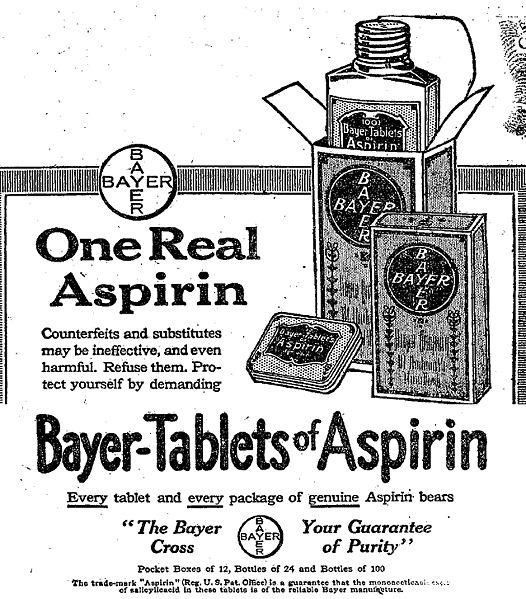
To understand why aspirin matters so much, we need to look a bit at fat.
Different fats have different structures, and structure determines behavior. Some fats are stabler, others are more fragile and reactive.
Saturated fats are the most structurally stable. They are chemically simpler and harder to damage. Monounsaturated fats sit in the middle. Polyunsaturated fats (PUFAs) are the most reactive of the common dietary fats as they contain multiple double bonds, and those double bonds make them easier to oxidize and easier to break down into aggressive byproducts later.
The modern diet is saturated with refined seed oils rich in linoleic acid, the main omega-6 polyunsaturated fat that people accumulate over time. Soybean oil, corn oil, sunflower oil, safflower oil, cottonseed oil, generic vegetable-oil blends — they’re all built into so many common foods. A person can carry a large amount of omega-6 in their body without ever consciously deciding it.
Crucially, fat does not behave like sugar. Sugar is eaten and used quickly. Fat incorporates into our bodies and becomes tissue.
Some fats are stored, some are built into cell membranes, some are packed into fat cells. Over time, the kinds of fat you consume become part of the body you live in. They shape what your physiology will later draw from.
That means stored fat is a chemical reserve. Especially during stressful states, the body often releases a lot of these fats into our bloodstream. What you store is what you later release — under stress, fasting, illness, over-training, under-eating or bad sleep. If a body has a high PUFA-content, the organism is drawing from a more unstable pool.
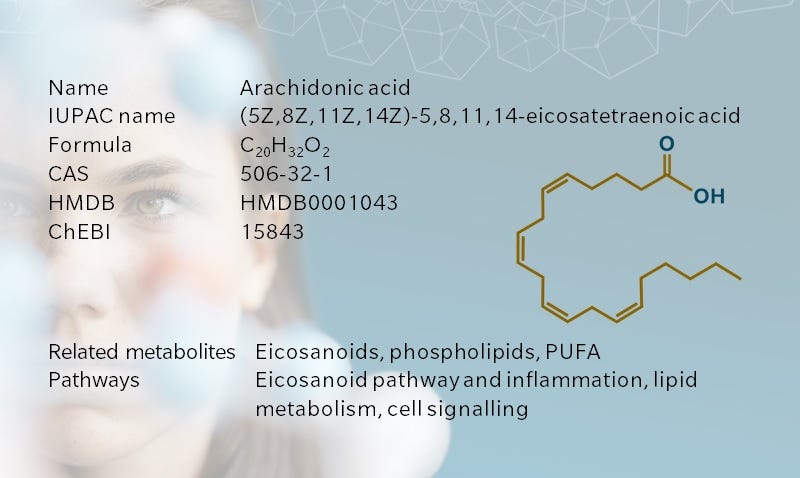
Linoleic acid is also more than a fatty acid. Some of it can be converted further into arachidonic acid, which is another fatty acid that sits in tissues and serves as a precursor for inflammation signals. When the body is irritated, injured, stressed, arachidonic acid can make a family of potent local messengers called prostaglandins.
Aspirin interferes with the production of those prostaglandins. It interrupts one of the most harmful consequences of a PUFA-rich environment. (The full argument against seed oils is in my previous article, “The Seed Oil Bible”)
In that sense, aspirin is not vaguely anti-inflammatory, but a direct brake on inflammatory signalling that modern lifestyles are extremely prone to producing.
Most people have felt prostaglandins despite the obscure name. Think the pounding edge of a headache, in the heat and swelling after an injury, in the ache of inflamed tissue, in cramps that hurt the abdomen, fevers and illness, or the general pain in a body. A major part of those experiences are due to prostaglandins.
Prostaglandins are hormone-like inflammatory messengers made from PUFA, especially when tissue is irritated or inflamed. They encourage swelling, intensify inflammation, increase pain and a whole host of effects. Lower these prostaglandins, and it improves pain, fever, menstrual cramps and inflammation.
But prostaglandins matter far beyond pain.
They influence blood vessels, puffiness, whether a tissue calms down or stays inflamed. They can amplify physical stress and over-signalling. Crucially, they also increase aromatase activity – the enzyme that converts androgens to estrogens.
That’s how inflammatory signalling, which is so common in the modern human, can tilt the hormonal balance towards estrogen dominance in both men and women. Estrogen dominance has a lengthy list of issues, including demotivation, increased prolactin, lower drive and color in life. This imbalance is anti-metabolic (lowers your metabolism), fat-storing, reduces your liveliness and willingness to explore and be curious. This is a huge discussion on its own, and I explore it deeper in my book, The Metabolic Blueprint.
With that, prostaglandins are clearly involved in inflammation and even hormonal balance. Aspirin blocks the enzymes that turn arachidonic acid into prostaglandins. Through that blocking, tissues hurt less, overreact less, irritate less and it can even strongly prevent estrogen-amplifying loops.
Prostaglandins are NOT evil in every context. The point is that modern physiology is often pushed toward an excess. With too much inflammatory fat precursors and too much stress, the modern human often has too much prostaglandin relative to what a resilient organism should have to tolerate.
That is how aspirin can feel disproportionately helpful in the modern world. It’s acting on a system that has become unnecessarily loud.
It’s necessary to note that not all prostaglandins are the same. There are many prostaglandins (PGE2, PGF2α, PGD2, prostacyclin, thromboxane) and they do different things in different tissues. PGE2 in inflamed tissue amplifies pain and aromatase. Prostacyclin in the stomach lining protects the mucosa, and thromboxane in platelets promotes clotting.
Aspirin’s COX inhibition hits the production of all of them. That’s how it can reduce inflammation and pain while simultaneously making the stomach a little more vulnerable and thins the blood. It’s the same mechanism producing both the benefits and the risks.
There is an uncomfortable truth about seed oils in that even after you stop eating them, they’re still in you. Linoleic acid has a half-life in adipose tissue measured in years. The fats one accumulates over a decade of industrial food doesn’t leave in a month of clean eating. They sit in membranes, in fat cells, in tissue, as a chemical reserve that the body will draw from under stress, during fat loss, illness, or fasting.
That means even someone actively improving their diet is still carrying an inflammatory burden. Every time they fast, diet aggressively, train hard, sleep badly or go through a stressful period, the body uses the stored fat and has to rely on the unstable material it accumulated over years. Those fats get released into the bloodstream, processed through the liver and converted into the arachidonic acid and prostaglandin signals that aspirin interrupts.
Aspirin can function as a shield during this transition period, in the months and years it takes for tissue PUFA to turn over. It simply limits the downstream damage from what’s still there. It catches the inflammation that a PUFA-loaded body generates and prevents them from the full prostaglandin-aromatase-estrogen-cortisol chain that makes everything worse.
For someone already living in a cleaner, lower-PUFA metabolic environment, aspirin may still be useful since stress and inflammation still exist. But for someone carrying accumulated linoleic acid in their tissue, the reasoning is stronger.
That doesn’t mean aspirin is a license to keep eating seed oils, but it is a protective tool that works best when paired with actually working on the problem.
Most of us have experienced metabolic sluggishness. It shows up as feeling cold, brain fog, slower thinking, worse recovery/mood, and the dependence on stimulants to keep going. The body functions, but does not feel easy or energetic.
A genuinely good high-output metabolism turns food into usable energy with relatively little drama. That leads to warmth, clearness, lower stress and higher but also calm energy. It also shows up as higher motivation and liveliness.
Mitochondria sit behind all of this, being the main energy-converting structures in the cell. When they are sluggish, blocked or pushed toward a lower-output state, the body compensates through inflammation, stress hormones, altered fuel use, and a system that feels more defensive.
Beyond prostaglandins, aspirin and its metabolites can alter mitochondrial function itself. The old literature on aspirin’s mitochondrial uncoupling-like effects was part of the reason Dr. Ray Peat treated aspirin as pro-energy. Later studies kept showing that aspirin can change respiratory behavior, and in some settings it increases mitochondrial throughput.
“Uncoupling” might sound like damage. What it means is that the mitochondria allow more “wastefulness” per unit of fuel. The cell produces somewhat less ATP per unit of fuel, but burns through fuel faster, consumes more oxygen and generates more heat.
That “waste” itself is protective. It reduces oxidative damage and increases CO2, which is itself a positive metabolic signal. A mitochondrion that runs slightly “loose” in this way is less likely to stall or generate damage, and more likely to keep the cell in a highly energetic state. That is the signature of a high-energy system.
Many report feeling warmer and clearer on aspirin. A body that is pushed away from inflammation and toward better respiratory flow will feel more metabolically sound. It is the sense that the engine is working with less friction.
That’s how aspirin fits so well inside a pro-metabolic framework. It can change the energetic state that often sits underneath pain, edema, brain fog, and sluggish recovery. Once respiration improves, even modestly, the organism often stops acting quite so trapped inside defensive chemistry.
And a body that handles energy more cleanly is usually a body that handles glucose more cleanly too.
Thyroid hormone (T3) is the body’s metabolic tempo-setter. It determines how fast cells burn fuel, how much oxygen they consume and how warm the body runs. When thyroid output is adequate, the organism is warmer, clearer, more energetic and less reliant on stress hormones to stay functional.
Aspirin has a thyroid-like overlap when it comes to energy. Its mitochondrial effects like increased respiratory throughput, mild uncoupling, higher oxygen consumption, more carbon dioxide, functionally resemble what T3 does to a cell. Both push cellular metabolism in a more oxidative, more heat-producing direction.
But there is also a more direct connection between aspirin and thyroid hormone that is under-discussed.
Most thyroid hormone in the blood is inactive. It floats around bound to carrier proteins, mainly TBG and TBPA. While it’s bound, it can’t enter cells or do anything. Only the small unbound fraction; free T3 and free T4, is active and available to drive metabolism.
In 1972, Larsen published a study showing that salicylate (aspirin’s breakdown product) bumps thyroid hormones off those carrier proteins. When sodium salicylate was added to human serum at normal aspirin concentrations, free T3 and free T4 increased by 100-200%. That’s a doubling or tripling of the active fraction of both thyroid hormones.
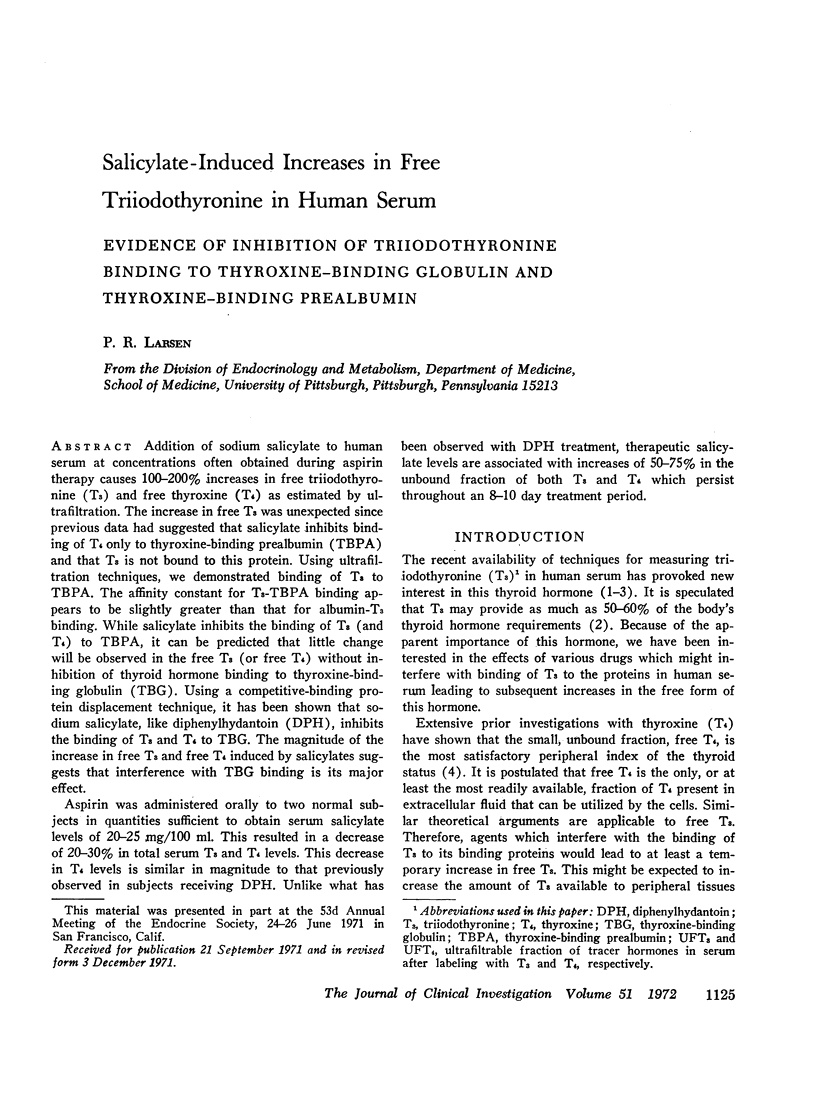
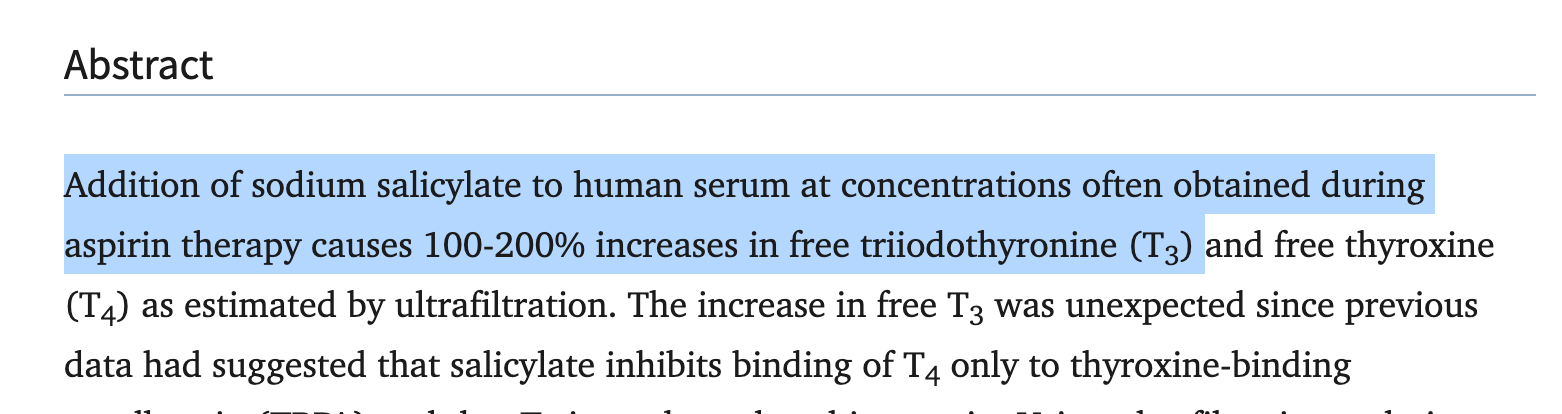
They then gave aspirin to two subjects and tracked what happened over 8-10 days. Total T3 and T4 in the blood dropped by 20-30%, because the body sensed more free hormone and pulled back on production. But the free, active fractions stayed 50-75% higher than baseline for the entire treatment period. The body’s compensation was incomplete. The net result was a new equilibrium with substantially more active thyroid hormone available to tissues.
That’s a large effect. If a new pharmaceutical achieved a sustained 50-75% increase in free T3, it would be widely discussed. Because it came from aspirin which is an old, cheap, generic drug, it was filed under “salicylate interference with thyroid function tests” and treated as a diagnostic problem rather than a metabolic finding.
The blood levels in Larsen’s study correspond to high anti-inflammatory dosing, roughly 3-5 grams per day, which is above casual daily use. At a moderate dose like 250 mg, some displacement still occurs, but it hasn’t been precisely measured. The degree is dose-dependent.
If aspirin feels warming, clarifying and energizing, that’s consistent with what this data predicts.
Most anti-inflammatory drugs block the same enzymes aspirin does, namely COX-1 and COX-2. These are the enzymes that convert arachidonic acid into prostaglandins. Many drugs do this, like ibuprofen.
Aspirin is different in that it doesn’t just temporarily block the enzyme. It chemically modifies it. Aspirin transfers an acetyl group onto COX, permanently deactivating it. The enzyme cannot recover. The cell has to make an entirely new COX enzyme from scratch to resume prostaglandin production. It’s an irreversible change for the enzyme.
For most cells, that means COX inhibition lasts until a new enzyme is synthesized, which is usually in several hours. However, blood platelets are an exception. They can’t make new proteins, and so aspirin suppresses the platelets’ thromboxane production for its entire lifespan (roughly 7-10 days). That’s why even a single low dose of aspirin can suppress platelet thromboxane production for well over a week.
This is also why aspirin has a wide range of useful doses. At around 81mg (baby aspirin), it’s enough to silence platelets while mostly sparing the rest of the body’s COX activity, since aspirin gets metabolized before reaching systemic circulation. At higher doses like 250 mg, 500 mg and more, it starts inhibiting COX in the stomach lining, the kidneys, inflamed tissue, and the brain. The broader metabolic and anti-inflammatory effects live at those higher doses.
Aspirin breaks down in the body into salicylic acid. Some of aspirin’s important metabolic effects that we explore later are driven by salicylic acid rather than by the acetylation event itself. So even after the aspirin molecule has done its work on COX, its breakdown product keeps working through different pathways.
That means aspirin is deactivating COX and then its broader metabolic effects.
Modern health discourse often frames glucose as a problem. In a pro-metabolic frame, that is completely backward. The problem is not glucose, the problem is a body that cannot use it well. How well you use, burn and utilize sugar is one of the most important foundations of health.
A strong metabolism is one that can oxidize it cleanly, extract useful energy from it, produce carbon dioxide freely, and avoids having to lean on catabolic stress hormones to keep sugar stable.
Glucose oxidation/burning is efficient, gives more energy per unit of stress, leads to warmth and is the cornerstone of a high-energy phenotype. A body that can burn carbs properly is usually less dependent on stressful fat-burning, less cold and tired.
One of the strongest pieces in modern literature found that high-dose aspirin improved glucose metabolism in people with type 2 diabetes, with roughly a quarter reduction in fasting glucose along with lower triglycerides, lower CRP, lower hepatic glucose production, and better peripheral glucose uptake.
The improvements came from both that the liver was producing less unwanted glucose, and the muscles were taking up more.
The mechanism was traced to inhibition of IKKβ/NF-κB, which is a pathway that connects inflammation directly to insulin resistance. When that inflammation reduces, glucose handling improves.
This pattern of aspirin improving glucose metabolism by removing the metabolic brake, shows up repeatedly across the literature. Aspirin metabolites look like something that can make an insulin-resistant system less dysfunctional, because they are addressing the inflammation that keeps the resistance in place.
When glucose enters a cell but cannot be fully oxidized (because the mitochondria are sluggish, blocked, or overwhelmed), it gets diverted. Instead of completing the full respiratory pathway and producing carbon dioxide, the glucose is partially processed through glycolysis and converted into lactate.
Lactate is a normal byproduct in certain contexts like intense exercise. The problem is when lactate becomes a chronic default. A body that routinely converts glucose to lactate is running a noisier, less efficient version of the process.
From a metabolic world view, CO2 is a powerful metabolic signal. It stabilizes cells, improves oxygen delivery (the Bohr effect) and inhibits excessive inflammation. It reflects that the cell is completing full oxidative metabolism. A body producing excess lactate relative to CO2 is a body stuck in a lower-output, more inflammatory metabolic state.
Dr. Ray Peat’s article titled “Lactate vs. CO2” connects aspirin to CO2. Aspirin can inhibit some glycolytic excess, push metabolism toward more complete oxidation and shift the lactate-to-CO2 balance in the right direction. It does this through the same mechanisms already described. Less prostaglandin interference with mitochondrial function, mild respiratory uncoupling that keeps the chain moving, and reduced inflammation that would otherwise suppress oxidative metabolism.
A body that handles glucose well produces warmth, clarity and CO2. Aspirin nudges the system towards that.
Aspirin is not only reducing inflammation in a bad metabolic state, but can shift the state itself. Plenty of people live in a semi-blocked state. They are not necessarily diabetics, but they do have more unstable fuel handling. Think crashing after meals, easily gaining weight, very stressed living. A compound that improves glucose handling in that terrain is a powerful metabolic tool.
If aspirin helps glucose metabolism, what exactly is glucose being blocked by in the first place?
Lipolysis is the release of stored fat out of fat cells. Those fats circulate in the blood as free fatty acids. This is a normal backup system and keeps us alive between meals, during fasting, during illness, during hard exercise, or under acute stress. The problem is when it rises too often, too aggressively, and too chronically. Then the bloodstream starts carrying more free fatty acids than the system can handle well.
This takes us to the concept of the Randle cycle. In simple terms, too much incoming fat inhibits glucose oxidation. The cell starts prioritizing fat, and glucose is handled badly. The organism drifts into a more fat-dominant, stress-biased state.
Stress makes the whole environment harsher. Adrenaline, cortisol, low carb, overtraining, they all raise lipolysis. If the person has spent years building a more unsaturated fat reserve (see the Seed Oil Bible), the released pool is unstable and more inflammatory. That’s how one can “flood” themselves in a more unstable kind of fuel while simultaneously suppressing clean glucose use.
The metabolites can downregulate 11β-HSD1, which is the enzyme that regenerates active cortisol from its inactive form (cortisone) inside tissues. The strongest study for this looks at fat cells specifically (PMID: 22357964).
In that study, salicylate was shown to lower the enzyme expression in obese subjects. The enzyme exists in other tissues too (liver, brain, vasculature, immune cells), but we have direct evidence that it reduces cortisol in fat cells..
That’s how aspirin can reduce the metabolic burden of excessive free-fatty-acid levels and improve sugar burning capability. Later studies complicate the picture, for example a 2017 study actually found aspirin increased one type of fat burning while inhibiting a different pathway (peroxisomal FAO).
So “aspirin blocks fat burning” isn’t fully right, rather aspirin opposes fat-dominant stress metabolism, not every fatty-acid pathway indiscriminately.
(Reducing fat burning doesn’t mean that burning body fat is impeded, that’s different.)
When lipolysis calms down and excessive prostaglandin is reduced, there’s less cortisol pressure and better thyroid. The hormonal improvements are closely linked to the metabolic ones.
“High estrogen” often begins lower down, in tissue that has become inflamed and chemically overactive. In a body already leaning toward stress, estrogen can quickly become dominant and show all of its negative sides. Think worse metabolism, more fat storage, imbalanced mood and motivation. It amplifies inflammation, makes you puffier and less lively in excess.
Aromatase is the enzyme that converts androgens into estrogen. Inflamed tissue can increase aromatase activity, and one of the clearest ways it does that is through prostaglandins, especially the PGE2-type signals that rise when unstable fats are turned into inflammatory messengers. With more inflammatory fat and prostaglandin, there’s more aromatase and more local estrogen production.
Aspirin cuts that chain at the prostaglandin step, and lowers some of the inflammatory pressure that increases estrogen in the first place. PGE2 stimulates aromatase, aromatase makes estrogen, aspirin lowers PGE2, therefore less aromatase activity and less local estrogen.
There is a lot of academic discussion on aspirin’s effect on total estrogen. Aspirin can interfere with prostaglandin-driven estrogenic loops, especially in inflamed tissue, but it does not tank serum estrogen in every context. This is more about tissue-level effects, which blood tests can’t measure well.
The result, in lived terms, is often a body that feels less puffy and hormonally noisy. There’s less estrogen dominance, which is unfortunately a common modern problem, both for men and women.
There’s also a sexual benefit here. Erections depend on vascular relaxation, blood flow and healthy endothelial signaling, all of which are impaired by the inflamed physiology we’ve been describing. A small study found aspirin improved erectile function metrics in men with vascular erectile dysfunction, and the combination of aspirin with tadalafil (Cialis) outperformed either one alone. A body with less estrogenic dominance and better vascular function tends to function better in every domain that depends on blood flow and tissue responsiveness. This is one of those domains.
Progesterone is one of the body’s best anti-stress and protective hormones. It opposes excess estrogen, cortisol, prolactin and catabolism while supporting metabolism, the brain and fertility in both sexes. It is calming but energy-giving. In women especially, progesterone production depends on how safe the body feels.
Aspirin and progesterone share an overlap in their direction. Both oppose prostaglandin-heavy, estrogenic stress states. Both can feel anti-inflammatory and fertility-supportive. Aspirin is often grouped with progesterone, vitamin E and thyroid among the body’s broadly protective substances. They are substances that move the whole organism away from stress-dominant, inflammatory, catabolic physiology towards safety and high-energy.
This is all due to the prostaglandin-aromatase-estrogen loop. PGE2 is a strong stimulator of aromatase expression, so aspirin’s anti-prostaglandin action gives an anti-estrogenic effect. In that way, it acts in a progesterone-compatible direction by helping counter the inflammatory and estrogenic terrain that suppresses progesterone in the first place.
Many people — especially women — live inside a low-progesterone, estrogen-dominant environment. This is due to the stress and inflammation that modern life brings, which favors estrogen and suppresses the conditions under which progesterone is produced. Aspirin helps make the environment more hospitable to progesterone.
Cortisol is the most well-recognized stress hormone. It mobilizes fuel, keeps blood sugar available and helps the organism survive hard moments. But it is emergency chemistry.
When it’s chronically elevated, it becomes catabolic, meaning it breaks down tissue, encourages fat gain, impairs recovery, suppresses digestion and leaves the nervous system unwell. A body running on high cortisol does get through the day, but it comes at a price which compounds.
The brain signals the pituitary, the pituitary signals the adrenals, and cortisol rises. That pathway (the HPA axis) is influenced by prostaglandins and inflammation. Lower prostaglandins, and you lower some of the factors driving cortisol up. Through this mechanism, aspirin can soften the stress-amplification loop.
Beyond that, aspirin’s metabolites have a more direct effect on stress. In human studies, aspirin blunted exercise-related stress responses. There was less prolactin and less ACTH (which stimulates cortisol). As we explored earlier, salicylic acid can downregulate 11β-HSD1 in fat tissue, which is the enzyme that regenerates cortisol. That means less local cortisol being made in the tissue where it drives insulin resistance and fat storage. A study also suggests aspirin can soften cortisol in the morning, which can be beneficial for many who experience stressful mornings.
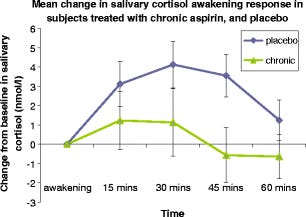
Studies challenge aspirin’s broad anti-stress effects, but the best interpretation is not that aspirin is a cortisol off-switch, instead, it’s that aspirin can soften certain stress-amplification loops, especially the ones driven by prostaglandins and local cortisol regeneration.
In a body with high inflammation, that’s incredibly useful. However, if the body isn’t under load or strain, the effect might be less noticeable. Aspirin is more calming than sedating in this manner.
The liver is underrated. It is one of the most crucial organs for your metabolism. It is one of the central buffering systems, storing glycogen and releasing energy. When it is full of fuel, the body doesn’t need stress hormones to prop itself up. The liver clears excess estrogen and restores hormonal balance, and is the largest site where active thyroid hormone (your metabolism hormone) is made (T3).
Fatty liver is extremely important to explore here. By the time somebody is diagnosed with fatty liver, their system has likely been breaking down for years. The organ has been overburdened and underpowered. Poor glucose handling, worse hormonal clearance, sluggish recovery, and metabolic instability tend to all come together because they are all downstream of the same struggling organ.
Seed-oil worsen this state. The liver is the first major organ downstream of the gut, which means it takes the first hit from excess endotoxin. Add a high-PUFA tissue environment to that, and the liver is processing a more inflammatory kind of trouble. The endotoxins raise inflammatory stress, while the oxidized seed oils directly damage liver mitochondria and its energy production. The liver becomes overburdened and can’t handle it.
Aspirin, by lowering prostaglandins and inflammation, assists the liver powerfully here. A 2024 randomized study found that just 81 mg a day (low dose) for six months reduced liver fat in people with fatty liver.
In a gut-burdened, PUFA-loaded, prostaglandin-heavy world, liver health becomes a priority. A calmer liver stores glycogen better, releases glucose well, handles hormones properly and can actually increase your active metabolic hormones.
The brain does not tolerate inflammatory noise well, and it especially does not tolerate inefficient energy production well.
Aspirin is often taken as a headache pill, but it can be directly brain protective. Preclinical research has shown that aspirin can bind to PPARα (a receptor involved in fat metabolism and cellular maintenance). Through that, it can stimulate hippocampal plasticity and BDNF, which is a growth factor involved in learning, memory and the brain’s ability to adapt.
In mouse studies on Alzheimer’s, aspirin-related compounds increased lysosomal cleanup, which is the process by which cells clear damaged proteins and debris. Amyloid plaque buildup, which is characteristic for Alzheimer’s, was reduced.
These are mouse and cell studies, so not proven in humans (yet), but very interesting mechanistically.
Though a large randomized study in healthy older adults (ASPREE) found no significant reduction in dementia, cognitive decline, or mild cognitive impairment. We’ll unpack this in the next section.
So aspirin does show a direction of less neuroinflammation, better cellular maintenance and more plasticity. Whether that translates into measurable cognitive protection in a healthy person isn’t as clear. But in someone whose brain is already sitting inside high inflammatory noise, which, given everything we’ve covered, is a large number of people, the case is clearer.
“If aspirin is so beneficial, why don’t the large clinical trials prove it?”
ASPREE, as we cited above, is the most common example. Over 19,000 healthy adults above 70 were randomized to low-dose aspirin or placebo. The trial found no benefit for disability-free survival, no dementia protection, and even showed slightly higher all-cause mortality in the aspirin group. That sounds horrible for aspirin. But the trial design makes it almost impossible for aspirin’s real effects to show up, for several reasons.
The dose was wrong. Every major elderly trial uses 81-100 mg. At that dose, you get platelet inhibition and nearly nothing else. The presystemic metabolism clears the aspirin before it reaches systemic circulation in meaningful amounts. The glucose metabolism improvements, the 11β-HSD1 effects, the mitochondrial uncoupling, the thyroid hormone displacement… those all show up at higher doses.
Additionally, ASPREE enrolled healthy older adults. That’s the subgroup least likely to benefit. Aspirin’s measurable effects are best in people with high inflammation, high prostaglandin pressure and/or metabolic dysfunction. If you enroll 19,000 healthy elderly people, you’re selecting for those whose physiology doesn’t match the problem aspirin solves.
Also, by 70+, participants have spent decades accumulating tissue PUFA, running inflammatory physiology, and building metabolisms that are hard to improve. Starting aspirin at 75 is intervening after the terrain has been remodeled. The argument for aspirin is strongest during active metabolic life, when the system is still flexible enough to shift, when reducing prostaglandin pressure can actually change the trajectory. A 35-year-old with high PUFA stores and recoverable insulin sensitivity is a fundamentally different biological context than a 75-year-old with decades of structural adaptation.
The bleeding risk scales with age as well. Older bodies have more fragile vasculature, more comorbidities, more concurrent medications. The GI and intracranial bleeding risk that’s manageable at 35 becomes more dangerous at 75. Even if aspirin provides some metabolic benefit in that population, it may get cancelled out by increased bleeding events.
The large elderly trials tell us less about aspirin’s real potential than most people assume. But they also serve as a real reminder that aspirin is not universally beneficial regardless of context.
When prostaglandins are excessive, any effort you try requires more of you. The system is fighting itself with inflamed tissues, pain and a higher cost to every output. Aspirin can lower part of that burden by reducing the chemistry that was making output feel unnecessarily expensive.
The best evidence for this comes from multiple sclerosis, where fatigue is often inflammatory, heat-sensitive and physical rather than just low motivation. In one crossover trial, MS patients saw improved fatigue scores on aspirin versus placebo. In a separate study, aspirin pretreatment improved heat-sensitive exercise tolerance. When fatigue has a large inflammatory and metabolic part to it, reducing prostaglandin pressure makes exertion feel easier.
A lot of people’s daily fatigue is more inflammatory than they realize. Poor sleep, chronic low-grade stress, high seed oil intake, suboptimal liver function… those create a version of fatigue that is closer to inflammation than to mere tiredness.
Reproduction is one of the most metabolically demanding tasks. A pregnancy depends on whether tissue is calm enough to receive life, whether inflammatory signaling is restrained enough not to sabotage, and whether the hormonal environment is ordered enough.
A uterus can be structurally sound but not ready for pregnancy. That is part of why fertility problems so often turn out to be problems of stress chemistry, inflammatory spillover, and tissue-level instability.
Implantation does require some controlled inflammation, but it’s much different than being chronically inflamed. Aspirin, like progesterone or vitamin E, can improve fertility by suppressing prostaglandins and improving uterine circulation.
Low-dose aspirin has become an accepted tool in high-risk pregnancies, especially where preeclampsia risk is already on the table.
This is seen with miscarriage data as well. In women carrying the highest inflammation, daily aspirin improved the odds of carrying a pregnancy to birth (while the effect was much less impressive in women without high inflammation). Birth rates in the group rose from 44 percent (on placebo) to 59 percent with aspirin.
Tumors grow inside a biochemical environment. That environment can be rich in prostaglandins, inflammatory cues, distorted fuel use and local estrogenic signaling. In other words, cancer is more than cell division but also an inflammatory, vascular, metabolic context. Aspirin interferes with several parts of it.
Prostaglandins are actually quite significant in tumor biology. They help maintain inflammation and create the kind of local chemistry which abnormal, cancerous growth likes. As we explored, they also help drive aromatase activity, which increases the uncontrolled growth. A drug that lowers prostaglandin is pushing back against part of the growth environment itself.
Aspirin deactivates platelets, which are most known as clotting fragments that stop your bleeding (you have other clotting factors as well, don’t worry). In cancer, platelets do more than clot. They can protect circulating tumor cells from shear stress in the bloodstream, help them avoid being destroyed, and help them in getting to distant tissues. Aspirin’s deactivating effect removes one of the tumor’s tools.
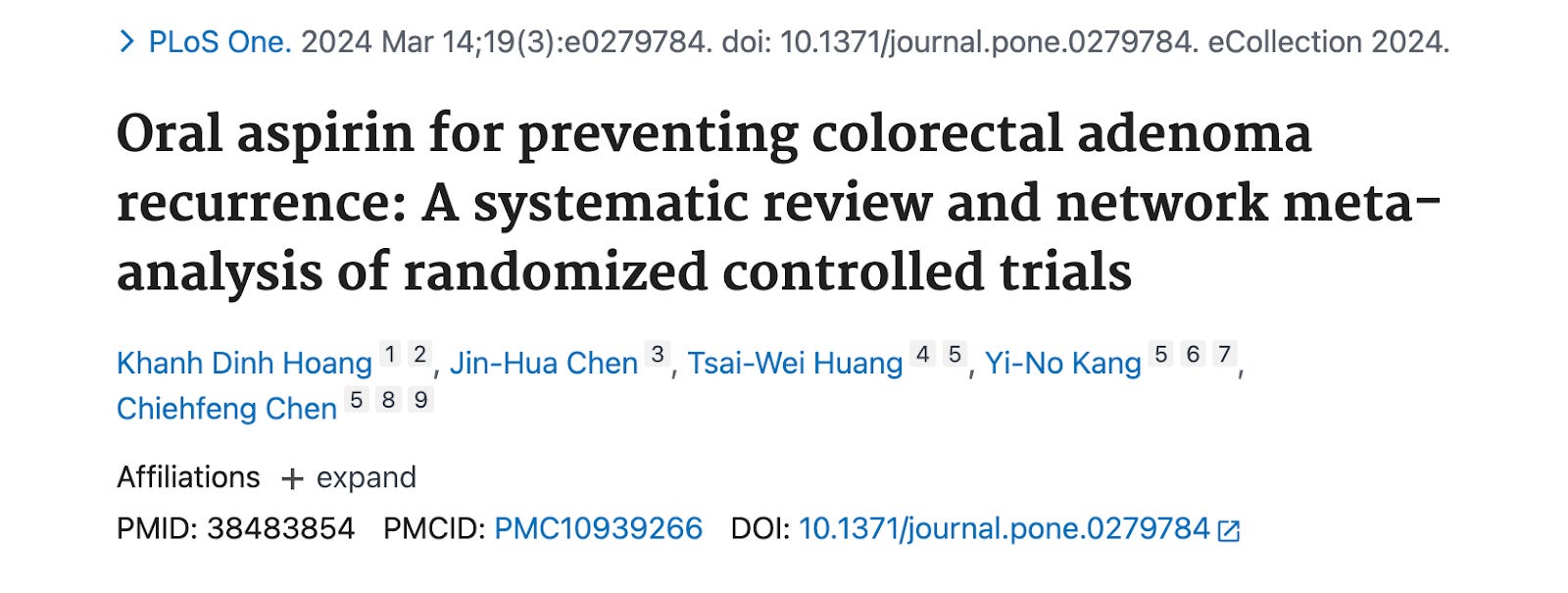
Aspirin has meaningful anti-cancer effects, and studies prove it. Colorectal adenoma recurrence and prevention are the clearest proofs.
The larger anti-cancer data concerning breast, prostate, liver, pancreatic and other cancers has interesting signals but less settled data. The logic is still strong regarding prostaglandins, platelets, inflammation and estrogenic drive, since these are real features of tumors, but the strength of evidence varies by cancer type. Colorectal is just where the argument is strongest. Otherwise, aspirin is simply strategically interesting, but we cannot say that it “cures cancer” in the simplistic sense.
Aspirin works best when used with some judgment, in the right form, at the right dose, in a body that is trying to improve.
As a working default, plain aspirin without additives or coating makes the most sense. Enteric-coated aspirin is often marketed as “stomach-friendly,” but research has shown that enteric coating doesn’t actually reduce the risk of GI bleeding or meaningfully protect the upper GI mucosa. You lose some predictability in absorption timing. Plain aspirin gives you the purest version of the tool without unnecessary complexity.
Aspirin has more than one use-case. There is a difference between low-dose platelet-oriented use and larger anti-inflammatory or metabolic use. You want enough to get the effect, but not more than necessary.
I personally take 250 mg on normal days, with 500 mg if I feel particularly stressed or off. When sick, I go up to 1-1.5g.
At low doses like 81mg, aspirin mostly silences platelets through presystemic metabolism as the drug hits COX-1 in the portal blood before the liver clears it, so the stomach lining is largely spared. At 250 mg or more, you’re inhibiting COX systemically. That’s where the broader metabolic and anti-inflammatory effects live.
Aspirin does cause some degree of gastric mucosal injury in essentially everyone who takes it orally. At a microscopic level, that’s unavoidable. It’s a direct chemical consequence of an acidic drug dissolving on the stomach lining and locally inhibiting the specific prostaglandins that maintain the mucous barrier, bicarbonate production and mucosal blood flow.
A common question I get is that if platelets are already fully deactivated at 81 mg, why does bleeding risk climb with higher doses?
The answer is that the extra risk comes from a different mechanism than the platelet effect. At higher doses, you’re inhibiting COX-1 in the gastric mucosa itself, reducing the prostaglandin protection layer. The stomach lining becomes more vulnerable. Combine that with the fact that platelets are also deactivated, and any small mucosal lesion that forms can’t clot properly.
But the stomach adapts. With continuous daily aspirin, mucosal injury peaks around day three and then lessens. Damage after seven days of continuous use is significantly less than after one day. The mechanism is a rapid upregulation of cell turnover. DNA recovery (a marker for cell shedding and regeneration) roughly doubles just before visible healing. The mucosa starts regenerating faster than the damage accumulates.
But even after adaptation, gastric microbleeding stays elevated throughout aspirin use. The tissue still leaks small amounts of blood. Adaptation also disappears after just three days off aspirin. The mucosa drops back to its baseline regeneration rate, and if you resume, you get the full acute injury response as if you’d never taken it. That means the riskiest pattern isn’t consistent daily use — it’s intermittent, on-again-off-again dosing where the mucosa never settles into its adapted state.
Additionally, when aspirin was given intravenously at equivalent blood levels, it produced no detectable mucosal damage at all. The gastric injury is primarily the drug sitting on your stomach lining, instead of being systemic. Anything that reduces how concentrated the aspirin sits on bare mucosa reduces the acute hit. So when taking larger doses, I would consider splitting them, as long as the individual dosages are high enough to get systemic effects (so don’t go low dose).
Both glycine and baking soda are powerful tools to support the GI. Glycine is cytoprotective to the gastric mucosa, meaning it supports the integrity of the mucosal cell and has anti-inflammatory properties in the gut. It helps maintain the protective lining that aspirin’s COX-1 inhibition is reducing. It addresses the cause of the vulnerability.
Baking soda (sodium bicarbonate) buffers stomach acid. If the mucosa is already compromised by prostaglandin loss, reducing the acid sitting on it means less erosion.
Glycine is the more mechanistically interesting one because it’s supporting tissue integrity rather than neutralizing acid.
Aspirin deactivates platelets but you still have other clotting factors. Those factors are vitamin-K-dependent. Making sure vitamin K status is adequate ensures the rest of your clotting cascade works properly even while platelets are offline.
Aspirin generally makes more sense in a fed, buffered body than in a fasted, undernourished, stress-heavy one. I’ve argued that good metabolism depends on not living off stress hormones, so aspirin should not be thrown carelessly on a foundation of under-eating, low carb and high cortisol. The stomach damage is also reduced when aspirin is taken with food, since the food dilutes the local concentration of the drug sitting on your mucosa.
Medical guidance warns against aspirin in children and teenagers with viral illness because of the association with Reye syndrome, which is a rare but serious condition involving liver and brain swelling. The causal evidence has been debated in the literature, but FDA, NHS and standard clinical guidelines still recommend against it.
This article is written for adults making informed decisions about their own physiology. It does not apply to children or teenagers.
Aspirin works better as a shield when the root problems are being addressed. You can use it when lowering your seed oil burden, but don’t keep eating large amounts of seed oils and rely on aspirin to clean up the mess. It is a meaningful drug, but it does not rescue a body that’s still having the same inputs that create problems.
Aspirin is too old to feel exciting, too cheap to feel powerful, too familiar to spark curiosity. But that is exactly the kind of substance that deserves a second look, as it’s one that has been so absorbed into background noise that its actual biology has become invisible.
The case for aspirin touches prostaglandins, energy production, hormonal balance, liver function, brain protection and tissue repair. All because it keeps touching foundational biology that modern life keeps disturbing.
In a high-PUFA, high-stress, low-resilience era, aspirin acts as a partial shield to a world that narrows your body’s margin of error. It is not a miracle substance and has real risks, and it doesn’t protect against everything. But the core argument is that lowering prostaglandin pressure in a prostaglandin-heavy world improves how the body produces energy, handles hormones, maintains tissue and responds to stress.
Aspirin deserves respect as one of the cheapest, most accessible tools that can positively shift the organism.
For some readers, applying the metabolic advice to your specific case (your phenotype, your labs, your history, your medications, your dietary baseline, your life situation) is a lot of work, and you’d rather have someone with experience do that work with you.
The Comprehensive Metabolic Analysis is the coaching product I run. It is an analysis of your metabolic state, your bioenergetic state, and the upstream patterns that produce whatever you’re presenting with.
You complete a comprehensive intake covering your case, and I produce an in-depth written analysis specific to you, with your phenotype identified, the mechanism story behind your pattern, your levers ranked, a phased implementation roadmap, a supplement protocol matched to your phenotype, a curated reading list, tracking templates, and a 30-day follow-up to check in on implementation.
This is for readers who recognize themselves in my articles and in the broader pattern of metabolic dysfunction. Readers who’d rather pay for a focused analysis once than spend months self-assembling the protocol. Readers who want a single, defensible written reference they can return to.
This is NOT for readers who want a quick answer to a single question (DM me on X or on here, no charge, I’m more than happy to help), or readers who want me to diagnose or treat a medical condition (the analysis is structured as analysis and education).
I take a few clients every month. To inquire, visit metabolicblueprint.io.
The Metabolic Blueprint is the result of years of studies, health research, analysis and trial & error. The all-in-one guide for reclaiming your youthful health energy.
Here’s 20% off: https://metabolicprint.gumroad.com/l/blueprint/liaanuz
No posts
Comments
Nothing yet. Say the first thing.
Sign in to join the conversation.