
The life I found in the craft helped to bring to a new birth my ideals in education. Some secret center became vitalized in those hours of silent practice in the arts of transformation. The experience of centering was one I particularly sought because I thought of myself as dispersed, interested in too many things. I envied people who were “single-minded; who had one powerful talent and who knew when they got up in the morning what it was they had to do. Whereas I, wherever I turned, felt the enchantment: to the window for the sweetness of the air; to the door for the passing figures; to the teapot, the typewriter, the knitting needles, the pets, the pottery, the newspaper, the telephone. Wherever I looked, I could have lived.
It took me half my life to come to believe I was OK even if I did love experience in a loose and undiscriminating way and did not know for sure the difference between good and bad. My struggles to accept my nature were the struggles of centering. I found myself at odds with the propaganda of our times. One is supposed to be either an artist or a homemaker, by one popular superstition. Either a teacher or a poet, by a theory which says that poetry must not sermonize. Either a craftsman or an intellectual, by a snobbism which claims either hand or head as the seat of true power. One is supposed to concentrate and not to spread oneself thin, as the jargon goes. And this is a jargon spoken by a cultural leadership from which it takes time to win one’s freedom, if one is not lucky enough to have been born free. Finally, I hit upon an image: a seed-sower. Not to worry about which seeds sprout. But to give them as my gift in good faith.1
I have these paragraphs underlined in my copy of “Centering”. On the margins I wrote “this is me!”.
To me, this quote is about curiosity. What does it mean to be an explorer of our lives? For a long time, I thought of my pleasure in experiencing different lives as a flaw, the inability to make a commitment, or worse, lack of resilience. Would I stick with something even when it gets hard if I were a more resilient person? It turns out, I stuck with ceramics even when it got hard, even when I was doubting myself.
I now know my insatiable curiosity, my ability to lead different lives is a gift. Something that makes me able to adapt and, most importantly, something I do not need to be ashamed of. I credit clay with this discovery. It came into my life at a time where I was questioning my career in technology, choices being laid out in front of me, “take this path to end up here”. I don’t do well when being told I can only pick between a miserable life or a life in misery.
Working with clay requires a certain degree of resilience and flexibility. Things don’t always work out, we sometimes start a piece with a plan and then find something better in the way the clay reacts to our gestures. We need to remain open-minded and listen to the material.
The least fun I had in ceramics was when I had to make many identical pieces. My stubbornness is what is helping me chart my own way in the craft. I can be a teacher and an artist, I could create one-of-a-kind functional work, as well as sculptural work. I can be organized and creative.
I now use all my skills and previous experiences when working as an artist and running a ceramic studio, and I still work on technology projects. We do not need to be one thing all the time.
Clay taught me I could live many lives, I could be many things.
What has clay taught you?
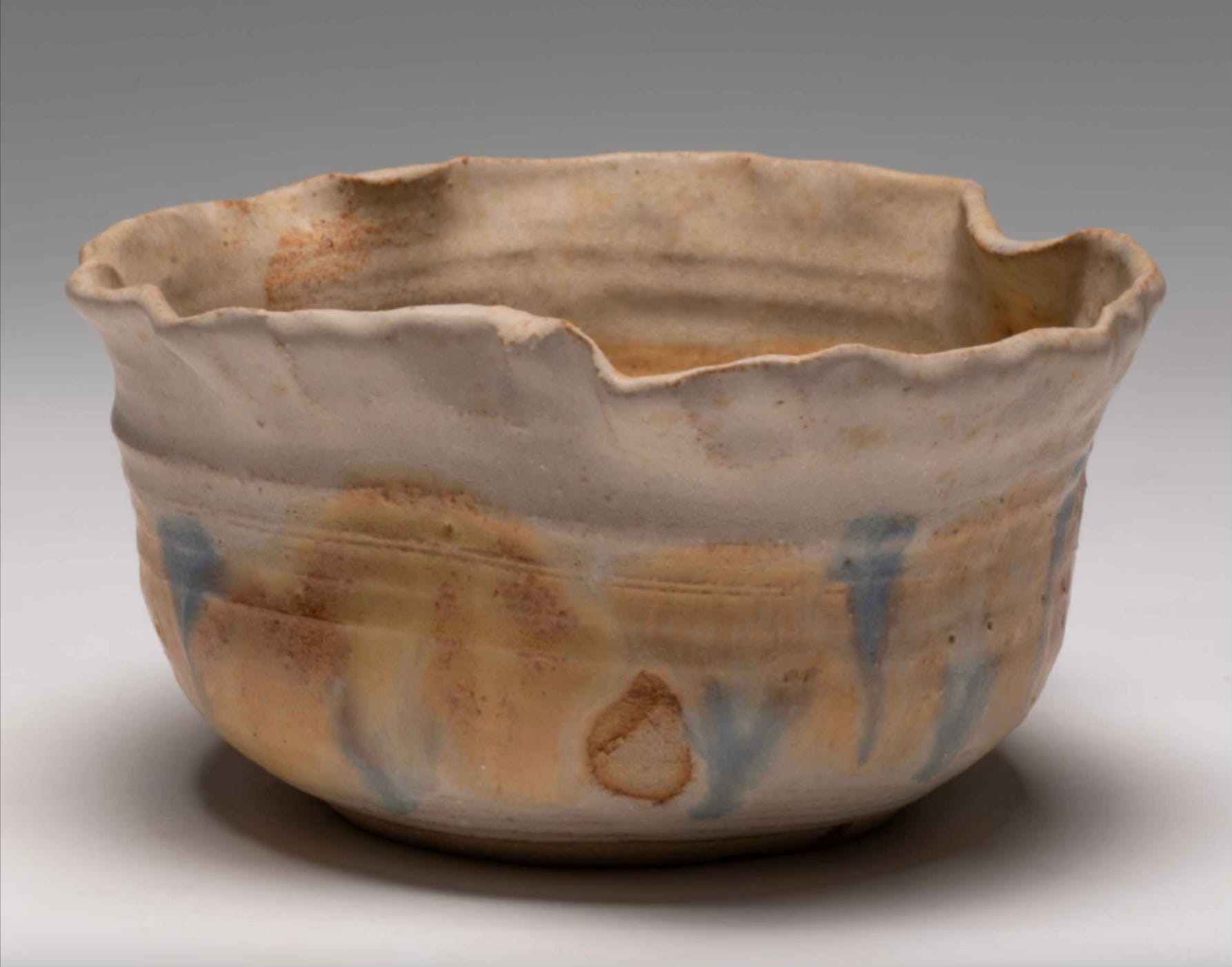
Mary Caroline Richards (1916 – 1999) was a poet, a potter and a teacher. Richards produced one of the most important books on the poetry of craft, which I have already quoted a few times in my series about poetry and pottery. She taught at the Black Mountain College in North Carolina (US).
M.C. Richards, “Centering in Poetry, Pottery, and the Person”, Wesleyan University Press, 1989, p.21
No posts
Comments
Nothing yet. Say the first thing.
Sign in to join the conversation.